Last week, in my article, I shared how I got into McGill University and how the lessons I learned there significantly impacted my life (http://www.serhansuzer.com/tr/ufuk-acan-bir-deneyim-mcgill-yillarim). This week, I’d like to share some more detailed and specific information about Montreal, a city with a significant portion of its social life underground, and about my university, which has given the world many valuable scientists and artists.
First, I’d like to share a brief overview (source: Wikipedia). Founded in 1821, McGill University is a public institution located in Montreal, Canada, and is Canada’s oldest university. Named after its founder, James McGill, the university is among the world’s most prestigious universities. The McGill campus covers 79 acres. The university has two campuses: the one in the city center, at the foot of Mount Royal. This campus also houses a museum called the Redpath Museum. The second campus is the MacDonald Campus. The university has a capacity of 34,000 students and 21 faculties. Education is offered in English and French.
The university is quite cosmopolitan, encompassing students from diverse cultures and countries. Described as Canada’s ‘Harvard,’ McGill is particularly known for accepting Turkish students from French or American high schools. It remains one of the best options outside France, especially for students graduating from French high schools. This is due to McGill University’s high prestige, as well as the widespread use of French in daily life due to its location in Montreal, a province of Quebec. One of McGill University’s most important characteristics is its status as a research university. Its students and faculty have made numerous discoveries.
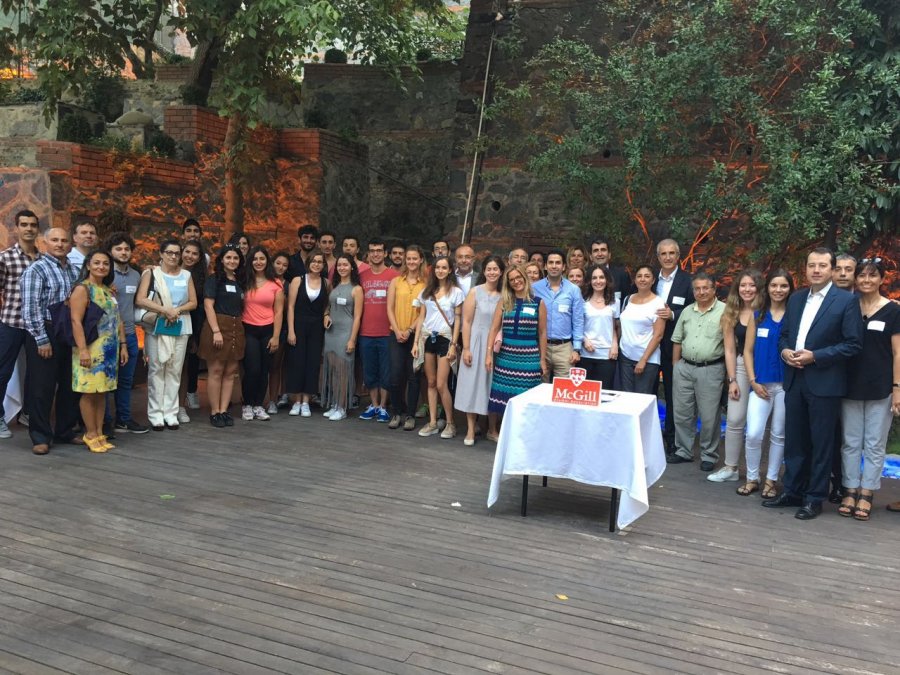
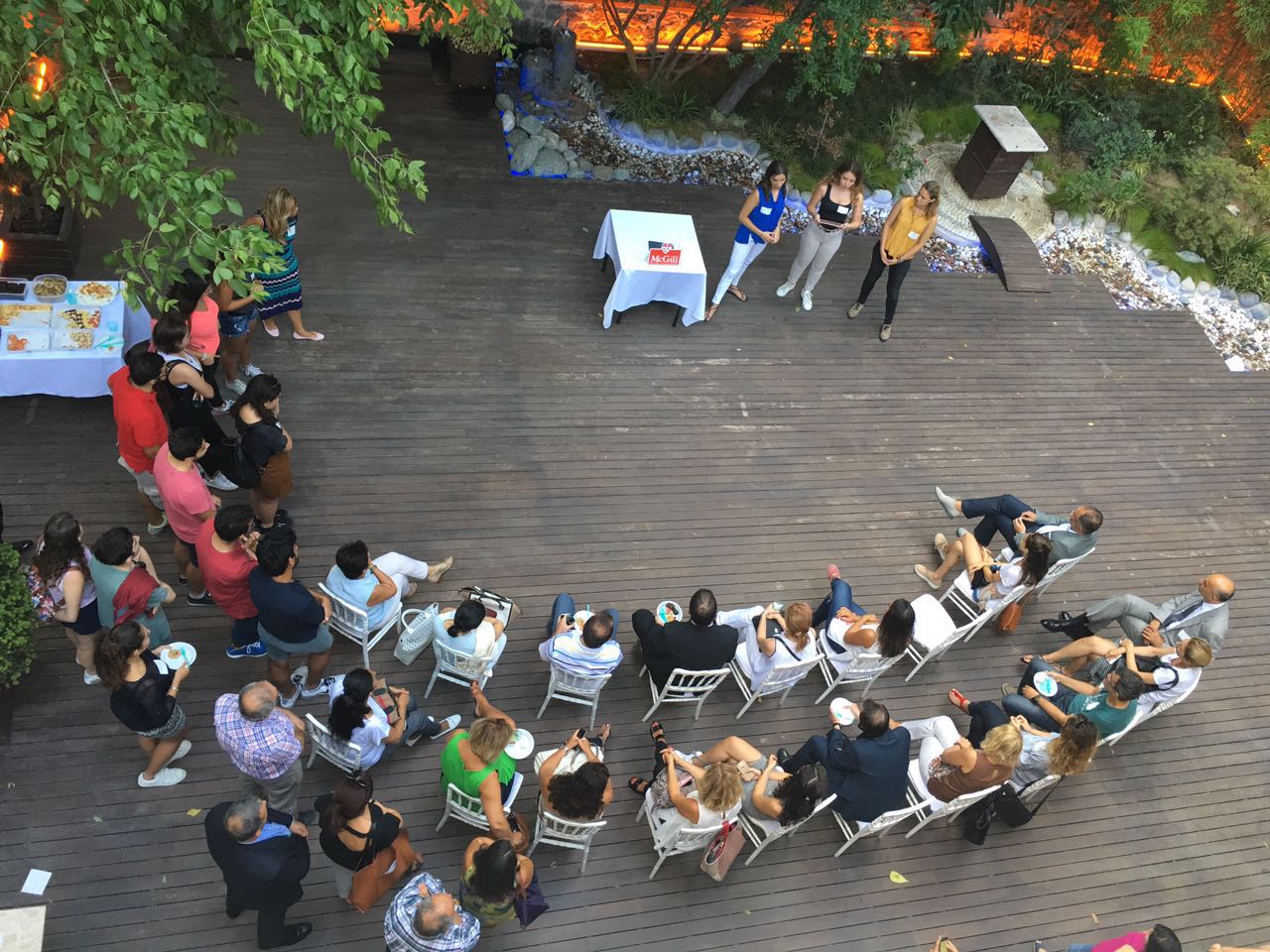
In last week’s article, I discussed an event held in Istanbul at the end of July where former and prospective students at McGill gathered. Approximately 50 people attended this event, entitled ‘Welcome to McGill,’ held in a pleasant atmosphere in Kuruçeşme, Istanbul.
The McGill Alumni Association (MAA) has notified registered alumni and students from our region through the Alumni Online Community email group, which includes McGill alumni.
Sisters Uğurgül and Melike Tunç organized and hosted the event. Murat Polat, who was just starting the school, supported the outreach to new students. Students Elif Ezgi Aksulu, Yasemin Biçer, and İlayda Abacıoğlu, the current President of the Turkish Students’ Society of McGill University (TSSMU), volunteered their support and made presentations at the event. Zeynep Meydanoğlu, a valued friend of mine who also participated through the alumni quota, had badges printed, and Zeynep Çiçeker baked brownies and cookies.
Zeynep Çiçeker is the founding president of TSSMU. That evening, there was some joking about TSSMU. As we chatted at the end of the evening, with Zeynep Çiçek on one side of me, the first president of TSSMU, me, the second president who took over, and the current president, İlayda Abacıoğlu, on the other, the conversation turned to, “How wonderful, three presidents side by side.”
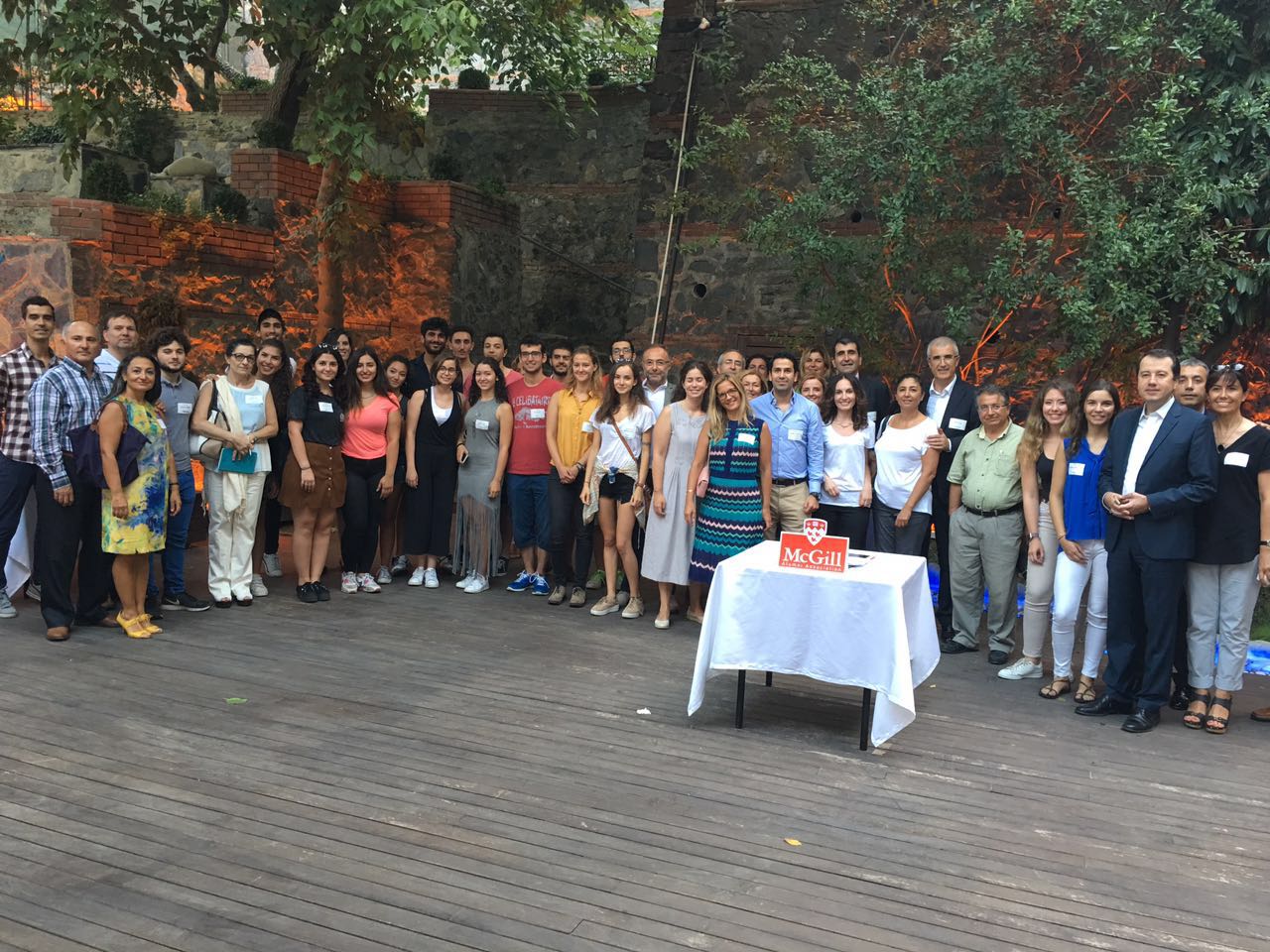
The photo we took together at the end of the event
First a cancellation, then a wonderful reunion.
The event was originally scheduled to take place at ITU’s Faculty of Architecture, but it was canceled after the coup attempt. Uğurgül contacted me during that time and asked my opinion. I told him that canceling was a very wrong decision, that life goes on no matter what, and that the international media was exaggerating the events and creating a false image of Türkiye. In short, I told him that he should not listen to the advice of anyone abroad and that he should hold the event no matter what, because we are the ones living in this country, and as it turns out, the situation in Türkiye is quickly returning to normal, and there’s no reason to cancel the event. As always, Uğurgül took immediate action and reorganized the event. This time, in my opinion, it was held in a more beautiful location: in the intimate setting of a beautiful house on the Kuruçeşme coast. Overall, everyone enjoyed the event and gave positive feedback, so we plan to continue the event in the coming years.
During the event, my other graduate friends and I had the opportunity to chat with incoming McGill students and their parents. They asked us a lot of details about the university. Of course, a Turkish classic: parents asked more questions than students, and they were so involved that you’d think they were the ones going to study, not their children. In this sense, I find it positive that children living under constant protection are now going abroad to manage all their affairs, experiencing real life, and learning to stand on their own two feet.
One of the mothers I was chatting with asked me, “What grade are you in?” You should have seen the look of surprise on her face when I laughed and said, “It’s been 17 years since I graduated.”
To contribute to the promotion of Canadian universities, the Canadian Consulate General asked me for a quote about my experience. The following image was eventually included in the promotional materials:
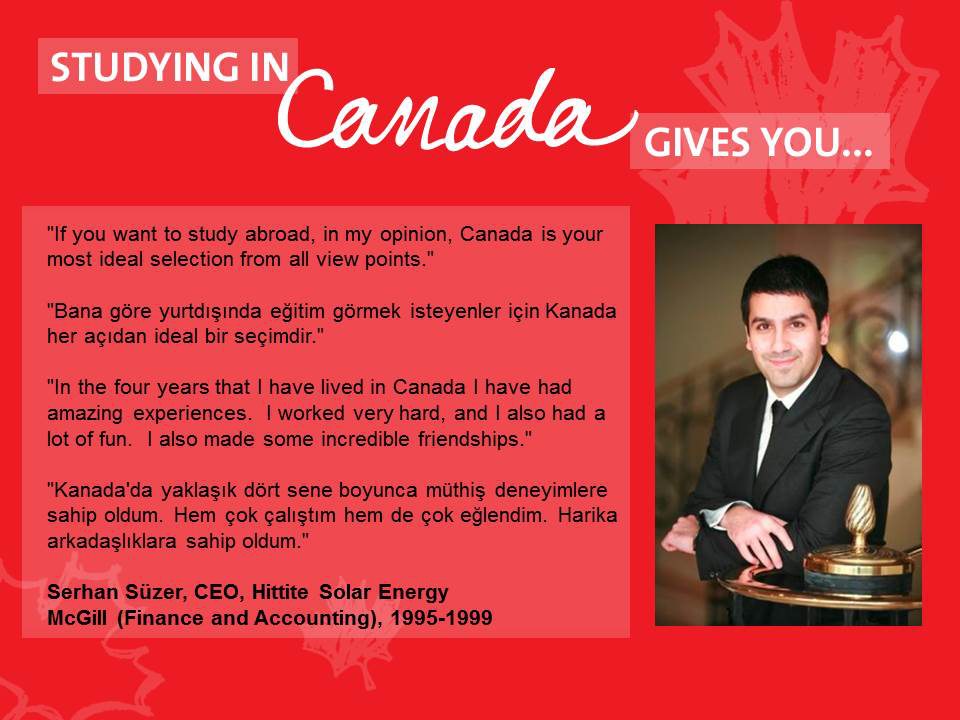
All the graduates shared information about McGill University in Montreal, saying, “Your children are in the right place; the future is bright for those who graduate from here.” And indeed, that’s true. All my friends who graduated have achieved great things.
Famous Alumni Who Made a World of Distinction
Beyond achieving great things, there are many important individuals who have graduated from McGill and made history. Among McGill University’s alumni are eight Nobel Prize winners, three astronauts, and two Canadian Prime Ministers. Most recently, in the 2015 Canadian elections, Justin Trudeau, another McGill graduate, was elected Prime Minister of Canada. From now on, some McGill graduates, whom we might call ‘special people,’ will continue to hold a prominent place in history. I’d like to briefly share some examples (information summarized from Wikipedia):

William Shatner (Actor, Producer)
William Shatner was born on 22 March 1931, in Montreal, Quebec, Canada. He studied economics at McGill University and graduated from the university in 1952. After university, Shatner worked as a manager for a time and later joined the National Theatre of Canada in Ottawa. There, he performed in a number of large and small roles, making his Broadway debut in 1956. Although William Shatner’s film career officially began in 1951, his first major film role was in 1958’s The Brothers Karamazov, opposite Yul Brynner. Since then, Shatner has appeared in numerous films, including the title role in the Hitchcock film The Glass Eye. However, his breakthrough came when he played Captain Kirk, commander of the Starship Enterprise, in the Turkish television series Star Trek, which premiered on 17 October 1972.
Another factor that makes Shatner special is that he became the first Canadian actor to appear in a series on the three major US television networks: NBC, CBS, and ABC. Shatner won both an Emmy and a Golden Globe for his role as Danny Crane in the 2005 television series Boston Legal.
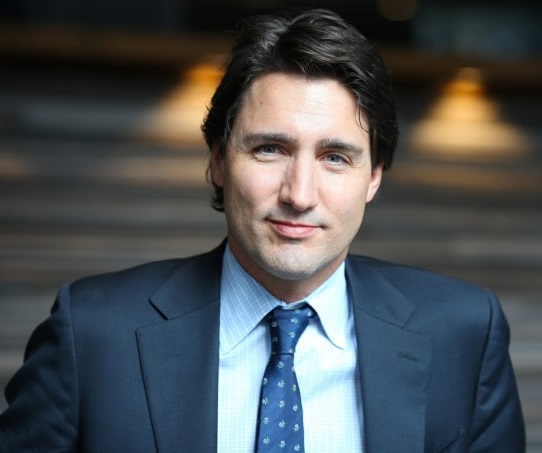
Justin Trudeau (Politician, Prime Minister of Canada)
Born on 25 December 1971, Shatner is a Canadian politician, the 23rd Prime Minister of Canada, and Chairman of the Liberal Party of Canada. He is Canada’s second-youngest prime minister after Joe Clark. Trudeau is also the eldest son of the legendary former Prime Minister of Canada, Pierre Trudeau. His father’s surname was given to Montreal Airport at the time.
Justin graduated from McGill University in 1994. After his father’s death, he became more involved in politics and successfully won the 2008 federal election, winning the House of Commons seat from Papineau. After serving in various positions within the party, he became party leader on 14 April 2013. Trudeau won the majority in the elections held on 19 October 2015 and was appointed Prime Minister of Canada. He officially took office as the 23rd Prime Minister of Canada on 4 November 2015.
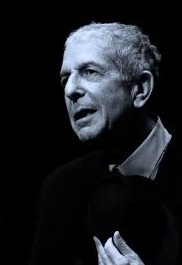
Leonard Cohen (Poet, Musician)
Born on 21 September 1934, in Montreal, Quebec, he is a Canadian author, poet, songwriter, and musician. Cohen entered McGill University in 1951, where he also served as president of the McGill Negotiating Group. After graduation, he spent a year at McGill’s law school.
His first book of poetry, Let Us Compare Mythologies, was published in 1956 while Cohen was still a student. His 1961 publication, The Spice-Box of Earth, established him as a well-known figure in the poetry world, particularly in his native Canada. Cohen, who worked with pop, cabaret, and world music in the 1970s, typically sung in a bass-baritone tone, was accompanied by female vocalists and electronic synthesizers from the 1980s onward. His works often explored themes of religion, loneliness, sexuality, and complex interpersonal relationships. His works have been interpreted and recorded by over a thousand other artists. Cohen, who has been inducted into the Canadian Music Hall of Fame and the Canadian Songwriters Hall of Fame, was also awarded the Companion of the Order of Canada, the country’s highest civilian honor.
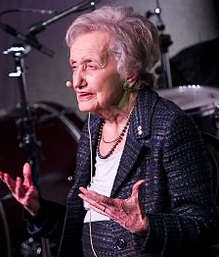
Brenda Milner (Neurophysiologist)
Born on 15 July 1918, Milner, a Canadian neurophysiologist, has made significant contributions to the literature by conducting valuable research in the field of clinical neuropsychology. He is also known as the ‘founder of neuropsychology.’ Milner is a professor in the Department of Neurology and Neurosurgery at McGill University. Milner, who has received more than 20 honorary degrees, continues his work into his 90s, currently researching the interaction between the right and left hemispheres of the brain. Milner has received numerous awards for his contributions to neuroscience, its subfields, and psychology, including those from the Royal Society of London, the Royal Society of Canada, and the National Academy of Sciences.
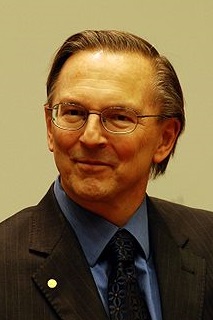
Jack Szostak (Biologist)
Born on 9 November 1952, Dr. Szostak is an American biologist, Professor of Genetics at Harvard Medical School, and a researcher at Massachusetts General Hospital in Boston. Jack Szostak graduated from McGill University’s Faculty of Science in 1970 at the age of 19. He received the 2009 Nobel Prize in Physiology or Medicine, along with Elizabeth Blackburn and Carol W. Greider, for their discovery of how chromosomes are protected by telomeres.
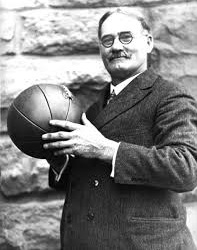
James Naismith (Coach)
James Naismith (1861-1939) was a Canadian sports coach and inventor. He invented basketball and the American football helmet. Naismith graduated from McGill University’s Department of Physical Education. Dr. James Naismith, who worked as a sports coach in the United States for many years, developed the ancestor of the game of basketball, a game he had long dreamed of while working in Springfield. This game, based on the principle of throwing the ball into wooden baskets hung on opposite walls of the gym, was originally designed as a good winter training session for athletes and baseball players. Naismith chose the word ‘basketball’ for his game because of the goal of throwing the ball into the baskets hung on the wall.
In short, basketball, the second most popular game in the world after football, was invented by James Naismith, a graduate of our university.
Local information about Montreal
Speaking of our university’s alumni, I’d like to share some experiences and experiences we all share. Now, I’ll share some things that only those who study at McGill or live in Montreal might know:
– Life underground: Due to the harsh winter conditions, I can say there’s another world beneath the city of Montreal. Montrealers prefer to spend time in underground shopping malls, shops, and restaurants rather than going outside during the winter. Similarly, some buildings at our university are connected underground. You can spend the entire day in indoor social settings without ever having to deal with the harsh winter conditions outside.
– Life above ground: I generally loved hanging out outside, even when it was cold. Because even when it was freezing cold in Montreal, the sky was usually sunny. In fact, I didn’t quite grasp it when I first went. Looking outside, it felt like a summer day outside. You’d step outside and it was -20° C! Because of this, there would be ice on the roads. While they usually solved the problem by salting them, sometimes it was inevitable. Even walking on the sidewalk requires some knowledge of how to deal with ice. You’ll see many people slipping and falling. But despite everything, I think it’s much more enjoyable outside.
– Transportation: The metro is accessible to every part of the city, and that’s why there are no problems with transportation. Besides its extensive network, the Montreal metro is also very convenient.
– Our bilingual school: McGill University embodies a characteristic of the city in which it’s located. The school is bilingual: English and French. Courses are typically taught in English, but you can also take exams in French if you prefer. Moreover, both in our school, in Quebec, where we live, and in many parts of Canada, especially in the capital, Ottawa, all conversations are bilingual. So, you might hear conversations like this at a dinner or conference: The conversation begins in English, continues in French, returns to English, and ends in French. I’ll be honest, I was initially surprised when I saw this, but then I started to like it.
– The Layering System: Many parts of Canada employ the ‘layering system.’ I’ve used this system for years, as it’s an effective method for dealing with rapid temperature changes. For example, on a typical day, you wear a T-shirt, a sweatshirt, a sweater, and a coat. You can change these between them as the temperature rises and falls.
– The Language of the Signs: Quebec is a province where people of French descent have privilege. Therefore, all the signs in the city are in French.
– The Relationship between French Canadians and the French: Quebec boasts interesting personalities. French Canadians are original people in many ways. For example, their spoken French has a very heavy French accent. I even know that many of my French friends complain, “I don’t understand what they’re saying.” French Canadians also find the French snobbish in many ways. Interestingly, French Canadians understand French very well because they speak their native language, but French people struggle to understand French Canadians.
– French Canadian Women: French Canadians, both men and women, are physically beautiful people. They are free-spirited and have a distinct culture. I’ve even experienced French Canadian women taunting me while walking down the street. Coming from a place where you’re normally used to men taunting women, when women taunting you, you’re surprised. There’s also the habit of having children before marriage amongst French Canadian women.
– The city’s liveliest areas: Montreal is a very vibrant city. Various events, restaurants, cafes, and entertainment venues are located throughout the city. The liveliest streets are St. Laurent, St. Denis, and Crescent Streets, with St. Catherine Street running parallel to them. The Old Port district, home to the Old Port, is also a hip area that is constantly growing in popularity.
– Food: I’ve never had any trouble finding food. You can find dishes from every culture and region in Montreal. The finest examples of Latin American, Far Eastern, North American, French, and Italian cuisine are available. During my time there was only one Turkish restaurant: Au vieuil Istanbul, (In Old Istanbul,) run by a husband and wife team. The mezes were delicious. We could also find flavors very similar to our Turkish palate in Lebanese and Greek restaurants and their markets.
– State motto: In the US and Canada, every state has its own motto. These mottos are displayed on license plates. For example, in Florida, the motto is ‘Sunshine State.’ In Quebec, where Montreal is located, for some reason, it says “Je me souviens,” meaning ‘I remember’ in French. When I first saw this, I asked my friends, “What are they remembering?” They replied, “They’re referencing history. They fought serious sovereignty wars with the British back in the day; that’s what they mean.” Of course, I didn’t like this very much. A great country was founded, you’re a vital part of it, and yet you’re still turning your past delusions into slogans and displaying them on license plates. I can say that this was the only thing I didn’t like about Quebec, and therefore Montreal.
– Referendum: While I was questioning this “je me souviens” motto during my freshman year, this discriminatory approach hit me even more concretely and harshly. In my first year of school, a referendum was held in Quebec. In other words, the province of Quebec, where Montreal is located, voted on whether to secede from Canada. Can you imagine? I thought I’d arrived in a very comfortable country like Canada, but suddenly, in my first year, supporters of “yes, let’s leave” and “no, let’s not leave” were organizing daily marches and events on the city streets. Then, when 25 of McGill University’s most prominent professors issued a joint declaration declaring, “If the Province of Quebec chooses to secede from Canada, we will also secede from McGill University, where we teach, recognizing it as a Canadian university,” everything was utterly bleak. I told myself, “I came to study at a wonderful university in a comfortable and pleasant environment. Look at the situation we’ve found ourselves in.” I even remember humbly trying to dissuade some friends who held separatist views, saying, “Comfort is getting to you. You need to be sent to a chaotic Middle Eastern country for a while. Then you’ll appreciate the opportunities your country offers you much more. Canada is a wonderful place to live; why would you want to ruin that?” Ultimately, the referendum resulted in a narrow victory for those who said, “No, let’s not separate,” with a very close margin of 51-49%. We all breathed a sigh of relief.
The Need for Reverse Migration
Speaking of the referendum, I want to emphasize this. In my opinion, Canada, which came back from the brink of a cliff back then, remains one of the most prosperous and livable countries in the world today.
In our own country, where we have been experiencing difficult times, we came back from the brink in a different way last month. From now on, we must constantly shift our momentum upwards and work together, united and solidarity, to make our country even better than before.
As one of them, I say this first and foremost to all my fellow McGill graduates. Then I address young people who have graduated from good universities and can contribute to their country, as well as to Turks who have built careers and possess significant knowledge. We need valuable minds for our country’s development more than ever. Therefore, let’s reverse the brain drain and protect our country.
Tag: education