It was December 2011 when I left our family company to set up my own startup, Hitit Solar. I had made myself a promise when I first began working in the family business back in 2001: if, after 10 years, everything went well and I managed to help steer the company (which I saw as a ship) into calmer waters, I would leave to pursue my own venture.
I began working in the family business in July 2001. Exactly 10 years later, in July 2011, I knocked on my father’s door and politely expressed my wish to leave and start my own company. It took me 3–4 months to convince him. Eventually, I succeeded—with his support, I officially left in November 2011 and established my company in December.
My First Love: CSP Technology
At the time, I had two business ideas in mind. My priority was solar energy. The second was a venture focused on the digitalization of money (FinTech – Financial Technology). I entered the solar energy field with CSP technology in December 2011, and I stepped into the FinTech space with Moka in August 2014.
I had previously written a long post about my first startup, Hitit Solar. If you have the time, I recommend reading it. Here’s the link again:
https://www.serhansuzer.com/tr/ilk-girisimim-hitit-solar
One of the most critical moments in that journey was my decision to sell my shares in Hitit Solar. Looking back today, I can see it was the right move. Here’s a summary of what I wrote about that period:
What Made Me Rethink and Exit CSP
At that time, the rapidly decreasing costs in the PV sector—which produces electricity directly from sunlight—made me question the viability of our CSP model. We had developed a parabolic trough system that directly heated water up to 500°C, producing high-temperature, high-pressure steam at the end of the collector array. This steam could power a turbine to generate electricity.
Compare that to PV technology, where solar radiation moves electrons to directly produce electricity. The cost-per-kWh for CSP was three times that of PV—and the gap was widening.
I realized this within a few months of investing and decided to have a serious talk with my technical partner, Mr. Oğuz. Although our technology produced heat and steam effectively, adding steam turbines for indirect electricity production made the solution too costly. I tried to convince Oğuz to pivot.
His dream, however, was to build CSP power plants that generate electricity from heat via turbines. But it was clear to me that CSP, which relies on DNI (Direct Normal Irradiance), couldn’t compete with PV, which uses GHI (Global Horizontal Irradiance) to produce electricity directly.
Initially, he agreed. We even began building a prototype. But two months later, just as the technical team was about to begin testing, Oğuz came into my office and told me he wanted to halt the work. He was determined to focus solely on electricity production—not heat—and wanted to pursue a different model.
That’s when things fell apart. I told him, “If we continue down this path, we’ll hit a wall,” and expressed my wish to sell my shares. He agreed. Luckily, a Saudi investor—whom he had known previously—was interested. This investor wanted to use our technology in Saudi Arabia’s massive $110 billion solar energy tender (60% CSP, 40% PV). I successfully sold my shares for a profit, exited CSP, and entered PV in 2013. A year later, I launched my FinTech venture.
The Model I Had Proposed Back Then
Even though I exited CSP profitably, I still regret not being able to implement the idea I had proposed at the time. I had envisioned downsizing the collectors and selling them as products to facilities that required heat—like textile factories, geothermal plants needing efficiency boosts, or oil recovery facilities using EOR (Enhanced Oil Recovery) technology.
Unfortunately, we never got to develop that product because Oğuz, despite being a brilliant technical leader, insisted on focusing solely on electricity generation. So, I shelved my dreams and sold my shares.
Discovering Dr. Ahmet Lokurlu
That’s why I was thrilled when I met Dr. Ahmet Lokurlu, who developed the exact model and technology I had envisioned—and had successfully implemented it multiple times. This introduction came through Dr. Adem Akkaya, Turkey Director of NRW (North Rhine-Westphalia, Germany’s largest state).
Dr. Akkaya told me, “Serhan, I know someone who thinks just like you. I’m sure you two will hit it off. He’s developed major CSP technologies and has applied them in practice.” I responded, “Great—let’s meet.”
He arranged an online meeting, where I first met Dr. Lokurlu and later his son Deniz, whom he had trained himself. After a few follow-up meetings with Deniz, we identified potential areas for collaboration. Naturally, I won’t share those details due to confidentiality.
A Visit to the Installation Site
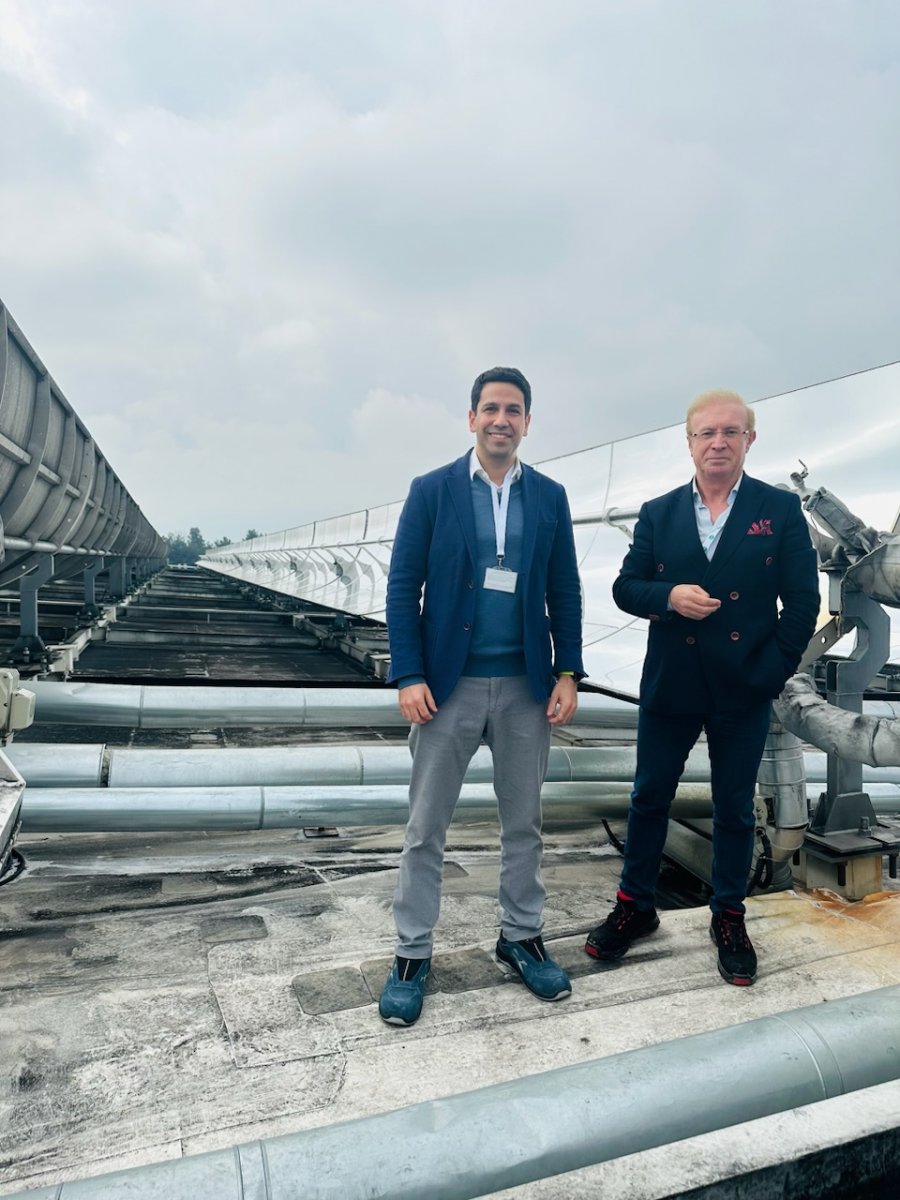
What I want to highlight instead is our in-person meeting at one of Dr. Lokurlu’s installation sites in Izmir. When I heard he would be visiting a factory where his system had been implemented, we scheduled a meeting. I traveled early in the morning to personally inspect the CSP installation at Mayr Melnhof Graphia Izmir (MM Graphia Izmir Karton San. ve Tic. A.Ş.), a company specialized in cigarette packaging.
I had been dreaming of this project since 2012. I left at 5:30 AM and arrived at the factory around 11:00. Dr. Lokurlu met me at the entrance with great enthusiasm, accompanied by the factory’s general manager. That kind of excitement—sustained over years—is often the key to success in technical fields like this.
A System Worth Hearing About
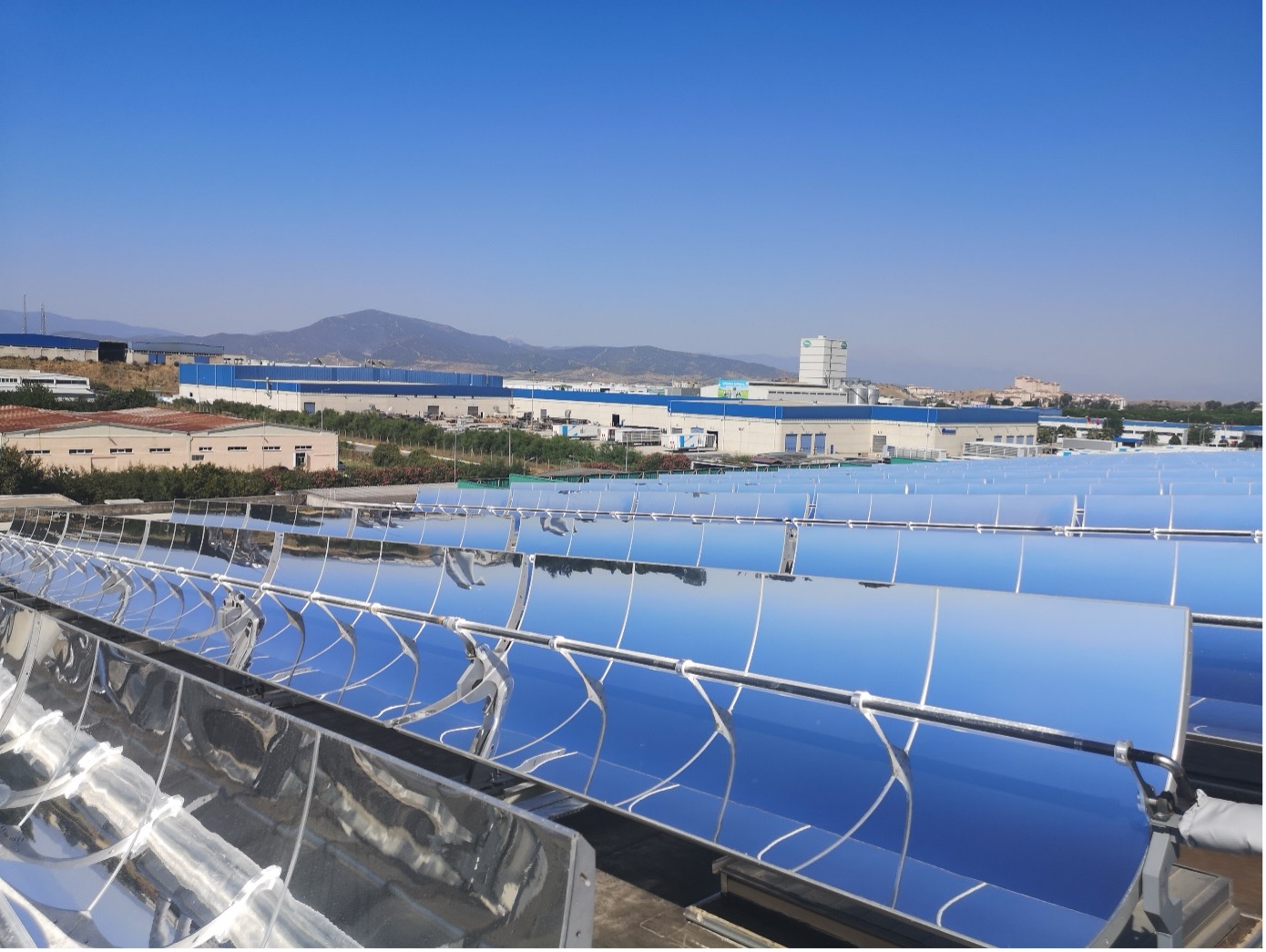
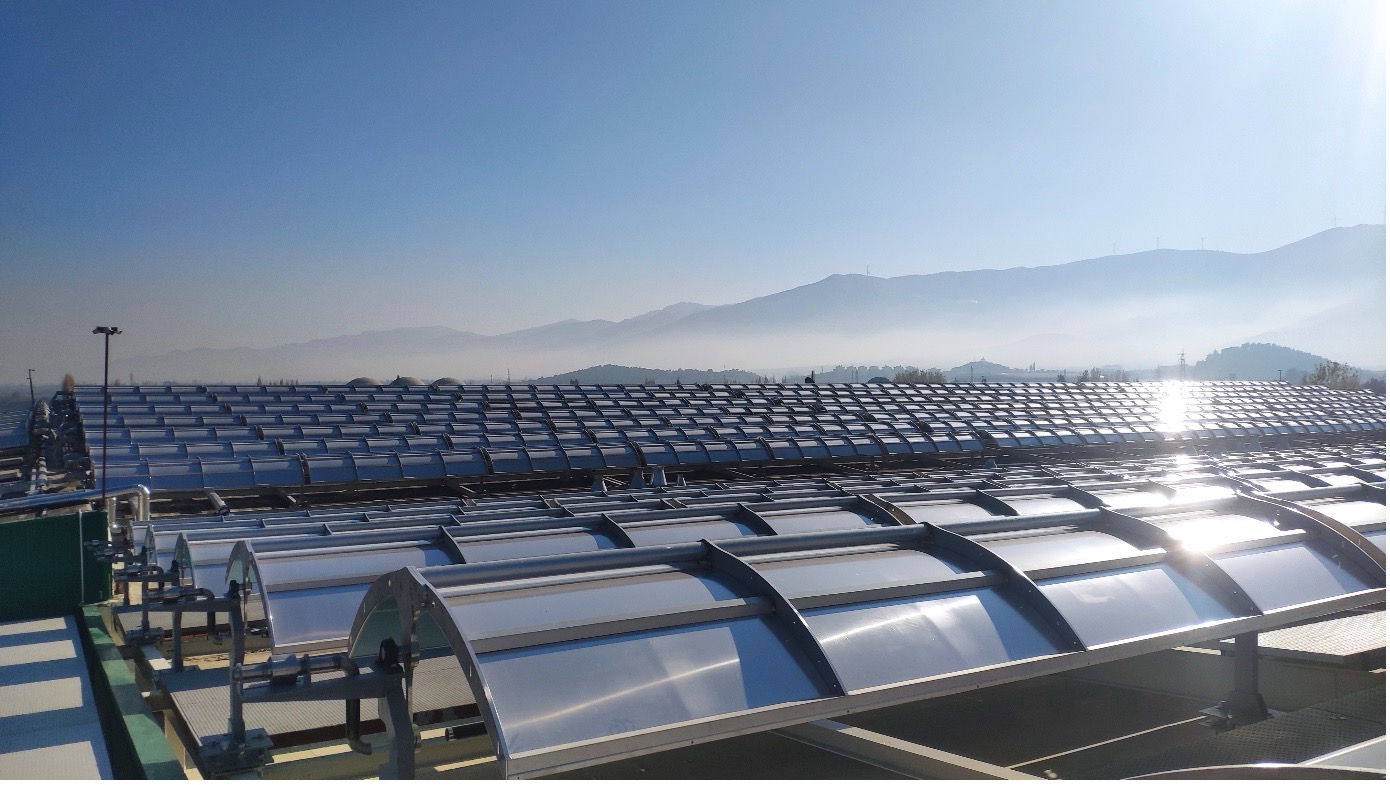
The factory’s general manager shared technical details with Enerji Günlüğü, a leading industry publication. Dr. Lokurlu also walked me through the system and then took me up to the roof, where 500 rooftop-mounted parabolic collectors—electronically monitored and sun-tracking through SCADA—produce heat and cooling for the facility. The results are phenomenal.
This state-of-the-art CSP installation heats water to 180°C and delivers thermal energy for industrial process cooling and climate control. Integrated with absorption chillers, cooling towers, and air-handling units, it enables year-round process cooling and seasonal heating.
Thanks to its hybrid backup system—using stored solar energy or a natural gas boiler—it ensures uninterrupted operation and energy security. The project saves 1,780 MWh in fuel and 3,500 MWh in electricity annually, reducing CO₂ emissions by 3,000 tons. With a payback period of under five years, it proves that renewable energy can be just as economically viable as conventional tech. It has also created 30 long-term technical jobs and increased awareness of sustainable energy solutions.
The system boosts the local economy while sparking interest in PTC-based (Parabolic Trough Collector) solar systems. Here are some photos of the system installed on MM Graphia Izmir’s roof—both in operation during the day and in idle mode at night:
Synergy in Vision and Collaboration
They launched this system at just the right time. Rising fossil fuel prices, the pandemic, and other factors reduced the payback period to just two years—hard to believe, but true. The factory’s general manager, who boldly supported the project when it seemed risky, has now become a star at the company and was appointed to the headquarters’ sustainability committee.
After he explained the system to me in detail, Dr. Lokurlu and I held a brief meeting to review collaboration opportunities.
I was overjoyed to see that the dream I once had was now a reality. I congratulated Dr. Lokurlu and his team multiple times and later invited him to lunch that same week.
What happens next remains to be seen, but one thing is certain: when technically and technologically advanced individuals with the right mindset and determination come together, synergy is inevitable.
Let’s keep working together toward a better world.
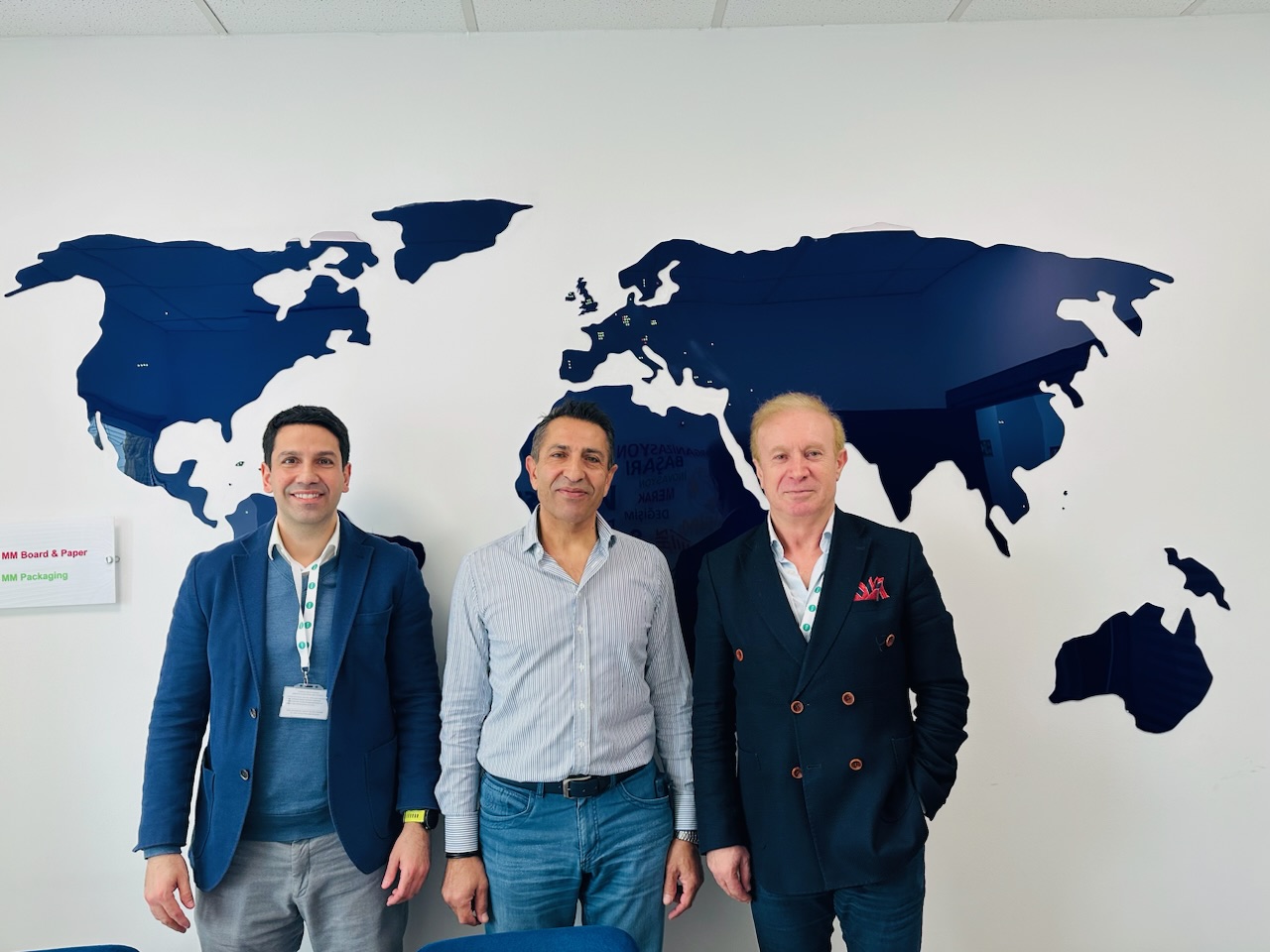
Before parting ways, I took this photo with Dr. Ahmet Lokurlu and MM Graphia’s general manager, Mr. Fuat Polat.
Note: Many thanks to Deniz Lokurlu for his contributions to this article.
Tag: ecology