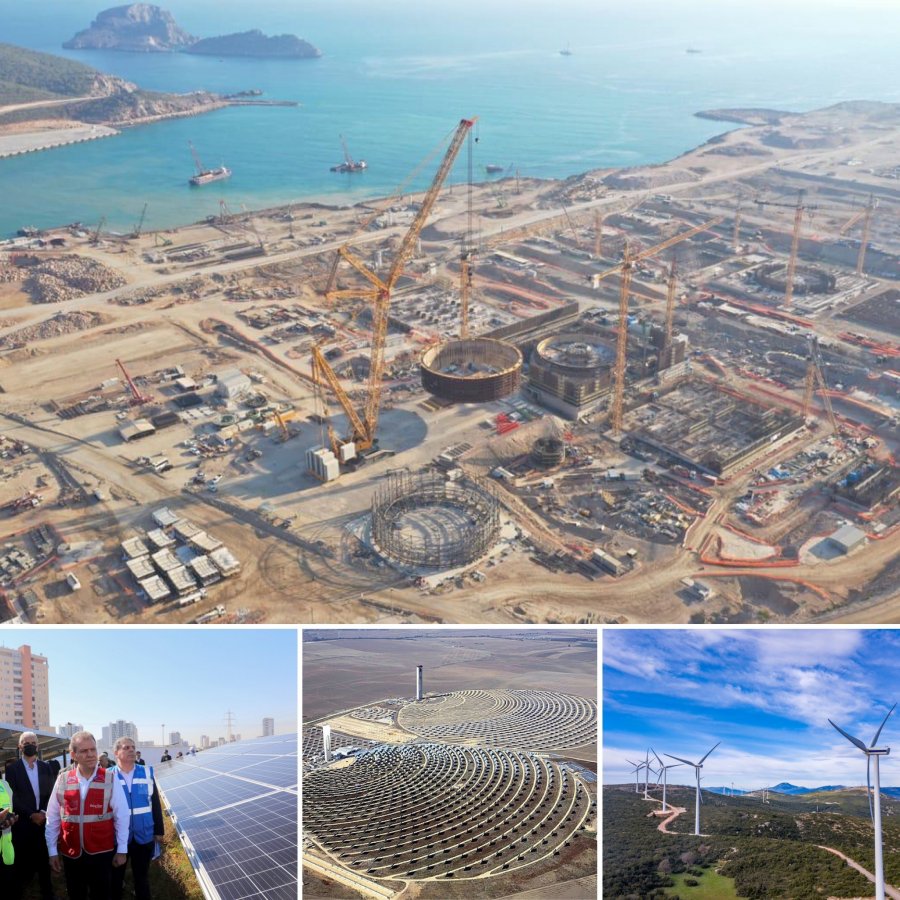
I’ve written about nuclear energy in the past. When I traveled to Mersin for business and to run the Mersin Marathon, my sensitivity to this issue resurfaced, and I wanted to write an article that looks at the issue from a different perspective. First, let’s recall my past articles:
1) Nuclear Disaster Imminent: https://www.serhansuzer.com/tr/nukleer-facia-kapida
Is there a goal of converting a nuclear power plant into a nuclear bomb? What impact would such a situation have on the region for a world already on the brink of nuclear war? Let’s take this opportunity to recall the first submarine nuclear bomb test by the US in 1946: https://www.instagram.com/reel/CrTecOEITyO/?igshid=MDJmNzVkMjY%3D
2) Questions to ask about nuclear power plants: https://www.serhansuzer.com/tr/nukleer-santralle-ilgili-sorulacak-sorular
For my readers who don’t have time, I’d like to briefly remind them of the content of these articles. First, I’ll list the questions to ask about the nuclear power plant in Akkuyu, Mersin, below:
1) What will be done with the nuclear waste from the Mersin Akkuyu Nuclear Power Plant?
2) What measures are being considered to minimize the permanent damage to the Mediterranean coast from the waste heat generated by the plant?
3) Although the risk of an accident at the nuclear power plant to be commissioned in Mersin is considered very low, has the tragic consequences if such a problem occurs been calculated? On this occasion, I recommend reading WWF’s article titled “Don’t Let Akkuyu Become Chernobyl”: https://www.instagram.com/p/CrirpIZKkxj/?igshid=MDJmNzVkMjY%3D
4) Wouldn’t the fact that such a power plant is under Russian management create problems in terms of national security (strategic, geopolitical, and economic)?
5) God forbid, do we have a shield system for a missile launched from a neighboring country? What precautions does the nuclear power plant have against external interference?
6) Based on initial statements, it appears that the subsidized price of the nuclear power plant is far higher than the subsidized price of renewable energy. What is the purpose of supporting this project, which is causing economic harm to the country, under any circumstances?
7) What is the cost of this nuclear power plant? How many MW of renewable energy (solar, wind, bioenergy-biogas, biomass, biofuel-geothermal, wave, current, etc.) power plants could be built with this investment? I will further elaborate on this last question I posed regarding the cost of nuclear power plants in this article. I will specifically compare nuclear power plants to solar power plants from an economic perspective to help my readers understand the topic more clearly. In doing so, I will be using a recent article in PV Magazine entitled “Nuclear who?” as a basis. You can read this article at https://www.pv-magazine.com/2023/12/06/nuclear-who/ , and I’m sharing the summary below:
Who is Nuclear?
The authors of the “World Nuclear Industry Status Report 2023” describe the future role of nuclear energy in the global energy mix as “irrelevant” and “marginal.” They add that there were 407 operational reactors generating 365 GW by mid-year, which is lower than the installed capacity estimates for solar energy by the end of the year. The “World Nuclear Industry Status Report 2023,” conducted by French nuclear energy consultant Mycle Schneider, shows that despite the significant global presence of the nuclear industry, which produced 2,545 TWh of energy last year, the sector is shrinking, while renewable energy is gaining ground due to its low cost. Costs and popularity…
Schneider told PV Magazine that “as the cost gap between solar and nuclear continues to widen, PV continues to dominate.”
“This is undoubtedly the main reason why China will systematically implement programs across all regions, with over two-thirds of its massive 85 GW solar additions in 2022 being decentralized (distributed systems), primarily rooftop installations, resulting in a super-high project density.”
Differing LCOEs
Schneider noted that the levelized cost of electricity (LCOE) for solar and wind projects is lower than for nuclear. He cited data compiled by US-based Lazard, which indicates that the LCOE for combined solar and wind could be $45-130/MWh in 2022, well below the estimated $180/MWh average for nuclear.
Schneider said that fourth-generation reactors, often referred to as “PowerPoint Reactors,” would be unable to compete with renewables because they “have barely made it off the drawing board” and haven’t been approved by licensing authorities.
“With no design, no existing fuel chain, no safety analysis, how can we even discuss potential competitiveness?” he asked. “But implementation of these ideas on any scale is decades away. Many of the conceptual ideas, like fast neutron reactors or molten salt reactors, have been around for decades. As the cost differential for current designs with renewables grows, the likelihood of their existence diminishes.”
New Reactors
Schneider stated that renewables and nuclear energy will never be complementary energy sources. He cited Olkiluoto-3, Europe’s first enterprise resource planning project, as an example. The nuclear plant “almost” began commercial operations in April 2023, when production fell in May due to unprofitable wholesale market energy prices. Schneider stated that it could not compete with the flexibility of renewables.
“The increasing penetration of variable renewables like wind and solar requires fine-tuned, flexible, and complementary elements such as demand response, storage, efficiency, sufficiency, hydropower, and biomass,” he said. “Nuclear energy needs to operate for as many hours as possible to amortize the huge upfront investment.”
Schneider stated that wind and solar technologies work well together and can generate a large portion of the power grid’s baseload. Not only that, but he also said that they “eat away” nuclear’s profitability. Schneider stated, “There are many systemic features that clearly demonstrate that renewables and nuclear energy are not only not complementary, but also increasingly contradictory as the share of renewables increases.”
What’s in the World Nuclear Industry Status Report 2023?
The report notes that renewable technologies, including solar, hydropower, and wind, are the main area of “optimism” regarding energy security. “Nuclear energy remains marginal at best and often irrelevant to the challenges ahead,” the document states.
The report also notes that last year and this year were crucial for examining and developing the international energy sector. The insecurities exposed by the Ukraine war and the climate emergency forced countries to develop new industrial and economic strategies to strengthen domestic supply chains and production.
As a result, the total installed capacity of solar energy reached 1,047 GW by the end of 2022. The sector increased its annual production at an “unprecedented” pace, reaching an annual output of 1,309 TW/h. Over a decade, the LCOE of utility-scale solar projects has decreased by 83%, while that of nuclear projects has increased by 47%, making nuclear the “most expensive generator.”
“Aside from natural gas peaking plants with discount rates lower than 5.4%, nuclear has consistently been the most expensive source on an LCOE basis,” the analysts noted. “Renewable energy growth is now not only outpacing nuclear, but rapidly outpacing fossil fuels, making it the economic preferred source for next generation.”
Nuclear Fleet
According to the report, global energy production for nuclear power fell by 4% last year. This occurred despite a net addition of 4.3 GW of nuclear capacity and the retirement of four reactors.
However, the report notes that 58 new reactors were under construction as of the end of June, five more than last year. Nuclear’s share of global commercial gross electricity generation has fallen to 9%; According to the authors, this is the largest decline since 2012, the year after the massive Fukushima nuclear accident.
They also noted that as of the end of June, 407 reactors operating in 32 countries were generating 365 GW of solar power. This is less than the 413 GW of installed solar capacity expected by the end of 2023, according to estimates provided by New York-based research firm Bloomberg NEF.
Construction Time
The report notes that reactor construction times now average six years, a decrease from last year. Despite the accelerated process, other challenges arise, including year-long delays, “lengthy” licensing procedures, complex financing negotiations, and site preparations.
“Despite optimistic numerical targets for expansion, the proposed role for nuclear power in a decarbonized world faces ongoing competitive pressures in terms of both cost and technical capabilities,” the report states.
“This includes the economics of operating reactors and financing new ones.”
Renewable energy is significantly cheaper than nuclear!
After reading this article, I’d also like to share with you the report published by CSIRO (The Commonwealth Scientific and Industrial Research Organization), an Australian Government agency responsible for scientific research (affiliated with the Department of Industry), and this article about it, written in Renew Economy. You can read the article at https://reneweconomy.com.au/csiro-says-wind-and-solar-much-cheaper-than-nuclear-even-with-added-integration-costs/ . I’ll summarize it below:
CSIRO has released the latest edition of its landmark GenCost report, responding to criticism by calculating near-term integration costs for wind, solar, and storage. But the conclusion remains the same: renewables are clearly Australia’s cheapest energy option! And the situation with nuclear has only worsened. The annual GenCost report, produced in collaboration with the Australian Energy Market Operator since 2018, is an important guide to where Australia’s energy transition is and where it needs to go, but has been the target of attacks from conservative opponents and naysayers like the pro-nuclear lobby in the past.
CSIRO’s findings support environmental arguments
CSIRO defended its methodology, but to appease critics, it added pre-2030 integration costs, including those for new transmission lines built to connect new generations, and found the story to be much the same.
“While this change has led to higher cost estimates, variable renewables (wind and solar) still appear to have the lowest cost range of any newbuild technology,” the CSIRO says, noting that this includes all integration costs of up to €90 million.
Over the past year, the cost of solar and offshore wind has fallen, the cost of battery storage has remained stable, but the cost of other technologies, such as onshore wind and pumped hydro, has increased.
A key factor in the Australian energy transition debate and the Federal Coalition’s insistence that nuclear is the answer to most problems is the cost of nuclear and small modular reactors. The CSIRO has been attacked by the pro-nuclear lobby, including conservative media and right-wing think tanks, for what the lobby claims are inflated cost estimates, but the CSIRO says recent events support its calculations.
Scientific data is essential
The CSIRO report reveals some interesting points about the costs of wind and solar energy and the technologies available and working. Following various price shocks affecting these technologies over the past few years, the costs of these technologies are expected to continue to decline in the coming years.
“The LCOE cost range for variable renewables, including integration costs, is the lowest for all newbuild technologies between 2023 – 2030,” the CSIRO says.
“The cost range overlaps somewhat with the lower end of the cost range for coal and gas generation.”
“However, the lower end of the range for coal and gas can only be achieved if they can offer a high-capacity factor, provide low-cost fuel, and, despite their high emissions, can be financed at a rate that does not include climate policy risk.”
“Excluding high-emission generation options, the next most competitive generation technology is gas with carbon capture and storage.”
Minister Bowen’s warning
Federal Energy Minister Chris Bowen said the report was proof that the government’s policies were on the right track and that the coalition was pursuing a dangerous fantasy by calling for an end to cheap and reliable renewable energy and sticking to nuclear.
“The opposition has made some inappropriate attacks on CSIRO and AEMO in recent months, and has questioned GenCost,” Bowen told reporters on Thursday.
“GenCost is being developed independently of and at arm’s length from government by experts, scientists, and economists, taking into account Australia-wide consultations.”
“And today’s GenCost report takes into account all the costs of renewable energy between 2024 and 2030, including transmission and storage, and finds that even if nuclear costs fall, renewable energy remains by far the cheapest form of energy. From 2030, nuclear energy will be at least three times more expensive than renewable energy, and possibly even more.”
‘The final corner’ that must not be taken
The commissioning of the Akkuyu Power Plant, which has been a topic of discussion from time to time, is only a matter of time. The news report, “The final corner has been reached for the commissioning of the first reactor at the Akkuyu Nuclear Power Plant,” confirms this: https://www.aa.com.tr/tr/ekonomi/akkuyu-ngsde-ilk-reaktorun-devreye-alinmasi-icin-son-viraja-girildi/3085616
We also encounter concerning news about the Akkuyu Power Plant: https://www.sozcu.com.tr/akkuyu-nukleer-santrali-ni-yapan-sirket-hakkinda-endise-yaratan-iddia-rosatom-da-gizli-sorunlar-p9381
Of course, the economic aspect of the situation, as I asked at the beginning of the article, is the one that needs to be addressed seriously. In this article, I tried to explain how economically unnecessary an investment in the nuclear power plant was. In any case, building a large, expensive generator in Mersin, a corner of the country’s paradise, and a place with significant renewable energy potential, is against the country’s economic interests.
In my opinion, positioning Mersin as a renewable energy hub rather than a nuclear energy hub is a more appropriate approach from every perspective (economic, ecological, national security, human health, tourism, etc.). A wrong decision is a win-win situation.
Tag: ecology