
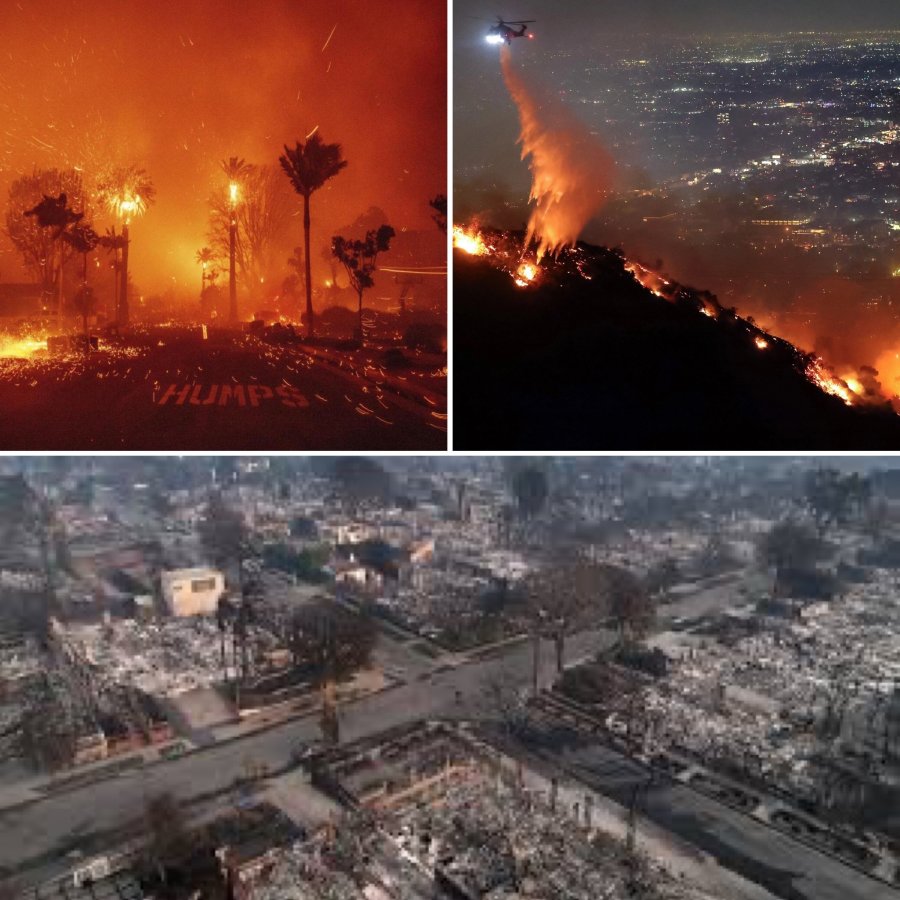
When my mother went to L.A. on 7 January for spinal treatment, she had no idea what she was walking into. There was no way she could have known that just as her plane was taking off, one of the worst disasters in L.A.’s history was about to unleash fire that would turn nearly the entire city into ash. Even after she and my brother landed and checked into their hotel, they didn’t fully grasp the situation. But the next day, when her doctor canceled the appointment and left the city, and they saw the hotel slowly emptying out, they realized how serious it was.
When my mom and my twin brother Baran arrived in L.A., and I spoke to them the next day, oddly enough, they still weren’t panicking. Meanwhile, I was in Istanbul, getting updates and growing increasingly anxious, calling them repeatedly. My one message was this: “There are fires everywhere in L.A., and it won’t take long for the flames to reach your area. Get out of there immediately—fly back home or go somewhere else.” They finally decided to leave. After staying in L.A. for three days, my mom managed to find a flight back to Istanbul, and Baran flew to Miami. They could’ve been caught in the middle of those fires, but thankfully, they made the right call and left. In my opinion, they got out with minimal risk—barely.
It Looked Like a War Zone
I also contacted other friends who live in L.A. They were all packing up and heading out of the city. A major city like Los Angeles looked like it had come out of a war. In fact, it was nature that had declared war on humanity. The reckless standards of living we’ve created are causing climate change, and nature is responding—first with subtle slaps, then with increasingly forceful ones. Eventually, this could lead to a fatal blow, like the one that wiped out the dinosaurs. We need to get our act together.
Before diving deeper into nature’s escalating slaps, let’s look at the extent of the damage from the L.A. fires, how they started, and what happened.
The Scale of the Damage Is Terrifying
Just the Pacific Palisades and Eaton fires burned more than 40,000 acres. Over 12,000 buildings were damaged or rendered unusable.
The total damage and economic loss from the fires are estimated to be between $250 and $275 billion. (bkz: https://www.aa.com.tr/tr/dunya/abdde-los-angeles-yanginlari-nedeniyle-olusan-zararin-nasil-karsilanacagi-tartisiliyor/3453593)
What Caused the Disaster?
I found a great article on the BBC that explains why the fires happened. You can read the full piece here. Here’s a quick summary of the causes:
1) Overgrown vegetation acting as fuel:
According to Rorry Hadden, a fire science researcher at the University of Edinburgh, rainfall before the fire season can cause rapid vegetation growth. Later, in dry periods, this vegetation dries up quickly and becomes perfect fuel for fires.
2) Santa Ana ‘hairdryer’ winds:
Hot, dry winds coming from the California desert dry out vegetation even more. These winds also greatly intensified the fires. Hadden explains that these ‘Santa Ana winds’ make wildfire behavior highly unpredictable. They can even knock down power poles, sparking fires when electric wires ignite dry brush.
3) Ember spread:
Winds can carry embers from burning plants and scatter them far ahead of the fire front. Embers can travel meters—or even kilometers—and start new fires. Hadden says, “There are reports of embers traveling tens of kilometers. They can land in yards or decorative gardens and ignite homes.”
One ember might cause a house to burn, and firefighters can respond. But Hadden notes: “The problem is that dozens of homes can catch fire from embers at the same time, and each burning home generates its own embers. It creates a kind of domino effect.”
4) Hills and canyons:
L.A.’s rugged terrain makes fires more dangerous and harder to fight. It also complicates evacuation. A former L.A. City Council member told The New York Times that the narrow roads in hillside neighborhoods like Palisades make escaping even harder.
5) Climate change:
U.S. government research shows climate change has increased both the risk and intensity of wildfires. The National Oceanic and Atmospheric Administration stated: “Climate change, increased temperatures, and a dry atmosphere have played a significant role in worsening wildfire risks and scope in the western U.S.” After an unusually hot summer and no rain for months, California is under serious threat. Wildfire season used to be considered May through October in Southern California. But Governor Gavin Newsom said, “There is no more fire season—there’s a fire year.” Wildfires are now a year-round threat, even in the coldest winter months.
My Past Articles on Climate Change
I’ve written about climate change before and would like to remind you of a few pieces:
“Drought Is Roaring In”:https://www.serhansuzer.com/tr/kuraklik-gumbur-gumbur-geliyor
“Hot, Very Hot, and Getting Hotter”:https://www.serhansuzer.com/tr/sicak-cok-sicak-daha-da-sicak-olacak
“How Can We Return to Normal from Global Boiling?”: https://www.serhansuzer.com/tr/global-kaynamadan-cikip-nasil-normale-donebiliriz
“What Can We Do Against Forest Fires?”: https://www.serhansuzer.com/tr/orman-yanginlarina-karsi-neler-yapabiliriz
“Are COP Summits Truly Fighting Climate Change?”: https://www.serhansuzer.com/tr/cop-zirveleri-iklim-degisikligiyle-mucadelenin-hakkini-veriyor-mu
All these articles share the same message: If we don’t act urgently to reduce carbon emissions below a certain threshold, we’ll face many more climate-induced disasters. We’re already in an era where natural disasters are increasing rapidly. Nature’s slaps are becoming ever more forceful.
A First Since the 19th Century!
Let me also share an update from the World Meteorological Organization: Based on six international data sets, 2024 was confirmed as the hottest year on record. The past decade included all ten of the hottest years ever recorded. The global average surface temperature was 1.55°C above the 1850–1900 baseline (±0.13°C margin of uncertainty). This likely marks the first calendar year where global temperatures were more than 1.5°C above pre-industrial levels.
We can now count the L.A. wildfires among the worst disasters in history. But these fires weren’t isolated—around the same time, climate-related disasters happened all over the world. Not even a month into 2025, here are just a few:
- List of tornadoes in the U.S.: https://en.wikipedia.org/wiki/List_of_United_States_tornadoes_in_January_2025
- List of tropical cyclones:
https://en.wikipedia.org/wiki/Category:Tropical_cyclones_in_2025 - Other U.S. wildfires: https://en.wikipedia.org/wiki/Category:2025_wildfires_in_the_United_States
- Floods in Europe: https://en.wikipedia.org/wiki/Category:2025_floods_in_Europe
- European winter storms: https://en.wikipedia.org/wiki/2024–25_European_windstorm_season
- Flood and landslides in Indonesia: https://en.wikipedia.org/wiki/2025_Pekalongan_flood_and_landslide
This short list is just what I found with a bit of research, it’s far from exhaustive. Imagine this many disasters in just 20 days. I don’t even want to think about what the rest of the year may bring.
To Reduce Carbon Emissions…
As always, I want to emphasize: We must stop climate disasters if we want to reduce the frequency and severity of these events. To do that, we need to reduce carbon emissions in the atmosphere. Here’s a quick list of how we can achieve that:
- Transition the entire world to 100% renewable energy.
- Use fossil fuels only as raw materials—not for energy.
- Electrify all buildings, vehicles, and energy-dependent systems.
- Remove carbon from the atmosphere (the tech exists!) and store it for other uses.
- Address livestock emissions with tech—like capturing methane for energy use.
- Design cities and buildings not to emit carbon, but to absorb it. Existing cities must be transformed with this in mind.
Change Is Essential to Avoid a Bad Ending
These are just the basics—this list can go on and on. But even if we accomplish just these, we can at least halt the acceleration of climate change and allow the planet to recover naturally.
Otherwise, we’re heading toward a future where humanity may not survive. I don’t think the steps above are impossible. What we need is political will and public support for this transformation. I hope we can lead this change, starting with our own country, and extending across the globe. For the sake of future generations, we must act now.
Tag: ecology