1) If you weren’t an entrepreneur, what would you be?
I remember wanting to be a boxer and an astronaut as a child. But since sports are my passion as an adult, I probably would have been an athlete if I hadn’t been an entrepreneur and would have continued in that vein (coach, manager, manager, etc.). If you were to ask me what I would have gone professional in, it would have probably been tennis (I was about to turn pro at the TED Tennis Club in Istanbul when I was 11. You can read the story at H. Serhan Süzer – Üniversite Günlerime Döndüğüm Bir Hafta sonu ve Başlamadan Biten Tenis Kariyerim (serhansuzer.com) or skiing (I can still heli-ski). Those were the sports I excelled at in my youth. I could also have played football (midfield or anywhere in defense), basketball (yes, I’m shorter than basketball, but I’d have been a better guard), and water polo (I was a good swimmer and a solid shot with both hands).
Frankly, I’m also very interested in Olympic sports. The atmosphere of the Olympics is unique. They’re like a measure of a country’s level of development. In the future, I can undertake projects to increase Turkey’s success in the Olympics.
There were three physical reasons why I was a successful athlete. First, I was a fast runner. Second, I had good endurance, meaning I could perform at a high level for long hours. Finally, I used both hands and feet effectively.
Of course, the first requirement for success in anything is mental strength.
2) Are you right-handed or left-handed?
I can use both hands and feet. When I was little, I started writing with my left hand. When I looked at my classmates, everyone wrote with their right hand, so I switched to my right and started writing with my right. Similarly, I have pictures I made with my left hand. I remember that when I shifted writing to the right, I shifted drawing to the right.
When it comes to sports, I use whichever hand or foot I find most comfortable at the time. For example, I play tennis with my right hand (but I have a very strong two-handed backhand), and I play basketball with my left. I play football with my right foot (but sometimes shots or crosses with my left surprise me, and I have to land on them). My left foot is the key to balance when water skiing. So, when doing mono or wakeboarding (or kiteboarding), it’s the back foot.
From another perspective, for example, I can hold and cut scissors with either hand. In short, I can use whichever hand and foot I want.
3) This year’s Turkish Football Super League championship battle went down to the final week between the three major Istanbul teams. Which team do you want to win the championship?
I’m a Galatasaray fan. But I have a few other favorite teams. If Galatasaray isn’t aiming for the championship or playing against Galatasaray, then Trabzonspor, because my mother is from Trabzon; Gaziantepspor, because my father is from Gaziantep; Beşiktaş, because I spent a significant part of my life with Beşiktaş (Galatasaray’s hometown is also a neighboring district of Beyoğlu); and Denizlispor, because I did my military service in Denizli. I have great affection for these teams and always want them to succeed.
I can make a recent comparison to give a concrete example of how I think about this. Tomorrow is the final league match. Galatasaray and Beşiktaş are tied on points, with Beşiktaş having the advantage on goal difference. Of course, I want Galatasaray to win the championship as a result of tomorrow’s matches. However, I wouldn’t be upset if Beşiktaş won the championship.
4) How would you define the concept of sustainability? What does this concept mean to you?
Sustainability is the state of being constant, without depleting resources, and constantly renewing itself, no matter what you do. For example, in sustainable finance, the financial resources you spend renew themselves, replacing at least what you consume, and this process is repeated continuously.
Similarly, in renewable energy, which ensures sustainability, the resource constantly renews itself without depletion, and you can constantly obtain the energy you need from nature with the help of relevant technology. Sustainability is my philosophy of life. Making everything human sustainable is one of my life goals.
5) As someone who worked in the food retail sector, can you tell us about your sustainability practices?
My last job, while managing KFC and Pizza Hut in Turkey, was opening the first LEED-certified green restaurant for Yum International, the owner of these brands, KFC in Bostancı. This LEED-certified restaurant, which we opened in November 2011, was also a first in Turkey.
I remember both reporting on this restaurant, which boasts a solar power plant (SPP) on its roof, minimizes water consumption in the kitchen and restrooms, and implements other elements like transportation in compliance with LEED certification criteria, and personally contacting the executives of other players in the industry to set an example for the industry. You can read the details in my blog post by H. Serhan Süzer – Gıda perakendesinde enerji ve su verimliliği (serhansuzer.com)
6) What is the concept of need in Turkey, and what happened?
In my opinion, needs are things necessary for survival and a healthy life. Unfortunately, for millions of people in Turkey, these are the most basic goods like food, cleaning products, and clothing.
We continue to work intensively at TİDER, of which I am a founder, to change this situation. To understand the TİDER (Basic Needs Association) model, you can read my blog post by H. Serhan Süzer – Temel İhtiyaç Derneği – TİDER’i anlamak… (serhansuzer.com).
7) Have you ever had a pet in your life?
I have always loved and fostered my parents’ and friends’ cats, dogs, and other pets. While studying in Canada, I had a goldfish I named Haso for a short time. However, I left Haso with my friend at the time when I went on summer vacation in Turkey. I was deeply saddened to learn that we had lost Haso during our return from Turkey to Canada.
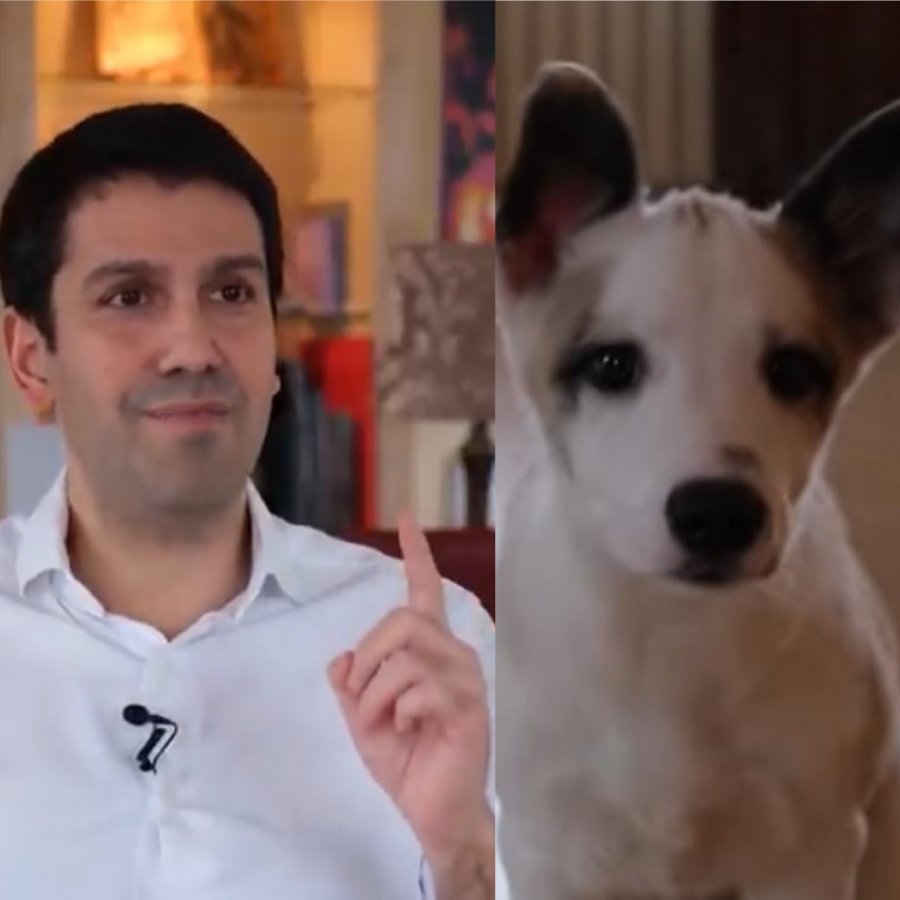
My first dog of this age came into my life last October (2020). I adopted him when he was the son of the guard dog at the wind power plant in the Kandıra district of Kocaeli. I named my wonderful, sweet son Sunny because I first started my entrepreneurial life with solar energy, and because the sun is the source of our lives. May God grant Sunny a long and happy life with us. Amen.
8) Is being a visionary genetic, or is it a learned skill?
It depends. I believe most visionaries are born with a gift for foresight. Those who nurture this talent and cultivate it can achieve significant success. However, a visionary perspective can also develop to a certain extent in someone who has no foresight at all. I believe this begins to develop gradually by spending time with people who have different perspectives and high foresight. Of course, if someone is talented, this can develop quickly; if they don’t have much foresight, they need to work on it.
To give you an example, my grandfather had a remarkable foresight. In the 1990s, as we walked along the shore of a plot of land he bought in Alaçatı, he said, “Look, son, you’ll see. This place will rival Bodrum. This place has incredible potential.” Those who knew Alaçatı in the 1990s know that there was nothing in Alaçatı except for a few dilapidated Greek houses. In fact, people would say things about my grandfather behind his back, “Oh, Hasan Bey, he went crazy after turning 70 and lost his ability to make rational decisions.” Today, I think Alaçatı has surpassed even my grandfather’s foresight back then.
Let me give you an example from my father. He recounts that when he developed the Bahçeşehir project, the first self-sufficient (satellite city) concept, on a 4.5 million m² farmland he purchased in the late 1980s, far outside Istanbul, he was criticized: “What are you doing here? The idea of building a city in a place where there were no people and access was very difficult is absurd.” The Bahçeşehir project, which included 17,000 residences, was groundbreaking at the time. Beyond its immense popularity, dozens of similar projects (unfortunately) were built around it, and imitations of Bahçeşehir were built in many parts of the country. My father’s vision proved correct.
It’s highly likely that my foresight was inherited from them. But beyond that, I spent a lot of time with both throughout my childhood and adolescence. I even remember attending a meeting where Bahçeşehir’s street names were named when I was 11. Of course, my brother and I were playing in a corner of the meeting room, but I was also listening in on the conversation at the meeting.
Let me share with you the firsts I’ve accomplished so far (I’m generally modest, but sometimes when I’m too modest, people mistake me for real in my country, so I won’t mince words this time):
- I was one of the first to enter the solar energy sector in Turkey.
- I was one of the first to launch a Fintech (financial technology) venture.
- I am the founder of TİDER (Basic Needs Association), which launched Food Banking.
- I was the first spokesperson for the Disaster Platform, which enables 23 NGOs to coordinate and work together in disasters (this idea came about during a phoneconversation with Ali Ercan from Needs Map).
- I worked as the director of the Coca-Cola Iraq project, the first investment in Iraq after the war.
- As Honorary Consul of Costa Rica, I organized the first official visit from a Central American country to the Republic of Turkey (Costa Rica’s Nobel Peace Prize-winning President Oscar Arias made his first official visit to Turkey in 2009).
- Hilda Hidalgo, one of Costa Rica’s renowned directors, held the Turkish premiere of her film Love and Other Demons at Istanbul Modern. I organized the exhibition Erotic Nature, by renowned Costa Rican sculptor Jose Sancho at the Pera Museum. These events also represented groundbreaking for Costa Rican artists.
- TİDER, with my encouragement, launched the Automat Food Bank.
- We opened the first green restaurant at Yum International, the LEED-certified KFC, in Bostancı. This restaurant also became the first LEED-certified restaurant in Turkey.
- I was among the first to voice the goal of 100% renewable energy in our country. You can read my article I wrote in Turkish Policy Quarterly in 2013: http://turkishpolicy.com/author/545/h-serhan-suzer
9) What are your thoughts on cryptocurrencies?
I believe cryptocurrencies will be the currency of the future. Of course, there will be a lot of damage in this process, and more than 90% will go bankrupt (including brokerage firms and other elements). Once this cleanup is complete, the most properly functioning ones will begin to be used as the currency of the future. It’s crucial to separate the wheat from the chaff in these times. Furthermore, digital currencies issued by governments will replace paper money. They will dominate the system. Sector-specific or destination-based currencies and altcoins will also become a part of our lives.
Blockchain technology, which forms the infrastructure of cryptocurrencies, will be ingrained in every aspect of our lives, including contracts.
10) When will the pandemic end?
There’s a clear answer to this question. The pandemic will end when everyone is vaccinated. This will take years for some countries (example: India). Others will finalize this process this year (example: the UK). Therefore, I believe international travel will be restricted, and it will take years for everything to return to normal worldwide.
Tag: education