- Why did you step down as TİDER’s board chairman at the end of the year?
It was necessary. I’d been considering handing over the chairmanship for a while. There are several reasons for this. First, as I always say, TİDER is an institution that needs to be publicly recognized, and I was fulfilling my public duty. This is a relay race, and I felt it was time for a change of flag.
I’ve decided to hand over my TİDER Board Chairmanship, which I’ve held for over seven years, to my dear friend Hande Tibuk, who has been on our association’s board for three years. Hande and another friend, Burak Küntay, last participated in the Istanbul Marathon with the Adım Adım platform last October and November, and we ran a campaign focused on team camaraderie. You can find our photo below.
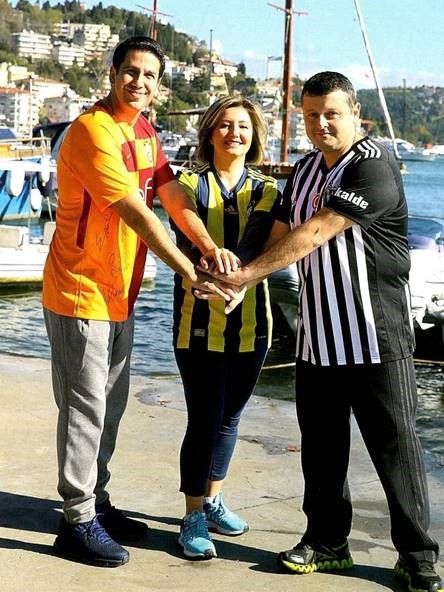
From Right to Left; Burak Küntay, Hande Tibuk and me
Another reason is that TİDER is often referred to as Süzer’s association. I won’t be modest here anymore. Yes, I am the founding president of the association. I provide by far the largest source of funding for the association. I have always shaped the association’s award-winning model, vision, mission, and building blocks. Of course, everything I do and create has been filtered through the intelligent people around me, the professionals, and volunteers who work for TİDER. The structure is starting to take shape.
However, I’m still uncomfortable with TİDER being referred to as “Süzer’s affiliation.” Because, as I’ve always said, one of my biggest dreams is for TİDER to grow over generations and serve humanity increasingly each day. This dream is far bigger than the name Süzer or any individual. Moreover, calling it a “Süzer affiliation” would be a grave injustice to me. My family has no knowledge of my association’s activities. I only occasionally offer a summary when conversation arises. There are some family members who support it, and others who say, “Why bother with this?” I have my own free will and I pursue what I want to do in life. The actions I take and everything I do at the association are my own. I prefer it to be called Serhan’s work, not Süzer’s. Otherwise, I perceive such statements as deliberate or unconscious attempts to devalue me and my work. Süzer is not behind me. Only Serhan has the intellect, heart, will, stubbornness, and conviction. I want to emphasize this clearly.
- Will you continue to support TİDER from now on?
Do you think someone of my character would abandon an institution I’ve invested so much effort in and consider my own? Of course, I will continue to provide every support I can. I don’t need a title for this. If they absolutely must use an adjective, they can call me TİDER’s “founder” or, since I was its first chairman, “founding president.” But as I said, I don’t need a title to serve. I will always stand by the board of directors, professionals, and volunteers, both financially and morally, to see TİDER achieve its rightful place.
I can define TİDER’s rightful place as follows: To establish a healthy and institutional foundation for the social assistance system in our country through the cooperation and coordination of the public, private, and NGOs. Our goal is for our ideal model to be adopted nationwide, then globally, and evolve into an international organization like UNICEF or WWF. The fact that this will originate from our own country will be a source of pride. Let’s not forget that in the future, NGOs (especially those that serve all humanity in a truly impartial, transparent, sincere, honest, and sustainable manner) will play crucial roles globally. We are laying the foundation for this today.
- Why did you take such a long break from blogging?
The second half of last year was very busy and challenging for me. After my last post about Canadian universities, it took me a long time to truly focus on writing. I’ve been back with more enthusiasm than ever in the last few weeks. I can’t wait to share my content-packed articles with you every week.
- Why did you appoint a CEO to TİDER? Can an association have a CEO?
We’ve received comments on this topic. To those who ask, I ask, “Why can’t an association have a CEO?” Is there a rule that an association can’t have a CEO? Here’s an example: my dear friend Brianna Casey, CEO of the Australian Food Bank. She’s doing a fantastic job, and her title is CEO. In developed countries, there’s no rule that an NGO can’t have a CEO. On the contrary, NGOs are headed by CEOs. In Turkish, that’s “chief executive officer.”
https://www.foodbank.org.au/2016/06/15/fba-appoints-new-ceo/
I’d also like to emphasize that we’re working to bring private sector dynamism to the NGO world. In other words, we want to bring intelligent and skilled private sector professionals who embrace philanthropic work with warmth, not just lip service but also substance. Therefore, it’s natural for us to employ some of the methods familiar to the private sector in the third sector, the NGO world.
Finally, to those who criticize us on this matter, I’d like to point out that we already have a General Manager at the association, and that any subsequent appointment can only be made as CEO. However, we may also revise the roles of those working at the association in the future.
Having said all this, I’d like to reiterate this: Whether you’re a professional or a volunteer, the title isn’t important. What matters is the service provided.
- Isn’t EkoRE as active in the renewable energy sector as it once was?
EkoRE has commissioned numerous renewable energy powerplants with its capital. Now, it’s selling these plants in line with its own model and strengthening its cash position.
Our model, which we established from the very beginning when we first entered the sector, is: The approach was to develop projects from scratch (greenfield) or partially completed (brownfield), prepare them for construction, then secure financing, complete construction, and commission them. We’ve implemented the “sell after commissioning” model for many projects. We don’t build a portfolio because the renewable energy sector is my own venture. In a sector that requires a lot of capital, you need to maintain a good cash position to stay afloat. This means selling a powerplant that has gained value.
With the recent regulations in Türkiye, solar powerplants and wind powerplants projects have come to a halt. I’ll explain what we’ll do after we sell off all our projects later.
- Aren’t you bored in Çekmeköy after Nişantaşı?
No, not. Because even when I lived in Nişantaşı, I wasn’t someone who was always hanging out. Of course, when my friends came to Nişantaşı, they would call me, and if I was home, not busy, and had enough energy, I’d go out. I can do that in Çekmeköy too, because I’m close to the bridge. I’m happy in Çekmeköy because I realized I missed nature. In Çekmeköy, I can touch the ground, breathe in the fresh air, and sleep more comfortably in a much quieter environment. As someone who works at a busy pace, doing these things helps me recharge my batteries.
- How is Moka doing?
Our company, Moka (short for ‘Mobile Card’ or ‘Mobile Safe’), is doing well. Under the leadership of our General Manager, Selim Bey, Moka has achieved good growth momentum. As partners, we are pleased with Moka. As pioneers of fintech (financial technology) in our country, I will explain our roadmap later. http://www.moka.com

- Do people betray you? How do you respond to this behavior?
In a country like Türkiye, where good deeds are constantly punished, do you think there are people who betray? Let me put it this way: the number of people who betray is greater than the number who don’t. I say this with sadness.
Especially when you’re a little weaker or lose control, they start to eat you from the outside and from the inside. Some even become vultures. They start attacking. You can sometimes see these behaviors even in those close to you.
What do I do when I encounter such a situation? I show them how someone with a soft heart can also be strong. If there’s nothing I can do now, I write down what they did. Of course, there’s an opportunity later to teach them a lesson. I try not to hold grudges; I believe in divine justice, but if I can do anything to ensure justice is served, I do it. And of course, the biggest loss these people lose is losing someone who will always support them. Because it’s my nature that if I write someone off, I write them off. I don’t hold a grudge, but they won’t come near me again.
I’ve experienced these situations many times in the past, and recently. In fact, the biggest reason why projects I envision don’t go the way I want them to is human resources. I encounter this problem repeatedly.
In Türkiye, smart and knowledgeable professionals are often dishonest, gossiping behind your back, or if they are honest, they may not deliver much. If I cross paths with someone who is smart, knowledgeable, and honest, I do my best to stick with them.
There are also people who imitate me and try to implement the ideas I share. With the logic that imitations keep realities alive, I don’t pay much attention to them either. In fact, if they lead to good things, I want them to imitate me. However, I have a problem with those who distort my work, use good for evil or for their own benefit, and with those who deceive people. Similarly, there are those who constantly speculate about me. I don’t care if they tell lies or falsehoods about me. In the long run, the truth becomes clear.
I say, “He who laughs last laughs best,” and I dedicate the following portrait to my friends, family members, and relatives who have always supported me against all these negative types I’ve mentioned.
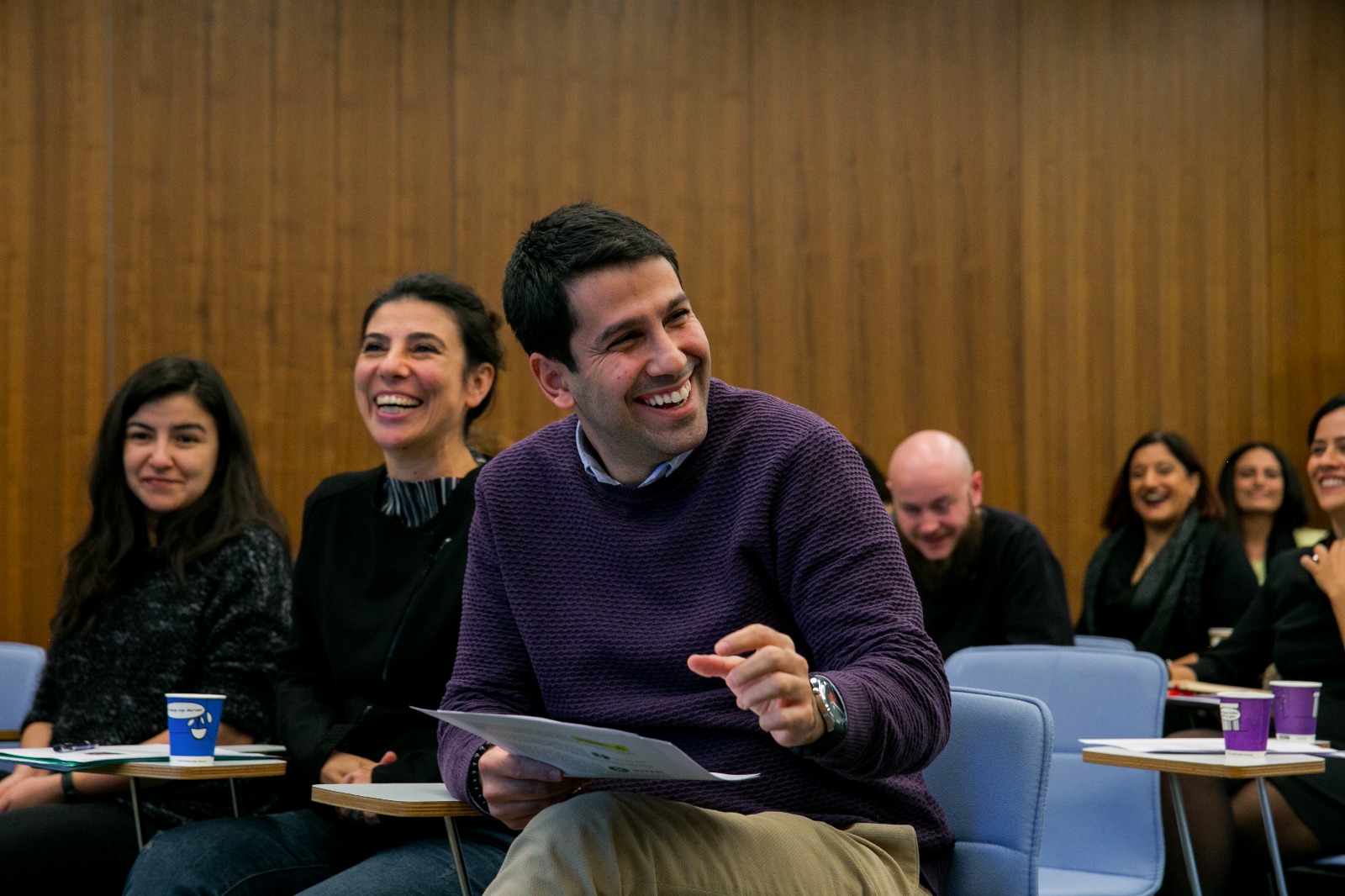
Of course, the fact that most of the people I encounter are inclined to evil and harm me directly or indirectly doesn’t deter me from my work; on the contrary, it motivates me even more and encourages me to increase my work tempo. My favorite quote from İnönü always sticks with me: In a country, there is no salvation unless the honorable are as courageous as the dishonest.
I wonder if I’ve made myself clear?
- Could you provide information about the project you plan to implement in partnership with technological companies operating in the IT sector to combat waste and poverty?
As a technology company, we utilize software developers provided by Eko Group. They have successfully implemented the Support Cloud and Support HR software we need. On the other hand, if technological companies want to serve food banking, they should do so pro bono, meaning free of charge. Recently, we’ve encountered several startups claiming to be technology companies that have launched social enterprises that are trying to create a marketplace and generate commission income. Our stance on this matter is clear: charging commissions through the social assistance system is completely wrong. If these types of startups want to create platforms that generate commission income, they should establish the marketplace with private sector companies. Earning commission income through food banks, NGOs, and animal shelters is unethical. It doesn’t matter where you receive this commission. If there’s any income to be generated, it should be generated by the food banks, animal shelters, and other relevant NGOs that provide this service. Because the burden on each of these organizations is immense.
As someone whose family has been an entrepreneur for three generations, I want to emphasize that I am absolutely against this type of greed and unethical practices. When I see such a situation, I will do everything in my power to protect the third sector (NGOs).
- What contribution do you aim for the Support Cloud platform to make in Türkiye’s fight against waste and poverty?
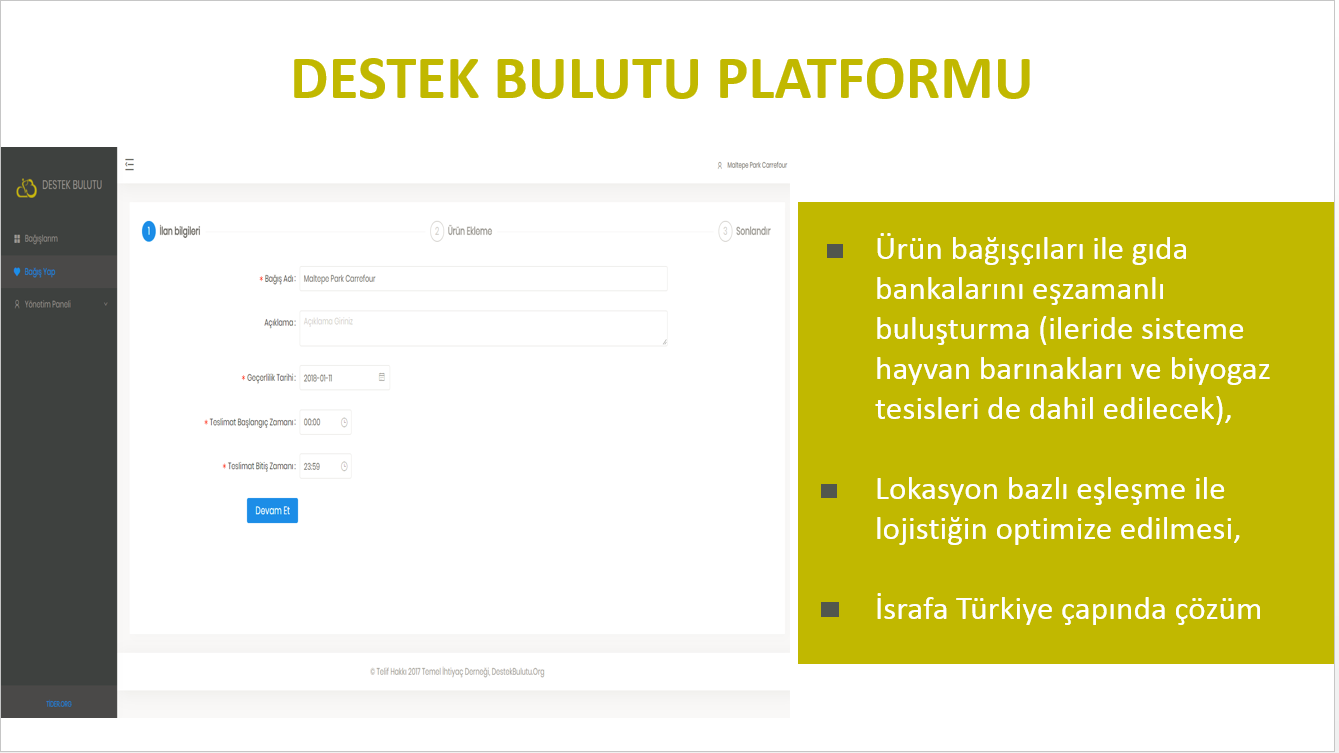
Numerous food banks operate in various regions of Türkiye to prevent waste and extend a helping hand to the poor. However, their biggest challenge is accessing product donations. While they may be able to secure product donations early on, they struggle to do so later, and if they have the resources, they resort to purchasing. Food banking operates on two pillars: preventing waste and combating poverty. When a food bank starts purchasing, one of these two pillars is eliminated, which is unhealthy. Meanwhile, producers and retailers also want to donate products. However, when various institutions knock on their doors asking for product donations, it becomes impossible for them to systematically donate from a single source. The Support Cloud solves these problems on both sides. It offers producers and retailers a single platform for product donations. Producers and retailers work systematically solely with TİDER, while food banks access product donations from their nearest supermarket or producer through a single platform. This allows people living below the poverty line to access products from these food banks.
There’s also the economic aspect. We provide and donate these products free of charge. However, many municipalities and relevant public institutions that have established food banks fund these products from their own budgets. Therefore, the Support Cloud platform is a system that significantly contributes to the public budget and creates added value. You can find a screenshot and a summary of this system below.
See you in new articles, stay healthy.