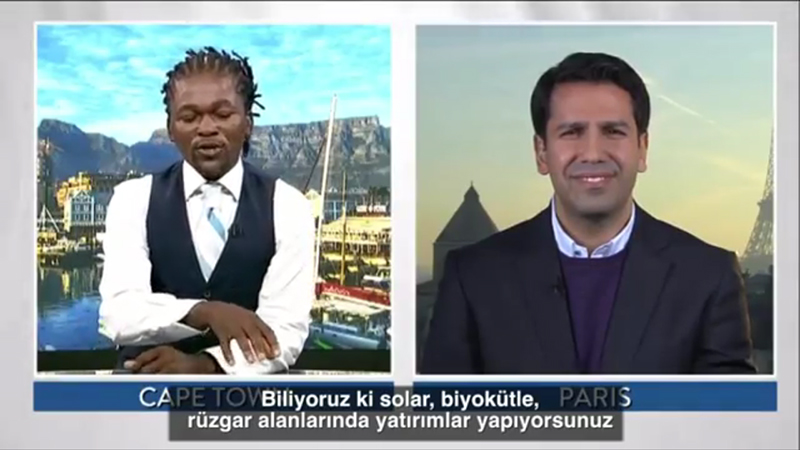
In my previous article (related link: http://www.serhansuzer.com/tr/dunyayi-iyilestirmek-isteyenlerle-her-seyi-kendine-isteyenlerin-mucadelesi) , I wrote that I spoke at the Türkiye session as a participant in the Climate Reality program in Paris, unknowingly answering questions from the presenter in Cape Town while thinking I was connected to the US studio. After former US Vice-President Al Gore opened the Türkiye session, I was unable to connect in time due to a technical audio problem and only managed to speak to the presenter in Cape Town towards the end of the session, for a shorter time than I was allocated.
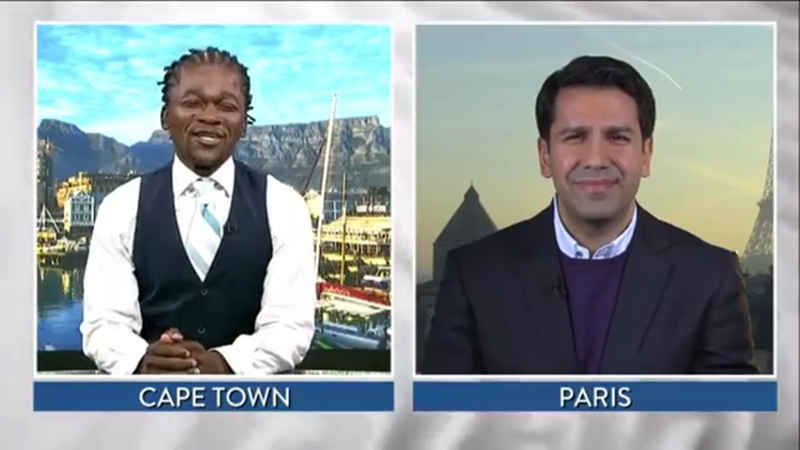
When the studio head approached me at the end of my speech and informed me that there was an audio connection issue with Cape Town, I thought to myself, “Cape Town again!” At that moment, my experiences in 2010 flashed before my eyes like a movie reel.
Now, let’s go back in time. In 2009, after acquiring the shares of KFC and Pizza Hut in Türkiye, which we had held franchises for 20 years, from our Qatari partner, we launched a franchising process. During this challenging period and the intense workload I experienced as the company’s leader, we overhauled the entire infrastructure and, as a result, added 25 more restaurants to our existing 81 in a record six months. We did this without using bank loans and by consistently turning our other restaurants profitable. (I’ll share a detailed article about KFC and Pizza Hut later.)
In 2010, Coca-Cola announced an incentive trip to the FIFA World Cup in South Africa and asked us to let them know who would be attending. You may know that KFC and Pizza Hut, the restaurant company ‘Yum!,’ was originally a Pepsi company. It was a spin-off, meaning it separated from PepsiCo and became a standalone restaurant company. For years, we, as a former Pepsi company, preferred Coca-Cola. There were several reasons for this. Beyond our closeness to Anadolu Group, Coca-Cola’s partner in our region, we held a tender a few months before the expiration of the signed 4–5-year agreements. Each time, Coca-Cola offered better financial terms than Pepsi. Beyond the low prices, they also provided us with significant cash flow in advance. This was the most important reason we chose Coca-Cola. Of course, the Turkish public’s preference for Coca-Cola over Pepsi was another factor. If they asked our people today whether they preferred Coca-Cola or Pepsi, Coca-Cola would be the clear preferred drink. This is how deeply ingrained it is in our minds as a nation. I know this very well, because we, as a company, used to conduct surveys, and the results were always the same. After all, we’ve always worked with Coca-Cola for many years.
World Cup invitation to South Africa
Because Coca-Cola operates with large capital, it regularly organizes trips and invites executives to recognize companies it values. We were invited as one of their top retail clients. At our meeting that week, I asked our executives, “Who wants to go to South Africa?” Our Business Development Director, Mr. Haluk, was the candidate. Personally, I wanted to watch a World Cup game and see South Africa, a country I was very curious about, so I put my name on the list next to Mr. Haluk, who would travel with Coca-Cola.
Later, they gave us the exact date, and as the tournament progressed, it became clear that the game we were going to watch would be between Germany and Argentina, and my desire to go there grew even stronger. We stumbled upon a fantastic game.
The day of the trip arrived. Executives from over 30 retail and tourism companies arrived at the airport. With experience in both sectors, I knew most of them.
For some reason, they had arranged a connecting flight via Abu Dhabi instead of a direct flight, probably to get the tickets cheaper. Our route was Istanbul – Abu Dhabi – Johannesburg – Cape Town. We were flying for almost a full day. Even so, the group’s joy remained undiminished. Joking and industry-related conversations continued throughout the journey. It was a tiring but enjoyable journey. We flew from Istanbul to Abu Dhabi. In Abu Dhabi, we changed planes and headed to Johannesburg. The plane landed in Johannesburg for a layover, and we waited inside the plane as instructed. Half an hour later, we took off again and then landed in Cape Town. For some reason, I wasn’t particularly tired after such a long journey. Perhaps the excitement of the trip kept me going. But that excitement was short-lived.
From a small stain to a nightmare…
When we arrived at the passport control point, I chose the vacancy on the far right. A young officer took my passport. Behind him was another older, more senior officer, whom I assumed was his superior. I chatted cheerfully with the young officer, then with his superior, who was standing right behind him. We joked and laughed. This joyous moment continued until he looked at my passport and asked, “Where’s your blank page?”
I took my passport, found a blank page, and showed it to him. Just as the young officer was about to stamp the visa, the superior behind him said, “You can’t press it there; there’s ink on the edge.” Suddenly, the nightmare began when I told the officer, “This page is blank. Smudged ink doesn’t mean it’s been used.” The superior dismissed me, saying, “No, we can’t use this page; find another.” So I picked up my passport again and started flipping through its pages quickly, but, unlike my extensive travels, I couldn’t find another blank visa page in my passport. Only the pages labeled “Not for Visa” were blank. The officer then told me, “We have to deport you.” At first, I thought he was joking, but when I realized he was serious, I insisted, “I came here to watch the World Cup game at the invitation of Coca-Cola. I’m also the Honorary Consul of Costa Rica; I know a bit about visa issues. You can use this page; it’s empty.” He told me with equal firmness, “We absolutely cannot use this page. Whatever you came for, it’s none of my business; I must follow the rules. I’ll call security now,” and indeed, he did. I told him, “What you’re doing is completely wrong. You need a serious offense to be deported, but I’m only here to watch the World Cup.” I added that for the development of tourism in South Africa, people shouldn’t be treated this way. He made a gesture like, “I don’t care at all.” Then he said, “Well, let me give you a guide. You know that ‘Not for Visa’ page. If your embassy calls me and tells me I can use this page, then I’ll accept it.” Meanwhile, security arrived. The chief looked at me and said, “Your flight leaves in 15 minutes. If you can sort this out with the embassy in that time, we’ll let you in. If you can’t, you have two options. If you insist on staying here, we’ll have to send you to prison here, or you can get on the next flight back to your country.” I told him, “I’ve been flying for over 20 hours, and look at what I’m going through. This is unbelievable,” and I immediately grabbed the phone. Believe me, I must have called the embassy 50 times in those 15 minutes. Even though it was the time the Turkish Embassy was open, no one answered. I was furious. “The embassy is missing when we need it most,” I groaned. Meanwhile, the manager of the event management company the Coca-Cola Group worked for came to me. I immediately explained the situation to him. He tried to explain that I was a prominent businessman in my country and that I’d come with the Coca-Cola Group, but he was also rebuffed. He then tried to reach the embassy with me. Neither of us could succeed.
This story shouldn’t end like this.
I don’t want to rant because I spent a lot of time working with the Ministry of Foreign Affairs, but I prefer not to put my anger into words right now. Ultimately, the security guard told me, “Time’s up, you have to board,” and I obliged, saying goodbye to the event manager and heading for the plane. No one could believe it.
I remember thinking to myself, “This isn’t fair, this story shouldn’t end like this.” My adrenaline was skyrocketing. As soon as I boarded the plane, I asked the flight attendants who their superior was. They pointed me to a male officer. I went to him and summarized the situation in two minutes. I explained that a huge mistake had been made and asked him to help me and show me a place where I could easily make a phone call as soon as the plane landed in Johannesburg. Since I was returning on the same flight, I knew the plane would be grounded in Johannesburg for half an hour. I had to use my last chance and do whatever I could in that half hour. The flight attendant’s superior was very understanding. He said, “Okay, don’t worry, I’ll help you.” Sure enough, as soon as the plane landed in Johannesburg, he came right up to me and pointed to the empty space in front of the restrooms and said, “You can talk on the phone from here until the plane takes off.”
So, I picked up the phone and, as planned, the first thing I did was call Selma Hanım, my father’s assistant of 30 years. After quickly explaining the situation, I explained that they needed to contact the South African Embassy and that we only had half an hour to get me off the plane. Then I called the Turkish Embassy again. As usual, no one answered. Then I called some people I knew at the Turkish Foreign Ministry. Officials weren’t offering any solutions. I had 10 minutes left. The flight attendant’s supervisor came by twice and asked, “How are things going? Is there any progress?” Each time, I said, “Nothing yet.” Just as I was muttering to myself, “I guess this isn’t going to happen,” my phone rang, and a miracle happened.
The Miracle That Came with İzzet Garih
Selma Hanım, with her experience, first looked online to see if anyone knew the South African Honorary Consul. When she realized it was İzzet Garih, she immediately called İzzet Bey, saying, “We urgently need your help.” I was fortunate enough to have İzzet Garih as Honorary Consul of South Africa. İzzet Garih and Esat Edin are businessmen from the generation before me who, without any personal gain, have always helped me, sharing their knowledge and experience with me, and whom I truly admire and respect.
My heart aches whenever I remember Esat Edin. I still can’t fathom the passing of him, his wife, and their children, and I deeply grieve the loss of these wonderful people. I will write about Esat in the future. For now, I pray to God for his mercy and his family. May they Rest in Peace.
Returning to our topic, İzzet Garih, upon learning of my situation, immediately contacted the South African ambassador. Then another miracle occurred. The Turkish ambassador at the time, Ankara, had previously served as VIP service manager at Johannesburg Airport. He immediately called his then-deputy and instructed him, “Get Serhan Süzer off that plane.” Selma Hanım called me and explained how she’d resolved the issue. “They’ll be picking you up from the plane soon,” she said, and I let out a shriek of joy. The flight attendant’s supervisor came to me at that moment, and I explained the situation to him. The supervisor then said, “There’s still a risk. Let’s do whatever it takes to make sure the door doesn’t close.” We went to the gate together. We explained the situation to the attendants, who radioed me to ask about it. After receiving confirmation, we waited. Sure enough, the VIP manager came himself. He picked me up with two of his men, then immediately removed my luggage.
As we walked to the VIP area, he apologized several times for what had happened. I explained that it was no problem and that the matter was behind me. After I got to the VIP area, they took my passport to complete the procedures. They also brought me a domestic return ticket to Cape Town. When I received my passport, I was curious to see which page they had stamped the visa on. Of course, they had stamped the page I’d shown to the officials in Cape Town, who had also claimed to have ink on it. Seeing this, I smiled wryly and told the VIP Manager, “That’s what this whole thing is about.” I explained the situation. The woman shook her head and said, “That’s amazing, we apologize again.”
The night’s adventure: I took the first flight back to Cape Town. After checking into my hotel, showering, and completing my other preparations, I went to the restaurant where the evening meal was being held. The group of 30-40 Coca-Cola guests was chatting animatedly at the dinner, which was on the top floor of a building. When I entered, everyone stopped talking and burst into applause. No one could believe I’d returned. Someone in the group said, “Mr. Serhan, there’s probably no one else in this group who could have come back like this after being put on a plane and deported.” Jokes flew, and of course, they made me recount what happened beforehand. I became the talk of the evening.
All in all, a very enjoyable trip began. We really enjoyed visiting Table Mountain, Cape Town Marina, and the tip of South Africa. Here are some photos we took during the trip:
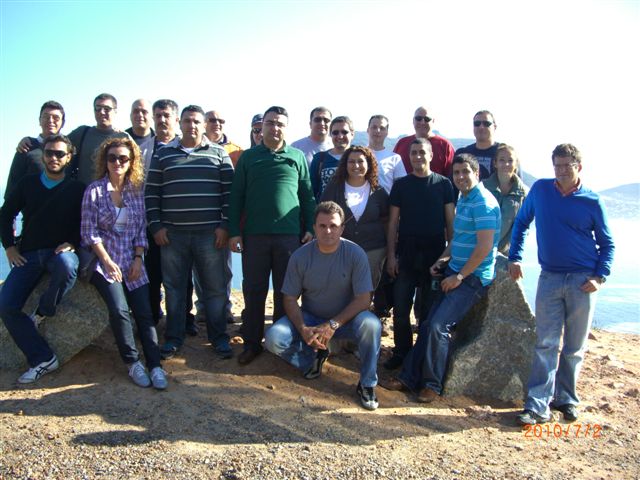
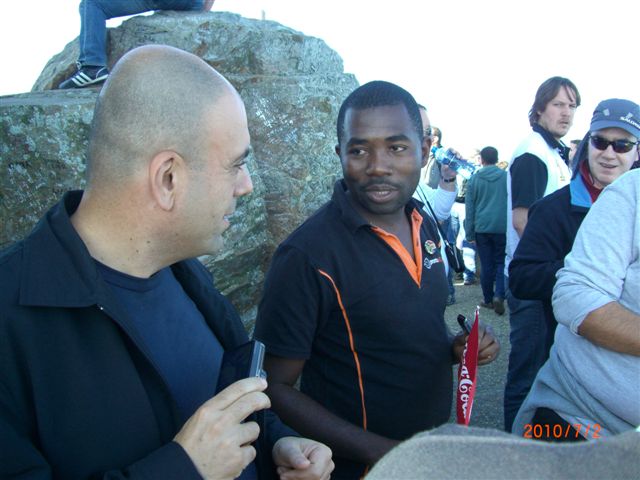
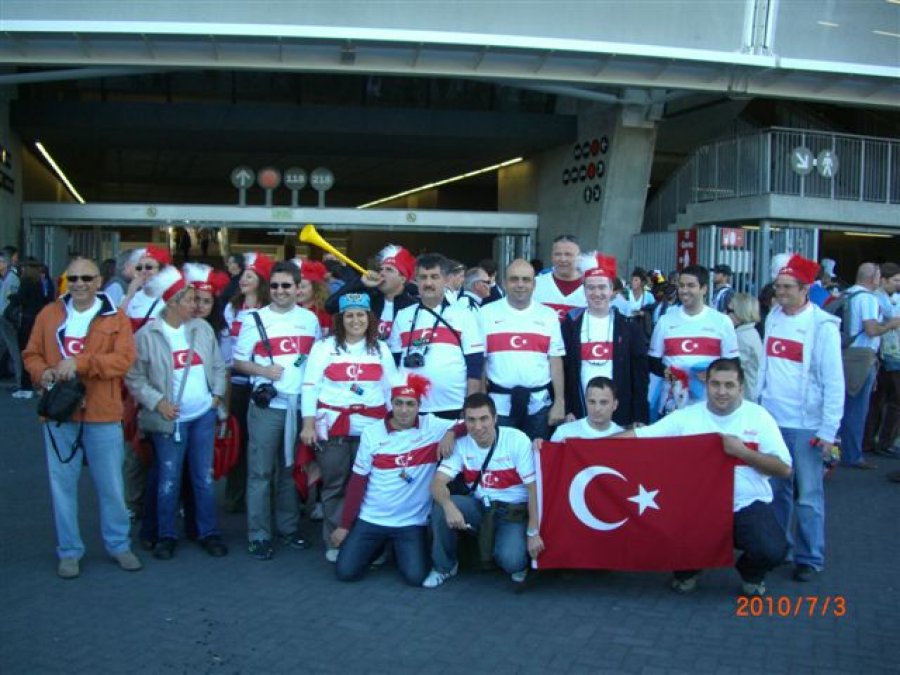
Meanwhile, two days later, we went to the Germany-Argentina game with great enthusiasm. For some reason, everyone in the group was supporting Argentina. As we entered the stadium, the Germans, noticing we were Turkish, saw some of our group cheering for Argentina and asked, “Why aren’t you supporting Germany?” I explained that everyone viewed Germany with sympathy due to our close ties with Germany and the 3.5 million Turks living there. However, the Argentines, with their Mediterranean characteristics and warm-heartedness like ours, set them apart. When some Germans in the queue said, “But Mesut Özil plays here,” I told them, “All Turks support Mesut. In fact, everyone here wants Argentina to win, but Mesut Özil to score. And you’ll appreciate that the other team also has Messi.” The back-and-forth exchanges, mixed with jokes, continued. And of course, we ran into the Argentinian fans. We jumped up and down with them. They were truly cheerful. The Argentines, mostly of Italian descent, are as friendly as the Turks and probably more cheerful than we are. Here are some photos we took on the way to and during the game:
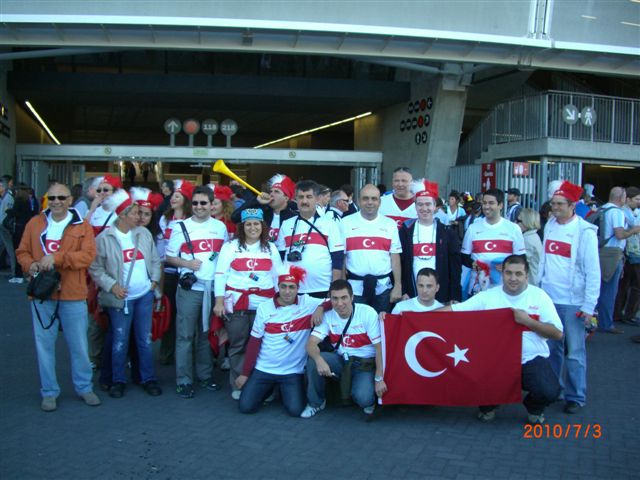
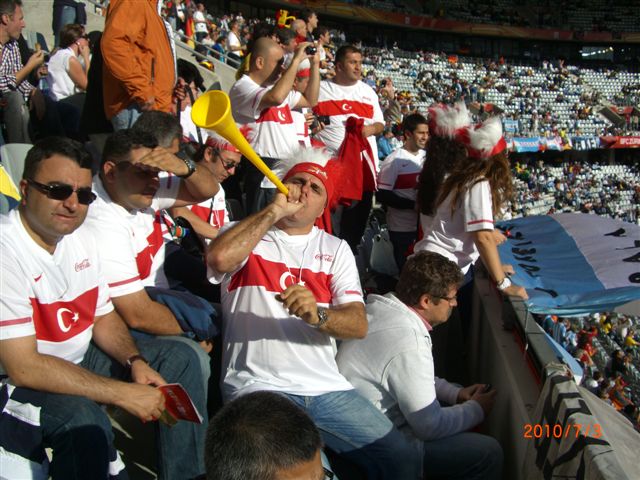
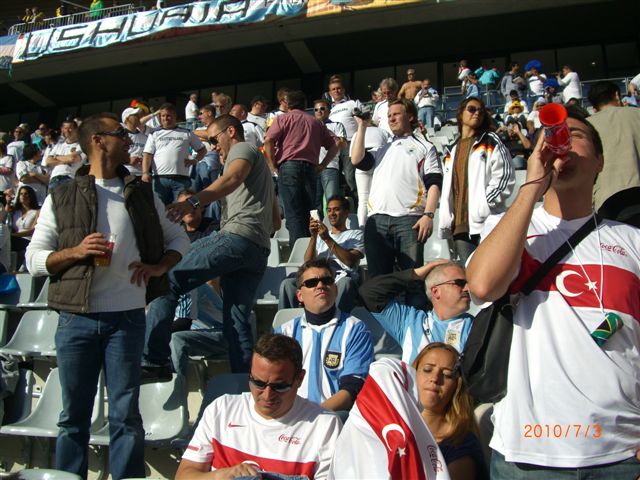
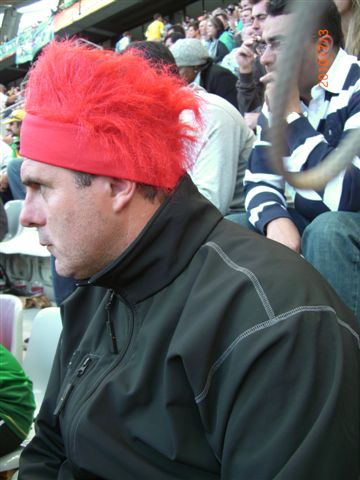
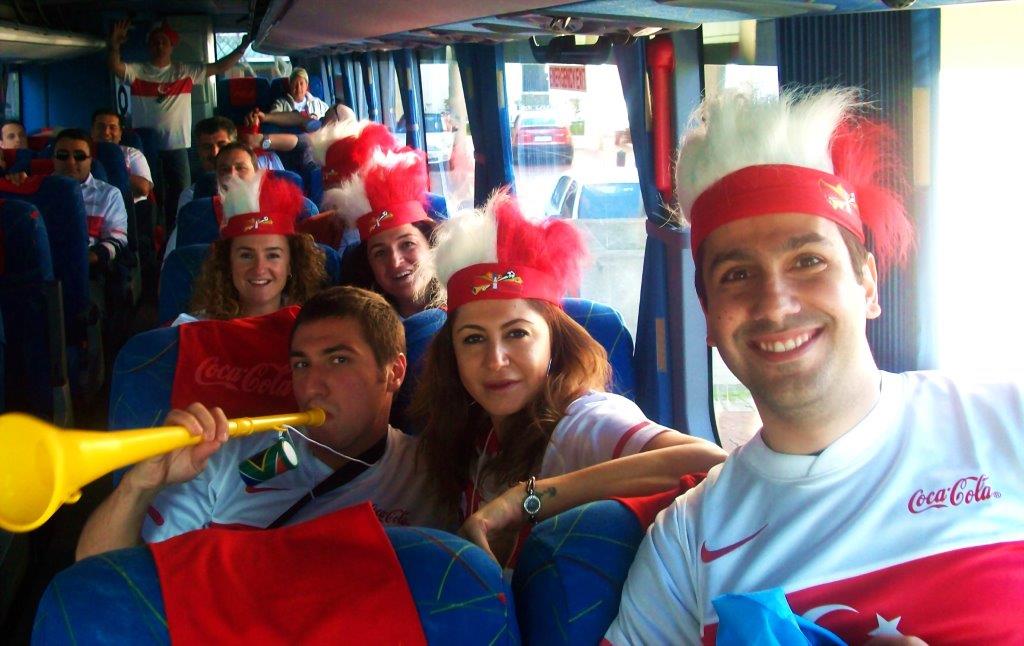
The game ended unexpectedly, with Germany thrashing Argentina 4-0. The Argentines left the field with their heads down. We returned to our hotel, still cheerful, to prepare for the evening’s program. Frankly, I never felt in danger in Cape Town, day or night. I didn’t personally witness the frightening stories they told me. In fact, I walked through what they called one of the most dangerous areas of the country at one point in the night.
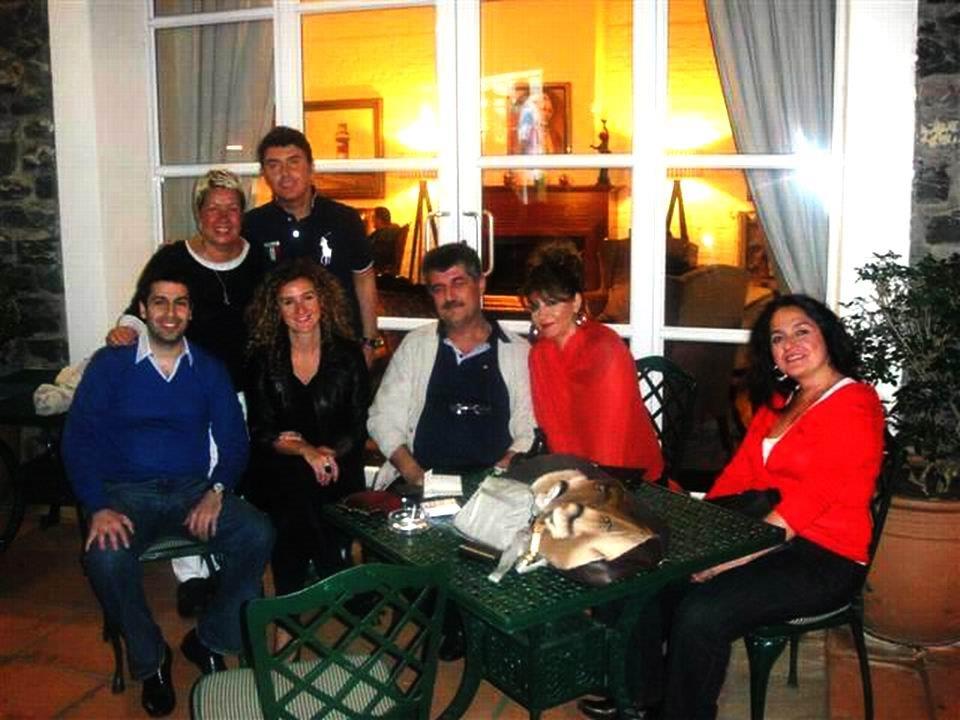
I should also mention this: In South Africa, in 2010, black people had just regained their democratic rights from white people, and it was said that after gaining power, black people began to oppress white people. Some friends even suggested that my experience was related to this. After all, the commander who gave me the deportation order was black. The young officer at passport control who gave the order was also black. The security guard who carried out that order was white. However, both the ambassador who ordered my removal from the plane and the VIP manager who removed me from the plane were black. Therefore, I don’t think it’s fair to interpret this as racial discrimination.
A message of well-deserved revenge
In the final act of my story, we were on our way back from Cape Town. On the way to the airport, I remember thinking to myself, “I hope those who put me in this situation will come to me.” After the first security check at the airport, I encountered the security guard who had let me on the plane. As soon as I noticed him, I went over and tapped his shoulder. He turned his head, and when he saw me, he seemed momentarily startled. Then, the following conversation began between us, beginning with the question he asked me:
- How did you get in?
- The VIP manager removed me from the plane at Johannesburg airport. As you know, VIPs don’t remove people from planes so easily, as the name suggests.
- How did this happen?
- We all tried to explain to you that we have authority in our country and that this was a very wrong decision. But we couldn’t listen.
- I’m sorry, but I follow orders. I must do whatever I’m instructed to do.
- Then tell the person who gave you that order that you saw me inside, that despite all his directives, I entered the country and had a wonderful holiday. Also (since there’s no full translation of this part, I’ll write it in English), “Tell him to f…k himself.”
When I said this, he smiled and said, “I’ll let him know.”
The moral of the story: When I was told in Paris that there was a connection problem between me and Cape Town, I thought to myself, “When hasn’t there been a connection problem?” And last week, when I heard that my primary school friend Fulya had also moved to Cape Town, I wanted to share these experiences with her.
There are certainly lessons to be learned from this story. I’d especially like to share this with young people:
- Never give up.
- In times of crisis, focus on what you need to do without panicking.
- Enjoy life under all circumstances, and don’t lose your spirit.
Tag: business world