
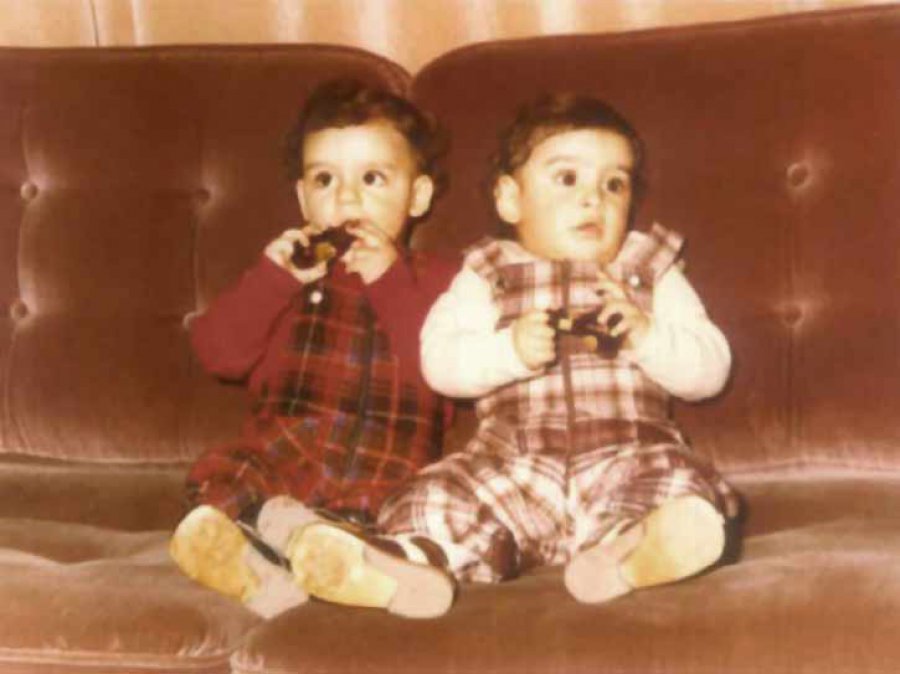
I discussed the rich cultural mosaic in my previous article regarding the Ani Ruins, emphasizing the multiculturalism engendered by the many civilizations, kingdoms, and empires that ruled that region for 7,000 years. Rather than debating or highlighting the superiority of a culture in Kars or elsewhere in the country, I wrote about the need to embrace this magnificent mosaic, and that one of the most significant problems in our country is the attempt to make everyone alike. I mentioned that it’s possible to encounter very different personalities within the same family, even among twins, and that these differences should be seen as an asset, not a weakness.
When I mentioned twins in my family, I was using my own family as an example. I have a twin named Baran. We are fraternal twins, born 10 minutes apart. We are two very different brothers, both physically and in character. Here’s a picture from our childhood:
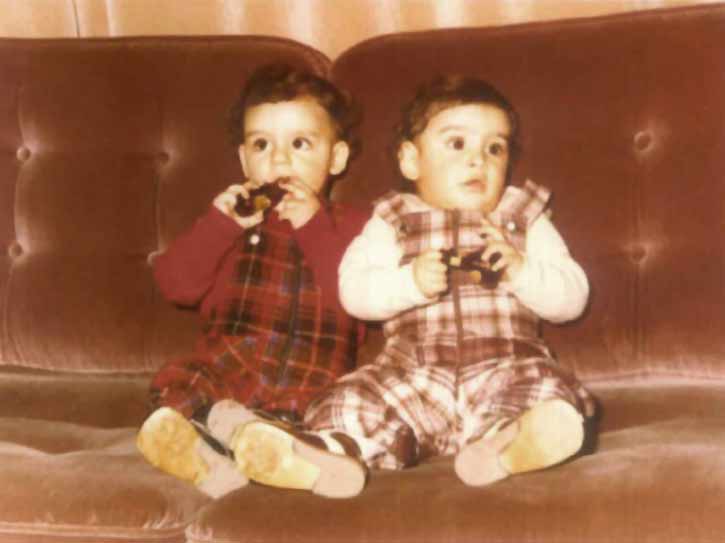
I’d like to share here the advice I always give to parents of twins whenever I get the chance:
Never forget that twins are two separate individuals who just happened to be born close together in time. It might be easier for parents but trying to make them alike or forcing them to do everything together isn’t the right approach, in my opinion. Instead, you should make a greater effort to help them grow into distinct individuals.
For example, don’t dress them in matching outfits—ever. They each have their own preferences. When they’re little, they dress differently. And once they’re old enough to pick their own clothes, support their individual choices. In the same vein, have them attend different classes. If possible, even enroll them in different schools where they’ll feel comfortable. Twins in the same class or school are often compared by their peers, and this kind of comparison can lead to problems down the line.
Never lose sight of the fact that there are two different people with different personalities and abilities. Discover your twins’ talents and guide them accordingly. For instance, if one of them is good at and enjoys sports, and has the physical build for it, encourage them to pursue athletics. Maybe they’ll become successful professional athletes at the very least, they’ll play for their school teams and gain valuable personal development. If the other twin is into computers, they help develop in fields like computer engineering or software development.
Watch your twins closely and guide them wisely, so they can enjoy life and do the work they love. This way not only will the relationship between the siblings thrive, but their interactions with others will also be stronger, and their contributions to society will be all the greater.
My twin brother Baran and I shared many experiences and were together in the same environment all the way through college. Our rooms were on the same floor, right across from each other. We did everything together. In elementary school, we were in the same class. In middle and high school, we went to the same school but were placed in different classes. In college, Baran studied in England while I studied in Canada. Later, once we began our careers, we occasionally worked together through our family business.
Of course, we had moments that remind me of the twin brothers Ali and Nuri, whom we often see on screen these days. As someone with a twin brother, I enjoy Akbank’s ad campaign featuring them. Some parts have me saying, “Yep, that’s exactly us!” while others don’t really have much to do with being a twin. Still, overall, I find the campaign successful and congratulate everyone involved.
Here are four commercials featuring Ali and Nuri that I think were particularly well done—and that I feel reflect our experience to some extent:
https://www.youtube.com/watch?v=-2PFo1Gti7Y
https://www.youtube.com/watch?v=5ECdxQ6PykU
https://www.youtube.com/watch?v=LCNG4iRZY_k
https://www.youtube.com/watch?v=BAixatvSMAo
Speaking of Ali and Nuri, I’d like to share a few memories of my own:
In the 1980s, Süzer Holding—led by my father—was one of the top importers and exporters in Türkiye. It was among the rare companies in the country that handled billions of dollars in international trade. This also meant that my father was constantly traveling to different countries. After every trip, he would bring us a gift. We’d wait eagerly for him to return.
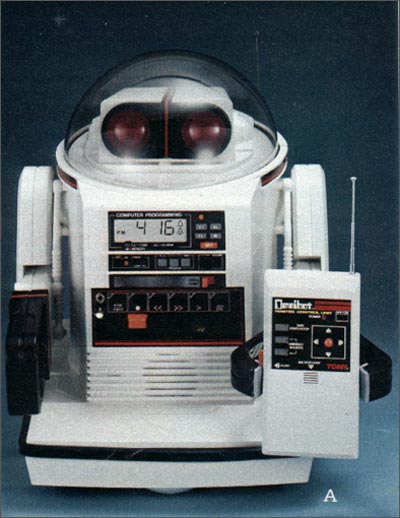
Of all the gifts I received throughout my childhood, the one that left the biggest impression on me was a robot my father brought back from a trip to Japan. Its brand was Tomy, so we named the robot Tomy as well. I was completely captivated. I tried to examine and understand every single function of that robot. It could move wherever you wanted using a remote control, respond to your voice, and play music as if it were singing. It even had a tray, making it useful in daily life—you could place things on the tray and have Tomy carry them for you.
Here’s a photo of Tomy I found online after doing a little research:
One day, while Baran and I were sitting in the living room, Tomy suddenly said, “Hello, kids.” His first question was, “How are you?” His eyes were blinking as he spoke. Baran immediately started chatting with the robot. But I knew how Tomy could talk—he had a remote control. You could make Tomy speak in your own voice using that remote. So, I set off around the house to find out who was using it.
When I got to my parents’ room, I saw my dad holding the remote. He gestured me to be quiet and motioned for me to come over. He was chatting with Baran via the remote. They were deep in conversation. My dad was disguising his voice, and from the other room, Tomy’s voice echoed back with a sort of walkie-talkie tone, sounding totally different.
Here’s how part of the conversation went:
Tomy: “How old are you?”
Baran: “I’m seven.”
Tomy: “Are you a boy or a girl?”
Baran: “I’m a boy, of course.”
Tomy: “Are you sure?”
Baran: “Yes, I’m sure.”
Tomy: “I don’t believe you. You could be a girl.”
Baran: “I told you, I’m a boy.”
Tomy: “Prove it.”
After that, my dad and I went from the bedroom to the living room, where Baran was. I won’t go into details about the scene we walked in on, but let’s just say Baran was very determined to prove to Tomy that he was a boy. In the end, he proudly said, “See? I told you—I’m a boy!” and felt vindicated.
Naturally, I teased Baran hard about it. He was embarrassed. And my dad, who loved pulling pranks, had once again pulled off a great one. That moment became one of our favorite memories—a glimpse into the kind of playful relationship we had at the time.
So what happened afterward? Like I said, every set of twins has their own unique strengths. My passion for technology never faded. It took me a while to find my way into the kind of work I truly enjoy, but eventually, I started following the path that aligned with both my mind and my heart. I’m now doing work I’ve dreamed of for years in the fields of renewable energy and software.
As for my twin brother Baran, he’s also doing what he loves. He leads a life that’s very different from mine. We still don’t fully understand how we turned out so differently. But as I’ve said before—differences are a source of richness. What matters is embracing them and turning them into an advantage.
In my next post, I’ll try to explain how that can be done, drawing from another memory I share with Baran.
Tag: memoir