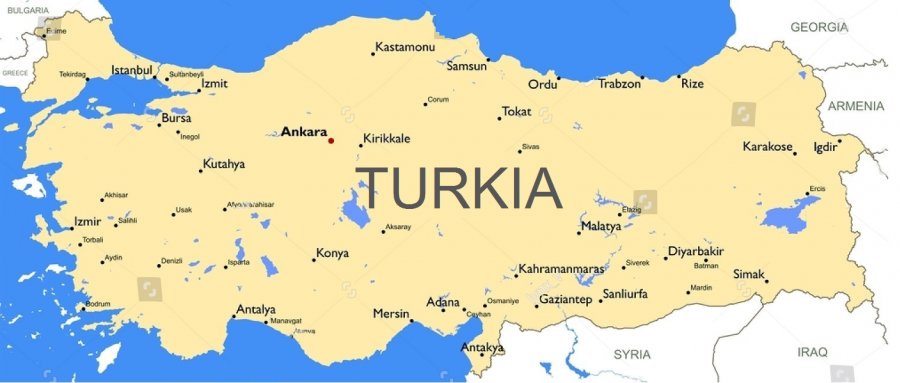
I first went to England by myself when I was 12. This question has been on my mind ever since. Why do they call our country “Turkey” or “Turkey”? It seemed absurd to me from the moment I first heard it. But everyone had become so accustomed to it that I had to use the word myself. But I could never accept it.
This feeling of unacceptance reached its peak while I was studying in Canada. Even my well-intentioned Canadian friends would make bad jokes like, “Serhan, I want to eat Turkey in Turkey.” I would respond, “That’s not funny at all.”
Imagine a country at the intersection of East and West, home to lands that have historically been the cradle of hundreds of civilizations and possessing all the elements that form the foundation of even the cultures of developed countries today. For instance, Turkey has more ancient Greek ruins than Greece, the house where the Virgin Mary is believed to have spent her final years is in Turkey, St. Nicholas, the inspiration for the Santa Claus legend, lived in Anatolia, and the oldest churches were widely established in these lands. You go to a country with all these qualities and name it after the unsympathetic and notoriously noisy animal you see in the picture below. Or you name the animal after our homeland. Both are the same nonsense to me.
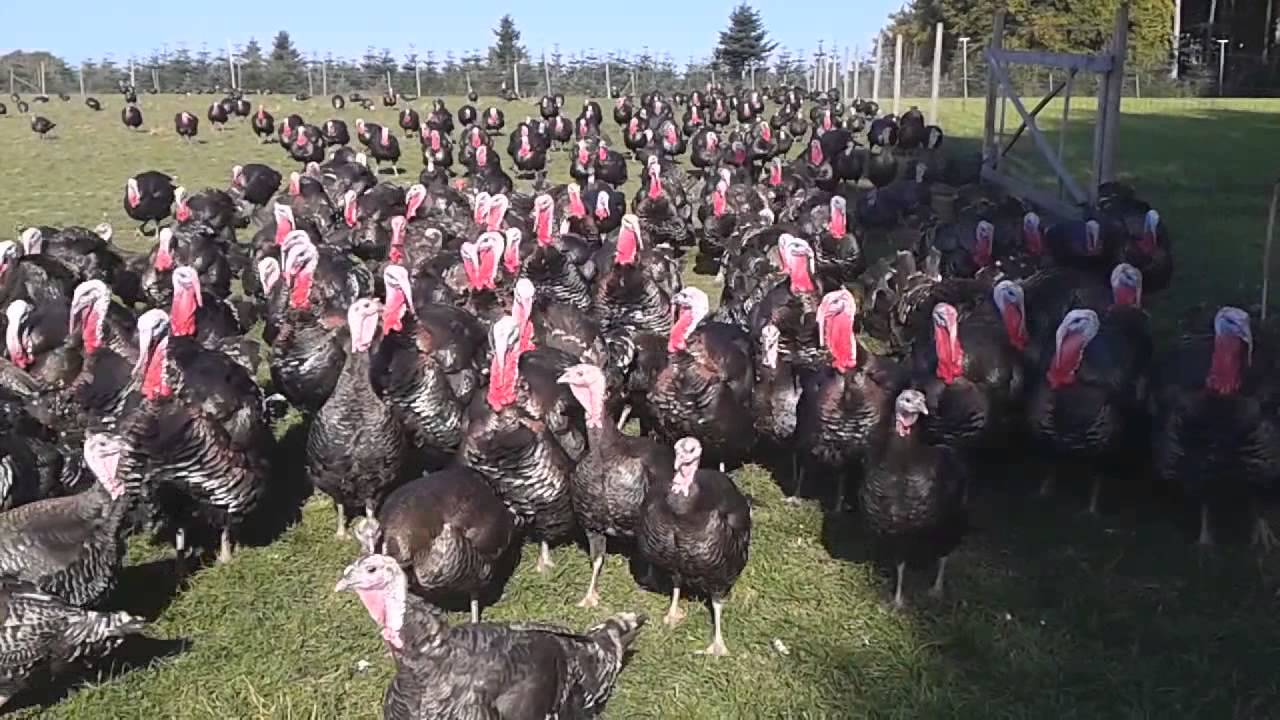
There are many theories about how the name ‘Turkey’ came to be. One or more of them may be true. It doesn’t matter. What offends me, and many Turks who think like me, is being called a turkey and making light of our country. We don’t accept this.
To those unfamiliar with North American culture, I have to say this: The turkey is the most frequently mocked bird, especially in the US and Canada (example: https://www.rd.com/jokes/turkey-jokes/ ). Of course, the turkey’s appearance and its noisy nature, as well as its appearance on Thanksgiving Day, celebrated every year on the last Thursday of November, play a significant role in this. Beyond the turkey being a popular joke, hundreds of thousands of Turks living in North America also share their share of turkey jokes. I’ve experienced this myself.
The article offered the right solution:
Which English word can we use instead of ‘Turkey’ that would be correct in every respect? I’ve been searching for an answer to this question since I was a little girl, and I found the answer in an article I read a few months ago.
Since I first started my career in the tourism sector, I follow tourism news in the country. Recently, while browsing through Tourism Newspaper, Ege Cansen’s headline caught my eye: ‘TURKISH IS GOOD INSTEAD OF TURKEY, BUT THE RIGHT ONE IS TURKIA.’ I’m sharing the link to the article with you: https://www.turizmgazetesi.com/article.aspx?id=86866
It suddenly dawned on me. I opened the article without wasting any time and quickly finished it. I remember reacting with the satisfaction of finally finding the answer to a question I’d been asking myself for many years, “This is it!”
Mr. Ege expressed the situation beautifully and directly answered the question. I have a few more things to add to his article. But first, I’d like to introduce Mr. Ege to you because I have the utmost respect for those with original ideas who guide us:
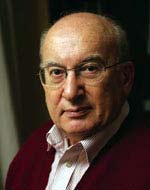
Kemal Ege Cansen was born in Ankara in 1938. He completed his high school education at İzmit High School and his university education at the Department of Business Administration at the Faculty of Administrative Sciences of METU. After graduating with honors in 1961, he started working at Arçelik. He went to the United States on a scholarship from Arçelik and earned an MBA from the Wharton School. He received an award of appreciation from METU in 1991 for his contributions to Turkish industry. In his professional career, he held positions such as Assistant General Manager at Arçelik, Industrial Affairs Coordinator at Koç Holding, Manager at Soyer Hafriyat, and Executive Director at Anadolu Endüstri Holding.
Between 1987 and 1999, he taught Business Economics to master’s and doctoral students at Marmara University’s Faculty of Engineering. He currently serves as a Management Consultant. He continues to write for Hürriyet Newspaper, a column he began in 1983 titled “The Rules of the Game.” He is married to Handan Hanım and has one child.
Countries ending in -ia are predominant
In English, the suffix -ia is the equivalent of the Turkish suffix -istan. So, when you add -ia to the end of a nation or ethnicity, you define ‘their country.’ For example, Bulgaria means the country of the Bulgarians, and Malaysia means the country of the Malays. This is the case worldwide. I could give you many more examples: Albania, Algeria, Armenia, Australia, Austria, Bosnia, Bulgaria, Croatia, Estonia, Georgia, India, Indonesia, North Macedonia (don’t let my Greek friends get mad), Malaysia, Mongolia, Nigeria, Romania, Russia, Saudi Arabia, Serbia, Syria, and many more countries I can’t list here.
The most recent addition to the list of countries whose names end in ‘ia’ is ‘Czechia,’ or the Czech Republic. If they managed to impose ‘Czechia’ over ‘Czech Republic’ at length, why can’t we? *
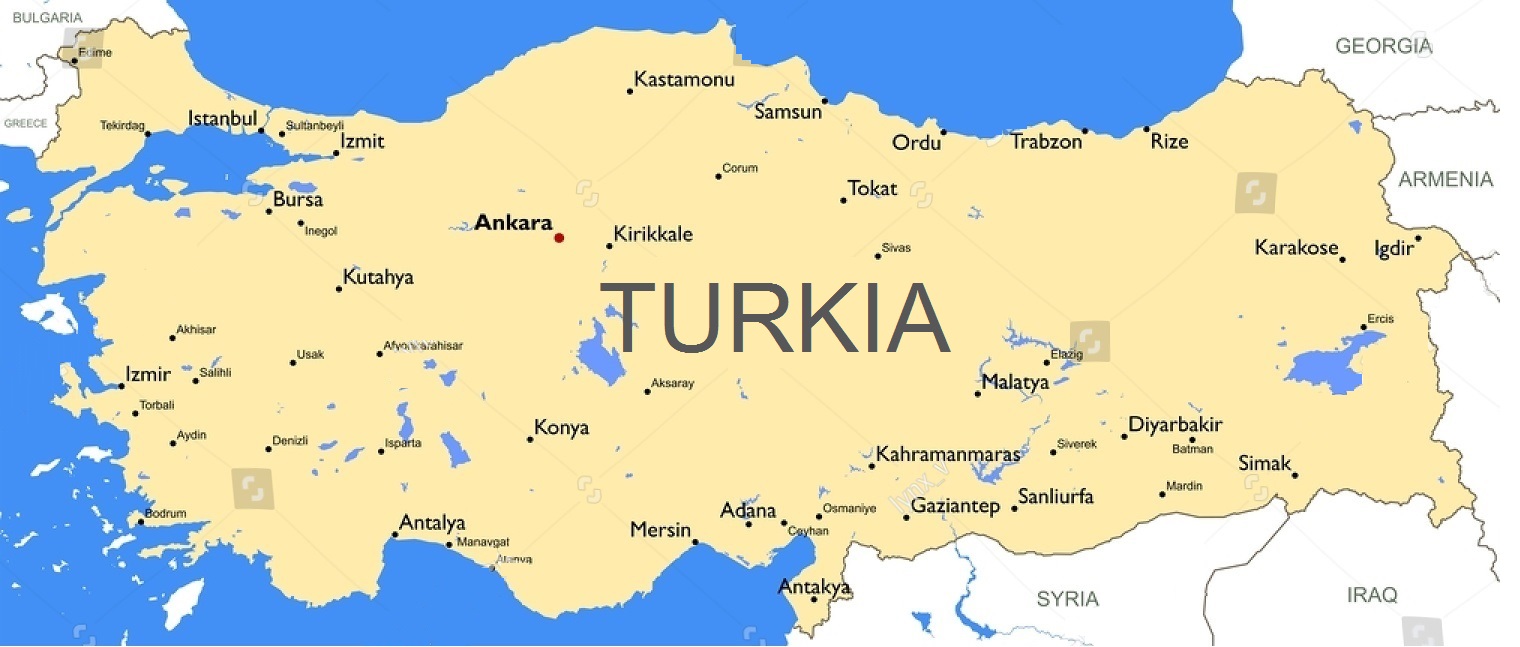
Turkia also defines itself as ‘Turkish country.’ Some might say, ‘We are global citizens and oppose having a name based on ethnicity define a specific region,’ or others might say, ‘In Turkey, there are more than 70 ethnicities besides Turks, such as Kurds, Circassians, and Bosnians. It wouldn’t be right to call it only Turkish country.’ I partially agree with these criticisms. However, there’s also another truth: when this country was founded from the ashes in 1923, and even before that, the Ottoman Empire, which had ruled these lands for centuries, and before that, the Seljuks and many other Turkish principalities, had called these lands their home and owned them. If we consider the tendency of the majority ethnic groups in the world to append -ia to their names, and if we accept the fact that the official language in these lands is Turkish, we can determine how appropriate it is to call the country ‘Turkia” instead of “Turkey,” which is a taunting mockery of the country.
Furthermore, Basque is the language that directly writes ‘Turkia’ and pronounces it as it is written in their own language. Apart from the Basques, who live in northern Spain, many Latin-based languages pronounce Turkey as ‘Turkia,’ with slightly different spellings. For example, in Spanish, Turkey is written as ‘Turquia,’ and in Italian, ‘Turchia,’ but both are pronounced as ‘Turkia.’
The first use of ‘Turkia’ is in our Bor video.
After conducting all these analyses, I commend Ege Cansen for launching a campaign in 1991 to establish the name ‘Turkia.’ Unfortunately, Ege Bey’s campaign was not supported enough, and he ended his campaign two years later. After reading his article, I remember thinking, “This is it,” and then asking myself, “We need to restart this campaign, but who will?”
I found the answer to that question in recent weeks: As you know, we’ve laid the groundwork for a very important investment for our country. I’m talking about the integrated solar panel production facility we launched in the Niğde Bor Organized Industrial Zone. I recently wrote about it: https://www.serhansuzer.com/tr/enerji-bagimsizliginin-temelini-nigde-borda-attik
While looking at the translations of the groundbreaking ceremony video, we were supposed to mention where we were at the beginning. It suddenly occurred to me, and I remembered Ege Cansen. That’s when I decided: Let’s restart this campaign with a project that could create a truly global brand in our country. As a first step, I included the word “Turkia” in the translation of the first title in this video. Here’s the video: https://www.youtube.com/watch?time_continue=3&v=9LX3lLEtOK8
Here are two frames from the video of our groundbreaking ceremony to give you an idea:

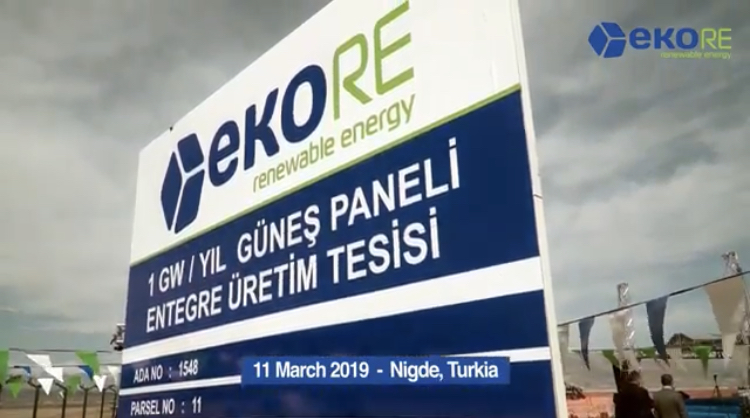
An open invitation to all friends to use the word ‘Turkia’ when speaking English. The more people who insist on using the word ‘Turkia,’ the greater our chances of changing this decades-long nonsense. I’ve been very happy to receive positive messages from some friends who have expressed their support for my campaign and stated that they will use the word ‘Turkia’ from now on. I hope our government will one day adopt this and officially take the necessary action.
As for me, even if no one stands behind me on this issue, I will continue to use the word ‘Turkia’ for the rest of my life. Let it be known. I want to conclude my remarks in English using the word ‘Turkia’:
I am a world citizen, that’s for sure. I respect and love every culture, tradition, and ethnicity on this planet. I am also proud of my country, Turkia!
I’m a world citizen, that’s for sure. I respect and love every culture, tradition, and ethnic group on our planet. I’m also proud of my country, ‘Türkiye’).
* My friend, Attorney Okan Demirkan, made the comment about Czech Republic, saying he would support my campaign. I’ve included it verbatim in the article. I thank him for his positive contribution.
Note: After this article, I received many positive messages and comments in support of me. The most common suggestion was, “I prefer it to be called Turkey.” I responded to them as follows:
Every language has its own nature. English doesn’t have the letter ‘ü’ we have. They can read it as ‘u’ or ‘ö.’ Foreigners also can’t pronounce the word ‘Türkiye’ (Turkey), which we like in Turkish. Instead of pronouncing it the way we do, foreigners often say ‘Törkay’ or some variation of it.
Finally, in my article, I explained why it should be spelled ‘Turkia’ with the suffix ‘-ia.’ I’m quoting from my article: The English suffix -ia is the equivalent of the Turkish suffix -istan. So, when you add -ia to the end of a nation or ethnicity, you define ‘its country.’ For example, Bulgaria means the country of the Bulgars, and Malaysia means the country of the Malays. This is true all over the world. I could give you many more examples:
Albania, Algeria, Armenia, Australia, Austria, Bosnia, Bulgaria, Croatia, Estonia, Georgia, India, Indonesia, North Macedonia (My Greek friends should not be angry), Malaysia, Mongolia, Nigeria, Romania, Russia, Saudi Arabia, Serbia, Syria…
The word ‘Turkia’ means ‘Turk’s country’ in English.
I also received some strange comments. I’ve written my thoughts on these comments in my next blog post. Those who want to read it can visit https://www.serhansuzer.com/tr/egitimli-kesimin-yetersizligi-ve-kisilik-sorunlari.
Tag: social responsibility