During my solar energy adventure, which began in 2011, I was also interested in different types of renewable energy, such as wind energy and biogas. We developed or assisted others in developing biogas projects in various locations. For example, we determined the biogas potential of Elazığ province and compiled a report.
The project we truly finalized was in the wind energy sector. We decided to purchase a project developed in this area by an Ankara businessman in 2007. Of course, with these types of acquisitions, you pay a significant price per MW.
Before purchasing the project, we completed technical, financial, and legal due diligence. Located on the coastline of Babalı village near Kefken in the Kandıra district of İzmit, this project was satisfactory in every respect. The project, which directly faces the wind blowing from the Black Sea coast, has a capacity factor of 39%. Let me explain the capacity factor for my readers who are not in the industry: The net capacity factor (KF) of a power plant is the division of the total energy produced by the power plant in a certain period of time by the energy it can produce at full capacity (Wikipedia: https://tr.wikipedia.org/wiki/Kapasite_fakt%C3%B6r%C3%BC#:~:text=Elektrik%20santralinin%20net%20kapasite%20fakt%C3%B6r%C3%BC,ba%C4%9Fl%C4%B1%20ölarak%20a%C5%9F%C4%B1r%C4%B1%20derecede%20de%C4%9Fi%C5%9Fir .). In wind energy projects, those with a capacity factor above 35% are considered to have high attractiveness.
Seeking a Letter of Guarantee for World Bank Funding
After paying the first installment of the project development fee and purchasing the project, we contacted the most active banks in the market for project financing. We were generally well-received. We even met with Turkey’s most prominent project finance-focused bank, which had provided World Bank funding for the project. To qualify for their advantageous loan, we needed to provide a letter of guarantee from another bank. Therefore, we began negotiating with other banks.
While we were in negotiations with five or six banks for a letter of guarantee, we suffered our first major blow. The 15 July incident erupted. One bank amongst the top five in Turkey, told us the following week, “The country experienced a coup attempt. We are now calling for existing loans, not new ones.” One by one, all the other banks left the table.
Among the banks we approached, the bank with the smallest volume in terms of volume, stood up boldly and invited us to participate in our project, which we had previously discussed, in November 2016. They said, “You requested a letter of guarantee for the loan from the bank providing the World Bank funds. We’ve opened our limits, so we can discuss this.”
After lengthy negotiations and some additional collateral, we were able to obtain the letter of guarantee. Thanks to that letter, we qualified for the World Bank-funded loan. In December 2016, we made the first major payment to the turbine company and placed the order.
Unexpected Developments and Challenges
While we thought everything was going well, we gradually began to enter a vortex from which we later struggled to escape. We had to use the money we had allocated for the wind project capital to prevent my other ventures from collapsing, and our cash reserves began to rapidly dwindle. We were forced to provide cash support to those companies because if they had failed, it would have spread to all my other businesses, forcing all four of my companies into bankruptcy.
However, you can imagine the dire situation I faced when my four companies, which normally wouldn’t request cash from me, also requested cash. Ultimately, the economic climate had transformed into a period in which foreign investors were leaving Turkey one by one, companies were going bankrupt or declaring bankruptcy, financial institutions were extremely sensitive and aggressive in every aspect, and the need for cash was growing rapidly day by day. All of the approximately ten potential investors we had contacted before 15 July called us to inform us that if they had assets in Turkey, they had decided to “exit Turkey,” and if they were planning to enter for the first time, they had decided “not to invest in Turkey.” They all began making intense efforts to exit the country as quickly as possible. We, too, found ourselves in significant difficulties.
Negotiations for Additional Loans Spanning Two Years
During this period of turmoil, we contacted the bank from which we had obtained the guarantee letter and explained the situation. We expressed our need for cash. They initially expressed their understanding of the situation and began discussing the possibility of an additional loan with us. However, for some reason, our request for additional loans, which had already been approved by the committee, was not approved by the board of directors. This left us in a significant predicament. Due to the current situation, we had no choice but to approach another bank.
These negotiations continued for approximately two years. Ultimately, the bank weighed the credit risk against the additional loan they would provide us and decided that keeping the project alive was much more in their favor than sinking it and using the collateral they had. The math was already clear. However, it took them two years to take the initiative. The long negotiations culminated in us securing the additional loan in March 2019. As you can imagine, during these negotiations, both the main lender and the turbine company were constantly pressuring us about the timing of the remaining payments.
Senvion’s Bankruptcy Shock
15 days after securing this financing, we suffered the next major blow. Turbine company Senvion filed for bankruptcy. Senvion (formerly Repower), with over 6,000 turbines in Europe, was one of the best turbine companies of its time. This German turbine company remained among the top contenders until it was mistakenly sold to the Indians. I’m sharing what I heard here. After acquiring Suzlon Repower, an Indian company, he transferred technology and sold the remainder to an American fund. The American fund, with a significant investment and renaming it Senvion, successfully revitalized the company, particularly in terms of technology. Thanks to these improvements, they once again became among the highest quality and most efficient turbines. At this point, while evaluating turbine alternatives, we began evaluating the Senvion turbine after the then-general manager of Senvion Turkey contacted us.
In our comparisons of Class III turbines and the scenarios we generated, the Senvion turbine had by far the best production values. Therefore, despite the lack of a proper O&M (operation and maintenance) team in Turkey, we chose Senvion. While the Senvion turbine, with its top-quality components, was technically superior, it was financially dragging the company into financial ruin. The company was burning through cash, its revenues never exceeded its expenses, and the gap between the two companies was widening. When the American fund that provided the financing withdrew its support for its constantly cash-burning investments, the company officially entered bankruptcy proceedings. In April of last year, they officially announced Senvion’s bankruptcy. More accurately, it first entered a bankruptcy-like process in Germany, and then, in August, they officially declared the company bankrupt and closed it down. They also sold the company’s sole revenue-generating European O&M division to Siemens Gamesa.
After securing financing after a two-year struggle, we were saying, “We’ll complete this project at full speed from now on.” When Senvion’s bankruptcy announcement was announced exactly 15 days after our credit line was opened and our loan was approved, we were all shocked. In fact, we had already seen the signs of this. Because when I called Senvion officials as soon as the loan was approved and said, “Good news, we’ve secured the financing and are now ready to undertake the project,” they not only didn’t welcome the news with great enthusiasm, but also said, “Okay, then we’ll get back to you,” but then they never did. At first, I didn’t understand this because we had reached a conclusion after a long two-year wait, and it was time to put everything back in order. When I pressed them, three days before they announced their bankruptcy to the public, they said, “Strange things are happening within the company; we can’t get approval to continue this project.” When Senvion’s bankruptcy announcement was made, I said, “Okay, now it’s clear why they’re procrastinating.”
Understanding vs. No Response
As the top executive at a company that has gone through very difficult times, I told the Senvion executives exactly this: “We understand your situation very well. I hope you get through this process as soon as possible. We are always with you, no matter what.” Then I added, “We are ready to pay the remaining 30% of the turbines. We want to make this payment and bring our turbines to Turkey as soon as possible.”
We kept saying these things, but we never got anything in return. We met with all the executives in Turkey and Germany, but no one was taking the initiative and taking responsibility for the process. We couldn’t make sense of it. We figured everyone was probably confused by this bankruptcy process, so we didn’t press them too hard at first. Then, as the days turned into weeks, and the weeks turned into months, I frankly began to panic. In June, I raised the flag of rebellion and said, “Enough, but if you’re not going to take the initiative and complete this process, then refer us to someone authorized.” They’d been stalling us for months. Finally, the information I needed came out: “We no longer have authority; all authority rests with the bankruptcy attorneys assigned to the board.” Upon hearing this, I immediately said, “Then have us meet with authorized bankruptcy attorneys.” Senvion’s executives were taking their time on this matter. I remember asking three or five times a day for 10 days, “When will you have us meet with bankruptcy attorneys?” After this process, they frankly got a little fed up with us and finally said, “Okay, we’ll let you meet, give us some time.”
A significant risk due to legal errors
After a total of about three weeks, a licensed lawyer from the law firm assigned to Senvion’s board of directors contacted us on the phone. Initially, everything was going well with friendly words. After two meetings spanning 10 days, the licensed lawyer told us, “Okay, then, we’ll send you the continuation agreement.” However, he never responded. When we insisted on meeting him again, he appeared again a week later and told me over the phone, “You don’t have the turbines; we can’t.” At first, I thought he was joking, but when I realized he was serious, I asked, “What do you mean, you can’t give us our turbines? You were giving them to us last week. What did you do with them?” Nothing. Then it suddenly occurred to me, and I blurted out the following random question: “You gave our turbines to another project, didn’t you?” Again, the German bankruptcy lawyer on the line remained silent. The situation was clear. I immediately started to say, “You have no right to do this. We paid 70% of the price for those turbines, and we want to pay 30% and get our turbines, that’s all.” The man immediately acted like a lawyer to me: “You paid 70%, but you don’t own the turbines. In other words, the title hasn’t transferred to you. Therefore, according to German bankruptcy laws, we can do whatever we want with the turbines.” I didn’t quite understand what he meant at first, but when I asked the lawyers, I understood the situation. There had been a serious legal error on our part. So, you’re paying 70% of the price and not getting the title. This time, we were going bankrupt because of the professionals’ mistake. When I finally pulled myself together and asked, “What are you going to do with our 70%? Will you give us back?” I received this even more alarming response: “Of course, you reserve the right to sue.” I thought to myself, “What the hell is this lawsuit? They’ll have me out of the picture by the time they win this case.” Then, suddenly, these words came out of my mouth: “You’re not giving our turbines to anyone. I’m getting on a plane to Hamburg, and I’m definitely not coming back without our turbines.” Within a few days, I completed my preparations, got on a plane, and flew to Hamburg.
The Three Fronts of the Struggle in Hamburg
I handled three important matters during these few days. First, I made an appointment with Senvion’s bankruptcy lawyer, albeit with some difficulty. At first, he refused to make an appointment. In fact, he stopped answering our calls. I texted everyone, including the company’s chairman and the other board members. Then, as a professional courtesy, he gave us an appointment a few days later.
Second, I asked my neighbor, Selda, for support in my apartment complex. Selda is a German-Turkish woman born and raised in Germany. She is also the general manager of an international German company in Turkey. She not only referred me to the German Chamber of Commerce (AHK) but also helped me find a decent lawyer. During these conversations, I realized this: No matter how much you speak English, the common language everyone understands, it’s never quite the same as speaking your own native tongue. Selda identified three lawyers, using the most reliable source, the most appropriate communication method, and enlisting the support of Germans. We then sat down and evaluated them together. I spoke with all three on the phone. Finally, we identified the right lawyer. We settled on a local law firm in Hamburg staffed by reputable lawyers. They didn’t charge a lot of money, and they were much more realistic than other lawyers. Furthermore, the lawyer who spoke with me had previously left a firm staffed by German bankruptcy lawyers and knew the team there well. My goal was to initiate a dialogue.
Thirdly, we contacted the Ministry of Trade through the AHK (Regional and Commercial Communications Authority). From there, they put me in touch with the Commercial Attaché in Hamburg. Commercial Attaché Uğur Bey turned out to be a very solid man. He never left us alone, personally attending any meetings we needed and providing translation support.
Alita’s Motivation
Despite being exhausted on the way to Hamburg, I couldn’t sleep. Although I’d normally gotten used to sleeping on planes, I couldn’t sleep due to the stress. So, I chose a movie and started watching it. I started watching Alita, the latest film by my favorite director and screenwriter, Canadian James Cameron. I found the perfect movie! One scene in this film, which tells the story of Alita, a woman with incredible willpower and fighting skills and an angelic heart, fighting against Nova, the evil leader who controls everything, motivated me immensely. In fact, I can say I watched this scene three more times after the film ended. Grewishka, Nova’s hulking underworld puppet, possessed a new, cyborg body with cutting, iridescent octopus arms and all manner of lethal weapons, while Alita, armed with nothing but her enormous heart, challenged him. In their second battle in the underworld, Grewishka’s blade-like octopus arms rip Alita’s body in half and sever her arm (Alita’s body, being a cyborg, or robot, is still functional). With one arm and a massive heart, she fights back with all her might, leaping from the ground with one arm and managing to gouge out one of Grewishka’s eyes. After this devastating blow, she is finally saved by the arrival of her loved ones, and Grewishka is forced to flee. Here’s the fight scene I mentioned: https://www.youtube.com/watch?v=T35dw8uwNEY *
This fight scene, and Alita’s relentless fight to the very end, summed up my situation. I was heading to Hamburg, my arms and legs broken and facing incredible financial hardship. Everyone, including the bank, thought the project was bankrupt and I was finished. No one, including the professionals, had any hope left. I was off to fight for my life.
I landed in Hamburg and confirmed my arrival with the lawyer first thing. We went to their offices the same day and had our first meeting. The next day, we went to Senvion’s headquarters and met with the bankruptcy lawyer. Thankfully, our Commercial Attaché, Uğur Özcan, joined us. We had a strong start to this first meeting. I can say that the first part of the meeting was successful. We went to lunch around 12:30 that same day.
Understanding the Bankruptcy Lawyer
I had the opportunity to get to know the bankruptcy lawyer better during lunch. During lunch, he mentioned the political tension between Germany and Turkey. I told him, “We have no business being involved in politics. In fact, as the renewable energy sector, we are working on a business that transcends politics. All politicians and relevant stakeholders need to help transition from fossil fuels to renewable energy. Because the climate change, we are experiencing threatens all of humanity.” I added, “It’s incredibly unfortunate that Senvion is going bankrupt while such an energy revolution is taking place. I wish they could have continued.”
The lawyer and I were able to understand each other better during the meeting. We met again in the afternoon. The morning meeting had gone well, but we still hadn’t reached a conclusion. During the afternoon meeting, I asked the bankruptcy lawyer several times, “When will we start discussing the terms of the continuation agreement to bring the turbines to Turkey?” Each time, the bankruptcy lawyer ignored me. Finally, I shouted a little, and he couldn’t resist, and the following words came out of his mouth: “It’s unclear whether we’ll sign the continuation agreement with you. Frankly, you’ve gone to the trouble of coming this far, but as I’ve told you before, your turbines are no longer with us, so the likelihood of us signing a continuation agreement is very low.”
Then he said the following, which seriously disturbed me: “I’m sorry, but my job isn’t to empathize. Your situation doesn’t concern me. I’m focused on my job; I focus on how to maximize the cash flow for the company.” What he called cashing out on behalf of the company meant selling our turbines for another project. The men had written us off.
I was horrified by these words. He was saying that after all this effort, the likelihood of us returning your turbines to you was very low. I was struggling to control myself, but despite everything, I calmly said, “You all know these turbines are ours, and I won’t leave here without getting them,” and we concluded the meeting that way.
We Determined Two Strategies
Afterward, we went to our lawyer’s office and held an evaluation meeting. Everyone knew we were finally playing our last card. We devised two strategies:
1- The turbine towers were built in Turkey by a company called Ege Kule. Ege Kule had been purchased by a Korean company called CS Wind in early-2019, but the towers were physically located in Izmir. We needed to prevent the towers from leaving Turkey. Without the towers, there would be no turbines. That would have stalled the project they had decided to provide us with the turbines. I immediately called my lawyer in Turkey and asked if he could place a restraining order on our towers. After a day of research and discussion, he said he could, so I urged him to take immediate action. We immediately initiated the necessary procedures to obtain the restraining order.
2- The words the German lawyers told me during the meeting: “We can do whatever we want; German bankruptcy laws protect us,” caught my attention. Then we picked up a subtle detail. Our German lawyers confirmed this. German bankruptcy laws may have provided the legal basis for any action taken by bankruptcy lawyers, but under Turkish law, what they were doing was, in the clearest terms, “fraud.” They had taken 70% of the turbine’s price and were simply paying for it without delivering the product.
Thereupon, the next morning, our lawyers informed the German bankruptcy lawyer of these two points:
- We are obtaining an injunction against the towers; we will not allow our towers to be removed from Turkey (we did exactly this; we initiated the procedures to obtain an injunction and shared this with the German bankruptcy lawyers).
- We will personally file a fraud lawsuit in Turkey against each of you (both the bankruptcy lawyer who contacted us and all the lawyers in his office who handled the Senvion file).
After these conversations, the course of events changed again, and the needle swung in our direction. Because by failing to remove the tower from Turkey, they would not be fulfilling their obligations to both us and the people in Italy to whom they sold our turbines. Moreover, Turkey is an attractive country, especially for Germans. No one wants to personally experience problems in a country like Türkiye. They know they’ll end up here, even if it’s just for a vacation.
Two days stretched into two weeks.
Still, we couldn’t reach a conclusion. Something was always holding up our process. I’d planned to go to Hamburg for two days, sort things out, and then return. It took me two weeks to resolve the matter.
During this time, I also contacted Turkish members of parliament in Hamburg. After understanding the situation, they thankfully agreed to provide all the political support they could if I couldn’t resolve the issue through negotiations. I had a backup plan ready.
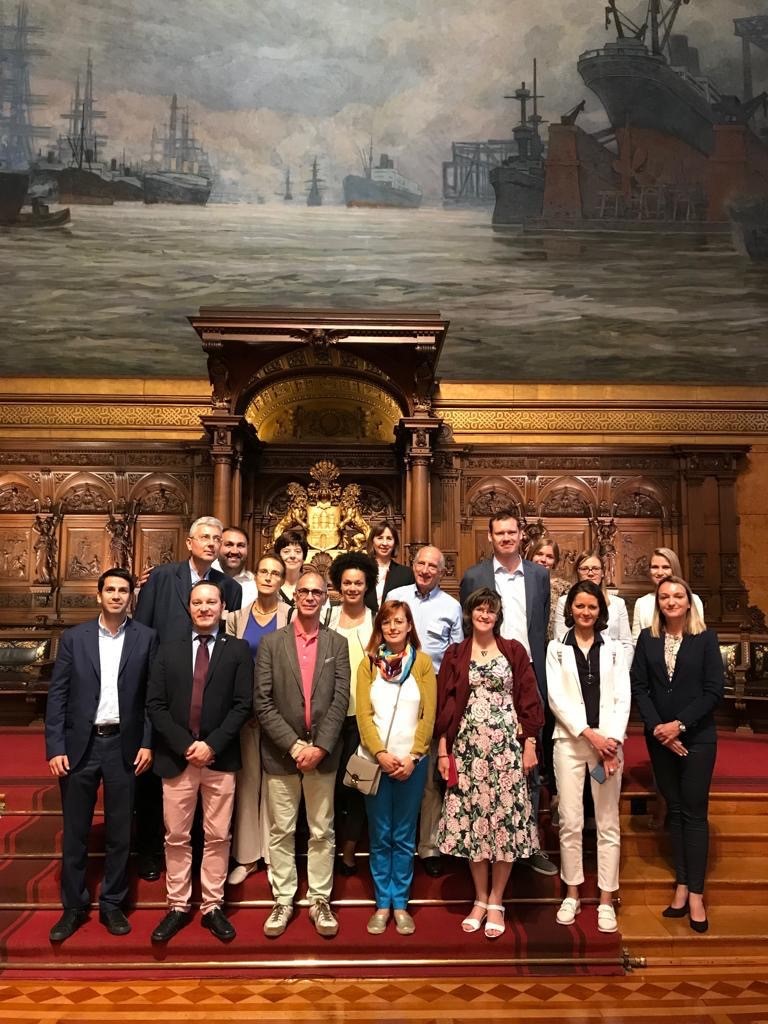
While visiting Turkish members of parliament in Hamburg, I suddenly found myself among a visiting delegation from the European Union and joined a tour of the parliament building. You can see a photo from that moment above.
To relieve my stress, I ran around the river in Hamburg every day. I ate ice cream. Meanwhile, I found Spiderman on the streets of Hamburg.
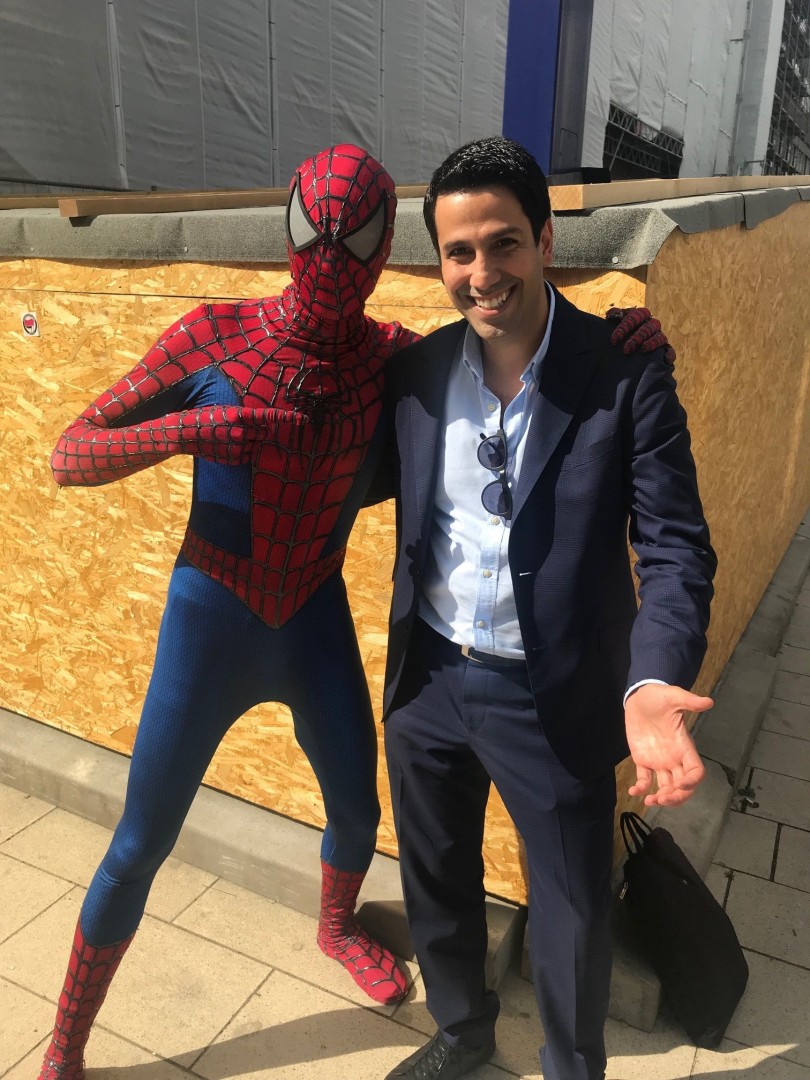
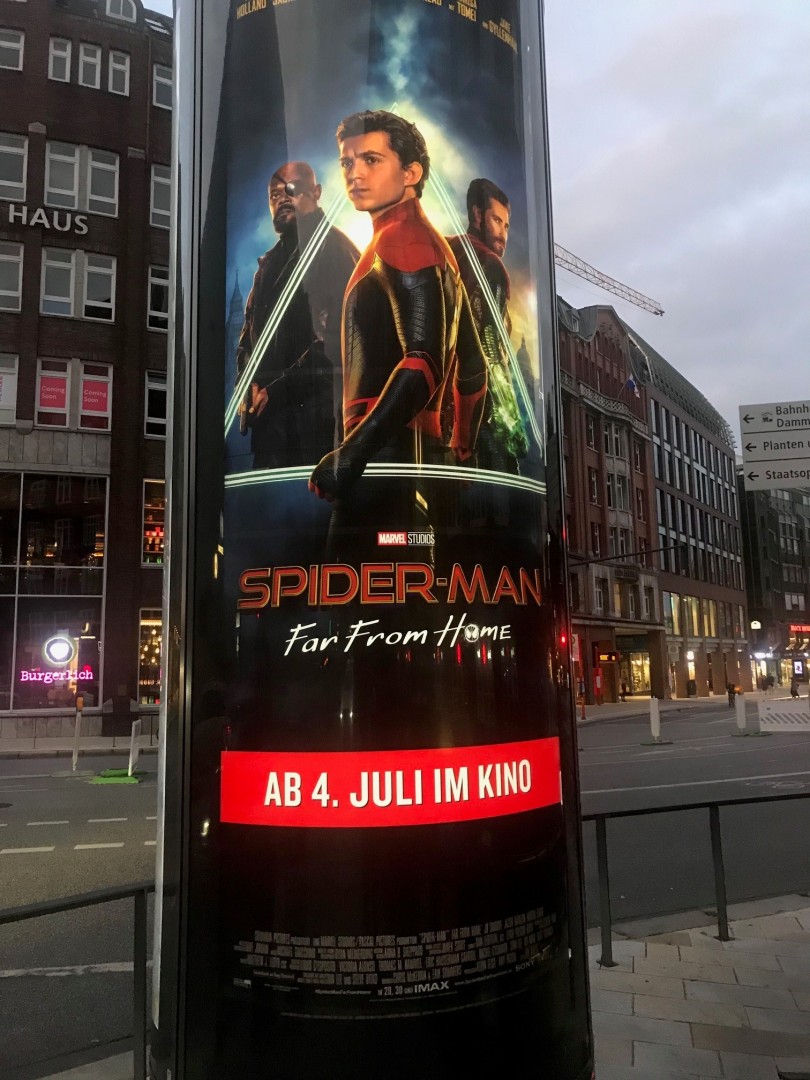
Jokes aside, to promote the new Spider-Man movie, they plastered Spider-Man posters on billboards everywhere and unleashed Spider-Man (a friend of mine in a Spider-Man costume) on the streets of Hamburg.
A beautiful encounter in a bad time
Meanwhile, I had another interesting encounter. As I was brooding on the stone blocks built for public seating by the river, someone sitting next to me asked me in English, “Are you okay?” I turned my head. A long-haired, hippie-looking man was smiling sympathetically at me. His African-American wife and adorable mixed-race daughter were with him. When he smiled, I couldn’t help but smile back, saying, “Well, we’re doing okay.” Then he said, “I’ve been looking at you all morning. You’re acting like your world is falling apart. What’s wrong with you?” I told him, “My world isn’t falling apart yet, but it’s about to,” and, relying on his sincerity, I explained the situation. It turned out the guy was in the wind energy business. He had a niche job inspecting turbines, a completely technical field. I couldn’t find anyone like him if I’d searched for him. We then contacted this man before the turbines were loaded onto the ship, ensuring they were inspected and everything was done correctly. Meanwhile, to confirm our work, I asked him, “What do you think of Senvion turbines?” He replied,
“Senvion turbines are among the highest quality turbines on the market. I know this from the thousands of inspections I’ve conducted. They use the best of everything in their components. The fact that they won’t be on the market saddens me, both as someone who works in this industry and as a German.”
I thought to myself, “This man was sent to me to clear up all my doubts.” I was happy to meet him.
A Difficult Walk on Thin Ice
Meanwhile, the bank that issued the guarantee letter and additional loan was constantly pressuring me. Several times a week, they’d ask me, “Mr. Serhan, what happened? Is this done?” This question meant, “If we don’t get the turbines, the project is dead.” The project’s end meant they’d pull the plug and come after me with all sorts of legal action, etc. I was trying to calm them down, constantly saying, “We’ll figure this out, don’t worry.”
Essentially, if we didn’t get the turbines, the project would collapse, and we’d be declared bankrupt. So, we were in a situation where we were trying to reach the other shore on a very thin sheet of ice.
On the 10th day, the bankruptcy lawyers called my lawyer and said, “Okay, we’ve discussed all the details. We agree to give you your turbines, but there are procedures we need to take care of.” I felt a little relieved. I waited another five days for them to finalize those procedures. Finally, I signed my part and returned to Istanbul that evening. Frankly, I felt relieved upon returning from Hamburg, where I was under considerable stress.
Upon returning from Hamburg, I gathered all the professionals working on the İzmit Kandıra WPP project and explained the situation. Everyone was under considerable stress, and by the end of the conversation, everyone felt a sense of relief.
Afterward, we focused on our work and began working feverishly to get the turbines to Turkey. After finalizing all the contractual and banking details, there were no obstacles to our turbines’ arrival. We have also resolved the technical aspects of the project. As you can imagine, organizing the logistics of this project was a challenge.
Proof that Senvion had given up on us
Meanwhile, while discussing the turbines’ arrival in Turkey, we came face to face with another reality. A concrete example emerged of Senvion’s pretense of us. The turbines’ nacelles (the head of the turbine engine) normally bore the EkoRE logo. Since they had assigned our turbines, manufactured in 2017, to another project, they had attempted to remove the EkoRE logo and ship them as is. So perhaps removing the logo saved us time. We reacted just in time, just as the turbines were about to be shipped. So, we intervened just as the plug was about to be pulled. If I had been a little later in traveling to Hamburg, our turbine would have been lost.
This became clear during a conversation with the regional director I had with to arrange for the turbines to be shipped to Turkey. He said, “Serhan, there’s a problem. The EkoRE logo is no longer on the nacelles. We had to remove it because we were sending it to another project. We have two options here. You can either wait for the logo to be repainted, or we can send it as is.” Without a second thought, I said, “The logo isn’t important. Just send the turbines right away.”
The Turbines Arriving in Turkey
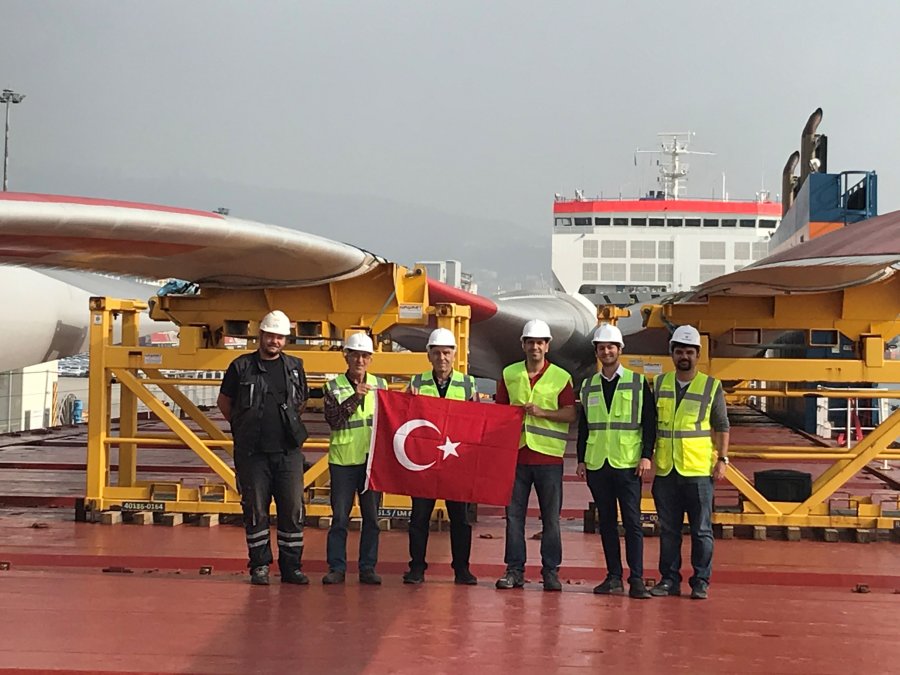
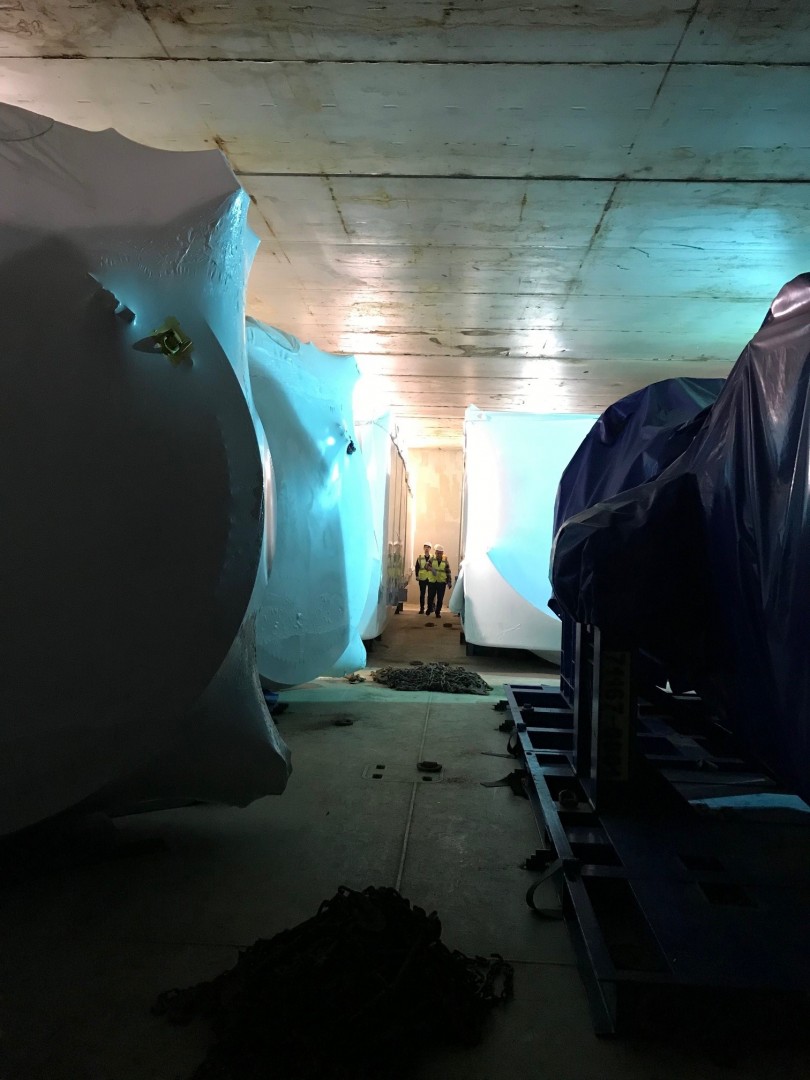
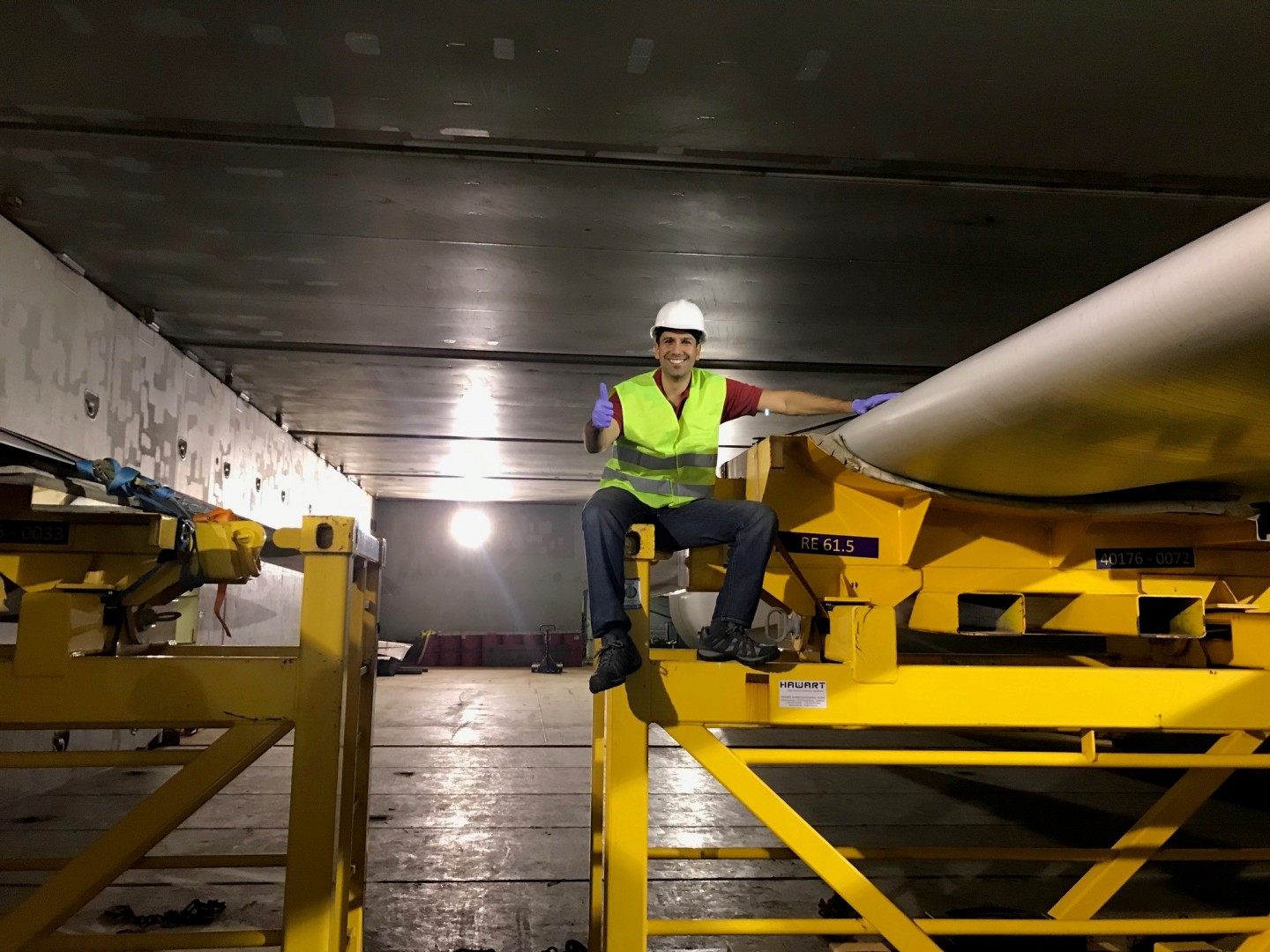
Our turbines departed in early October and arrived at the port on 29 October, one of my favorite days. We all enthusiastically went to one of the ports in Kocaeli Gulf to pick up our turbines. For some reason, the port management refused to let us in, claiming there were missing documents. By noon, we had completed the required documents and managed to get inside. When we saw the ship carrying our turbines from afar, two sets of our wings stood out on the deck like lions.
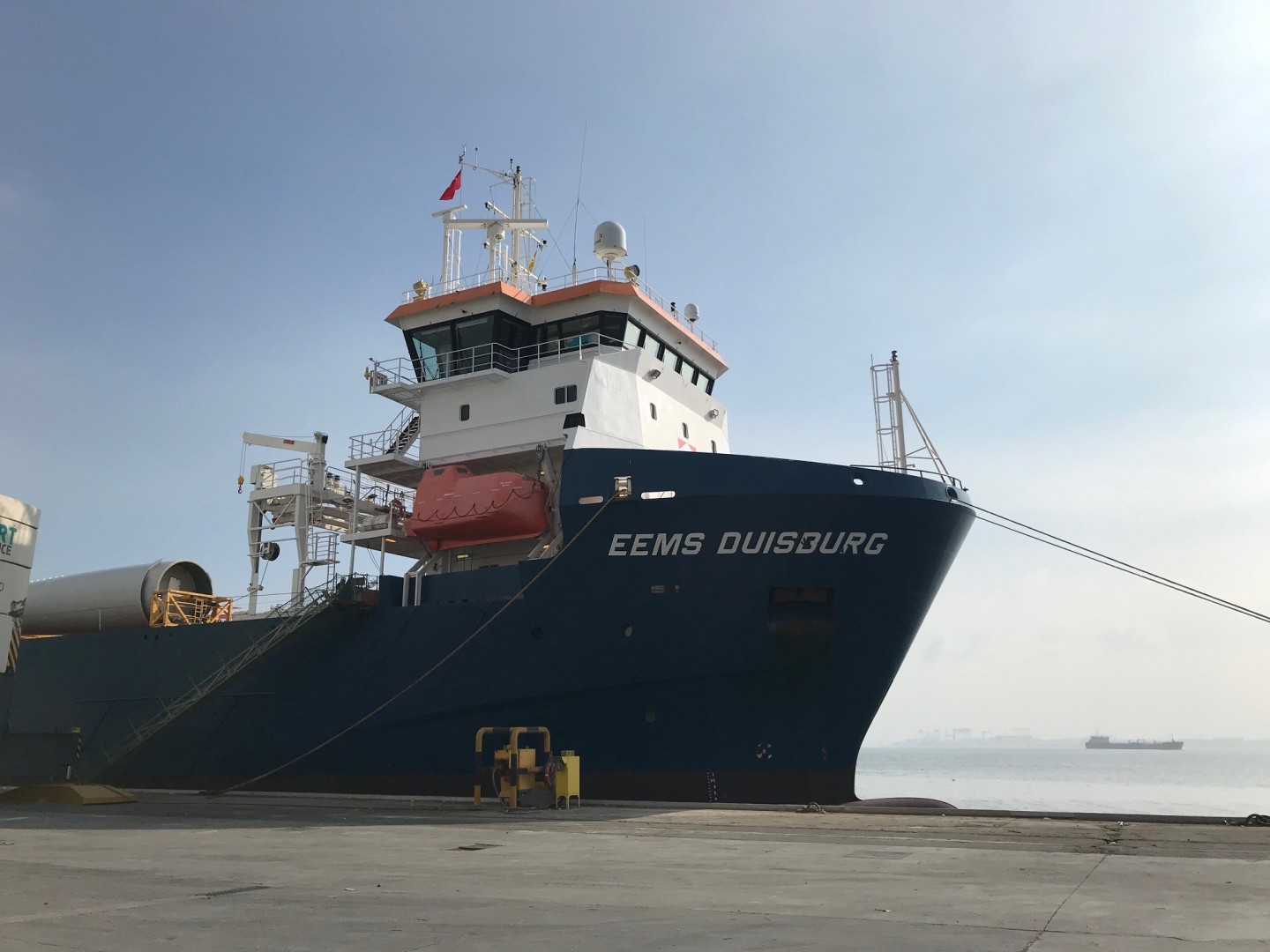
When I saw this, I said to myself, “Thank God.” Then we climbed aboard. The following images emerged:
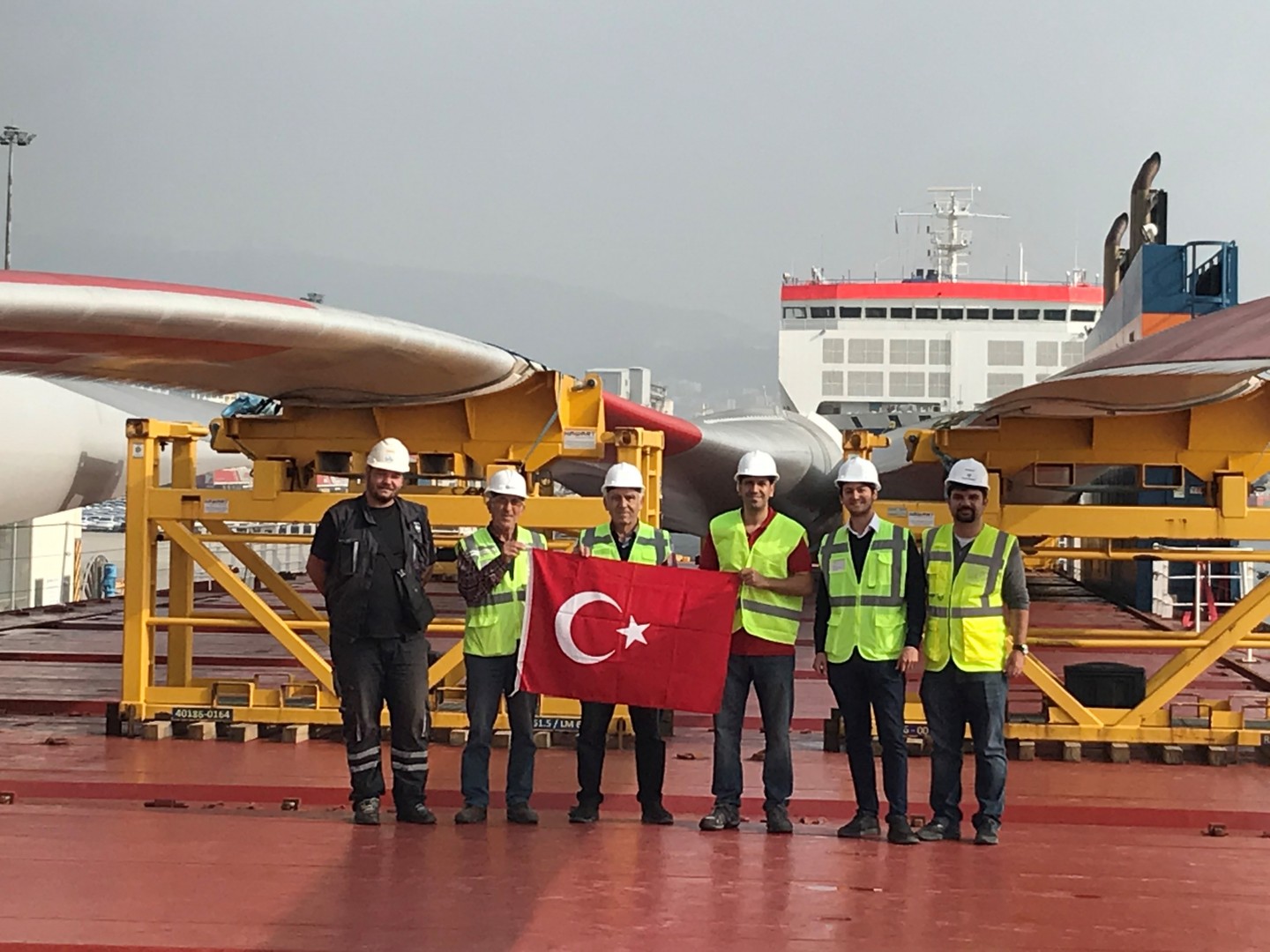
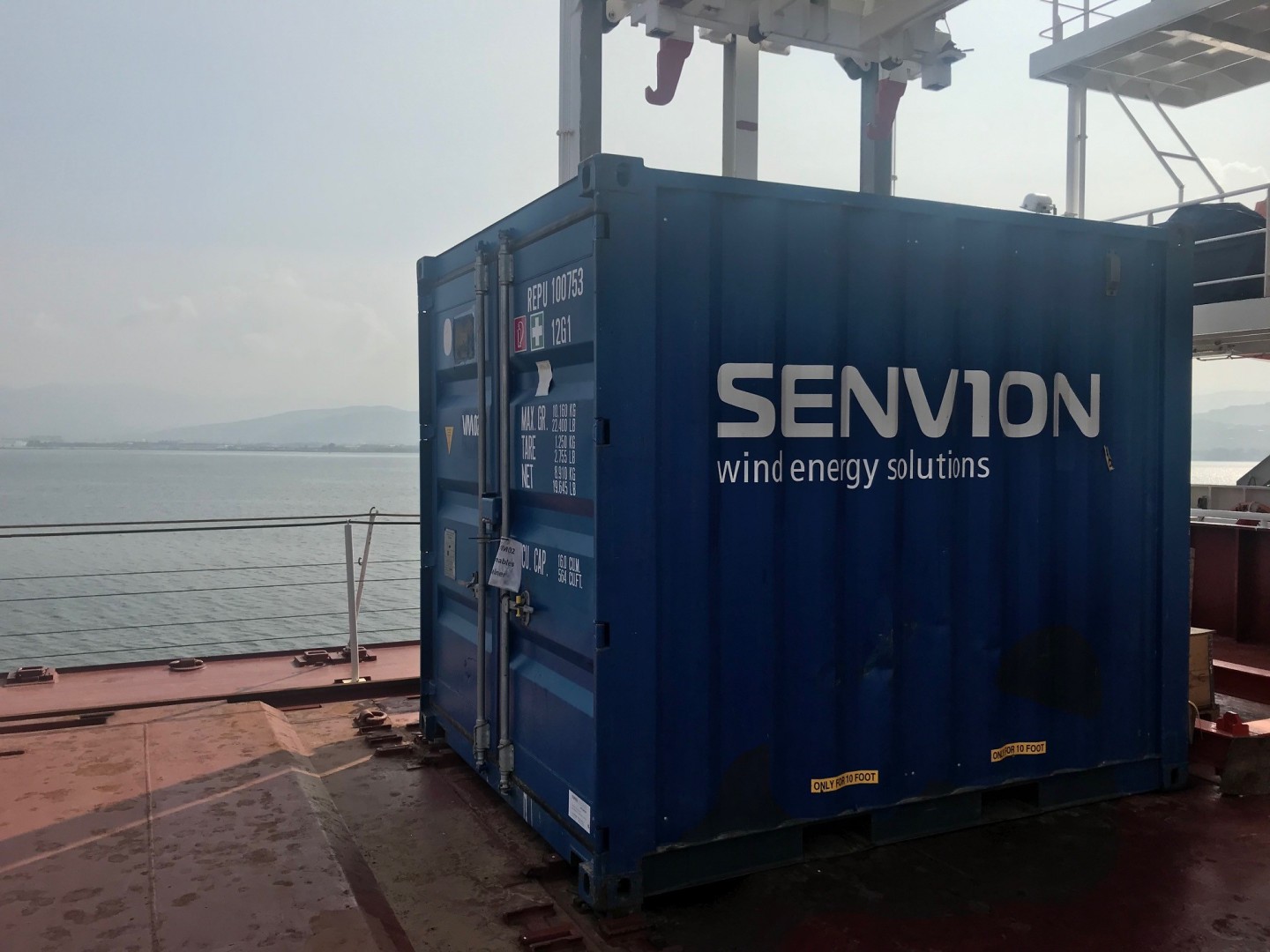
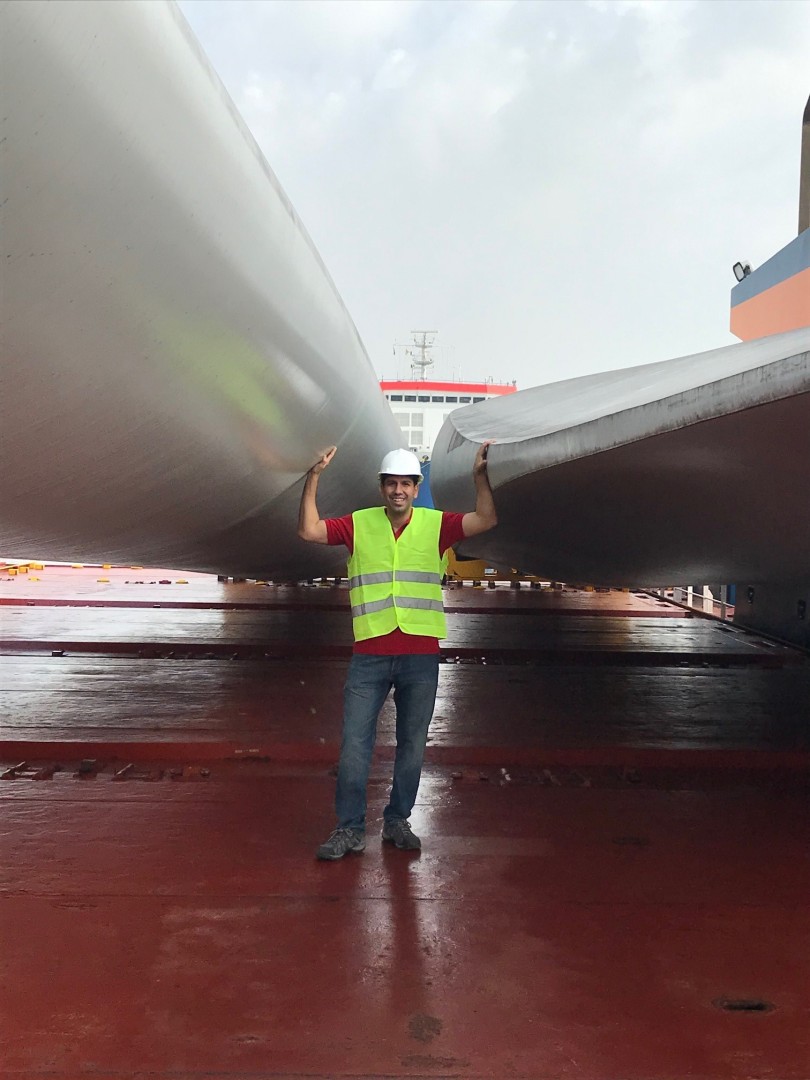
The entire team relished the moment with great joy. One by one, we wandered through the blades, nacelles, and other spare parts on deck and inside the ship. The main components had arrived intact. Here’s the moment:
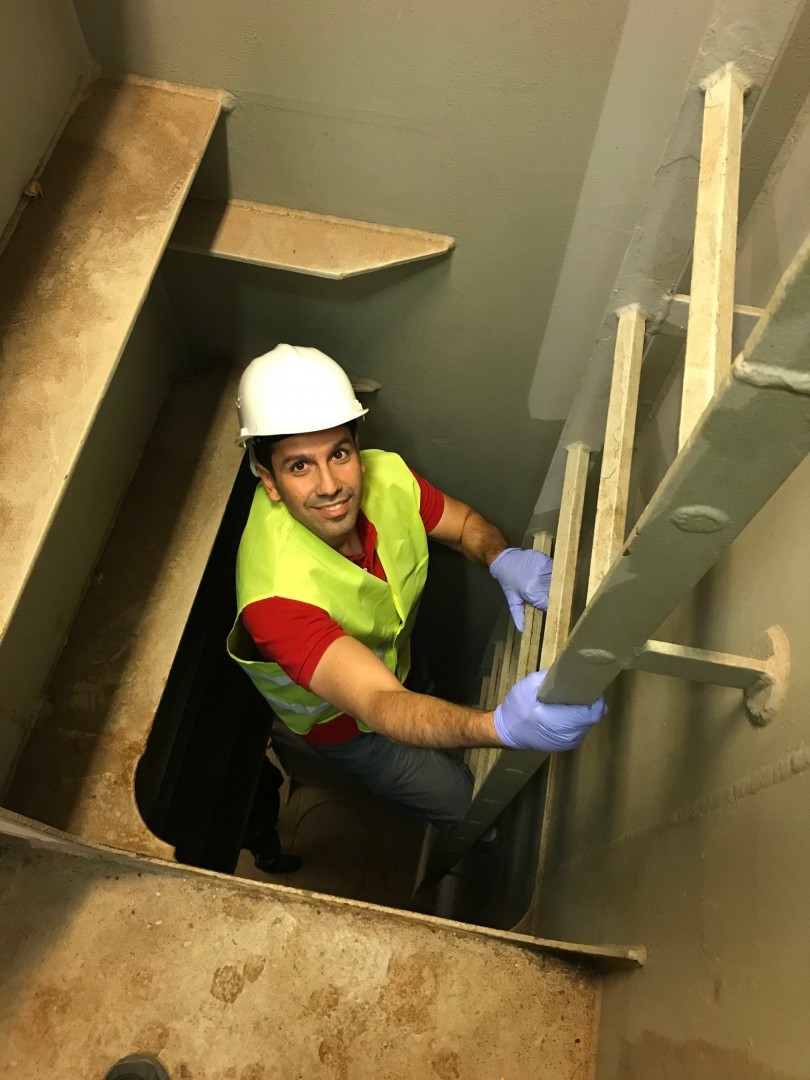
By that evening, our turbine was unloaded piece by piece and transported to the main warehouse.
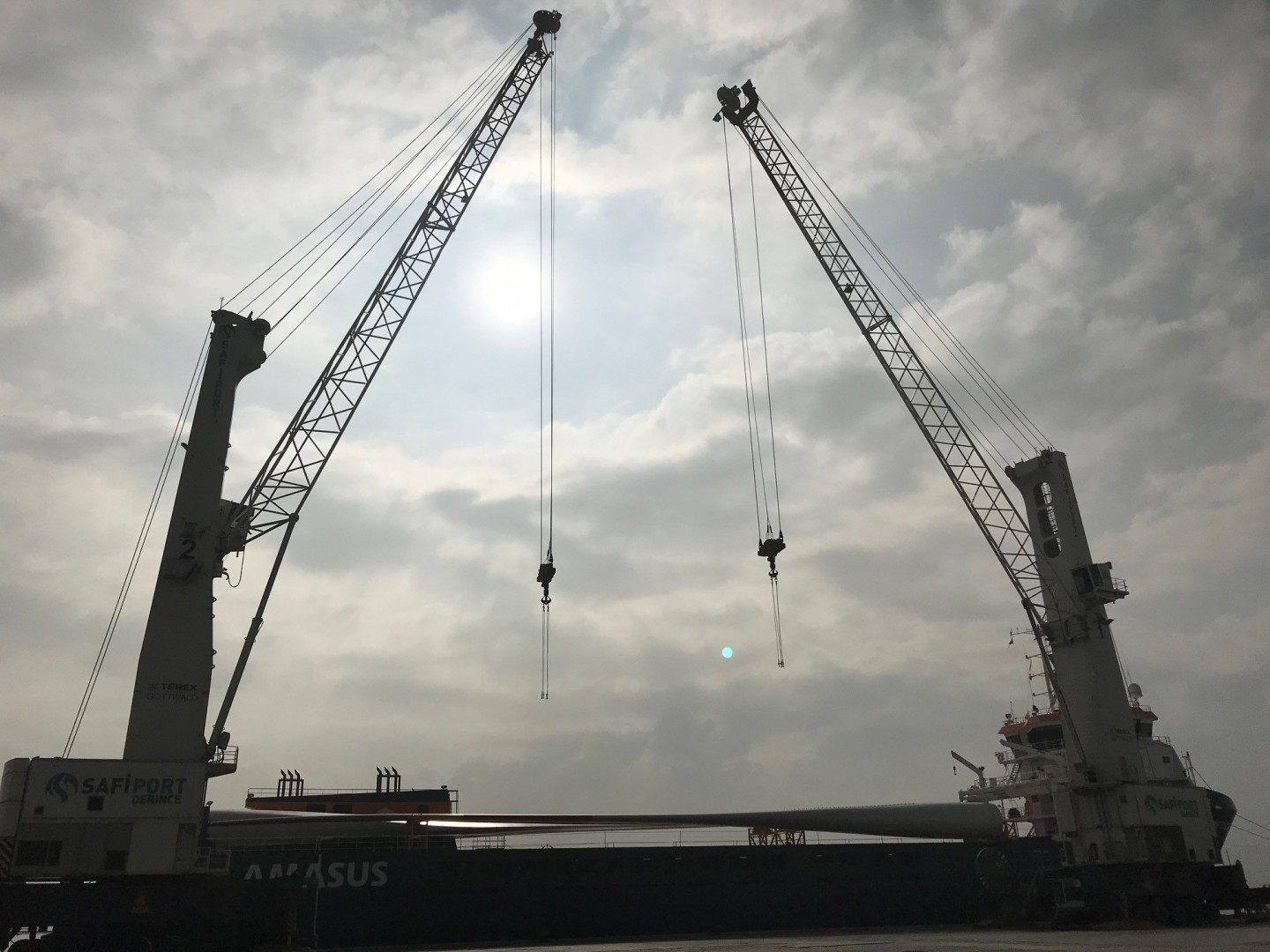
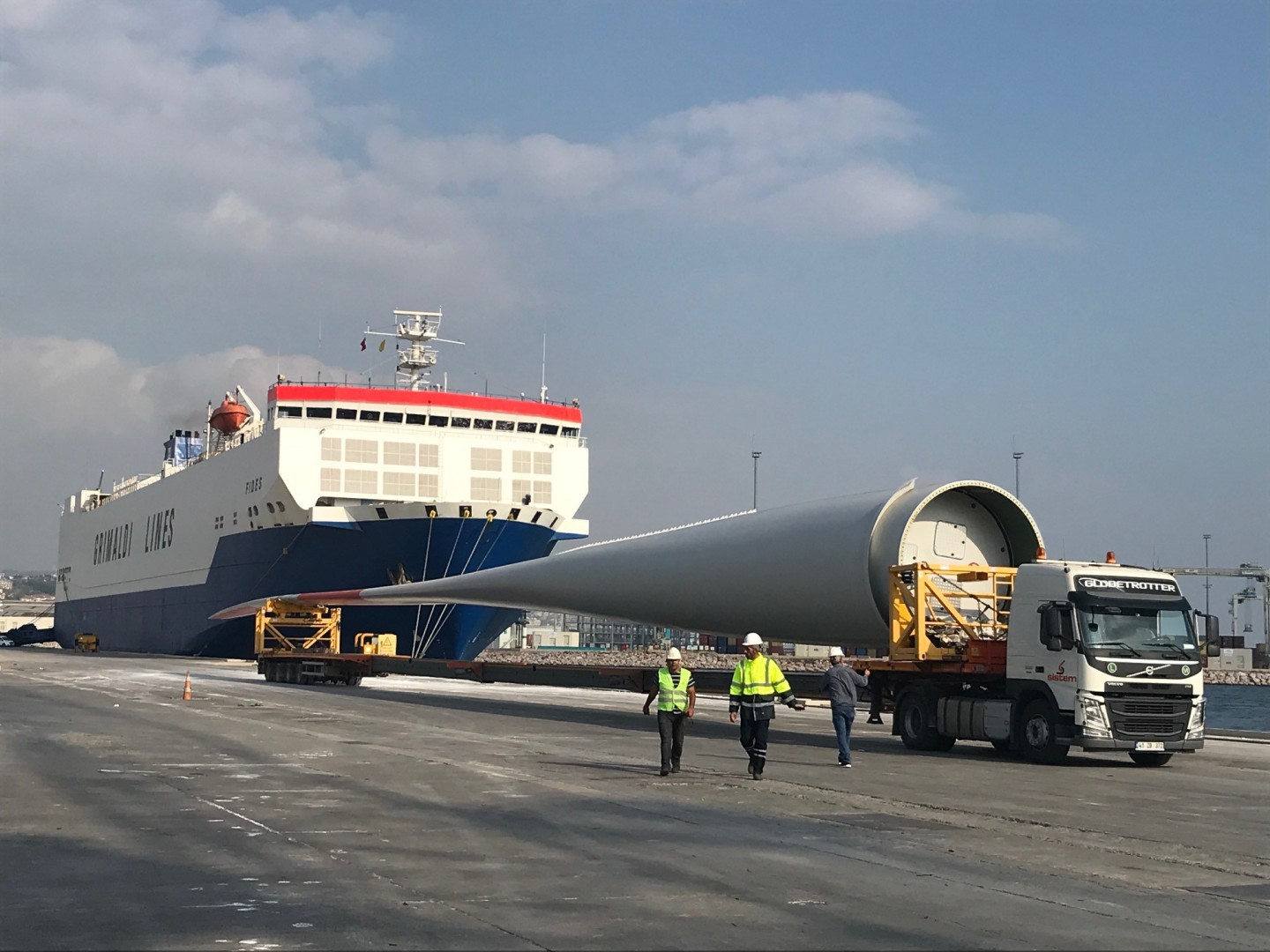
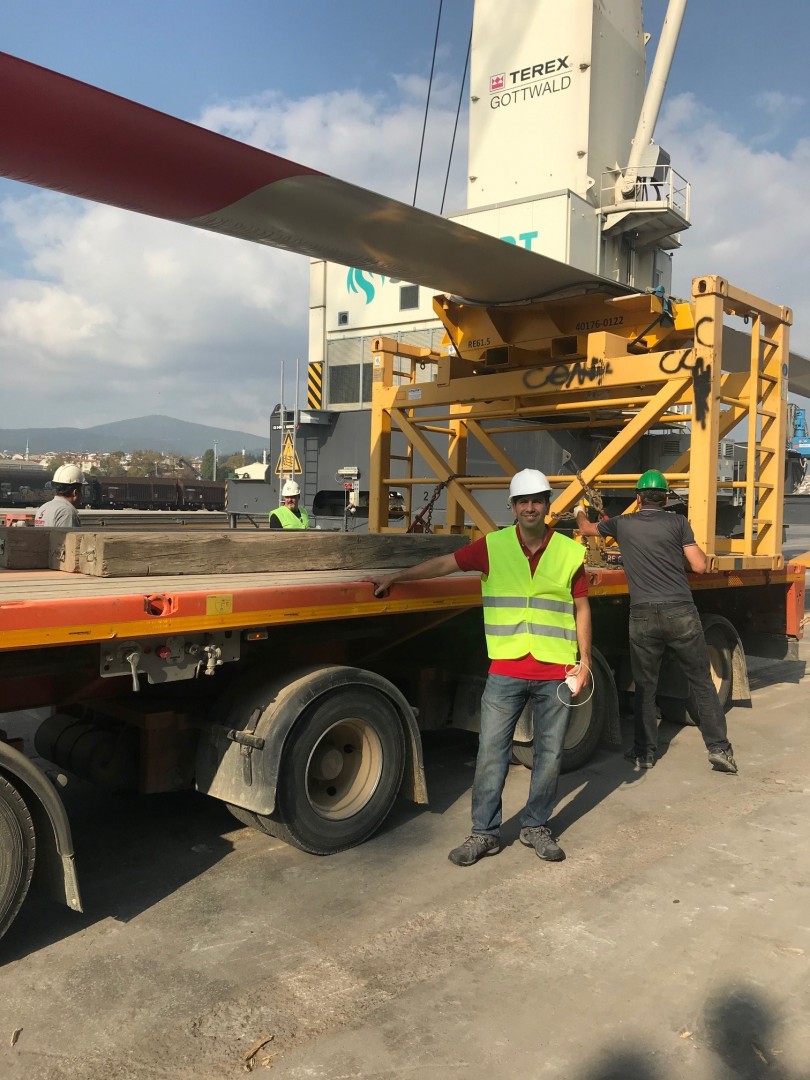
That evening, I returned to Istanbul with peace of mind. We then completed all the customs procedures to remove our turbine from the port. You can imagine how difficult this was. We somehow managed to resolve it. We also contracted the German company Robur to do the installation. Weeks after 29 October, Robur’s professionals arrived on site. Here, we made the necessary arrangements to reach an agreement with Robur, obtain the team’s visas one by one, and ensure their arrival on site. Finally, a few days after arriving on site, on my birthday, 26 November, we met with the entire team. Robur’s senior management was also present at this meeting. On the day the installation was to begin, I gave a historic speech to the entire team. Here’s the video of that speech:
In this video, as if I’d predicted everything, I say, “We’re having problems with the logistics and crane company.” Make a note of that, too. My next post will be about this topic.
After this historic speech, I left the field that evening to speak on sustainability at an event organized by my dear friend Kerem Siral at Soho House. Following the event, we celebrated my birthday joyfully with all our friends.
During the birthday celebration, I thought things had become easier with the arrival of the turbines, but then it suddenly occurred to me that we still had a long way to go. I kept telling myself, “We’ll see what’s in store for us.” I had a feeling things weren’t going to be so easy.
I’ll share what happened next in my next post about our İzmit Kandıra WPP project.
Lessons to be learned from these experiences
1) Financing
No matter the project, prioritize financing. Never wishfully assume (see Wiktionary: Don’t naively interpret a situation favorably) that “we’ll get it done.” Secure financing first, then begin the project. I thought I had secured financing, but I had to use the money I had set aside for this project to prevent other companies from going bankrupt. Even though it wasn’t the right move, I had to.
Essentially, always have a backup source of financing for tough times. Such a source can save you from major problems, even bankruptcy. If I had had money lying around after July 15th, I could have prevented this situation from forming, which would have piled up like dominoes and ultimately caused me significant trouble.
2) Human Resources
Always work with the best. Lawyers, accountants, and technical staff are especially crucial. Mistakes made by second- or third-rate professionals, simply to cut down on your payments, can cost you much more. They can even lead to bankruptcy. A mistake like paying 70% of the turbines’ price and not transferring the title to us nearly bankrupted us completely.
3) Your Network
Associate yourself with high-quality people who are successful in their professions. I was fortunate to have Selda as my neighbor. We formed a strong bond; Thanks to his German-Turkish origins and his ability to professionally address Germans, I not only found the best possible lawyer for me but also gained the support of an effective chamber of commerce like the AHK.
4) Fight to the end
No matter what, never give up the fight. Just like Alita in the movie, who, despite losing half her body and an arm, survives by delivering a devastating blow with all her might with a final jump, fight to the very last moment. Thanks to this fight, I managed to save our lost turbines. There was a lot of back and forth, but I never gave up the fight and achieved the result. Also, always keeping a close watch is crucial.

Bonus:
I’d like to share some information about the Alita movie. Don’t worry, Alita defeats Grewishka towards the end of the movie. Here’s their final round fight: https://www.youtube.com/watch?v=ks8Uj-EL_t8
These are also clips that show Alita’s fighting spirit and her struggle to hold on to life:
Bar fight scene: https://www.youtube.com/watch?v=Um8i-glXSzY
Survivor: https://www.youtube.com/watch?v=L6qH2YJyUp
Tag: ecology