In my last blog post, I included the following lines: “I’ll share my thoughts on the radical changes in the system in the future. I will provide clear examples so you can visualize these concepts more clearly. For example, I will write down what needs to be done to achieve sustainable development in Turkey without wasting any time.”
In this post, as I mentioned in my last post, I will address what needs to be done in Turkey economically, ecologically, socially, and culturally. In fact, there is much work to be done. To keep this post short, I will address the five most important points in my opinion under each heading. But first, let’s reiterate the problem and reiterate why sustainable development is necessary in Turkey.
As Zehra Yakut, whom I quoted in my last post, stated in her article: “The Northern Hemisphere, including Turkey, is under threat from biodiversity. According to the map, Turkey has had a biocapacity deficit since 1977, and according to the latest 2018 data, this deficit has decreased to 1.1 gha (global hectare) per capita.” I list below the steps needed to close the biocapacity gap, sustainably restore the economy, ensure social equality, and strengthen and diversify our cultural heritage.
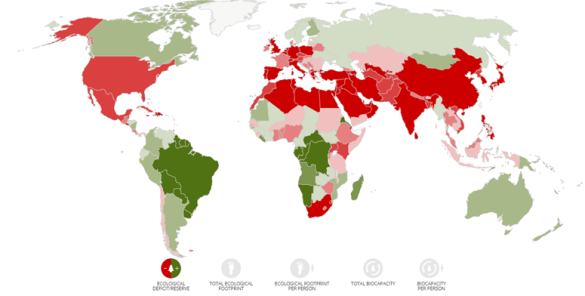
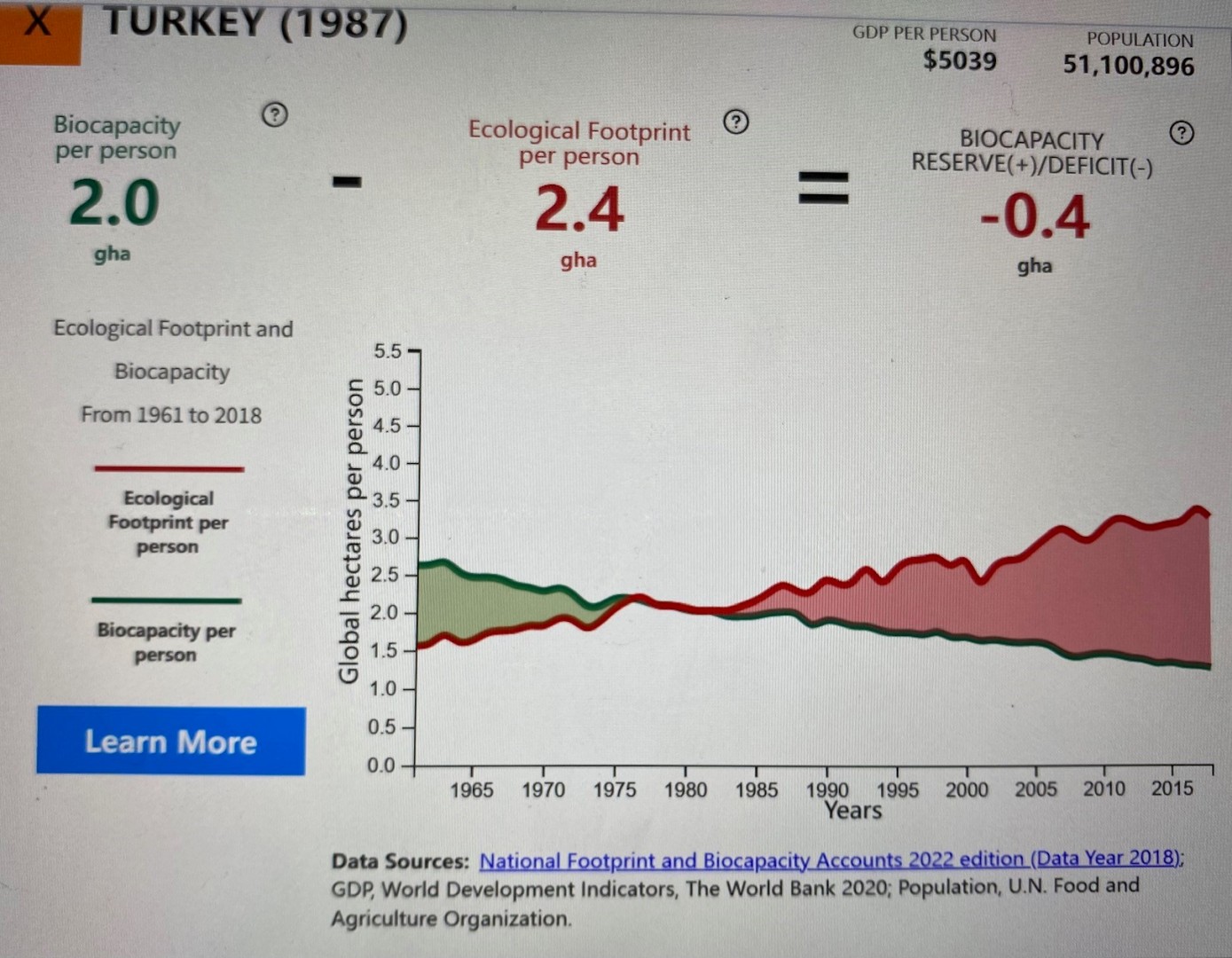
I list below the steps needed to close the biocapacity gap, sustainably restore the economy, ensure social equality, and strengthen and diversify our cultural heritage.
1) Economy
a) Production-based economy: We can transform from a country that constantly consumes and runs a current account deficit because imports exceed exports to a country that exports with production and generates a current account surplus every year, with all parts of the value chain located in Turkey. Achieving this goal requires planning and implementation. The steps to be taken require an institution like the State Planning Organization, along with the country’s leading industrialists and businesspeople, to come together to develop a master plan, and then implement it to the letter.
b) 100% renewable energy: As long as the state is supportive, all of the country’s needs can be met by renewable energy within three years. Our renewable energy resources are in an enviable state, the technology exists, and the only thing missing is the right initiative from the state mechanism. This goal can be achieved very quickly. I’ve been saying this for years. I’d like to re-share an article I wrote in Turkish Policy Quarterly 10 years ago: H. Serhan Süzer – Turkish Policy Quarterly. I have ideas on how we can achieve 100% renewable energy within three years, but I’ll save that for another blog post.
c) Using fossil fuels as raw materials: Now, everyone is advertising that “we’ve found natural gas.” If this natural gas actually exists, it could be utilized in multiple ways beyond simply meeting our energy needs. With technology and extra effort, we could both meet our energy needs and create a commodity to sell by extracting carbon. Natural gas needs to be separated into hydrogen and carbon through a special process. We can use the hydrogen for our baseload energy needs. Furthermore, since water vapor is released after burning the hydrogen, there will be no ecological problem. We can use hydrogen for our energy needs 24 hours a day. The separated carbon can be used as a raw material for various products like Coke, creating added value and increasing revenues.
d) Ensuring Continuous Technological Development: It is essential to establish a system that ensures the continuous development of technologies that will make a difference in different sectors. R&D efforts need to be handled by both the public and private sectors. One of the most important factors that makes Germany what it is is the presence of 73 Fraunhofer Institutes, each focused on different topics and spread across the country. You read that right: there are 73 German state-owned institutes dedicated solely to R&D. I’m not even counting the R&D efforts of various public institutions across the country and the R&D units effectively managed by the private sector. What do we have? We have one poorly managed TÜBİTAK (The Scientific and Technological Research Council of Turkey) and a private sector that’s used to ready-made things. Of course, there are exceptions. To be fair, there are some, albeit rare, private sector organizations that take R&D seriously and are conducting significant research in this area. But the vast majority don’t engage in R&D or only do it for show.
e) Becoming a self-sufficient country: Turkey needs to be able to produce all the products it needs domestically, especially basic necessities like agriculture, livestock, cleaning products, and clothing. Trying to meet our people’s needs with imported products is unsustainable. We have the raw materials, human resources, and vast lands to do this.
2) Ecology
a) Protecting our forests and planting trees: Turkey is increasingly becoming a forest-poor country. This trend must be reversed and a system must be created to ensure that more trees are planted each year than are cut down or expired due to natural causes such as drought. Increasing the number of forests and the ratio of forest land to total land should be set as a nationwide goal, and everything necessary should be done to achieve these goals.
b) Land reform: The country’s land must be cultivated and produced responsibly. Soil maintenance is another important element. To achieve this, the number of farmers must be increased and they must be provided with the best training and technological equipment. To this end, a full-scale mobilization must be declared, land must be allocated to people struggling to make ends meet, especially in underdeveloped regions, and they must be transformed into conscientious farmers who protect nature. I am talking about transforming millions of our citizens into conscientious farmers who own or have the right to use land. Furthermore, an inventory of Turkey’s agricultural and forest lands must be prepared and nationwide planning must be implemented. It is necessary to ensure the optimal management of agricultural lands and protect forests.
c) Water management: We can divide this into two categories. The first is water use. With the help of existing and developing technologies, we need to minimize water use now and in the future. Achieving water efficiency is crucial, and these principles must be applied in every aspect of our lives and every sector. It’s essential to minimize water consumption in homes, agriculture, livestock, garden watering, car washing, etc., without compromising our comfort. We can achieve this with technology. We absolutely must prevent water waste. The second is water production. We can utilize technologies ranging from the simplest to the most complex, such as rainwater harvesting systems, desalination of seawater, and the conversion of air into water. The ideal is for everyone to be able to produce their own water.
d) Protecting our seas and freshwater resources: We must prevent the pollution of our seas, lakes, rivers, streams, and creeks—in short, all our freshwater resources. To achieve this, we need to take drastic measures if necessary. The mucilage problem in the Sea of Marmara is still on everyone’s minds, and I don’t think it has been fully resolved yet. Waste management in industrial zones and organized industrial zones must be carried out with the utmost professionalism and without hesitation. Similarly, life-threatening problems such as overfishing in our water resources (marine and freshwater) must be addressed. Unfortunately, the diversity and abundance of fish in our seas are at a low ebb. Special efforts are needed to restore seafood to its abundant state. We also need to prevent the evaporation of freshwater resources due to drought. Building floating solar power plants on water to prevent evaporation is a priority.
e) Respect the right to life of all animals, wild and domestic: As forests diminish and human settlements replace them, we are causing incredible harm to wildlife. We should declare a significant area of Turkey a national park and leave no stone unturned. To ensure that pets have the beautiful lives they deserve, we must start with stray animals. I have much to say on this subject, but first, neutering stray animals, ensuring they enjoy a happy life in farm-style settings, being adopted with the help of digital media, and finding loving homes are just a few of the things that come to mind. However, this requires detailed study.
3) Social Sector
a) Ensuring free education and healthcare at high standards: Our government must absolutely allocate the resources to provide free education and healthcare at high standards. This is not a pipe dream. If the right steps are taken, the necessary financial resources can be allocated, and this goal can be achieved. It would be particularly useful to examine the systems of Scandinavian countries and Canada. I believe we can establish a system that functions better than these developed countries.
b) Providing continuous education for all citizens, not just young people: We need to completely transform our education system. One of the radical steps we need to take is to go beyond educating our children only in schools. We also need to educate the parents of children who attend school. A special system should be established for this. Children need to attend schools, and parents need to attend specialized courses. Parents who don’t attend these courses should be sanctioned if necessary. These courses should include child psychology and life guidance (e.g., etiquette). After all, our children, our future, spend more time with their parents than in school. This must not be forgotten. Children of ignorant or psychologically disturbed parents are more likely to experience the same problems. In addition to parents, educators also need to be constantly trained and kept up to date. I’m talking about monthly training for schoolteachers. This training should be designed to help them become better educators, both in their own fields and in vital principles, such as child psychology.
c) Uncompromising implementation of the principle of the rule of law nationwide: It seems perfectly normal for Turkey to be a state of law, doesn’t it? Unfortunately, we’re not even close to a state of law. Law is the foundation of coexistence. The steps to re-establish the principle of the rule of law in Turkey are clear. This is a blog post. Among the first measures that come to mind are ensuring that those within the system (judges, prosecutors and lawyers) are financially secure, establishing a system that ensures decision-makers and litigants are not covetous, and taking measures to completely remove politics from our legal system—in other words, establishing an independent judiciary. Since this is the subject of a blog post, I’ll stop here for now, but I want to reiterate that the rule of law is a profound and important issue.
d) Ensuring everyone respects differences in ethnicity, beliefs, and lifestyles: A system that tries to make everyone a carbon copy is fraught with flaws and will always cause problems. Forget the differences across the country; even within a family, siblings have very different personalities and backgrounds. Differences are not a handicap; on the contrary, they are a sign of diversity, a unique richness. Therefore, we need to instill a broad perspective nationwide that will allow everyone to appreciate the differences in our country and support one another. Hatay, the province that has achieved this best in Turkey, should be taken as an example in this regard. On this occasion, I offer my condolences to our beautiful Hatay and all those affected by the earthquake, and I hope they heal their wounds soon.
e) Distributed systems: A centralized system that ensures our citizens’ dependence on the state is not the right system. Because governments in power can use citizens who rely on the state for everything as a vote bank in any way they can. However, for our citizens to be free and act with their own free will, distributed systems must be established where everyone can take care of their own needs. Our citizens must be able to meet at least the basic needs of themselves and their families. I will write a blog post about how this can be achieved in a future post. Of course, in healthy, functioning democracies, all citizens should be active in local issues, and issues regarding local changes should be asked of the citizens and voted on (the Swiss Model). The more engaged citizens are in solving the problems that concern them, the healthier the democracy in that country will function.
4) Cultural Sphere
a) Embracing All Cultures: We live in arguably one of the most colorful and profound geographies in the world. First of all, we are at the intersection of East and West. For tens of thousands of years, our region has hosted many different civilizations. In other words, if a genetic study were conducted, our genetic map would reveal that our culture is as diverse as our own, which is a great richness. We must embrace all the cultures in our region and ensure their enrichment. We lose this distinction when everyone becomes like a carbon copy. Protecting all cultures in our lands can only be achieved by creating a peaceful environment and changing mindsets throughout the country.
b) Supporting culture and the arts: All kinds of cultural and artistic activities and those who contribute to them must be supported. Ultimately, everything hinges on financial support. It wouldn’t be right to expect this support solely from the government. The private sector also needs to be encouraged to support cultural and artistic activities. For example, giving the private sector the discretion to decide how to use taxpayer funds and ensuring that it can be transferred to NGOs that organize cultural and artistic events in the country would be a good start.
c) Smuggling of historical artifacts: We have never been able to address this shameful problem. Smuggling of historical artifacts has reached such a level that they are even establishing museums in foreign countries with historical artifacts smuggled from our country or officially purchased (which, in my opinion, is the official form of smuggling). Since we cannot protect our historical artifacts, the countries that open museums with artifacts they stole from us express the arrogant, though justified, view and respond to criticism with the arrogance of “we can take better care of these historical artifacts than you can.” Yet, historical artifacts must be preserved in their original locations. A system must be established to return these artifacts to Turkey, to uncover new artifacts, and, most importantly, to protect these historical artifacts (reducing the smuggling of historical artifacts to zero). A state’s will, led by governments staffed by truly patriotic individuals, can strictly implement the necessary measures for this purpose and restore our country’s lingering prestige.
d) Making Turkish cuisine one of the world’s most popular cuisines: Turkish cuisine is renowned worldwide. However, unfortunately, when asked by tourists, we still lag behind the positive perception of popular cuisines like French, Italian, Japanese, Korean, Chinese, Thai, Greek, Spanish, Portuguese, and Peruvian. With the right promotion, a commitment to creativity, and a global workforce, Turkish cuisine can become one of the most beloved in the world. Our current situation isn’t bad, but we’re certainly not where we deserve to be. Another characteristic of our cuisine is its emphasis on sustainability. For example, many different dishes are prepared in our kitchens even with stale bread. There’s even a cookbook for it. I saw the book “Recipes of Dishes Made with Stale Bread” in Gaziantep. We can highlight this very characteristic and set an example for the entire world in preventing waste.
e) Museums: Museum visits are increasing, but they are still not at the level they deserve. We need to increase the number of museums and ensure they are well run. We also need to pursue more creative initiatives beyond the classical museum approach. We can open museums with different characteristics in every province. Every corner of Turkey is a paradise of culture, art, history, and cuisine. We need to showcase this. The Baksı Museum in Bayburt is a good example. Opening museums with different concepts will also significantly contribute to the economy of the city in which they are located.
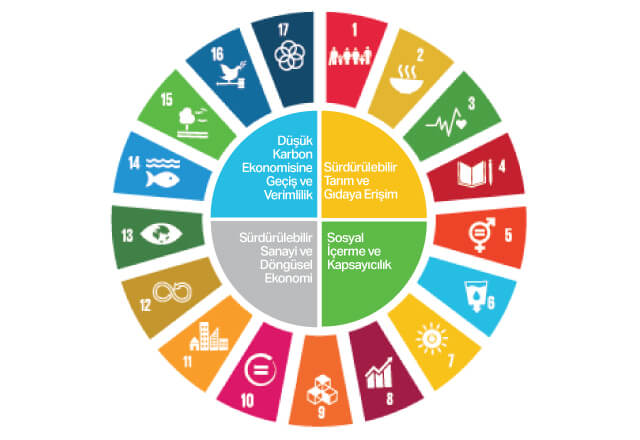
We can launch within 5 years.
I have made five recommendations each in the economic, ecological, social, and cultural areas to achieve sustainable development in Turkey. I have also provided some tips for some of these suggestions. Of course, there are many other things to do beyond this article, which I wrote to start a brainstorming session. I’m sure you have many ideas too. By ensuring that our intelligent and patriotic citizens contribute to this process, we can achieve lasting sustainable development in our country through teamwork. This is not a dream; If the right goals are set and planning is done, and if the competent people who will execute this plan are at the helm, we can start sustainable development within five years.