In August, a series of events forced me to isolate myself from TİDER (Basic Needs Association), which I founded, and from the Disaster Platform, of which I was the founder, the founder, the founder, and the first spokesperson. Suddenly, the forest fires broke out. In such a time, I felt a sense of emptiness. Although I wanted to go to the field and help, I couldn’t figure out how to do it because I was so isolated from NGO work, I’d been working on since 2010, so I put it on hold.
After further consideration, the idea of firefighting with drones came to mind. As I began to think about drones, I thought of calling Orkun, a young engineer friend of mine whom I’d met years ago at a meeting and given advice about whom had entered the drone manufacturing business after university.
From the drone idea to the construction of a water truck
Orkun and I had the following conversation:
– Hello Orkun. It’s been a while since we’ve seen each other. How are you?
– I’m fine, Serhan Abi. How are you?
– I’m fine too, thanks. As professionals in the drone business, are you planning to do anything about these forest fires? Fires have been everywhere for a week. After all, you could have an impact here, both in terms of surveillance and firefighting (firing fireballs, etc.).
—You’re right. However, drones are very complex. Special permits are required. Not everyone can fly a drone on their own. Even if they’re skilled—and licenses are required for this—helicopters and planes are constantly operating in that area, even at low altitudes. Drones launched without proper permission or permission could collide with other aircraft and cause a disaster.
—I’d say let’s get the permits and proceed with that, but getting those permits would take a long time, wouldn’t it?
—Yes, exactly. This involves a lengthy and complex procedure.
—So, what should we do?
—If we want to work in that area, I have another practical solution. We could build water trucks, or fire trucks. These vehicles can also be used for firefighting and carry water for the helicopters.
—This is the first time I’ve heard of water trucks. Do you have any technical information or drawings? Could you send them?
– Of course, we have drawings we’ve prepared. I can send them.
– Please send them. Thank you.
Action Plan
He then explained the technical details of the water trucks to me, and after we talked, I told Orkun, “Let’s take action immediately.” Taking action immediately meant:
1) Determining the roadmap (where will we work, what will we do?)
2) Raising the financing
3) Building the water trucks
4) Getting them to the fire zones
The Orkuns immediately acted and began work in Izmir to build the water trucks. I also spoke with close friends to raise the financing and asked them to donate to the Akut Foundation. We raised 100,000 TL in two days. I wholeheartedly thank all my friends who supported us.
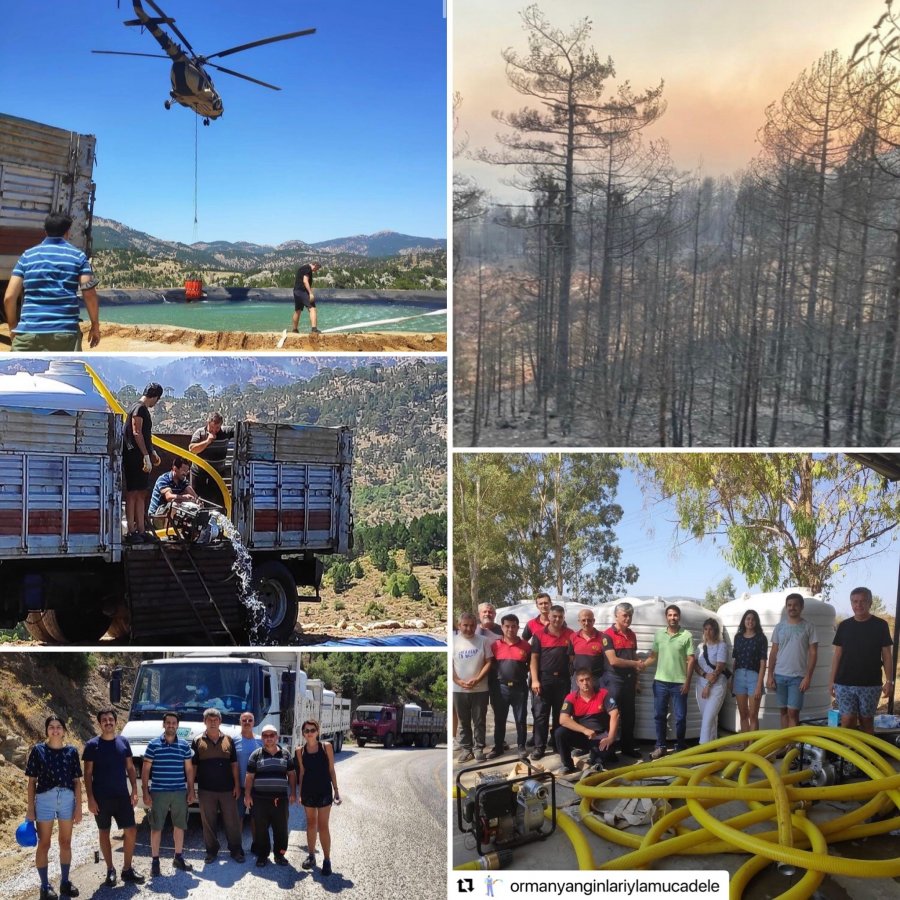
In the meantime, our Instagram page has been launched. You can access the forest firefighting platform at https://instagram.com/ormanyanginlariylamucadele?utm_medium=copy_link .
Determining the roadmap proved challenging. Finally, we departed for Izmir on a Sunday and met with Orkun and İpek, who handled the technical aspects of the project. In Izmir, we finalized our plans. Accordingly, we would work in Köyceğiz. There was a significant need there, and the fire was struggling to be extinguished. Furthermore, we contacted the General Director of Forestry, who said, “There’s a lot to do here. Come on in.” That opened the door.
The next day (Monday) was a very busy one. Procuring the parts for the water trucks, organizing logistics, and procuring materials—we handled all of this from early morning by dividing the workload. After working until evening, we were ready to head to the region. That evening, we arrived in Köyceğiz and checked into our hotel.
31 tons of water, carried up on the first trip.
We woke up early in the morning and began assembling the water trucks under Orkun’s leadership. Şeyda, who lives in Köyceğiz, also played a significant role in the execution of the project, handling the finer details. Erdal, one of our volunteers who had come to Köyceğiz on his motorcycle, joined us that morning. We worked all day long, going directly to the Köyceğiz Fire Department and establishing contact with them. We designated the Köyceğiz Fire Department as our headquarters and deployed there.
We completed assembling the water trucks around 5 p.m. and immediately set off for the village of Otmanlar, where the fire department had directed us. Loaded onto five trucks in total, we were directed to the helicopter water collection area established near the plateau. On our first sortie, we collectively lifted 31 tons of water.
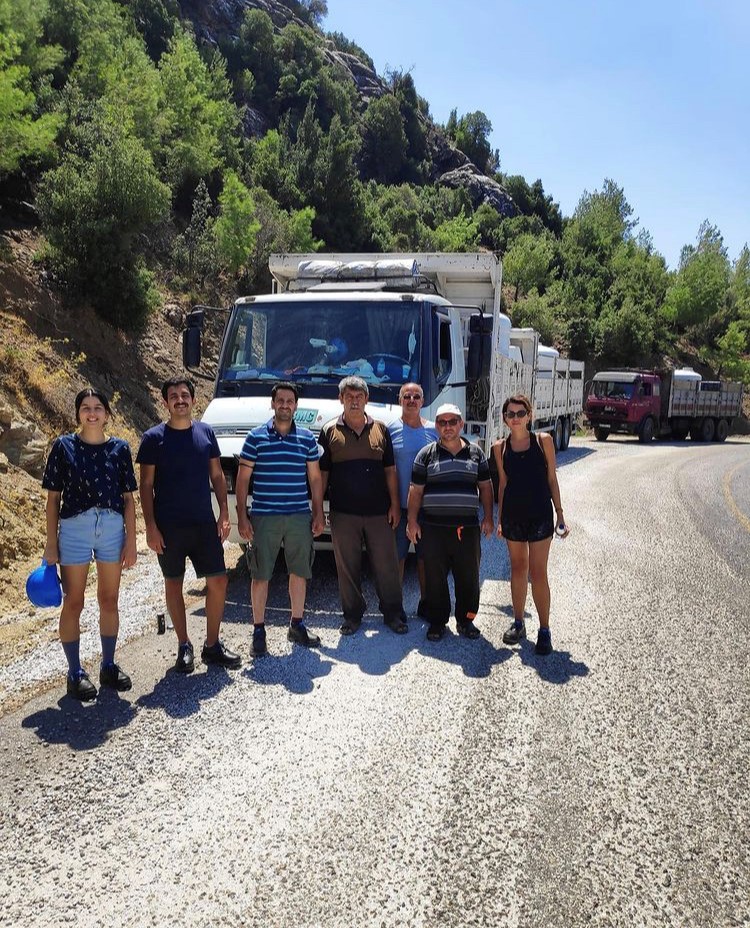
We continued the water transport operation the next day and the day after. By Thursday evening, we had transported a total of 120 tons. Thanks to these transports, the helicopters were able to continue their work without interruption. The continuous airstrikes, conducted at very short intervals, helped extinguish the fire. We were delighted if we were able to contribute to the fire.
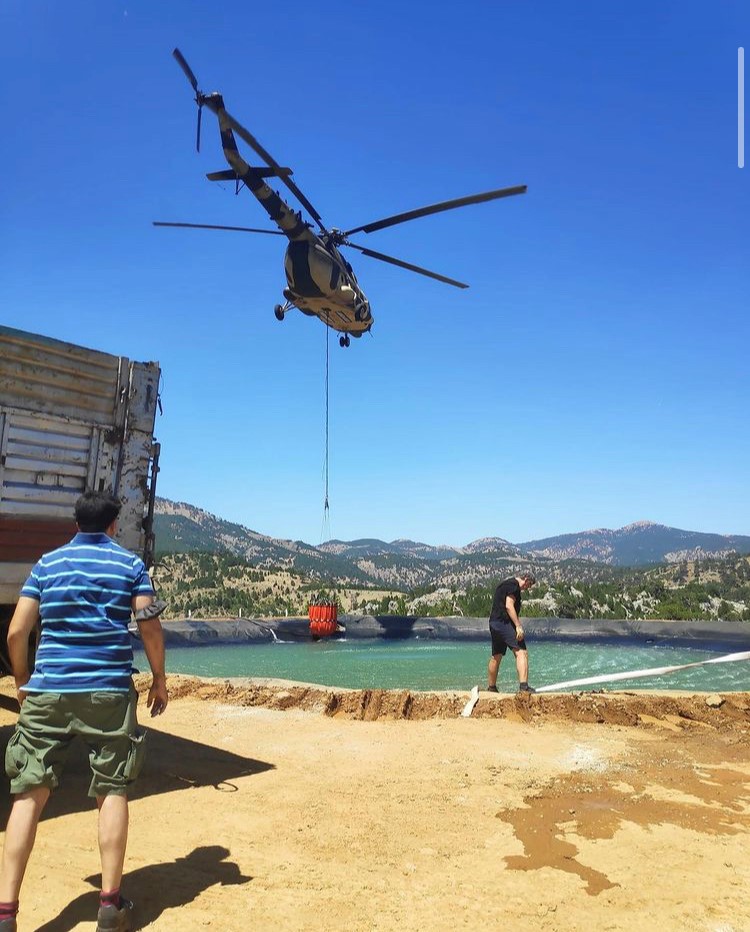
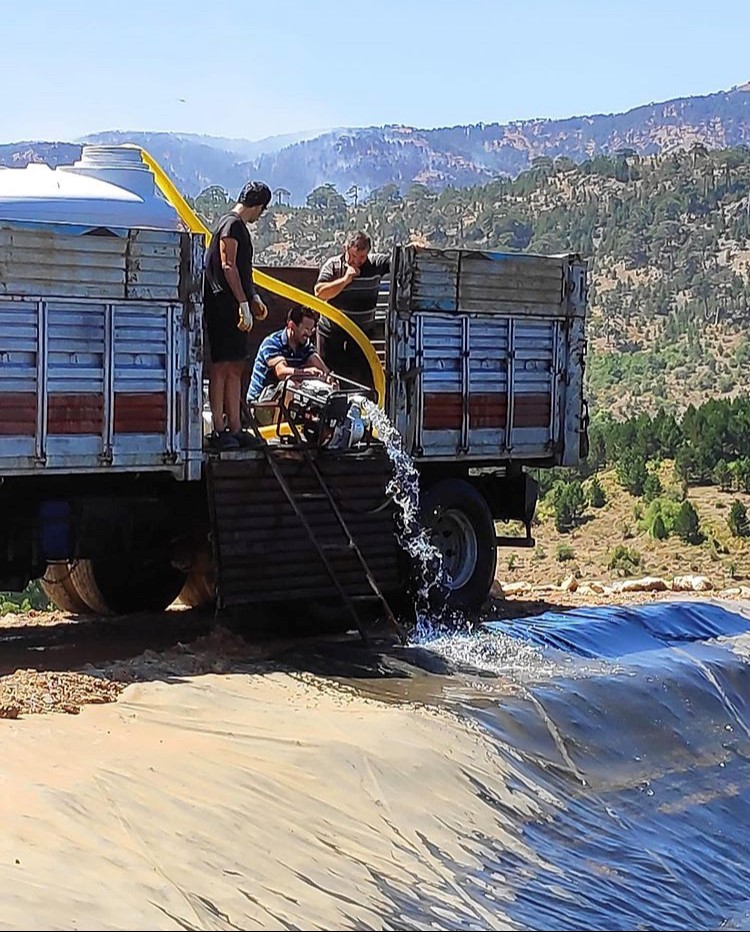
On Friday, we donated our water truck equipment and useful parts to the Köyceğiz Fire Department, which we consider both reliable and consistently supportive throughout the process. After taking this photo, we set off for Istanbul.
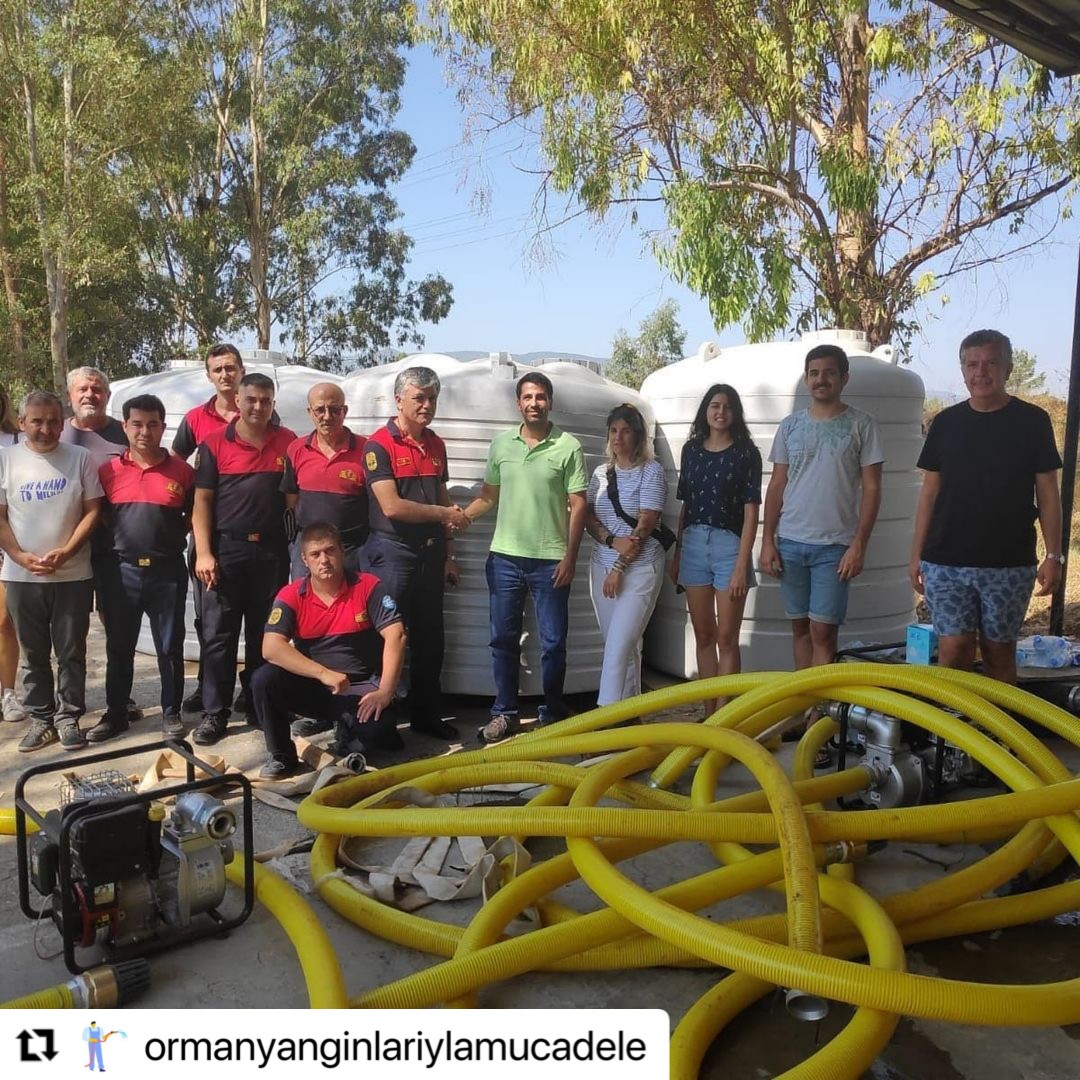
I would like to wholeheartedly thank Aslıhan, Cansu, İpek, Erdal, Şeyda Bey, Orkun, and Berk, each of whom is a true gem of a volunteer. We’ve done a fantastic job together. This will continue, and we will continue to develop this work and the experience we’ve gained in the field to further our efforts in combating forest fires.
Here’s a wonderful video summarizing what we’ve done in Köyceğiz (I extend my heartfelt thanks to Serkan Koç of Kam Film, who produced this video for us):
We’ve gained a wealth of knowledge and experience during this process. Perhaps the most valuable of these is the constant surveillance, especially during the summer months, the fire season, until the end, in terms of risk reduction, and the response to even the slightest smoke.
Delayed response is very costly.
They showed me where the Köyceğiz fire started. It started on a roadside platform in the Zeytinalanı neighborhood of Köyceğiz. The fire there lasted two days. I suspect it was due to a lack of coordination between the forestry and fire departments, and most importantly, a lack of equipment, that the fire was unable to be contained. After two days, the fire, driven by adverse winds, reached the very top of the hill and continued unabated.
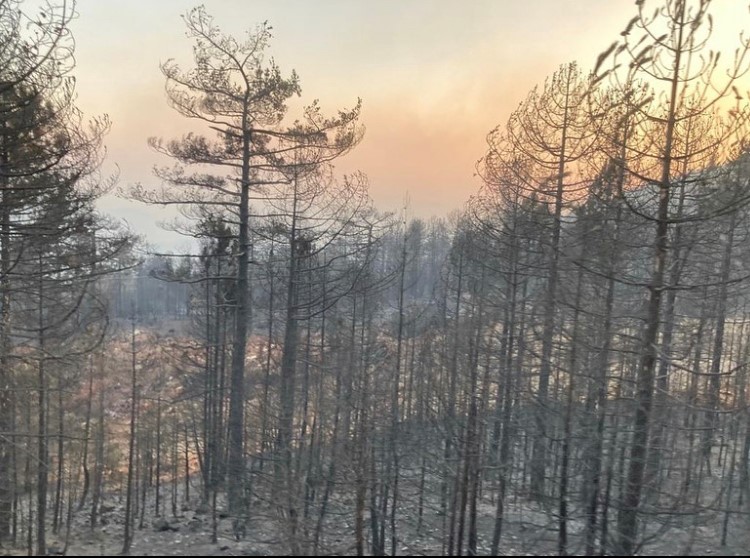
It crossed dozens of hills and spread beyond the plateau. So, if the fire had been intervened at its inception, such a vast area would not have been burned. Meanwhile, we witnessed everyone there doing their best with good intentions. If our people are provided with the necessary equipment, training is completed, and disaster preparedness is meticulously prepared; any losses caused by forest fires can be minimized.
The crucial point is to carry out these efforts without delay in all areas of Turkey at risk of forest fires, ensuring everyone is prepared and acts in coordination.
Turkey has the wisdom, power, and resources to do this.
Tag: education