As a reminder, let me share the links to my previous articles about my trip to Peru, which included Lima, Cusco and Macchu Picchu:
https://www.serhansuzer.com/tr/latin-amerikali-kuzenlerimizin-karizmatik-ulkesi-peru-lima
https://www.serhansuzer.com/tr/latin-amerikali-kuzenlerimizin-karizmatik-ulkesi-peru-cusco
https://www.serhansuzer.com/tr/latin-amerikali-kuzenlerimizin-karizmatik-ulkesi-peru-macchu-pichu
In the final days of our last week in Peru, we wanted to leave Lima and experience a different city. While considering where we could rent a car, we thought of Ica, which Jesus, the owner of the hotel where we were staying in Cusco, had previously highly recommended. Upon further inspection, we determined that Ica could be reached by car in about five hours. We had return flights on Saturday evening, so we thought a Friday trip would be a good idea.
Our plan was to rent a car early in the morning, drive to Ica, and return in the evening. However, it took longer than we expected to leave the hotel and rent a car. Keep in mind: renting a car in Peru is quite a hassle. Cars can get stolen for some reason, and there are additional procedures and security measures. So, it took us an hour and a half to get out of the car. Setting off at 11:30 a.m. instead of early in the morning, our schedule naturally got delayed.
Peruvian roads are a pain for Istanbul drivers. 🙂
Of course, you’d be hard pressed to find a better Turkish driver in Peru. You’ll appreciate that for someone who experiences driving in a place like Istanbul every day, driving in Peru wasn’t difficult at all. The constant lane changes, pedestrians and vehicles popping up everywhere, vehicles cutting each other off, cars not obeying traffic lights, and so on, weren’t a problem at all. Because we have the same old habits. Nothing surprised me in Peru; in fact, I felt like I was back home. Of course, I want to point out that I’m not boasting about this. Don’t take it as a joke; these characteristics of Latin Americans, whom I call our cousins and whom I find very similar in character, aren’t particularly commendable in my own country either. This tendency to disobey the rules is unique to underdeveloped countries. Frankly, I adapt to survive. Does it work? Of course it does. I have no difficulty adapting to that country, but I also hope that things will get back to normal soon, both in our region and throughout Latin America.
Getting back to our topic, just as leaving Istanbul is a difficult task due to the heavy traffic in Turkey, getting out of Lima also took time. We managed to get out of Lima in about an hour.
Afterward, the road was relatively smooth, and we found ourselves in an incredible landscape. With the ocean on one side and the desert on the other, we cruised along the highway, taking in this visual feast and the beauty that nature has bestowed upon us.
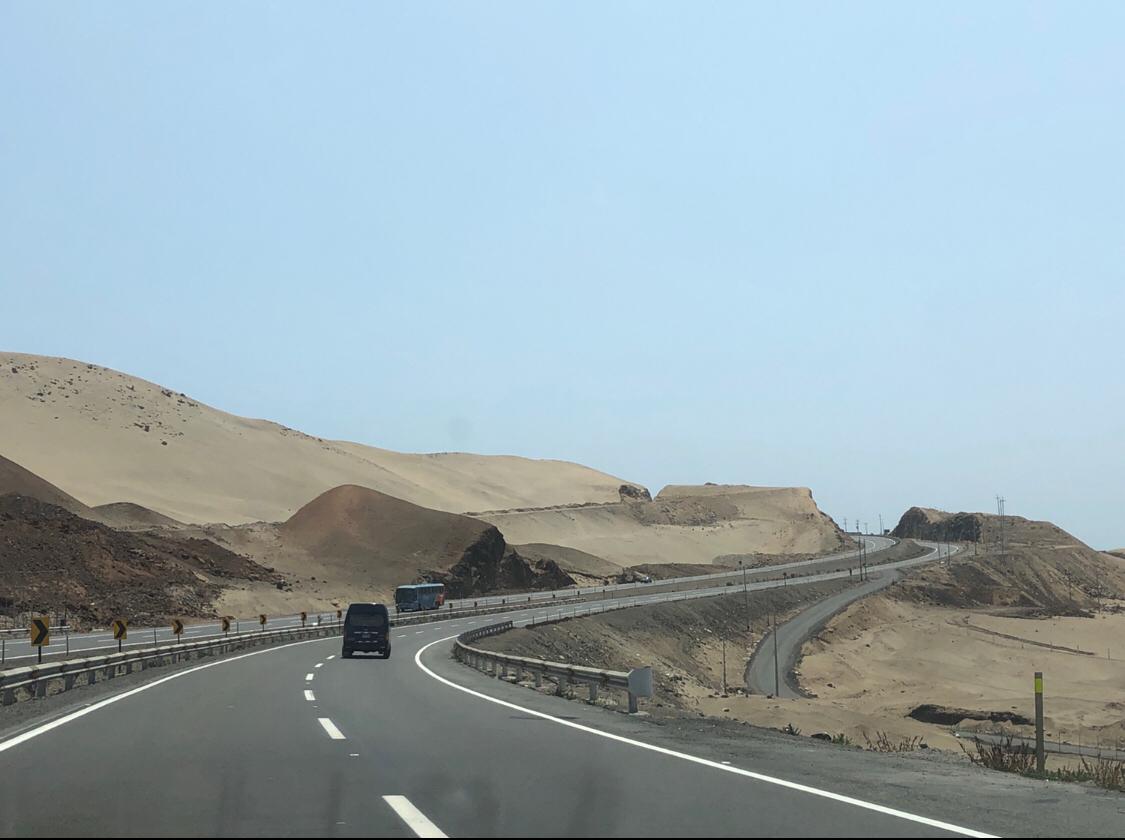
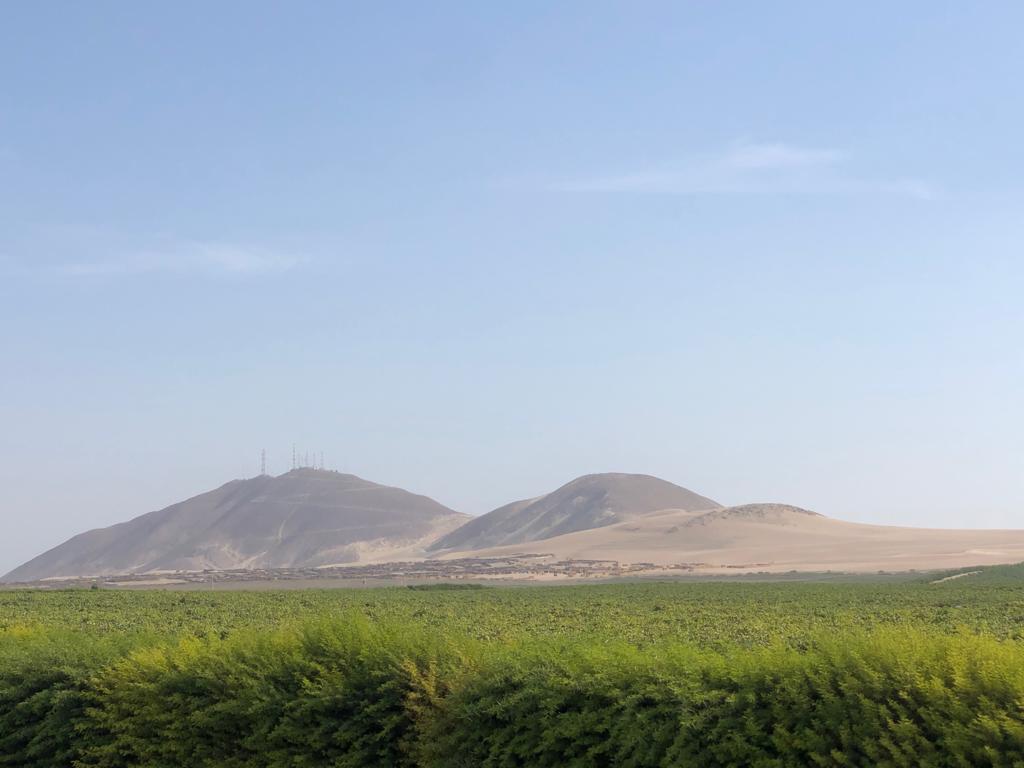
Three hours after setting off, we stopped for lunch about two hours from Ica. This charming roadside spot, nestled in the desert, offered little more than the usual hamburgers and fries, but the eccentricity of our location made the meal enjoyable. Let me explain our location to you: we ate hamburgers and fries in the desert, and the ocean lay beyond the hill next to our restaurant.
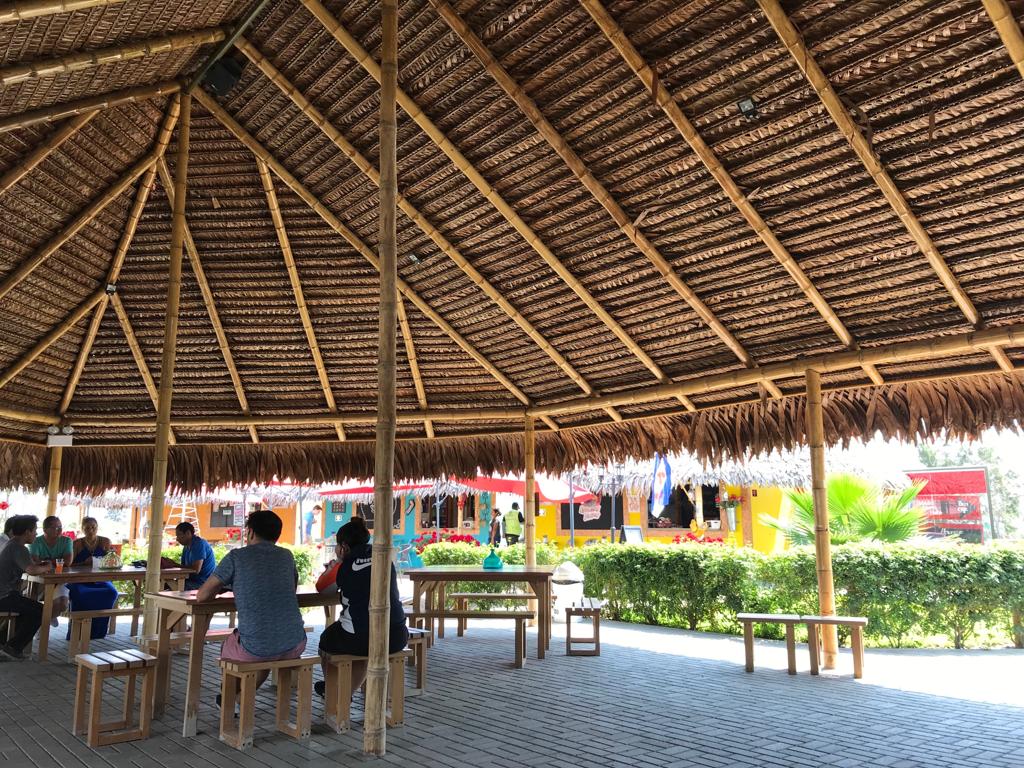
A photo we took at the charming Peruvian restaurant
Turkish-style solutions that drive navigation crazy
After filling our stomachs, we were back on the road in about 45 minutes. Meanwhile, we had set a goal of making it to the Museo Regional de Ica, which Jesus had highly recommended. The museum closed at 5:00 PM. Shortly after setting off, asphalt work reduced our route to a single lane. After waiting in that queue for about three minutes, I looked at my watch. I realized it was impossible to reach the museum on time before closing time. I told my friend next to me that at this rate, we wouldn’t be able to make it to the museum and we’d be late for Huacachina, where we were heading when it got dark. I added, “I can only solve this the Turkish way. Don’t worry about anything after this; turn up the music.” My friend naturally asked what I was planning to do. I smiled, then turned left, first into the oncoming lane, then onto a side road—or rather, a dirt road with no road at all. So, I followed our route along the dirt road parallel to the road leading to our destination, sometimes through side streets, sometimes through no roads at all. Meanwhile, Google Maps was going crazy. When it kept spouting nonsense like, “You’re on the wrong road, make a u-turn,” I turned the volume down on the navigation. I continued on my own. After 20 minutes, I bypassed the entire single-lane traffic, which had been shown an hour and a half on my navigation, and then turned right again at the toll booths. I pulled into my own lane, right in front of the police block. So how do you think I managed to get out of the way of the road, even breaking the lane, and still beating thousands of cars, despite the police?
Of course, back to the usual Turkish method: saluting the police!
The police officers saluted me back and cleared the way. It was great fun. Because, as is often the case in our region, they probably thought I was someone important or someone’s son (despite our dilapidated car).
My friend next to me couldn’t believe his eyes. After all that adrenaline, we burst out laughing. Ultimately, despite the navigation’s misdirection and the time-wasting drive to the market area opposite the museum, we managed to enter the museum at 4:30 PM.
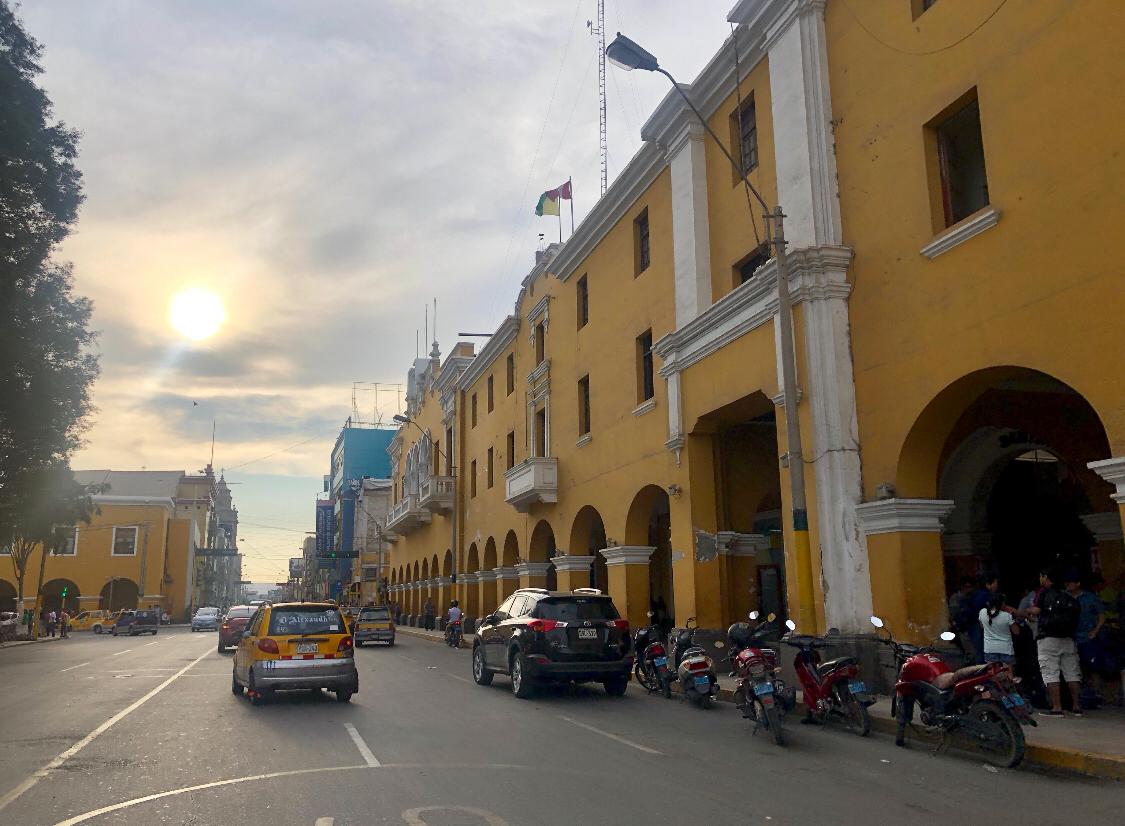
A shot of the city center
A video we shot in the city center where we accidentally landed
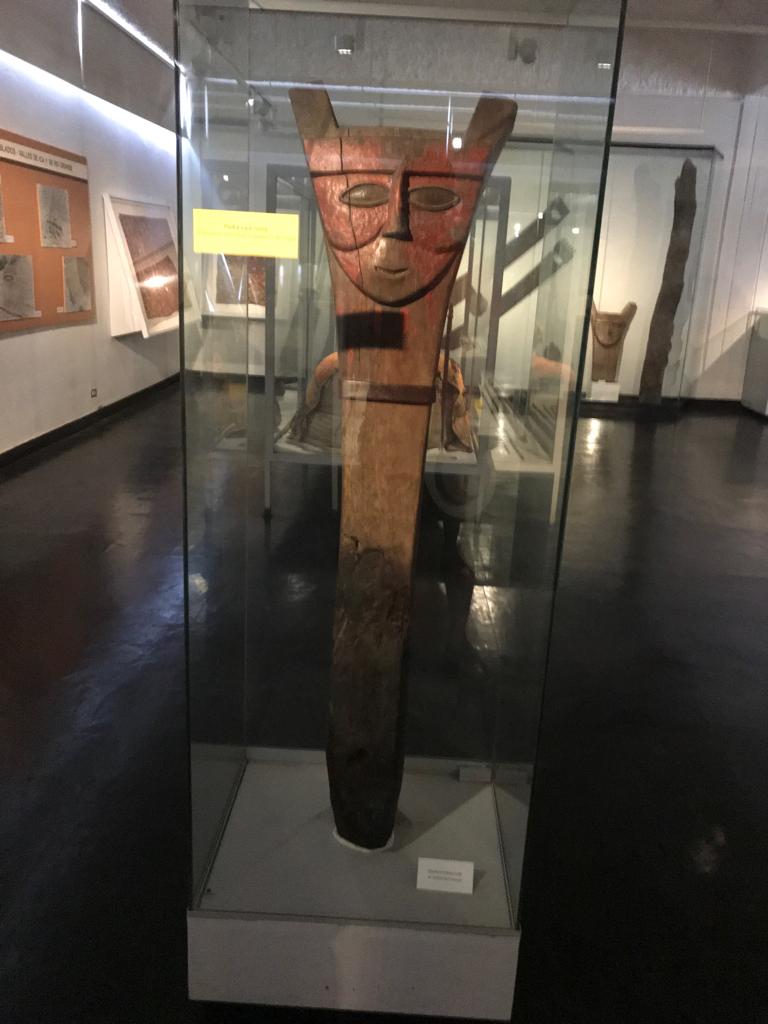
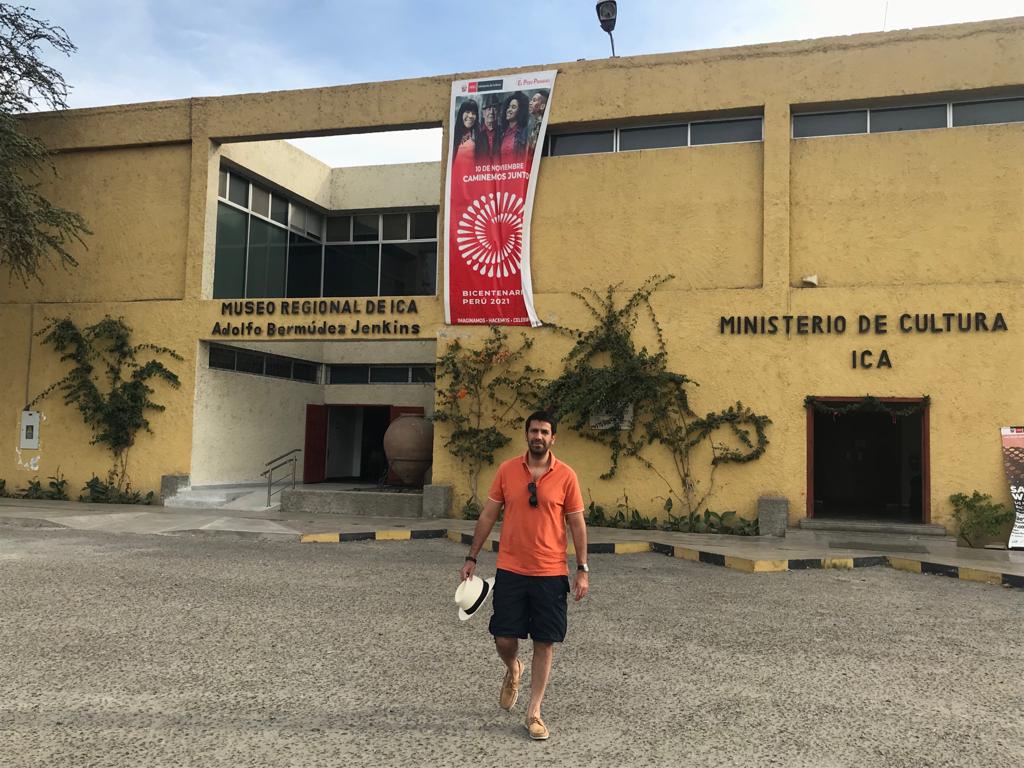
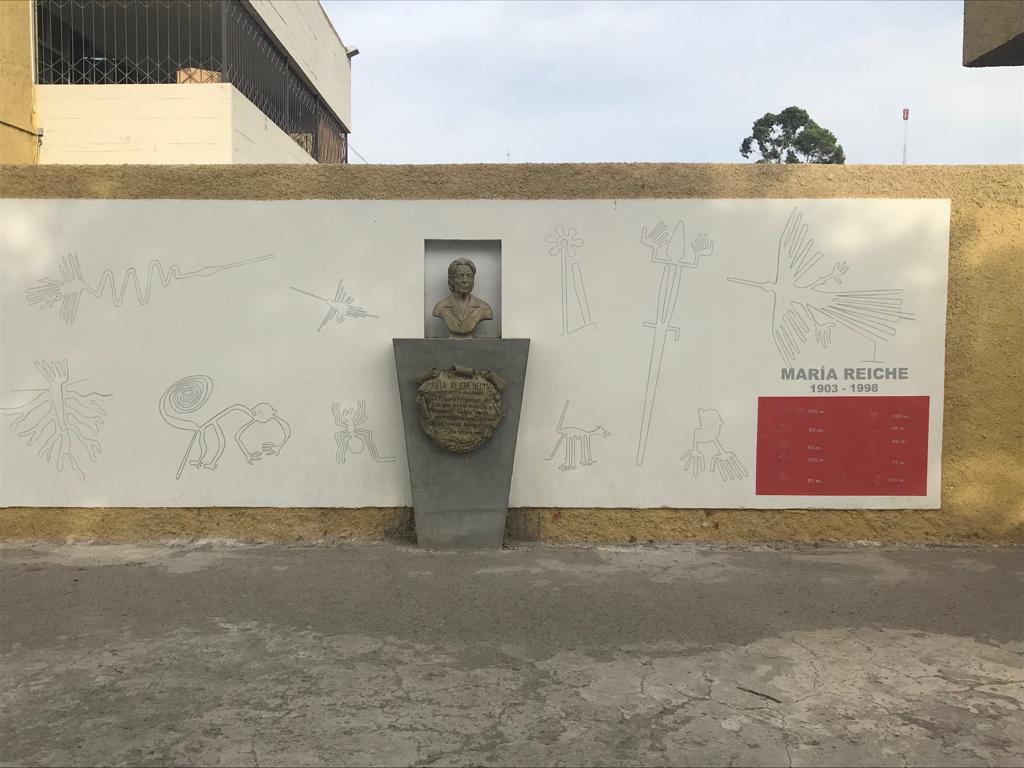
The museum was nice, but frankly, it fell short of my expectations. Still, it was enjoyable to trace the region’s civilizations stretching back into the past. Here’s a selection of photos I took inside and outside the museum to help you visualize it:
A mirage-like oasis in the desert
After leaving the museum, we quickly headed to our next stop, the Huacachina region. It was a very interesting place. Let’s put it this way: we entered the desert, but next to it was an “oasis,” just like the fairy tales tell. Inside the oasis was a lake, and around it were tourist facilities.
Video of the oasis
This was the only natural oasis in North and South America. Huaca-china means “weeping young woman,” and the oasis takes its name from this legend. According to legend, a beautiful Inca princess fell in love with a handsome Inca prince. However, when the prince died suddenly, the princess wept profusely, and her tears created this oasis. The princess sat next to this oasis, contemplating the prince, and eventually, she transformed into a mermaid in the oasis she created out of her own grief, immortalizing their love.
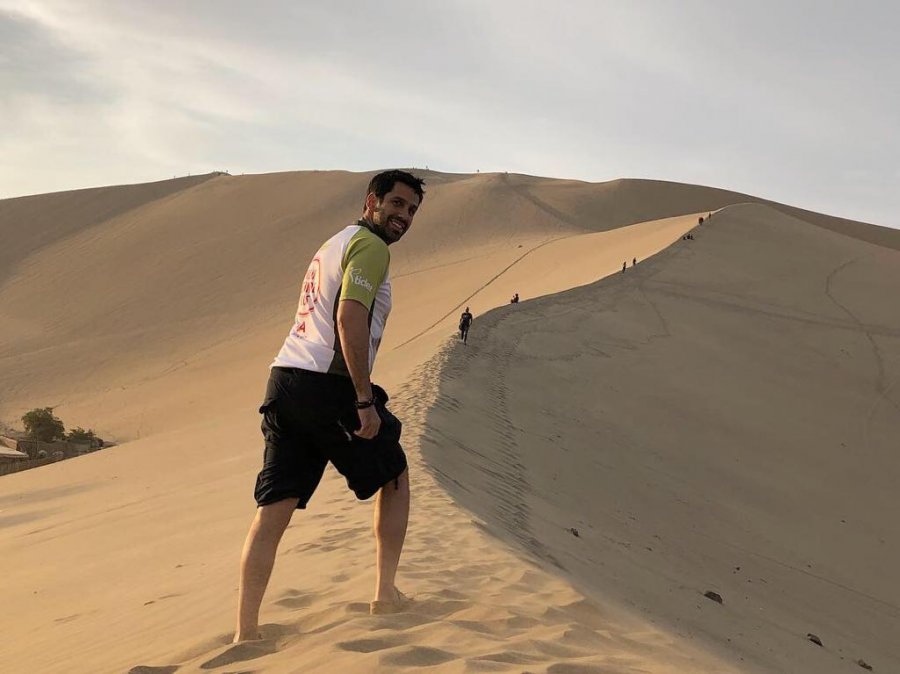
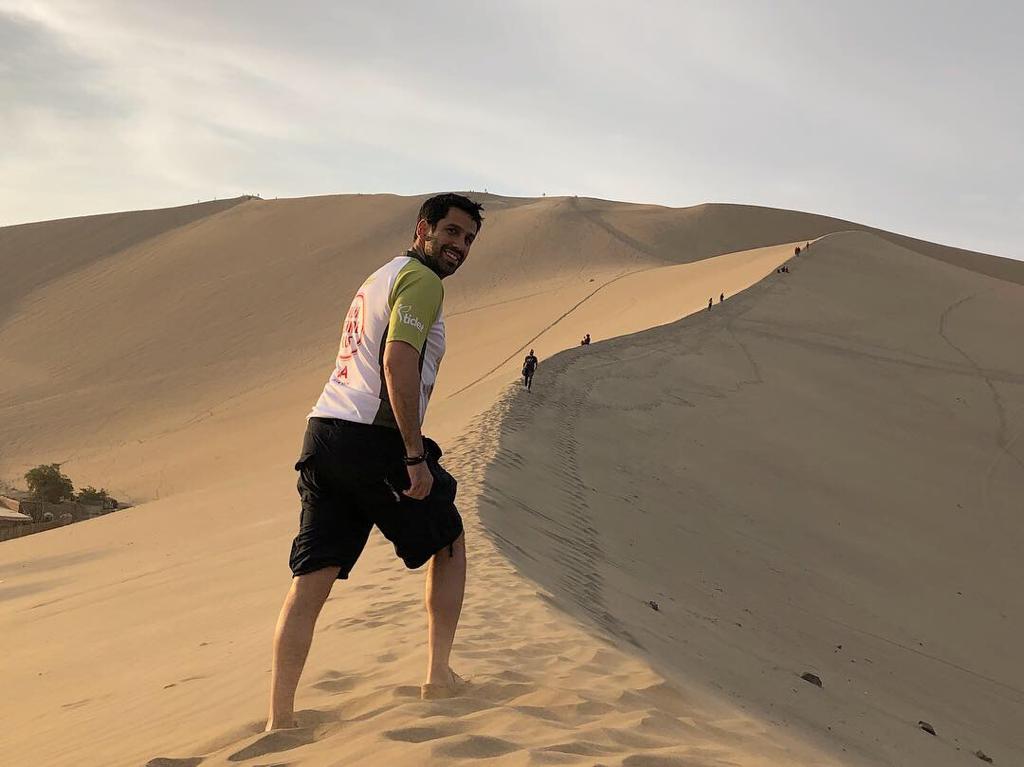
The warm, soft hues of the setting sun, viewed from the high dunes, combined with the vast expanse of the desert, created a visual feast.
After taking a break in both the desert and the adjacent oasis to take the photos below, the sky had already begun to darken.
I’d like to share the photos we took in this setting with you:
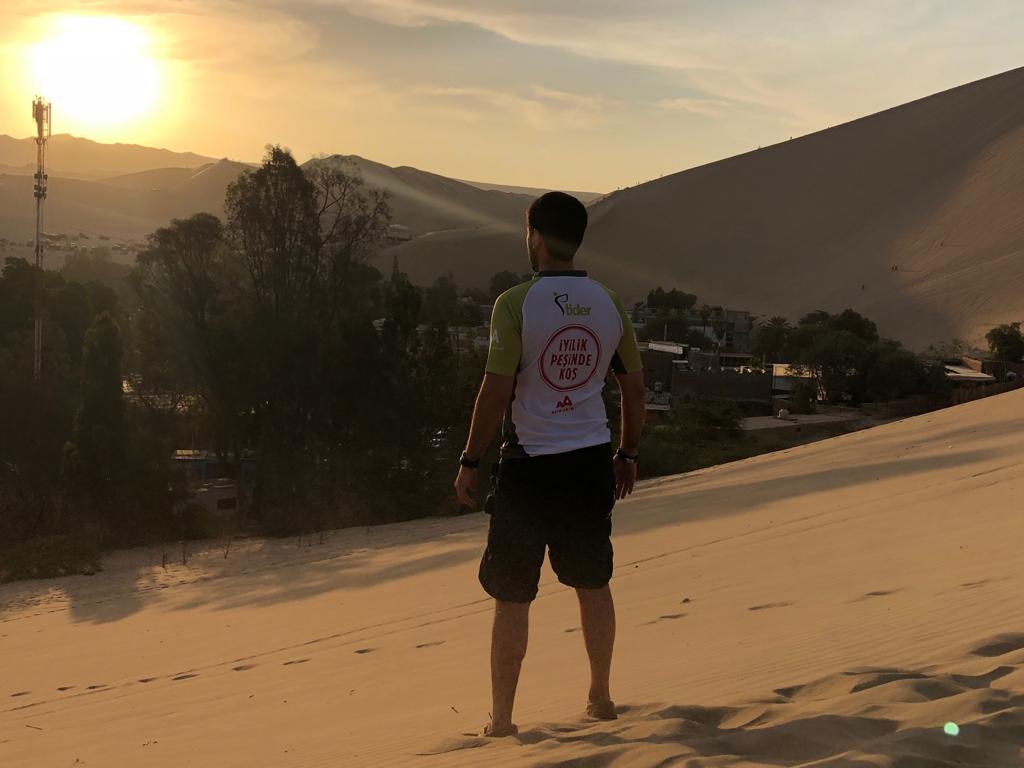
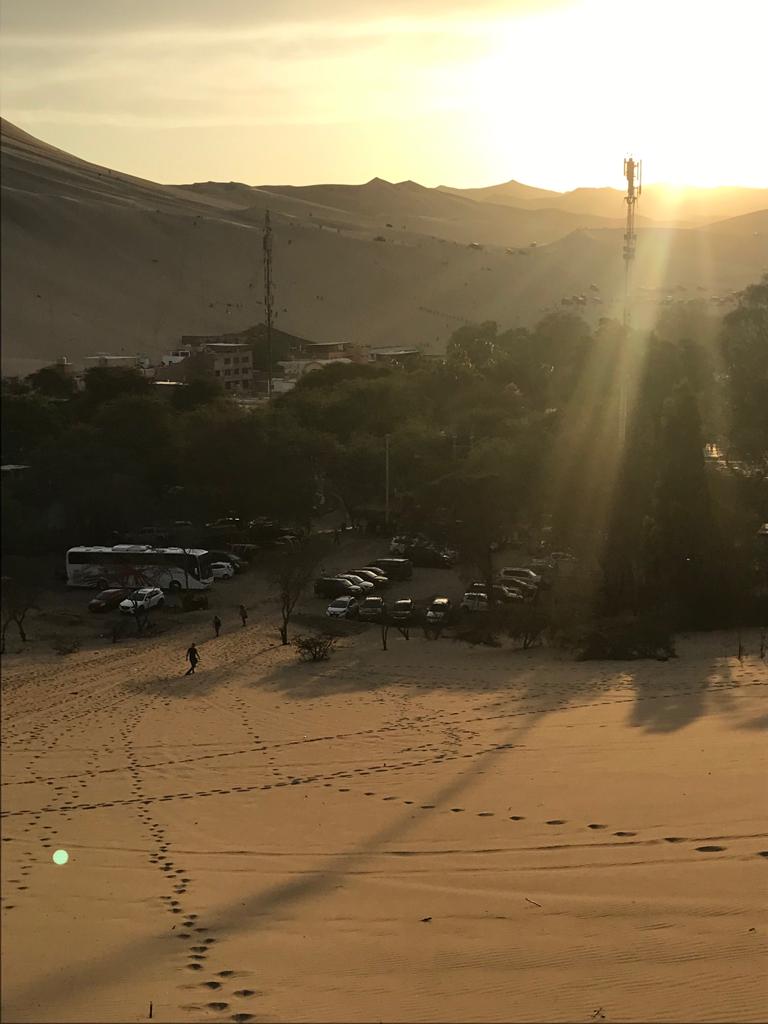
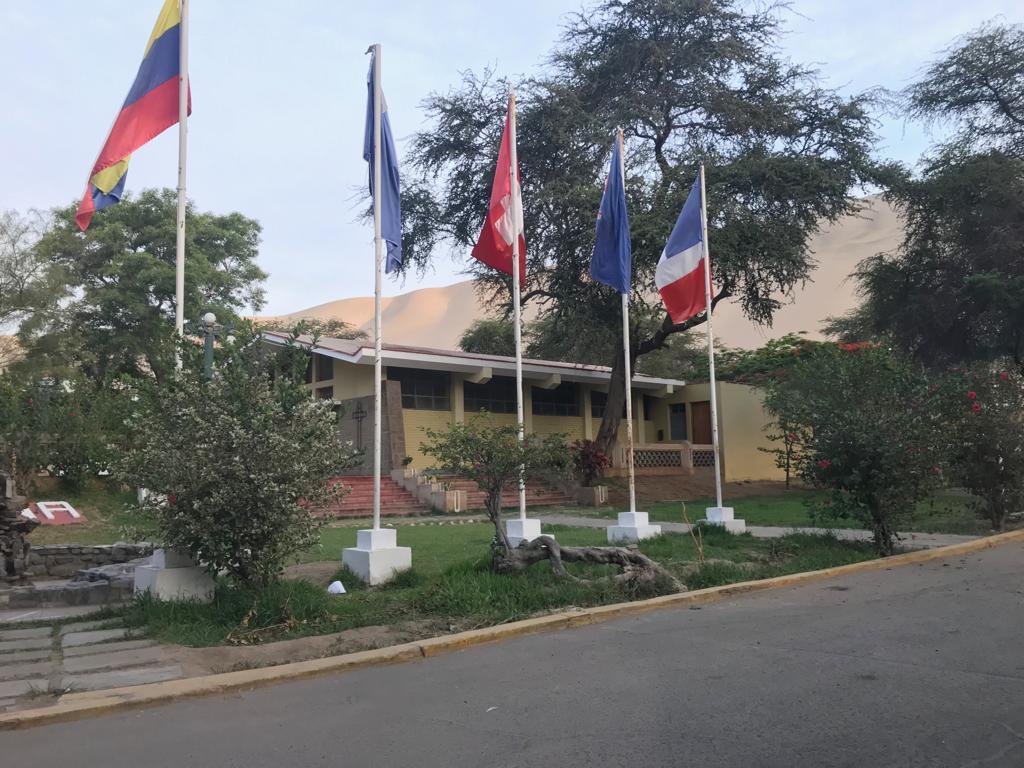
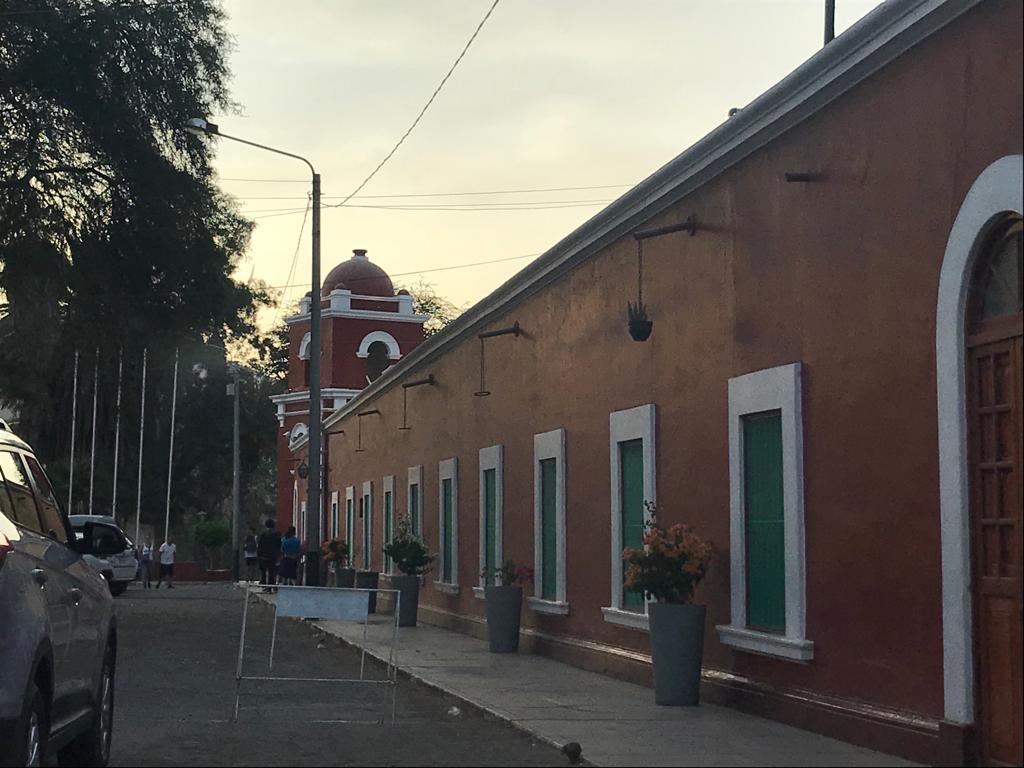
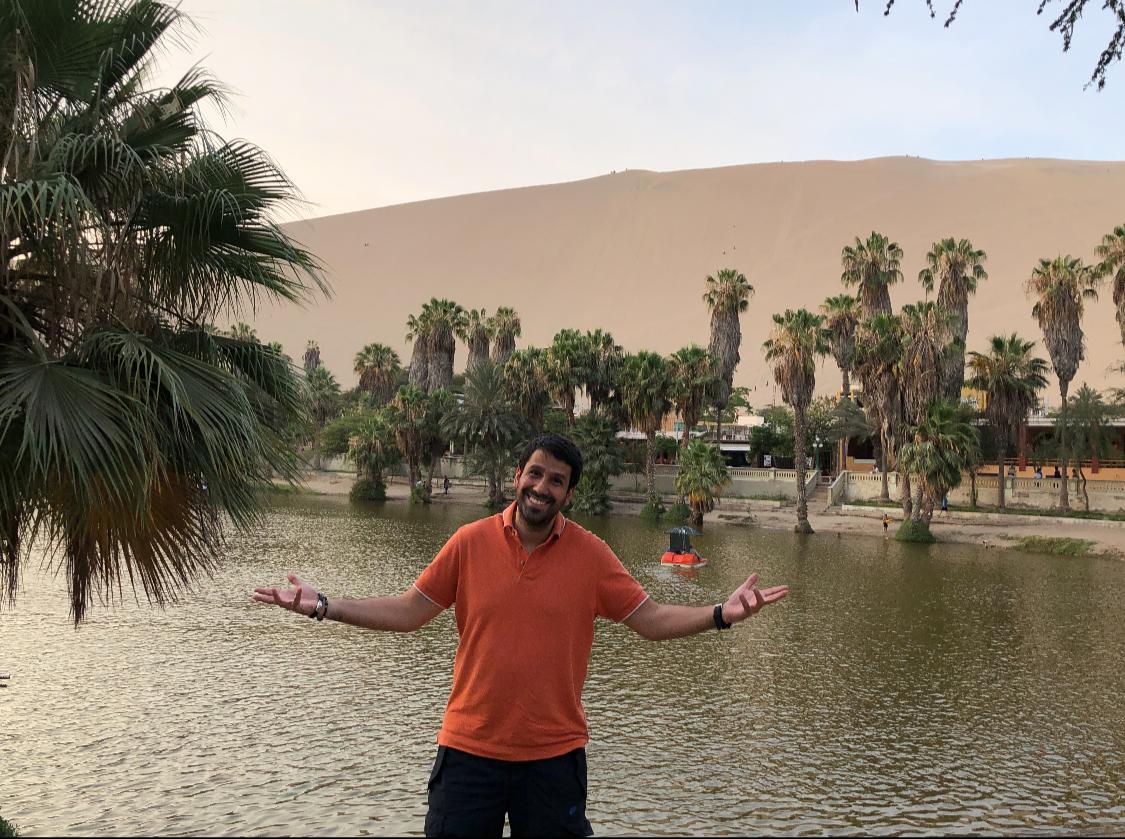
A shot taken by the lake that formed in the oasis
I promised the TIDER volunteers I’d run in the desert for them. Let me share the video of that run:
Two regrets: Desert surfing and an aerial view of Nazca
Two things stuck with me here. The first was desert surfing. Seeing people gliding across the sand on a board, I was blown away. But we didn’t have time for that. I told myself, “If I ever come back here again, I’ll definitely desert surf.”
Another thing that stuck with me was the air tours to Nazca, which I saw on tourist itineraries here. So, if I ever go to Ica again, instead of just a day trip, I’d like to stay at least a day and experience both desert surfing and the Nazca lines, one of the mysterious traces of the Earth, from the air. I even came across a poster promoting such an air tour near the oasis:
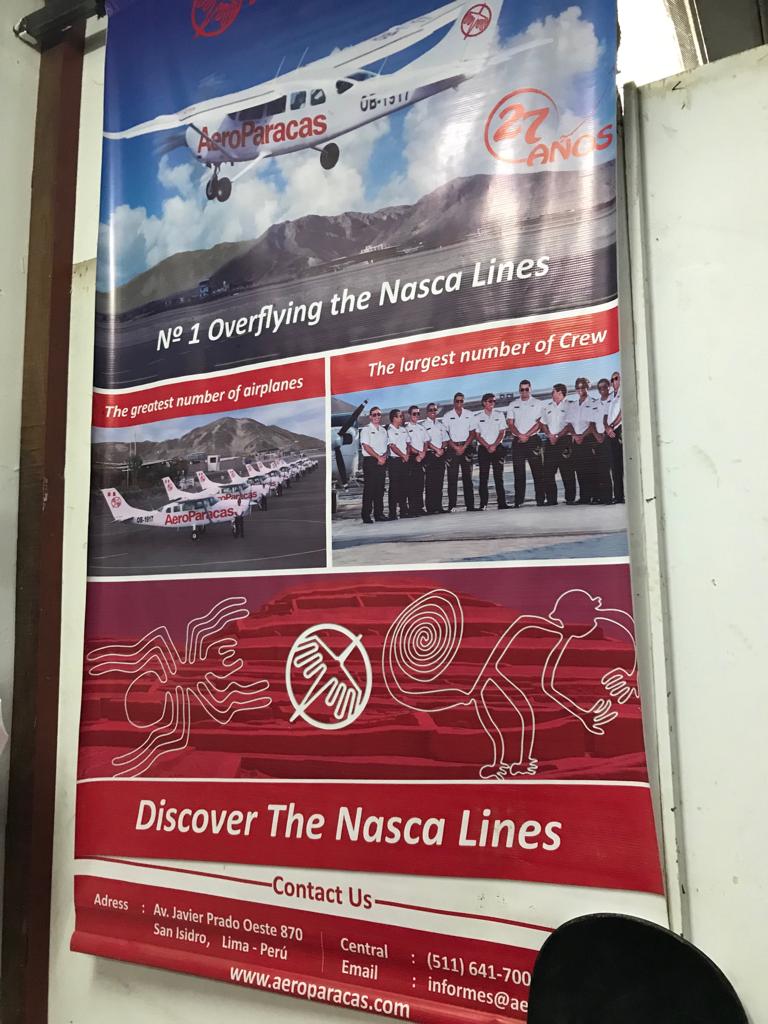
The Nazca lines are geometric lines covering an area of over 1,500 and approximately 4,000 square kilometers, formed because the iron-oxide sands in the upper layer of the desert are darker than the soil below, resulting in the emergence of lighter sands from the lower layer. These lines also served as a celestial calendar, indicating the positions of the sun, moon, and stars, aiding the Nazca people in their agricultural activities such as planting, irrigation, and harvesting. Science has yet to explain how these lines were formed. If you’d like to learn more about this unearthly destination, I recommend the TÜBİTAK link:
http://www.bilimgenc.tubitak.gov.tr/makale/silinin-gizemli-nazca-cizgileri
By the time we started our return journey, the sky was already darkening. Our plan was as follows: We’d stop in Pisco, have dinner, and then head straight to Lima. We even considered staying overnight there, but logistically, it would have been more logical to return to Lima and finish our travel preparations at our hotel the next morning.
On our last night in Peru, we feasted on Peruvian cuisine at As de Oro’s, Pisco’s only decent restaurant (I’d come to this conclusion after wandering around the city). The food was fantastic.
The deserted and pitch-black return journey
Then, around 10:00 PM, we hit the road again. My co-driver took us onto a two-lane road next to the brightly lit highway we were supposed to be on. Then, exhausted, he fell asleep. On the way back, I spent about two and a half hours driving through the desert on a pitch-black road, only encountering four other cars. I also did this without any help from my phone’s navigation system. Our charging cable was broken, so our batteries were almost dead, and we had no phone signal in that area.
It was up to me, and frankly, I didn’t try the brightly lit highway because, instead of getting lost in the pitch-black darkness, wandering through unidentifiable villages and towns, it felt more prudent to continue straight ahead.
As we approached Lima, my friend woke up after two hours of sleep and asked where we were. I smiled and said, “We’re nearing Lima, don’t worry.” Then he asked, “Why is it so dark here?” I teased, “We’ve been driving this road for two hours. Thank you for getting us on this road. There’s nothing we can do.” He teased me, saying, “I wanted to show you that I trust you blindly, under all circumstances.”
Finally, we reached the junction with the illuminated highway and took this road that led directly into Lima. We arrived at our hotel around 1:30 a.m. The hot shower felt wonderful after a very tiring journey.
I was ready to return home the next day. As I drove to the airport, I thought about the wonderful flavors my Peru trip had left on my palate and the beautiful experiences I had experienced. I was grateful for all I had experienced.
I imagined that on my way back to Turkey, I would encounter a similar situation to the pitch-dark road I had traveled the night before. I told myself, “Serhan, just like last night, you will emerge from this darkness with calm and integrity!”
I was ready for 2019, a year of great challenges, with renewed energy and morale.
Tags: excursion