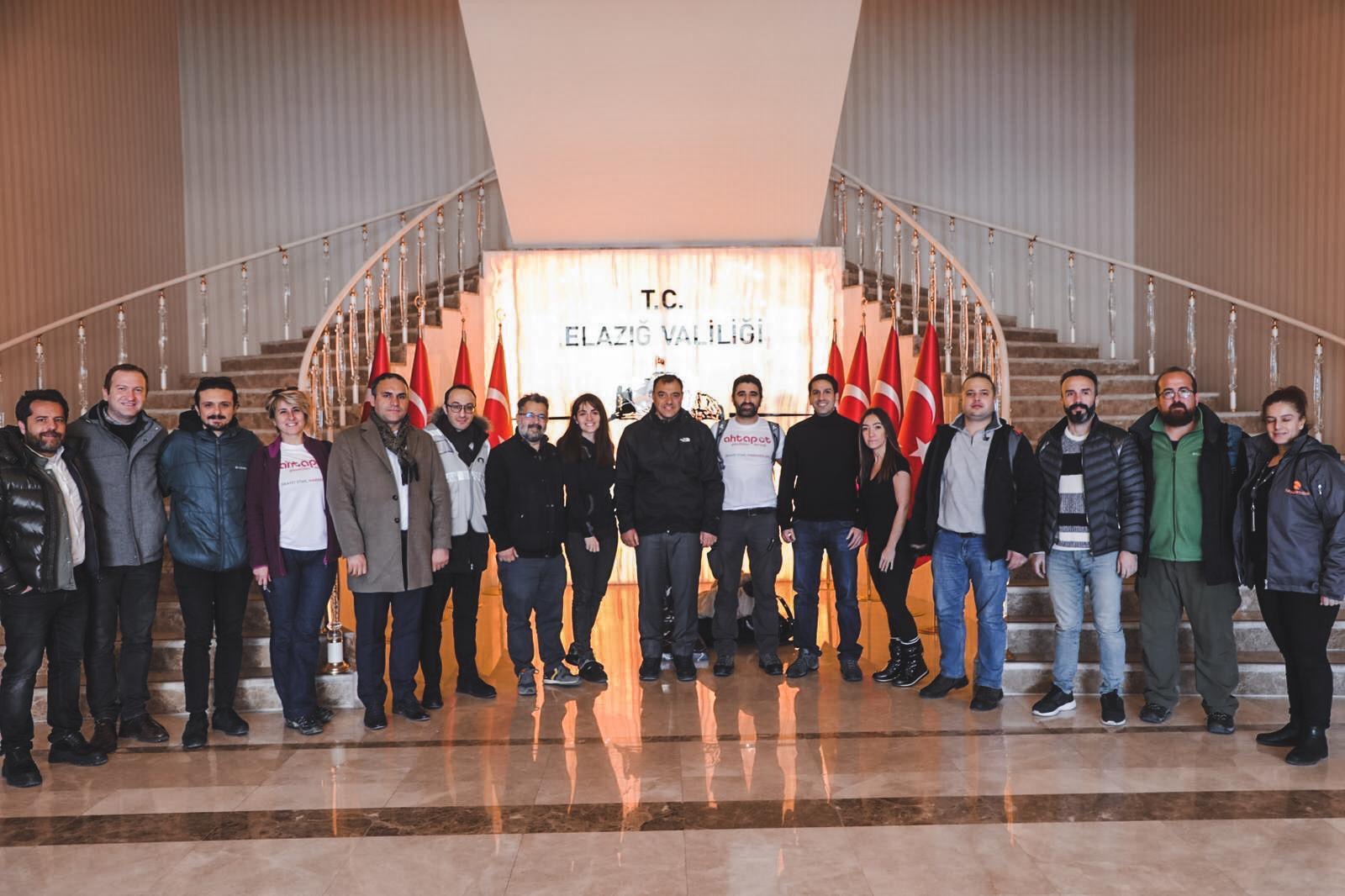
I wrote an article in January about how Disaster Platform began. You can read the story of this process at https://www.serhansuzer.com/tr/elazigda-bizim-stklar-tarih-yaziyor .
In short, the Disaster Platform’s beginnings date back to the Elazığ Earthquake. In Elazığ, we came together as a group of 8-10 NGOs, both through networking and chance encounters with some other NGOs. We first met among ourselves at the Elazığ Chamber of Commerce and decided to work together. The Chamber supported us, opening the doors of their headquarters to us and then providing us with a warehouse. Then, we all met with the Governor and the AFAD President. We were accepted, and we began working together. We made a significant contribution to the rapid resolution of the acute disaster in Elazığ.
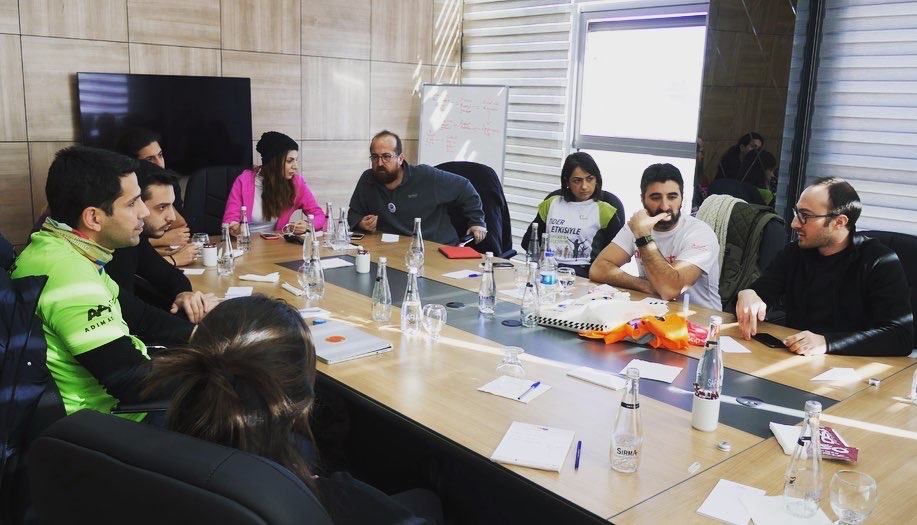
Normally, in Turkey, two or three people would have difficulties; but we, around ten NGOs, can come together and, moreover, we can work with the public. When we saw that we had achieved this, we said, “Let’s transform this into an institutional structure.” We met in February and discussed the details. When the COVID-19 pandemic broke out in our country in March, we continued our internal meetings via video conferences and held our weekly meetings online at predetermined times without interruption.
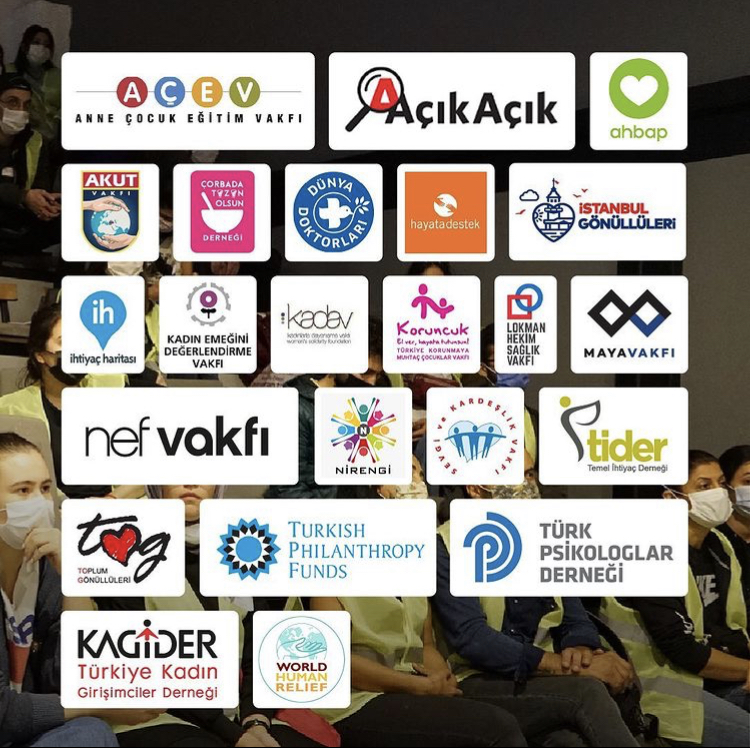
Founding NGOs
During this period, we participated in the Van Earthquake, the refugee crisis in Edirne, the COVID-19 pandemic, and most recently, the flood disaster in Giresun. As NGOs part of the Disaster Platform, we did our part in every disaster. After weeks of discussion, we clarified how we would implement governance. On 1 October 2020, we established the Disaster Platform with the initiative of 23 NGOs. The names of these 23 NGOs are as follows: Mother Child Education Foundation (AÇEV), Açık Açık, Ahbap Association, Search and Rescue Association (AKUT), Çorbada Tuzun Olsun Association, Dünya Doktorları Association, Support to Life Association, İstanbul Volunteers, Needs Map, Foundation for the Support of Women’s Labor, Foundation for Solidarity with Women (KADAV), Turkey Foundation for Children in Need of Protection (Koruncuk), Lokman Hekim Health Foundation, Maya Foundation, Nef Foundation, Nirengi Association, Basic Needs Association (TİDER), Community Volunteers Foundation (TOG), Turkish Philanthropy Funds, Turkish Psychologists Association, Women Entrepreneurs Association of Turkey (KAGİDER), and World Human Relief.
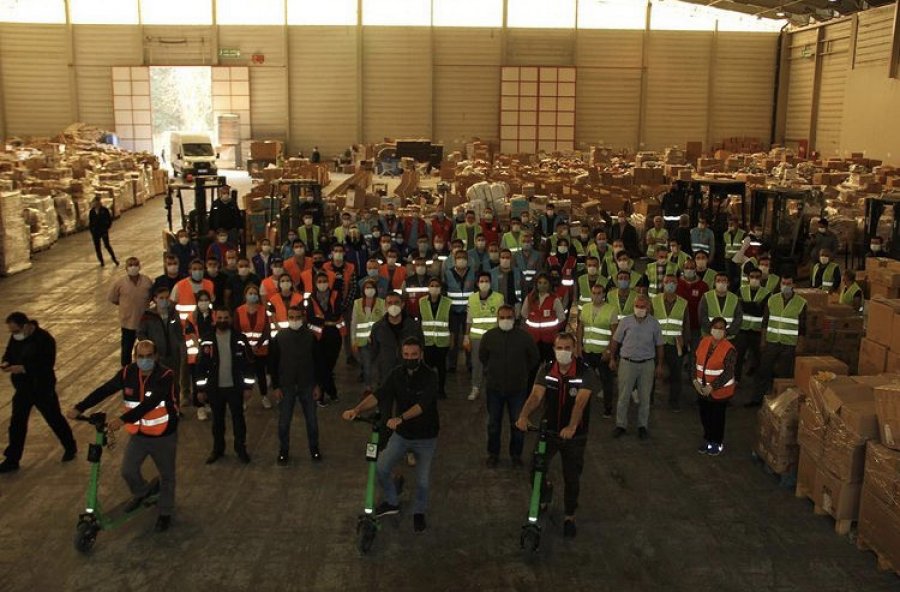
About a month later, when the Izmir Earthquake struck, we established the Crisis Desk and implemented comprehensive disaster management on the same day. I also wrote a blog post about our role in the Izmir earthquake: https://www.serhansuzer.com/tr/izmirde-bir-kez-daha-gorevimizin-basindayiz
The Importance of Building a Connection with the Public
The greatest strength of the Disaster Platform, which we established with the motto “Common Sense, Collective Action,” is the synchronized, complementary, and collective solidarity of NGOs specializing in various fields, including search and rescue, needs assessment, food banking, humanitarian aid, and psychosocial support. The collective and systematic efforts of officials and experts from relevant NGOs during disasters contribute to a much quicker recovery from acute phases.
I mentioned that we established a crisis desk on the day of the earthquake. The next day, I headed to Izmir. Our first task that weekend was to establish ties with the public. So, on Saturday, 31 November and Sunday, 1 November, we made a serious effort to establish our connection with the public and determine the system within which we would proceed. We finally succeeded in establishing that connection. The support of artist Haluk Levent, founder of Ahbap, played a significant role in this. From the day of the earthquake, our colleagues Sarıca, the spokesperson for the Crisis Desk, Ali Ercan, and Ahmet from Needs Map, did their best. I joined them on Saturday, and by Sunday, 1 November, we had made significant progress in the discussions. On Sunday afternoon, we reached a conclusion at a meeting attended by AFAD President Mehmet Güllüoğlu and his team. I also attended this meeting, organized by Haluk Levent and the Ahbap team.
Following the meeting, they appointed an official from AFAD, the disaster coordination authority, to facilitate our progress and ensure coordination. We contacted him and met with him in the evening. Before the AFAD official, we also met with the general manager and team of the Turkish Red Crescent. As a result of these meetings, both AFAD and the Turkish Red Crescent directed us to the Basmane warehouse of the Social Assistance and Solidarity Foundation, which is affiliated with the governor’s office. We went there without delay that same night and were met by officials from Elazığ. Having worked together for a long time and knowing us well, they welcomed us enthusiastically, saying, “We’re so glad you’re here again.” We jointly assumed responsibility for the warehouse. After finalizing the warehouse, which is central to humanitarian logistics, we established our system and launched our volunteer organization the next day.
The Platform Needs Official Recognition
In essence, we face the challenge of integrating with the public in every disaster we address. We want the public, once satisfied with us, to officially recognize us, to automate our accreditation, and to be able to go to the scene and take our place like cogs in a machine in the next disaster. In other words, when a disaster strikes, the Disaster Platform should be recognized by all public units and should immediately take its place in disaster response. AFAD (Disaster and Emergency Management Presidency) handles coordination when a disaster occurs in a region. Therefore, we already work closely with AFAD and want to render this a permanent practice. Similarly, we want to establish that connection with relevant institutions and organizations such as the Red Crescent, the Ministry of Family, Labor and Social Services, the Ministry of Interior, and the Ministry of Health. We will continue to make significant efforts to institutionalize this coordination.
Returning to Izmir, we took over responsibility for the warehouse in Basmane through the coordination of the Social Assistance and Solidarity Foundation, affiliated with the governor’s office. We also visited the Bayraklı Municipality warehouse because we learned of its need. We agreed to provide volunteer support, and as of Monday, November 2nd, we began directing our volunteers to Bayraklı. We also provided volunteer support to the Red Crescent. They requested assistance as needed for work at the Red Crescent’s own warehouse, and we met their labor needs thanks to our volunteers.
While we were doing all this, search and rescue teams, primarily from AKUT and coordinated with AFAD, were on duty. Local NGOs such as İZMAD (Izmir Cave Research Association) from the Cavers’ Federation have now begun joining these teams.
7 Commissions and Executive Boards
Our operational style in disasters is now well-established. The Izmir earthquake further reinforced this. Accordingly, our Crisis Desk Committee assumes responsibility during disasters, and its first task is to establish the Crisis Desk in the disaster area on the same day. All the Disaster Platform’s commissions support this operation during disasters. Our platform has seven commissions in total: Governance, Preparedness, Membership, External Relations, Resource Development, Communications, and Crisis Desk. Furthermore, communication groups are immediately established at the scene of a disaster (for example, we have a very busy Disaster Platform Izmir group), and sub-Whatsapp groups are even created as needed: Child, Psychosocial, Mobile Toilet, etc. All this coordination is handled by the Executive Committee, which consists of spokespersons from all committees, including the Term Spokesperson and the Crisis Desk Spokesperson.
Furthermore, with the Disaster Platform, we personally work for the first 15 days. In other words, while the shock of the disaster persists and no one knows what to do, we enter the field from day one, quickly implement the necessary tasks, establish the system, and then hand it over to local NGOs. Local NGOs working with us maintain our system in the field for at least one week. Afterward, duties and responsibilities can be transferred to public institutions at their discretion. Some continue to work in the field.
In Izmir, after working in the field for two weeks, we transferred humanitarian aid-related work to Izmir’s local NGOs. After working for a week, they transferred their duties and responsibilities to the public. I say “transferred,” but we have some platform-member NGOs that continue to provide volunteer support in the field. We support them in every way possible.
Managing Volunteers
Volunteers are at the heart of our work. NGOs like Ahbap, Needs Map, and TOG, which have successfully organized volunteers, are also involved, along with local NGOs in Izmir and independent volunteers. Announcements are made daily based on need through the relevant NGOs’ communication networks and social media channels. Those who will come are determined the day before.
Volunteers are directed according to the work to be done. Each NGO is responsible for its own volunteers. Our Crisis Desk Committee provides coordination between the various NGOs. Independent volunteers join the volunteers of the relevant NGOs based on the work being done.
Distributions in Izmir are carried out by officials and employees of public institutions such as AFAD and the Turkish Red Crescent, based on the public’s decision. However, we reserve the right to accompany our donors during these distributions upon request. This system was different in Elazığ. We were able to directly handle distribution in Elazığ. Because the Izmir governor’s office deemed it appropriate, we followed the regulations there. We mostly managed the back-end work, such as organizing the warehouse and preparing the products, which required significant labor.
Transparent Donation System
We always inform donors where donations are directed. We also provide the relevant documentation (receipts, etc.). There’s a key point here: Because the Disaster Platform doesn’t currently have a legal entity, we manage all in-kind donations in full coordination with NGOs. For in-kind donations, each NGO nominates its own donor and donations. All these donations are directed through the joint coordination of our Resource Development Committee and Needs Map and are sent to the locations where they are needed.
We also have two options for cash donations. We either ask donors to provide and deliver the products; for example, hygiene kits for our volunteers are purchased directly with the donation (we don’t intervene), and the products are sent to the volunteers’ locations. Alternatively, the relevant NGO can open a Disaster Platform account, deposit the cash into that account with the donor’s permission, and send the funds to the field, using the donor’s preferred use. Most often, we notify the donor of the need and, upon their acceptance, make the necessary arrangements.
Accountability and transparency are among our core principles. Therefore, we act according to donor requests. Even the storage location is selected in line with the donors’ goals and objectives. In addition, we will discuss the issue of the Disaster Platform’s legal personality at our general assembly in December. If approved, the next step is to decide what type of NGO we will establish (association, foundation, federation, etc.). Currently, we are operating our platform based on the adoption of the general principles document of our member NGOs and the general principles.
Taking Precautions Before Disaster Strikes
I want to emphasize another very important point. As the Disaster Platform, our success will be demonstrated by the work we do during non-disaster periods. For example, we aim to identify risks before a disaster occurs and implement measures to eliminate or reduce those risks. More specifically, we aim to prevent loss of life and property by relocating buildings built in stream beds before flooding occurs. We will publish risk reduction reports for this purpose and will monitor their progress.
Another example of our work during non-disaster periods is the training we will provide to those who want to volunteer in search and rescue and humanitarian aid. I’m talking about selecting and training local NGOs with expertise in this field to ensure the emergence of accredited search and rescue personnel. Or, given the critical nature of the first 72 hours in a disaster, I’m talking about training First Response Teams (FRTs) everywhere. This not only involves training them but also providing first response equipment to neighborhood headmen (mukhtars).
Hundreds of our volunteers worked in the field every day during the Izmir Earthquake. We worked intensively in search and rescue, needs assessment, humanitarian aid, food banking, and psychosocial support, and our work continues. Search and rescue efforts concluded, and as of last weekend, we transferred a significant portion of our humanitarian aid efforts to the public. However, our work on needs assessment, psychosocial needs, and especially shelter needs continue.
Our work will continue at full speed.
While the number of volunteers working in the psychosocial field has decreased over time, we continue to do so. We continue to support the http://www.birkirabiryuva.org campaign, developed by Needs Map, a member of the Disaster Platform, in partnership with the Izmir Metropolitan Municipality. We are also accepting and directing donations of bedding, furniture, and appliances needed by those moving into these homes.
Finally, we have begun working on a report on our actions during the Izmir Earthquake. We will compile and consolidate all the data and share it with the public. I also plan to share the results of this report with you in a separate article.
As the Disaster Platform, our goal is to minimize the loss of life and property resulting from disasters. To this end, our work will continue to intensify during both disaster and non-disaster periods. You can follow us on social media platforms like Instagram, Twitter, LinkedIn, and Facebook. Our website will be launched soon.
To cope with natural and man-made disasters, the public, non-governmental organizations, and the private sector must act in full coordination. Even more importantly, any support from individuals is crucial. Therefore, I ask all my readers to support us, both as an institution and as an individual, by choosing the work we will undertake that best suits your needs.
Stay well.
Note: While writing this article, I used excerpts from two interviews I previously gave about the Disaster Platform. I recommend you read these interviews as well:
NGO Pages: https://www.sivilsayfalar.org/2020/11/03/stk-afet-platformu-dayanismayi-buyutmeye-cagiriyor/
TÜSEV: https://degisimicinbagis.org/afet-platformu-ve-paydaslar-arasi-is-birlikleri/
Tag: health