These days, we’re watching European Championship games. The generally sterile and boring nature of the games has diminished my motivation to watch the tournament. Furthermore, due to our country’s failure to display a fighting spirit on the field, beyond its lack of results, I rarely follow the games. Yet, when our national team finished 3rd in the World Cup in 2002 or reached the semifinals of the European Championship in 2008, we were all watching the tournament very closely, with our mouths wide open. Beyond our lack of fighting spirit, this cup was marked by unnecessary pronouncements stemming from overconfidence, such as “it’s not over until we say it’s over,” disagreements within the team, manager Fatih Terim’s usual attitudes (we’re joking now, here’s a great Fatih Terim imitation from Ata Demirer: https://www.youtube.com/watch?v=Mn2d9xQB-Kw), and discussions about the team’s poor team composition. In this article, I’ll address the ego problem that has emerged in Türkiye in various ways and has spread to the national team.
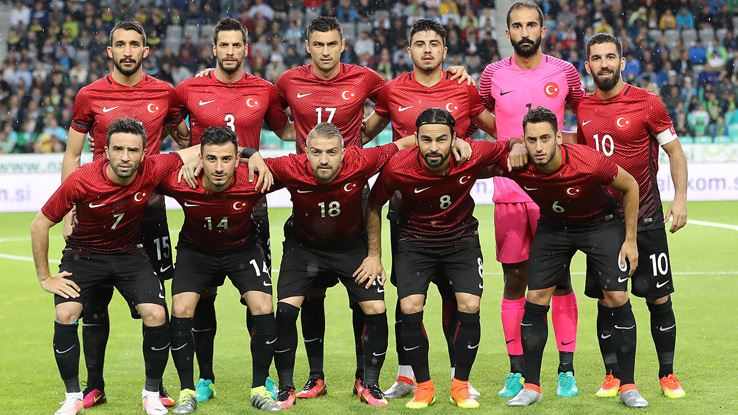
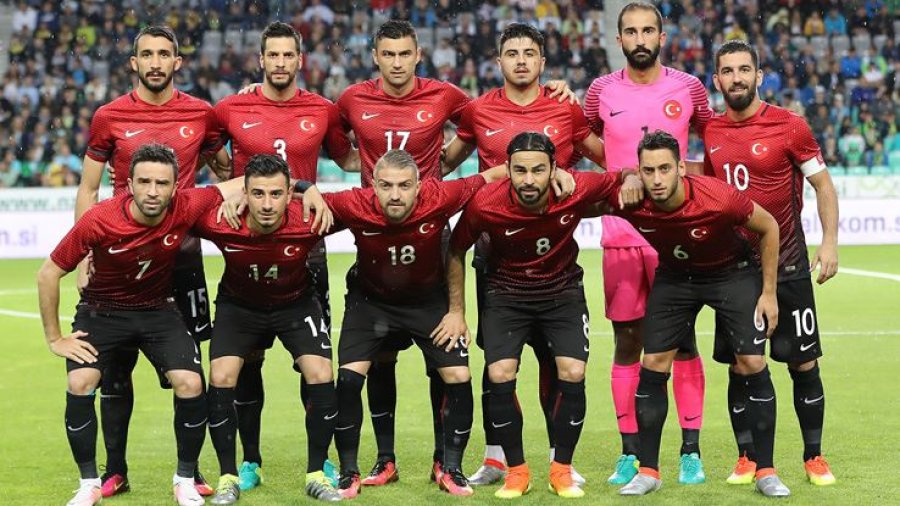
The Turkish National Team played in the 2016 European Soccer Championship
However, we need to sit up and talk straight. No matter how lackluster we played in the tournament, we weren’t as bad as the national team of my childhood and youth. I don’t know if you’re old enough, but back then, as a country, we were happy when we lost by a narrow margin. Thankfully, we were able to shake off the ‘lost but not crushed’ inferiority complex of my generation. I remember those times vividly.
For example, I attended summer schools in England from the age of 11 – 16. I can say that I had the most enjoyable time of my youth at the schools I attended every summer. I remember Türkiye losing 8-0 in the international games against England during those years. The Europeans we played against, especially the Italians and Spanish, would mock us, saying, “The Turks are here, let’s see how many points you’ll score in this game!” These jokes inevitably affected our self-confidence, fueling our ambition and making us even more eager to compete. I vividly remember winning every game we played, and the games we played with the teasers ended with a 4-5 margin.
From two-man passing to a grand-field tournament…
In fact, my generation has made significant strides in many areas, including sports, in Türkiye since the founding of the Republic. Let me give you another example from my school life. One summer during my university years, I took microeconomics and algebra courses at Harvard University. I even had these courses count toward my university credits in Canada. I had two roommates at Harvard back then. Peter, a computer engineer, was a good guy. However, he never left the computer lab, so we rarely saw him. When we did, we chatted a lot with this charming friend with slanted eyes and a Southern accent. My other roommate, Austin, was a tall, handsome friend of ours who played professional soccer for the state of Colorado. Austin and I always hung out together. The first day we met, we discovered both of our interests in soccer, and we immediately found a soccer ball and started playing soccer together in Harvard Yard. People who saw us passing the ball back and forth joined us and started playing together. By the end of practice, we had grown to six or seven people from the first day. The next day, we became even more crowded, and in the following days, our numbers steadily increased. Austin and I had become famous at school. Everyone who wanted to play soccer was calling us. By the time we’d finished our first month of two months at Harvard, we had outgrown Harvard Yard and started organizing tournaments on a real soccer field on the other side of the river in Boston. It was truly a lot of fun.
One day, Austin asked me, “Serhan, we’ve been playing soccer for a month. I told you where I played, but you never told me about your career. Where do you play?”
Being in a playful mood, I told Austin I played for Galatasaray’s PAF team. He replied, “You know what I mean.” I just smiled. But I had no professional soccer background. My twin brother and I mostly played alone at home, and occasionally, we played with the neighborhood kids on the streets of Bebek, where we spent our childhoods. We joined the high school soccer team purely for fun. I had no interest in professional soccer . But even though we were amateurs, we loved soccer and played it to the fullest.
My Generation’s Soccer Success
That summer in America, I became an instant star with this level of soccer. For example, despite playing defense for my high school team, I would immediately move into midfield and lead the entire team in American games. Of course, I must admit that this was the first time I’d trained consistently, which allowed me to improve my game. At Harvard summer school, everyone knew me as a Turk who played soccer well. Three days after this conversation with Austin, I brought it up again, and he initially didn’t believe me when I told him I wasn’t a professional at all, that I was joking about Galatasaray, and that I simply enjoyed playing soccer. After emphasizing several times that I was truly right, he asked, “Well, how can an amateur play soccer at this level? The level of soccer in Türkiye is very high, that’s not even true, because your tournament results are clear.” I instinctively replied, “Yes, it’s true that the Turkish national team hasn’t been successful in any tournament to date, but we can’t say it will be like this in the future. You’ve seen my soccer; I play mediocre soccer in Türkiye compared to my generation. It would be beneficial for you to watch others my age. We will be successful in the upcoming tournaments.” Those words I told Austin about my generation back then, as a reaction, came true to the letter. Galatasaray’s European wins, first in the UEFA European Championship, then the Super Cup, and the Turkish national team’s third-place finish at the World Cup, all happened thanks to my generation, as I had mentioned to Austin.
These are all fond memories. I’m sure Austin remembered what I said to him while we were achieving these successes. In fact, we shared a lot together. I can say that the dominant Turkish culture was evident in my room back then, and we even used Yonca Evcimik’s tune, “8:15 Vapur” as the background music on the answering machine recording in my room. Of course, relatives and friends calling from Colorado and Texas would have funny reactions like, “What’s that music?”
Prejudiced, blank stares…
While I was at Harvard, focusing on my studies, enjoying playing soccer, and enjoying an international circle of friends, there were also Turkish friends I’d never hung out with for some reason. I remember the first time I met the other Turkish students there. It was truly hilarious. Everyone was asking each other where I was from. I don’t remember exactly, but when I said I was from Tarabya Kemal Atatürk High School after four Robert College graduates, two German High School graduates, and one Austrian High School graduate, there was a silence. You should have seen the looks some of them gave me, like, “How did this kid get here?” I probably had a conversation in my absence afterward. There were some very good friends among them, and while I saw some of them from time to time, I had a different circle at Harvard. Today, we have many friends who attend top-tier schools, work at big-name international companies, but in my opinion, haven’t accomplished anything in life, and I’d call them empty. Conversely, we have friends who didn’t attend top-tier schools but have lived life to the fullest, struggled, and achieved success, and are highly qualified. School is an important label, but it’s not everything, I always try to say that. I also attended university at one of Canada’s best schools, but I’ve never tried to make it a point of praise or try to dominate others in that way. Again, what matters is what you do with your life. That’s why I’ve always mocked those who make their school or their big-name company a matter of ego.
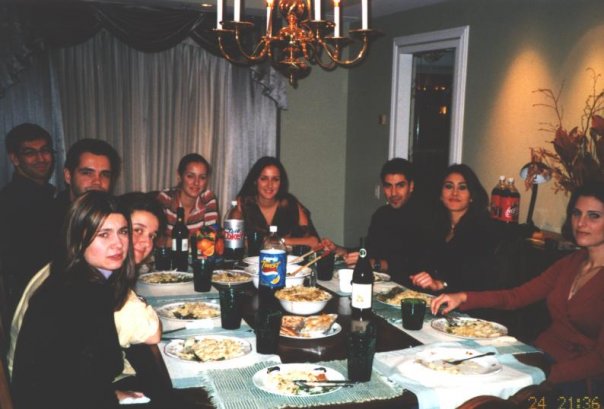
A picture from my university days
I can say that my high school and university years were very enjoyable in the past. But once you enter the real world, things change. Inevitably, you have to grow up, and your responsibilities increase. No matter what, I’ve always done my best to preserve my true self. That’s why, even today, when I meet with my friends from elementary, middle, high school, and university, the same conversation usually follows: they tell me I haven’t changed a bit. When a person knows their true self and truly trusts their abilities, they rarely seek other ways to boost their self-confidence.
‘Walking egos’ and arabesque
Speaking of other ways to boost self-confidence, let me give you an example. Many people in Türkiye are quite sensitive about cars. My close circle, many people I know and don’t know, say that cars directly impact their image. I’ve never thought that way. When I place a person in my mind, I look directly at their mental capacity and culture. Intelligent, creative, practical, emotionally intelligent, well-educated, and culturally sophisticated individuals are always top tier in my eyes. The car these people drive isn’t important. How they carry themselves is far more important. With all due respect, I’ve always viewed cars as ‘walking egos.’ However, in my eyes, the most luxurious cars can only accommodate very small people, or very valuable people in cars no one would consider. I’m excluding those who genuinely enjoy driving nice cars, of course. Driving is a true hobby for some people. I respect it if people drive nice cars because they love it, but if they do it to enhance their personal prestige, then they have little value in my eyes.
Let me give you another example. I drove a Ford Focus for five years, including during my time as General Manager of Süzer Holding. Although I was quite happy with my car, they later forced me to change cars, saying, “Mr. Serhan, it’s rude. Let’s change your car.” Yet, I’d drive that Ford Focus to a fancy restaurant and hand the keys to the valet who picked up my car, telling him, “Move the car to a nice place.” The valets and security guards knew me and knew I was in the mood. They would literally place my car among the Ferraris and Porsches in front of the restaurant or club, laughing. In a sense, I was protesting this Arabesque culture of ours, and they were supporting me. This had nothing to do with being stingy or a tightwad. I could easily have bought the most luxurious car if I wanted. It had to do with my attitude.
Actually, I enjoy driving a nice car. I’ve been driving a Renault Fluence for the last three years. The reason I drive this car is because it’s 100% electric. Few people in Türkiye still drive 100% electric cars as determinedly as I do (and I’ve even personally influenced many to buy one). I’ve been driving this car for the last three years because of my stance on sustainability. There are good developments in my business coming up, and when I reach certain goals, I plan to reward myself with another 100% electric Tesla towards the end of this year. I’ve tried this car before, and it’s truly a pleasure to drive.
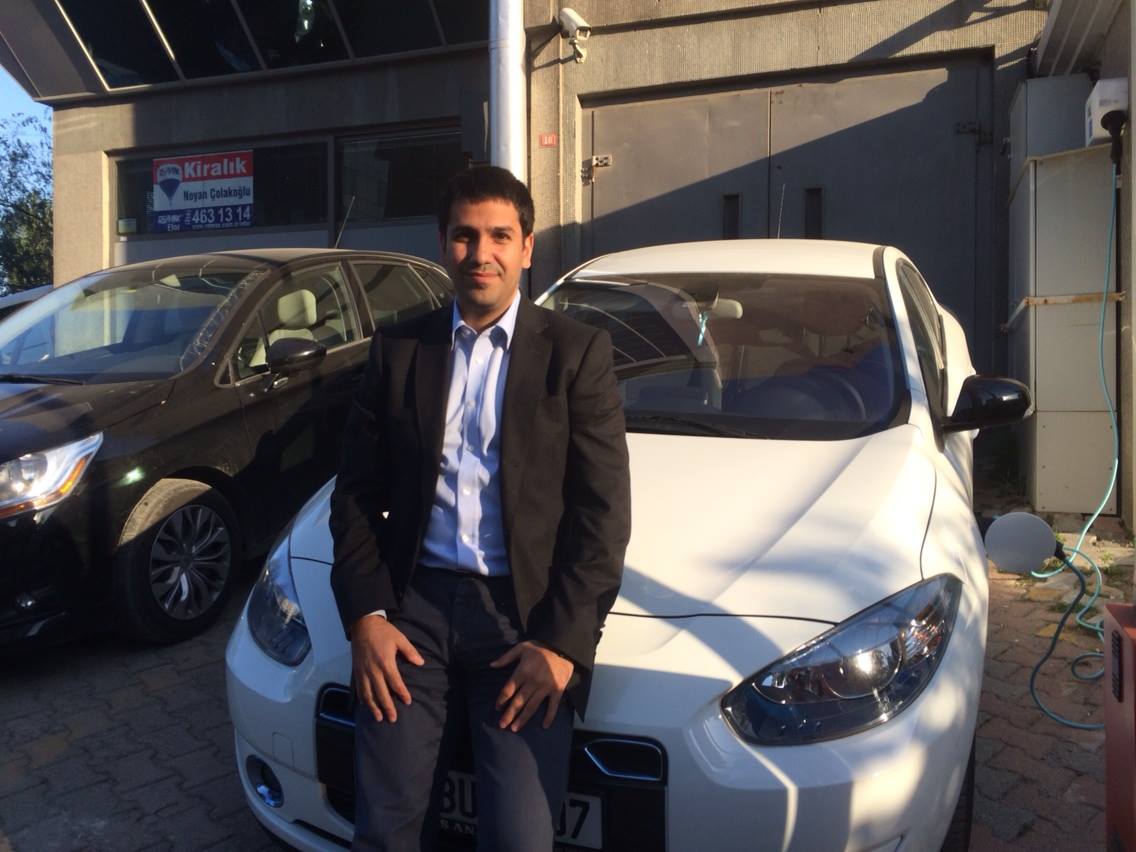
A picture I took in the first days of buying the 100% electric Renault Fluence
The True Value of a Gift
Let me give you another example of this stance. In our culture, giving and receiving gifts holds a special place. Personally, when choosing a gift, I always prioritize functionality. A gift should be useful beyond its appearance. One day, I bought a beautiful set of plates from Paşabahçe printed with paintings by Turkish artists for someone I truly care about. The plate was always used, and since the recipient had an interest in art, I thought I’d made a good gift. However, I was disappointed to learn much later that they didn’t like it. However, for me, the correct approach is: if the recipient is valuable, even if the thing they receive is a trash can, that trash can is valuable. Whether they receive a plate, a trash can, or a valuable diamond, the important thing is to think of the other person. It’s not necessary to buy an expensive gift to make them feel valued. For example, my favorite gift is a book. If I can learn something from that book, I’m happy.
I also have a few words for those who aren’t satisfied with their gift. The ego says: Let everything be exactly as I want it to be, and then I will be at peace. The soul says, “Be at peace, and then everything will be exactly as you want it to be.”
Although, I’ve also received expensive gifts as a reaction. But I liken it to this: A strong person already knows they are strong, but they don’t show it to the other person and don’t make it an ego issue. This Far Eastern philosophy was also taught to me when I practiced combat sports like karate and kickboxing. For example, professional fighters don’t fight. Because they perceive the person they’re going to fight as weak, they avoid fighting, no matter how provoked. However, when push comes to shove, they show off their skills and break up the person or people they’re fighting with. This logic underlies my hesitation to buy expensive things or to show off.
Those who know me know that I try to be as modest as possible in my relationships and try not to offend anyone. However, in Türkiye, people often misunderstand modesty, mistaking it for reality or equating it with casualness. In such a situation, I immediately change my stance, put that person back in their place with a few words, and ensure the conversation continues on a healthier footing.
The “Daddy Government” Perception
Ego problems are prevalent throughout the country. Many people who have gained a little power can quickly exert this power over others. A few years ago, on my return from Baghdad to Istanbul, I witnessed them stationing additional security right outside the apron at Istanbul Atatürk Airport for the first time. They kept us in a glass case and took us through security as soon as we got off the plane. However, when this security procedure took a long time, like 45 minutes, naturally, the passengers started to react. Can you imagine, you come from a stressful place like Baghdad, and in your own hometown, they make you wait in a glass case for 45 minutes as soon as you get off the plane! Naturally, one of the passengers started yelling at the police. The following exchange ensued:
- You can’t keep us like this. You have no right to do this.
- Sir, calm down, this is routine.
- It’s not routine. You act like this because you’re from Baghdad. I’m a businessman. If I don’t earn my living by enduring all the risks there and pay my taxes back home, you won’t be paid either. You have no right to treat us this way!
This was the first time I’d ever heard such a thing. Thinking about it deeply, the man was right. The ‘Daddy Government” mentality is so deeply ingrained in our minds that it’s been imposed on us for a long time that those working in the state are always privileged. Yet, these people founded the state so that it could be better governed. State expenses are covered by our taxes. In my opinion, the state should be able to meet the people’s basic needs, such as security, justice, healthcare, and education. The general understanding should always be “better service to the people.” This doesn’t happen through asserting superiority. We are all striving to make this country better.
Additionally, I’d like to say something about the attack at Istanbul Atatürk Airport. There was a chance I’d be at the airport at the time of the attack. I’d requested a connecting flight to Vienna via Istanbul. My assistant flew me to Vienna late, via a different destination. I was grumbling about this, but at the same time, I was also saying there’s always a silver lining. The attack happened at the gate I always leave from. Our lives are, in a sense, hanging by a thread. Life goes on in Türkiye, the land of the superego, but we can’t pretend nothing happened.
Speaking alongside the Moroccan Energy Minister at the Crans Montana Forum in Vienna, I emphasized that the events in Istanbul are now being seen worldwide and that all countries must cooperate to address global terrorism and the immigration problem. I added, “Enough is enough,” and listed what needed to be done, in my opinion: “We must ensure that people are happy in their own countries, teach them to be good people and tolerant, and provide good education that embraces universal values.”
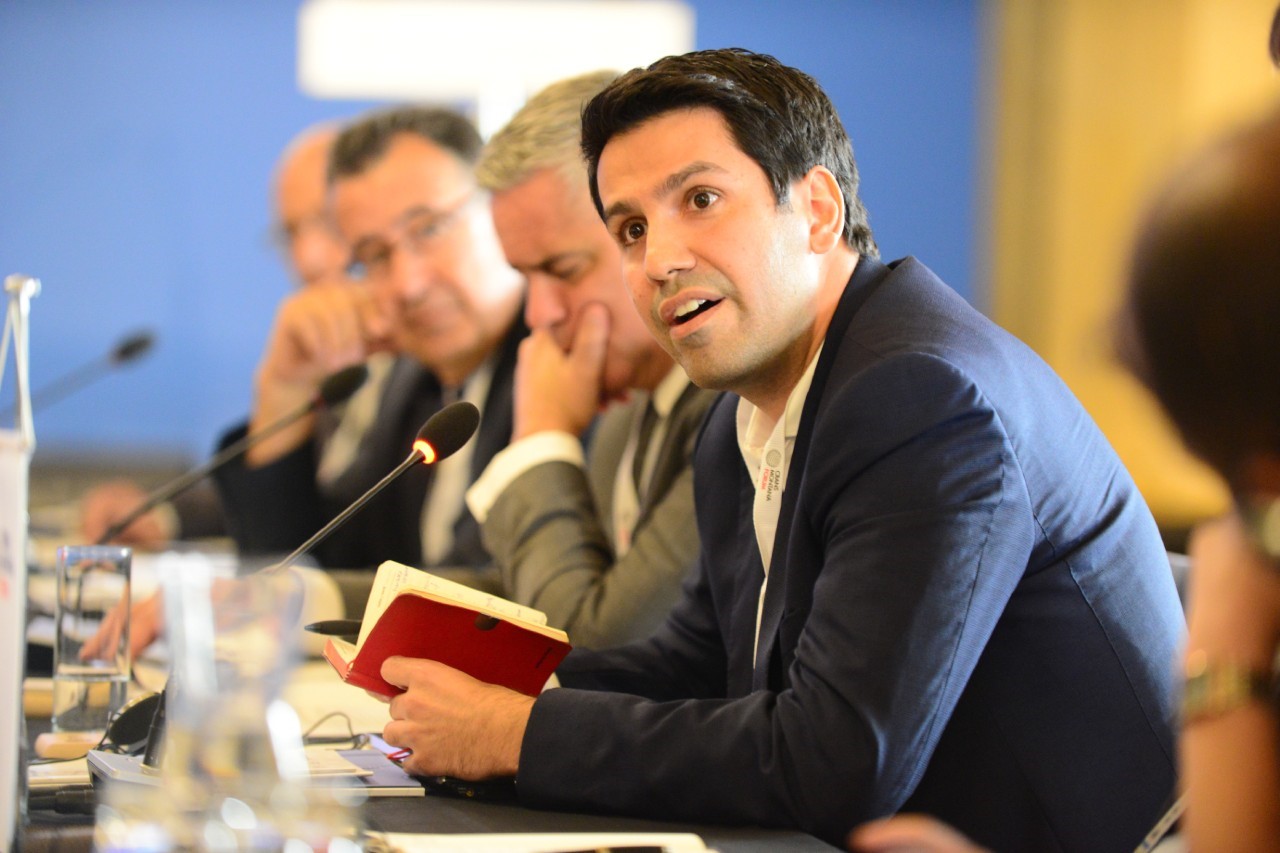
Speaking at the Crans Montana Forum in Vienna
To achieve this, we must work together.
I take this opportunity to offer my condolences to those who lost their lives in the attack at Istanbul Atatürk Airport and offer my deepest condolences to their families and loved ones. Stay safe and healthy!
Tag: education