Niğde Becoming Turkey’s Solar Energy Hub
PANEL PRODUCTION BEGINS IN 2023
Niğde has significant potential in solar energy, with an annual solar radiation value of approximately 1,620 kWh/m². This value drops to 1,615 kWh/m² in the Çiftlik district in the north-west of the province, while it reaches as high as 1,640 kWh/m² in the Çamardı district in the southeast. June, July, and May are the months with the highest solar radiation values. Investments in Niğde, which boasts insolation values well above the national average, are continuing at a rapid pace. Niğde is poised to become one of the country’s major powerhouses for solar energy electricity generation, thanks to investments made and planned in recent years.
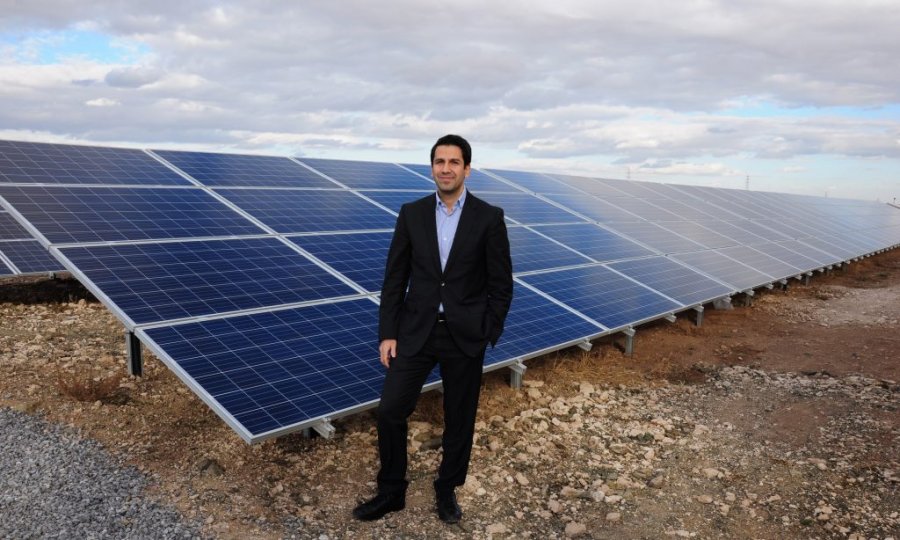
Led by Eko Group‘s renewable energy company, Eko Temiz Enerji A.Ş. (Eko.RE), Niğde will soon become a regional energy input production hub with its integrated solar cell and panel investment. Energy investments in the region will accelerate, particularly with the YEKA (Renewable Energy Resource Areas) tender to be held by the Ministry of Energy and Natural Resources. Prior to the tender, Eko.RE began investment preparations in Niğde Bor before anyone else. An Investment Incentive Certificate was obtained for the project in 2019. Investment preparations subsequently began in the region.
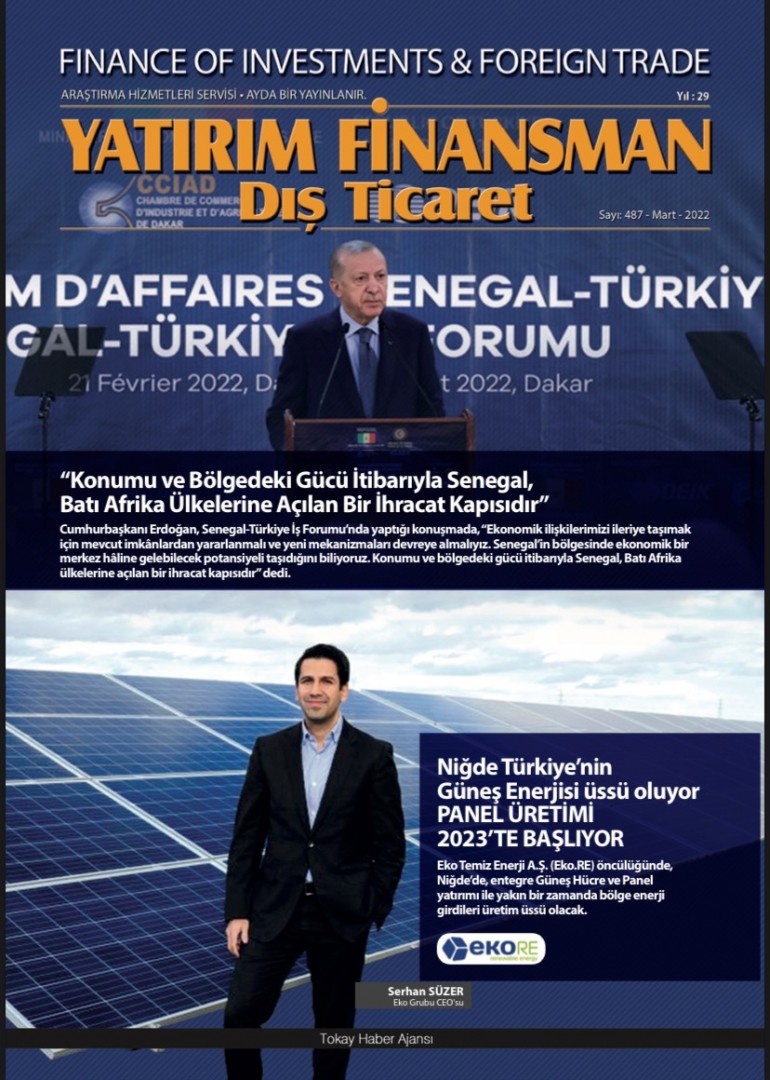
Eko Group CEO H. Serhan Süzer responded to Tokay News Agency’s questions regarding the progress of Eko.RE’s solar panel investment in Niğde. Süzer stated that they are currently seeking a solid strategic or financial investment partner while also rapidly progressing project updates. Süzer announced that they will lay the foundation for the factory this year once the update and investor search process is complete and announced that they plan to transition to solar panel production starting in 2023, the Centenary of the Republic.
Here are Eko Group CEO H. Serhan Süzer’s answers to our questions about the solar energy investment:
– “What is the current status of this important investment? What will happen? Why was the investment delayed? When will it be realized?”
Unfortunately, we had to restart this investment three or four times. This is due to financing. Financing is a crucial issue, and in Turkey, this business needs to be built on a solid foundation. When you attempt to do this primarily through bank loans, as you know, banks in Turkey generally don’t take a long-term perspective; they focus on increasing their income from you, such as interest and fees, and this always creates a squeeze. However, such technology, such an investment, needs to be supported by a long-term and visionary perspective. Therefore, in this project, the capital investment needs to exceed the loan by percentage.
The key is financing, and we don’t want to do this with bank loans; we want to realize this project primarily through capital and investors. At this point, there are two types of financing available. We’ve had many meetings here in the past, including potential strategic investors and financial investors.
Strategic investors are companies and groups already operating globally. They bring both technology and financing together, meaning they put everything on the table for the factory’s construction. But in this case, you’re working with their technology. So, you don’t have the option of saying, “Let’s have this technology or that technology.” You’re working with whatever technology the strategic investor brings.
—So, have you found this type of investor?
—Yes, we have. I won’t name names because we have a confidentiality agreement, but I can tell you the origin; most recently, we agreed with an American investor. (It changed twice after 2019. Just as they were about to get the company on the board and get approval, the COVID-19 pandemic hit, and so they said, “We’re pausing investments globally. Sorry, let’s wait for COVID to pass, and then we’ll talk again.”)
There are also financial investors. When working with them, you choose the technology; there are various companies worldwide that produce these technologies, and you collaborate with them, finance their import with the contribution of a financial investor, and have the technology company build the factory. If there’s a financial investor, we’ll choose the technology. We’re also in discussions with them. We initiated these discussions at the end of last year and are updating the technology because this business is very dynamic, technology is constantly changing, and I’m always looking to invest in more cutting-edge technology to keep up with current trends.
We’re updating the technology
-Does that mean adapting the technologies you implemented when obtaining the incentive certificate to current conditions?
–Yes, exactly, you need to update the technology. And right now, as we’re working on this technology update, we’re working with consultants with international expertise. Their technology consultancy will hopefully be completed soon, probably this month or next month at the latest. So, we’re continuing our discussions interactively, with multifaceted assessments.
After we finalize the technology, we’ll return to the financial investors we’ve already informed and met with regarding our investment. We’ll say, “Look, this is the technology, this is the business model, and this is the feasibility. We’ll begin the investment process with this technology we’ve selected and then resume investment discussions with them. Because we finally told them, “Wait until we complete the update.” After that, we’ll move on to closing that financing.
We’re currently in talks with strategic investors, but choosing a strategic investor requires caution, as their technology may sometimes not align with your long-term plans. We want to create a platform that everyone will appreciate in the future, where we can continuously develop products across distributed and centralized systems.
We have four places in mind where we could source the technology: the US, the European Union, Japan, or Korea.
-Which option comes first?
–This may vary depending on the situation. So, instead of buying entirely from one source, we might even consider a mix, for example, half from Europe and half from Korea. This depends entirely on the machinery and equipment; we’ll source products from wherever it offers the best price-efficiency. But the most important thing, of course, is to work with experts and develop the final product, in other words, the business model—correctly. For example, everyone is currently complaining about electricity costs, and this factory we’re building will actually solve that problem.
-What kind of solution will it provide?
– We’ll be bringing electricity to the people, meaning they won’t need to draw electricity from the grid. Let’s take Niğde, for example. You probably have friends in Niğde who also own a factory, and they’re complaining that electricity costs have skyrocketed. We’ll launch our products, either produce solar panels and build structures on their roofs, install solar tiles, perhaps install solar cells on the factory facade, or, if necessary and available, install a solar energy system in the garden. Ultimately, we’ll make that factory sufficient in electricity, eliminating the need for external power.
– Are there any other points you’ve updated?
– Yes, there are some details. When launching a project like this, it’s essential to plan thoroughly and then invest, because, as you mentioned, this is an investment of hundreds of millions of euros. The total project cost will reach 750 million euros with future capacity increases. I’ll be able to provide the exact figures, the latest figures, after I update, but I can confidently say that the initial investment will be 200-250 million euros in terms of financing. So, the figures are coming down; the 750 million investment figure will decrease, but we’ll be able to use the savings we make to finance the capacity increase.
– When will this update be completed?
– This update will likely be completed in March. So, we’re already in negotiations right now, working out all the technical details. I’m meeting with European experts, and I’m also in contact with all the R&D institutes. After this is finalized in March, we’ll begin talking to financial investors again. They’re currently waiting to hear from us, and then we’ll move toward closing. We’ll begin after we’ve completed the financial closing.
A solid financing structure is crucial, because only if we can establish that structure can this project continue in line with our vision and in the long term. That’s why we’re also currently in talks with strategic investors, but our intention is to complete the technological update, then sit down with financial investors, close the financing, and begin construction of the factory this year.
It will begin production in 2023.
– So, will you begin construction this year?
– The technological update will be completed in March. After that update, we’ll sit down with investors. Then, my estimate is that we’ll finalize it within six months. We’ll likely begin construction in the last quarter of this year, and the factory will begin production next year. Of course, I’m just giving you estimates right now. We can accelerate this process even further, and hopefully, there won’t be any delays. We’ll see.
Approximately 5,000 jobs
Approximately 1,500 people will be employed at the factory. We’re also creating a cluster there, and we’ll attract other inverter and battery companies to join. We hope to create approximately 5,000 jobs through this sectoral cluster.
Beyond these, there’s a third area: people who will perform installations using our products. We will create employment opportunities for numerous people across Turkey who will install our products. In other words, engineers from all over Turkey, experts in this field, will be performing these installations thanks to our products. We will produce, package, and ship together. Therefore, I believe this region will create a total of up to 5,000 jobs.
Furthermore, there will be an employment group created by people in every province of Turkey. This represents a significant number of people. In other words, it will not be our direct, but indirect, employment opportunities.
– While everyone around us expected this investment, which began with great excitement in 2019, to be realized as soon as possible, the delays have raised concerns, such as, “Was it abandoned or will it not happen?” What are your thoughts on this?
– As the person who initiated this project, I say this is the project of my life; it’s something I’ll probably do for the rest of my life. Because we are undergoing a transformation, the world is undergoing a green transformation, and if we can develop these products, we will achieve that green transformation thanks to our products. Renewable energy is our most important weapon in the fight against climate change as humanity; if it’s a contribution to the world, then this is it. It’s the same in terms of contribution to the country; generating our own energy and not being dependent on foreign energy is a matter of our national security. Third, it’s a contribution to our own citizens, because everyone is desperate because of high energy prices, and we will be offering them a solution.
A significant portion of our current account deficit stems from energy imports, and we will also be able to overcome that. Therefore, from any perspective, we have a truly valuable mission.
The President supports it.
-Do you receive the necessary support from high-ranking government officials for this important investment you’re undertaking?
–The Presidency supports it, because the Ministry of Industry and Technology provides project-based incentives, and the final approval comes from the Presidency. There has been a delay, but we haven’t given up. We stand behind it, and we won’t give up. I can say that we will continue to pursue it to the end. Turkey is currently experiencing an economic crisis, and many businesspeople could have abandoned this operational incentive and returned it. But we didn’t. We said we stand behind it, we will pursue it to the end, and we are doing everything necessary right now.
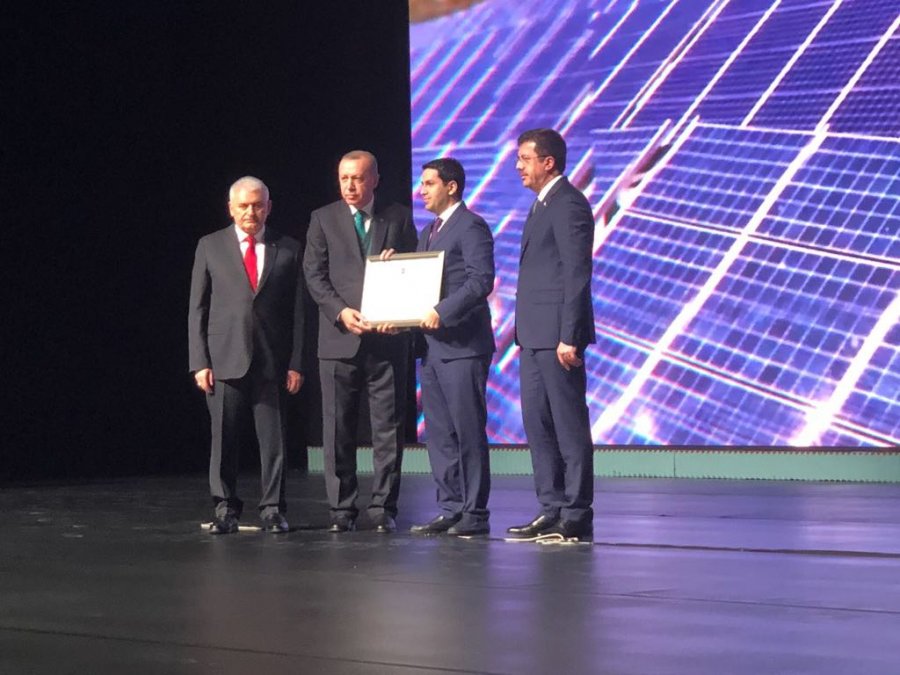
Incidentally, I’d like to point out that the public has been misinformed, and I believe they misinformed our esteemed Niğde Members of Parliament about our project. We didn’t receive a financial incentive; we received an operational incentive. This is a very important distinction. So, what’s the difference? We haven’t received a single penny from our government; there’s no such thing. What constitutes an operational incentive? We need to invest in a factory, we need to produce solar panels and other products, we need to produce them, and we need to sell them. This is the tax deduction we receive after sales, or the incentive we receive on the electricity we use. So, there’s absolutely no such thing as a “take this money and build this factory” upfront; there’s absolutely no financial incentive.
National Security Issue
Frankly, our government has done its part here, and they believe in this visionary project, thank you. Let me explain why we received this incentive. The main ingredient in this solar panel is silicon, and Turkey has silicon. Now, it’s possible to produce it in Turkey, from the silicon purification process to the final product. Our country is already in a very good position in terms of solar radiation, ranking second only to Spain in Europe. The key to having such potential is to eliminate external dependency on energy and ensure national security. I was one of the first to mention the vision and technology based on these in Turkey. I began sharing my views on this issue in 2013, speaking with all relevant ministries, even presenting the details. We stated that we needed to adopt such a model, emphasizing the importance of manufacturing these products in Turkey rather than importing them. In short, I’ve repeatedly emphasized the need to solve this national security issue with our own products in Turkey. A tender was even held for this, and as you know, Kalyon won the tender. Knowing how passionate I was about this issue, during our meetings with the Ministry of Economy, they said, “We’re offering such an incentive. Wouldn’t you apply?” We then submitted our application with our already prepared work and were awarded the incentive.
-Is there anything about Niğde that influenced your decision to make this investment?
Now they ask me if I’m from Niğde, but we’re not. My father’s side is from Gaziantep, and my mother’s side is from Trabzon. When I was in the military, the first thing they asked was where I was from, but I think it’s an unnecessary question; there are good and bad people everywhere. I was wondering where the ideal environment for this kind of production would be, and somehow I ended up in Niğde in 2014. That’s when I first came to this city. In fact, the valuable colleagues in the governor’s office at the time are still there today, and I liked the atmosphere. After looking at all the details, I realized the following: Turkey has a solar belt; if you draw a line across half of Turkey, Niğde is in the middle of the lower half, in other words, in the middle of the solar belt. Two, it’s safe. Three, it’s right in the middle of the area where solar power plants will be built; in fact, a specialized field is being established in Niğde. Four, my general approach is not to go into highly developed areas, but rather into areas with potential for development, and I’ve observed that this city has a high potential for development. I’m someone who always strives to stimulate development, not only in a business sense but also personally, and I derive satisfaction from achieving it.
We could have built this around Istanbul, but it would have been completely unnecessary. However, there are many areas in Anatolia that are ripe for development, and I believe Niğde is one of them. Another factor is whether we can easily export this. Because if we go somewhere farther inland, logistics costs significantly increase. Niğde, for example, is only 1.5-2 hours from the Port of Mersin.
There’s also a railway line, which is another important factor. Finally, I found the level of public employees there to be truly excellent; they are both sincere, honest, and supportive. After I liked that environment, I decided, “This is the right place.” I also influenced other investors to enter after me. There was demand for organized industrial zones, meaning some people heard about us and came after us.
I think Niğde is a great place. And hopefully, if we can resolve the financing issue, we’ll move forward quickly. You know the saying, “We have flour, sugar, everything, why not make halvah”… We’re missing one thing: financing. Once we complete that, everything will be taken care of.
– What are your projections and expectations regarding this?
– In the first phase, we need to secure a minimum of €100 million in financing. After completing the update, we will immediately begin negotiations with the financial investors currently waiting in the background. Frankly, I think we can secure it. We have a team, and more importantly, we have consultants who are experts in these technologies. In other words, since some of the knowledge and know-how isn’t yet available in Turkey, we’re supplementing this from outside, from Europe, and working with many experts. Thus, God willing, we will bring this knowledge to Turkey.
My goal is to begin production in 2023, the centenary of our Republic.
The incentive certificate expires in 2024. But right now, thanks to the bureaucrats in the relevant ministries, including the Ministry of Industry and Technology and the Ministry of Trade (formerly the Ministry of Economy), they continue their support and are waiting to hear from us. Hopefully, once we’ve done our homework and are ready for everything, we’ll be in touch with the relevant ministries and the Presidency again.
What can you tell us about Süzer Holding’s activities?
–It’s the headquarters of the company founded by my father, Mustafa Süzer, so my father manages that company. After all, my father has done significant work. They undertook projects like Bahçeşehir and Süzer Plaza, which hold significant positions in the Turkish real estate sector. The family company currently owns a bank in Croatia.
Furthermore, our family history spans three generations; I’m the third generation; my grandfather started this business. Perhaps it’s genetic; as a family, we have a strong foresight.
Let me give you two examples from my family to illustrate this foresight. My grandfather, Hasan Süzer, founded the company in 1952 and ran a very valuable hotel, the Pera Palace, for 35 years. The badge you see on my chest is a legacy from my grandfather. He always wore Atatürk’s badge like this. My grandfather was a staunch Atatürkist.
Let me share a bit of my grandfather’s life: You know Alaçatı in Izmir. In the ’90s, Alaçatı was a place with nothing but ruined Greek houses; very few houses were still standing. My grandfather was in his 70s when he decided to build a large resort there. Many people were skeptical of his decision, saying, “Hasan Bey, I guess he’s not thinking clearly after he’s 70. Can anyone invest in such a place at his age?” He set out to build a major tourist resort, and the hotel he built became the largest, his first, and still stands there. In the ’90s, when I was talking to my grandfather, he said, “Look, son, this will be a very important tourist destination. You’ll see, it will even rival Bodrum.” Everyone was a bit skeptical. Today, in my opinion, Alaçatı has surpassed Bodrum in terms of demand, becoming an incredible destination, and has even surpassed my grandfather’s vision. That’s why I take my hat off to my grandfather.
Let me give you an example from my father: My father founded Bahçeşehir in Istanbul, and when he did, he started with the following vision: I wanted to build a self-sufficient city. At the time, Bahçeşehir was quite far outside Istanbul; there weren’t even any highways. And the place where Bahçeşehir was founded was our farm, a vast 4.5 million square meter area. As a child, I would play there with sheep, goats, and dogs, and have barbecues. But my father said, “I’m going to turn this place into a city,” and he went in with that vision. They also told my father, “Mr. Mustafa is exaggerating. Can such a thing be done?” Then the highway passed through there. The only time my father had mentioned this to Turgut Özal was when he said, “You’re absolutely right, it’s a great idea.” Otherwise, the approach was generally half-hearted. Now, when you look at the current situation, Bahçeşehir is practically within Istanbul. My fathers built 17,000 residences in Bahçeşehir, and then there was a strange development surrounding it. I think it was a bit excessive, but that’s another matter. But it truly was an exemplary project with its pond and urban planning. This demonstrates my father’s vision. I think this project we’re implementing in Niğde reflects the vision of my generation.
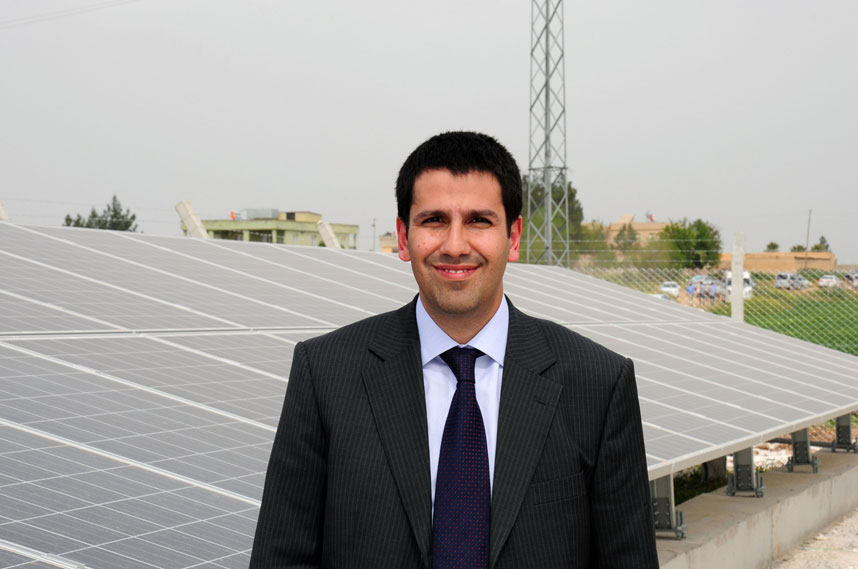
– So, as Serhan Süzer, what are your interests and activities beyond this significant investment?
– I’ve positioned myself as an expert in sustainability and am constantly developing and educating myself in that area. I delve into all the important layers of sustainability. But if this field is an alphabet from A to Z, solar cell production is the A of it, in my opinion. I’ll complete all the letters. This includes battery production and inverter production. Then, it’s time for self-sufficient buildings. But the starting point is solar cells.
Tag: energy