
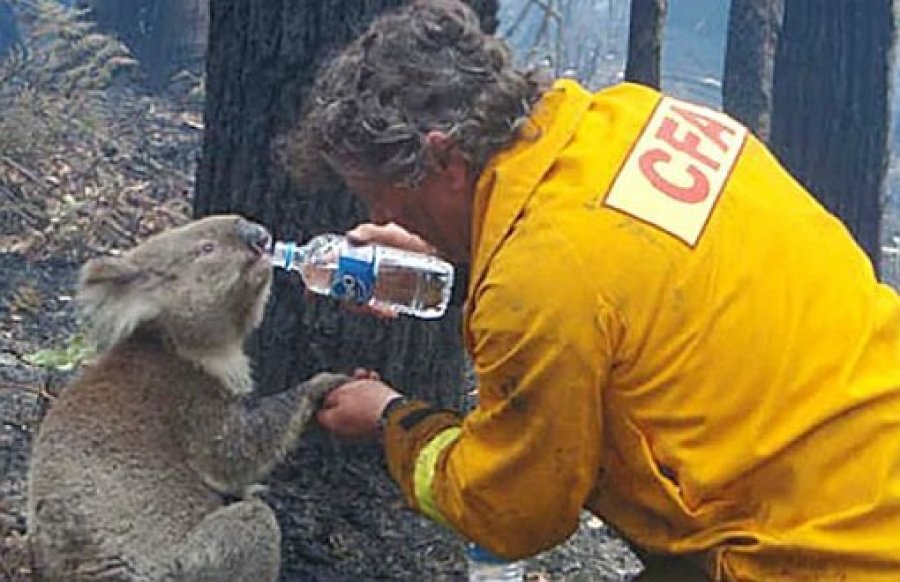
Recently, I gave a presentation about Costa Rica, where I explained how I decided to get into renewable energy back in the ’90s. I started this work in this field because I’m an environmentalist. Rewinding to the beginning, having been skiing since I was five years old, I was aware from an early age that snow quality was declining and precipitation was constantly decreasing. So, since the ’90s, I’ve been researching what I could do with this awareness. Here’s a video about the decline in popularity of ski resorts. In this video, he reiterates the situation I analyzed in the ’90s: that climate change is reducing snow quality. He argues that this is one of the factors reducing demand for skiing:
https://cheddar.com/media/why-ski-resorts-are-dying
After determining that renewable energy was the most effective way to combat climate change, this work became a passion for me. I was fortunate enough to enter solar energy in December 2011, after leaving the family business. In fact, I had been preaching about solar energy to both the family business and my inner circle since the early 2000s.
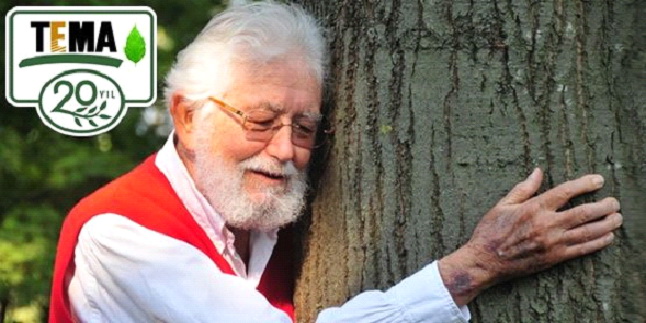
Another effective way to combat climate change, like renewable energy, is through afforestation. I would also like to commemorate Hayrettin Karaca, a.k.a. ‘Grandpa Soil,’ founder of the environmentalist TEMA Foundation, a pioneer in this area in our country. May his Soul Rest In Peace
It’s everyone’s fault
The climate change problem I identified in the 1990s has become a nightmare approximately 25-30 years later, as we approach 2020. Different people in different regions are experiencing this nightmare. Worse still, this nightmare will only get worse. Because despite a significant number of people taking action, the vast majority are still doing nothing. Some are even obstructing the necessary structural changes. Everyone is to blame here: the private sector, which doesn’t sufficiently focus on technological development, the financial institutions that continue to finance fossil fuel projects and don’t adequately support renewable energy companies, governments, states, and individuals whose selfishness has sunk to the bottom. This is everyone’s fault.
Here’s an example of these obstructionists: Australia’s Prime Minister Morrison. Morrison, who championed the burning of fossil fuels as an energy source rather than using them as raw materials, received incredible backlash for going on holiday when the disasters began. Australia’s prime minister, who has been unable to stop the fires since September, is facing serious backlash from the public. You can see some of the reactions to Prime Minister Morrison in this video:
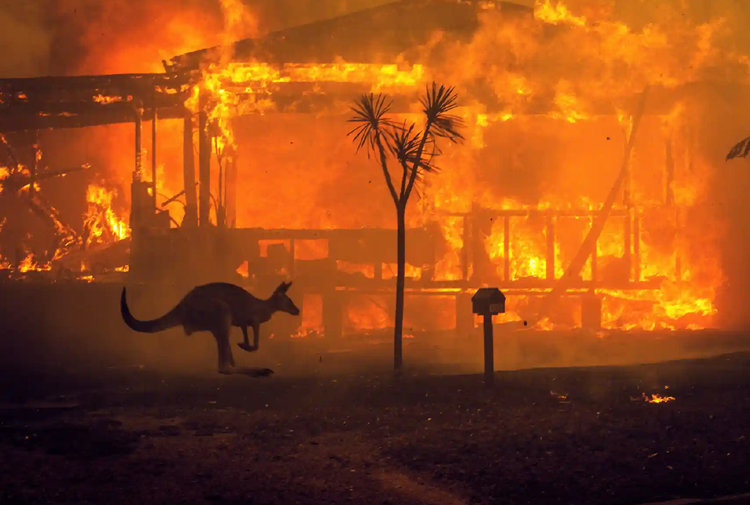
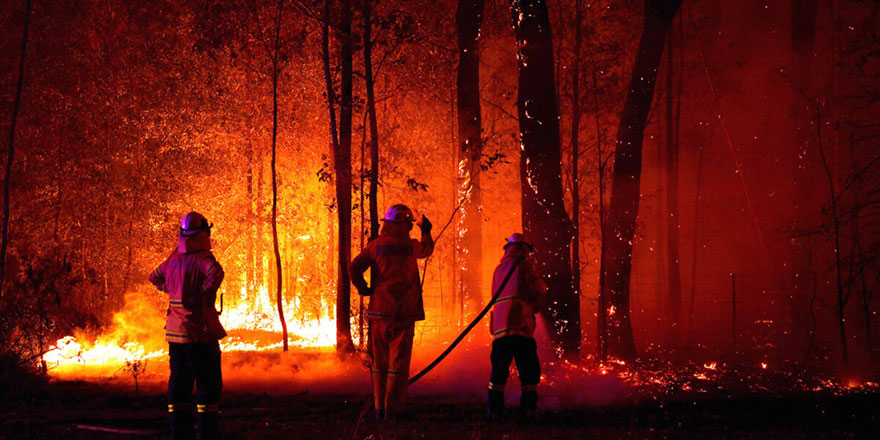
I hope they’ve learned enough from these events and, at the very least, do what’s necessary from now on, ensuring that fossil fuels are used solely as raw materials. There’s a lot to be said about the fires in Australia. You can get a sense of this disaster unfolding at a loss for words by looking at the images below:
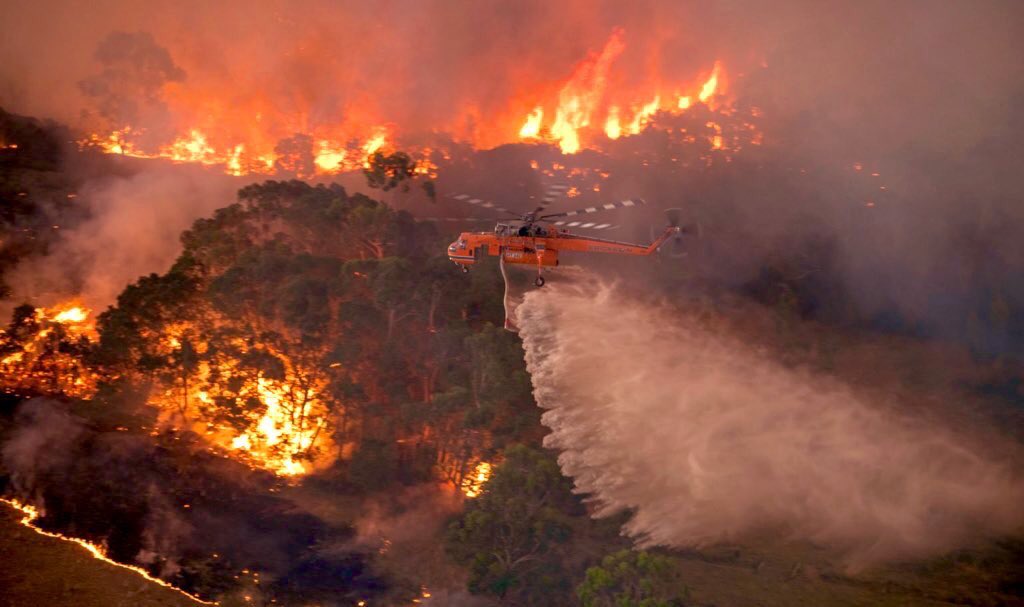
Information from our sister NGO in Australia
To delve deeper into this issue, I enlisted the support of some friends.
I contacted Briana, CEO of Foodbank Australia (https://www.foodbank.org.au ), the Australian counterpart of TIDER and the umbrella organization for food banks there, to request information about the fires in the country. Below, I share a summary of the information sent to me by Briana, the CEO of this aid organization, which provides basic provisions such as food, cleaning products, and clothing to those in need. Here’s what’s happening in Australia, right from the source:
“Most of the Australian Food Banking team, myself included, are now in our 8th day of operation, working almost 15+ hours every day. We have to work very fast in a very stressful environment. I’ve never been prouder of our team and our food bank. The situation is still dire, but I wanted to keep you updated on what we’ve done so far.
FOOD BANK’S FIELD ACTIVITIES (just from these actions alone, you can see the critical role food banks play in emergencies):
What the Food Bank has accomplished in the last 7 days:
- Distributed over 160,000 500ml bottles of water to Victoria and NSW
- Delivered over 100 tons of food, water, and animal feed to evacuation centers and local charities in the same region
- Mobilized army trucks, military helicopters, sea transport to isolated areas, ferries (to Kangaroo Island in South Australia), partner trucks, and our own vehicles to distribute products from our warehouses
- Delivered 4,500 Food Banks Distribution of the Bank aid basket to Victoria and South Australia (each basket provides 7 days’ worth of food for a family of 4)
- Delivery of 3 pallets of muesli and 4 pallets of fruit to first responders
- Shipment of 1,000 packages of toiletries and hygiene products
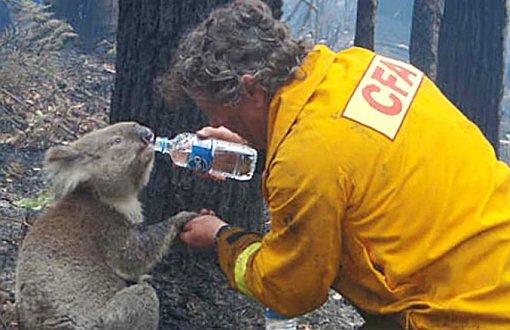
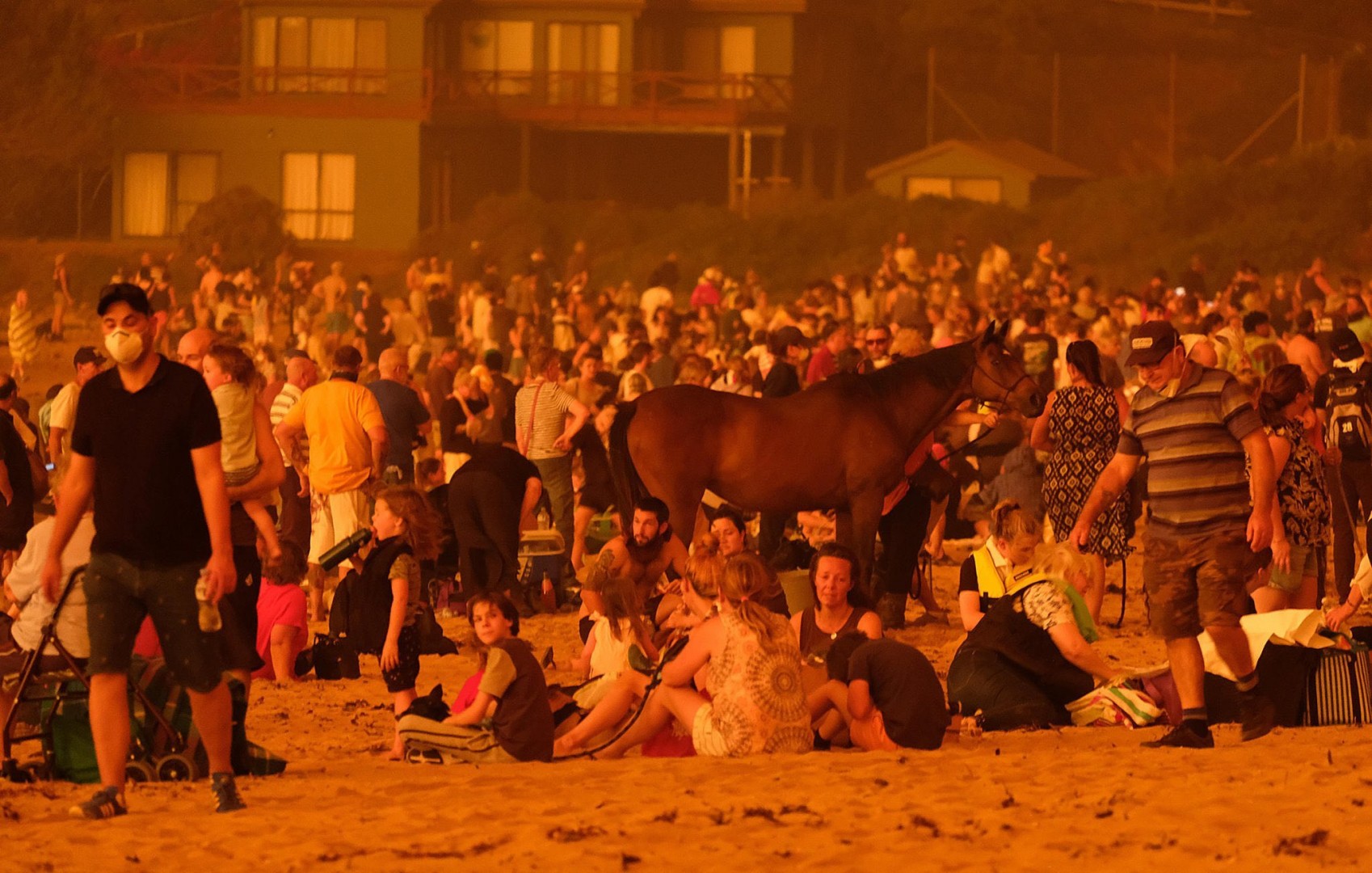
STATEMENT AS OF 6 AM TODAY:
1 fire emergency in Victoria, 13 fires in progress and in transit.
27 deaths so far (20 deaths in NSW, 4 in Victoria, 3 in SA. Three of the casualties are firefighters).
2,131 homes have been completely destroyed, including in NSW. Seven regions in Victoria are isolated.
4.9 million hectares have burned in NSW alone. 1.2 million hectares have burned in Victoria.
6,284 livestock have either died or been euthanized in NSW.
More fires are expected in Victoria and NSW tomorrow. This indicates that other fires may start.
Air quality is very poor in many places, including major cities.
Donations are pouring in from everywhere. We’re collecting donations both nationally and internationally. Messages of support are pouring in on social media. We’ve made the Food Bank the go-to organization for wildfires. We’ve become one of four organizations supported by celebrities (the other three are the Red Cross, local fire services, and animal/wildlife NGOs).
——-
I thank dear Briana for this valuable feedback, congratulate her for her leadership during challenging times, and wholeheartedly congratulate the Foodbank Australia team for all the valuable work they do. That’s the power of civil society!
The real reason is the climate crisis
Briana’s comments reflect the charity’s perspective. To summarize the general situation, bushfires occur frequently in Australia every year because of the continent’s ecology. However, the main reason these wildfires in Australia periodically start earlier, last longer, are increasingly severe, and have unpredictable consequences is the climate crisis.
Due to these wildfires that have caused widespread devastation in the country, Greenpeace is once again calling on Prime Minister Scott Morrison to take climate change seriously and take urgent action to reduce greenhouse gas emissions, which have been increasing over the past four years. This call is being made today by Australia, as well as by the entire world and its governments. The climate crisis has no borders or countries. This crisis affects us all.
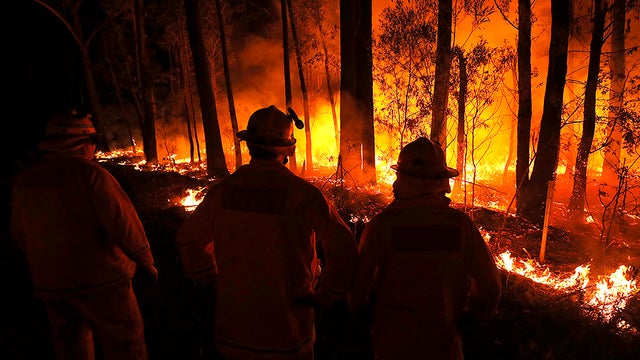
I would also like to personally address the Australian Government: Fulfill the requirements of the energy revolution. This means meeting 100% of energy needs with renewable energy, using fossil fuels as raw materials (such as oil in petrochemicals and natural gas in fertilizer production), promoting energy efficiency and distributed systems. Furthermore, accelerate reforestation (rapidly plant more vegetation to replace burned vegetation), support R&D for the development of sustainability-related technologies, and proactively plan now to prevent similar wildfires next season, or to respond quickly after they do occur.
Meteorological Expert Opinion
At this point, let’s consider the issue from a meteorological perspective and include the views of Deniz Demirhan, a.k.a. the ‘Weather Doctor,’ who is a faculty member of the Meteorological Engineering Department at ITU and an expert on the subject:
“2019 was determined to be the second hottest year in the world in the last 140 years. It is thought that the temperature increases in Australia in 2019 caused air humidity (relative humidity) values to drop below 20%, causing trees and shrubs to dry out excessively. It is estimated that these conditions, combined with strong winds, made the environment suitable for fires. The initial start of a fire could be an electric current caused by lightning or a spark caused by sabotage. Once a fire starts, it creates its own weather conditions. Hot smoke rises, forming pyrocumulonimbus clouds. The air within these clouds cools at higher altitudes, the moisture condenses, and the air begins to collapse. When the collapsed air encounters warm air at the ground, it loses its moisture. This dry air, moving from the cloud to the ground, contributes to the spread of fire.” It causes the fire to spread. According to NASA, the number of Pyronocumulus clouds formed in Australia between 28-31 December 2019, was at least 20. By January, these clouds had carried fire particles up to the stratosphere at 16 km. This is believed to be the reason for the prolonged rage of the fires in Australia. The adverse consequences of the fires are estimated to have global effects. However, the exact consequences are not yet known. However, if we were to speculate, it is possible that particles reaching the lower stratosphere (approximately 16 km) during large-scale fires could cause this region to overheat. Another possibility is that the particles from the fires, similar to particles released into the atmosphere after volcanic eruptions, block solar radiation and cause the environment to cool. According to NASA’s statements, whether this fire will cause a net cooling or warming is currently under investigation.
I thank Deniz for these valuable insights. Expert opinion is always invaluable to me.
Nature’s slap in the face of Humanity
To summarize, I can say the following:
According to the latest report by the International Panel on Climate Change, a United Nations agency that has published thousands of scientific studies and reports on climate change, average global temperatures are projected to increase by 1.5 to 2.3° C. by 2050 compared to the 1850-1900 period.
Due to climate change, normal rainfall patterns have been disrupted. Rainfall intensity increases during the rainy months, bringing with it disasters such as floods, landslides, and erosion.
If governments and companies fail to implement policies to reduce greenhouse gas emissions, temperatures could rise by up to 4° C. within the current century. The immediate implementation of the Paris Climate Agreement is not a requirement, but a necessity. I want to remind you that governments that fail to act seriously on these issues bear a heavy responsibility.
If you would like to support Australia’s rapid recovery from its wounds, you can visit one of the links below and donate to:
- Foodbank (to provide food and essential goods to disaster victims): https://www.foodbank.org.au/
- Red Cross: https://www.redcross.org.au/
- Fire Services:
- https://www.rfs.nsw.gov.au/volunteer/support-your-local-brigade
- https://www.cfa.vic.gov.au/about/supporting-cfa
- NGOs related to animal and wildlife:
- https://www.cfa.vic.gov.au/about/supporting-cfa
- https://www.rspcansw.org.au/
- https://www.facebook.com/koalahospital/
- https://www.wwf.org.au/get-involved/bushfire-emergency#gs.ua15fe
The climate crisis is now affecting our lives far beyond what is currently determined in scientific reports. I’ve always said that we must act as part of nature. When we disrupt the natural balance, nature first listens, then begins to strike back, and eventually delivers the final blow that will lead to the end of Humanity (I’m not talking about the end of the Earth, but of the human species, like the dinosaurs).
Nature is already striking back. We can observe the effects of climate change all over the world. For example, in total, more than 7.3 million hectares (17.9 million acres) of forests have burned across six Australian states. This is an area larger than Belgium and Denmark combined. Animals are as severely affected as humans.
In other words, it’s not just us who bear the brunt of our human irresponsibility; other living creatures on Earth are as well. Speaking for myself, despite all the challenges I’ve experienced, I will continue to do my best to leave future generations a world free of climate change concerns.
To our Australia Mates, you are not alone. This world belongs to all of us, and with our collective will, we will do what is necessary.
References:
https://www.greenpeace.org/turkey/blog/avustralya-yaniyor/
https://biacaip.com/iklim-degisikliginin-hic-sakasi-olmadigini-gosteren-16-carpici-fotograf/