As I rushed to get ready—trying not to be late for a long-awaited meetup with my Colombian friends—memories of the Summer of ’94 came flooding back: my days at Harvard and the first time I ever watched a World Cup game in a stadium.
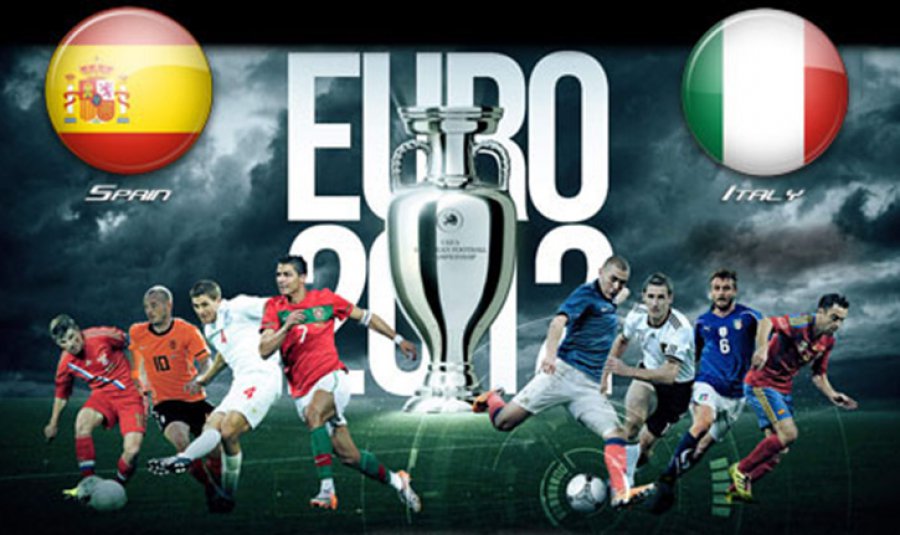
That summer, I had the chance to see a World Cup game live for the very first time. I was taking Algebra and Microeconomics at Harvard Summer School, and since I was in Boston that summer, I got to attend the Italy–Spain quarterfinal game in the World Cup hosted by the U.S. I owe this unforgettable experience in part to a friend of mine, Shahnaz, who was originally from Iran but lived in Los Angeles and was staying in our dorm at the time.
Shahnaz was one of the few people at Harvard who really clicked with me—smart, cool, and knowledgeable about soccer. In fact, she was the only woman amongst a group of 15 of us watching the games together in our dorm supervisor’s room.
One day, as we were chatting about the games, she asked, “Would you like to go see a World Cup game in person?” What a brilliant idea! A major European showdown was happening in Boston—and it was a quarterfinal game. When I asked her, “But how will we get tickets?” she replied, “Leave that to me.” I said, “Great. You get the tickets, and we’ll go together.” She said, “Deal.” The next day she called me—she had acquired the tickets. We agreed on a time and place to meet and take the subway to the stadium. I was beyond excited.
When the day came, we took the subway to the stadium and grabbed seats in a great section. The game itself was a thrill to watch. That was the era when Baggio was truly Baggio. Back then, Italian soccer was miles ahead of everyone else. Serie A was widely seen as the best league in the world, attracting all the top global stars. Spain, while still strong, wasn’t yet the powerhouse it is today.
Italy won 2–1, with a spectacular goal from Baggio. We were all blown away.
One of the things that made that day especially memorable was the fans. It was the only game I’ve ever attended where supporters of both teams sat side by side. No insults. No fights. Everyone cheered in their own way and expressed joy or disappointment—but always with sportsmanship and good vibes. The energy throughout the stadium was completely positive.
These days, when I watch games in Türkiye, what I see is a society that feeds on hatred. At stadiums and arenas, we witness brawls, shouting, swearing, and constant attempts to humiliate the opposing side. After seeing the warm rivalry between two Mediterranean nations who are so similar to us, I find it disheartening to watch our fans—many of whom are well-educated—behave so poorly.
What difference does it make if you win or lose? Is it the end of the world? You go to a game to have a good time, enjoy sport, and hang out with friends. If your team loses, big deal—did your ships sink in the Black Sea?
That night, after the game, I went back to our dorm in Harvard Yard and excitedly recounted everything to my roommate, Austin. We talked about the players, the goals, the fans. Austin was a perfect game for me as a roommate—he played for the Colorado State University soccer team and was a fantastic guy. I was really lucky to have him as a roommate.
When I first arrived, I was a bit shy introducing myself to Austin and Peter, my two roommates. But curiosity got the best of me, and we ended up talking all night. When I told them I was from Türkiye, they bombarded me with questions—apparently, I was the first Turk they’d ever met. Likewise, they were the first Americans I’d ever lived with.
Peter was of East Asian descent and from Texas. Seeing someone who looked East Asian but spoke with a thick Southern drawl totally threw me off at first—but once I got used to America, it all made sense. Peter was also a great guy. We developed a strong friendship, and needless to say, our cozy Harvard dorm room quickly took on the unmistakable vibe of our homeland.
Example? The answering machine—very trendy back then—played Yonca Evcimik’s “8:15 Vapuru” as background music whenever someone left a message. When Austin and Peter’s parents called and left messages, they’d say things like, “Son, what is this music? Sounds like you’re having quite the experience at Harvard.”
Peter, being a computer engineering student, basically lived in the computer lab, so we didn’t see him much. But Austin and I discovered a shared passion: soccer. We grabbed a ball and started kicking around in the grass fields of Harvard Yard. What began as a casual pastime quickly gained traction. More people joined—Europeans, Americans, Latin Americans—and before long, we had enough for full games.
Eventually, our growing group outgrew Harvard Yard. We tried a few locations and finally settled on the official soccer field across the river where the Harvard team trained. What began with just the two of us turned into a full-on tournament by the end of the 2.5-month summer term—with 7–8 teams, each with 11 players. Since we were the ones who started it, Austin and I got to pick who played on which team.
One day, during that period, Austin asked,
“Serhan, I told you where I played. But you never told me where you played.”
As a joke, I replied, “I used to play professionally for Galatasaray’s youth team.”
He said, “It shows—you’ve got great technique.” We talked about how well we complemented each other on the field.
Two days later, I couldn’t keep the joke going. I came clean:
“I’ve never played professionally—just pick-up games with friends, and a bit in high school.”
He was stunned.
Then came this exchange:
Austin: “Wait, you’ve never played for a real team?”
Me: “Nope. Just for fun. I played for our school team a few times, but it wasn’t even an organized squad.”
Austin: “That’s wild. If we put you on my Colorado State team, you’d be a starter.”
Me: “Hard to say. In Türkiye, everyone loves soccer—even more than I do. I’m not even considered top-tier by Turkish standards. There are so many better players than me.”
Austin: “If it’s that serious over there, how come we never see Türkiye in big international tournaments?”
Me: “Fair point. But watch our generation—you’ll see big things. Just keep an eye on Türkiye.”
And sure enough, the generation I told Austin about went on to achieve great things—Galatasaray won the UEFA Cup and then the UEFA Super Cup, climbing to the top of European soccer. That same core of players helped Türkiye place third in the 2002 World Cup. I’m sure Austin remembered me then.
While hanging out with Austin, I also saw other Turkish students from time to time. They were all smart and well-mannered. Whenever we ran into each other, they’d say, “Where have you been? You’re never around!”
Only four Turkish high schools had students at Harvard Summer School: Robert College, the German High School, the Austrian High School, and Üsküdar American Academy. When I told them I was from Tarabya Kemal Atatürk High School, I remember the surprise on their faces. They asked, “Wait, seriously?”
I explained that I had actually enrolled at the Austrian High School despite having appendix surgery a month before the private school entrance exams. But my family had opted for the newly established Tarabya Kemal Atatürk High School instead—and I was very happy with both the school and my classmates.
I applied to Harvard Summer School on the advice and with the help of a close family friend (thank you, Binnur Hanım), and somehow I got in. My grades were decent, especially for a first attempt.
That academic journey continued at McGill University, one of Canada’s top universities.
Each of the schools I attended contributed something valuable to my development.
May God bless all my teachers. And a big thanks to my classmates, too.
Tag: memoir