
Last week, in my article about the forest fires in Türkiye, I argued that the main cause of these fires is human-caused and that people set these fires for four different reasons: ignorance and lack of culture, infrastructure problems, and attempts to profit or terrorize the country.
However, I emphasized that the reason people can so easily burn down forests, and sometimes even cause fires due to extreme heat, is always the ever-increasing extreme temperatures stemming from the climate crisis.
So, when you ask, “What is the main cause of the climate crisis?”, there’s a clear answer: the increasing rate of carbon emissions. There are three reasons for this increasing rate of carbon emissions:
1) The ever-increasing human population,
2) The increase in average per capita consumption,
3) The increase in average per capita carbon emissions.
For all these reasons, carbon emissions are increasing at a snowballing rate, and the established targets are never met.
Intervening in consumption is difficult
Let’s say we can’t do anything about the ever-increasing human population and average per capita consumption. Ultimately, it’s not easy to intervene in the unplanned, arbitrary, and unthinking proliferation of people. For population control to be successful, the state must have complete control over everything. For example, the Chinese state was successful for a long time with the ‘one-child’ rule. However, they later decided that population growth and abundance were also a ‘power’ and abolished this rule. Of course, other states are not as omnipotent, powerful, and disciplined as China. Therefore, if India, for example, attempted to impose this one-child rule, its people would likely object greatly, but Indians would not listen to the government and would simply do as they please. The Chinese, on the other hand, have a completely different, uncompromising, collective culture, so all the state’s rules and criteria are met.
As with population control, intervening in average per capita consumption is also unlikely. However, in times of economic crisis, people act cautiously and thriftily to meet their basic needs. Beyond that, the general human tendency is toward abundance. This is precisely the prosperity that governments so often promise. The promise is that people will be able to buy and consume whatever they want. Therefore, intervening in the increase in average per capita consumption is unlikely. However, with the collective wisdom of nations like Russia and China, which have grown with discipline, it may be possible to reduce consumption at certain times. Otherwise, it’s not possible in places like the US and European countries that promise perpetual freedom.
The real issue is the increase in carbon emissions
My biggest concern here is the increase in average per capita carbon emissions. In my opinion, global mobilization is needed on this issue. Because if average per capita carbon emissions are reduced or even neutralized rather than increased, the cycle of the climate crisis will reverse, despite the impacts of human population and per capita consumption. In other words, nature will begin to recover rapidly.
I can hear you asking, “How can average per capita carbon emissions be reduced?” The answer lies in the fossil fuel sector. We need to completely overhaul the fossil fuel sector’s model.
Raw materials, not fuel
In other words, we need to replace the model of burning fossil fuels to generate energy with a model of meeting our energy needs with 100% renewable energy. Fossil fuels should also be used as valuable raw materials. In other words, oil needs to be used as a raw material for the petrochemical sector (to produce recyclable plastics, etc.), and natural gas needs to be used for fertilizer. Alternatively, it needs to be separated into hydrogen and carbon, the hydrogen burned for energy, and the separated carbon used as a raw material. I’ll give three examples of where carbon can be used. These examples can easily be expanded, creating hundreds of product lines using carbon as a raw material. Carbon can be used as a raw material for the following three products:
1) In carbonated beverages like Coca-Cola,
2) In products like carbon fiber,
3) To meet the carbon needs of greenhouses.
You can list other products using your industry knowledge or imagination.
The problem isn’t the substance, but the model used
So, I want to emphasize this point. In fact, I’ll put it in capital letters to emphasize it to those who don’t understand or don’t want to understand:
FOSSIL FUELS AND CARBON ARE NOT OUR ENEMY. WE NEED TO CHANGE OUR FOSSIL FUELS USAGE PATTERN. INSTEAD OF BURNING FOSSIL FUELS AND RELEASING HUGE AMOUNTS OF CARBON INTO THE ATMOSPHERE, WE NEED TO USE THEM AS RAW MATERIALS. BY BURNING FOSSIL FUELS, WE ARE NOT ONLY DISRUPTING NATURE’S BALANCE, FEEDBACKING AND ACCELERATING THE CLIMATE CRISIS, AND WE ARE ALSO CONSUMING THESE ESSENTIAL RAW MATERIALS THAT FUTURE GENERATIONS NEED.
My 2013 article that ignited the flames
Since 2011, we have been fighting hard for the transition to 100% renewable energy in the energy sector, and we’ve always found ourselves facing the fossil fuel lobby. I ignited the fire in this struggle within ministries and industry in 2013 with an article I wrote in Turkish Policy Quarterly (later renamed Transatlantic Policy Quarterly, the acronym remains: TPQ) titled “Why Türkiye Should Aim for 100% Renewable Energy.” I recommend reading this article I wrote 12 years ago: https://transatlanticpolicy.com/why-Türkiye-should-aim-for-100-renewable-energy/
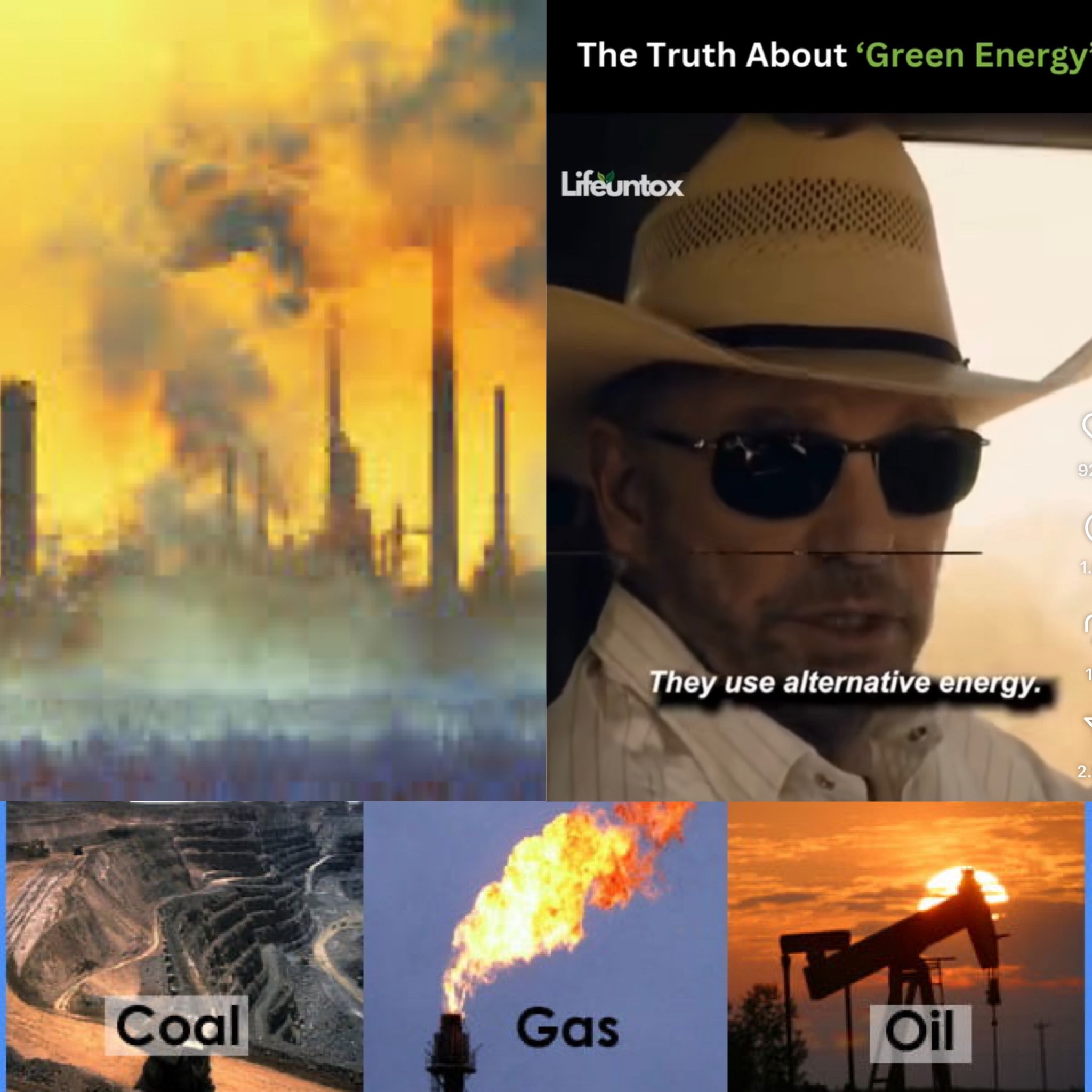
Having said all this, I recently came across a video of an American working in the oil industry, using his typical manipulative rhetoric, denigrating renewable energy, almost leading us to claim “fossil fuels are cleaner.” I’ve heard this man’s nonsense throughout the industry, and we’ve responded to every one of them when their time came, silencing them all. In fact, at some events, for example, while speaking on the same panel, I’ve encountered fossil fuel professionals. While my fossil fuel colleagues were booed by the audience at the end of these panels, I always received applause. Because in my discussions with them, I always provided the necessary answers based on science and factual information.
The Lying Cowboy’s Claims and My Responses
You can watch the speech of this oil-wielding American, who manipulates people with the confidence and poise of his ignorance or self-interest, at https://www.instagram.com/reel/DL-FjUiv2NU/?igsh=MTVlazFhNXgxbmdrMA%3D%3D.
It’s time to put this oil-wielding American in his place, who doesn’t even realize they’re darkening humanity’s future or doesn’t hesitate to knowingly mislead people for their own benefit. Here are his statements, followed by my responses. I hope one day his children read this and say to him, “We are ashamed of you and your actions. You have left us a world worse than the one you live in, whether consciously or unconsciously.”
1) Are they using clean energy to operate oil wells? They’re not using clean energy; they’re using alternative energy. There’s nothing clean about them.
Alternative energy is pure fossil fuel jargon. We absolutely reject this. Don’t make up alternative energy. The term “clean energy” is correct. We will call it “renewable energy,” or in the future, simply “energy.” We advocate that 100% of our energy needs should be met by renewable energy. There’s no alternative, absolutely nothing. There’s only one type of energy: renewable energy. We must be able to fully utilize the energy resources in nature through the necessary technology. These include solar radiation, wind, bioenergy based on plant or animal organic waste, underground heat (geothermal), water’s fluid power (for hydroelectric power plants to be considered renewable energy, the source must be constantly replenished), waves, currents, hydrogen, etc. Nature has everything we need. We need to be able to use these resources with the right technologies.
This doesn’t include fossil fuels, which take millions of years to form underground. Because of their high carbon content, fossil fuels should never be burned; instead, they should be used as raw materials.
2) He then mentioned how much fossil fuel they use for wind turbines:
a) Do you know how much diesel they use for the concrete in the foundations of wind turbines?
All materials used in wind turbine construction, which increase carbon emissions, will be manufactured to neutralize carbon emissions soon. For example, other technologies will be used instead of concrete in the foundations (such as steel piles or natural building materials).
b) Do you know how much fossil fuel they burn for the steel they use for wind turbines?
The steel used for wind turbines will be produced using hydrogen in the future, putting an end to the debate about steel (burning hydrogen produces water vapor instead of carbon). Furthermore, most turbine materials used, such as steel and copper, are recyclable. The only problem is recycling the blades, which they are solving through reuse. I have no doubt that blades will be 100% recyclable in the future.
c) Do you know how much fossil fuel they used to power the 450-foot crane while erecting the turbine?
Soon, these cranes will also be powered by electricity. The electrification of all vehicles (cars, minibuses, buses, trucks, cranes, lorries, ships, aircraft, etc.) will be achieved within the next 10-15 years, including cranes. Meanwhile, to ensure this uninterrupted electrification, batteries will be used in small vehicles (cars, minibuses, buses, etc.) and hydrogen in large vehicles (trucks, ships, aircraft, etc.). So, this isn’t a matter of debate. These electric vehicles will also generate their electricity from renewable energy sources like solar power plants (SPPs) or wind power plants (RESPs). Therefore, the source of electricity will be clean.
d) Do you know how much petroleum-based oil they use to spin that turbine or keep it running uninterrupted in the winter?
If you don’t burn the oil, there’s no problem. Burning it creates significant carbon emissions. You can use that oil for years to prevent the mechanical parts of the turbines from rubbing against each other. Then, you can recycle that oil and reuse it repeatedly.
e) If you consider that all these things have a 20-year lifespan, do you know how much fossil fuel is consumed and how little electricity they generate to offset the carbon emissions they produce?
This statement is misinformation and manipulation. Let me correct it immediately (science is speaking here): Anything in the world inevitably releases some carbon during its production process. This is a fact that allows you to demonstrate something. However, the carbon emissions generated in the production of these objects are not the important thing. What matters is the sum of the carbon emissions generated during the production of these products and their contribution to reducing carbon emissions after they are manufactured and put into use.
So, to give you a sense of it, carbon emissions are generated in the foundation of a wind turbine, in its steel, and in the crane used to erect it. However, once that wind turbine is operational, the electricity it produces, virtually carbon-free, displaces electricity generated from fossil fuels, thus significantly reducing carbon emissions.
Finally, I emphasize this point: WIND ENERGY, IN GENERAL, IS ONE OF THE CLEANEST AND MOST SUSTAINABLE ENERGY SOURCES AVAILABLE.
3) After wind turbines, it hasn’t slowed down and has also focused on solar panels and lithium batteries. Regarding these, it says, “Don’t get me started.”
Go ahead, get started. You’ll get the answer you need, just like you did with wind energy. The equation for solar panels and lithium batteries is the same as for wind turbines:
Total Carbon Emissions Over Their Lifetime = Carbon emissions generated during production + Carbon savings generated when generating electricity once operational.
I’m writing this in capital letters so this fossil-minded, reactionary American can understand: THE TOTAL CARBON EMISSIONS OVER THE LIFETIME OF BOTH WIND TURBINES, SOLAR PANELS, AND LITHIUM BATTERIES ARE BY FAR NEGATIVE.
4) He also stated, with his magnificently short-sighted vision: If the entire world wanted to switch to electricity, we don’t have the power grid to handle it. It would take 30 years to build the transmission line to bring the electricity we need to our cities. Yet, we have 120 years of oil infrastructure to meet our grandchildren’s needs. Our entire lives depend on it.
Who says we need a grid? We’re already saying that the grid and these very high-budget infrastructure investments must be eliminated. In other words, instead of centralized systems, distributed systems must be planned and implemented. That is, on-site production, on-site consumption.
I’m talking about buildings soon producing their own energy, water, and food. They will produce and consume for their own needs. This way, there will be absolutely no need to build kilometers of electricity transmission lines with huge budgets. At best, neighbors could create microgrids or smart grids to support each other. The investment for this would be very small.
So, this fossil-brained friend of ours is still stuck in the past, talking about the electricity grid. That model will completely change. The billions of dollars in oil infrastructure you spent in the past should be used solely for the petrochemical sector.
5) Products we use in every aspect of our lives—the road you came here on, car tires, lipstick, tennis rackets, refrigerators, antihistamines (antiallergenic medication), cell phone protection, artificial heart valves, all clothing not made with animal or plant fibers, soap, hand lotion, garbage bags, and even the boats we use for fishing—are made from plastic.
Yes, that’s exactly what we’re saying. Don’t confuse the concepts. Produce these products with the same petroleum you extract or even set a criterion like this: Petroleum-based products must be recyclable. For example, eliminate single-use plastic bags and replace them with recyclable hard plastic products (like household and car accessories).
Disposable plastic-based products can be replaced with plant-based products that can be biodegraded. For example, instead of plastic-based garbage bags, use plant-based bags that can dissolve in compost or biogas and be mixed with organic waste.
6) What will kill us is the fact that we will run out of oil, the raw material for this plastic, and we haven’t found an alternative.
This man is contradicting himself; he doesn’t realize it. That’s what we’re saying anyway. I’ll write it in capital letters again for you to understand: TO PREVENT THE DECLINE OF RAW MATERIALS FOR OIL-BASED PRODUCTS, WE MUST Abandon the Model of Burning Fossil Fuels Like Oil to Generate Energy. IF WE CONTINUE TO USE FOSSIL FUELS FOR ENERGY, WE WILL DEFILE FUTURE GENERATIONS OF THIS VALUABLE RAW MATERIAL AND CONTINUE TO POLLUTION NATURE AND FIRE THE CLIMATE CRISIS.
Organic-based products instead of plastic
Finally, I’d like to share some information based on science and technology. We can also use organic-based products instead of plastic. In other words, the saying, “Oil is finished, humanity is finished too” is false. Everything in nature (including different raw materials) has a substitute or alternative (we can use the same word he used to insult the renewable energy sector for raw materials here). If this reactionary cowboy, instead of spreading false information, were to follow developments in science and technology and consider humanity and future generations even a little bit instead of his own personal gain, he would need to completely revise his future rhetoric. Meanwhile, there are people everywhere who, driven by the confidence of ignorance or for their own personal gain, try to intimidate people by swaying them left and right. There are especially many in Türkiye. Everyone is trying to impress others by projecting an image of themselves and presenting themselves as something completely different. Unfortunately, due to our current environment, people often fall for these tricks. We need to silence these people, if necessary, with louder voices, knowledge, and experience, and prevent them from misleading people.