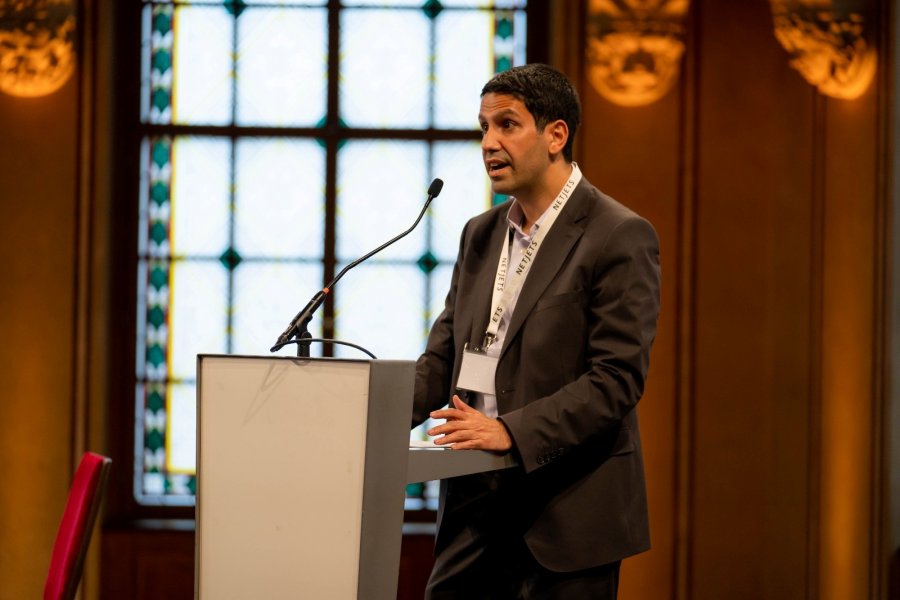
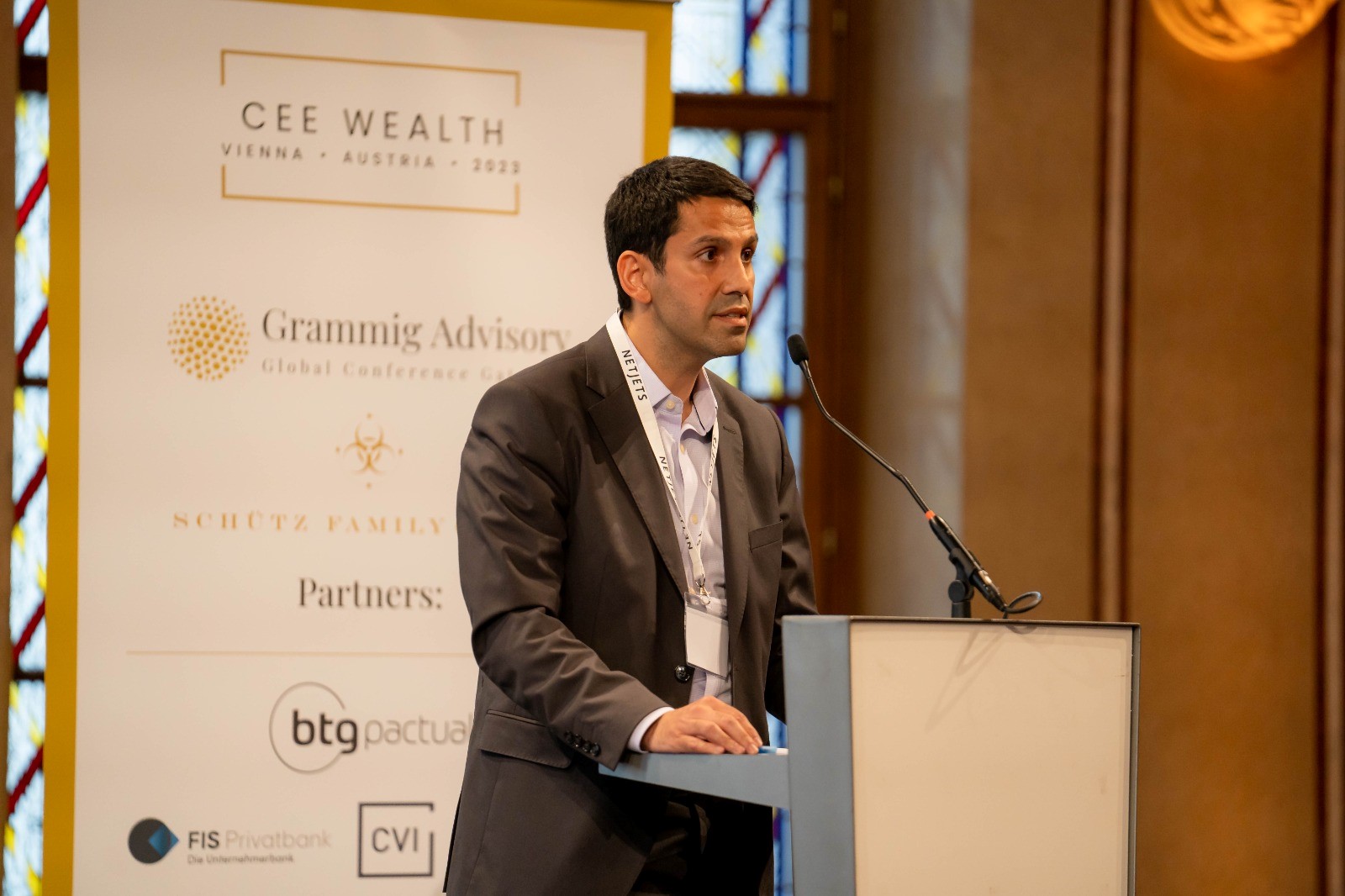
The CEE Wealth Summit brought together more than 120 family offices, private investors, and family business owners and managers from Central and Eastern Europe in Vienna from 14-15 June. You can read about the event at https://cee-wealth.com/ .

On the first day of this event, I gave the opening speech on sustainability, a topic that all family offices are interested in but don’t know where to start, and a crucial topic that particularly concerns family offices with real estate investments: the future of cities and how we will live.
Following this speech, we had the opportunity to discuss the topics in more detail in a panel discussion with the participation of the esteemed panelists and our moderator. The following participants participated in this panel:
Moderator: Hans van Houwelingen, Managing Partner, Urban Ventures, Bulgaria
Serhan Süzer, Eko Group CEO, Turkey
Hugo Borges, MCA Group COO, Spain
Benjamin Epstein, Saber (SFO) Director, Austria
In this article, I would like to share my important speech with you. I’ll leave the interpretation to you:
The fire joke that didn’t make me laugh
Last week, in an online conversation with Americans, a joke was made about the wildfires in Quebec, which have also affected the New York City skyline. You know Americans, they love to joke about Canadians. Regarding the dense smoke and haze from the wildfires in Quebec, Canada, which have turned the New York City skyline orange and caused the worst air quality in the Northeast in decades, the American participant jokingly commented, “Is this an act of war by Canadians against Americans?” Everyone in the conversation laughed. I didn’t laugh much. Not because I can’t take a joke, or because I went to college at McGill University in Montreal and care about Canadians, but because I’m fully aware of climate change. This situation will only get worse in the future, and in fact, future generations will suffer even more. I felt like responding to the friend who made this joke: “If we are to define this situation as war, it is Mother Nature’s act of war against us, against humanity. Because for decades, we have been burning fossil fuels and releasing too much carbon into the atmosphere, and this is warming the climate, fueling fires, floods, and hurricanes. If we don’t act quickly and take the necessary action, disasters will become a part of everyday life, and as humanity, we will face serious difficulties even finding the water and food necessary for our existence.”
Setting aside America and Canada, let me give you a recent example from Vienna. This morning, I ran in the Stadtpark (City Park). The water level was so low that the wild ducks that should be swimming in the canal were waddling right in the middle of it. Now, I ask you, is it normal for the canal to be running out of water at a time like this, when it’s not even July yet? (After asking this question, many in the room shook their heads to indicate “not normal”).
The concepts of ‘self-sufficiency’ and ‘net zero’
So, what needs to be done? Simple. We need to change our way of life. Because since the modernization of our society in the past, our way of life has been unsustainable. To live sustainably, we will need to change our way of life. So how do we achieve this?
By considering the principles of self-sufficiency and net (carbon) zero. In other words, we must neutralize carbon emissions by making our communities self-sufficient. And to be self-sufficient and at least carbon zero, or if possible, carbon negative, we must design and build new buildings, new villages, new towns, and new cities from scratch.
I could expand on the concepts of self-sufficiency and net zero. However, it would take me a few hours to explain the entire concept. I don’t have time for that, so I’ll summarize. Self-sufficient buildings are buildings that can produce their own electricity, water, and food. I’m talking about generating and consuming your own electricity, water, and food on-site, whether in your home or in a group of homes. Self-sufficiency should be at an urban level. So, every city should be self-sufficient across the entire area, followed by districts, neighborhoods, towns, villages, and ultimately buildings. For a building to be energy-sufficient, we need to install solar tiles or panels on the roof and use integrated photovoltaic solar cells for the façade. We’ll also need batteries and green hydrogen to store the energy generated. Other renewable energy sources such as heat pumps, wind turbines, and micro-biogas units are also good options depending on your location.
Technologies such as vertical farming, modular farming, aquaponics, and others are also available to enable a building or a collection of buildings to become self-sufficient in terms of food.
Let me explain why self-sufficient and net-zero buildings will become the norm in the future:
1) Environmental Sustainability
As the world faces challenges such as climate change and resource depletion, self-sufficient net-zero buildings offer a sustainable solution. By generating their own energy from renewable sources, conserving and recycling water, and producing food on-site, these buildings significantly reduce their carbon footprint and environmental impact. They help reduce greenhouse gas emissions, reduce reliance on fossil fuels, and support a more sustainable and resilient environment.
2) Energy Independence
Self-sufficient net-zero buildings provide energy independence. By integrating renewable energy systems such as solar, wind, or geothermal heat pumps, they can generate their own energy and potentially become energy positive, producing more energy than can be stored or fed back into the grid. This reduces dependence on traditional energy sources, increases energy security, and contributes to a distributed and more flexible energy infrastructure. This is also an important way to avoid dependence on Russian natural gas, which has become a national security issue for many countries.
3) Cost Savings
While the initial investment for self-sufficient net-zero buildings may be higher, they offer long-term cost savings. Users can reduce or eliminate their energy bills by generating their own electricity. Water conservation and on-site food production also reduce utility bills. Additionally, these buildings are designed and constructed with energy-efficient materials. They reduce energy needs and maintenance costs over time.
4) Resilience and Reliability
Self-sufficient net-zero buildings are designed to be durable and self-sufficient, making them less vulnerable to power outages or water shortages. By incorporating energy storage systems such as batteries or hydrogen, they can store excess energy for later use and provide baseload, a continuous power source. On-site water collection and purification systems provide a reliable water supply even during outages in the municipal grid. This resilience is especially crucial during times of natural disasters or emergencies.
5) Health and Well-Being
These buildings prioritize the comfort, health, and well-being of their occupants. Energy-efficient design, natural lighting, proper ventilation, and sustainable materials contribute to improved indoor air quality and thermal comfort. On-site food production promotes access to fresh, organic produce, improving nutrition and overall well-being. Connecting nature and sustainable practices can also positively impact mental health and foster a sense of community.
6) Innovation and Technological Developments
Self-sufficient net-zero buildings foster innovation and lead to the development of new technologies and solutions. As demand for sustainable living grows, research and development in renewable energy, energy storage, water conservation, and smart building technologies is accelerating. This fosters technological advancements and economic growth, creating opportunities for job creation and industrial development. These technological advances are also vital to supporting human efforts to become a multi-planetary species. In other words, we could use these technologies to create life on other planets in the future.
7) Regulatory Support and Market Demand
Governments around the world are now recognizing the importance of sustainable development and have begun implementing regulations and incentives to promote self-sufficient, net-zero buildings. These policies encourage everyone to adopt sustainability principles, stimulate market demand, and create a favorable business environment for companies in the sector. As awareness of environmental issues grows, individuals and organizations are actively seeking sustainable alternatives, further fueling market demand for self-sufficient, net-zero buildings.
Ultimately, self-sufficient net-zero buildings offer a sustainable, energy-independent, cost-effective, and resilient solution for the future. They align with global efforts to combat climate change, reduce reliance on traditional energy sources, and create more sustainable and livable communities. As technology advances and awareness grows, these buildings are poised to become the standard for environmentally responsible and forward-thinking construction.
At the beginning of my conversation, I mentioned how, during our online conversation, an American gentleman joked about the worst wildfires ever recorded in Quebec, Canada. In fact, there were Native Americans in the US and Canada who historically cared for their land.
Indigenous cultures have long recognized the interconnectedness of all living things and the importance of maintaining a respectful relationship with Mother Earth.
The Ancient Wisdom of Indigenous Peoples
From Native American tribes to Aboriginal peoples, from Amazonian Indigenous peoples to Inuit peoples, Indigenous peoples, rooted in ancient traditions and ancient wisdom, emphasize the preservation and regeneration of ecosystems. They have always implemented environmentally conscious approaches, believing that all life depends on it, because they were wise enough to recognize this.
Indigenous communities teach us to view nature not as a resource to be exploited, but as a sacred entity deserving of respect and protection.
In the words of Oren Lyons, “keeper of faith” of the Onondaga Native American people, “We are all intimately connected. Biologically to each other, chemically to the earth, and atomically to the rest of the universe…”
Since we are all interconnected, I believe that the financial community, and particularly family offices around the world, can create real change by investing highly in projects that will have significant impact on combating climate change and promoting sustainable living. This is quite possible, and we will delve into this very topic in detail in the next panel.
The “7 Generation Principles”
I would like to conclude with the “7 Generation Principles,” implemented by the Native American Iroquois tribe. The Iroquois people always consider how their actions will impact generations beyond their own. For example, when they cut down a tree, they consider its impact on the next seven generations.
The key lies in creating a highly positive impact on future generations while also identifying and securing highly profitable investments. Along with sustainable new business models like self-sufficient net-zero buildings and related real estate, there are many profitable investment opportunities within both centralized and distributed business models.
I will now leave for the next panel to explore this topic in more depth.
With these words, I conclude my speech.
Take action!
I would like to remind my readers, who will find my talk inspiring, that the time for action is long overdue. Everyone needs to contribute and do their part to accelerate this transformation. So, act for sustainable living!
Note: I would like to take this opportunity to thank David, his partners, sponsors, and colleagues, for organizing such a wonderful event in Vienna.
Tag: ecology