Last month, the whole world was talking about Andreas Lubitz, the co-pilot who deliberately crashed a Germanwings plane—an airline owned by Lufthansa—taking 149 people with him to their deaths.
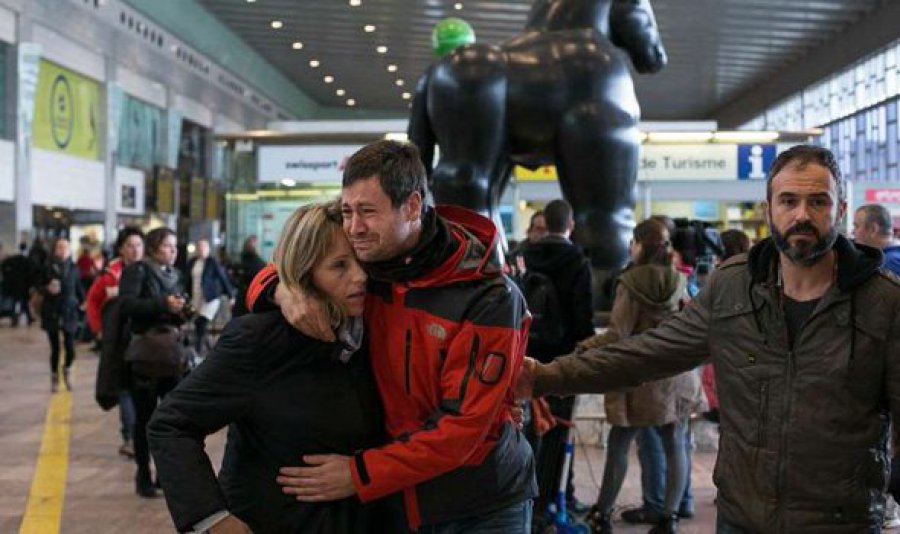
Initial reactions from the families of the deceased passengers. I take this opportunity to pray for God’s mercy upon those who died in this terrible accident and to grant patience to those left behind.
You can find an animation of this mind-boggling disaster at the following link: http://www.dailymotion.com/video/x2knpt7_dusen-ucagin-animasyonu_news?start=12. This unimaginable tragedy sparked a wave of debate. Naturally, we all need to draw the necessary lessons from it.
The first major question was how someone with mental health issues was allowed to continue flying. German prosecutor Ralf Herrenbrueck stated that during a search of the 28-year-old Lubitz’s home, they found documents indicating that he had been receiving “appropriate” treatment for his condition. Herrenbrueck also revealed that Lubitz had been issued a medical note excusing him from work on the day of the crash—but the note was found torn up in his home. This discovery supported the initial assessment that Lubitz had deliberately concealed his illness from both his employer and his colleagues.
Another prosecutor, Christoph Kumpa, revealed that suicidal tendencies had been identified in Lubitz during his pilot training. Düsseldorf University Hospital confirmed that Lubitz had been examined at one of its clinics in February. The statement added that he had last visited the hospital on 10 March, though the reason for the examination was not disclosed.
As someone who travels frequently, I was deeply disturbed reading these reports. After all, every time we fly, we’re entrusting our lives to a couple of pilots. In this case, a psychopath dragged hundreds of innocent people to their deaths with him. You can’t help but ask: “If you had suicidal tendencies, why feel the need to take hundreds of people down with you? What kind of psychopathy is that?”
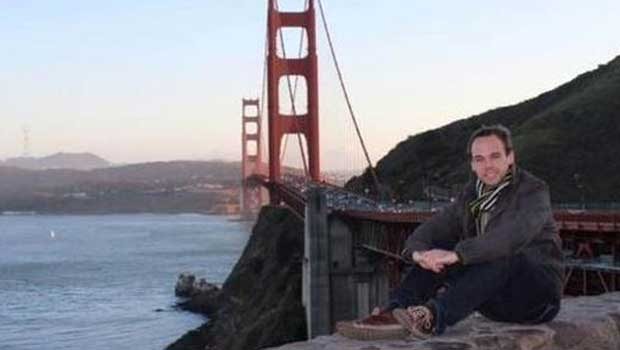
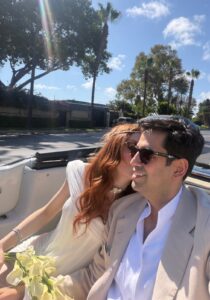
The co-pilot who crashed the plane, Lubitz, poses in front of San Francisco’s famous Golden Gate Bridge. This man, smiling for the cameras, was able to deliberately kill 149 people through a chain of errors.
In my opinion, the lesson this debate teaches us is that “airlines must immediately ground any pilot with the slightest doubt about their mental health.” Instead of trying to rehabilitate such pilots, they should be uncompromisingly removed from the profession. This is not a joke. Any leniency you show could cost hundreds of lives, just like in this tragic accident.
The second debate focused on how many pilots should be in the cockpit. If the captain hadn’t left the cockpit and handed over control to the co-pilot to go to the restroom, this crash might never have happened. Taking advantage of that moment, the psychologically disturbed co-pilot locked the door from the inside and initiated the kamikaze dive.
According to the German newspaper Bild am Sonntag, cockpit voice recorder transcripts reveal that just seconds before the plane, carrying 149 people, crashed, Captain Patrick Sonderheimer—unable to get back into the cockpit—pleaded with Lubitz, “For God’s sake, open this door.” Amid the screams of passengers in the cabin, Sonderheimer tried to break down the door with an axe and later shouted at the co-pilot, “Open this damn door!”
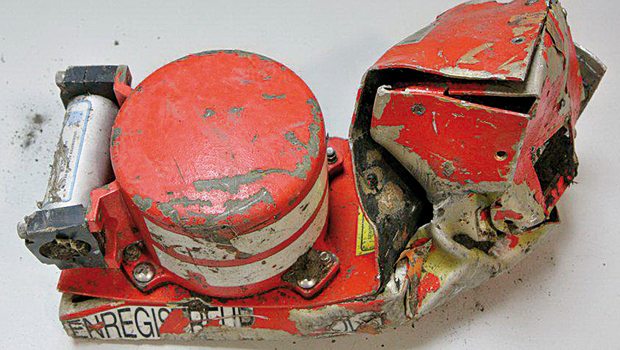
The plane’s black box was later found
As a result of this incident, questions and debates arose over why U.S. airlines always require two pilots in the cockpit while European airlines did not. From what I have been able to follow, these discussions eventually led European airlines to also implement the rule requiring at least two pilots to be present in the cockpit.
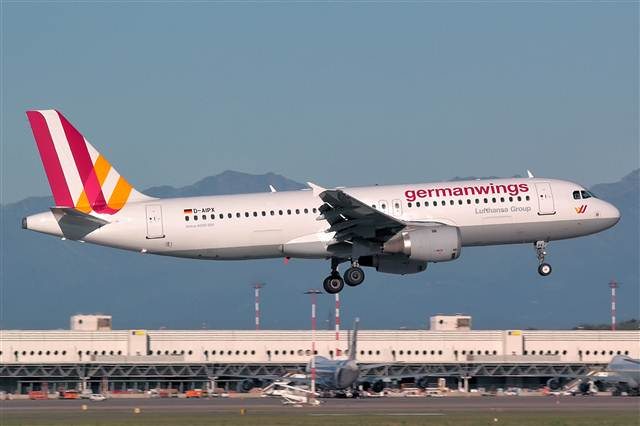
A Germanwings plane taking off
The third debate centered on whether Germanwings was able to escape major responsibility by blaming the pilot for the accident. Some argued that Germanwings, owned by Lufthansa, tried to settle with the families of the victims by offering around €50,000 PAX, while they should have paid much higher compensation. There is no price on human life. Especially when you think about the innocent people on that plane, it’s truly heartbreaking. Although Lufthansa and Germanwings faced serious criticism regarding this crash (and I believe there were some negligence issues), I have to say that I found the Germans successful in their communications. They handled such difficult and sensitive matters very well in terms of communications. Their focus was always on the victims and their families.

Young people’s happy pose before boarding the plane
The fourth debate was about a short film that had been made. The Argentine film Relatos Salvajes (Wild Tales), which was nominated this year for the Oscar for Best Foreign Language Film, caught attention because one of its six stories resembles the accident. In the film, a character named Gabriel Pasternak gathers people he hates on a plane and crashes it. You can watch the short film here:
(Relatos Salvajes short film: https://www.youtube.com/watch?v=qD4EVIiErBk
The film’s release in the UK caused a major backlash. Despite calls to postpone the release after the Germanwings tragedy, the film was screened as scheduled. It had previously been shown in Germany and Spain.
The debate here centered on whether the pilot had watched this film before causing the disaster. Of course, all of this is speculation. We don’t know the facts, but witnessing such an event after watching this film gives you the chills.
This tragedy reminded us once again how important flight safety is. Ensuring flight safety requires rules that must be respected not only by pilots, but also by flight attendants and even passengers.
On every flight I take, I encounter many passengers who either don’t follow or don’t know the rules. I try my best to help those who are unaware. For instance, I have often shown people how to fasten their seatbelts or warned those not complying with the rules.
Once, while flying to Gaziantep for a Solar Energy Conference, just as we began our descent, a man in his 60s sitting next to me opened his laptop and started reading. At first, I tried to ignore it, but after five minutes of blatant disregard, I felt I had to intervene calmly:
– “Sir, we’re starting our descent.”
– “So what?”
– “There’s a rule that electronic devices must be turned off during takeoff and landing. That’s why I’m telling you.”
He looked at me skeptically, closed his laptop, and said, “Are you satisfied now?”
– “This isn’t about my satisfaction. Electronic devices can interfere with the plane’s systems. It endangers everyone on this flight. Everyone knows this rule,” I said.
The man was about to retort, but the flight attendant, whom I later realized was watching the situation, stepped in and said, “Yes, sir, he’s right. Please put your seat back in the upright position.” The man fell silent and complied.
Later, I saw this man at the Solar Energy Conference, and I couldn’t help but think: “Someone who disregards hundreds of lives on a plane would most likely also neglect worker safety at a power plant.”
I experience many such incidents, and sometimes I get tired of trying to make folks understand. I should also mention that I’m not afraid of heights. I’m even considering skydiving someday—I’m sure I’d have a blast. But human life can be as fragile as a thread. In such situations, we must strictly follow the relevant rules.
I believe these rules should be taught and ingrained in everyone from school age onwards. For example:
- Especially during takeoff and landing, electronic devices like cell phones, laptops, iPads must be turned off or set to flight mode (Of course, as technology evolves, if this becomes unnecessary, we can reconsider this rule).
- As soon as the plane’s wheels touch ground, many passengers immediately unbuckle and jump up to grab their bags from the overhead bins. No one should stand up until the plane is completely stopped and the “fasten seatbelt” sign is turned off because sudden braking can happen even on the ground, causing injuries from falling luggage or passengers being heaved into the aisles.
- We must remember the repeated instructions about seatbelt fastening, cabin pressure changes, and emergency landing procedures on every flight.
- Passengers and flight attendants must treat each other with respect and assist one another.
These are what come to mind for now. Rules save lives. While the odds of a plane crash are far lower than that of a car accident—practically negligible—if such a crash does occur, the chances of survival are almost zero. Plane crashes are, unfortunately, mostly fatal.
Lest we forget, nothing in this world is more precious than human life and health.
Below are links to the news articles I read related to this topic, shared here for reference:
http://turizmaktuel.com/haber/germanwings-iflas-edebilir
http://turizmaktuel.com/haber/germanwings-iflas-edebilir
http://www.milliyet.com.tr/germanwings-yardimci-pilot-ucagi/dunya/detay/2038594/default.htm
http://www.hurriyet.com.tr/dunya/28598567.asp
Etiket: anı