
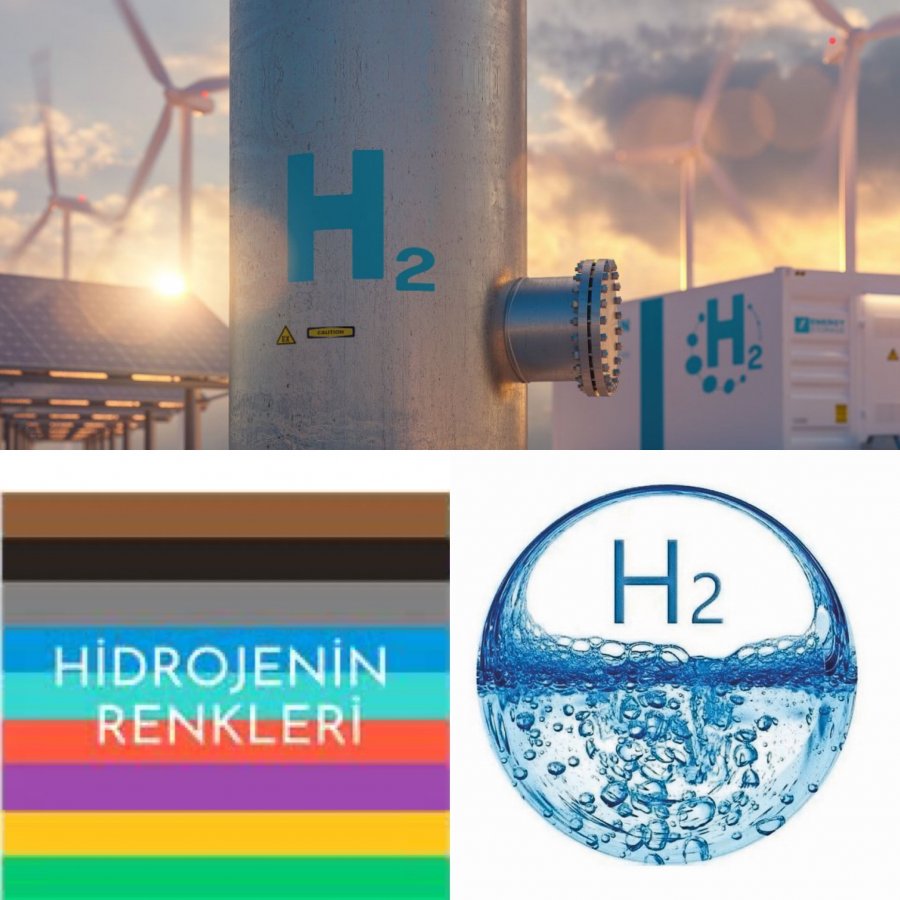
I’ve been addressing the topic of hydrogen, which can be positioned as a baseload energy source and a natural gas substitute, from various perspectives since 2021. In this article, I’d like to address a niche topic in hydrogen that’s currently a topic of debate. If you’d like to learn more about hydrogen before delving into this topic, I recommend reading my previous articles. I’m sharing the titles and related links below:
The unsung hero against climate change: https://www.serhansuzer.com/tr/iklim-degisikligine-karsi-gizli-kahraman-yesil-hidrojen
Green hydrogen in the Eurasian Region: https://www.serhansuzer.com/tr/avrasya-bolgesinde-yesil-hidrojen
Green hydrogen in Turkey: https://www.serhansuzer.com/tr/turkiyede-yesil-hidrojen
Hydrogen economy for our national security: https://www.serhansuzer.com/tr/ulusal-guvenligimiz-icin-hidrojen-ekonomisi
Setting a standard for hydrogen, the panacea for energy: https://www.serhansuzer.com/tr/enerjide-her-derde-deva-hidrojene-standart-getirilmesi
Now, let’s get to the article I mentioned. You can read Sam Bartlett’s article titled “Why hydrogen colors matter?,” written on the Green Hydrogen Organization’s blog page on 23 February, at https://gh2.org/blog/why-hydrogen-colors-matter . I’m quoting the article verbatim below. I’ll share my comments afterward:
Why hydrogen colors matter?
There’s a concerted campaign to stop talking about hydrogen colors and focus solely on the emissions intensity of hydrogen production. This is a mistake. The different color-coded routes of hydrogen production have very different characteristics. Bundling them all under the banner of “clean hydrogen” or “low-carbon hydrogen” obscures some important choices and opportunity costs. We need to make smart choices about which routes to prioritize, and colors help us do so.
We produce and consume approximately 100 million tons of hydrogen each year—mostly “brown hydrogen,” derived from coal, and “grey hydrogen,” produced from fossil fuels (natural gas). This is a very dirty process, accounting for 2% of global greenhouse gas emissions. If hydrogen use is to be scaled up to help us achieve net-zero targets (perhaps up to 500 million tons per year), these production processes are unsustainable. Two prominent alternatives are “green hydrogen,” produced through the electrolysis of water using renewable energy, and “blue hydrogen,” produced using carbon capture and storage (CCS). Other colors include “pink hydrogen,” electrolyzed using nuclear power; “white hydrogen,” naturally occurring from the Earth’s crust or mantle; “yellow hydrogen,” electrolyzed using grid electricity without restrictions; and “turquoise hydrogen,” which produces hydrogen and solid carbon through a process called methane pyrolysis.
We often attend meetings or conferences where at least one person argues that we shouldn’t talk about hydrogen colors. In 2023, the IEA (International Energy Agency) published a report advocating that we “move away from the use of color-based terminologies” and instead “use the emissions intensity of hydrogen production in the development of regulatory and certification programs.” In a recent post titled “Beyond the Rainbow,” Wood Mackenzie argues: “As momentum builds around low-carbon hydrogen, the industry is being forced to look beyond colored labels. The future of low-carbon hydrogen depends on governments enacting regulations, subsidies, and other incentives that are increasingly tied to the carbon intensity of the hydrogen produced, rather than its color.”
The Importance of Full Life Cycle Assessment
We agree with the IEA and Wood Mackenzie on the importance of rigorous standards for measuring the carbon intensity of hydrogen production. However, most regulatory and certification programs fail to utilize full life cycle assessment, and many have gaps that underestimate emissions. Research published this week by scientists at the Environmental Defense Fund suggests that the most widely used life cycle assessment frameworks fail to address three critical factors: 1) the warming impacts of hydrogen emissions; 2) real-world measured methane emission intensities; and 3) the near-term warming impacts of emissions.
Even if these issues are addressed comprehensively, we disagree that color labels should be ignored. Different routes to hydrogen production have very different characteristics. Bundling them all under the banner of “clean hydrogen” or “low-carbon hydrogen” obscures some important choices and opportunity costs.
Here are four reasons why hydrogen colors are important:
1) Fossil fuel dependency. Brown, gray, and blue hydrogen reinforce our dependence on fossil fuels, which we must transition away from. Green hydrogen reduces this dependency. In countries with large fossil fuel resources (such as Australia, Canada, Norway, the United Kingdom, and the United States), the promise of blue hydrogen is used to justify the development of new fossil fuel projects. In contrast, a growing number of countries and stakeholders are emphasizing the urgent need to phase out all fossil fuel-based hydrogen in line with the global 1.5C plan.
2) Technology risk. The “no color” narrative assumes that all production routes are equally viable and well-established. Green hydrogen is based on proven technology. Scaling up the green hydrogen industry is not dependent on any major technological breakthrough; it will benefit from research and development that will deliver greater efficiency, innovation, and economies of scale. In contrast, blue hydrogen is “technically feasible,” but the 95%+ CCS and near-zero methane leakage rates required to make blue hydrogen “clean” have not been proven by extensive research. When considering which path to support, we are choosing between technologies that work and those that could work. Hydrogen policy should not be “technology neutral” regardless of risk. It should be based on a comprehensive and iterative process that assesses technology readiness levels and prioritizes proven production routes.
3) Cost and subsidies. Brown, gray, blue, and green hydrogen have fundamentally different economics, which makes sense for government support and subsidy programs. Let’s start with brown and gray. These seem like the cheapest options. But let’s not forget that we also provide substantial subsidies to the fossil fuel industry. The IMF estimates that global fossil fuel subsidies will reach $7 trillion, or 7.1 percent of global GDP, in 2022. Blue will always be more expensive to produce than brown and gray, and therefore requires subsidies or a permanent carbon tax to be sustainable. Achieving high CCS rates is particularly expensive.
To remain competitive, the green hydrogen industry needs subsidies to encourage large-scale projects, particularly those involving electrolyzer production, to achieve economies of scale. However, the most significant cost is renewable electricity, which is currently the lowest-cost option for new electricity generation in most countries. Renewable electricity prices are expected to fall further.
Eventually, green will be cheaper than blue, and then brown and gray. The question is how to reach this milestone as quickly as possible. Subsidizing gray and promoting blue could crowd out green and delay this inevitable transition. Many governments are prioritizing the expansion of green hydrogen technology over doubling fossil fuel subsidies.
4) Sustainability beyond emissions. Hydrogen colors are also a useful way to signal broader sustainability considerations for specific production routes beyond climate impacts. Gray and blue hydrogen rely on the need to extract fossil gas, which is associated with water and air pollution and, consequently, health hazards. The safety risks of pink hydrogen, which uses electricity from nuclear power plants, are a significant concern. Green hydrogen brings its own set of challenges, including water use, renewable energy, and electrolyzer supply chains.
To summarize, anyone who says “color doesn’t matter” is trying to distract from some fundamentally important issues. When the hydrogen industry talks about a “level playing field” based on emissions measurement, it’s both disingenuous (given the gaps in emissions measurement standards) and ignoring important aspects of what truly makes it sustainable.
We’re not suggesting that green hydrogen is the only solution. In some cases, blue hydrogen could have a role as a transitional solution; this might be the case where blue hydrogen directly replaces stagnant brown or gray hydrogen production, and blue hydrogen projects have been proven to have near-zero emissions intensities (including rigorous measurement of upstream methane emissions and the sustainability of carbon capture). But these are the exceptions. Let’s not forget that blue hydrogen is expensive and hasn’t been proven at scale.
We’re not advocating that green hydrogen is the only solution. However, these are exceptional cases. Let’s not forget that blue hydrogen is expensive and hasn’t been proven at scale.
Andrew Forrest, CEO of Fortescue, founder of GH2, recently said: “If you want to channel capital… we need to have clear disincentives for harmful things and clear incentives for good things.” He’s right. We must ensure that the emissions intensity of hydrogen production moves toward zero by 2030. However, we must also consider fossil fuel dependency, technology risk, and the design of smart subsidies. We must also understand hydrogen’s different colors and evaluate its contribution to the energy transition and sustainable development holistically.
My thoughts on the subject
Now, let’s move on to my own thoughts on this topic. In my previous article, “Green Hydrogen in the Eurasian Region,” I touched on the colors of hydrogen. I would like to state that I agree with Sam Bartlett’s article, which delves into the essence of the matter, on many points. Of course, there are points I disagree with. First of all, I’d like to emphasize that, from my perspective, the most important factor in hydrogen use is “sustainability.” The type of hydrogen used must be environmentally, socially, and economically sustainable. I also agree that the full life cycle should be considered when determining sustainability. I stand by what I said in my previous article:
“In my opinion, hydrogen production should be done with either green or white hydrogen. White hydrogen is a naturally occurring form of hydrogen. Finding and efficiently extracting white hydrogen is not easy, and its natural abundance is limited. Green hydrogen, on the other hand, requires water and renewable energy. This is quite possible in today’s world. Natural resources such as seawater, solar energy, and wind are abundant everywhere on Earth. The use of green hydrogen, which has the potential to replace natural gas and oil in neutralizing carbon emissions, is crucial for neutralizing carbon emissions.”
Of course, as time goes by and you become familiar with new technologies, some of your opinions may change. You may either change your mind or realize that your statements are based on incomplete information.
Reaching 100% carbon capture is the most important criterion.
I do not change my statement above. I’d like to point out that I’m aware of a significant new technology that separates natural gas to produce hydrogen and carbon, and that this technology is codenamed “blue hydrogen.” If this technology proves itself, I believe it would represent a significant advancement in terms of neutralizing or even reducing carbon emissions to negative levels. The most important criterion here is reaching 100% carbon capture. If a technology can achieve this, I fully support it.
Just think, changing the model of generating energy by burning natural gas, one of the factors that exacerbates carbon emissions, to producing hydrogen by separating natural gas and burning hydrogen to generate energy, while simultaneously using the resulting carbon for the needs of various industries, is a fantastic model. You’re killing two birds with one stone.
Therefore, if this technology proves itself (I don’t have the relevant reports yet; I’ve only spoken with certain experts), then in addition to green and white hydrogen, blue and turquoise hydrogen should also be specifically supported. This is because this technology not only neutralizes carbon emissions but also removes carbon from the atmosphere and makes it available for human use.
On the other hand, I would like to explain why different color-coded hydrogen types should absolutely be disregarded and why I support or disagree with certain color codes, categorized below.*
1) Things that should not be permitted due to carbon emissions: The following hydrogen types, which significantly increase carbon emissions, should absolutely not be permitted. These are:
a) Brown: Brown hydrogen is produced by gasifying lignite coal. However, this production process releases carbon dioxide into the atmosphere.
b) Black: Black hydrogen is a type of hydrogen obtained from bituminous (black) coal through gasification. In this production process, bituminous coal is converted into gas under high temperature and pressure through gasification. Unfortunately, this process releases carbon dioxide into the atmosphere.
c) Gray: Gray hydrogen is a type of hydrogen produced by steam reforming natural gas. It is generally produced through methods such as natural gas reforming or coal gasification. Unfortunately, this steam reforming process releases carbon dioxide into the atmosphere.
d) Turquoise: Turquoise hydrogen is a type of hydrogen produced by pyrolysis of natural gas. In this production process, the methane content of natural gas is broken down at high temperatures, and solid carbon (char) is also produced during the production of hydrogen. Turquoise hydrogen, like blue hydrogen, is considered a low-carbon hydrogen production method. The possibility of storing the solid carbon produced in the process is a feature that distinguishes turquoise hydrogen from other types of hydrogen. I also believe that turquoise hydrogen should not be permitted due to the possibility of the coal produced as a result of the turquoise process being re-combusted and converted into heat. If a model emerges that can transform and use coal for the benefit of humanity without releasing carbon into the atmosphere, then my view on brown, black, and turquoise hydrogen may change.
2) Things that should not be allowed due to safety issues: It is necessary to ban the colors of hydrogen produced by nuclear power plants due to the safety concerns they pose. These colors are:
a) Red: Red hydrogen is a type of hydrogen produced by catalytic water splitting. In this production process, water is catalyticly split at high temperatures, and the heat energy required is obtained from nuclear energy.
b) Pink: Pink hydrogen is a type of hydrogen in which the electrical energy used during water electrolysis is generated from a nuclear source. In this production process, the electrical energy used during water electrolysis is supplied by a nuclear source.
3) Decisions will be made based on technological development:
Blue: Blue hydrogen is a type of hydrogen produced by steam reforming natural gas. In this production process, the methane content of natural gas reacts with water vapor, producing carbon dioxide as a byproduct during hydrogen production. The carbon dioxide produced during this process is generally captured and stored underground in large quantities.
4) Types of hydrogen that require full support:
a) Green: Green hydrogen is a type of hydrogen where the electricity used in water electrolysis is generated entirely from renewable sources. Green hydrogen, an electrolysis-based production method, is produced without carbon emissions not only during the water electrolysis process but also during the generation of the electricity required for electrolysis.
b) Yellow: Yellow hydrogen is a type of hydrogen where the electricity used in water electrolysis is provided by solar energy. In this production process, yellow hydrogen, an electrolysis-based method, is produced using electricity provided by solar energy. No carbon emissions are produced during the electrolysis or hydrogen production process. Speaking of yellow hydrogen, some color scales assign different meanings to it. Instead of solar energy, they refer to the production of hydrogen by operating the electrolyzer and splitting water using electricity from the grid (power grid). I think there’s some confusion here about yellow hydrogen. I’m very clear on this. If the electricity source for yellow hydrogen is solar energy, I support it; if the electricity source is grid energy, I don’t. Because the electricity carried by the grid today is not 100% renewable.
c) White: White hydrogen indicates the presence of hydrogen naturally present in the atmosphere. This amount of hydrogen is quite low. Because the concentration of naturally occurring white hydrogen is generally much lower than other types of hydrogen, this hydrogen source is generally not used in the energy industry.
I want to emphasize technological development again. If technological development in blue hydrogen allows for 100% carbon capture (which is currently in the 85-95% range, very close to the target), then it should be supported in every way possible. Similarly, if the types of hydrogen that should not be permitted are produced with new technologies that neutralize carbon emissions, then I would also support these types (as I mentioned with turquoise hydrogen). I would say that this is unlikely to be possible with current technologies.
In conclusion, technology is key for hydrogen to become a significant tool in the fight against climate change. Once technology enables these color-coded hydrogen types to meet the desired criteria, these technologies should also be made economically sustainable, and all possible support (incentives, etc.) should be provided.
We are closely monitoring developments.
* Note: For brief explanations about hydrogen colors, I used the website
Tag: ecology