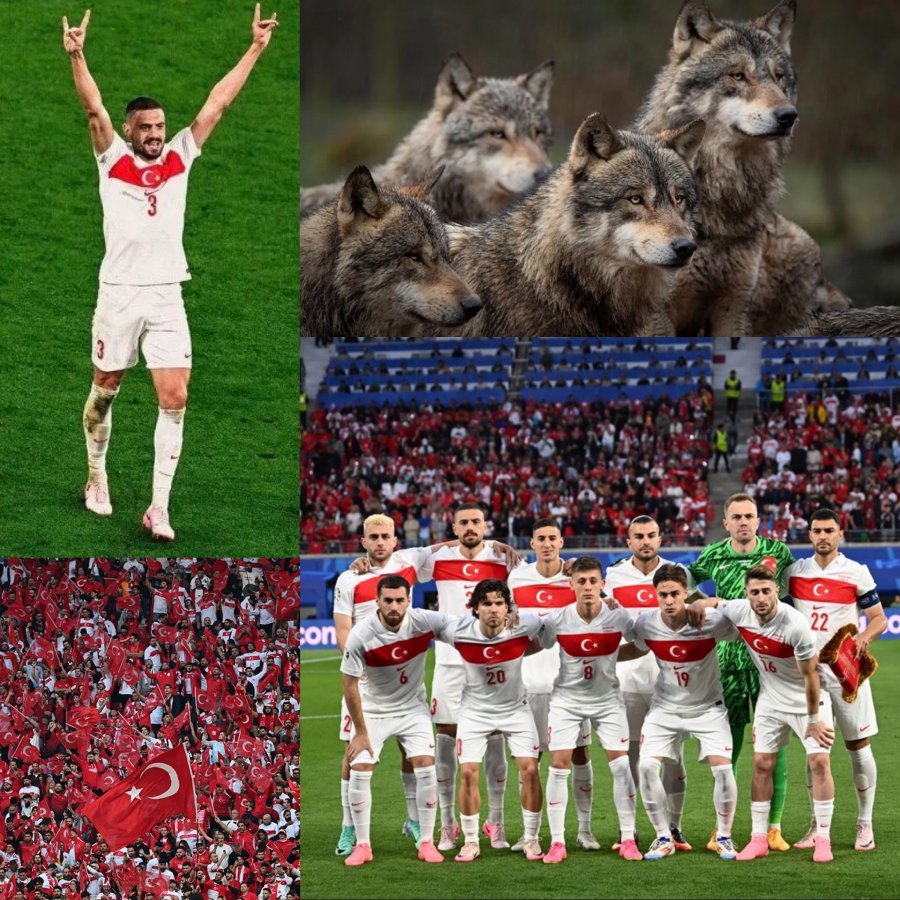
Now, let’s look back at what happened during the quarterfinals of the 2024 European Soccer Championship (see: https://tr.euronews.com/2024/07/05/uefa-bozkurt-isareti-nedeniyle-merih-demirala-iki-mac-ceza-verdi#:~:text=Demiral%3A%20’Yapt%C4%B1%C4%9F%C4%B1mdan%20dolay%C4%B1%20%C3%A7ok%20mutluyum,akl%C4%B1mda%20onu%20yapt%C4%B1m%2C%20T%C3%BCrkl%C3%BCkle%20alakal%C4%B1)
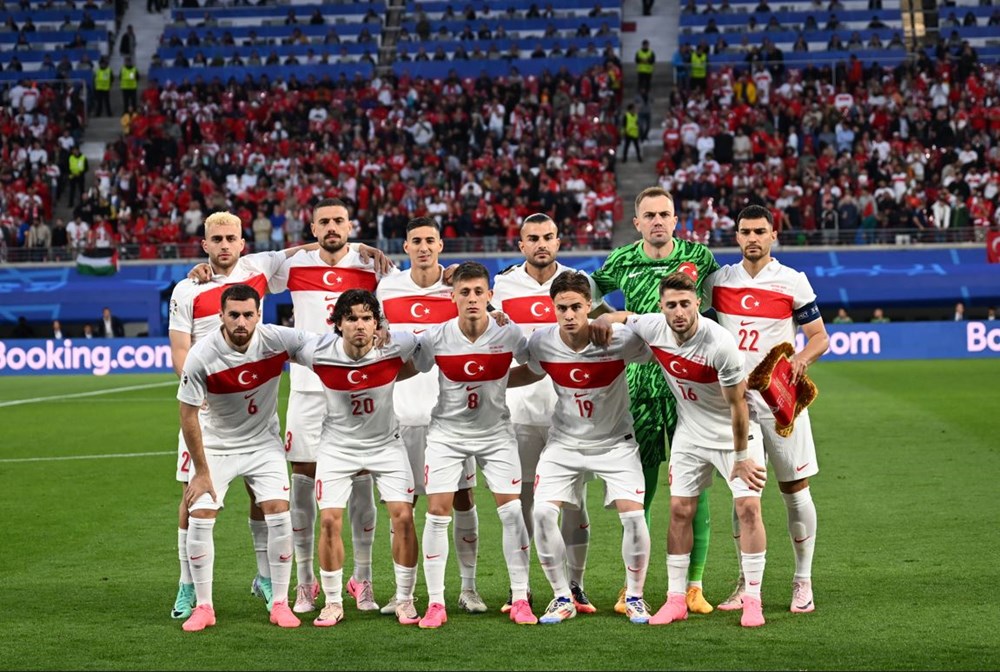
Our Starting Eleven Against Austria
The Union of European Football Associations (UEFA) has handed Merih Demiral a two-match ban due to his “gray wolf salute.”
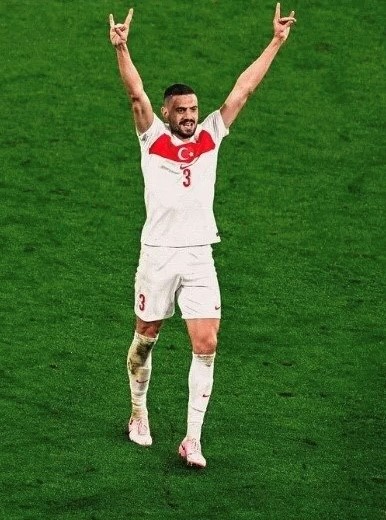
UEFA’s decision cited Demiral’s “unsportsmanlike conduct” as the reason. The penalty was applied under Article 11 of UEFA’s Disciplinary Regulations, titled “General Principles of Conduct.”
UEFA’s statement said:
“Turkey Football Federation player Merih Demiral was found to have violated general principles of conduct, breached basic rules of etiquette, used the sporting event to make unsporting gestures, and damaged the reputation of football. Therefore, he has been suspended from participating in two UEFA representative team matches.”
UEFA’s Investigation
In Round 16 of the European Football Championship (EURO 2024) held in Germany, where Turkey eliminated Austria, Demiral, who played defense but scored both of Turkey’s goals, celebrated by making the “gray wolf” hand gesture. Following the incident, UEFA launched an investigation into Demiral.
The German newspaper Bild claimed last Thursday that Demiral had been given a two-match ban. However, the Turkish Football Federation (TFF) initially did not confirm the news, stating, “We have until tomorrow morning to submit our defense.
The decision came after TFF submitted its defense.
Demiral: ‘I’m very happy about what I did’
On Wednesday, national team player Merih Demiral spoke about his “gray wolf salute” celebration: “I’m very happy because I scored two goals. There was a goal celebration I had in mind related to being Turkish. I’m very proud to be Turkish, and I felt that deeply after scoring. I wanted to do something like that, and I’m very happy I did.”
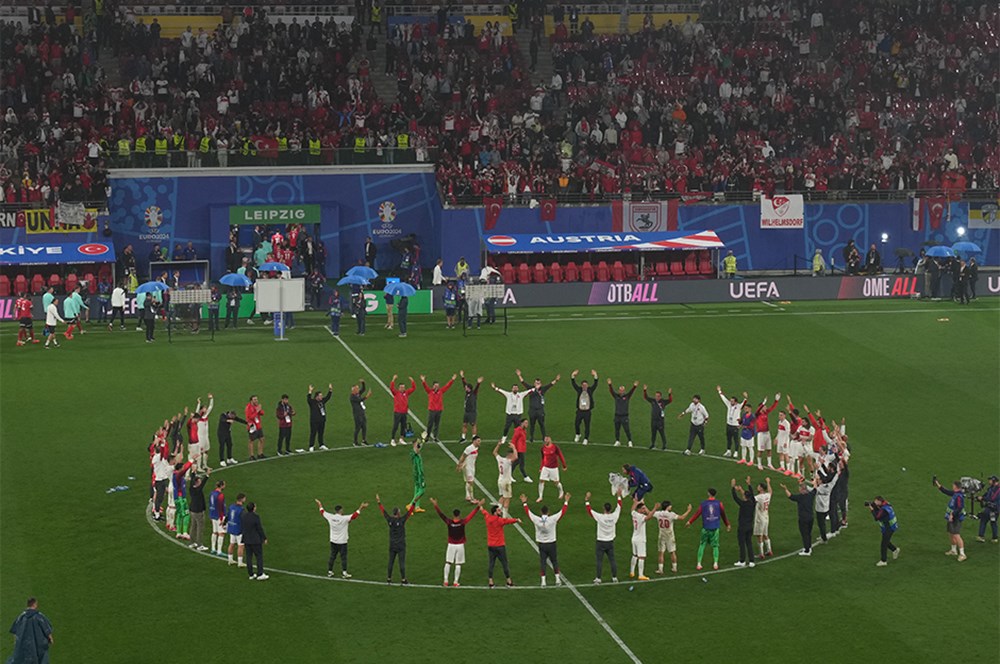
He went on to add, “I saw our fans making the gesture in the stands, and after seeing them, I felt like doing it even more. I’m very happy.”
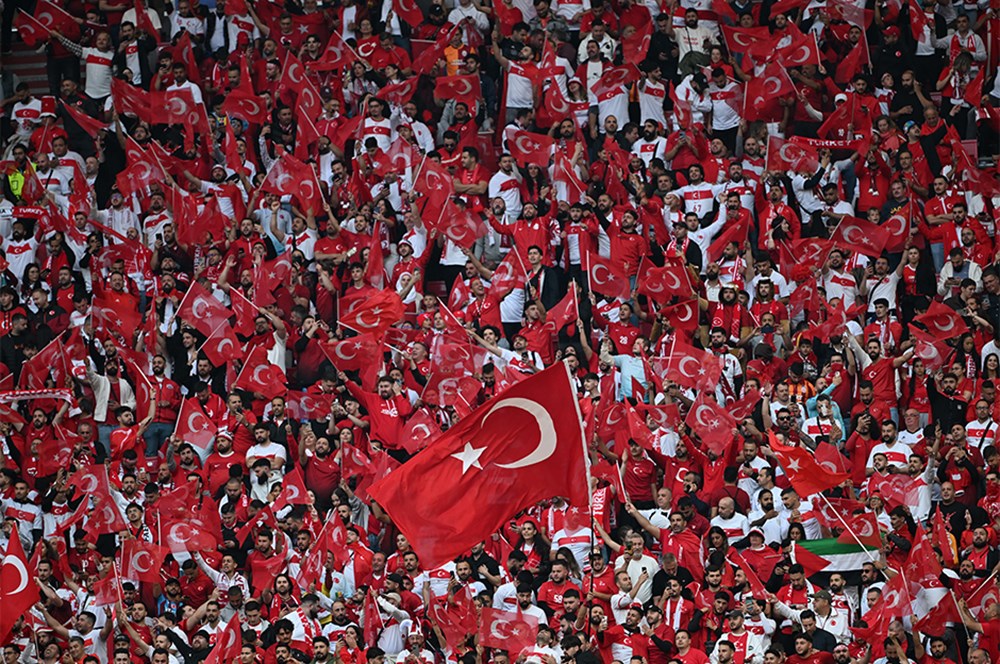
The Banned ‘Gray Wolf’ Salute
The “Gray Wolf salute” gesture was banned in Austria, whom Turkey defeated in Round 16, under the 2019 “Symbols Law.” The ban was enacted on grounds of “combating extremism and political Islam.”
Along with the “Gray Wolf” symbol, the Symbols Law also prohibits signs and emblems associated with groups recognized as terrorist organizations by the European Union (EU), the United States (US), Turkey, and many other countries—such as the Kurdistan Workers’ Party (PKK), the Muslim Brotherhood, Hamas, Lebanon’s Hezbollah, and Croatian ultra-nationalist Ustasha groups.
France, for instance, officially banned the Ülkü Ocakları (Idealist Hearths) in 2020 through a presidential decree.
My Thoughts on the Penalty
First, I must say I think UEFA’s decision is unfair. Many soccer players in the past have made similar salutes without facing any penalties. Moreover, in this tournament, the famous English player Bellingham made a gesture—grabbing between his legs—which is considered offensive in many cultures, after scoring against Slovakia, yet he was not punished during the tournament.
UEFA’s Control, Ethics and Disciplinary Body (CEDB) announced that Bellingham was fined €30,000 and given a one-game ban (with the ban deferred for one year) for violating ethical conduct rules during his goal celebration.
On one side, Demiral faces a harsh two-game ban for making a gesture recently banned in Europe and considered a forbidden symbol by Europeans, even though the sign is accepted as a cultural emblem in Turkish republics. On the other side, Bellingham’s gesture, which is insulting across many cultures worldwide, was essentially not punished during the tournament (his one-match ban was deferred, and he played the next game).

It’s worth emphasizing that both Merih and Bellingham are key players for their national teams and have delivered match-saving performances in this tournament.
Unfortunately, this clearly reveals the classic double standard Europeans often apply.
My Thoughts on the Gray Wolf Symbol
I’m conflicted about the gray wolf symbol. One side of me says it’s associated with criminals who have deeply harmed society, with organized crime and crimes committed in the name of Turkish nationalism. Those criminals must face the severest punishments in this world and the next. If such people claim the gray wolf symbol as their own, then I have nothing to do with it.
But the other side believes the gray wolf is a fitting symbol of Turkish identity. Wolves have long been the animal Turks identify with most closely. During campaigns and migrations, wolves always accompanied Turks. Turks, traveling migration routes, acted like wolves—following leaders, organizing, surviving, and spreading like wolf packs. For centuries, Turks have identified themselves with wolves. From this perspective, I do not view the wolf as a negative symbol of Turkishness. My paternal ancestors are Turks from Iran’s Khorasan region. Also, since dogs—some of my favorite animals worldwide—are descended from wolves, I personally hold the wolf as a warm historical symbol. However, because of the gray wolf salute’s recent connotations, I personally avoid using this symbol.
The Modern Emergence of the Gray Wolf Symbol
The gray wolf salute was popularized politically by Alparslan Türkeş in the early-1990s during his mature political career. It became a symbol of the nationalist movement he led.
You can read the story of how Türkeş learned this gesture at this link: https://serbestiyet.com/haberler/alparslan-turkes-bozkurt-selamini-1991de-gagavuz-turku-kizlardan-ogrendi-173112/. According to this source, the gesture was first shown to Türkeş by Gagauz Turks.
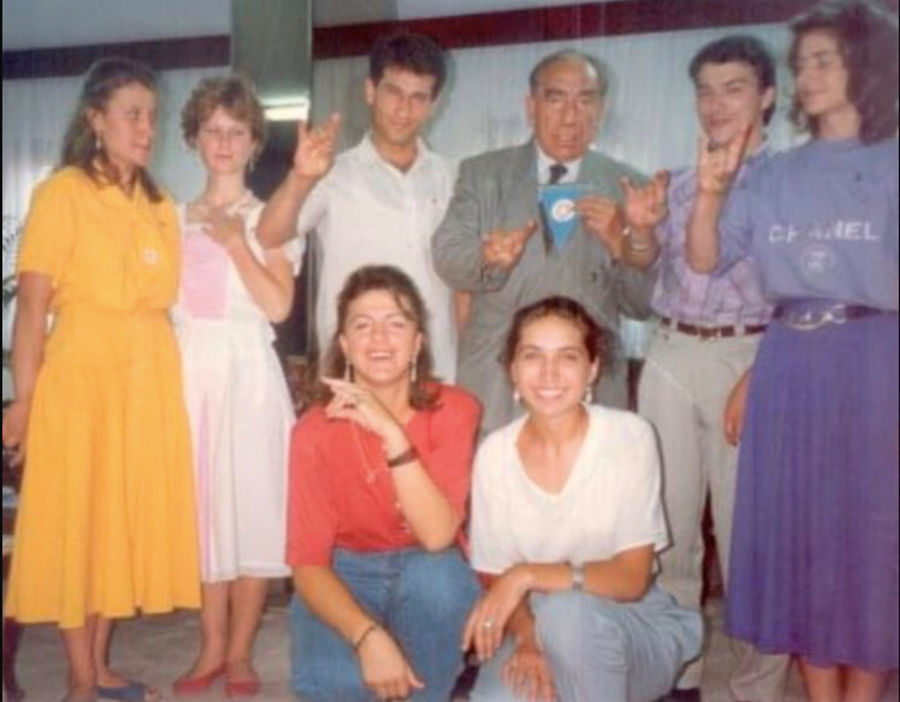
Türkeş first learned the symbol on 7 August 1991, from a group of young Gagauz Turks visiting him. One of them, Güllü Karanfil, later wrote about the visit:
In 1990, the wall was broken, and from August 1-15, 1991, Prof. Dr. Turan YAZGAN, President of the Turkic World Research Foundation, organized a tour of university students from across the Turkic World. We were an army of 70-80 people: Azerbaijan, Kirkuk, Bulgaria, Romania, Gagauzia, Kazakhstan, Kyrgyzstan, East Turkestan, and Turkey… There was a stuffed gray wolf statue in the courtyard of Turan Hocan’s Foundation. And we Gagauzians, with our gray wolf flag and our sincerity, stood out from other groups.
From the first day of our trip, when the “gray wolves” in the Foundation’s courtyard “grey wolves” became more numerous, our Turkish friends, finding us sincere, showed us the now-famous gray wolf sign. It turns out that back then, Turkish nationalists rarely made this sign among themselves.
They did, but it hadn’t spread in Turkey. A historic moment occurred there. The Gagauz Republic The Gagauz team, who had just become the (unknown) new leader, waving the Bozkurt flag and immediately adopting the Bozkurt sign from their Turkish friends, kept that sign throughout their trip, starting from that day.
Türkeş gets the sign wrong the first time
I can’t remember exactly whether it was 7 or 8 August… We were in Ankara, visiting Başbuğ Alparslan Türkeş. Our Turkish friends had told us this man was an important man. And when we saw the staff there, dressed in suits, disciplined, and enthusiastic… we knew even more clearly that this person was important. Young people from every country would come in groups, introduce themselves very briefly, take photos, and then leave. I was the speaker for the Gagauz team. One by one, we shook hands with the Başbuğ, said our names, explained where we came from, donated our Gagauz triangular flag, and some of us took photos holding the Bozkurt sign. This is a historic photo! Başbuğ, standing in the middle of the Gagauz youth, was holding this sign for the first time, and if you even noticed, he was holding it incorrectly. Some of the young people in our team were new. They hesitated to uphold the adopted sign.”
Yakup Ömeroğlu, President of the Eurasian Writers’ Union, who was also on that trip, writes the following in his article, “A Foundation Çinar: Prof. Dr. Turan Yazgan Walked to the Truth”:
The sign draws attention during the train farewell
We had first learned the “grey wolf” sign, frequently used by one of our political parties in Turkey today, made by bringing the middle and ring fingers of one hand together with the thumb and raising the index and ring fingers, from young people from the Turkic world whom Turan Hoca had invited to Turkey. After three days of intimate companionship, we were at the Ankara train station to see the group off to Kayseri. The young people had quickly bonded so much that they were crying in the train car, while our friends were crying below. Among this scene, young people from the Gagauz living in Azerbaijan (among them was Güllü Karanfil, one of the great poets of the Gagauz today, with whom we still maintain relations) were leaning out of the train window and making a sign. Our young people were surprised to see this sign. Hakan Memur said excitedly, “Brother, the Gagauz are making a sign! Look!” After a bit of surprise, I said, “This is a wolf; they’re making a grey wolf sign!” and we began to greet them by making our fingers like theirs. They were on the train, while we were on the ground, saying goodbye with this sign. This sign was very popular. We loved it, and we decided with our friends there: We would participate in the demonstrations against the occupation of Karabakh, which were frequently held in those years, at the Tel demonstrations, Bosnia rallies, and everywhere else by making this sign. And that’s what we did; while chanting slogans, our friends would make the “Grey Wolf” sign with their hands. After a while, we even started receiving criticism from some of our elders for this behavior. “Where did this come from? We were disrupting the unity of the group, were we starting a separate factional movement, etc.” We ignored this criticism and continued to make the same sign at every demonstration, explaining our new sign to each of them. That is, until the late Türkeş made this sign at the Manisa rally. With Türkeş’s making this sign, Turkish political life and all of Turkey were introduced to a new symbol.
Wolves in Kars
Another reason why wolves have such a significant place in Turkish life is that they have always accompanied Turks wherever they have been. We can still find beautiful wolves in our region today, especially in forested areas.
I recently came across an article you can read at https://www.aa.com.tr/tr/yasam/karsta-13-yil-uydu-vericileriyle-takip-edilen-kurtlarin-hareketliligi-ortaya-cikarildi/3280540. This article states that 13 years ago, a satellite transmitter was installed in the Sarıkamış district of Kars, and its movements, habitats, and behaviors were monitored, yielding significant information about wolves. I am quoting the rest of the article verbatim to illustrate how beneficial wolves are to our ecosystem:
Interesting findings from the wolf research
Prof. Dr. Çağan Şekercioğlu, who I know personally and has accomplished significant work in his field, told an Anadolu Agency (AA) reporter that they analyzed the habitats of wolves fitted with satellite transmitters as part of the project.
Şekercioğlu explained that the wolves were tracked using camera traps and a GPS system, saying, “Wolves were found in over 500,000 photographs taken at 142 locations using camera traps. 91,166 GPS points and 578,546 activity data points were obtained from the transmitter-equipped wolves. The average home range of year-round wolves in the region was determined to be 322 km2, while the average home range of nomadic wolves was determined to be 1,121 km2. The most mobile wolf was found to roam an area of 5,600 km2 in a single year, an area larger than the entirety of Hatay.”
Work on the “Large Mammals Monitoring Project,” a joint effort in Sarıkamış by teams from Kars Kafkas University and Zagreb University in Croatia, the General Directorate of Nature Conservation and National Parks, and the KuzeyDoğa Association, is ongoing.
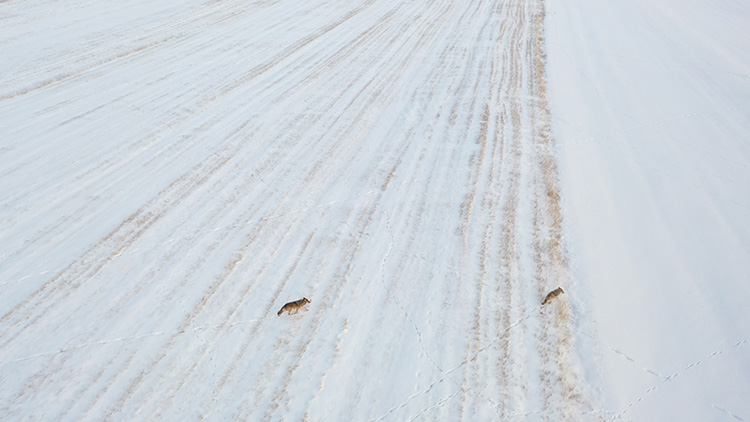
As part of this project, a wolf satellite tracking project is being conducted under the leadership of biologist Prof. Dr. Çağan Şekercioğlu, a faculty member from Koç University and Utah University, Prof. Dr. Josip Kusak from the University of Zagreb, and expert biologist Emrah Çoban from the KuzeyDoğa Association.
The Crucial Role of Wolves in Nature
Şekercioğlu emphasized that the existence of wolf populations is crucial for the holistic protection of ecosystems, stating:
“Wolves play a crucial role in natural habitats. They play a crucial role in preserving the natural grassland ecosystem by regulating prey populations. Furthermore, the presence of wolves is an indicator of the health of natural habitats. Protecting wolves contributes to maintaining the natural balance. Reintroducing red deer, which had become extinct in Sarıkamış due to overhunting, can contribute to the formation of a balanced ecosystem by providing wolves with access to natural prey resources.”
Turks, Dogs, and Humans
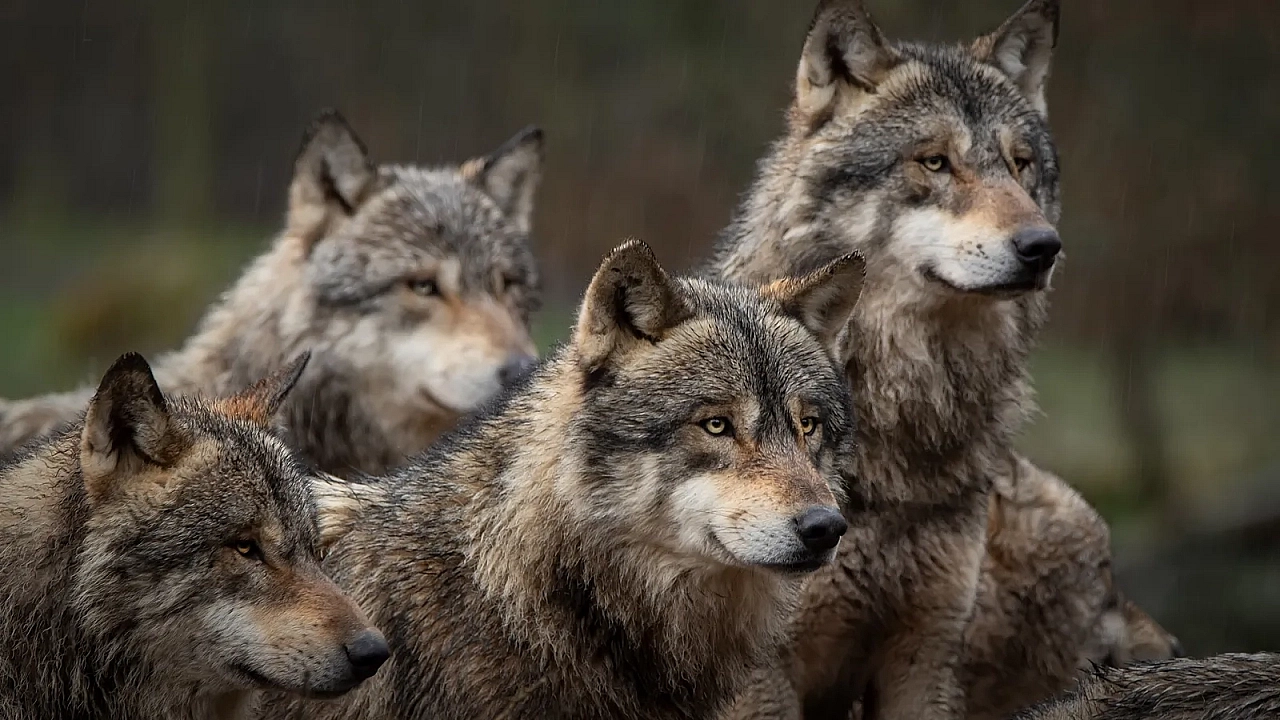
For thousands of years, wolves and their descendants, dogs, have been loyal companions and guardians of our people and environment.
It’s worth remembering that wolves live not only in our region but worldwide. I recently saw a post showing wolves roaming streets in Utrecht and Rotterdam in the Netherlands: https://www.instagram.com/reel/C-QcFrZJp9g/?igsh=NWx2NXMwdnVlcWVq.
Considering current debates on animal laws aimed primarily at street dogs, I think those enacting such laws betray the rights of all living beings, humanity, and Turkish heritage.
Footballer Melih’s Contradictions
As for footballer Melih, I believe he is conflicted. I don’t think he’s a bad person, and trying to act proudly Turkish is not negative. However, some inconsistencies stand out. For example, Melih’s wife is Swiss, and their two children have both Turkish and foreign names. So, calling Melih a racist is wrong. But he fails to respond when Saudi Arabia, where he plays, disrespects Atatürk—the greatest leader for Turkish patriots. When the Turkish Super Cup match between Galatasaray and Fenerbahçe was played in Saudi Arabia, the Saudis refused to allow Atatürk’s flag in the stadium. This caused a scandal and outrage in Turkey. Yet Melih, playing in the Saudi League and earning far beyond his worth, said nothing. A true Turk who values Atatürk would have protested there and then, even if it meant moving to a lower-paying club. One must ask Melih: What happened to your love for Turkey while in Saudi Arabia?
The True ‘Alpha’: Atatürk
Among wolves and dogs, there is the concept of “alpha” — the leader who ensures the pack’s survival and prosperity. Like wolves, Turks’ fate has always depended on their leaders. Atatürk was the pinnacle of alpha leadership, rising a dying nation from the ashes.
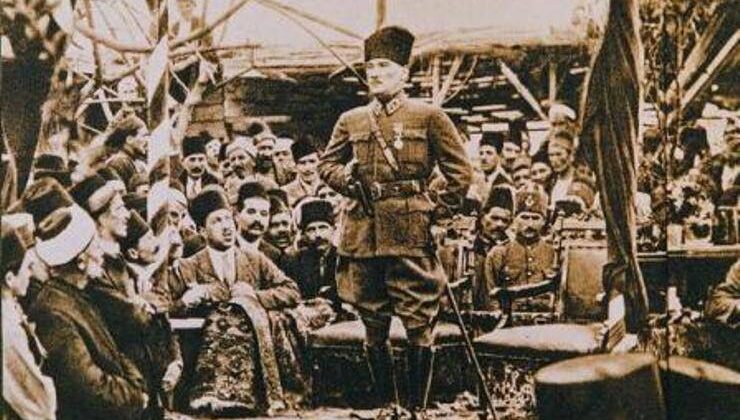
After Atatürk, Turkey’s leaders took the opposite path, and the country has steadily declined, especially accelerating in the 21st century. We all live through the harsh reality of our country’s current dire state.
I hope that in this century we find our healthy alpha wolf again and rebuild a strong, thriving Turkish nation. A healthy, steadily developing Turkey is a crucial source of balance and prosperity for our region and the world. Let’s not forget that.
Tag: education