
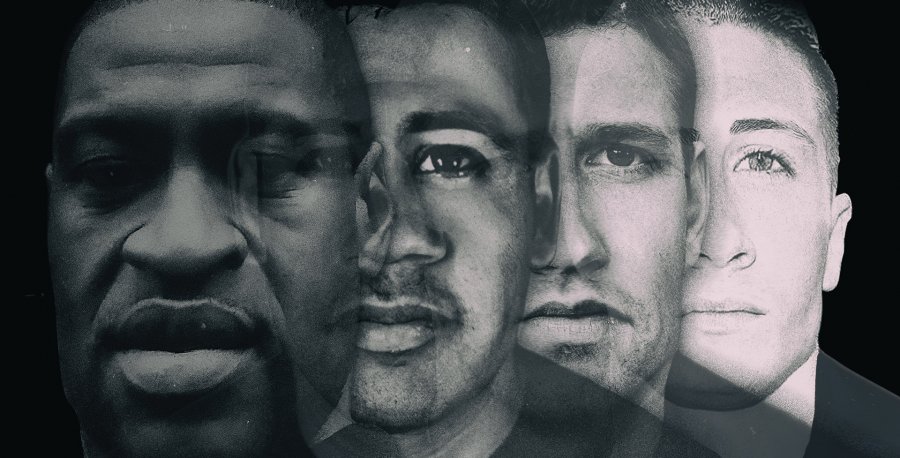
First, let’s remember the George Floyd incident that triggered all this. George Floyd’s death occurred on the evening of 25 May 2020, in Minneapolis. Derek Chauvin, a white officer who responded to a report of a counterfeit $20 bill, killed the Afro-American suspect, George Floyd, by kneeling on his neck for 8 minutes and 46 seconds while he was handcuffed. If you have the courage, you can watch the video at https://www.youtube.com/watch?v=5I3SWcwD3EY .
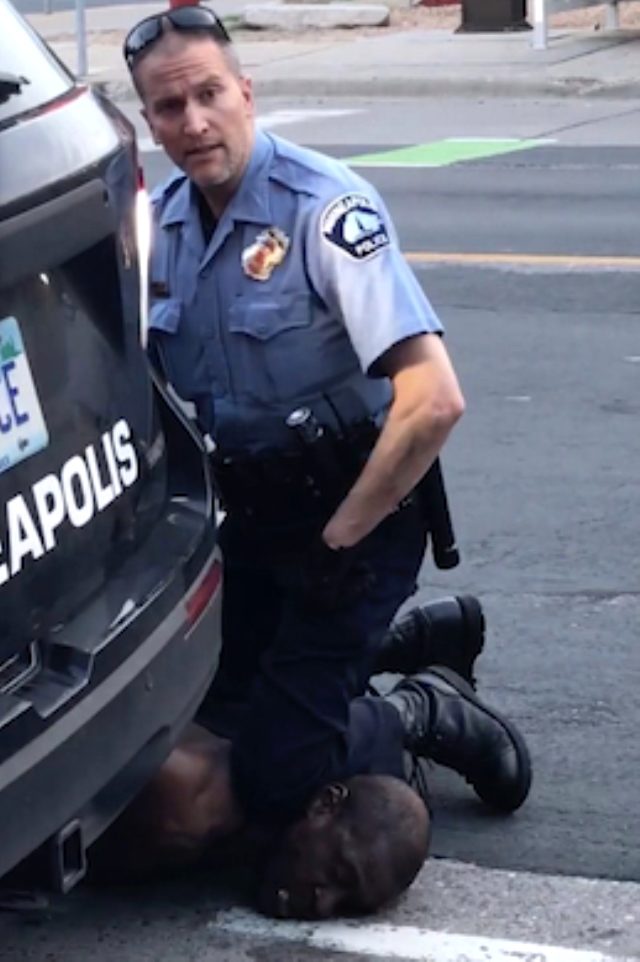
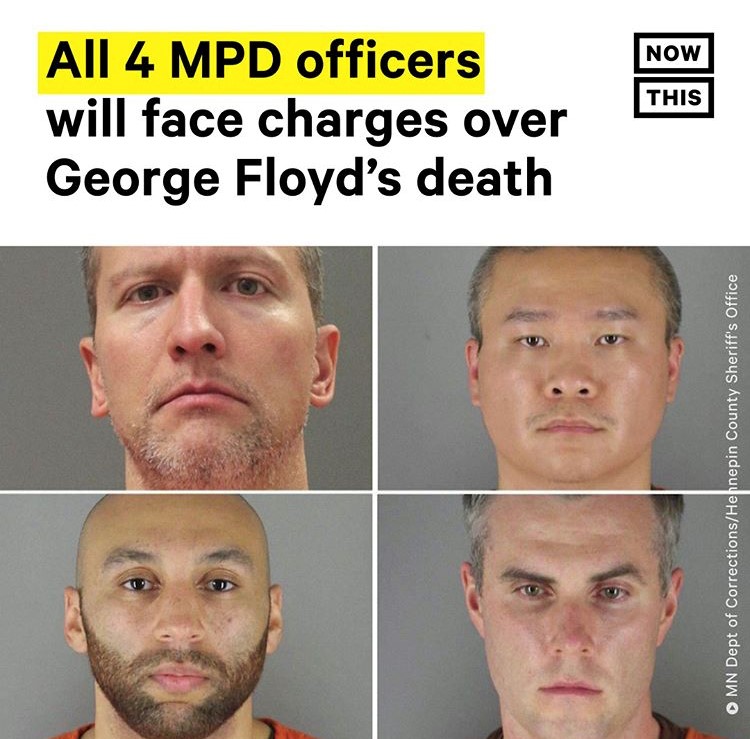
Witnesses recorded the incident in Minneapolis on their cell phones. The video, which shows Floyd repeatedly saying, “I can’t breathe,” was circulated on social media platforms and mainstream media. The four officers involved were terminated the following day. Derek Chauvin, the officer responsible for Floyd’s death, was arrested for attempted murder. Not only Derek Chauvin, but also the officers on the same patrol who stood by and watched Floyd die, were charged with second- and third-degree manslaughter. Following the incident, civilian protests erupted in many parts of the US. Millions of people took to the streets. George Floyd’s pleading, “I can’t breathe,” and the kneeling on his throat became symbols of racism. Protests were even held in all 50 US states under the slogan “Black Lives Matter.” To help you visualize it, I’d like to share a video of these protests: https://www.instagram.com/tv/CBJROg-l7c6/?igshid=1rh3yg588fzr8
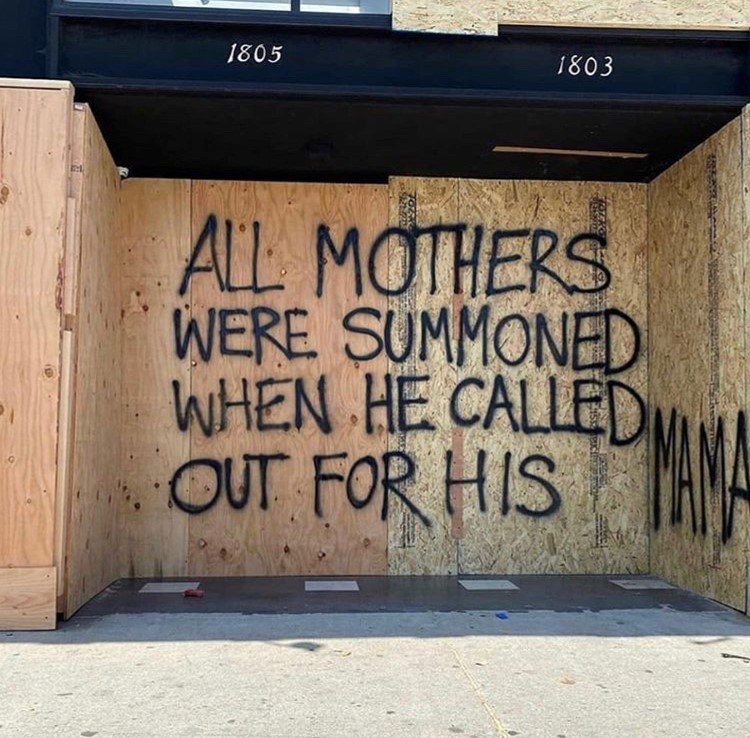
I’d also like to share with you the most meaningful graffiti written on the walls during the protests, in my opinion:
Since we’ve discussed the melting pot and the serious problems it entails, let’s delve into the topic a little more deeply. As you can appreciate, the idea of combining all cultures into one cauldron to create a single culture has been subject to numerous criticisms for being a policy implemented to create a monoculture. In contrast to monoculture, the concept of mosaic was also introduced for multiculturalism. This refers to cultures that create a whole from their parts, preserving their own existence without dissolving, while integrating into society. Furthermore, because the mosaic’s parts are fixed, meaning it evokes interaction only with those close to them, the kaleidoscope is proposed as a sophisticated model today. This model allows individuals from different cultures to interact with individuals from other cultures, creating a diverse society. In other words, we can say that the melting pot strategy, which America first introduced to create a monoculture, is seriously outdated. Instead, countries can model their cultures on the kaleidoscope model.*
A Bus Trip from Montreal to Baltimore
The second incident I’ll tell you about is a bus trip I took during my freshman year at university. My father called me at the time and said, “Son, Mevlüt Aslanoğlu, the general manager of Kentbank, is sick. I’ll take him to Johns Hopkins, one of the world’s best hospitals, for a checkup in two days, and then he’ll receive treatment if necessary. If you’re not busy, you can join us.” I immediately researched flights. However, since I only had two days to spare, the flight prices were prohibitively high. Being a very frugal person (especially at that time, my idealism was at its peak), I decided, “This money can’t be spent on a plane; it’s a shame. I can take the bus,” and that’s what I got myself into.
Of course, I could take the bus from Montreal to Baltimore for a very small fee. There’s a significant time difference between the plane and the bus. While it took me a few hours to get there by plane (including all the boarding and disembarkation), the bus had so many stops in between, so I almost reached Baltimore in a day (23 hours in total). However, since I had some free time (I didn’t have classes for four days), I decided, “I have time, I’ll take the bus.” I bought the bus ticket.
I was especially captivated by the natural beauty of southern Quebec, Canada, and Maine, USA. Since I had a window seat, I was able to enjoy the greenery and nature as much as possible. My only complaint was about the bus’s excessive stops and starts. But there was nothing to do, and that was my choice. I didn’t complain.
After a comfortable long journey, I arrived in New York. I had to change buses to get from New York to Baltimore.
Words cannot describe the feeling I had when I first boarded the bus to Baltimore. The bus was filled with Afro-Americans. Besides me, there was only one other person who was white. He was dressed like the rapper most favored by black people: baggy pants, shirt off, lots of starch, chains around his neck, and accessories. As soon as I boarded the bus, a few people asked me, “Yo, what’s up, man?” I tried to respond in their style, “Everything is cool, man, what’s up?” as best I could.
A friendly warning from the driver
Later in the journey, they called out to me from inside the bus, “The driver is calling you.” I thought to myself, “God, I wonder why?” I went over to him. The bus driver and I, who was black, had the following conversation:
– I wanted to talk to you.
– Go ahead.
– It’s obvious you’re not from around here. I want to warn you. As soon as you arrive at the bus station in Baltimore, immediately hop in the first taxi you find without wasting any time and without talking to anyone, and get to where you’re going immediately.
– Why are you warning me?
“Those places aren’t safe at all. The crime rate is quite high where we’re going. I don’t want you to get into any trouble. You’re clearly not from around here.”
“Thank you for the warning. I’ll do as you say.
Well done to the bus driver. That’s the human heart, black or white, it doesn’t matter. Because he couldn’t bear it, he called me over and spoke to me, warning me not to get into any danger.”
Sure enough, I arrived at the bus station late at night and got off the bus, and suddenly three or four different groups of people (all of them black) approached me (so many people were getting off the bus, they all came right at me) and tried to talk to me. I completely ignored them, jumped in front of the first taxi I saw right outside the station, flagged it down, and took a taxi to my parents’ hotel. It can be a bit of a culture shock when you arrive at my parents’ deluxe hotel after such a tiring journey, passing through a place you can almost sense is dangerous, but I fitted right in and quickly overcame my nervousness and tell my father, who greeted me in the lobby, about my journey. He smiled and asked me a crucial question:
– How will you get back to Montreal?
– (Without hesitation) By plane, of course. I wouldn’t want to go through that journey again.
Thankfully, he was helpful, and after contributing to the hospital work in Baltimore, I flew back. I’ll never forget that scene in Baltimore, one of the highest crime rates in America.
The Harshness of American Police
Before delving into the nitty-gritty, I’d like to talk about American police officers so you can fully understand the situation. I don’t know if it’s the action-reaction approach to curbing crime, the experiences they’ve had, or the way they’re raised, but American police are known for having the harshest attitudes in the world. For example, if you’re speeding and exceeding the speed limit and are stopped by American police, you can’t engage in conversation with them like you can in Turkey. You’re expected to roll down your window with your hands on the steering wheel, speak to the police in a very polite tone. Woe befall anyone who objects to anything, especially if they try to say something like, “Let’s find a way.” Police there, especially in major metropolitan areas and areas with high crime rates, are very harsh. If you’re stopped for speeding in America, you risk being shot if you don’t follow the rules to the letter.
However, as with the George Floyd incident, they can sometimes overstep the limits. It is unacceptable for a police officer to press his knee on a Black man’s throat for minutes, asphyxiating him, causing his death while other officers watched without intervening. There are criticisms of these excessively harsh police stance and their unlimited authority, and efforts are being made to address the situation. I’d like to share one of these with you: https://www.instagram.com/tv/CBI8mK8l63x/?igshid=u4yx8uv0meeo
As someone who has seen and experienced a great deal in America and knows the country well, I can imagine how the George Floyd incident unfolded and what transpired. Just to give you that feeling, I’d like to share a speech a little Black girl gave in the name of discrimination: https://www.instagram.com/p/CA4w2NgjMTK/?igshid=1kknptgpuvjno
And just see the reaction to a key question activist Jane Eliott posed to the audience about discrimination against Black people in the US:
https://www.instagram.com/p/CA5mdXcHD6a/?igshid=18g4dkgp39x4f
Racism isn’t just in the US, it’s everywhere.
Cultures that perceive differences not as a source of value, but as a source of hostility, are prevalent. Let’s take China, another superpower like the US, as an example. We can say that our slant eyed Far Eastern brothers and sisters, known as the yellow race, also have serious racist streaks.
It’s surprising, isn’t it, that people from this region, who face racism in many parts of the world because of their yellow race and slanted eyes, also hold racist attitudes. I thought so too, but as I went there and saw things with my own eyes and spoke to people who knew the area well, I realized that this attitude was also a normal part of the local behavior.
The Chinese admire the white race, but they can also be extremely racist towards the black race. Want an example? Here’s a racist laundry tablet commercial that ran for weeks in China: https://www.youtube.com/watch?v=X27dvuBSyXE
In this commercial, they put a black man in a washing machine, wash him, and then turn him into a Chinese man—in other words, they clean him in their own way.
You’re surprised, aren’t you? I’d like to share another video with you that humorously explains what living in China means for black people: https://www.youtube.com/watch?v=CqtS3hSwq3o China became a superpower after it managed to unite all the dynasties with different dialects, languages, cultures, and traditions within the country. This is true everywhere. Those who unite grow and become stronger, while those who divide based on religion, language, race, origin, or other reasons weaken.
Therefore, for the United States to maintain its superpower position, it must overcome its own internal problems. In fact, racism and polarization are on the rise not only in the United States but throughout the world. Serious efforts are being made worldwide to prevent racism and the resulting conflicts. For example, there are leaders in the Black community who say, “Protest peacefully, don’t commit crimes”: https://www.instagram.com/p/CA_nRsoIyA4/?igshid=3fzvzza3davs
Similarly, I can give the example of Canadian Prime Minister Trudeau, who graduated from my Canadian university (McGill University), kneeling and joining the protesters, which has become a symbol: https://www.msn.com/tr-tr/haber/dunya/kanada-prime-minister-trudeau-floyd-anısına-diz-çöktü/ss-BB156nZq?ocid=spartanntp
If I mention a question or problem in the articles I write, I always share the answer or solution. In my last article on racism, I talked about the answer to the problem.
The Scientific Nonsense of Racial Superiority
Leave everything aside and approach the issue from a scientific perspective: The most important reason why humans are the most dominant and powerful species on Earth is their rapid adaptation to their environment and their flexibility. Otherwise, like the dinosaurs, who were much stronger than us, Humanity could easily have vanished from the face of the earth. However, when we look at human history, we see that, regardless of the circumstances, Humanity, which has won the battle for survival and grown smarter with each passing generation, has migrated from its initial location to different places over time, changing its appearance based on climatic conditions. For example, people in the north, due to less sun exposure, have lighter skin, changed eye color, and become taller and larger. In Africa and other places where the sun’s influence is felt most strongly, Humanity has changed again, with darker skin, enlarged nostrils, and bodies shaped according to the humidity or dryness of their location. The situation is that simple. In other words, no one on this earth should claim to anyone that they are smarter, a superior race, or a sacred people chosen by God. We live in the 21st century, a time when humanity is perhaps at its most intelligent and experiencing its most rapid change in millions of years of history. We’re still sick and tired of hearing this nonsense. I’ll share two symbolic images to illustrate my point:
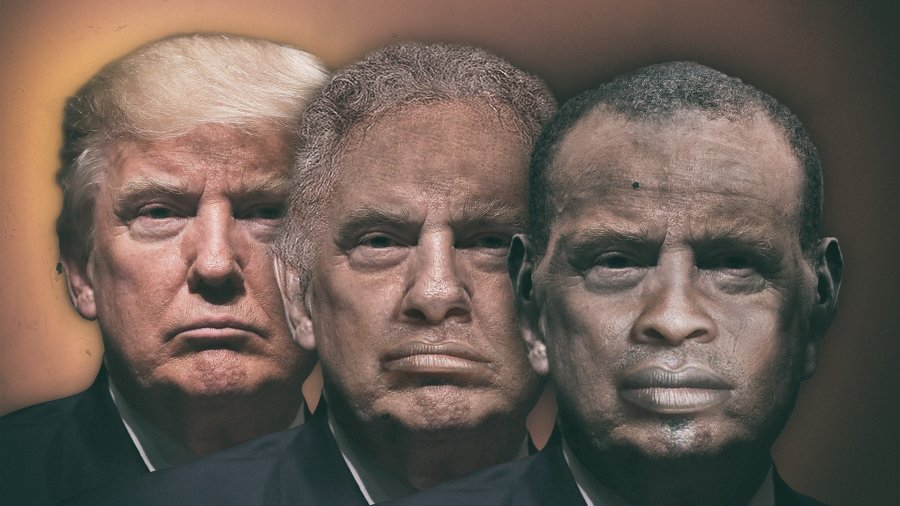
In the image above, which I shared in my previous article, you can see three versions of Trump. On the far left is Trump himself; in the middle, we see how the appearance of his descendants might have changed over the generations if Trump had lived in Latin America; and on the right, we see how his appearance might have evolved if Trump had lived in Africa. Of course, I don’t know how many generations it would take for such a genetic change to occur; I’ll leave that to the experts. However, if Trump’s descendants lived elsewhere, their appearance would begin to change in this way, even if they continued to marry members of their own race.
As a special feature of this article, I’d like to share a picture of George Floyd. If George Floyd had lived in a cold, sun-drenched region (for example, in Scandinavia or the northern regions of Russia), I’d like to illustrate how his appearance might have changed over the generations:
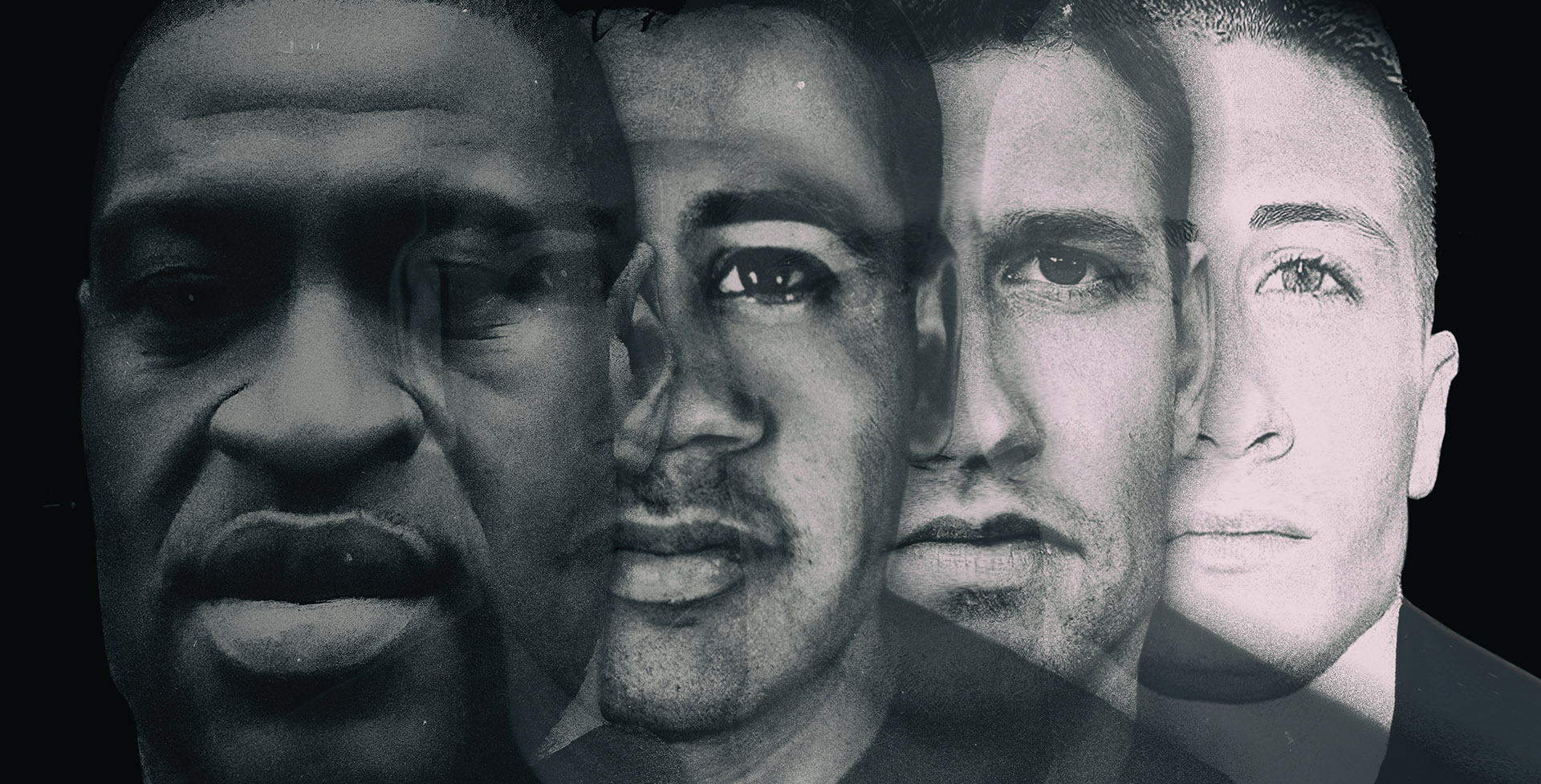
Above, you can once again see how skin color can vary depending on geographical features. Of course, as I mentioned in my previous article, I’d also like to point out the constant mixing of people of different races. When you look at countries like Brazil, you clearly see how mixed races can occur. Incidentally, mixed race isn’t a bad thing. On the contrary, if a child inherits the strengths of both parents, the outcome can be much more beautiful and healthier.

I’d like to use the eggs above as an example. Eggs of different colors have the same insides.
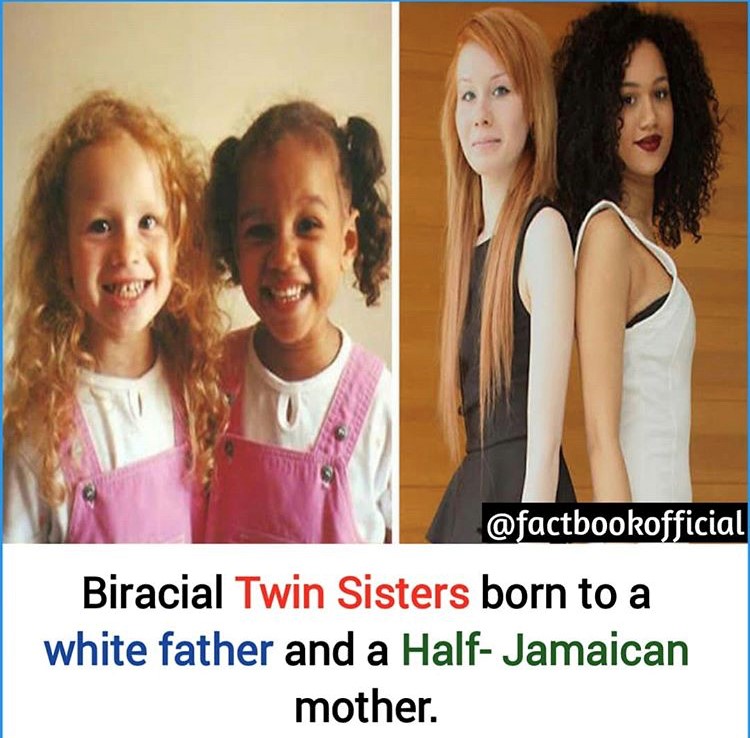
Of course, sometimes, beyond being mixed, children of parents of different races can take after their parents and have very different appearances. Here’s a striking example: fraternal twins of different races:
Since I’m also discussing China in this article, I’d like to share my observations about how slanted eyes develop. I believe the reason people of Far Eastern descent have slanted eyes is that the sun reaches that region at a steep angle.
When I spent time in China, I noticed that when I was outside and not wearing sunglasses, I would squint due to the steep angle of the sun. I even mentioned this to my colleagues. They couldn’t help but squint at me, confirming my point.
Just think about what happens when you walk around outdoors for generations squinting (despite hats and other accessories). Your body automatically adapts to this. It’s that simple.
So, what’s the point of categorizing people by color as white, yellow, brown, and black, and turning them into a source of hostility?
Solution to the Problem
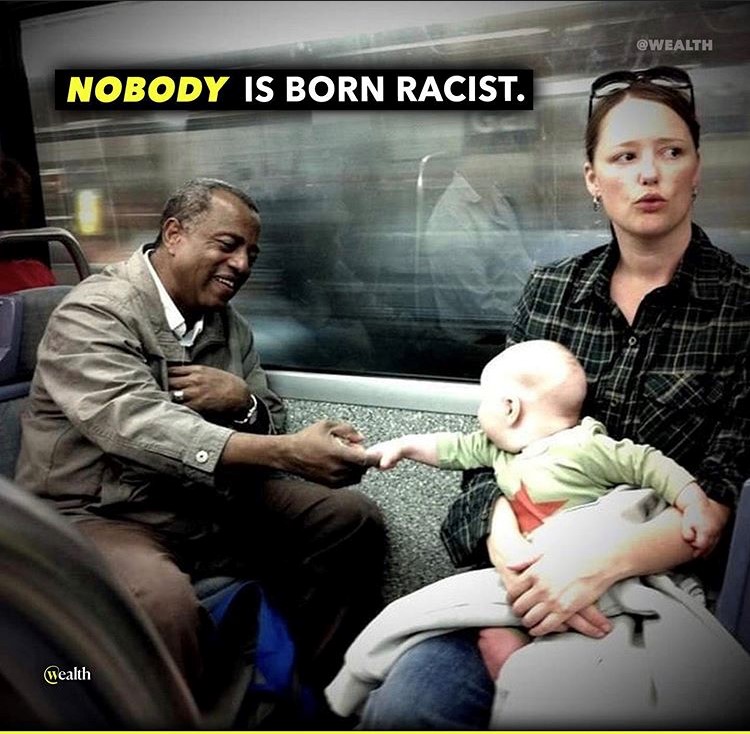
Beyond answering the question, I’ll offer another solution here. To understand the inherent value of differences, we need to ensure that people of different races and origins live together from a young age. Just like Angelina Jolie and Brad Pitt adopting children of different races. Could their own children, who are blonde and have light-eyed eyes, harbor negative thoughts about their slanted-eyed Southeast Asian siblings based on race and origin? Because they grew up together, they will see them as siblings and show them the necessary respect.
In an environment where borders are being removed worldwide, people of different origins should be encouraged to live together from a young age (Brazil is a good example, albeit improvised). Elements that will eliminate all negative thoughts on this issue should be introduced through the education system, parenting, and educator training. These training programs should teach that race and origin are related to geographical conditions, that no one is inherently superior to another, and that we should ignore nonsense like a superior race. No one is inherently racist. Let’s not forget this.
I conclude with the words of my previous article:
The difference isn’t in the blood, but in the goodness of the heart.
Categorizing people based on factors like their country, faith, or language is absurd. In my opinion, there are two types of people: good people and bad people. Of course, we can’t say that everyone is 100% good or 100% bad. But those whose good side prevails, those who know the bad but insist on the good, are good people. Wherever you go in the world, regardless of race, there are good people and bad people. Those who collectively inflate the people of their own country or race are actually deceiving themselves and those around them.
Note: I would like to thank Gökhan and Neslihan Erkek of GEN3 for the image designs of Trump and Floyd and the egg image.
* Thank you to Berna for her contribution to this section.
Tag: education