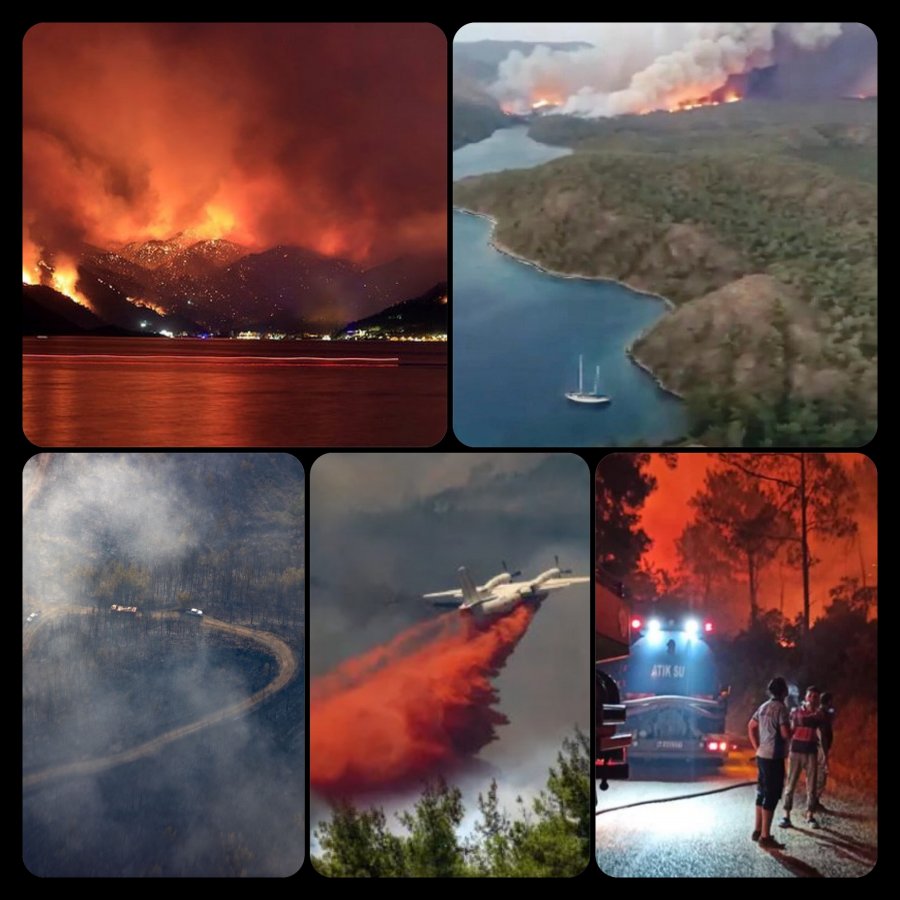
Last year, we unfortunately experienced a record year in terms of both the number of forest fires and the total area burned. I wrote about this topic in two articles last year. I’m sharing these articles as a reminder:
https://www.serhansuzer.com/tr/orman-yangini-felaketlerinin-dusundurdukleri
https://www.serhansuzer.com/tr/orman-yanginlariyla-mucadele-platformunun-dogusu-
This year, on 21 June, we experienced our first major forest fire in the Marmaris district of Muğla. First, I’d like to share with you some excerpts from various news reports I’ve read on this subject:
The importance of nighttime aerial intervention!
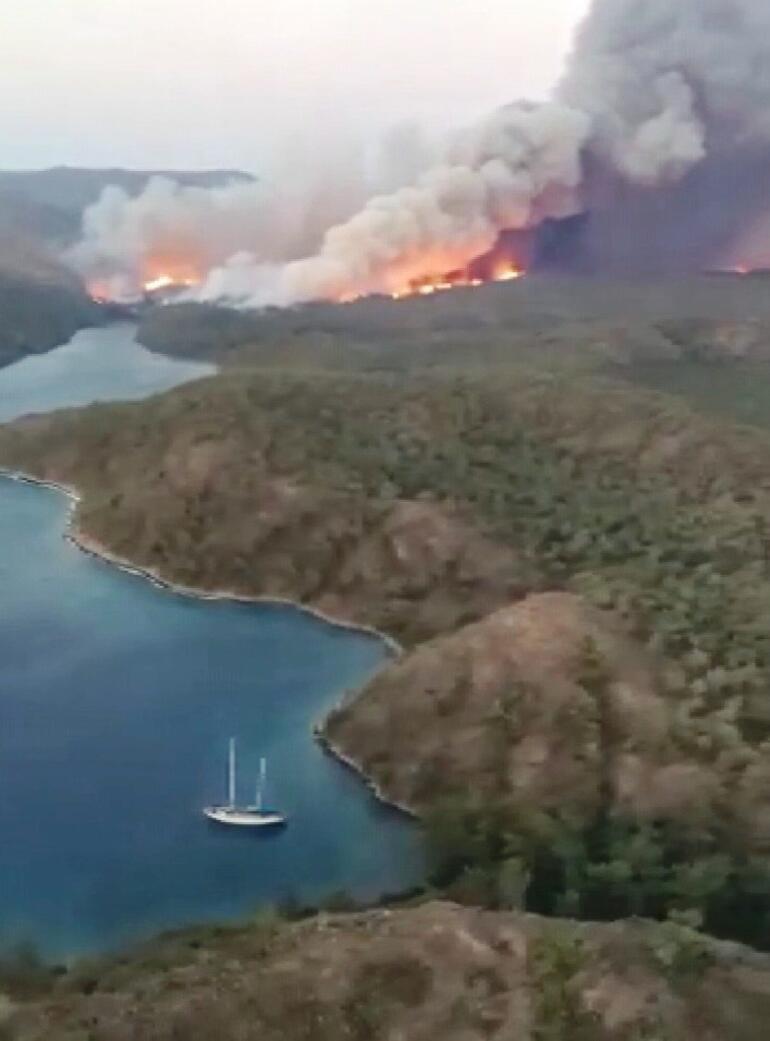
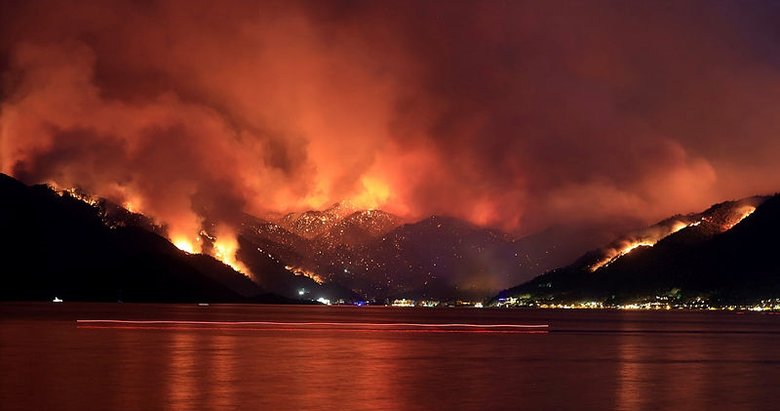
A year later, the Marmaris district of Muğla is battling fires again. (https://www.bbc.com/turkce/haberler-dunya-61889207?utm_source=newsletter&utm_medium=email&utm_campaign=%F0%9F%92%8A+Yang%C4%B1n%3A+Bir+y%C4%B1l+sonra+yeniden ). The fire broke out on Tuesday evening (June 21) in the Bördübet 7 Islands area of the Hisarönü district. Thirty homes in the area were subsequently evacuated. However, the blaze could not be contained overnight. The Marmaris City Council commented on this situation, saying, “We have seen how important it is to be able to conduct aerial firefighting at night.”
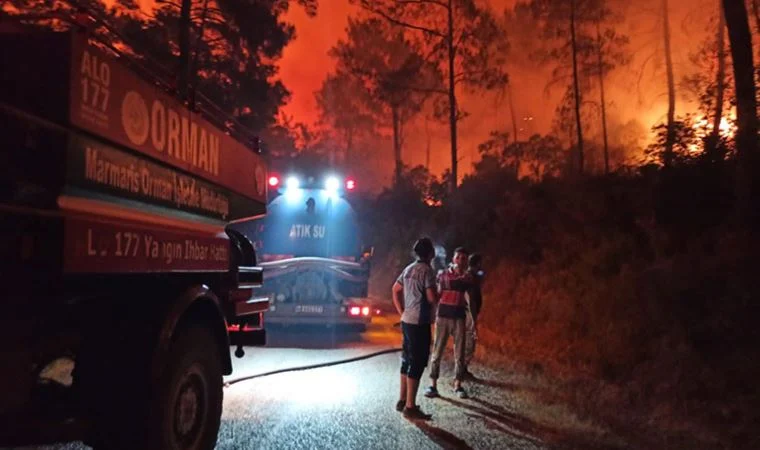
Authorities announced that they responded to the fire in the early hours of the morning with 20 helicopters and 14 aircraft, and nearly 20 water cannon vehicles (TOMAs), 363 vehicles, and 39 pieces of construction equipment.
Nevertheless, according to claims by some local citizens, journalists, and politicians, only four or five aircraft were involved in the airborne response.
Minister of Agriculture and Forestry Kirişci stated that the fire had been largely brought under control on the second day and that it had affected over 200 hectares. However, many of the areas that had been extinguished flared up again.
An area equivalent to 4,813 football fields burned
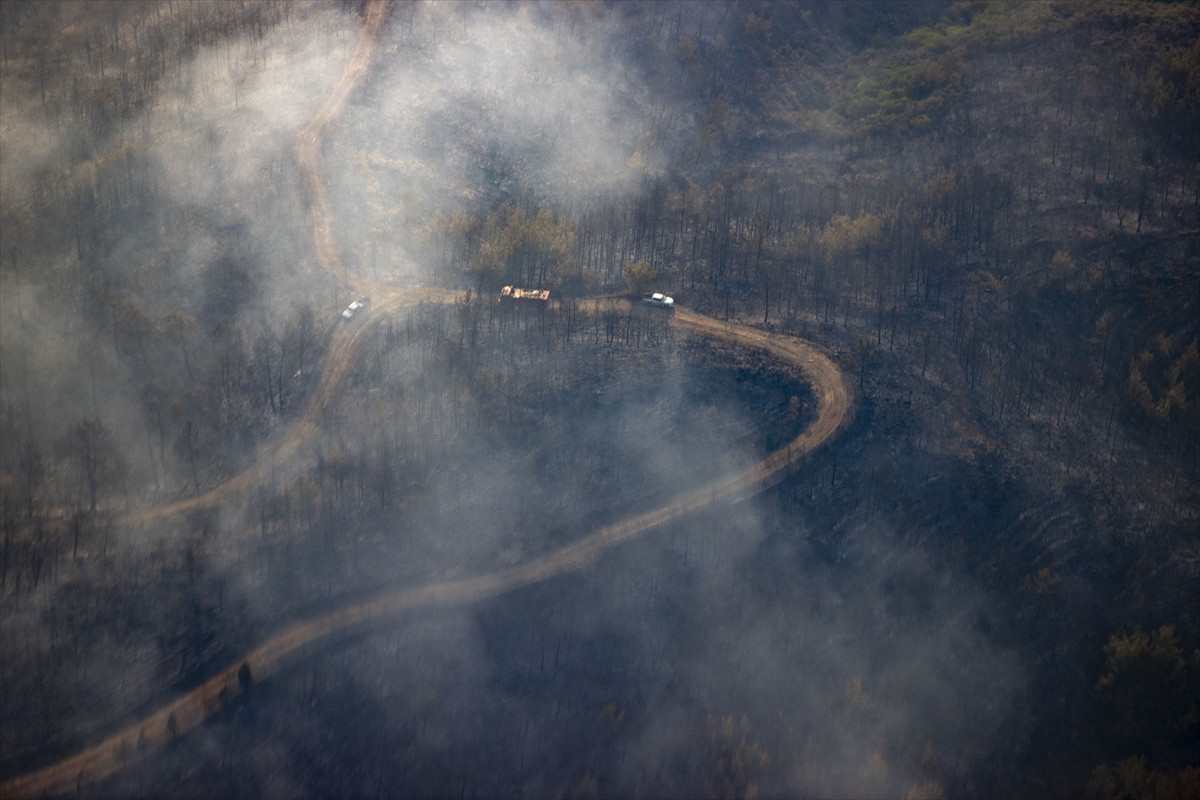
On 24 June, when the fire was brought under control, Muğla Metropolitan Municipality Mayor Osman Gürün announced that a total of 3,417 hectares (approximately the size of 4,813 football fields) had been affected by the fire. (https://www.bbc.com/turkce/haberler-turkiye-61921301)
After the fire became a trending topic on social media, Presidential Communications Director Altun announced that a technical investigation had been launched into “posts that cause disinformation.”
Altun concluded his remarks by saying, “Whatever necessary, within the framework of the law, will be done regarding those who negatively impact the morale and motivation of our heroes on the field.” (https://twitter.com/fahrettinaltun/status/1539433454886060032?utm_source=newsletter&utm_medium=email&utm_campaign=%F0%9F%92%8A+Yang%C4%B1n%3A+Bir+y%C4%B1l+sonra+yeniden )
President Erdoğan and Interior Minister Soylu observed the firefighting efforts from the air. CHP leader Kılıçdaroğlu, who was denied permission to land in Dalaman, traveled to the region by road from Selçuk.
Sabotage allegations and suspect apprehended
Health Minister Koca announced that no injuries or significant health problems were reported during the firefighting.
Marmaris Mayor Mehmet Oktay argued that the possibility of sabotage was very high. The Chief Public Prosecutor’s Office announced that an investigation into the fire has been launched.
Following Marmaris, news of a fire also came from Köyceğiz. Initial reports indicate that the fire, which has been brought under control, has damaged 1 hectare of forest. Here are images from the forest fire: TÜRKİYE ORMAN YANGINLARI (@turkiyeormanyanginlari) Instagram’da paylaşımda bulundu: “Böyle görünce ben kötü oluyorum orda yasayan yaban hayatindaki hayvanlari dusunemiyorum üzülüyorum yıpranıyorum Söylenicek söz yok.…” • Haz 23, 2022 at 10:53öö UTC
The saboteur who started this forest fire has also been apprehended. According to the Anadolu Agency report, which you can read at https://www.aa.com.tr/tr/gundem/marmaristeki-orman-yanginin-faili-polis-ve-jandarmanin-detayli-calismasi-sonucu-yakalandi/2621277 “As a result of meticulous investigation, S.A. was found in a forested area in the Saklıkoy area of Bördübet at 4:30 PM on 23 June. S.A., who was determined to be intoxicated, was taken into custody, and two gasoline cans were seized in the wooded area where he was hiding.”
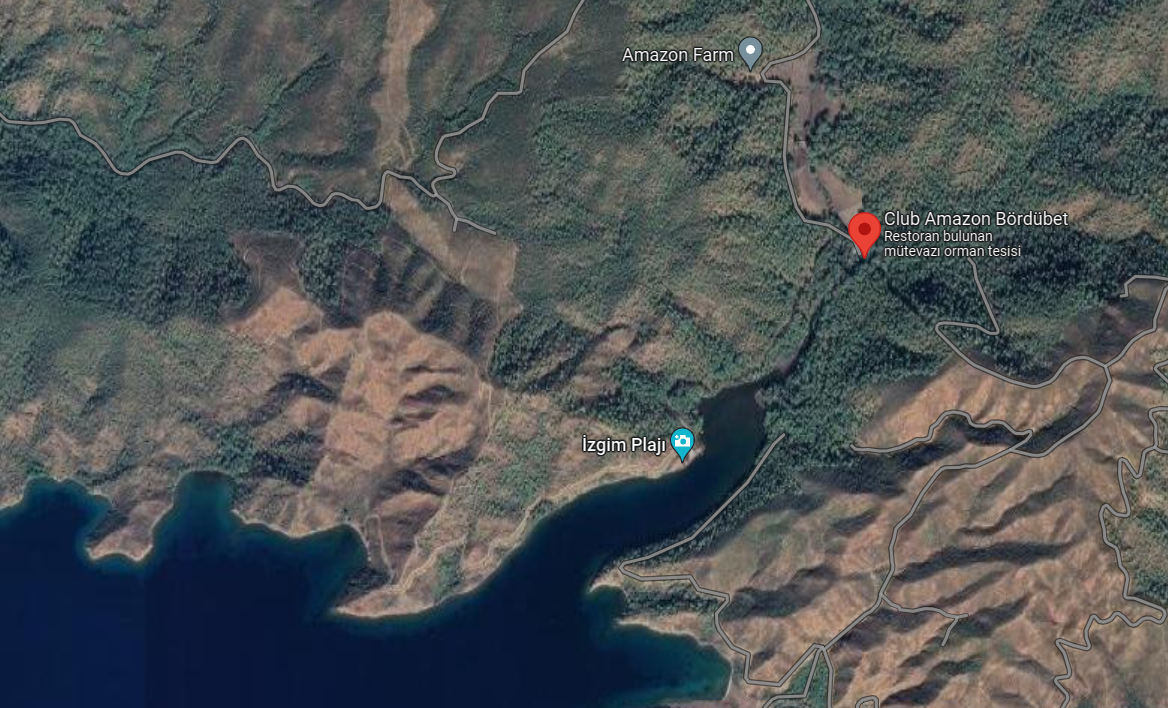
During his initial interrogation, the suspect, S.A., admitted to family problems, selling his father’s land in the area, being ostracized by his father, and therefore starting the fire by throwing cigarette butts at three separate locations in the fire area. S.A. also reportedly stated that he wanted to commit suicide by entering the fire.
Motions Rejected in the Turkish Grand National Assembly
During this period, motions submitted by the CHP and HDP to investigate forest fires were rejected by the votes of the AKP and MHP in the Turkish Grand National Assembly. Here is the related news: https://www.gazeteduvar.com.tr/orman-yanginlari-onergesi-ak-parti-ve-mhp-oylariyla-reddedildi-haber-1570720
Preparations of the Ministry of Agriculture and Forestry
Nonetheless, the 2022 Forest Fires Preparedness Assessment Meeting was held in May. I share the statement of Minister of Agriculture and Forestry Vahit Kirişci: “We are further strengthening our air and ground firefighting capabilities. We have increased the number of helicopters from 39 to 55, our aircraft from 3 to 20, and our UAVs from 4 to 8. As a reserve force, 25 helicopters, 2 aircraft, and 1 UAV are on standby. Our air force preparations are complete in this regard.
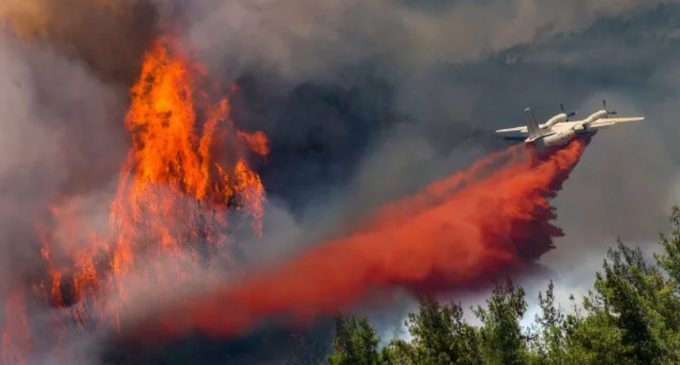
We have also significantly increased our ground response teams, the most crucial force in extinguishing fires. We have provided and continue to provide firefighting training, primarily to the Forestry Department, the gendarmerie, NGOs, and volunteers. I would like to note that 21,000 members of our organization, 20,000 military personnel, and over 100,000 volunteer citizens have participated in this training. I would like to emphasize that we have further strengthened our teams with the addition of 5,000 new workers, 283 engineers, and 1,500 forest conservation officers.” Kirişci, noting that the ground forces have been reinforced with a total of 1,350 water trucks, 692 pieces of construction equipment, and 2,270 first response vehicles, continued: “In coordination with the General Directorate of Highways and the General Directorate of State Hydraulic Works, we currently maintain 185 bulldozers, 12 water tankers, 25 graders, 1,913 excavators, and 229 tractor-trailers in our inventory as reserve forces. Scientific data and experience have shown that the real power in extinguishing fires lies in ground teams. No matter how much air intervention you can provide, you can only win the war against fires with ground troops. Many state institutions are conducting coordinated efforts against forest fires. In this context, forest fires have been included in AFAD’s response plans.” You can read the full text at the following link: https://www.ogm.gov.tr/tr/haberler/2022-yili-orman-yanginlari-hazirlik-degerlendirme-toplantisi-duzenlendi
Wheat Field Fires
Following reports of the first fire on 21 June, reports of other fires began to emerge. Wheat fields burned in Osmaniye, Bursa, Mardin, Gaziantep, Şanlıurfa, Diyarbakır, Kahramanmaraş, Mersin, and Aydın in June.
Fields continue to burn this week. Sparks from power lines in Batman reduced 200 acres of cultivated wheat to ashes in three days.
The same incident occurred the day before, and a 300-acre wheat field in the Malkara district of Tekirdağ burned.
Last week, a fire in a wheat field in Çorlu was reportedly caused by cigarette butts thrown from passing vehicles.
The other day, a fire in the Gönen district of Balıkesir reduced 40 acres of wheat to ashes.
Our country focused on the forest fire in Marmaris, but wheat fields are also burning! Is it a coincidence that so many fields burned in such a short time? Of course, it’s not a coincidence. The main cause of forest or wheat field fires is human-caused. The percentage of these fires caused by natural events like climate change or lightning strikes is quite low. Last year, I considered climate change the main cause, but this year, when I connected all the dots, I’m convinced that human-caused fires constitute the vast majority. Of course, the warm weather, dry climate, and high winds caused by climate change cause fires to spread rapidly and remain unextinguished for extended periods.
I recently read a good article about forest fires. You can read Cihan Erdönmez’s article in Yeşil Gazete, “Answers to Important Questions About Forest Fires,” at https://yesilgazete.org/orman-yanginlari-konusunda-onemli-sorularin-yanitlari/ . I’d like to share the highlights of this article:
Why do forest fires occur?
Nine out of every 10 fires are manmade. Fires caused by negligence or accidents, such as stubble burning, cigarette butts, power lines, and garbage dump fires, predominate. The number of fires caused by lightning strikes is approximately one in ten. Fires started for terrorist purposes are very, very few. For example, according to the General Directorate of Forestry statistics, none of the fires that broke out in 2021 were set for terrorist purposes.
It’s also important to emphasize that nearly half of the fires are recorded as fires of unknown origin, and this rate, which was around 20%, has approached 50% since the 2010s. The fact that most fires are manmade is both good and bad. Bad because it’s incomprehensible that humans can be so irresponsible. Good because human-caused fires are preventable.
Does climate change affect forest fires?
Of course, it does, and it will continue to do so. Due to climate change, fires start more easily, and the fires that do spread more easily. But if we ask whether fires would occur without the factors mentioned above, due to climate change and extreme heat, the answer is no. Nevertheless, it’s clear that climate change will gradually increase both the number and the extent of the fires (all other conditions remaining constant).
What is the most effective measure against forest fires?
Limit human-forest interaction at least between May and October, eliminating it where possible. Fires don’t break out in forests where there are no people; we need to keep this in mind.
What is the role of aircraft and helicopters in firefighting?
Extinguishing a fire is a very difficult and demanding process. The easiest time to extinguish a fire is within the first 15-20 minutes after it breaks out. Let’s say half an hour. Intervention before the fire has even grown is highly effective. Aircraft and helicopters are invaluable in this regard. As the fire grows and its energy increases, things become increasingly difficult. When a fire reaches this stage, the role of aircraft and helicopters is not as significant as is commonly believed.
The General Directorate of Forestry (OGM) must have a sufficient fleet of aircraft and helicopters, as well as the personnel and organization to effectively operate these vehicles. This work cannot be sustained through outsourcing.
What needs to be done after a fire?
The most appropriate action after a fire is to thoroughly examine the burned area and act based on the results of this examination. We must give nature a chance in areas where the forest has the potential to regenerate. In areas where this potential is lacking or low, it’s necessary to support nature with appropriate techniques. Unfortunately, due mostly to economic concerns and, to some extent, to public pressure, the General Directorate of Forestry (GDF) generally acts as follows: It opens large plantation sales tenders for the felling and removal of trees (which also have a high economic value) from the burned area. The company that wins the tender, disregarding the forest’s potential for regeneration, enters the area with machinery, cuts down the trees, and then markets them. Thus, the burned area is forced to face a second ecological catastrophe. Then, the area is again mechanized for reforestation. Two years later, when we look at the area from afar, we see green, admittedly. So, is that area a forest? Or when can it become a forest like it once was? Who cares?
Is the General Directorate of Forestry’s firefighting organization, excluding aircraft, sufficient?
No, it’s clearly inadequate. For one thing, the organization, which should employ approximately 80,000 personnel, now employs approximately 40,000. The percentage of these personnel without job security (contract engineers, contract workers, temporary workers, and consulting engineers) is steadily increasing. The complete disregard for merit in appointments and promotions diminishes organizational motivation and success. The mandatory rotation system removes knowledgeable and experienced personnel from the local level, leading to the replacement of uninformed and inexperienced ones. Top-down tasks, especially excessive wood production, consume all, and often more than all, of the organization’s and its employees’ time. A 183-year-old, deeply rooted organization struggling to operate under all these negative factors fails in every respect, including forest fires.
‘Eco-anxiety’ and ways to cope
Finally, all these problems are causing the psychological problem of ‘eco-anxiety’, also known as ‘eco-anxiety,’ in many people (especially the younger generation). According to an article written by Ezgi Kaynak in Good4Trust’s weekly briefing, I would like to define eco-anxiety: The American Psychological Association defines eco-anxiety as “the chronic fear of environmental disaster resulting from the observation that the effects of climate change are irreversible and the resulting anxiety about the future of future generations.” While eco-anxiety has become a common form of anxiety today, it is not yet accepted in the DSM-5 diagnostic book of psychological disorders. Those with eco-anxiety may experience symptoms like generalized anxiety, such as irregular sleep and feelings of tension. Sometimes, intense climate anxiety can even develop into depression. This excellent article concludes with solutions for dealing with eco-anxiety:
1) By replacing the negative rhetoric, we use when talking about global events with solution-oriented phrases, we can focus on the solution, not the problem.
2) If you want to put an end to ecological problems, just like the eco-anxiety within you, let’s meet at Good4Trust, a gathering of environmentally and humanely oriented producers. You can access Good4Trust at https://good4trust.org/ .
My suggested solutions for fires
Returning to forest and wheat field fires, I’d like to share the first solutions that come to mind:
1) Instant detection systems: Systems that detect forest fires as soon as they occur are necessary. For this, establishing a fleet of drones, monitoring them from satellites, and installing special cameras with night vision that can monitor temperature differences are important.
2) Picnics outside the forest: As Cihan Erdönmez pointed out, it’s necessary to minimize human interaction with forests. In addition to this comment, I think it’s necessary to reconsider the concept of barbecues and picnics. This work needs to be limited to certain areas and removed from the forest.
3) Effective punishment: After apprehending those who set forest fires, they must be punished with the harshest penalties. I’m talking about a swift trial, with sentences that could reach up to life imprisonment for those who set fires intentionally. Those who set fires unintentionally should also be given a sentence that is not as severe as the one for intentional fires, but still very severe.
4) Energy revolution: We need to implement the energy revolution in our country as soon as possible. To achieve this, we need to rapidly transition to 100% renewable energy (within three years at most). Furthermore, energy efficiency, the use of fossil fuels as raw materials, the transition to solar-electric and hydrogen vehicles, and distributed systems (on-site production, on-site consumption) are necessary.
5) Radical increase in equipment and manpower: We need to ensure that the General Directorate of Forestry has ample equipment and vehicles to cope with fires in forest and agricultural areas, and that these are managed within the framework of military discipline. In other words, I’m talking about equipment, vehicles, and manpower 5-10 times the current capacity.
6) Organized volunteer support: It is necessary to organize millions of volunteers and ensure their organized work for this cause. This can range from early detection of fires to firefighting (volunteer firefighting) and forest rehabilitation.
7) Environmental disaster tax: A certain percentage of the taxes paid by the private sector should be allocated to addressing environmental disasters. This is how we can finance the above-mentioned projects. This includes planting billions of trees and creating new forest areas. Of course, we need to manage this process with 100% transparency, informing taxpayers about where their taxes are going, and even giving them the right to choose.
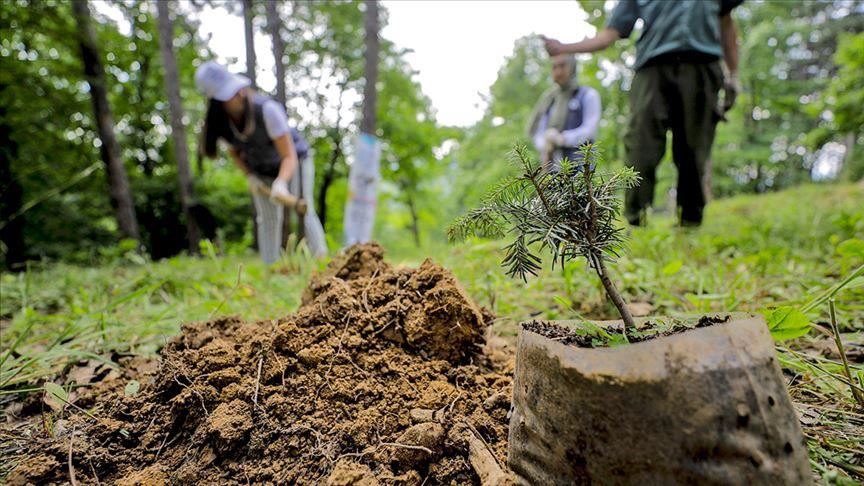
While some taxpayers will want to prioritize tree planting, others will want to tax equipment to combat forest fires or support incentives for renewable energy.
I hope what I’ve written inspires others and the necessary steps are taken. Stay well.
Note: After writing this article, the Istanbul Governor’s Office made an important decision regarding the restriction of human activity in forests: Istanbul Governor’s Office bans entry to forests – İstanbul Valiliği’nden ormanlara giriş yasağı – Son Dakika Haberleri (trthaber.com)
The Istanbul Governor’s Office announced that entry to forest areas is prohibited from 5-31 July, in accordance with Article 74 of Forest Law No. 6831 and Articles 9 and 66 of Provincial Administration Law No. 5442, considering that forest fires could occur due to rising air temperatures, increased human and vehicle movement in forested areas, and deliberate or negligent behavior.
Moreover, Istanbul Governor Ali Yerlikaya shared the following message on his Twitter account: “In Istanbul, picnicking without fires, sports, and other activities are permitted in the picnic and recreation areas, nature parks, groves, parks, and ecotourism areas listed in the attached list. Barbecuing, using gas cylinders, and lighting fires are prohibited in these areas.”
Tag: ecology