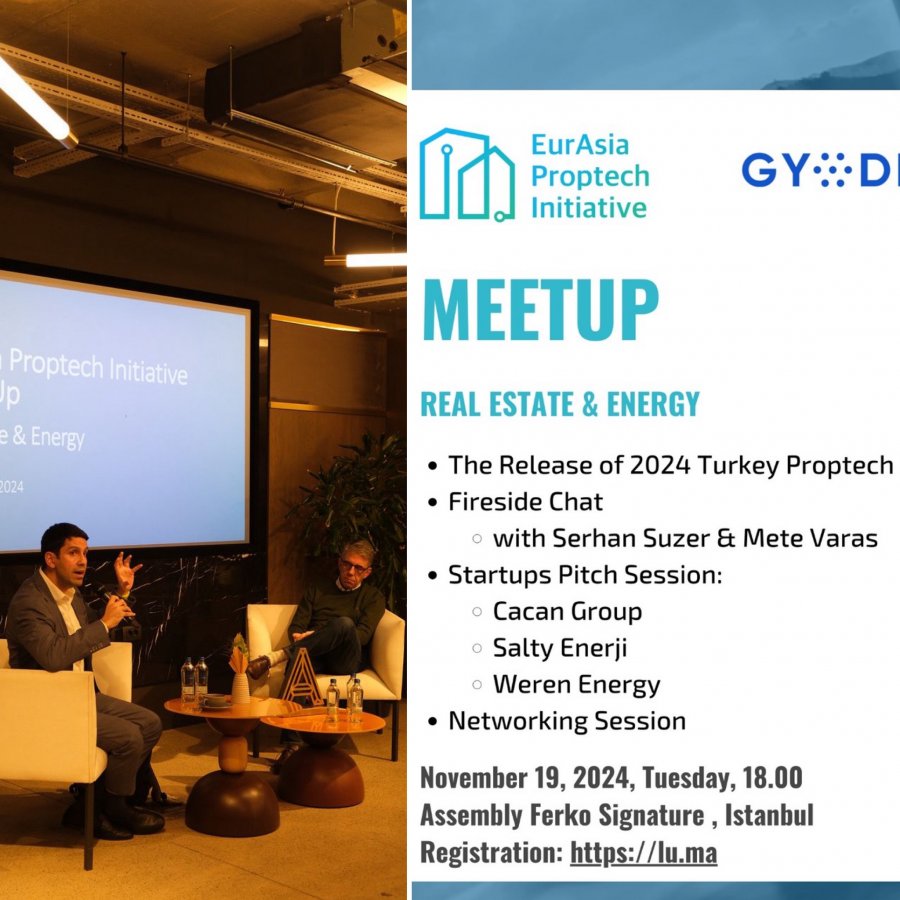
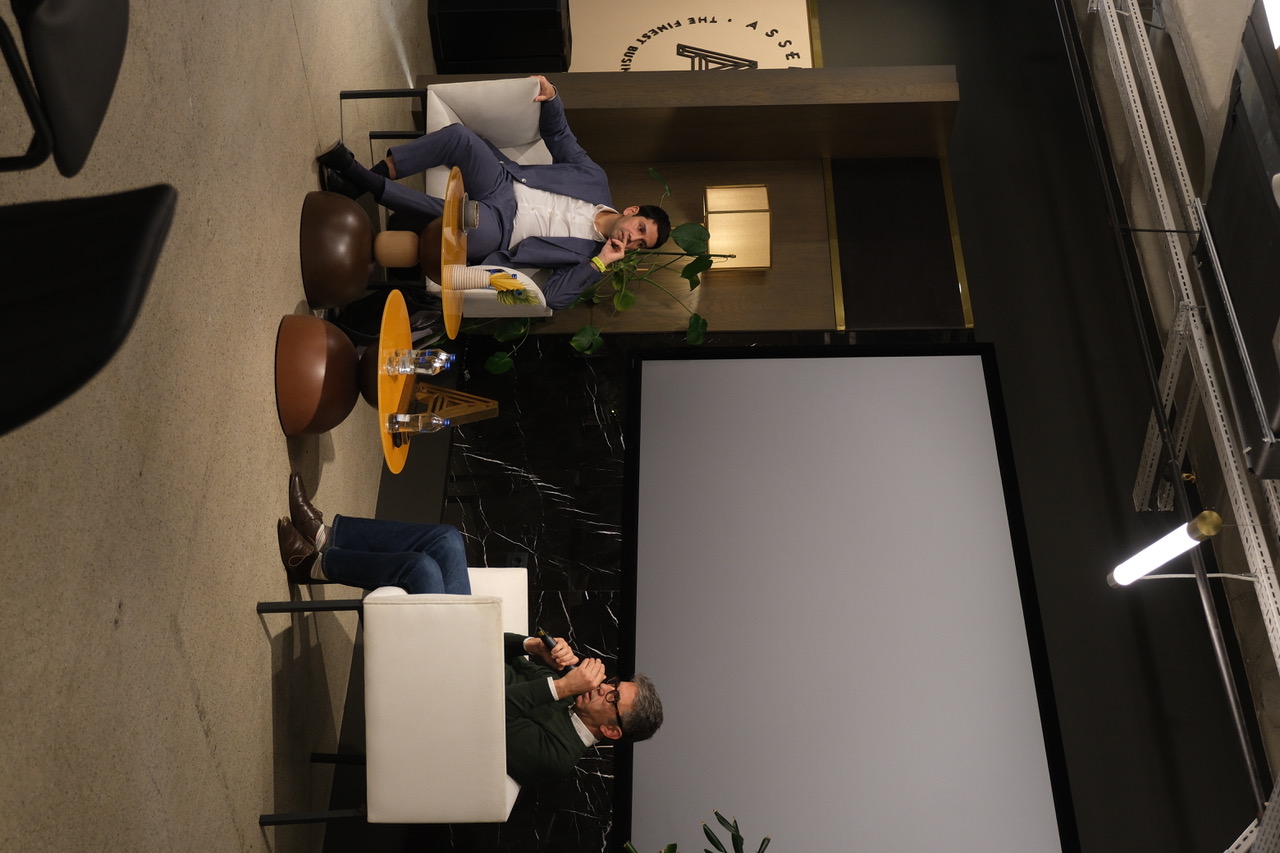
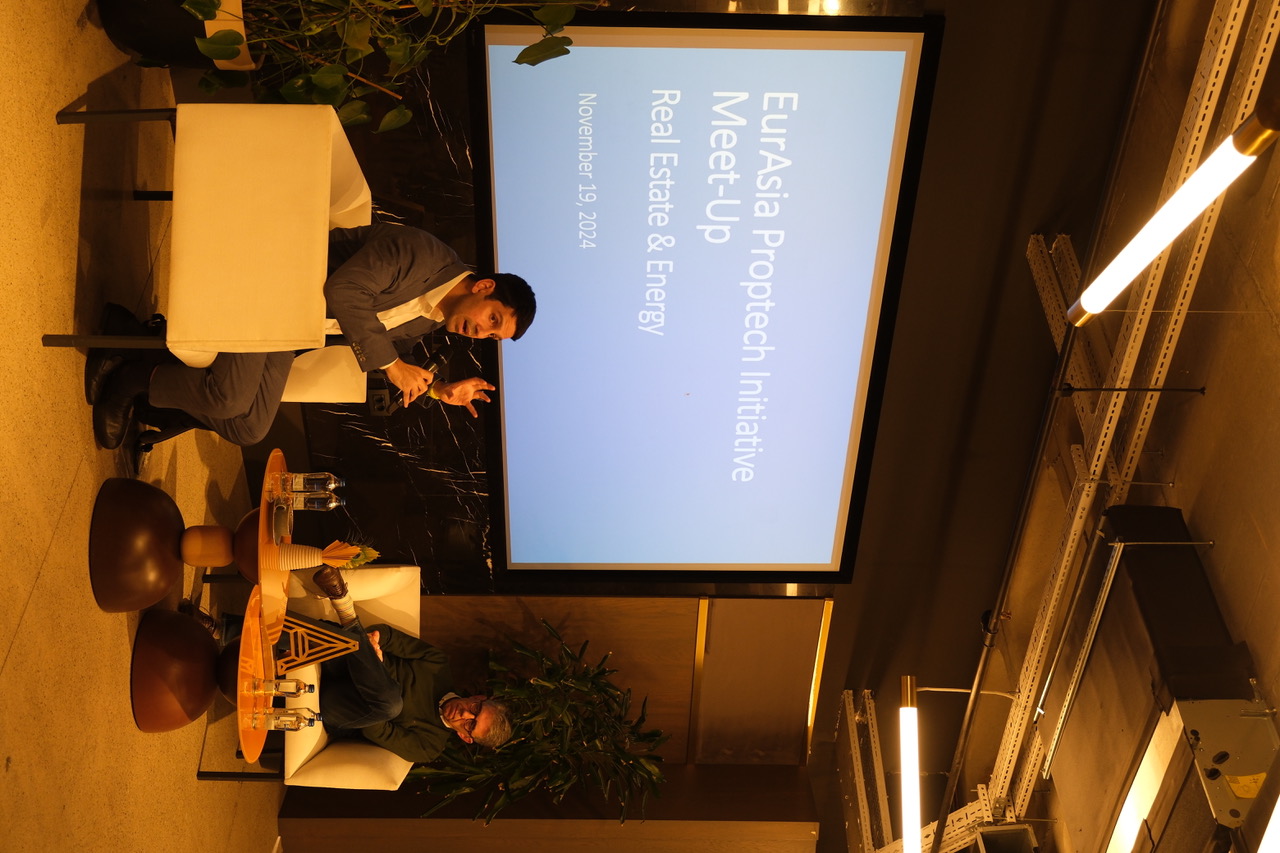
The event took place on 19 November at Assembly Ferko Signature The Hall, where I joined Proptech (Property Technology) expert Mete Varas for a conversation on the real estate–energy equation.
I remember realizing, on a day of unbearable traffic, that I’d be late. With no other option, I got out of my car about 500 meters behind the TSYD facilities in Levent and ran to Ferko. It was the only way—I was just 20 minutes from speaking time, so I jumped out and sprinted the distance in 10 minutes, arriving at the conference hall just in time. Morning run training really pays off—I can now comfortably run 10 – 15 kilometers at a good pace without breaking a sweat.
Despite the heavy traffic, the hall was packed, and the audience’s enthusiasm and thoughtful questions made it clear that there was serious interest in the topic. The opening remarks were given by Mete Varas himself, who had organized the event. He kicked off the panel by asking me where the relationship between real estate and energy is headed, then moderated the session while also sharing his own insights. Starting from that question, I’d like to present some of the key concepts from my talk here in a Q&A format:
Where is the real estate–energy relationship headed?
Three main models are coming to the forefront here. First, all buildings will eventually be powered by electricity. That means heating, cooling, running appliances—every function within a building—will rely solely on electricity. The increased energy demand from this full electrification of buildings will be met through renewable energy. This renewable energy will be sourced in one of two ways: either from centralized systems, such as large-scale solar and wind farms, or through distributed system renewable energy installations placed on, within, or around buildings (primarily rooftop solar systems or PVs) to generate the needed power locally.
What do you mean by “Centralized and Distributed Systems”?
In the future, the structure of urban planning will change. The chaotic urban landscapes we see today in Turkey—and even the much-admired urban models of Europe and the United States—will evolve. Cities of the future will be designed to be self-sufficient. In fact, this self-sufficiency will extend all the way down to the level of districts, towns, villages, and even individual buildings. That means buildings will produce their own energy, water, and even food.
Of course, no matter how much you try to retrofit existing cities with renewable energy—say, by covering buildings entirely with solar panels, including the roofs, façades, and even windows—you still won’t be able to meet all the energy needs of a city. That’s because these cities were not originally designed for this purpose. Therefore, these cities will need to be powered by large-scale renewable energy power plants based on centralized systems with high installed capacities.
What are the types of renewable energy?
Everything starts with the sun. Even wind is the result of temperature differences caused by solar heat. In other words, wind exists thanks to the sun’s thermal energy. That’s why solar energy should always be listed first. From sunlight, you can generate both electricity and heat—each through different types of radiation. For planning heat production (e.g., through CSP—Concentrated Solar Power—plants), the Direct Normal Irradiance (DNI) map is used. For planning electricity production (e.g., through PV—photovoltaic—systems), the Global Horizontal Irradiance (GHI) map is used. So, we can say that different types of solar radiation exist, each with its own mapping.
After solar, wind energy comes next. Thanks to technological advancements and its strong potential, wind has become a very important energy source. It also complements solar energy well, since it can continue generating power even when the sun isn’t shining.
Then we have other nature-based sources such as geothermal, bioenergy, wave, tidal, and current energy. Here, geothermal and bioenergy deserve special mention because they are “baseload” energy sources. In other words, they can generate energy 24 hours a day, 7 days a week, regardless of the conditions. This makes them especially valuable for backing up other sources like solar (which depends on sunlight) and wind (which depends on wind availability).
That said, the ability to draw energy on demand can also be achieved through energy storage systems. And there are many different types of batteries used for this purpose.
In your opinion, are hydroelectric power plants considered renewable energy?
Good question. I get asked this a lot. Whether hydroelectric power plants (HPPs) are considered renewable depends on how they are built. The key criterion is this: The source must be renewable by nature. That is, if the water source that powers the HPP continually renews itself and there’s no long-term depletion, then yes—it’s renewable energy. But if the water flow is decreasing over time, then it is not.
Another important factor is how the plant is constructed. If a dam is built in the narrowest part of a valley and has minimal impact on nature, then there’s no problem. However, if—as has happened in Turkey—multiple dams are built consecutively along the same river without regard for environmental balance, that disqualifies them from being classified as renewable.
Which energy storage systems are coming to the forefront?
This is a highly specialized question. There are many types of energy storage systems, each with its own advantages and disadvantages. Among battery technologies, lithium-based batteries are clearly at the forefront. But beyond lithium, a wide range of materials such as sodium and graphene are also being used. And it’s not just about the anode—many different materials are used for the cathode as well, including iron, phosphate, and others. These can be combined in various ways. Beyond batteries, there are also supercapacitors. Energy storage is a vast field, and each type and material have its own area of expertise.
Aside from mainstream lithium-based batteries, the most important thing is to choose the energy storage system that best suits your specific needs. There are many different criteria to consider: battery life span, charge-discharge cycles, weight, footprint, risk of explosion, and cost, among others.
Of course, the priority is to generate energy in the first place—and then store the surplus. In buildings, the number one method for energy generation is solar power.
How can renewable energy be implemented in buildings?
There are many different technologies available here as well. Ultimately, you can generate energy from any surface that receives sunlight. And by energy, I again want to emphasize that we’re talking about both electricity and heat. Let’s start with the roof. You can install a solar power system (PV) using traditional solar panels or, for more aesthetic appeal, solar tiles that look like regular roofing but have embedded solar cells. You can also install solar water heaters, which have become commonplace in Turkey’s southern provinces. Heat is energy too. Or you can use a hybrid panel that produces both electricity and heat. These systems, known technically as PVT (Photovoltaic Thermal), generate electricity from the solar cells on the front side and heat water via special alloy pipes on the back. This setup not only heats the water but also cools the panel, thereby increasing its electrical efficiency.
Beyond the roof, the entire building envelope can be covered in solar cells. Panels integrated into the building façade can generate electricity as well. There are even special solar paints that generate electricity. Although their efficiency is currently very low, this is expected to improve significantly in the future. In addition, there are systems that can produce heat on the exterior walls of a building. These systems heat the air using solar thermal energy and improve both energy efficiency and insulation. Companies like SolarWall specialize in such technologies.
You can also install solar (PV) or wind (RES) systems on the land surrounding the building. Of course, wind systems for this purpose must be smaller in capacity. You can install micro wind turbines on rooftops as well, provided they’re appropriate for the structural dynamics of the building. Another option is to install large-scale wind turbines near housing developments, villages, or small towns—especially since today’s turbines can have installed capacities of up to 8 MW each, and their sizes continue to increase. These turbines can supply energy to multiple households or buildings.
You can even use the ground beneath the building as an energy source. Heat pumps are a great example of how to provide baseload heating. Wherever there’s potential, heat pumps should be installed, since the Earth maintains a constant underground temperature that can be harnessed.
Having said all this, I want to re-emphasize that the number one and most critical method for energy generation in buildings is solar power. Finally, the ideal model is one where energy needs are minimized through energy efficiency principles and technologies—and the remaining energy demand is met entirely with 100% renewable sources.
What’s the brief history of solar energy?
It was the Germans who launched the solar energy sector. With a remarkably visionary approach, the German government identified new fields to support as part of a strategy to grow the economy and develop alternative industries like automotive. In the early 2000s, they introduced a very high feed-in tariff for electricity generated from solar power—around €50 cents/kWh. Thanks to this government incentive, solar energy projects became feasible for all investors and banks. Although Germany has relatively low solar irradiation levels, projects kicked off rapidly. As projects were launched, solar technologies began to be mass-produced and the supply chain expanded. As supply increased, prices dropped. With lower prices, projects became even more viable, prompting the government to gradually reduce the feed-in tariff. Prices fell so much that from the initial €50 cents/kWh, we’re now seeing tenders conclude at just €2–3 cents/kWh.
Other countries, witnessing the sudden boom in Germany’s solar sector, followed suit with similar models. Spain and other European countries came next. But when Chinese companies entered the scene, the game changed. Manufacturing shifted from Europe to China, and today, China dominates the solar and even energy storage sectors with over 90% market penetration.
It’s worth noting that solar energy isn’t just about panels. Inverters, mounting equipment, and what we call “balance of system” components all make up a solar energy system. There are also niche products beyond panels that are very important, like the solar shingles I mentioned earlier. Technically, this is called BIPV (Building Integrated Photovoltaics). BIPV systems play a key role in decarbonizing buildings.
How can buildings be decarbonized?
To decarbonize buildings, it’s essential that their energy needs are met through renewable sources. As I just noted, BIPV systems integrated into the structure are the first step. Of course, what we’re talking about here is operational decarbonization—the emissions associated with running a building. But the materials used in the construction phase are also part of the decarbonization equation.
Ideally, the materials used in building construction should have zero or even negative carbon emissions. Natural materials that can replace concrete and cement should be used. Wooden houses are a good example of this. Building homes from trees that absorb carbon is essentially like building homes from carbon itself. Because instead of burning wood and releasing carbon, you’re turning it into a long-lasting structure—effectively delaying emissions and possibly even achieving net negative carbon.
Another example would be structures made from clay, adobe, or stone. Using natural elements in construction is important. In rural Turkey today, homes are still being built with clay and adobe. There are even ancient buildings made with this know-how that have existed for thousands of years. Around the world, there are many fortresses and monumental structures—take the Great Wall of China, for instance, which is visible even from space.
These days we hear talk of low-carbon concrete and cement. I try to be respectful toward everyone, but I think we shouldn’t look at this issue purely through a carbon lens. It’s also crucial to consider how long it takes for a material to break down in nature. Unfortunately, we’ve buried millions of tons of concrete and cement into the ground. I don’t need to explain the damage this has done to nature and natural cycles. Anyone with a decent level of education likely understands this. Sadly, we’ve created ugly, jumbled cities made of concrete and cement. We must completely rethink our approach to urban planning.
How can urban planning adapt to this transformation?
Urban planning should be carried out in meticulous detail and with a long-term vision that spans millennia. The priority should be to design self-sufficient cities that are in harmony with nature. In other words, today’s concept of urbanism needs to be overhauled from top to bottom. We need to design cities made entirely of natural materials that produce their own energy, water, and food.
As for water, in addition to energy, we need to consider the rainfall capacity of the location (rainwater harvesting), underground water availability (advanced well systems), and whether the city is by the sea (so desalination systems can be used). If none of these are viable, AWG (Atmospheric Water Generator) systems can be employed. These can be implemented at the scale of a city or an individual building.
There’s also a wide range of technologies available for food production: hydroponics, aquaponics, vertical farming, waterless farming, and advanced greenhouse systems. In my view, all of these can easily be implemented at the scale of a city or a building (home, office, etc.).
Of course, the foundation of all these systems is energy. Because without energy, none of them can function. And this energy must come solely from renewable sources. In fact, I once wrote an article for Turkish Policy Quarterly back in 2013 titled “Why Turkey Should Aim for 100% Renewable Energy.” (See: http://turkishpolicy.com/article/632/why-turkey-should-aim-for-100-renewable-energy-summer-2013)
Isn’t relying solely on renewable energy problematic? Don’t nuclear power plants offer important advantages for supplying energy to cities?
We can meet the entire world’s energy needs by installing renewable energy plants on just a tiny fraction of the earth’s surface. In other words, the global renewable energy potential is millions of times greater than what we need. So, there’s no need to even consider any other type of energy.
Let me be clear from the start: I’m against nuclear power. I’ve explained why in many forums before, but I’ll summarize my reasons again here:
1) Nuclear Waste: In countries with nuclear power plants, highly radioactive waste is buried deep underground in heavily shielded containment systems. To this day, there is no clear answer to the question: “What will be done with the nuclear waste from Mersin Akkuyu?”
2) Waste Heat: Nuclear power plants generate a significant amount of waste heat. Plants located on coastlines discharge this heat into the sea for cooling, and the operation continues as a constant heat exchange. As a result, marine ecosystems suffer serious damage. Sea temperatures rise, making it harder for marine life to survive. I know of nuclear power plants in the U.S. that have been shut down specifically because of this. There is still no clear answer to the question: “What measures are being considered to eliminate the long-term damage caused by waste heat?”
3) National Security: We’re handing over operation of a nuclear power plant in Mersin—one of our most beautiful Mediterranean provinces—to another country. And it’s no secret that this powerful neighbor may, at times, have conflicting interests with us. Couldn’t placing a nuclear facility under their control put us at a disadvantage economically and strategically? What’s to stop another country from launching a missile at this plant and blowing it up? If something like that were to happen, it would be a regional catastrophe for us.
4) Risk of Accidents: My mother’s side is from the Black Sea region. People there suffered greatly after the Chernobyl disaster. Cancer rates exploded. We all lived through that painful experience. Even Japan, known for its perfectionist culture, failed to factor in the risk of a tsunami at Fukushima. A nuclear plant accident is the equivalent of thousands of plane crashes—it has a massive, devastating impact. Survival odds are low, and even if people do survive, the long-term damage to human health can be severe. Lifespans in the affected region drop dramatically. Even if the risk of an accident at the new Mersin nuclear plant is considered extremely low, has anyone truly calculated the potential consequences if something does go wrong?
That said, I must emphasize that nuclear is a valuable energy source. The problem isn’t the technology—it’s the people using it. Because of flaws in human character, nuclear power remains extremely dangerous all over the world. For this reason, nuclear research should be moved to the Moon, or to Mars, or other planets. We should be using nuclear energy for space travel and sustaining life in space—not here on Earth. We simply don’t need nuclear plants on this planet. Renewable energy sources on Earth already exceed our energy needs many times over.
A significant portion of energy demand comes from mobility. What’s your view of the future of transportation?
Yes, mobility is a critical issue. In the future, cities will be designed so you can travel from one end to the other in no more than 15 minutes. We can break this down into two aspects: the energy source of vehicles, and their function. In terms of energy sources, we’ll see two main types of vehicles: electric and hydrogen-powered. Technically, hydrogen vehicles are also electric—they use a fuel cell to convert hydrogen into electricity. So just like buildings, vehicles that move us from place to place will ultimately only require electricity. That electricity will be stored either in batteries or in hydrogen tanks. Battery-electric vehicles will be used for relatively small forms of transport like cars, vans, and buses. Hydrogen will be used for large vehicles like trucks, ships, and airplanes. Some of these may also include backup batteries, if needed, but a hydrogen tank alone will usually suffice for large-scale transport.
All vehicles will also be outfitted with solar panels or solar paint to generate energy. So during daylight hours, the surfaces of cars, vans, buses, trucks, boats, ships, airplanes, and so on will generate electricity from the sun. This will improve efficiency and reduce dependence on storage systems.
In terms of functionality, we’ll also see hybridization among land, sea, and air vehicles. In other words, flying cars or cars that can move over water are about to go mainstream. Naturally, these vehicles will be designed to run on solar-electric or hydrogen systems.
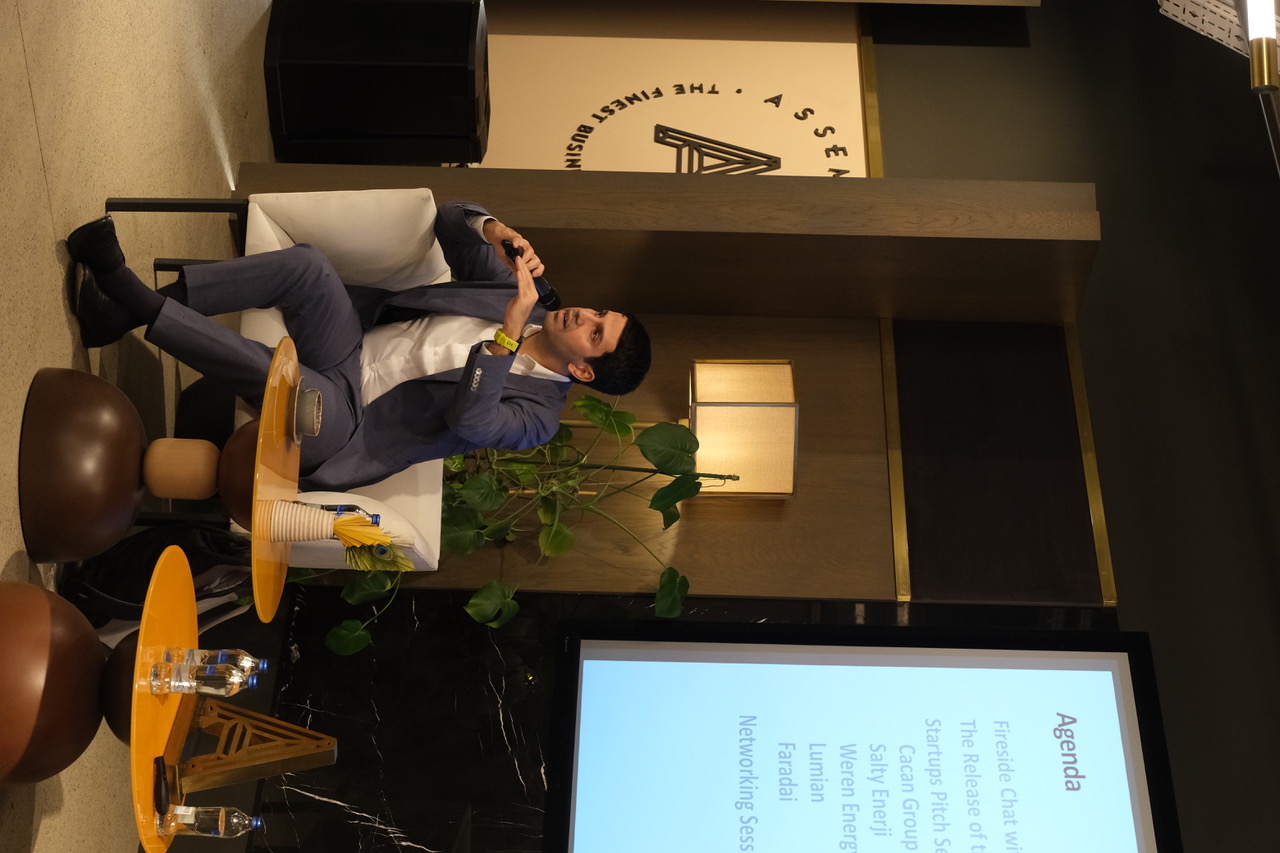
After my talk, presentations were given by Cacan Group, Salty Energy, and Weren Energy. Since I had a supply chain class, I left the room right after my speech and found a spot in the building to attend the class online.
I hope this lengthy post has been helpful to you, my valued readers. I’ll continue sharing my knowledge and experience. See you in the next post.
Tag: ecology