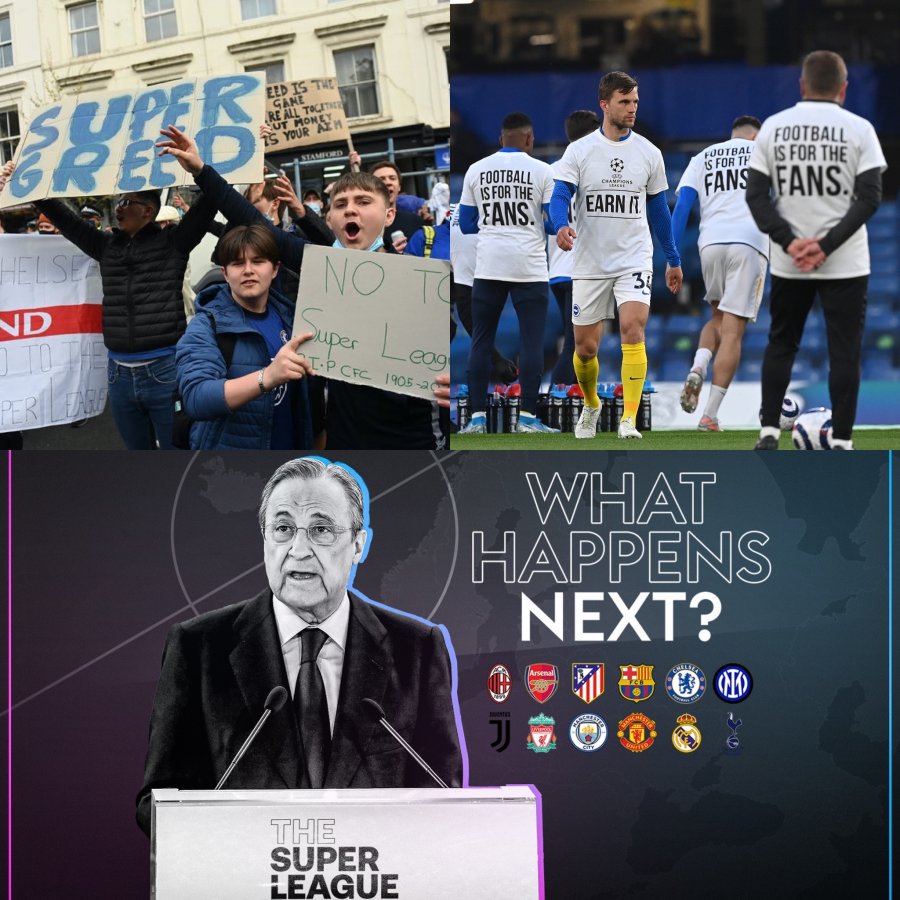
When the European Super League was first announced on 18 April 2021, I determined the topic of my blog post that week. In fact, as soon as I heard this announcement, I immediately wrote the title “Soccer’s Berlin Wall: The European Super League” and listed the topics that came to mind.

By the way, let me explain why I used the phrase “Soccer’s Berlin Wall.” The main idea was that the establishment of such a super league would create a serious division in soccer, dividing soccer teams into Super League teams and others. I also outlined other potential factors:
1) Teams outside the Super League would be perceived as lower leagues and looked down upon.
2) In this system established by elitists, teams in the Super League will constantly shell out money to acquire the best players, while other teams remaining in the UEFA league will never have the opportunity to compete with them and test their level.
3) The gap will constantly widen, and the richer clubs will become even richer.
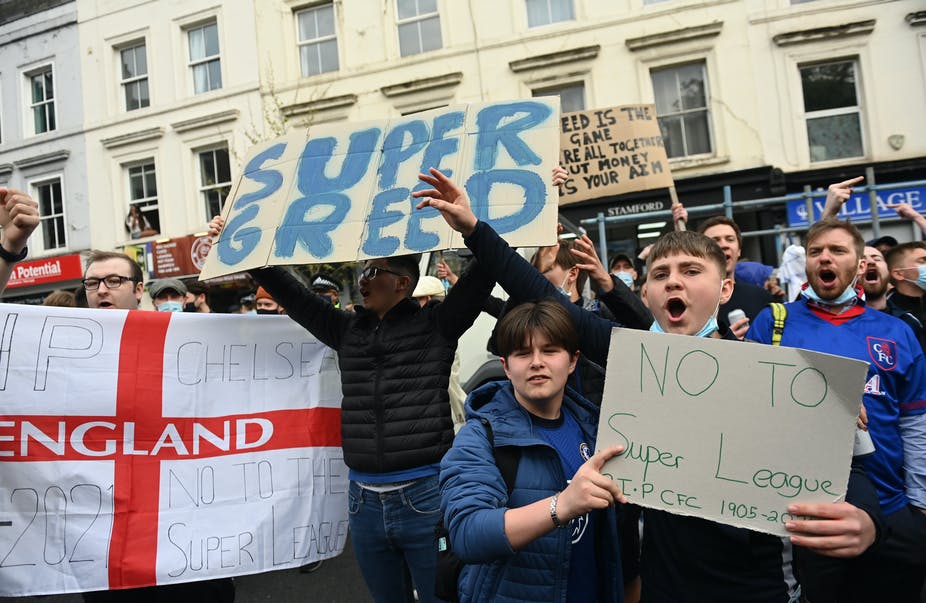
4) The created environment will not please true soccer spectators and fans.
In the conclusion, I was going to say, “Just as the Berlin Wall fell in due time, this division in Europe, the cradle of soccer, the sport that draws the masses most, will one day end, and this wall will also fall.” However, this initiative fell apart two days before it could even be implemented.
I postponed this article because two days after the European Super League was established, English teams announced their withdrawal, and I needed to write an article for the newly launched Ekonomi Dünyası magazine on “energy,” a topic more important to me than soccer. (You can find the relevant article at https://www.serhansuzer.com/tr/dunyadaki-enerji-devriminin-turkiyeye-yansimalari ). That is, until today.
How the project collapsed in 48 hours
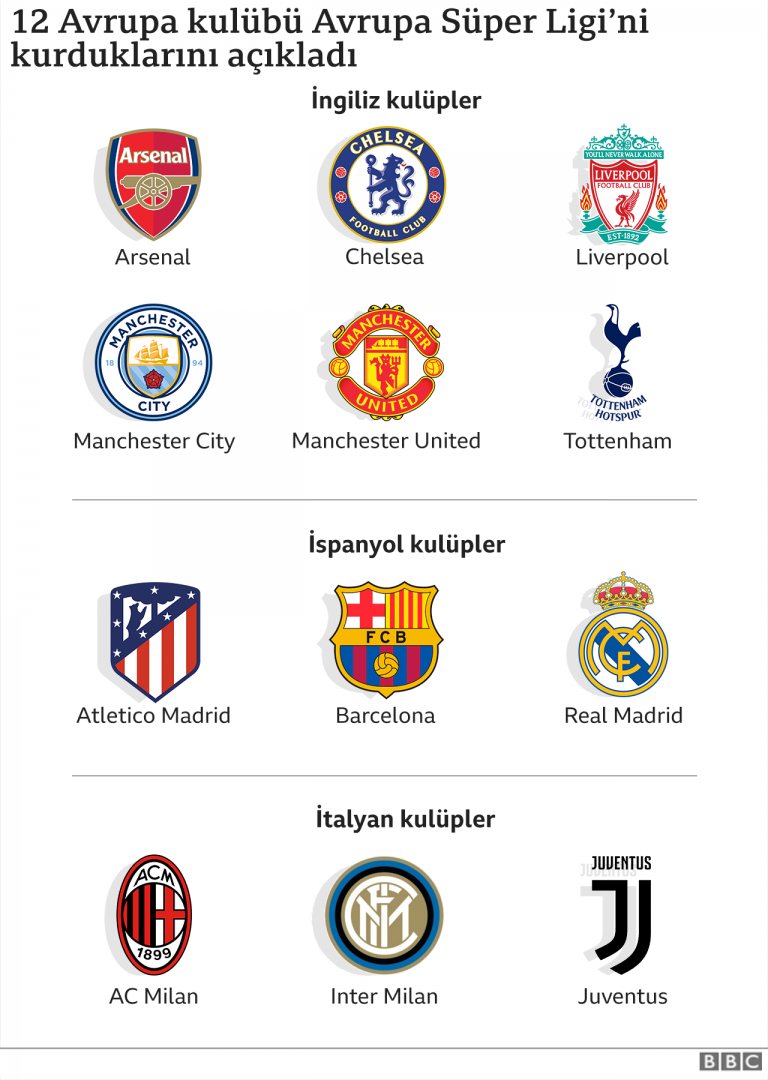
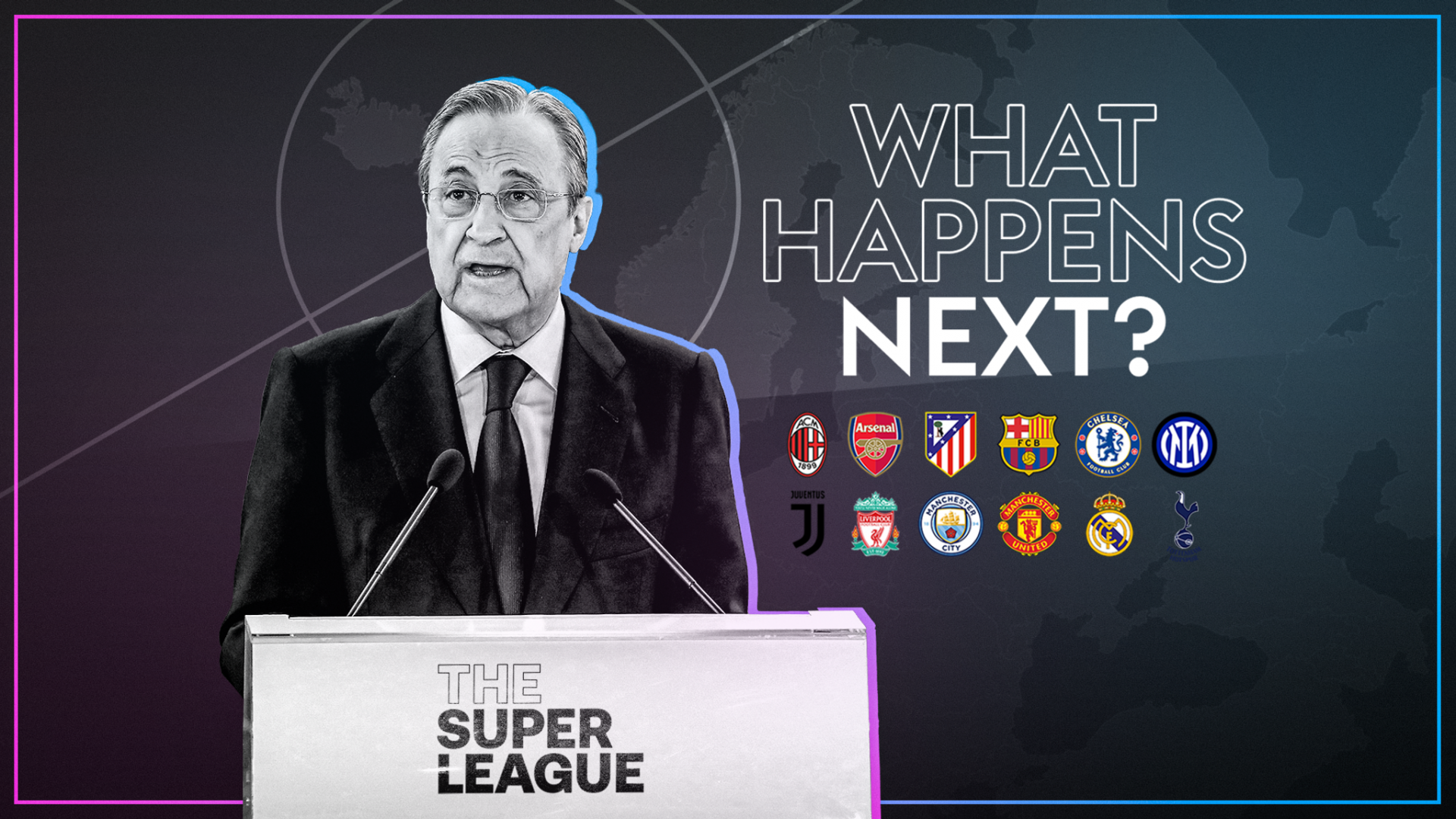
For those unfamiliar with the European Super League, let me summarize: 12 major clubs in Europe; Arsenal, Chelsea, Liverpool, Manchester City, Manchester United, and Tottenham from the English Premier League; Atletico Madrid, Barcelona, and Real Madrid from Spain’s La Liga; and AC Milan, Inter Milan, and Juventus from Italy’s Seria A announced the establishment of a 20-team European Super League on the night of 18 April.
UEFA, FIFA, and the national soccer associations reacted strongly to the decision. UEFA President Aleksander Ceferin stated, “Players playing in the European Super League will be banned from playing in the World Cup and European Soccer Championship.” For more details, you can read the article “European Super League: Why did 12 clubs establish a new league, and what are the opinions of those opposing it?” – BBC News Turkish.
The announced 12-team European Super League was also set to include Arsenal, Manchester United, Chelsea, Liverpool, Manchester City, and Tottenham from England. Following sanctions from UEFA and FIFA (you can read UEFA’s statement at Statement by UEFA, the English Football Association, the Premier League, the Royal Spanish Football Federation (RFEF), LaLiga, the Italian Football Federation (FIGC) and Lega Serie A | Inside UEFA | UEFA.com reactions from national federations, statements from former players and managers—in short, soccer professionals—and, most importantly, fans, the project collapsed within 48 hours.
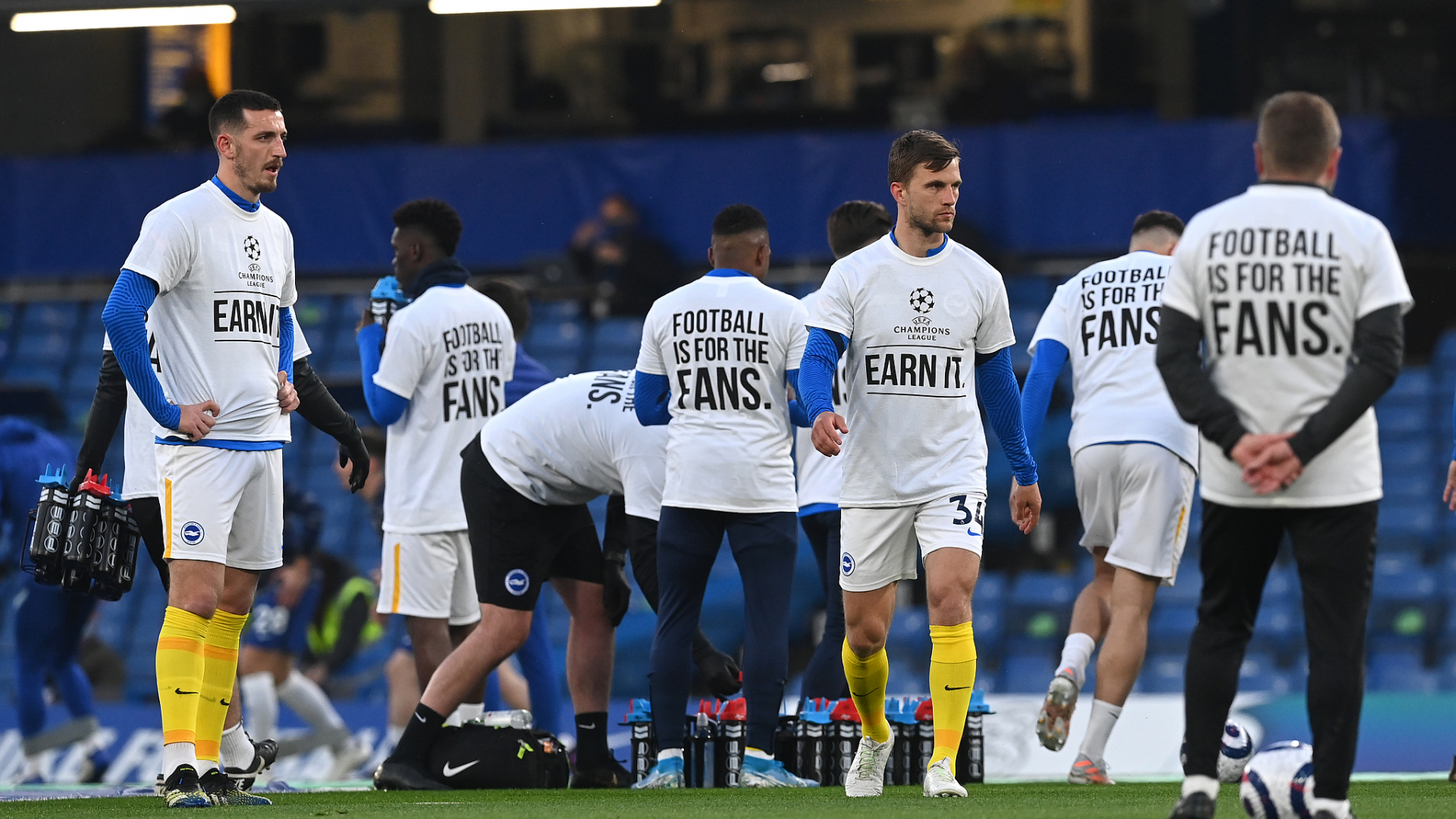
Resignations from English club executives also began to pour in one by one. Manchester United Başkanı Ed Woodward and Liverpool Chairman Tom Werner tendered their resignations. Following these two, Manchester City Chief Executive Ferran Soriano and Arsenal Chief Executive Vinai Venkatesham resigned from their roles in the Premier League’s strategic advisory group, while Chelsea Chairman Bruce Buck resigned from his roles in the audit and services unit.
Apologies from clubs and banks
Liverpool; “To honor our fans, I apologize to Jurgen Kloop, Billy, the players, and everyone who worked for the team’s success. They bear no responsibility for the disruption. They were the ones who were most devastated and wronged,” Arsenal said. “As a result of listening to you and the wider soccer community, we are withdrawing from the European Super League. We made a mistake, and we apologize for that.” The financial support behind this initiative has also been removed. Following the collapse of the European Super League project, US bank JPMorgan broke its silence on the project.
The bank announced its regrets in supporting the teams participating in the European Super League project. The statement acknowledged a misjudgment of how this project would be perceived by the soccer public and its impact, emphasizing that lessons would be learned from this process. According to Bloomberg, JPMorgan would provide approximately €4 billion in financial support for the project. You can read the details at JP Morgan to finance breakaway European Super League | The National (thenationalnews.com) Of course, such a source of funding provided significant incentive for these major clubs, which were heavily indebted, to establish the European Super League.
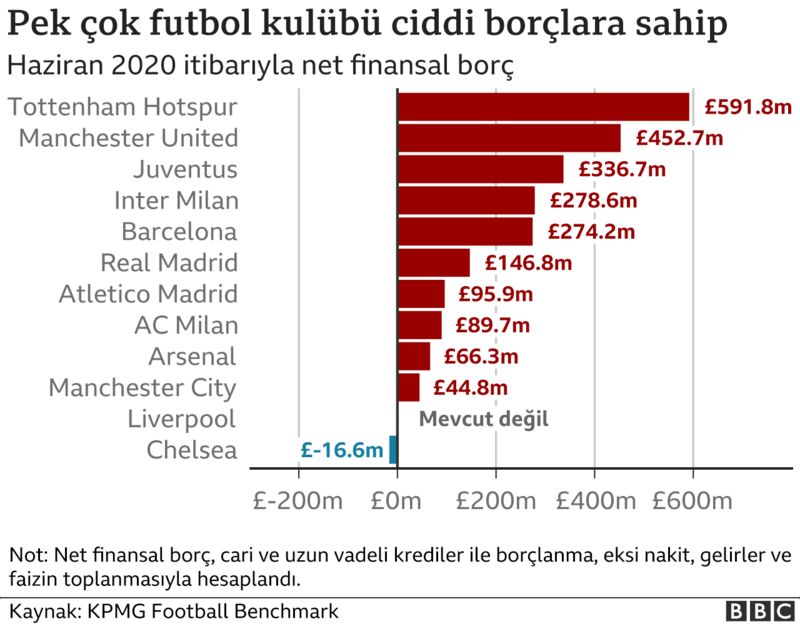
According to information received by news sources, the American investment bank JPMorgan Chase would invest €3.25 billion in the league’s launch and provide a welcome bonus of approximately €200-300 million to each participating club.
The similarity to the American model was alarming
It’s also likely no coincidence that the planned European Super League resembles the American model, where teams compete annually without having to face qualification or relegation, thus offering certainty to investors and sponsors. It’s also no coincidence that American-owned English clubs are significant supporters. The cancellation of the European Super League also prevented the complete commercialization of soccer.
From the outset, German and French clubs announced that they would not participate in this initiative. Our own TFF and the Turkish Clubs Union Foundation announced their lack of support for the league. As a Galatasaray fan, Galatasaray President Cengiz’s statement during this process personally troubled me: “If such an offer is made, we will act in the best interests of our community.”
In my opinion, making such a hasty statement without seeing that a project that was over before it even began would be unviable is a lack of vision.
Radical Changes
Returning to our topic, we witnessed significant changes because of all this chaos:
1) Champions League format changed: UEFA announced that the status of the Champions League will change starting with the 2024-25 season: The tournament will be played in a single group with 36 teams. You can read the details at the link: Şampiyonlar Ligi’nde format değişti: 36 takımla oynanacak | Mackolik.com
2) Sanctions imposed on the founders: The Union of European Soccer Associations (UEFA) announced that it has imposed sanctions on nine of the 12 founding teams of the European Super League. According to the decision, these nine clubs will be subject to a 5% seizure of their revenue from UEFA competitions for a season. Aside from the relatively mild sanctions imposed on these nine clubs, which quickly rectified their mistakes, it remains to be seen what sanctions will be imposed on the leading teams, Real Madrid, Barcelona, and Juventus. You can read the details at the link: UEFA, Avrupa Süper Ligi’nin 9 kurucu takımına yaptırım uyguladı – BBC News Türkçe.
3) UEFA launches financing offensive: In response to the billion-dollar financing provided by JPMorgan, which sparked the idea of a European Super League, UEFA is negotiating with investment funds to raise €6 billion to support the Champions League. You can read the details at Avrupa Süper Ligi’ni Unutturmak İsteyen UEFA, 6 Milyar Euro Finansman Paketi İçin Türk Yatırımcı ile Görüşüyor (webtekno.com) .
What needs to happen next
1) UEFA and FIFA, which have been plagued by scandals in recent years, need to get their act together. These organizations need to truly reinstate the principles of transparency, impartiality, and honesty as their core principles.
2) The teams that are among the founding members of the European Super League need to abandon their elitist approach and dedicate themselves to the essence of soccer, the joy of watching, and the development of the sport.
3) All European teams outside the European Super League need to get their act together, work to elevate their level, and manage their clubs to compete with the highest-level teams.
Thankfully, the elitist project has been thwarted.
Elitism (or elitism) refers to the idea that an elite or a minority should rule, or that the job of governing should be done by an elite or a minority (see: https://tr.wikipedia.org/wiki/Elitizm).
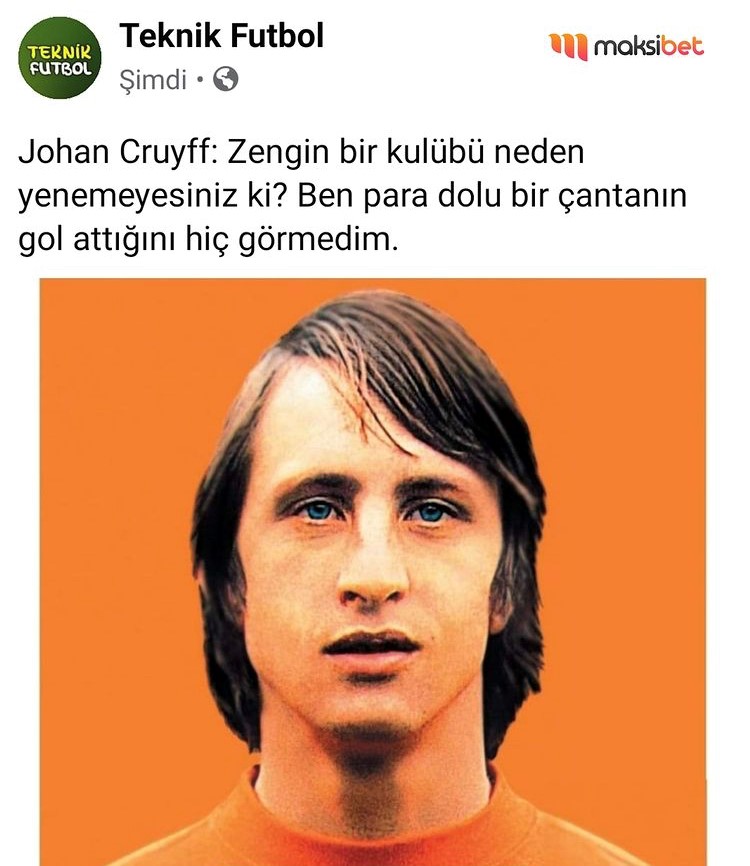
The idea of soccer being dominated by a limited number of top-tier soccer clubs run by a select group has been thwarted. These developments can be seen as an opportunity to shape soccer, the world’s most popular sport that appeals to all segments of society, in the right direction. The tasks I’ve listed above must be detailed and implemented with diligent effort. From now on, everyone will need to get their act together.
Tag: economy