In 2009, 2010, and 2011, I served as CEO of KFC and Pizza Hut Turkey before leaving to start my own ventures in solar energy. It was truly a valuable experience for me. During that period, we introduced many innovations. I will write about my food retail experiences at KFC and Pizza Hut Turkey in the future.
The topic of this article, however, is the competitive environment we were in with our biggest rival in Turkey at the time, TAB Food, which held the Turkish franchise rights for Burger King and its “bandmates” (Popeyes and Sbarro). I call them bandmates because TAB Food was the franchisee for all these brands in Turkey, and Burger King was the flagship. Wherever Burger King went, Popeyes and Sbarro were sure to follow.
Heavy pressure on shopping malls
From our perspective, TAB Food competed in a very unsavory way. For example, they constantly pressured shopping mall (mall) investors and operators not to allow us into their malls.
I say “not allow us” because unfortunately, due to the position I started from, we had not entered many malls since their openings. Later, during my tenure, we managed to enter many malls. Also, the investors and operators of newly opened malls started inviting us and made it easy for us to be part of their investments.
However, TAB Food, especially using the Burger King brand, always tried to commandeer the best spots in malls and told mall owners, “Don’t let KFC and Pizza Hut in. We have Popeyes and Sbarro; that’s enough for you, so don’t create unfair competition.”
How do I know this? Mall investors, operators, and retail consultancy firms contacted us directly and openly shared these issues.
Our revenues were much higher
All these mall officials particularly wanted us because they knew KFC and Pizza Hut generated much higher revenues than Popeyes and Sbarro. To illustrate how stark the difference between the brands was, here are the exact numbers: KFC generated at least three times the revenue of a Popeyes at the same location (mall or street), and in some locations, this difference rose up to ten times. I’m relaying the numbers exactly as they were — no exaggeration. This naturally irritated TAB Food executives, and they tried every means to sideline us or push us behind in competition. Where did I get these numbers? From two sources: First, operations managers of all food retail companies knew each other and shared these figures mutually. Second, we either got the numbers from mall operators or confirmed them if we had data on hand. So, we had full control over who was making what revenue where, and we discussed details and developed strategies in our meetings.
Aggressive growth plan
When I started in 2009 at Turkent, the franchise holder for KFC and Pizza Hut in Turkey, the company had 81 restaurants. After restructuring and setting up the infrastructure, in 2010 we hit the growth button. Without using any loans, relying only on sponsorships and our own cash flow, we opened 25 restaurants within six months. We accelerated so much that we reduced our new restaurant opening time to as little as 13 days.
As part of this aggressive growth plan, we contacted all investors, operators, and retail consultants of malls across Turkey to lower our rents. There were hundreds of potential locations, including along main avenues. When the location accepted the rent, we declared we could pay, we invested there. Everyone said we bargained very hard, but our target was to keep rent expenses below 8% of our revenue. We achieved this goal in 2011, my last year.
Despite threats and blockades…
That’s why we entered many malls later. Though they might not have had the best spots anymore, even in disadvantaged ‘food court’ locations, KFC still generated at least three times the revenue of Popeyes, sometimes up to 10 times. Next to Pizza Hut, Sbarro was losing badly. There was a huge, incomparable difference. Of course, TAB Food didn’t sit still; they threatened malls where we were trying to enter, saying, “Don’t let them in, or else…”
Despite all the blockades, we kept entering malls steadily and growing. In such a fierce competitive environment, an incident exploded, and divine justice was served. News broke out in all media channels that Burger King had been serving spoiled meat to its customers.
The spoiled meat scandal
I am quoting a news article on the issue exactly as it appeared: (See: https://forum.donanimhaber.com/burger-king-turk-halkina-bakterili-ve-viruslu-et-yedirtti–43160893)
Burger King’s warehouse operator Fasdat Food and its meat supplier TT Food clashed over meat that was supposed to be destroyed due to bacterial contamination.
Following claims that 164,000 hamburger patties contained Salmonella and Listeria bacteria, the Ministry of Agriculture launched an investigation into where those patties ended up. While the ministry started inquiries with the companies involved, the whereabouts of the 164,000 hamburger patties could not be clarified. The incident began when TT Food’s contract was canceled in April by Fasdat Food—which had been acting as a warehouse for Burger King—due to viruses found in TT Food’s products. TT Food insisted their products were clean and free of any virus and requested the return of the hamburger meat they had sent. However, Burger King claimed it did not use the meat, that it was destroyed, and even fed to dogs, refusing to return it to the supplier. TT Food then filed a criminal complaint with the Ministry of Agriculture.
Is it possible to feed that many dogs?
Ministry officials confirmed the allegations raised by Taraf Newspaper yesterday but stated that they could not find the company at the Zeybek Solid Waste Center—the address given by Burger King as the disposal site for the meat. They noted that Zeybek Solid Waste Company had moved to another address and did not have authorization to destroy such products. The ministry announced it has launched an investigation and is taking seriously the report from the Inspection Board stating, “the meat was not destroyed; it is also not possible to have enough dogs to consume such a large amount of hamburger meat.”
Ministry issued a letter stating ‘no criminal offense involved’
In response to the ‘Virus-Contaminated Meat Investigation at Burger King’ news, TAB Food—the operator of Burger King in Turkey—issued a statement denying the allegations as baseless. The statement said, “The Ministry of Agriculture and the Inspection Board even issued a letter to our supplier Fasdat Food declaring no criminal offense was found.”
We destroyed 12 tons
Hasan Büyükmertoğlu, owner of the Zeybek Solid Waste Management company in Balıkesir—which allegedly received the spoiled meat from Fasdat Food—said they destroyed 12 tons of meat by feeding it to dogs at a dog farm in Bursa. Büyükmertoğlu said, “Since 3 May 2010, we have destroyed 12 tons of spoiled meat. I also showed these documents to the Agriculture Directorate officials.”
Was the news covered up?
Of course, over the 14 years since this broke, I could hardly find any sources on the topic in almost all newspapers. I suspect the news was deleted from digital platforms. For proof, you can check what has been written on Ekşi Sözlük (a popular Turkish discussion forum).
https://eksisozluk.com/burger-king–33177?v=1.0.12&p=103
Many details about the incident were discussed at the time. TAB Gıda, of course, denied everything, but because the facts were so clearly laid out, the public perception quickly became: “Burger King fed us spoiled meat.” I believed they had served spoiled meat, too, because I knew some of their suppliers were not trustworthy in the slightest. And given that the company had an aggressive corporate culture, I thought it was possible that during a peak consumption period, spoiled meat might have been slipped into the mix and gone unnoticed. It wasn’t just everyone at our company, and even people in the industry, thought the same (I spoke to a lot of people about it, and everyone agreed).
Sales plunged overnight
Rather than dwelling on “what a disgrace they pulled off,” I was more focused on the result. The public was deeply influenced by the news coverage, and they wasted no time in punishing the brand. Burger King’s sales plummeted.
After speaking with our company’s executives, I decided to double our marketing budget for a certain period. We started running extra ads nonstop. It was the period when Burger King and its allies were getting hit the hardest. Our revenues saw a sharp increase. Don’t say Burger King’s and KFC’s products are different—at that time, people simply stopped eating hamburgers from Burger King and started buying our chicken burgers, like the Zinger Burger. The extra marketing we did translated into a significant boost in revenue. It was an excellent time for us.
In a developed country like the United States or somewhere in Europe, if something like this had happened, the public authorities wouldn’t have cared “how many restaurants they have” or “how many people they employ.” They would have shut the company down and imposed very heavy penalties on the executives involved. But, of course, this is Turkey—and unfortunately, here the powerful usually get their way.
A six-month ‘playing dead’ strategy
So how did TAB Gıda manage this crisis? They handled the process in a way that perfectly fit the Turkish reality and pulled the company out of the crisis. Put simply, they made people forget. They played to the public’s short memory. They stopped advertising and went completely silent. For six months, there wasn’t a peep from them—while we made our voices as loud as possible. After those six months, they slowly began speaking up again, starting with the launch of their most popular products and gradually ramping up their presence.
Believe me, most people either forgot or chose to forget what had happened six months earlier, and Burger King slowly recovered its sales.
Know what you’re eating!
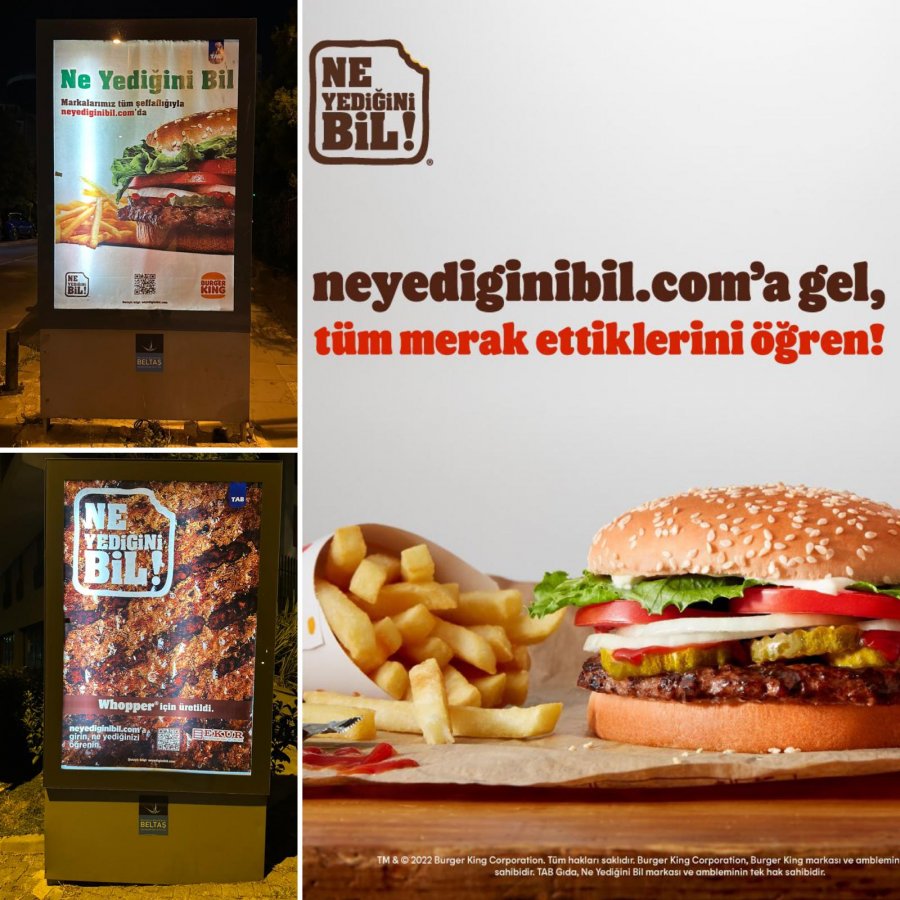
These days, whenever I see Burger King’s “Know What You’re Eating!” campaign plastered on billboards in all of Istanbul’s key districts, this whole incident comes back to mind. If you’d like to check out the campaign, you can visit https://www.neyediginibil.com/.
They’re lucky to be operating in a country like Turkey. They got off lightly from an incident that could have been devastating for them. I’ve heard that in this new period they’ve opened their own meat processing plant and invested in their supply chain. That’s a smart move—both for them and for consumers. After all, it’s far safer to work with facilities you supervise rather than relying on outside suppliers.
And I agree with the main message of their campaign: Know what you’re eating!
Tags: social responsibility, life, business world, health, memoir