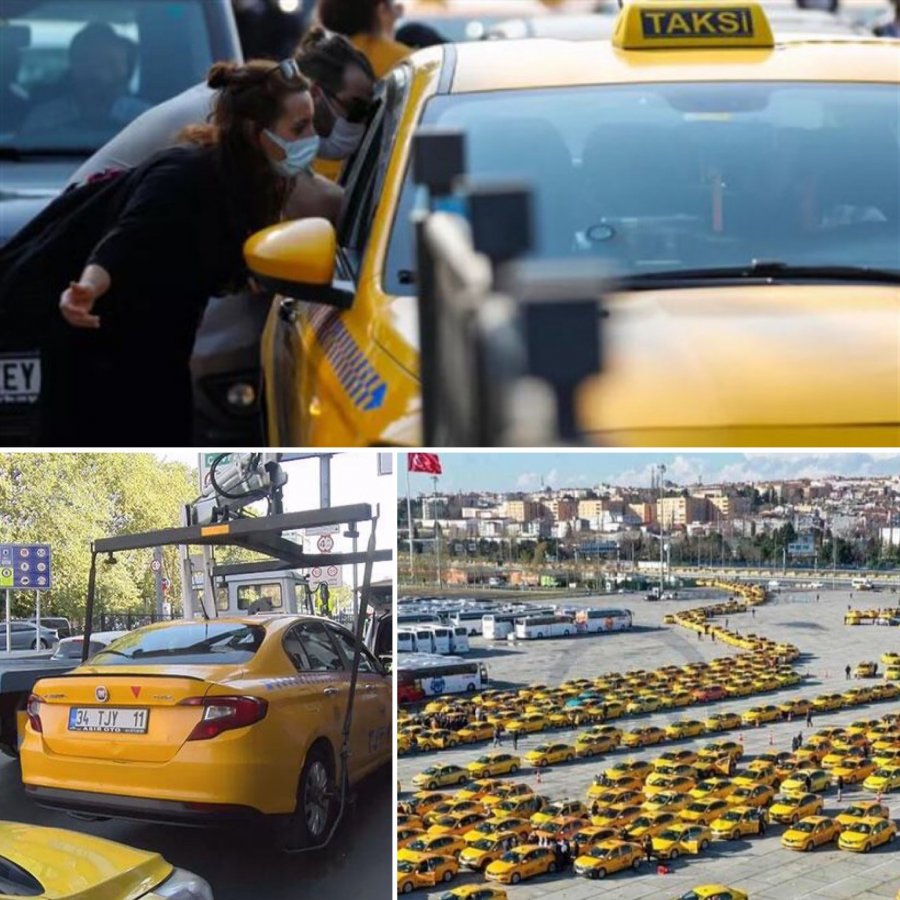
Years ago, a Canadian friend came to Istanbul for a visit. He called me after leaving the airport, talking from a taxi. I told him to come to Ortaköy, where we’d grab something to eat at a restaurant and discuss the rest of his trip. Meanwhile, considering the taxi risks in Istanbul, I asked my friend, “Can you give the taxi driver the phone?” The conversation between me and the taxi driver went something like this:
– Sir, you’re coming to Ortaköy, and I’ll meet my friend there. What’s the traffic like?
– There’s a lot of traffic.
– How long will it take you to get there?
– It’ll take about 1-1.5 hours.
– Where are you now?
– Eminönü
– (I jumped at this) How will you get from Eminönü to Ortaköy in 1-1.5 hours? The distance we’re talking about isn’t that far.
– There’s a lot of traffic, so I’ll be joining the highway soon.
– (I winced at the word highway) What does “highway” have to do with it, sir? Come along the coast road.
—I can’t, there’s too much traffic here.
—(Luckily, I passed Eminönü about 45 minutes ago.) I passed that exact route 45 minutes ago. There’s no traffic like you’re talking about. Don’t even take the highway; take the coast.
—I have no other choice.
—Why are you driving tourists around just to get a big charge? Isn’t that rude?
—Am I supposed to ask you? I can’t take any other route. I can drop your guest off.
—Get off right now. Can you give my friend the phone?
The big difference between the two taxi drivers
I asked my friend who took the phone to get out of the taxi immediately, get into another taxi, and call me back after getting in. He first asked, “Why?” I said, “I’ll tell you while we’re eating,” and he said, “Oh, come on,” got out of the taxi and got into another taxi. He handed the phone back to the taxi driver. The next conversation went like this:
—Sir, you’re going to Ortaköy now. But take the coastal road, don’t take any other roads.
—Where else would I go? Of course, take the coastal road, to Ortaköy.
—Oh, my goodness, we ran into a decent person. Thanks, buddy, I’m guessing you’ll be in Ortaköy in half an hour, right?
—Not even half an hour. We’ll be there in 20 minutes, the road is clear.
—Okay, thanks a lot. Have a good day.
—Have a good day.
See the difference? Two taxi drivers I spoke to five minutes apart… One is a scammer, the other is honest. The only problem is the tourists who come to visit our beautiful country and get a bad impression, who are wasting their time and money. Of course, it’s not just tourists who suffer from this bad attitude; Istanbul locals like me also experience this mistreatment.
The problems aren’t one-dimensional
Also, the mistreatment isn’t limited to driving you around and charging you too much; this trick doesn’t work very well with the locals. We all know the roads and know the situation. People refusing to accept taxis just because they’re short, trying to drop you off before your destination, taxis that smell of cigarette smoke or are unhygienic, taxi drivers talking nonsense, and so on. The list goes on.
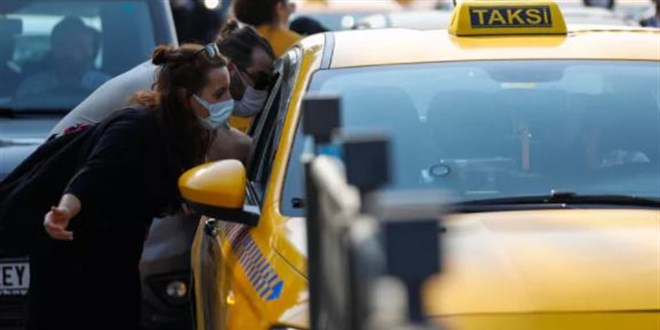
To all of this, we can also add the increasing problem of not being able to find a taxi, which we’ve been experiencing frequently lately. Finding a taxi, especially during rush hour, is now truly difficult.
I recently received the answer to the question of why these problems are happening from another taxi driver with whom I had an in-depth conversation. I attended a boat event and got off the boat in Kabataş around 10 p.m. After Beşiktaş’s 3-0 win over Kayseri, I was lucky enough to find an empty taxi within about 20 minutes amidst the crowd of Beşiktaş fans, who were clearly in high spirits.
A detailed assessment from a competent taxi driver
This taxi driver was a good person, and when we began discussing these problems with taxi drivers, he explained them in detail.
First, he said that the taxi problem in Istanbul is largely due to the system. In other words, there’s a virtual market for taxi license plates. İSTOÇ and the companies registered there are particularly central to this. Since no new taxi plates are being issued, the value of existing ones is constantly increasing due to excess demand. You might be wondering, “What’s the connection between the taxi plate market and the problems with taxi drivers?” Let me explain.
The main problem here is that taxi plate holders rent their taxis to drivers, charging 300-400 TL per shift (I’m talking about 8-hour shifts. Multiplying this amount by 3 gives you their daily earnings). One taxi plate currently sells for 2,500,000 TL, and there are approximately 18,000 taxis in Istanbul. Taxi plates haven’t been issued since the Özal era (of course, this information needs to be verified, but I estimate the figures to be more or less accurate).
Can you see the significant cash-generating potential of taxi plate investment? For more details, you can read Yatırım Kurusu’s article on this subject:https://yatirimkurusu.com/yatirim/taksi-plakasi-almak/
The main source of the problems is the current license plate system.
Of course, the reality of such a lucrative market isn’t so bright. Someone who invests in a taxi license plate immediately signs with drivers who will work three shifts and receives cash every day at shift change. Furthermore, this cash exchange doesn’t entitle them to pay taxes; there’s no such thing. They simply pay a small annual fee, and the (formerly) tax issue is glossed over.
Now, let’s get to the root of the problems with taxi drivers. We’re talking about a large group of drivers who work tirelessly every day to earn this money during their shifts, even going so far as to pull 40 somersaults if necessary, and even, if their ethics are weak, don’t hesitate to deceive and mistreat their customers. The main source of the problems is that license plate owners are entirely focused on profit when choosing drivers, with no criteria other than “driving the car properly and getting me paid.”
I also learned that whenever taxi meters go up, the license plate owners pay a much larger increase in the rent they charge to the taxi drivers. So, raising taxi meters doesn’t help either. Apparently, the license plate owner uses the price hike as an excuse to increase their rent even more. That’s why I got an unexpected reaction from the taxi driver I spoke to: “We oppose increasing taxi meters, sir. Increasing taxi meters always reflects negatively on us. Not only do we lose customers for a while (they say they use taxis less for a week or two to react to the price hikes, then return to normal), but when we add more than the price increase to our rent, it makes us even more vulnerable.”
Meanwhile, there are many artists, businesspeople, athletes, and others you’d never guess who invest in taxi plates. It’s shameful. Don’t be part of a corrupt system just to make money.
The ‘rosy picture’ doesn’t reflect reality.
Much has been written and discussed on this subject, especially reports that the Istanbul Metropolitan Municipality is trying to resolve the issue, but their offers are constantly rejected. According to a report published today, Istanbul Metropolitan Municipality (IMM) Spokesperson Murat Ongun stated, “The request for high-quality, new taxis was rejected for the ninth time by a block vote of ministry officials at the UKOME meeting, where the membership distribution was deliberately altered.” You can read the related news at https://www.turizmaktuel.com/haber/ibb-nin-yeni-taksi-teklifi-9-kez-reddedildi .
Despite all the critical news, I believe Eyüp Aksu, President of the Taxi Drivers’ Chamber of Commerce and Industry, who leads the taxi lobby, continues to spread misinformation and manipulate, and to this end, he doesn’t hesitate to bring the 15 July events into the picture to ingratiate himself with the current government. Here’s today’s news report by Aksu, who defends the system to the hilt (whatever his own interests may be): https://www.turizmaktuel.com/haber/15-temmuz-da-koprulere-ilk-taksiciler-cikti-medya-iki-tane-kotu-taksiciyi-alip-pr-calismasi-yapiyor
However, the situation is very different from the rosy picture painted by Eyüp Aksu. Good taxi drivers have become a significant minority. We’ve become surprised when we encounter a good one. I’d like to share a series of interviews that illustrate this absurd situation: https://www.hurriyet.com.tr/gundem/isine-saygi-duyan-taksiciler-dertli-iyi-davraninca-musteriler-de-sasiriyor-41902480
Also, just like “bad landlords turn tenants into homeowners,” we could say “bad taxi drivers turn Istanbulites into motorcycle owners.” Are you aware that motorcycle sales have skyrocketed due to the taxi shortage and transportation problems? Here’s the relevant news: https://www.hurriyet.com.tr/ekonomi/taksi-bulamayanlar-motosiklet-satislari-artti-alternatif-cozumlere-ragbet-cogaldi-41905816
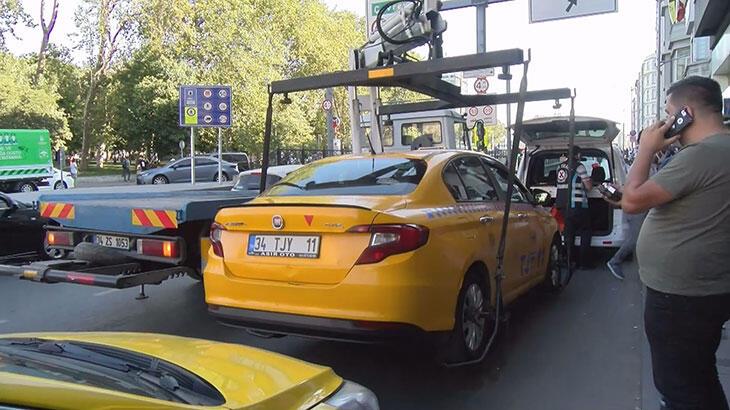
After making all these determinations, let’s discuss how the problem can be solved. I’ll list the necessary actions below:
1) Ban taxi license plate rentals
I think there’s nothing more absurd than using taxi license plates as an investment. Driving a taxi is a serious labor effort. The reward for this individual labor should remain with the person who contributes it, the taxi driver. Others should be prevented from making a living off the backs of taxi drivers by investing money. Therefore, the buying and selling of taxi license plates should be banned, and structures like the İSTOÇ (Istanbul Taxi Drivers’ Association) should be eliminated.
2) Grant every taxi driver the right to a license plate
In the name of respect for labor, it should be prohibited for others to print money and burden taxi drivers. Taxi drivers, who are under immense stress just trying to make rent and make ends meet, need to be freed from this mentality. Taxi drivers, who are the owners of their labor, should be given license plates to eliminate their financial hardship. Of course, the tax on these plates is paid without fail.
3) Taxi drivers should be carefully selected and carefully screened.
Taxi drivers should undergo rigorous training, as in the UK, and then qualify through an exam and interview. To restore the honor and reputation of the profession, becoming a taxi driver should be made much more difficult and taxi drivers should be selected who are truly knowledgeable about all routes, have high ethical values, know how to communicate with customers, abide by the rules, are meticulous about hygiene, and have a certain level of English. Ultimately, since the selected taxi drivers will be assigned license plates and will generate significant income, they should be made up of dedicated individuals. I can almost hear you asking, “Where are we going to find so many drivers who meet these criteria?” There are always solutions. Taxi driving training could be offered at vocational high schools, and young people could be trained according to these criteria. The number of female drivers could even be significantly increased, with the goal of having half of the drivers be women and half men. This would also ensure a healthy balance.
4) Preventing Political Involvement in Transportation
Unfortunately, politics has become a source of corruption in the transportation system. Where there’s politics, there’s also profit. In profit-driven systems, we’re always limping along because citizen satisfaction isn’t considered important. Personally, I oppose this being orchestrated by the Istanbul Metropolitan Municipality (mayor, council, etc.). After all, the mayor is elected, the council members are elected, and to maintain their positions and maintain their vote share, they repeatedly surrender to lobbies from various professions, including taxi drivers, using populist approaches. This strays from the truth. Currently, there’s a structure called UKOME, which is being manipulated by taxi drivers’ lobbies. These structures need to be eliminated (If you want to understand what UKOME is, read the news at https://www.milliyet.com.tr/gundem/ukome-nedir-ne-ise-yarar-ukome-acilimi-nedir-ve-kimlerden-olusur-6437116 ). Let’s not forget that the state is a regulatory body and is responsible for the well-being of its citizens and social order. 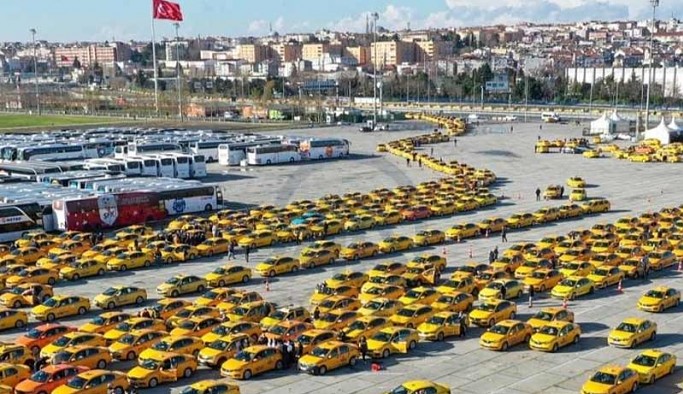
Therefore, in my opinion, an autonomous agency should be established for transportation services that directly affect the public, such as taxis, buses, minibuses, and shared taxis. Idealist managers should be appointed to these agencies and assigned to them for limited terms. During this rotation, idealist managers should be allowed to transfer their positions to other idealist managers. Political interference in this agency should be strictly prohibited by law, and its autonomy should be ensured. Furthermore, these autonomous structures should be destination-based. In other words, cities like Istanbul, Ankara, Izmir, Adana, Bursa, etc. should have their own autonomous structures, with a higher authority to coordinate them.
5) Camera monitoring of every taxi and entry of every address into the navigation system.
Transparency and ensuring that every driver knows they are being monitored are crucial. This camera system is also essential for the driver’s own safety. Many taxis have camera systems, but many do not function or are not fully utilized. The cameras inside the taxi should be required to operate and record 24/7. It is also important to enter the customer’s address into the navigation system. This way, even if the customer is a foreigner, they can verify that they are driving the right way. This level of transparency ensures everyone acts honestly and decently.
6) Restoring UBER and similar systems
In our country, things that were once praised can quickly become demoralized. I was delighted when UBER entered Turkey. As someone who has always used UBER abroad, I was especially happy to see an alternative to the corrupt taxi system. However, the taxi lobby worked hard again, declaring UBER a pirate, creating a negative atmosphere, pressuring the political landscape, and eliminating UBER, once again intruding on citizens’ comfort. What needed to be done was to establish taxes and regulations to address the shortcomings of UBER and similar services and ensure their full functionality. UBER was a system that would greatly benefit not only locals but also our foreign visitors, ensuring they had a safe holiday. This was not done. The alternative was eliminated, and we were once again forced into a poor taxi system. We must ensure that UBER and similar systems are reactivated. The most important thing here is the comfort and good service of the public and our foreign visitors, not the taxi lobby.
7) Replacing existing taxis with electric vehicles
Everyone complains about the high cost of gasoline. Using this as an excuse, taxi meters are constantly increased, and the cost is passed on to customers. So, don’t use gasoline. You’re both complaining about the cost and polluting the environment. The solution to both is to convert all existing taxis into electric vehicles. Of course, if the electricity is sourced from renewable energy. There are many excellent examples of this. Just look at the Netherlands. They’ve realized this vision, and everyone is happy with electric vehicles.
8) The introduction of sea taxis (Sea Taxi)
The use of sea taxis in Istanbul is still very low. However, if sea taxis were to increase, land traffic would be eased. For people to choose sea taxis, the number of alternatives would increase, and costs would be reduced to reasonable levels. This is possible. If someone focuses on reducing costs and providing good service. I’d like to share some news about water taxis: https://www.diken.com.tr/istanbulda-deniz-taksi-ucretleri-belli-oldu/
I’m afraid these costs are still high. Six months from now, when the shared taxi-sharing model is adopted, the business might change. Some creativity is needed to reduce service costs. For example, solar-electric boats could be used for water taxis. Similarly, prepaid systems like Akbil could offer these services to Istanbul residents at affordable prices.
9) The introduction of unmanned vehicles for taxis
In the future, a model without taxi drivers will be possible. Self-driving capabilities are currently being developed with artificial intelligence. When this becomes technologically feasible, perhaps taxis will no longer have taxi drivers. Computer-controlled taxis will operate in compliance with traffic laws and speed limits; all the negative aspects of this distorted system, such as overtravel, refusal to give change, and refusal to accept customers, will be eliminated. I’m talking about fundamentally solving the problem. However, reaching that point is still a long way off.
10) The Implementation of Air Transportation (Air Taxi)
In the future, when flying cars emerge, air transportation will also be used. This will make airplanes, seaplanes, helicopters, or drones possible. The use of air transportation will also, in a sense, render land transportation obsolete. However, there’s still time for this. I’m writing this here for historical record. Future technologies, especially those related to unmanned vehicles and aircraft, will be decisive.
I’m listing all these suggestions at this juncture. I’m aware that they won’t be implemented in a short time. If a strong will emerges in the future, even if half of the things I’ve listed above are implemented (and I hope they all become reality), we can all see how the flawed taxi system can be improved. If they stand behind it.
Wishing you a brighter future in every aspect. Stay well.
Bonus: I’m sharing a news report from BBC Turkish about the taxi problem in Istanbul.
Tag: education