
August was spent fighting forest fires. I took part in this fight. I will write about our fight against forest fires in detail in my next article. The bottom line is this: The main cause of forest fires is climate change. The most important way to combat climate change is renewable energy. The more we diversify and expand the use of renewable energy, the more successful we will be in our fight against climate change.
Speaking of renewable energy, I include solar energy, my first love at EkoRE, a company I founded; wind energy, for which we have developed and commissioned projects; and biogas energy, for which we have developed projects; as well as geothermal, other bioenergies (biomass and biofuels), wave and current (whether hydroelectric power plants are renewable energy is a controversial issue. I’ve explained this again below*), and I’d like to mention another renewable energy type that isn’t often discussed or on the agenda. In my opinion, hydrogen produced through renewable energy is one of the unsung heroes due to its great potential.
Why are we talking about hydrogen?
The process that began with the ‘2030 Agenda for Sustainable Development’ and ‘Sustainable Development Goals’ at the United Nations continued with the Paris Agreement, in which countries announced their commitments to combat climate change.
Announced by the European Union, the ‘European Green Deal’ emerged as an all-out growth strategy, setting a net-zero emissions target by 2050. New targets were set for transforming many areas, such as energy, agriculture, industry, and the circular economy, to become climate friendly.
In my opinion, 2050, 29 years from now, is a very distant goal. Net-zero carbon emissions should be achieved by 2030 at the latest. This is not a pipe dream; if states demonstrate the necessary will, 2030 is easily achievable.
Returning to our topic, finally, commitments to combat climate change came to the forefront at the G7 Summit and the ongoing G20 talks. During this period, international development banks have also shifted their focus towards clean energy and increased their climate financing volumes.
To achieve the global and national goals announced for combating climate change, energy- and resource-intensive sectors must first reduce their emissions. These sectors primarily include manufacturing, transportation, and buildings.
Given that 90% of energy-related greenhouse gases are carbon dioxide, 9% methane, and 1% nitrous oxide (International Energy Agency – IEA), we need to address the decarbonization of these sectors.
To achieve this, replacing fossil fuels with electricity (electrification) is a priority whenever possible, making it cost-effective. Generating electricity from renewable energy sources is critical for a sustainable future. I’ve discussed the same model for electric vehicles. Driving an electric vehicle on its own isn’t enough. If your electricity comes from coal or natural gas, you’re burning coal or natural gas in your vehicle. Therefore, the source of your electric vehicle’s electricity must also be renewable energy.
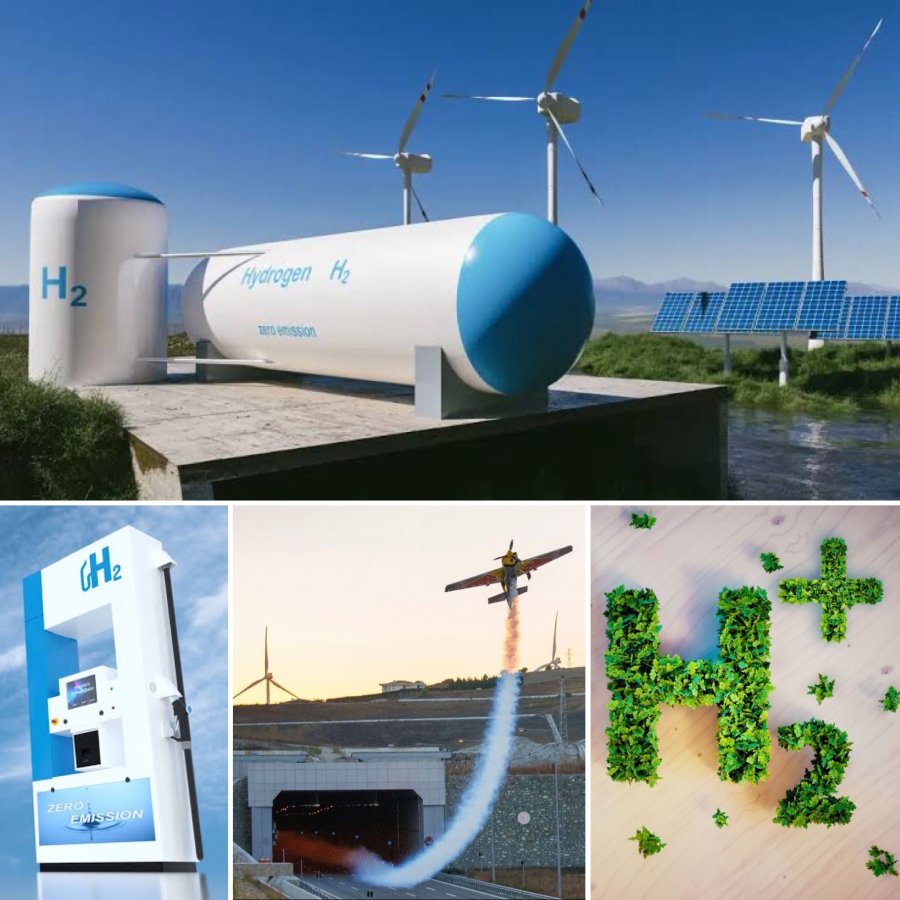
Hydrogen is a similar example. With hydrogen, you create a portable energy source. Hydrogen also has the distinction of containing the most energy per unit mass of all fuels. 1 kg of hydrogen provides the same energy as approximately 2.1 kg of natural gas or 2.8 kg of oil. It’s also 1.33 times more efficient than other petroleum-derived fuels. Because hydrogen releases water or water vapor when burned, rather than toxic greenhouse gases, it’s an ultimate energy source that should replace fossil fuels. However, the key to hydrogen is that it must be produced with renewable energy, just like electric vehicles. Otherwise, you won’t make any progress on carbon emissions. I recently came across a wonderful interview with Ebru Çiçekliyurt, the Turkey CEO of Siemens Gamesa (Siemens’ wind turbine company), about the production of hydrogen with wind energy, which I’d like to share in Dünya Newspaper:https://www-dunya-com.cdn.ampproject.org/c/s/www.dunya.com/amp/sirketler/turkiye-ruzgardan-hidrojen-uretiminde-oncu-ulkelerden-olabilir-haberi-628276
Hydrogen Production Types
We see that hydrogen is classified differently depending on the source from which it is produced. For example, hydrogen produced from renewable energy sources is defined as ‘green,’ natural gas as ‘gray,’ and coal as ‘brown.’ Blue hydrogen is the name given to the environmentally friendly production of fossil fuels. It appears that natural gas production, especially in the coming period, will enable the production of blue hydrogen thanks to carbon capture and storage technology.
In my opinion, green hydrogen is the only way forward. Forget blue, gray, and especially brown. If hydrogen is to be used, only green hydrogen should be permitted.
Unfortunately, 95% of the hydrogen produced today comes from fossil fuels. Water-based electrolysis (water splitting) represents only 4% of total global hydrogen production. Other methods account for 1%.
Therefore, carbon emission amounts vary significantly depending on the method of hydrogen production. When we look at hydrogen consumption, we see that only water vapor is produced. Therefore, green hydrogen is described as climate-friendly in both production and consumption, and its fossil fuel replacement properties herald the advent of the “hydrogen economy.”
Hydrogen Usage Areas and Financing Needs in Turkey
The aim is to use hydrogen as a raw material, fuel, energy carrier, and storage in areas where electrification is not possible. In a sectoral context, hydrogen has the potential to reduce greenhouse gas emissions, particularly in the industrial, transportation, energy, and building sectors.
When we look at examples that will impact our daily lives, we can say that we will consume electricity and heat generated from hydrogen and use hydrogen-powered vehicles. Of course, in my opinion, the most appropriate model for hydrogen production is to generate hydrogen with renewable energy and then use it in energy-intensive areas such as industry. Hydrogen vehicles can also be used, and even hydrogen-electric hybrid vehicles may emerge in the future.
Currently, technologies exist for production, consumption, and storage. However, significant budgets need to be allocated to establish infrastructures that enable the widespread use of hydrogen. In this sense, there is a need for infrastructure like natural gas pipelines that will enable the transportation of hydrogen throughout the country. When we examine hydrogen strategies, blending hydrogen with natural gas and supplying it through existing pipelines is therefore among the top options. This system is also among the options envisioned for implementation in Turkey. Published by the Ministry of Energy and Natural Resources, the Hydrogen Approach Document also references this area. However, it should be noted that no relevant legislation has yet to be published in Turkey.
The hydrogen report published by SHURA states that approximately 5% of Turkey’s energy consumption could be replaced with green hydrogen. It is estimated that producing this amount would require a total installed electrolyzing capacity of at least 12.1 gigawatts (GW), and the installed electrical power required for electrolysis would be at least 36.3 GW. The report states that the total investment requirement will be at least $45.4 billion.
EU Targets
Efforts led by the European Union have played a significant role in prioritizing hydrogen strategies worldwide. Indeed, the European Union has set ambitious targets for hydrogen production and consumption as part of the “European Green Deal.” It’s worth noting that the EU is already a global leader in hydrogen production and consumption.
According to the EU hydrogen strategy published last summer, the following targets are achieved:
- 2020–2024: Installation of 6 GW of clean hydrogen electrolyzers and production of 1 million tons of clean hydrogen
- 2025–2030: Installation of 40 GW of clean hydrogen electrolyzers and production of 10 million tons of clean hydrogen
- 2030–2050: Widespread hydrogen use
To achieve these targets, the goal is to establish a “hydrogen supply chain.” Formed with the participation of all stakeholders, the Clean Hydrogen Alliance is currently working on policy proposals for the supply chain infrastructure.
Meanwhile, it appears that the EU Commission is paving the way for the use of low carbon/clean hydrogen in the short to medium term. This will enable the combined use of green and blue hydrogen. There’s no doubt about the long-term goals; the only option is the use of green hydrogen. Indeed, it appears that failing to prevent the production and consumption of blue hydrogen from natural gas in the short to medium term has sparked serious debate within the EU.
Conclusion
Ultimately, hydrogen should be viewed as a method of energy storage and transportation. Hydrogen must be a renewable energy derivative, meaning it must be derived from renewable energy. This is technically called green hydrogen. Significant infrastructure investment is required for green hydrogen to become widespread throughout the country. Beyond that, I believe green hydrogen can be used even in distributed systems. To illustrate, for example, hydrogen could be produced from a solar or wind power plant near an Organized Industrial Zone (OIZ), and that hydrogen could be transported to factories via a short-distance pipeline. Safe energy storage and baseload provision, meaning energy is available for use whenever you need, are possible with hydrogen. In addition to energy security and independence, green hydrogen can also neutralize the carbon emissions from OIZs. Imagine neutralizing the carbon emissions of hundreds of thousands of factories in OIZs in Turkey, we would make a significant contribution to the fight against climate change as a country. I hope to see increased hydrogen use in Turkey and around the world.
* Renewable energy means the continuous renewal of energy resources. If the water source of hydroelectric power plants (HPPs) is constantly renewed, then that HPP is renewable energy. However, almost all of the HPPs in our country are experiencing depletion in their resources. Successive HPPs built on the same water stream cause drought and depletion of water resources. Therefore, I do not consider the HPPs in Turkey to be renewable energy sources.
** I would like to wholeheartedly thank Cansu Üttü for her support in writing this article.
Tag: ecology