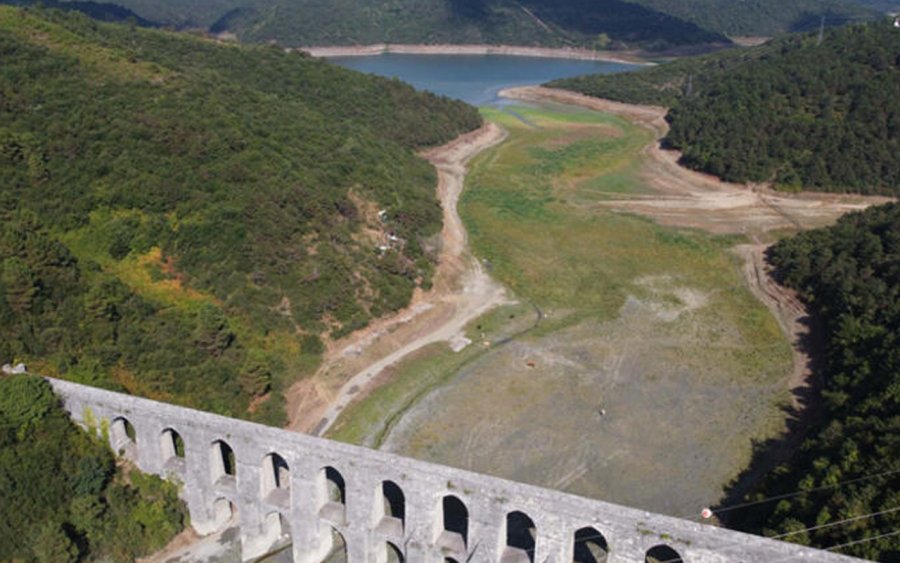
While we are experiencing increasing problems such as drought and water scarcity, disasters such as floods and landslides will continue to increase. The reason is clear: We are continuing to disrupt the balance of nature.
As the occupancy rate in Istanbul’s dams dropped from 45.27% to 24.4% during the same period last year, the Istanbul Metropolitan Municipality urged the public to conserve water (for details, see the news at https://www.hurriyet.com.tr/gundem/istanbulda-su-alarmi-41679384 ), reports of Istanbul’s water shortage became more prominent in print and broadcast media.
Boğaziçi University’s Kandilli Observatory even went so far as to declare, “We urgently need to implement symbolic two-hour water outages.” You can read the related news at https://www.hurriyet.com.tr/ekonomi/son-dakika-haberi-ekonomide-iklim-alarmi-kandilliden-cok-carpici-uyarilar-41691669 .
On the one hand, the human population is rapidly increasing, while on the other, the destruction of nature and the continued rise of carbon emissions indicate that this drought and water problem will continue to grow. It is possible for nature to rebuild its own balance, but even if we stop the damage we are causing to nature, compensation and the establishment of a new balance will take many years.
My tongue has run out of words, and my pen has worn out with writing. Still, I will never give up on this subject. When I first began discussing this issue, I was thinking about the question I wrote about eight years ago, “How can humanity restore the balance in nature and secure the future?” I’d like to share my article titled: https://www.serhansuzer.com/tr/insanoglu-dogadaki-dengeyi-yeniden-nasil-saglayip-gelecegini-teminat-altina-alabilir
In all my speeches over the last 10 years, I’ve repeatedly explained what the problem is and what needs to be done. Now, I’d like to specifically address one of the natural disasters resulting from this destruction of nature: the water problem.
A campaign that draws attention to both ALS and the water problem.
Six years ago, during the ice bucket campaign for ALS, thousands of people dumped buckets full of ice over their heads, which frankly annoyed me. I didn’t appreciate people ignoring another problem to highlight a disease for which a cure is being sought. This meant they were pouring water over their heads, causing pointless waste of water. Emptying these buckets full of water and ice onto the ground didn’t bother me that much, because I knew the soil absorbs water. However, when the action was performed on surfaces like concrete, tile, and carpet (which was mostly non-dirt), the waste of this water was disturbing. So, to raise awareness of both ALS and the water problem, I shot this video:
I also wrote a blog post about my campaign, which was chosen as the best ALS Ice Bucket video at a medical congress: https://www.serhansuzer.com/tr/als-buz-kovasi-kampanyasi
I say the same things today as I did then: Water is life. If we waste our water, we, humans, cannot survive. Therefore, I list the steps that need to be taken to address the water problem caused by drought caused by climate change:
1) Water Efficiency
- a) Water Efficiency, Achieving by Changing Our Habits: We need to prioritize water efficiency. We need to optimize our water consumption. We should avoid wasting water while showering, cooking, brushing our teeth, shaving, and so on. For example, avoiding leaving the shower running while applying shampoo, or turning on the tap only when necessary while brushing our teeth or shaving, will make a significant difference in water consumption.
- b) Water efficiency through plumbing upgrades: Old water pipes can burst. The key is to proactively take precautions and replace pipes before these accidents occur. We can also start by replacing old faucets that still drip water even after being turned off. You can waste significant amounts of water without even realizing it, and you need to prevent this unnecessary waste for both you and humanity.
- c) Water efficiency through technology: There’s nothing you can do about this yet. Technologies are emerging that allow the repeated recycling of water used at home (such as the water you use from the toilet, shower, or washing your face). You’ll need to install these technologies in your home immediately when the time is right. Be prepared.
- d) Recycling: Excessive water consumption isn’t limited to the water we use personally, but also for petrochemical and other production activities. Therefore, recycling must be a priority. Produced materials like plastic need to be recycled and used repeatedly.
2) Water-Providing Technologies
These technologies, which allow us to produce our own water by utilizing water or water-potential particles already in our environment, will become increasingly used in the future. At some point, everyone will have to fend for themselves. I’m sharing some of these technologies with you below.
- a) Rainwater harvesting technology
- b) Filtration technologies
- c) Producing drinking/usable water from seawater (salt water)
- d) Technology that produces water from the air
3) Distributed systems
We need to base water usage on the “on-site production, on-site consumption” mentality. In other words, we need to completely change the model of collecting water in dams and distributing it to a city of approximately 20 million, as in Istanbul. This water distribution can lead to water loss in many places, leading to serious inefficiencies. Instead, every household should be equipped to produce their own water.
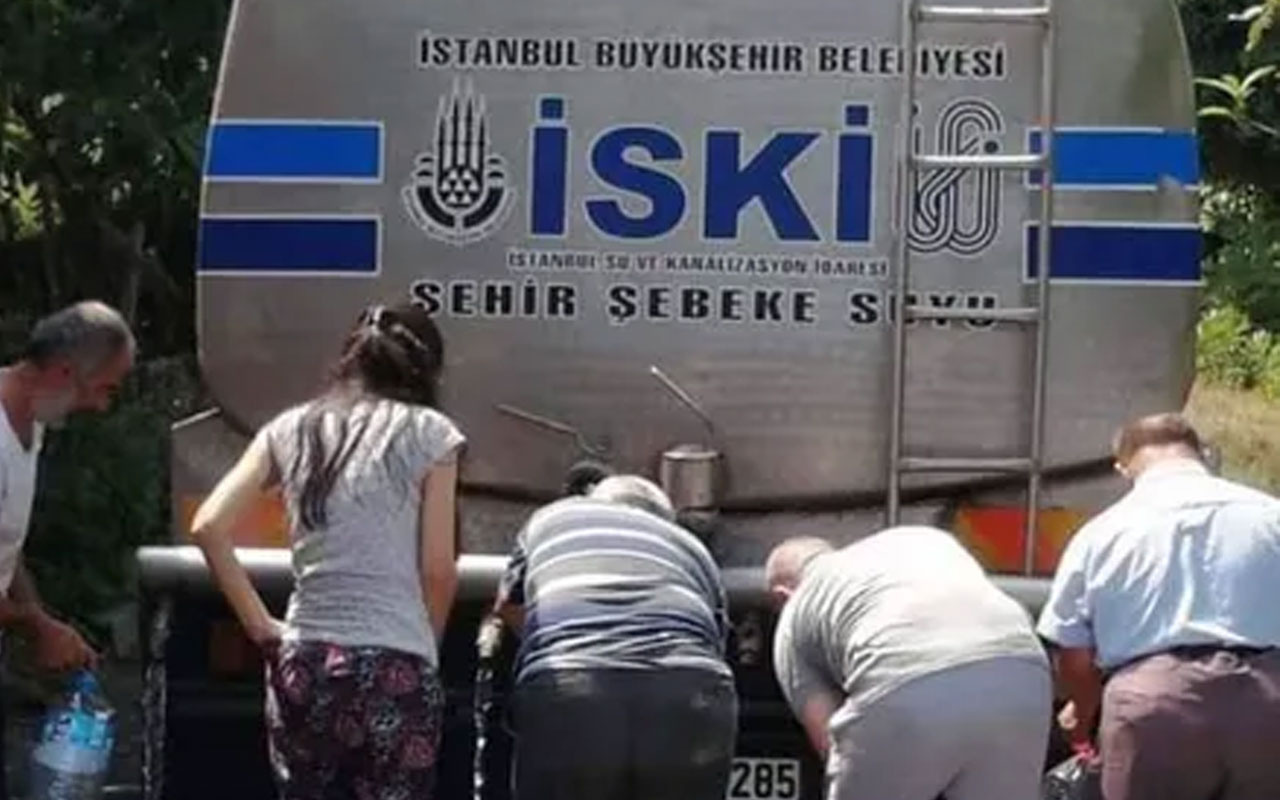
If distributed systems were used and everyone provided their own water from their home or their immediate surroundings (e.g., housing estates, neighborhoods), we wouldn’t see a scene like this one taken this year in the Şile district of Istanbul.
4) Preventing unplanned urbanization
Unplanned urbanization is one of the most significant factors contributing to the problem of water scarcity in major metropolises like Istanbul. There are two reasons for this. The most important thing is the construction in water basins. Excessive construction of hydroelectric power plants (HPPs) and even buildings in water basins eventually leads to the drying up of water resources. For more details, you can read the news at https://www.dw.com/tr/istanbulda-susuzluk-tehlikesi-nedeni-havzalerinde-yap%C4%B1la%C5%9Fma/a-51475355 .
The second problem is inefficiency, stemming from the constant problems caused by the water pipeline, which has entangled the entire city like a network due to unplanned construction and infrastructure. Let me give you specific examples to help you visualize: Damage to a water pipeline while laying a natural gas pipeline, a pipeline bursting due to wear and tear or excessive rainfall, and buildings constructed with a mindset that tries to build the building first and then build the infrastructure (water, natural gas, electricity, etc.), which constantly create problems and inefficiencies. Rather than tackling these problems, the best way is to ensure everyone gets their water from their own building or the surrounding area. The fundamental solution to these inefficiencies, particularly in water distribution, is distributed systems.
In short, all projects that lead to unplanned urban development must be shelved, and instead of simply correcting unplanned urban development, buildings and structures that comply with thoroughly considered urban planning must be implemented.
If necessary, Istanbul must be declared a tourism and financial center, all remaining elements relocated to other provinces in Turkey, and the city evacuated. In the 21st century, cities with a population of no more than 1 million should be built in different regions of Turkey in harmony with nature and facilitating human life. Cities must be created where distributed systems for energy, water, and food are implemented, where the latest technologies prevent all kinds of inefficiencies and ensure the well-being of all living creatures.
5) Taking the necessary steps to eliminate climate change
While severe droughts occur in some times and places, floods increase in other periods and regions. To stabilize these imbalances caused by climate change, we must implement everything necessary without compromise. I’m talking about changing our lifestyles. The primary goal is to accelerate the energy revolution. Because the primary driver of carbon emissions is the use of fossil fuels as an energy source. Accordingly:
- a) We must meet all our energy needs with 100% renewable energy.
- b) Fossil fuels must be used as raw materials, like the use of oil in petrochemicals.
- c) We must prioritize energy efficiency and optimize our energy consumption.
- d) As with water, we must focus on distribution systems in energy. That is, on-site production and on-site consumption.
- e) We must start using electric vehicles. This requires generating electricity from renewable energy. Essentially, all vehicles should be solar-electric (solar-electric cars, ships, airplanes, etc.) and charge their batteries with electricity generated from renewable energy.
- f) Forestry must be encouraged. Trees are the most important natural element that absorbs carbon. I’m talking about creating empty spaces in major metropolises and creating large forests and parks in them, as well as establishing new forests around cities and everywhere else in Turkey where possible, and planting billions of trees. Those who harm trees must be punished in the harshest possible ways.
We need to start immediately!
If the above recommendations are implemented immediately, we can prevent water shortages in Istanbul and major metropolises. Otherwise, we face a process that will begin with one- or two-hour water outages and eventually lead to permanent water shortages for the entire city. The reason we haven’t experienced a serious water shortage in Istanbul so far is because water resources from Tekirdağ to Düzce have been diverted to Istanbul. You can read detailed information about Istanbul’s water resources at https://www.iski.istanbul/web/tr-TR/kurumsal/iski-hakkinda1/su-kaynaklari1 . However, let’s not forget that these water resources also have a capacity. If this continues, we will have depleted all the water resources surrounding Istanbul. After all, we’re talking about the water needs of a population of 20 million. Consider that this need has increased per capita due to the pandemic (and excessive hygiene has become a habit for many people), and if we continue at this rate, woe is us.
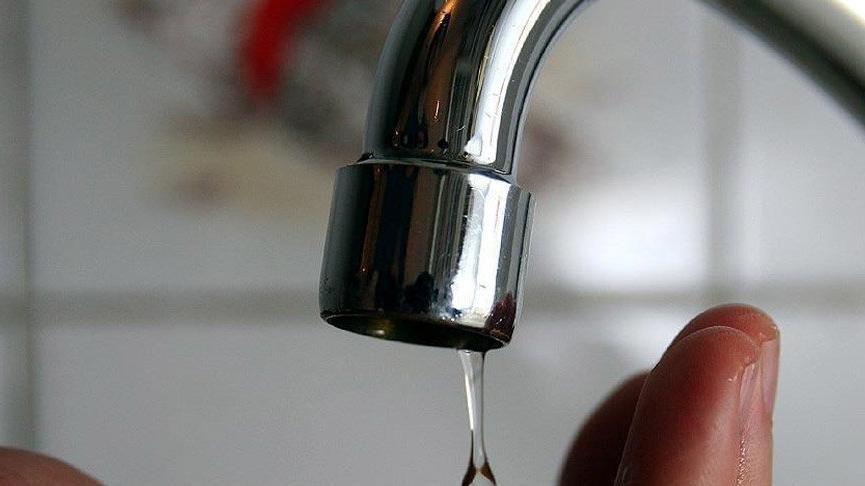
I also used Istanbul as an example because it’s the largest city in Turkey. The water problem is acute in all of Turkey’s provinces, especially in our southern provinces, which are particularly affected by drought. If Istanbul is experiencing a water problem, the water problem is even more critical in the metropolitan cities in the south, which have become major metropolises. When water scarcity occurs, people’s lives are thrown into disaster, and their quality of life is severely diminished. All sorts of health problems, including epidemics, arise. The situation can even become so serious that wars over water resources may even break out in the future. I repeat: Water is life! We must protect our water!
I hope that governments will take the necessary steps to avoid such disasters in the future and prevent the catastrophe of drought in the short, medium, and long term.
I am writing this article to leave a mark on history. For those interested, please share.
Note: As I mentioned in the article, water shortages are a serious problem in many different parts of the world, in different ways. Even Australia, surrounded by oceans, is facing another disaster caused by contamination, a phenomenon we Turks are not at all familiar with, known as sea foam. Here’s a video of a woman searching for her dog in the sea foam: https://www.instagram.com/p/CI3-yqXD9-w/?igshid=1ayibeamnmhb2
I’m adding this note because: If we humans have brought even the oceans, which hold the most water on earth, to this state, imagine the rest. We need to get ourselves in order as soon as possible.
Tag: ecology