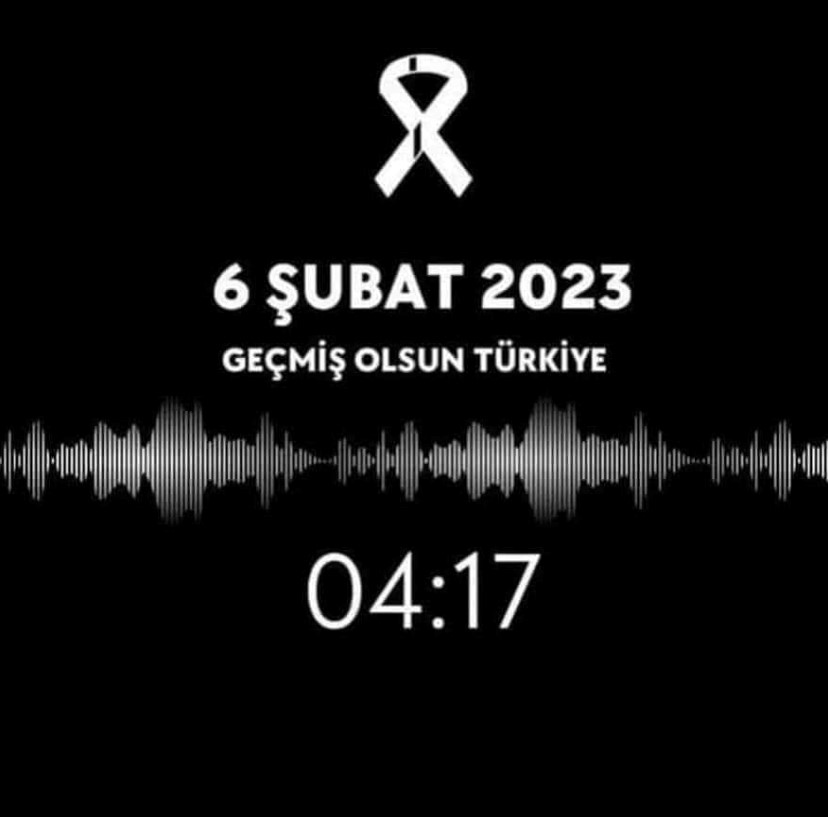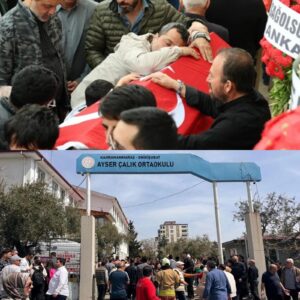
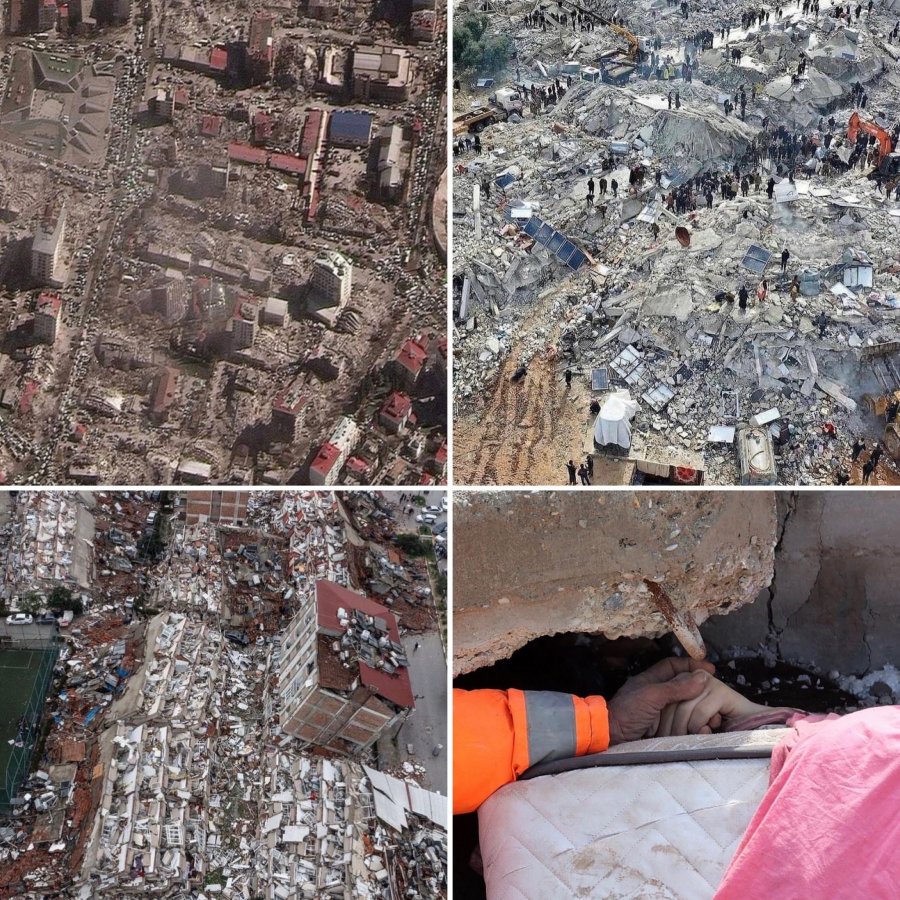
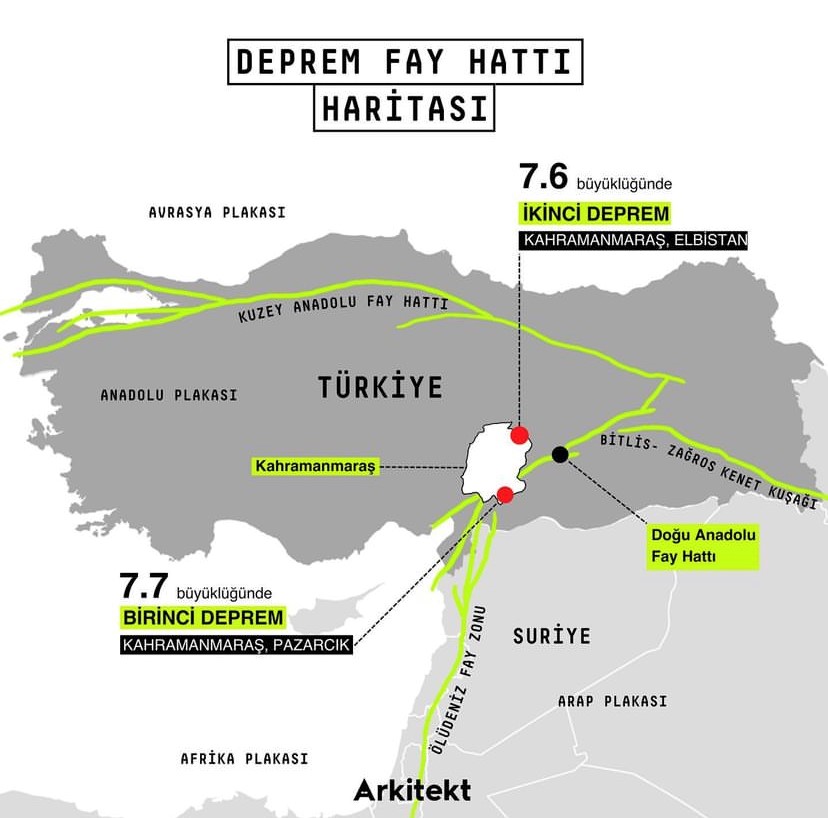
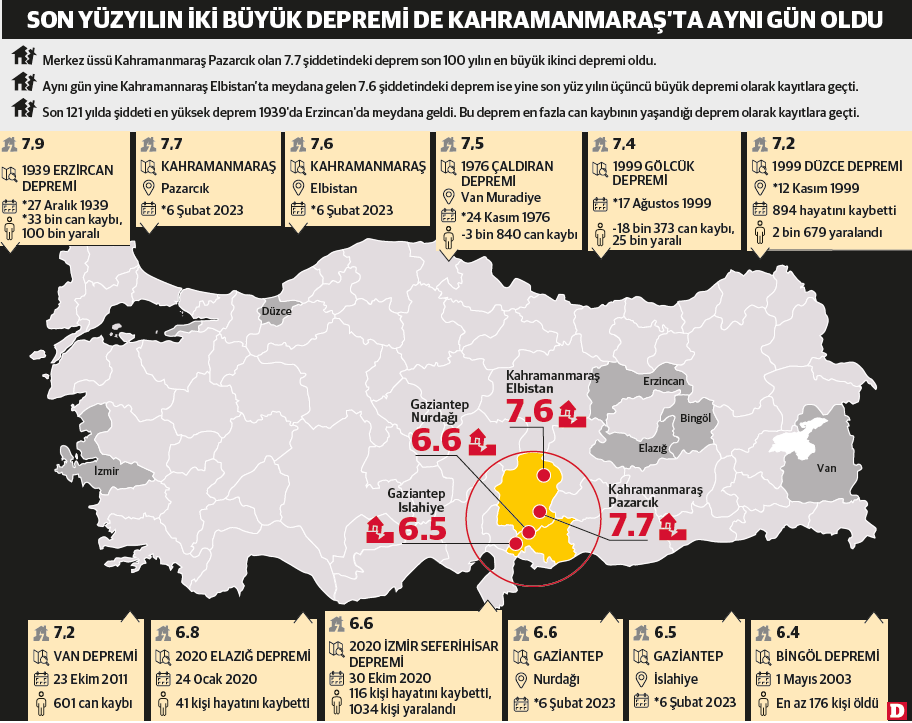
On 6 February 2023, at 4:17 a.m., one of the largest earthquakes in Anatolian history occurred in the Sofalaca area, located between the Pazarcık district of Kahramanmaraş and the Şehitkamil district of Gaziantep, within the borders of Maraş. The earthquake, measuring 7.7 magnitude, shook Kahramanmaraş and Gaziantep, as well as the provinces of Adıyaman, Hatay, Adana, Osmaniye, Kilis, Malatya, Şanlıurfa, and Diyarbakır, creating significant destruction. The first earthquake was felt across a wide area, including Turkey and Syria, as well as Lebanon, Cyprus, Iraq, Israel, Jordan, Iran, and Egypt.
Before the shock of the first earthquake had subsided, a second, measuring 7.6 magnitude, struck the Ekinözü area of the Elbistan district of Kahramanmaraş at 1:24 p.m. on the same day (6 February 2023). These earthquakes affected not only Turkey but also Syria, with numerous Syrian cities, including Aleppo and Afrin, but also Idlib, Hama, Latakia, and Tartus, being devastated.
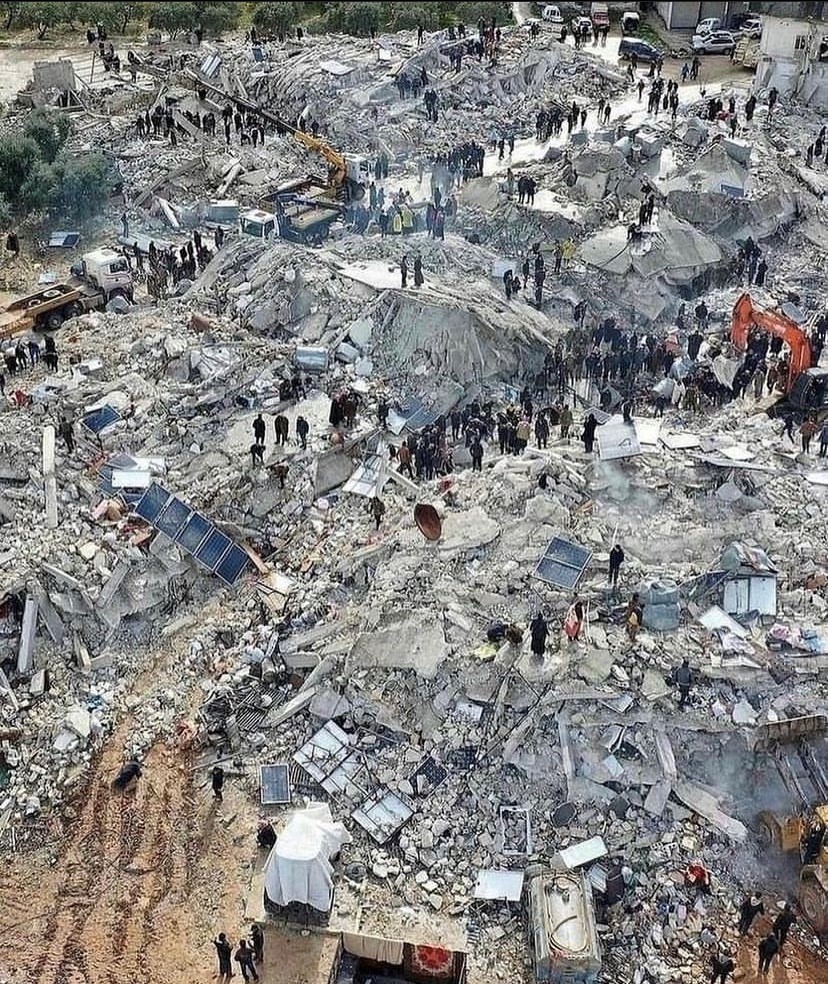
Over 12,000 buildings destroyed
Following the earthquakes, at least 1,972 aftershocks, ranging in magnitude up to 6.7 MW, occurred. Worse still, according to Kandilli Observatory official Assoc. Prof. Dr. Doğan Kalafat’s warning, these tremors will continue for quite some time: “The largest aftershock is 6.6, and there are earthquakes over 45, with magnitudes exceeding 4. Aftershocks will last approximately a year. Therefore, we strongly urge our citizens to avoid damaged buildings and avoid entering their homes.” Due to these two major earthquakes and their aftershocks, over 12,000 buildings collapsed in Turkey, and many historical structures, including Gaziantep Castle, the Şirvan Mosque, the Yeni Mosque in Malatya, and the Latin Catholic Church in İskenderun, were severely damaged or partially destroyed. The earthquakes in Turkey affected 13.5 million people across an area of 1,000 km2. 99 countries offered aid to Turkey, and 8,326 search and rescue personnel from 68 countries were dispatched to the earthquake zones. Dozens of countries sent first aid supplies, equipment, and medical teams.
Horrific images and news
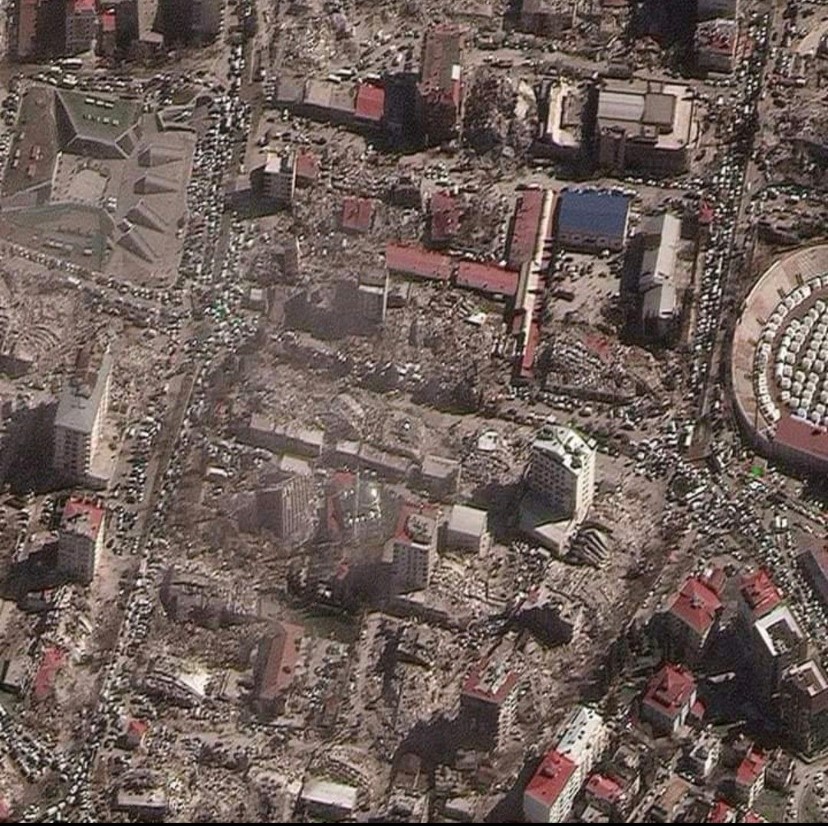
To illustrate the gravity of the situation, I share some relevant news and visuals (pictures and videos) below.
Drone footage from earthquake-stricken provinces:
https://onedio.com/haber/deprem-felaketinin-vurdugu-illerimizden-drone-goruntuleri-hatay-gaziantep-kahramanmaras-malatya-adana-1127381
Bird’s-eye views of Hatay after the earthquake:
https://www.instagram.com/reel/CoZ-vdvIs_n/?igshid=ZDFmNTE4Nzc%3D
Aposto News:
https://www.instagram.com/p/CoXR8ahqvHk/?igshid=ZDFmNTE4Nzc%3D
Moment of Kahramanmaraş Earthquake:
https://www.instagram.com/reel/CoWqDnOonFo/?igshid=ZDFmNTE4Nzc%3D
Gaziantep – Adana Highway:
https://www.instagram.com/reel/CoVTSpjgxVh/?igshid=ZDFmNTE4Nzc%3D
Major Earthquakes in Our History
When analyzing these devastating earthquakes, whose epicenters occurred between my father’s hometown of Gaziantep and neighboring Kahramanmaraş, I think it wouldn’t be wrong to emphasize the famous saying about the camel: They asked the camel, “Why is your neck crooked?” It replied, “Where is my neck straight?” We experience the same problems over and over again in various parts of Turkey.
My generation experienced its first major earthquake disaster in 1999, the Gölcük Earthquake. Then, in the same year, we witnessed the Düzce Earthquake. Subsequent major earthquakes followed, in succession, the 2011 Van Earthquake, the 2020 Elazığ Earthquake, the İzmir Earthquake later that year, and finally, the Kahramanmaraş-Gaziantep Earthquake that occurred last week in 2023. Of course, there have been many other earthquakes, both large and small, in between. As a result, the region where Turkey is located has been shaken by 23 earthquakes of magnitude 7 and above at various times since the 1500s (see:
https://www.ntv.com.tr/galeri/turkiye/turkiyeyi-sarsan-depremler,et–9cWd7EeXI5-hW7XMoA/dyzNRvADNkK4OisxNXQEQQ)
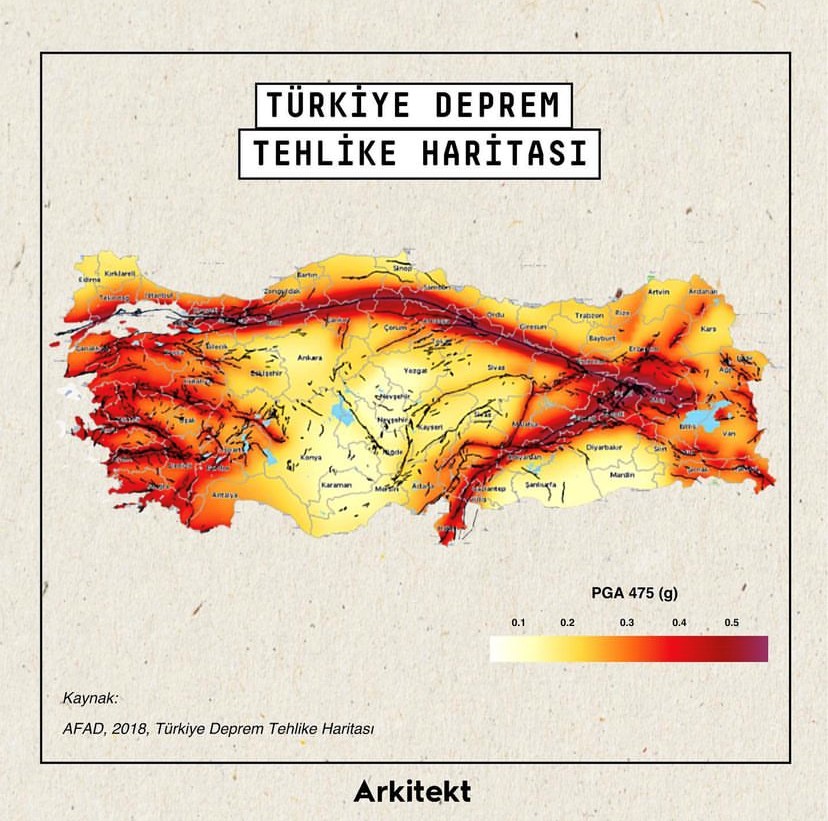
Examples of recurring cycles
After all these earthquakes, we’re constantly reliving inextricable cycles, like students taking the same exam and failing. Let me give you some examples of these recurring events:
– In every earthquake, poorly constructed reinforced concrete buildings, lined up like matchboxes, collapse very easily, and thousands of people die beneath the rubble, resulting in casualties. Here are two examples of buildings that collapsed very easily in this latest earthquake, like sandcastles (I’d like to remind you that there are thousands of buildings that collapsed like this):
1) https://www.instagram.com/p/CoXy3uMMYCB/?igshid=ZDFmNTE4Nzc%3D
2) https://www.instagram.com/reel/CoU9yziIsBP/?igshid=ZDFmNTE4Nzc%3D
– When earthquakes of the same magnitude occur in Japan, there are almost no casualties. The only difference is that the Japanese build earthquake-resistant buildings and plan their cities accordingly for earthquakes and other disasters.
Examples:
- The magnitude 9 earthquake in Japan:
https://www.instagram.com/reel/CnBWGwvASmD/?igshid=ZDFmNTE4Nzc%3D
• How does Japanese society live with earthquakes? http://cuts2.com/wlXxn
– Newly constructed buildings are most affected by earthquakes. Many older buildings remain intact (most existing buildings are two- and three-story houses built in ancient times). The architects of older buildings, constructed with earthquake calculations, are cited as examples.
- Mimar Sinan’s construction techniques: https://www.instagram.com/reel/CmmRWMANH_7/?igshid=ZDFmNTE4Nzc%3D
– The collapse of some iconic structures, and the disappointment this has caused to those who know and love the area.
- Iconic structures destroyed in the 6 February earthquakes:
https://www.instagram.com/p/CoW4aA5Mw-O/?igshid=ZDFmNTE4Nzc%3D
• Some iconic structures in the region (before and after):
https://www.instagram.com/p/CoZIdtkoBIy/?igshid=ZDFmNTE4Nzc%3D
– After every earthquake or any disaster like flood, forest fire, or landslide, there is complete chaos at every stage of the response (search and rescue, humanitarian aid, and psychological support). Public officials who don’t know what to do because they haven’t conducted any previous drills, those who don’t know what duties to perform where, officials who don’t know how to involve NGOs in the process, shouting and screaming, loud arguments, etc. I’d like to share a summary comment I recently made about this problem, which disaster workers have personally witnessed in the field:https://t24.com.tr/yazarlar/hayri-cem-haftalik/afetlerde-koordinasyonsuzluk-kaos-yaratir,38592
– The great efforts of search and rescue teams racing against time amidst all this chaos:
• AFAD: https://www.instagram.com/reel/CoWq3a7gjXC/?igshid=ZDFmNTE4Nzc%3D
– Drawing attention to the drama that occurs as a result of the cries of distress from prominent people living in the area during disasters, or the fact that some prominent people or their close relatives are trapped under the rubble:
- News reports about former football players Volkan Demirel and Gökhan Zan:
https://www.hurriyet.com.tr/sporarena/volkan-demirel-hatayda-gozyaslari-icinde-seslendi-allah-rizasi-icin-yardim-edin-42215704
• A businessman calling for help:
https://www.linkedin.com/posts/ziyayilmaz_deprem-yardaftm-destek-activity-7029326989245263872-Q2qr?utm_source=share&utm_medium=member_ios
• Hatayspor football player Christian Atsu, who was trapped under the rubble and still has not been found:
https://www.instagram.com/p/CoWnUp7riFK/?igshid=ZDFmNTE4Nzc%3D
– The drama and reports regarding children, our most vulnerable point:
- What can you do for children after the earthquake?
https://www.instagram.com/p/CoVNcgNL9Ag/?igshid=ZDFmNTE4Nzc%3D
– “What’s needed” lists circulate in every disaster (which leads to unnecessary in-kind aid piling up, or a needed product never reaching its destination). Here are two examples published during similar periods:
1) https://www.iklimhaber.org/afad-deprem-bolgesi-icin-oncelikli-ihtiyac-listesi-paylasti/
2) https://www.birgun.net/haber/ibb-den-afet-yardim-kampanyasi-ihtiyac-listesi-aciklandi-420348
– Wasteful in-kind aid (clothing, food, etc.) delivered to disaster areas without consulting anyone to ease one’s conscience, or volunteers becoming a burden instead of helping the process. Examples of unconscious aid: https://www.instagram.com/reel/CohJDxjuZzU/?igshid=MDJmNzVkMjY%3D
Those who try to profit from this good Samaritan aid (you have nowhere to sleep). Let’s give a current example. In earthquake-hit Hatay, 40 suspects were arrested after being caught stealing from damaged homes. Two suspects who stole six trucks of food sent to earthquake victims while posing as humanitarian workers were also apprehended: https://www.halk54.com/deprem-yardimlarini-calanlar-yakalandi
– The declaration of heroes and villains in every disaster. Heroes are highlighted, and celebrities who gain popularity by acting like these heroes continue to play the popularity game and garner ratings rather than providing a fundamental solution to the problem. Those portrayed as villains are initially vilified but are soon forgotten.
– The rise of a popularity contest after every earthquake. Everyone announces how much aid they have provided.
For instance: http://cuts2.com/nOLNU
– While listening in the rubble, someone made noise, and search and rescue teams shouted warnings to stay silent. Let’s give an example from Gaziantep:
https://www.youtube.com/watch?v=hzVOpRyeojA
– In a country where all living things are mistreated, where a culture exists that tortures and even kills animals, dogs trained in search and rescue detect people trapped under the rubble and rescue them. The tragic paradox of these people (some, but not all) being rescued by the animals they despise reveals this. These search and rescue dogs, risking their own lives (and some dogs have died trapped under the rubble), work tirelessly in the rubble to save people’s lives.
Here are a few examples…
- Search and rescue dogs:
https://www.instagram.com/p/CoYGF8wI_XG/?igshid=ZDFmNTE4Nzc%3D
• The secret of dogs saving lives from debris, no technology can surpass: https://www.milliyet.com.tr/gundem/enkazdan-hayat-kurtaran-kopeklerin-sirri-hicbir-teknoloji-onune-gecemiyor-6900417
• Fully equipped search and rescue dog: https://www.instagram.com/p/CoiYAk4rOUd/?igshid=MDJmNzVkMjY%3D
• Hero dog, Köpük, who saved the lives of 6 people in the earthquake: https://www.instagram.com/p/CoeSICCINYT/?igshid=MDJmNzVkMjY%3D
• Trained search and rescue dogs: https://www.instagram.com/p/CoYGF8wI_XG/?igshid=ZDFmNTE4Nzc%3D - Dogs are both victims and heroes:
https://www.instagram.com/reel/ConJzg0IX6X/?igshid=MDJmNzVkMjY%3D
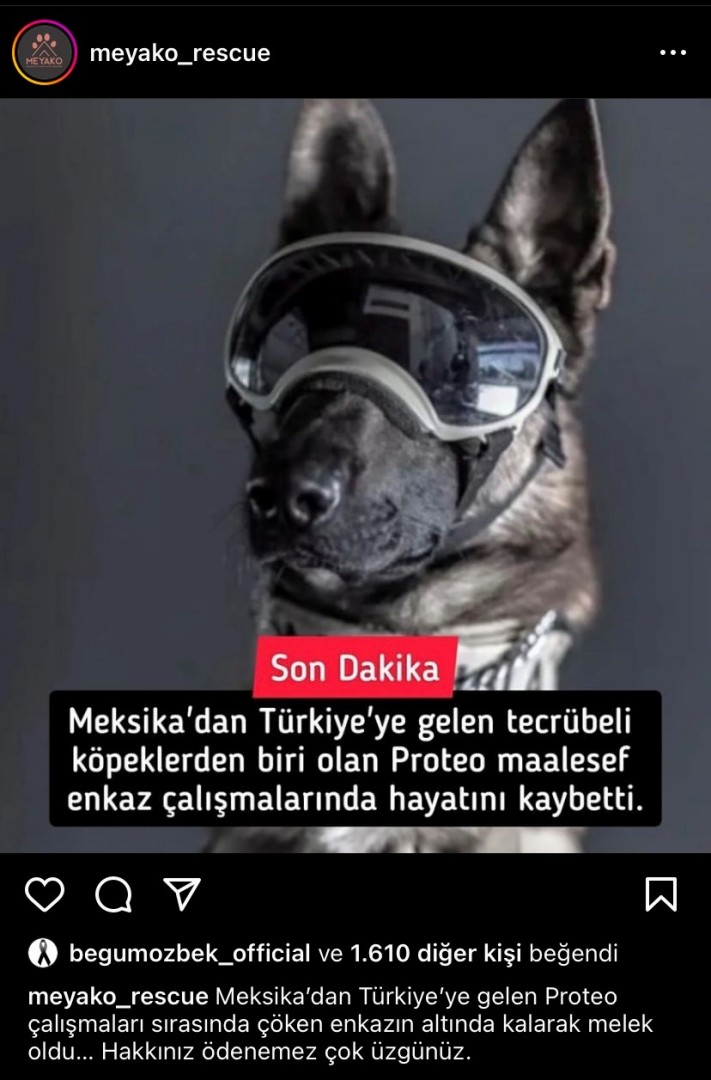
– Just like humans, animals also lose their lives, suffer injuries, and suffer from earthquakes. Thousands of animals can become homeless after their owners die:
- They found an owned golden retriever in Adana (Meyako):
https://www.instagram.com/reel/CoWvLASIJpV/?igshid=ZDFmNTE4Nzc%3D
– Images of animals (especially dogs) sensing earthquakes before each one:
- Dogs’ warning:
https://www.instagram.com/reel/CoUtH31qXil/?igshid=ZDFmNTE4Nzc%3D
– Statements by public officials such as, “We will hold those responsible for these collapsed buildings accountable.” - Minister Bozdağ’s statement:http://cuts2.com/KOrUD
– The emergence and repetition of very pertinent speeches and statements previously made by earthquake experts and relevant politicians after the earthquake.
- Speech by the former İyi Party Kahramanmaraş Provincial Chairman on August 3, 2022:https://www.instagram.com/reel/CofZaO3Ddyc/?igshid=MDJmNzVkMjY%3D
– The identification and scapegoating of some collapsed building contractors (in every earthquake, a contractor who is made the face of treacherous contractors is always revealed), yet the contractors of all the collapsed buildings continue their lives and even continue to be contractors:
- The dialogue between Yaşar Usta, played by Münir Özkul, and Contractor Yunus in the 1976 film “Gülen Gözler,” which depicts this age-old problem. The contractor’s criticisms remain the same 47 years later: https://www.instagram.com/reel/Coe_thJt91P/?igshid=MDJmNzVkMjY=
• The defense from the contractor of the Renaissance Residence that makes everyone look like a fool: https://www.yenicaggazetesi.com.tr/cennetten-bir-kose-diye-satilan-ronesans-rezidansin-muteahhidinin-ifadesi-ortaya-cikti-628797h.htm
• Contractors who spread death in Adıyaman, Hatay, Gaziantep, and Şanlıurfa are being caught one by one:
http://cuts2.com/DvPnL
– In such a dire situation, a mayor emerges who dutifully fulfills his duties throughout the earthquake zone and saves the lives of thousands. In the 1999 Gölcük Earthquake, this person was Salih Gün, the mayor of the Tavşancıl neighborhood in Kocaeli’s Dilovası district. In this earthquake, it was Ökkeş Elmasoğlu, the mayor of Erzin, Hatay:
- Erzin Mayor: I never compromised (No buildings collapsed in the earthquake): https://www.hurriyet.com.tr/gundem/depremde-hic-bina-yikilmadi-erzin-belediye-baskani-taviz-vermedim-42218397
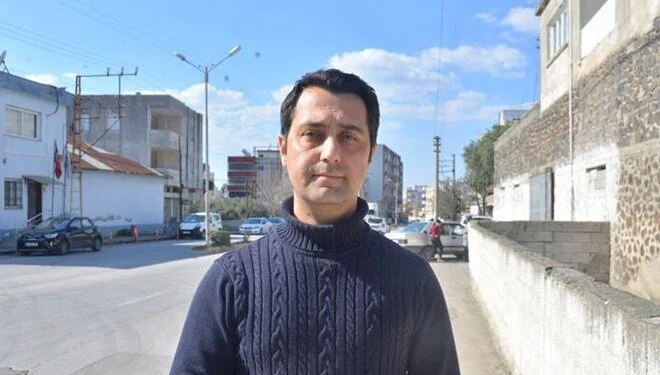
Erzin Mayor A. Ökkeş Elmasoğlu
– After every devastating earthquake, serious hygiene problems arise, and epidemic warnings are issued. These include toilet problems (the need for portable toilets arises each time), inability to dispose of garbage, lack of water (the effort to transport water tanks to the area each time, and the processes take time), and outbreaks due to hygiene issues. I share the information provided by the Turkish Medical Association regarding the February 6th earthquake: https://www.ttb.org.tr/haber_goster.php?Guid=0ec14fe2-a9fb-11ed-b4b5-486b41055497
– The emergence of absurd conspiracy theories about every major earthquake, such as, “This earthquake was actually triggered by technology held by colonialist Western powers; this is a coup against our country.”
- HAARP Technology:
https://www.instagram.com/tv/CoUJsPXp0ql/?igshid=ZDFmNTE4Nzc%3D
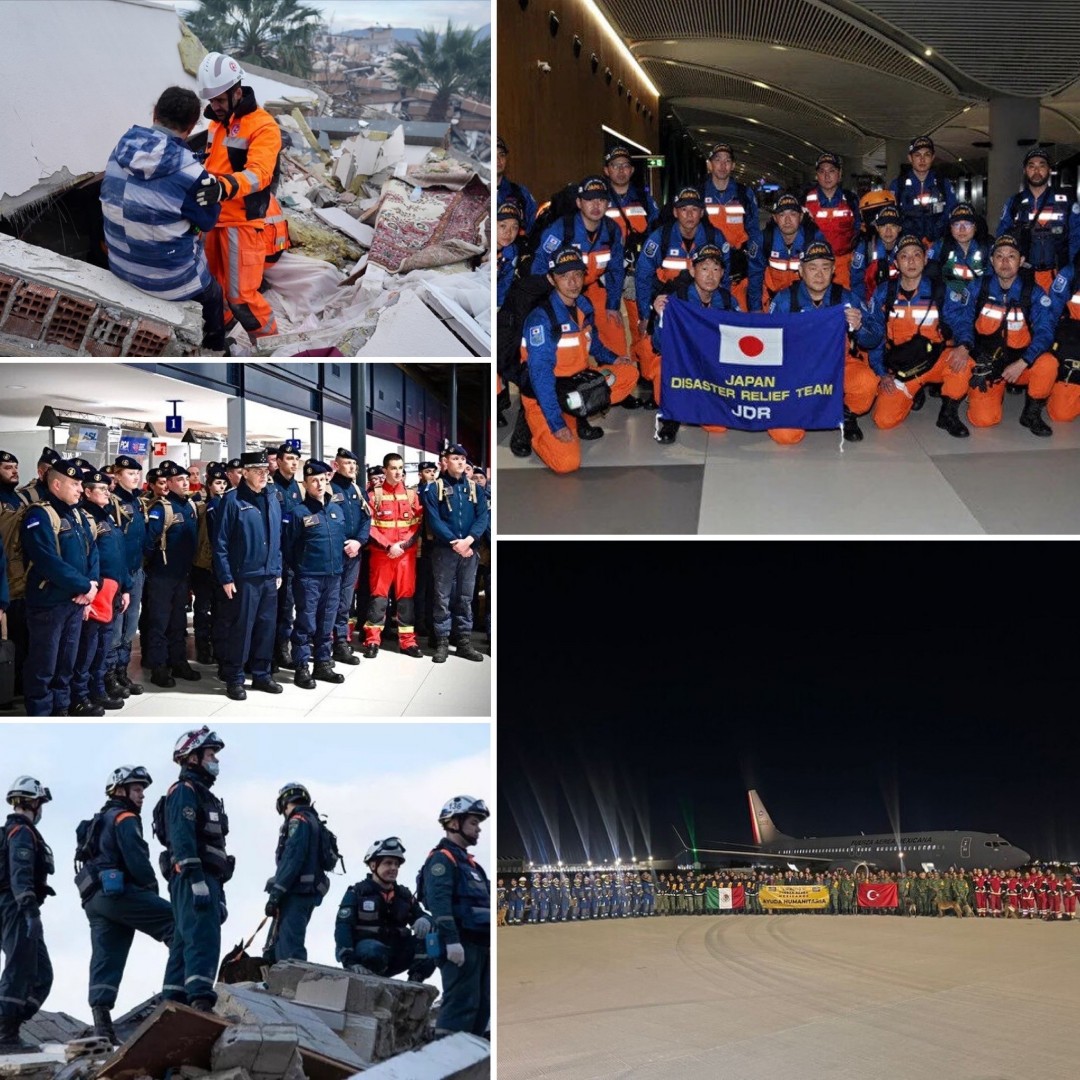
– Search and rescue teams from all over the country, as well as dozens of other countries rushing to Turkey to help, made rescues and were very helpful:
- Azerbaijan Rescue Team:
https://www.instagram.com/p/CoVJoKQIltH/?igshid=ZDFmNTE4Nzc%3D
• Dialogue between the doctor of the German Search and Rescue team and the earthquake victim:
https://www.instagram.com/p/Coe6d8TslYj/?igshid=MDJmNzVkMjY%3D
• The Hungarian Search and Rescue team rescued 12 people from the rubble of the Rönesans Residence: https://www.haberturk.com/macar-arama-kurtarma-ekibi-ronesans-rezidans-in-enkazindan-12-kisiyi-kurtardi-3564980
– Negative and depressing news about us as a country abroad:
• Nowthisnews News:
https://www.instagram.com/reel/CoYB_CaPaPj/?igshid=ZDFmNTE4Nzc=
• NY Times News:
https://www.instagram.com/reel/CoXeLQ7g294/?igshid=ZDFmNTE4Nzc%3D
https://www.instagram.com/p/CofZhDpO-dl/?igshid=MDJmNzVkMjY%3D
– The victims of the earthquake, who claim that aid efforts are insufficient, are rightfully angry and reproachful, especially at AFAD, public authorities, and the Turkish media:
- The justified reproach of a father whose three children and wife have been buried under the rubble for three days:
https://www.instagram.com/reel/CocH5IoDTzl/?igshid=ZDFmNTE4Nzc%3D
• Medya sitemi:
https://www.instagram.com/reel/CoZbovnjFoM/?igshid=ZDFmNTE4Nzc%3D
– Warnings from people who have experienced similar traumas, trying to explain the repercussions of all the mistakes made on earthquake victims:
- Message from İrem Aydemir, a survivor of the 1999 earthquake:
https://www.instagram.com/p/Coeo5gHroVL/?igshid=MDJmNzVkMjY%3D
– Comparing each major earthquake to other earthquakes, especially the 1999 Gölcük Earthquake, or referencing the anticipated major Istanbul earthquake:
- Kahramanmaraş/Gaziantep Earthquake vs. Istanbul Earthquake: https://www.instagram.com/reel/Coa4_77KDBX/?igshid=ZDFmNTE4Nzc%3D
Source: Dünya Newspaper
– Some encouraging dialogue amidst all this negativity:
- Search and rescue professional reassuring woman buried under rubble:
https://www.instagram.com/reel/CoYBBvDqSzt/?igshid=ZDFmNTE4Nzc%3D
• Dialogue between the injured person and the ambulance nurse: https://www.instagram.com/reel/CoZ2TnLDczW/?igshid=ZDFmNTE4Nzc%3D
After making all these diagnoses and sharing the experiences, let’s move on to solutions. I’d like to remind you of this. I am the founding president (May 2010) of TİDER (Basic Needs Association) and one of the founders of the Disaster Platform, as well as its first-term spokesperson (and the person who proposed/initiated the process of establishing a mechanism to coordinate all NGOs during the Elazığ Earthquake in January 2020). Tider continues its intensive humanitarian aid activities through food banks in Turkey. The valuable NGOs on the Disaster Platform are also doing their best in the field.
Vital Work That Was Not Continued
During my six-month term as spokesperson for the Disaster Platform, I repeatedly emphasized the idea that “the work and preparations we make during non-disaster periods will determine our success in disasters (such as saving the maximum number of lives and immediately meeting the needs of survivors).” All the colleagues with whom I worked shoulder to shoulder bear witness to this.
During that period (November 2020 – April 2021), we launched five projects, but unfortunately, they couldn’t be continued after I left. Interestingly, I even witnessed some NGO executives personally trying to prevent us from carrying out these projects. While everything was going well and we had gained significant momentum through collective discipline, I leave these traitors to God, who, with misinformation and lies, enlisted the majority there, created chaos, offended us, and changed the rules we had established to suit their own needs.
Some of these projects were also discussed with AFAD (Disaster and Emergency Management Presidency) (let’s work together), but they dismissed us with the rhetoric, “We’re already doing these things/we’ll do them.” Frankly, I’m personally saddened by this, because we have made significant progress over the past two years and perhaps saved thousands of lives. Unfortunately, the consequences have happened, and I want to reiterate that, moving forward, we need to calm down, make serious plans, and implement these projects. I’m sharing these projects, along with notes on the differences they can make:
1) Risk Reduction Map
Developing a real-time mapping program for risk reduction. This program will gather information from all official institutions on all types of disaster risks (earthquakes, floods, forest fires, landslides, etc.) across Turkey. This program will be accessible to anyone online, using millions of volunteers in the field, and will allow them to instantly access and view the risks in their area. I also arranged for an American software company specializing in mapping to do this (they agreed to provide this software free of charge). If we had developed this map, we would have inspected all buildings in earthquake-prone areas (we would have channeled all civil engineers and students in Turkey). Similarly, if there was a flood risk in an area and buildings were built in gullies, those buildings would be marked as high-risk on the map, and we would issue warnings (examples could be expanded).
2) First Responder Teams (IME)
AKUT Foundation undertook this project, and they attach great importance to it. As you know, Nasuh Mahruki and his team are a team that truly professionalizes search and rescue. In their opinion, the first hours of search and rescue are crucial. Currently, over 100 hours have passed, and people are still miraculously rescued. However, if IME teams had been established in their neighborhood or neighboring neighborhood, many more people could have been rescued. Because it’s crucial for someone from the nearest location (neighbors, etc.) to come to help immediately, this includes placing the necessary tools and equipment in steel containers for each neighborhood. The IME team members who survived the earthquake first arrive at the steel container containing the supplies, initiate the protocol, and begin search and rescue operations without delay. In this disaster that spread across 10 provinces, AFAD only managed to enter some neighborhoods after 2-3 days, and unfortunately, some victims lost their lives to hypothermia. This is tragic. The IME project is ideal for a much faster response. AKUT Foundation is also ready to lead this effort (training infrastructure, supply of relevant materials, etc.).
Having explained all this, I’d like to point out that a similar project was previously established in Turkey under the name Neighborhood Disaster Volunteers (MAG) with the support of a Swiss fund. Despite significant progress, it was unfortunately terminated due to lack of resources. Even today, despite the project’s termination, MAGs are attempting to organize under the structure of the MAG Platform or MAGDer:https://www.magder.org/
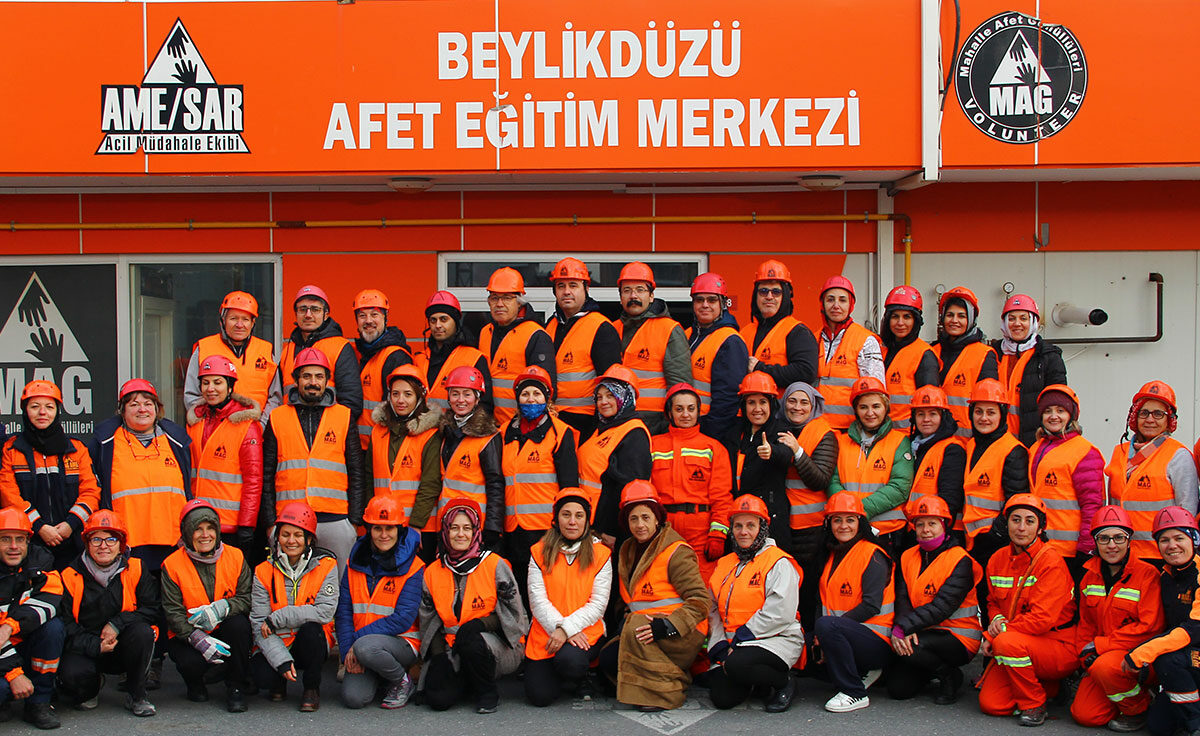
Here’s an example of a MAG: Beylikdüzü MAG.
Whether you call it IME, MAG, or whatever you call it, this project absolutely must be implemented in every neighborhood in Turkey.
3) Disaster Action Plan and Drills
Planning and standardizing everything from the first seconds of a disaster to the last moment. All public institutions and accredited NGOs will work together here, like cogs in a machine. This is critical because, as I’ve experienced in the field, there’s always chaos, confusion, late system implementation, and significant inefficiencies. The countermeasure against this is detailed planning of each phase and conducting drills (at the neighborhood/district level) several times a year.
4) Donation Management Platform
Collecting donations via a single channel. This software matches supply and demand in real time. Everyone can integrate with this: institutions (government institutions, NGOs, companies, etc.) and individuals alike. Donors will be able to see where their donations are going with complete transparency. As someone who has established humanitarian aid systems, I can say that such software is a critical need. Some NGOs are trying to do this but haven’t been able to do it completely, but their systems are very primitive. We need to create a truly professional, user-friendly system that everyone can accept and use. Otherwise, during such catastrophic disasters, everyone will panic and make donations, and those donations may end up in places that don’t need them at all, leading to looting. Furthermore, truly needed items may never reach their destination. Once a need is met, the board needs to be closed to prevent further donations (like the list-circulating list that we see and the flood of products through multiple channels even though they are no longer needed).
5) Psychologist/Psychiatrist Appointment/Referral Program
We discussed this program with the Ministry of Family and Social Services. The relevant departments within the Ministry were receptive, but we haven’t made any progress at the highest level (such as the Minister, etc.). This is a piece of software we’re talking about. This software includes numerous psychologists and psychiatrists who work in the field to support those experiencing trauma after disasters. Some are appointed by the government, while others come to the field through relevant NGOs. However, just as with humanitarian aid, there is utter chaos in the field. Especially in the first few days, psychologists and psychiatrists who arrive at work are unable to start their work (I have personally witnessed their ordeal in the field). However, through intensive efforts, they manage to find a suitable place. This software allows psychologists and psychiatrists who come through NGOs to be accredited by the Ministry, and all relevant institutions are notified as soon as disaster strikes, ensuring they can begin their field duties without delay.
Having said all this, I would like to emphasize that the main reason we continue to suffer such heavy losses in high-magnitude earthquakes is the collapse of our country’s moral consciousness, education system, and cultural heritage. If moral consciousness were high, the contractors who build buildings or the building inspectors who issue approvals would build buildings that comply with earthquake regulations or reject buildings that do not comply. If our education system weren’t broken, there wouldn’t be engineers building buildings that collapsed in earthquakes like this. All engineers practice their professions to the highest standards. Furthermore, if we had the cultural heritage, as people living with earthquakes, building buildings resistant to earthquakes and other disasters would become an automatic part of society’s consciousness. Unfortunately, none of this has survived in our country.
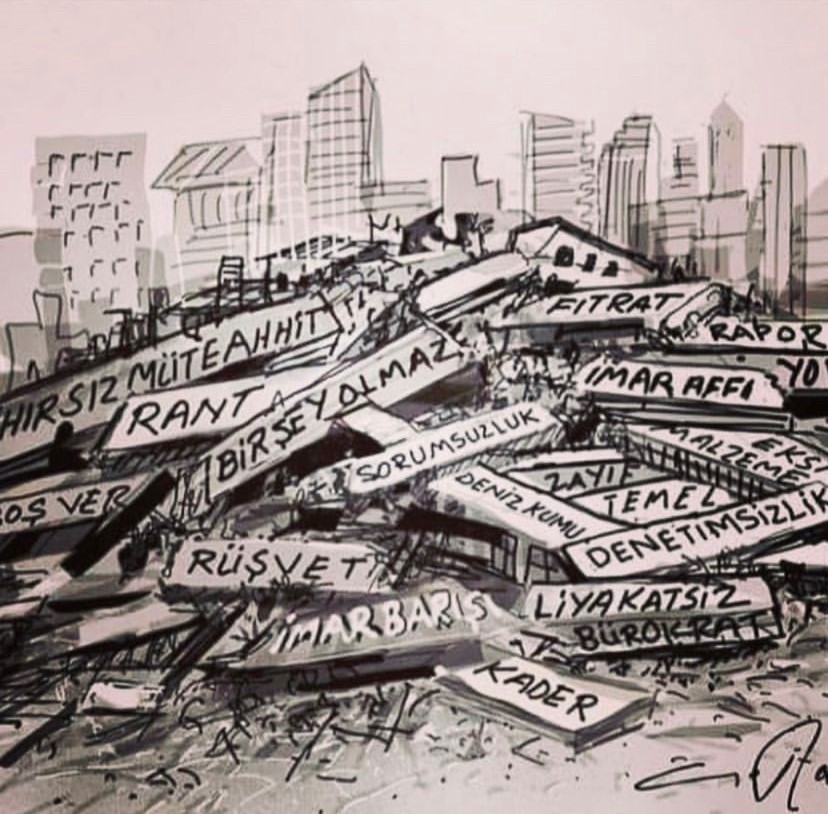
I want to emphasize once again that the fundamental solution to the problem, especially in earthquakes, lies in building earthquake-resistant buildings and planning cities accordingly for potential disasters. I’ve raised this issue many times in the past. For instance, I recommend reading my blog post entitled “Buildings, Not Earthquakes, Kill” from three years ago:
https://www.serhansuzer.com/tr/deprem-degil-bina-oldurur
To further elaborate on the technical steps needed to resolve this issue, I’d like to share my next article, “Building Buildings to Protect People,” with you.
I offer my condolences to the thousands of citizens who lost their lives in the 6 February Earthquake and offer my deepest condolences to their loved ones. I promise to continue doing everything in my power to minimize the losses from future major earthquakes.