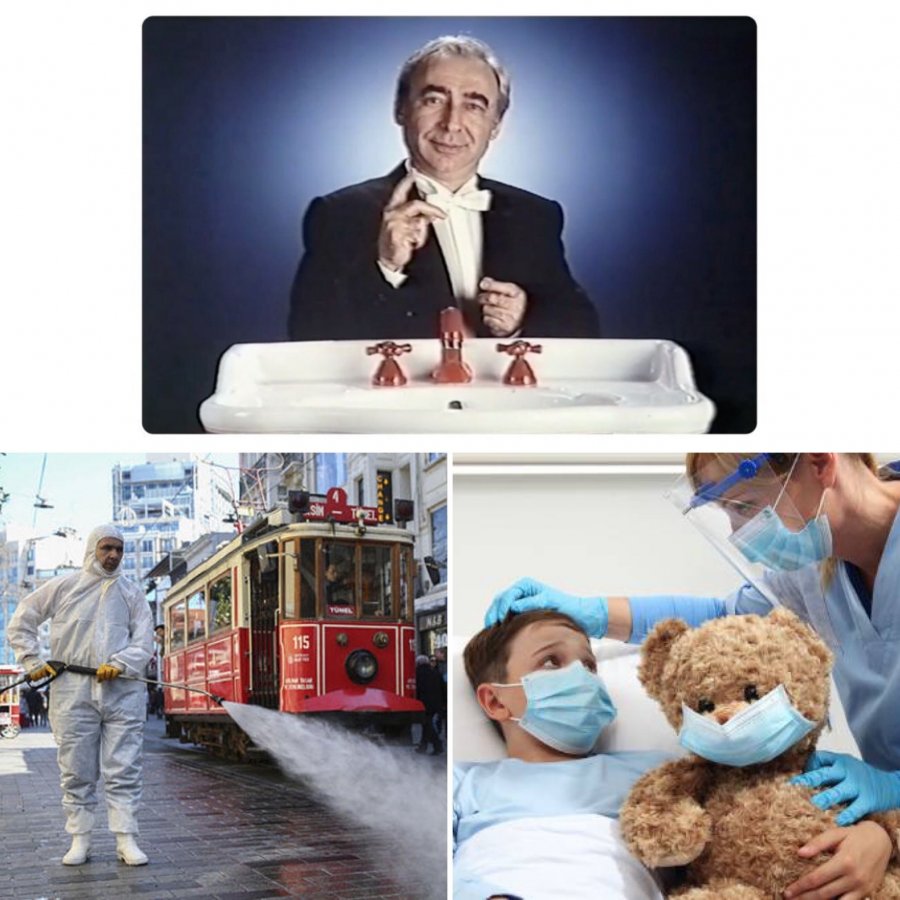
Everyone who lived through the 1980s knows Şener Şen’s cult Artema commercial, which first aired in the 1980s. His classic Şener Şen wittiness and style, “They said everyone wears it, so I figured I’d wear it too. You open it, you close it, you open it, you close it…” implying that he could do this over and over without any damage, the romantic melody of old Turkish films, and the ending line, “open-close, open-close,” were etched into people’s memories back then. I remember watching this commercial, which I first saw as a child, over and over again in the late 1980s and 1990s, each time with a smile. To refresh the memories of those who have seen it, and to help those who haven’t seen it understand what I mean, I’d like to share it with you:
While it might seem like a simple faucet commercial and may be meaningless to a younger generation, it can be adapted to a wide range of occasions today thanks to the wide use of the Turkish verbs ‘open,’ ‘close,’ and ‘plug.’ Just like the official reopenings and lockdowns we’ve experienced as a country thanks to the COVID-19 pandemic.
Since the first case was officially announced in March last year, Turkey has experienced numerous partial and full lockdowns. Lockdowns, then reopenings, then lockdowns again… We haven’t been able to break this cycle since last year.
I outlined ways to break this cycle in my blog post on March 13th. You can read it at https://www.serhansuzer.com/tr/covid-19-salginindan-nasil-kurtuluruz .
In short, I wrote that supplying sufficient vaccines and administering them quickly are the most crucial steps toward eliminating the COVID-19 pandemic, and that by streamlining the vaccine rollout, we can end the pandemic. The UK, which I cited as an example in that article, is now preparing to fully reopen its country after a successful vaccination policy.
In fact, while all countries continue their fight against the coronavirus, the UK, preparing for normalization steps, hosted its first mask-free, social distancing-free party since lockdowns. It turned out that the event, attended by thousands, was a pilot program. You can read this news at the link “Dünya virüsle boğuşurken… İngilizler dans pistine döndü: Karantinadan sonra binlerce kişiden ilk parti – Son dakika dünya haberleri (sozcu.com.tr).”
The same thing is happening to us.
What’s happening on our front?
Let’s start with vaccination. Minister Koca said, “Nearly 23 million vaccine doses have been administered. We also have six million doses ready. 100 million doses of the Sinovac vaccine were supposed to arrive, but China prioritized its own citizens.” President Erdoğan then offered the opposite view: “I don’t accept that we will have any problems with vaccine supply. We have sufficient vaccines.”
While all these vaccine debates continue, the country has begun a “full lockdown” period that will last until 5:00 a.m. on Monday, 17 May. While we discuss the importance of vaccination to end the pandemic, the most talked-about thing in Turkey has been the ban on the sale of alcoholic beverages, which was not included in the circular. Ruling party officials say the ban was implemented to “prevent domestic violence and social distancing.” Police have begun serving alcohol ban documents on tobacco dealers. Özgür Aybaş, President of the Alcoholic Beverages Platform, called on shopkeepers not to sign anything, stating, “This is a constitutional right.” He then declared, “The alcohol ban has been lifted.” TBP başkanı: İçki satışı yasağı kalkmıştır – Diken
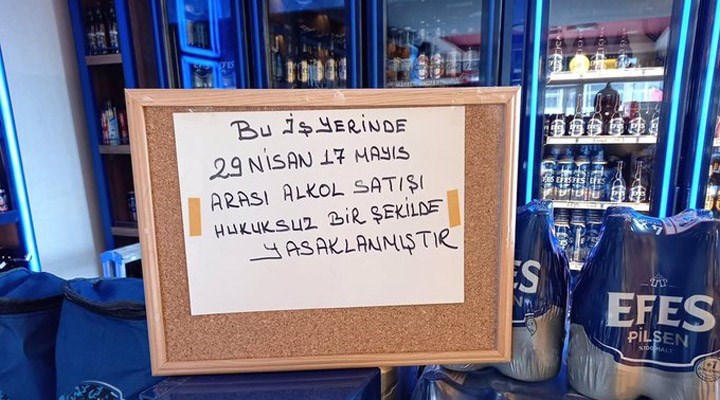
Legal experts believe the practice is an “unlawful order.”
Reminding that there is no legal circular regarding the ban, TESK President Bendevi Palandöken says, “We are discussing a ban that doesn’t exist. We will continue to sell. An alcohol ban is impossible in democratic countries.” TESK Başkanı Palandöken: Genelgede içki satışı yasağı yok, satmaya devam edeceğiz | Independent Türkçe (indyturk.com)
The Ankara Bar Association filed an application with the Council of State, stating that the decision was unlawful: Ankara Barosu’ndan içki satış yasağına karşı Danıştay’da dava (birgun.net)
Interior Minister Soylu responded to claims that the alcohol sales ban had been lifted, saying, “This is not true; it will continue throughout the full lockdown. When the restrictions began (14 April), we brought the number of cases down from 63,000 to 31,000 today. So, the decisions we made were correct…”: https://tr.sputniknews.com/turkiye/202104301044397603-icisleri-bakani-soyludan-alkol-yasagina-iliskin-aciklama/
Routes and Permits
During this lockdown, discrepancies regarding permits and exemptions emerged. The Ministry of Interior has introduced a new system. Accordingly, employees at workplaces exempt from the restrictions will be required to carry their work permits and present them during inspections. District governorships and e-government have been overwhelmed with applications for “exemption permits,” leading to the e-government system becoming overwhelmed. The Ministry of Interior has expanded the list of those exempt from the restrictions.
The same chaos and systemic gridlock have also emerged regarding work permits submitted for leave. People are increasingly confused.
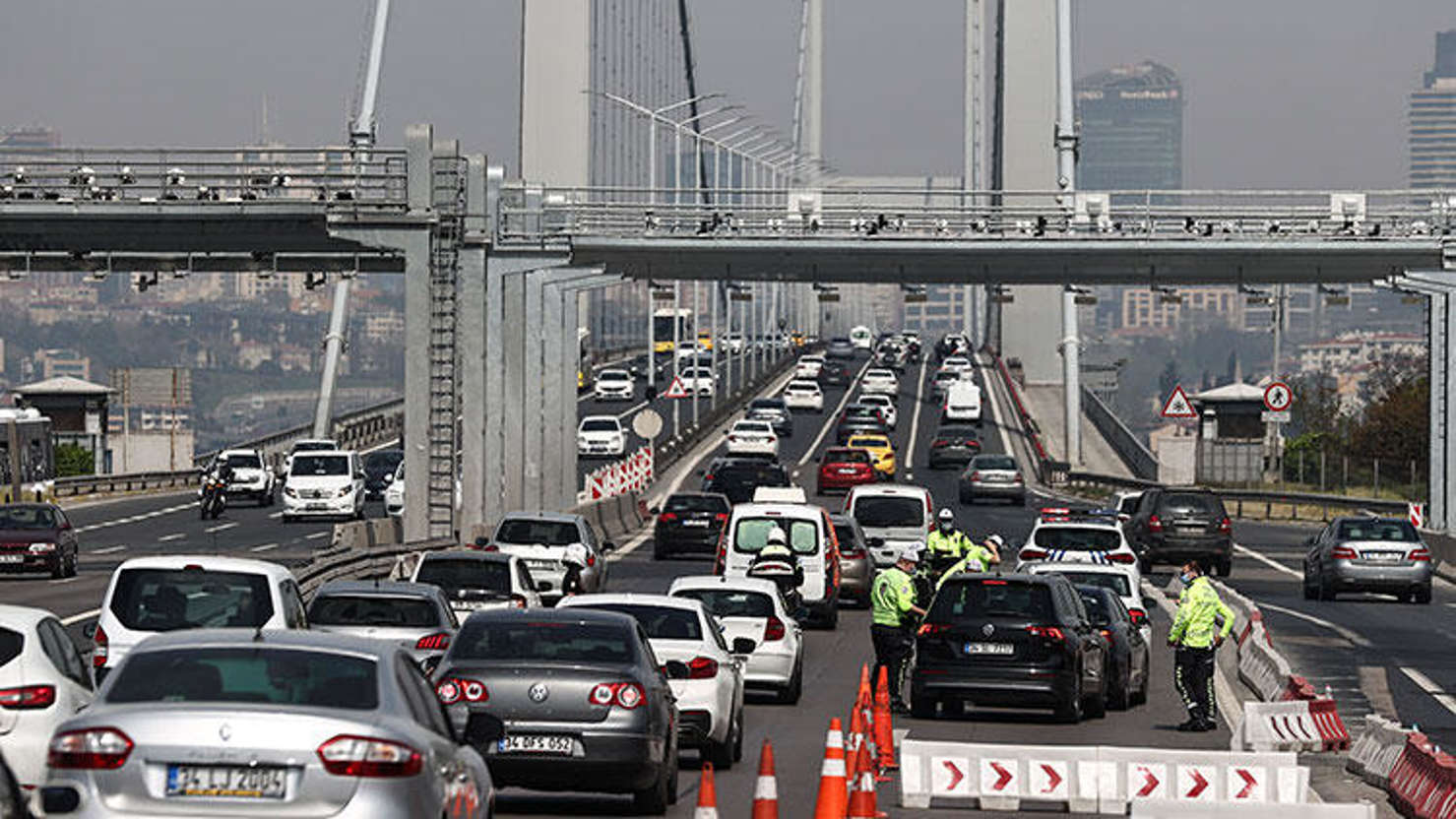
On the first day of the full lockdown, the streets, avenues, and public transportation of major cities were observed to be packed. In fact, traffic in many places (especially in major cities across Turkey, including Istanbul, Ankara, and Izmir) came to a standstill at times. According to a DİSK-AR report, this congestion was caused by the 16.4 million workers exempt from the lockdown, representing approximately 61% of employment. You can read the related news at the link Muafiyet kalabalığı: 16.4 milyon dışarıda (msn.com).
The importance of the energy sector during the pandemic must be understood.
Having said this, I would also like to mention the energy sector’s misfortune in this regard. The Ministry of Interior announced the list of exemptions: Tam kapanma: Sokağa çıkma yasağından kimler muaf, istisnalar neler? – BBC News Türkçe
Without energy, or more specifically, without electricity, no sector can exist. Hospitals cannot function, pharmaceutical companies cannot produce medicine, farmers cannot water their crops, public buildings are rendered dysfunctional, factories cannot continue production, and the tourism sector collapses, etc.
Put everything aside, just consider the consequences of hospitals or pharmaceutical factories being without electricity.
To explain the situation more clearly, let me consider the situation in reverse: Imagine the professionals who build and operate power plants struggling to survive and becoming unable to work due to COVID-19 (I can’t bring myself to say their deaths). Then who would build or operate the power plants? Wouldn’t all of humanity’s defense mechanisms collapse if these dysfunctional power plants were unable to produce electricity?
Shouldn’t the professionals of such a vital sector be among the top priorities for both vaccination and quarantine exemptions? Furthermore, in the public interest, those working in the energy sector should be exempted through the relevant public institutions (like district governorships) by directly registering their Turkish ID numbers with them, eliminating the need to issue job documents. I wonder if I understand.
“Quarantine tourism”
With the start of the quarantine, the ‘exodus’ from major cities continued until the final hours, creating congestion at the entrances to coastal cities. Yesterday (Thursday, 20 April), despite leaving Istanbul at 6:45 a.m., I arrived in Kandıra at 9:50 a.m. It took me over three hours to get there, a distance that would normally take me two hours. There was incredible traffic.
The total population of Balıkesir’s Marmara, Avşa, and Ekinlik islands has quadrupled: Tam kapanma öncesi Marmara, Avşa ve Ekinlik adalarının nüfusu 4 kat arttı – Yurt haberleri (dha.com.tr) Bodrum’s population exceeds 500,000: Bodrum’un nüfusu yarım milyona çıktı – Son dakika haberleri (sozcu.com.tr)
Of course, the advertisements made by tourism operators, driven by the idea of turning the crisis into an opportunity, also contributed to this chaos.
Following the Presidential announcement of the full lockdown, some tourism businesses began publishing ads saying, “Holiday between 29 April – 17 May” before the lockdown. Mustafa Yıldırım, President of the All Bus Operators Federation, announced that 250,000 people from Istanbul flocked to the bus terminal for travel. According to Yıldırım’s data, this figure reaches 500,000 across Turkey: ‘Karantina turizmi’ mi başladı?- (bloomberght.com)
Serdar Karcılıoğlu, President of the Bodrum Professional Hotel Managers Association, stated that there are no legal problems if those who want to vacation during quarantine check into a hotel on 29 April. Serdar Karcılıoğlu continued, “The lockdown decision came so unexpectedly that the tourism sector, already struggling for the past year, has been searching for such an alternative in the last few days. Any visitor entering on 29 April can legally stay at that hotel until 17 May. There’s no legal issue with this. Unfortunately, the tourism sector had high expectations in recent months, but the successive news from European countries has put it in a very difficult position. Now, the sudden decision to impose a full lockdown has been quite detrimental for businesses that had already reopened their hotels. They’re looking to attract domestic tourists in this short timeframe.”
Speaking of tourism, there are also opinions that the quarantine decision was also motivated by the need to prepare Turkey for summer tourism.
To elaborate further, with the Central Bank’s net reserves in negative territory, tourism remains one of the main foreign exchange-earning activities. In other words, this decision could be considered to have economic as well as health implications. Achieving the desired tourism efficiency depends not only on internal but also external factors. Russia’s announcement that it would not send tourists to Turkey following the Montreux debates and Europe’s decision to focus tourism primarily within the continent through vaccine passports are among the most significant negative impacts. In other words, a decrease in case numbers could lead to a better tourism season compared to last year. Tourism appears to have been the primary motivator behind the decision.
If tourism is to be saved, the path doesn’t lie in creating artificial models like “quarantine tourism.” The key to maintaining healthy tourism activities is ensuring that all Turkish citizens (not just tourism workers, but everyone) are vaccinated, and that vaccination is also a requirement for those entering the country as tourists (a vaccination certificate may be required). This creates an atmosphere of trust, allowing people to enjoy a comfortable holiday.
Aid for Those in Need
The most frequently criticized issue regarding the quarantine decisions was the lack of an aid package announced during the lockdown, despite a significant increase in the number of people in need. It’s clear that low-income earners or those working daily jobs will experience a loss of income and be negatively impacted. The opposition also drew harsh criticism on this issue.
To contribute to solving this problem, I would like to share my previous blog post about the work we’ve done at TİDER (Basic Needs Association), of which I am a founder: H. Serhan Süzer – Pandemide gıda bankalarının kritik rolü (serhansuzer.com) Aid efforts at TİDER are ongoing.
NGOs like TİDER should be supported to increase their impact, and the public and civil society organizations should work together.
Conclusion
You can see the COVID-19 data for 30 April, when a daily record of 394 deaths was broken, at the link Covid19 (saglik.gov.tr)). It’s clear that this quarantine period will slow the pace of the pandemic, albeit to a limited extent. I also fully understand the dilemma of the government, caught between the economy and the pandemic.
However, what needs to be done is crystal clear. To solve the problem definitively and definitively, we must prioritize what is necessary to end the pandemic, without considering tourism if it’s tourism, or the economy if it’s economy. It doesn’t matter if we lose tourism revenues from the summer months if we have to. We’ll heal the wounds next year. However, we need to take the measures I outlined at https://www.serhansuzer.com/tr/covid-19-salginindan-nasil-kurtuluruz and get to the bottom of it. The UK, which is in a much more difficult situation than we are, has figured it out. Now they’re preparing to fully reopen the country. After seeing this clear example, we too must focus on the target and ending this pandemic. The rest is just details.
The people want to see that the “on-off, on-off” programs in Turkey are finally working. The country isn’t as stable as Artema’s faucets. People’s nerves are in disarray. They’re psychologically damaged. They’ve lost their health. Their economic situation is at rock bottom. In this situation, in addition to the on-off campaign, a strict, swift, and uncompromising vaccination policy is also essential.
Bonus’
1) Artema has renewed its legendary on-off commercial twice after many years. First, in 2013, Engin Günaydın, one of the new generation’s successful parody actors, created another entertaining commercial, tackling a similar theme with a different scenario:
Here’s the sequel to the commercial:
Finally, this commercial, based on the original legendary commercial, was prepared to convey an important message this year on World Water Day (22 March 2021) (I congratulate those who thought of it):
2) After Istanbul’s lockdown, we’re presented with images we’re not accustomed to. Here’s one of them: a complete lockdown in Istanbul, captured through drone footage: BBC News Türkçe Twitter’da: “Drone görüntüleriyle İstanbul’da “tam kapanma” https://t.co/nd1dHzSFOKhttps://t.co/RpQiNHCpfX” / Twitter
Tag: health