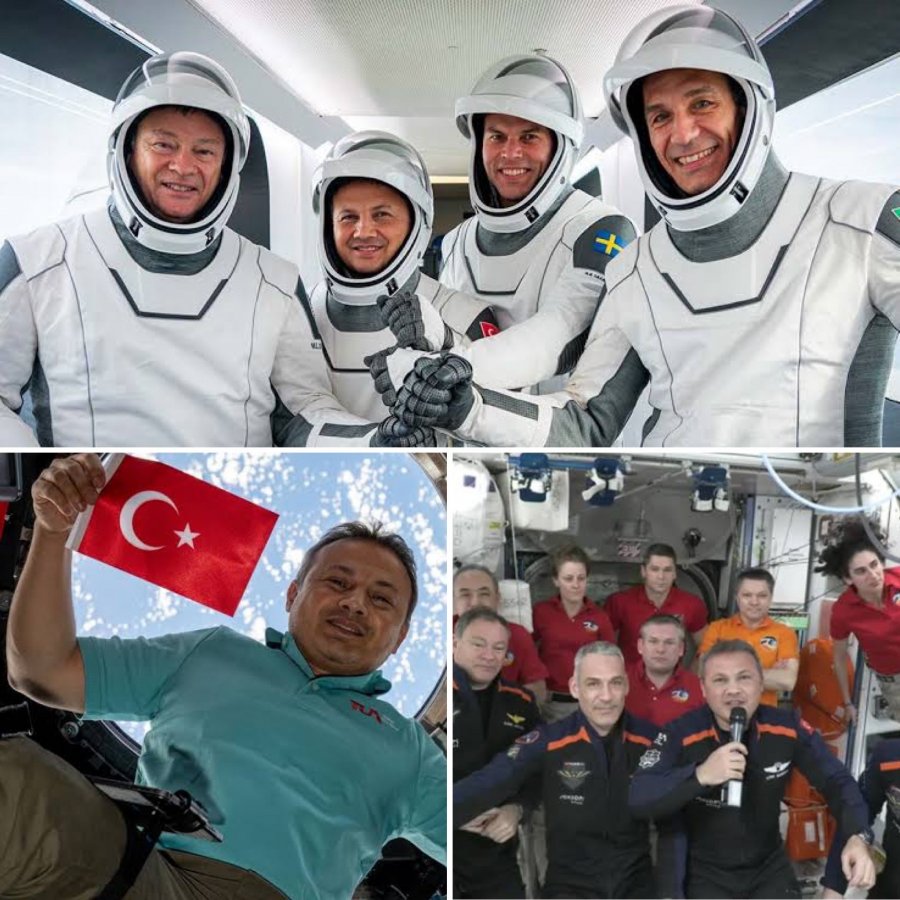
For as long as I can remember, I’ve had a fascination with space. In fact, let me tell you, when talking to children, I mention the classic question adults ask: “What do you want to be when you grow up?” I remember very clearly; my first response was, “I want to be an astronaut.” My fascination with space and space technologies stems from childhood.
Later, this answer evolved into various phases, and I expressed interest in other professions, but somewhere in my heart, I always harbored the idea of becoming an astronaut. The idea of leaving our world behind, floating in the endless darkness of space, discovering other planets, stars, and galaxies, and pushing humanity’s boundaries to infinity always motivated and excited me.
That’s why the statement, “As the Republic of Turkey, we will send our first astronaut to space,” caught my attention from the very beginning, and I followed the process closely. Now, let’s talk about Turkey’s first space traveler, Alper Gezeravcı.
Astronauts Launched into Space with National Sponsorship
The Republic of Turkey paid $55 million to Axiom Space for Gezeravcı’s transport to the space station. (See: Turkey to Pay $55 Million to Send Astronauts to Space: https://turk-internet.com/turkiye-uzaya-astronot-gondermek-icin-55-milyon-dolar-odeyecek/ )
A total of four astronauts, including Gezeravcı, successfully launched to the International Space Station on 19 January 2024, at 00:49 (GMT+3) from NASA’s Kennedy Space Center in Florida, USA.
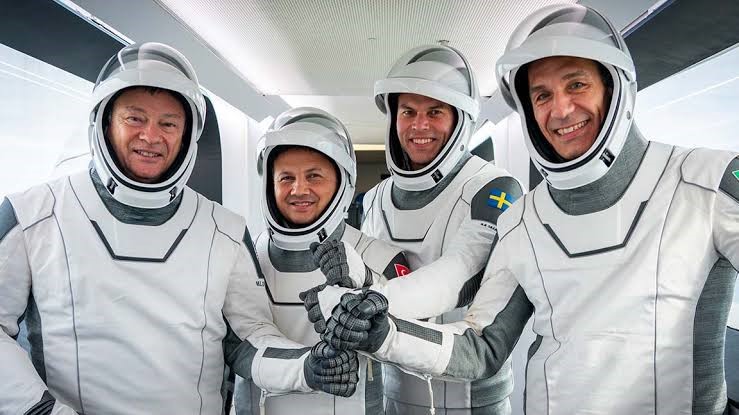
Ax-3 Mission Crew
Unlike previous such flights, none of the passengers were wealthy space tourists who paid for themselves. Instead, three of the crew members were sponsored by their respective countries of origin: Italy, Sweden, and Türkiye.
Axiom Space’s Third Mission
The flight, conducted by Axiom Space in Houston, heralds a new era in which nations no longer must build their own rockets and spacecraft to conduct a human spaceflight program. They can now purchase space travel from a commercial company, almost as if they were buying a plane ticket.
The astronauts were traveling in the SpaceX Crew Dragon capsule atop a Falcon 9 rocket launched from NASA’s Kennedy Space Center in Florida. After a one-day delay for additional vehicle checks, the countdown proceeded smoothly, and the rocket’s engines began firing at 4:49 PM (US Eastern Time).
The Ax-3 mission with commercial astronauts is the third for Axiom, which is also developing its own space station and making new spacesuits for NASA. It leased the rocket flight from SpaceX and has been sending paying customers to the International Space Station for two-week stays since 2022. In 2019, NASA changed its previous policy to open its own section of the space station to visitors. (Russia, meanwhile, has hosted several space tourists at the International Space Station since 2001.)
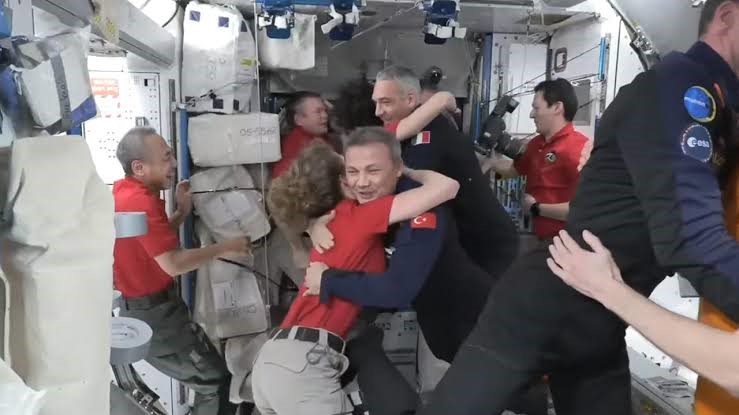
Welcoming the Ax-3 Crew to the Space Station
Space Station to be Retired in 2030
For the European Space Agency (ESA) and its 22 countries, commercial flights like Axiom’s offer a way to get more Europeans into space, demonstrating the growing intertwining of traditional and commercial space programs.
ESA currently covers 8.3% of the space station’s costs, so European astronauts receive a proportion of the benefits of missions there. This translates to only four flights until the space station is retired in 2030.
“We can’t provide one astronaut to each member country because we don’t have many flights,” says Frank De Winne, head of ESA’s astronaut office.
“Reserve Astronaut” Application
Marcus Wandt, a Swedish astronaut on the Ax-3 flight and a combat and test pilot, applied to become an astronaut at ESA several years ago. He made it to the final round of selection from 22,500 candidates but fell short of becoming one of ESA’s five new full-time astronauts. However, he was granted the title of “reserve” astronaut. These are unpaid positions, but backup astronauts are eligible to participate in training and space missions if a commercial opportunity arises and their country is willing to pay for the ticket.
“That’s why we created the reserve force,” De Winne said.
The Ax-3 crew, which includes Gezeravcı, is not the first government astronauts to pay to go into orbit this way.
The United Arab Emirates purchased an eight-day stay at the International Space Station on a Russian Soyuz rocket in 2019 for one of its astronauts, Hazzaa Al-Mansoori. Axiom Space has arranged a six-month stay at the space station for a second Emirati astronaut, Sultan Alneyadi, in 2023. Saudi Arabia also flew two astronauts to the International Space Station on its last Axiom flight last year.
Crew’s scientific experiments
In March, Swedish officials learned that Axiom had an available seat on this commercial astronaut mission. Sweden then stepped in, paying 450 million Swedish kronor, or about $43 million, for Wandt to go into space, with financial contributions from its space agency, the Swedish armed forces, and companies like Saab. This was less than the $55 million Axiom had said it would charge for the seat in 2018. (Axiom now declines to disclose the cost.)
With the agreement in place, Wandt was promoted from reserve astronaut to project astronaut for a one-year paid mission. His work on the space station included an experiment investigating the effects of weightlessness on stem cells and how architectural environments in space affect astronauts’ physical and mental health.
Our Turkish astronaut, Gezeravcı, conducted a myeloid experiment to investigate how galactic cosmic radiation, gravity changes, and other challenging factors during spaceflight affect astronauts’ immune systems and blood production processes.
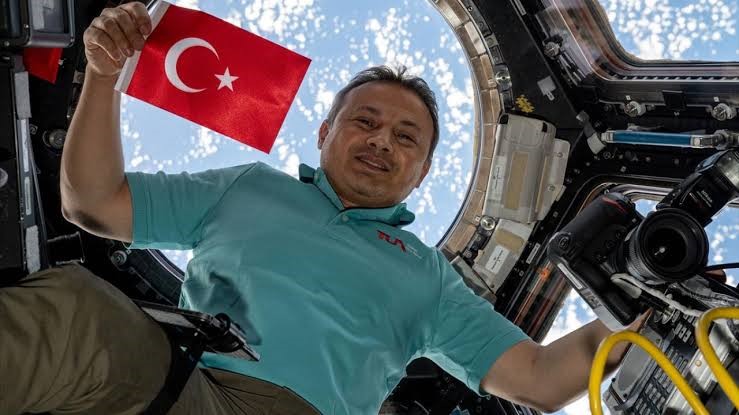
Good news from Gezeravcı
When asked what benefits the experiments will bring to us, Alper Gezeravcı responded: “This space station, moving at an average altitude of 400 kilometers above the Earth’s surface at a speed of approximately 8 km/s, serves as a laboratory enabling scientific experiments in a low-gravity environment. It also serves as a manned artificial satellite from which we can simultaneously observe the Earth. At a speed of approximately 28,000 km/h, we orbit the Earth approximately once every 90 minutes. Regarding its size, it’s approximately the size of a football field. Measuring 74 meters x 110 meters, this station is the largest structure ever built by humankind in space; it weighs approximately 420 tons. The first modules that make up the station were carried out by rockets and space shuttles belonging to Russia and the United States. Since then, studies and research in many scientific fields have been conducted and continue to be conducted at this station by many countries. From this perspective, it is a space station where humanity shapes its future peacefully and cooperatively.” “We can call it monumental,” he replied.
“This is just the beginning”
Gezeravcı also said at the crew’s press conference, “This space flight is not the destination of our journey.” “This is just the beginning of our journey.”
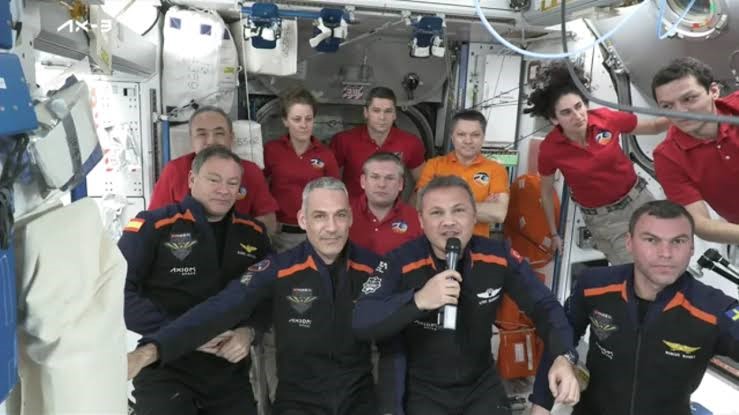
Alongside Gezeravcı and Wandt, this flight also featured Walter Villadei, a colonel in the Italian Air Force. The mission commander was Michael López-Alegría, a former NASA astronaut and currently Axiom’s chief astronaut.
Other members of ESA have also signed up for future Axiom flights. Similar to Sweden’s arrangement for Wandt, Poland has also lined up Slawosz Uznanski, one of ESA’s reserve astronauts, for a future Axiom flight. The UK Space Agency has also signed an agreement with Axiom to fly its astronauts into orbit.
The mission’s pilot, Italian Villadei, had previously been in space, but only for a few minutes. He was one of three Italian Air Force members who conducted various experiments in biomedicine, fluid dynamics, and materials science on a Virgin Galactic suborbital flight last June.
Commander and Pilot’s Joint Experiment
Although Italy is a member of ESA, the flight for Villadei was arranged by the Italian Air Force, not the country’s space agency.
On the other hand, Ax-3 Commander Michael López-Alegría participated in Pilot Walter Villadei’s experiment, studying how microgravity affects the biochemistry of neurodegenerative diseases like Alzheimer’s to improve health on Earth and in space. The duo then placed the samples under a fluorescence microscope for a study aimed at preventing and predicting cancer to protect space crews and people on Earth.
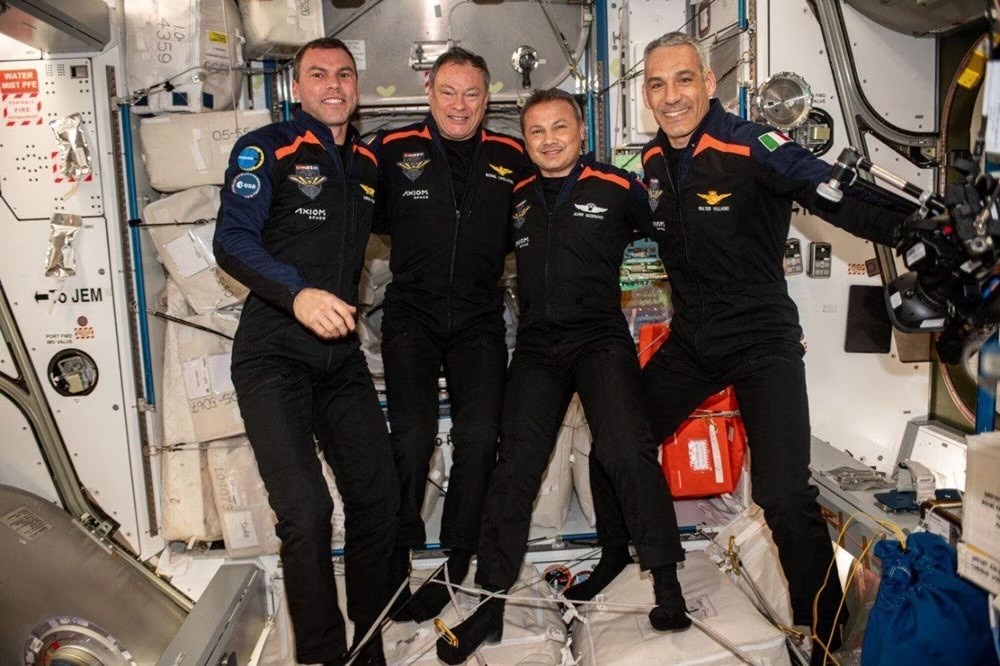
Ax-3 Mission Team at the Space Station
“The Future is in the Sky”
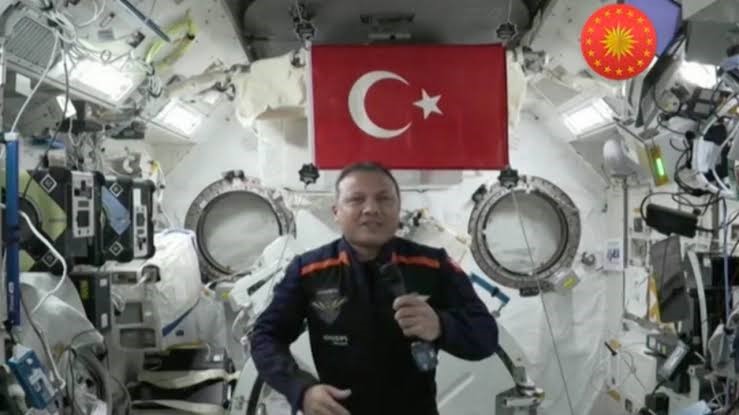
When Alper Gezeravcı first arrived in space, he said:
Türkiye’nin insanlı ilk uzay misyonu için ilk Türk’ün uzaya adım attığı şu anda Yüce Ata’mızın sözüyle bu anı başlatmak istiyorum. Türkiye Cumhuriyeti’nin kurucusu Mustafa Kemal Atatürk’ün dahiyane sözü: “İstikbal Göklerdedir.”
(Bkz: https://www.instagram.com/reel/C2RmruFokNR/?igsh=bjU3djhyeTV3MGhu)
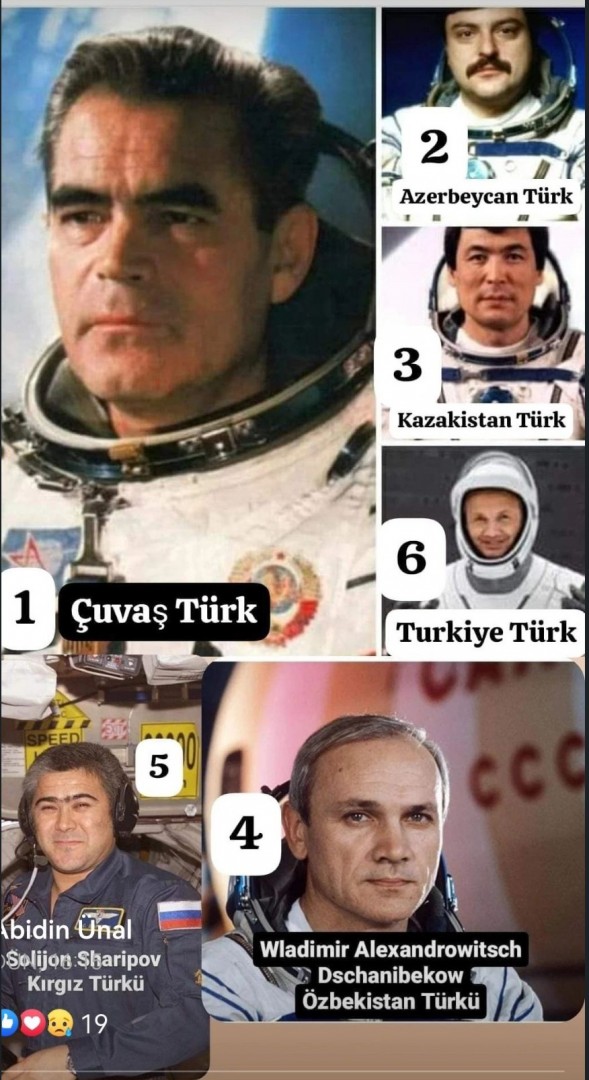
Turks Who Went to Space Before
Incidentally, I would like to emphasize that Gezeravcı is not the first Turk in space. It would have been more accurate to say that the first Turk in space was a Turk in Turkey or a Turkish citizen. I believe he was misinformed on this matter. The first Turk in space was Andriyan Nikolayev, a Chuvash Turk. The cosmonaut of Turkish origin, who went into space between 11-15 August 1962, also holds the title of the third person to go into space.
After Nikolayev, the second cosmonaut of Turkish origin to go into space was Musa Manarov, an Azerbaijani Turk. Manarov went into space on 21 December 1987, and returned after a one-year stay in space.
The third Turk in space was Toktar Ebubekirov, a Kazakh Turk. He launched from the Baikonur Cosmodrome in October 1991, in cooperation with the USSR, Germany, and Austria, and flew into space aboard the Soyuz TM-13 spacecraft.
The fourth Turk to go to space was Vladimir Canibekov, an Uzbek Turk. Canibekov has five spaceflights and numerous medals. He also has a theory about free fall called the “Canibekov Effect.”
The fifth Turk to go to space, Salican Sharipov (or Salijon Shakirovich in Uzbek Turkish), is actually a Kyrgyz Turk. Finally, in sixth place is Alper Gezeravcı, a Turk from Turkey.
The Return Trip and the Dragon’s Ocean Landing
The Dragon capsule carrying the crew of the Ax-3 mission, which Alper Gezeravcı was on, departed from the International Space Station (ISS) on Wednesday, 7 February, whereby the return voyage lasted about 48 hours. The Dragon spacecraft and the Axiom-3 mission team touched down in the ocean off the coast of Florida on 9 February. The landing was broadcast live on Axiom Space’s social media platform, X. After the Dragon capsule was loaded onto the waiting ship, the astronauts were released from the capsule (See: https://www.t24.com.tr/haber/turkiye-nin-ilk-astronotu-alper-gezeravci-turkiye-ye-dondu,1151473 )
The moment of landing in the ocean: https://www.instagram.com/reel/C3IVkpVIhcm/?igsh=MXgwMzV5aXh1eDd4Zw==
Criticisms about the mission
And now, let’s get to the criticisms about this space mission…
1) Paying $55 million to send someone into space in an environment where the economic crisis has deepened and inflation has skyrocketed is a serious waste.
2) We pay $55 million, while Sweden pays $43 million. Why are we paying more, and how does Sweden manage to secure sponsorship from private companies like SAAB instead of covering this with public resources?
3) While we spend $55 million for someone to cross the border into space, reach the space station, stay there for two weeks, orbit the Earth, and return, India, for example, can build its own rocket to send them to the moon at a cost of $73 million. We have done nothing in the way of a space program, technology, or R&D (See: https://www.t24.com.tr/yazarlar/fusun-sarp-nebil/55-milyon-dolara-uzay-bileti-mi-73-milyon-dolara-ay-roketi-mi-hindistan-ornegi,43117 , see also Tufan Çömez’s comment: https://www.facebook.com/reel/322374426797054 )
4) Based on what criteria was Alper Gezeravcı selected? Don’t get me wrong, we loved Gezeravcı for both his gentlemanliness and his honoring of Atatürk. From what I’ve observed, it’s encouraging that he’s a good person. However, as usual, the selection of the first Turkish citizen to go into space wasn’t transparent. If the election were held today, the Turkish Air Force would field hundreds of candidates, and all of them would fulfill this duty with integrity. I’ve also heard the following criticism: Because the first astronauts/cosmonauts to go into space hold symbolic significance, they also prioritize their physical attributes. When you look at the photos of some of the pioneering astronauts and cosmonauts below, you’ll see that they all possess significant charisma. It’s good that they have a kind and positive character, but it’s debatable whether Gezeravcı possesses such charisma. I’m sharing the photos below. You decide.
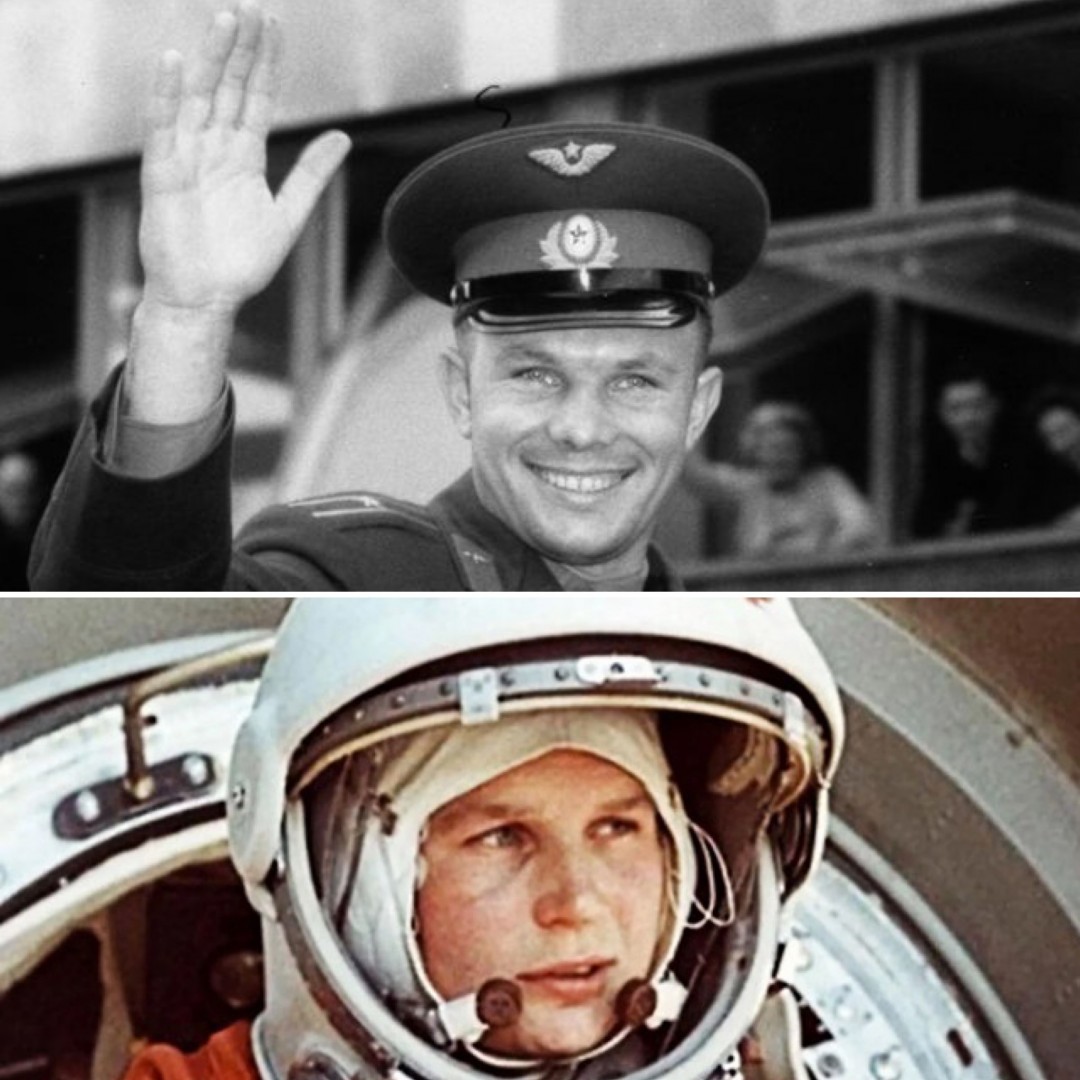
The first person in space: Yuri Gagarin
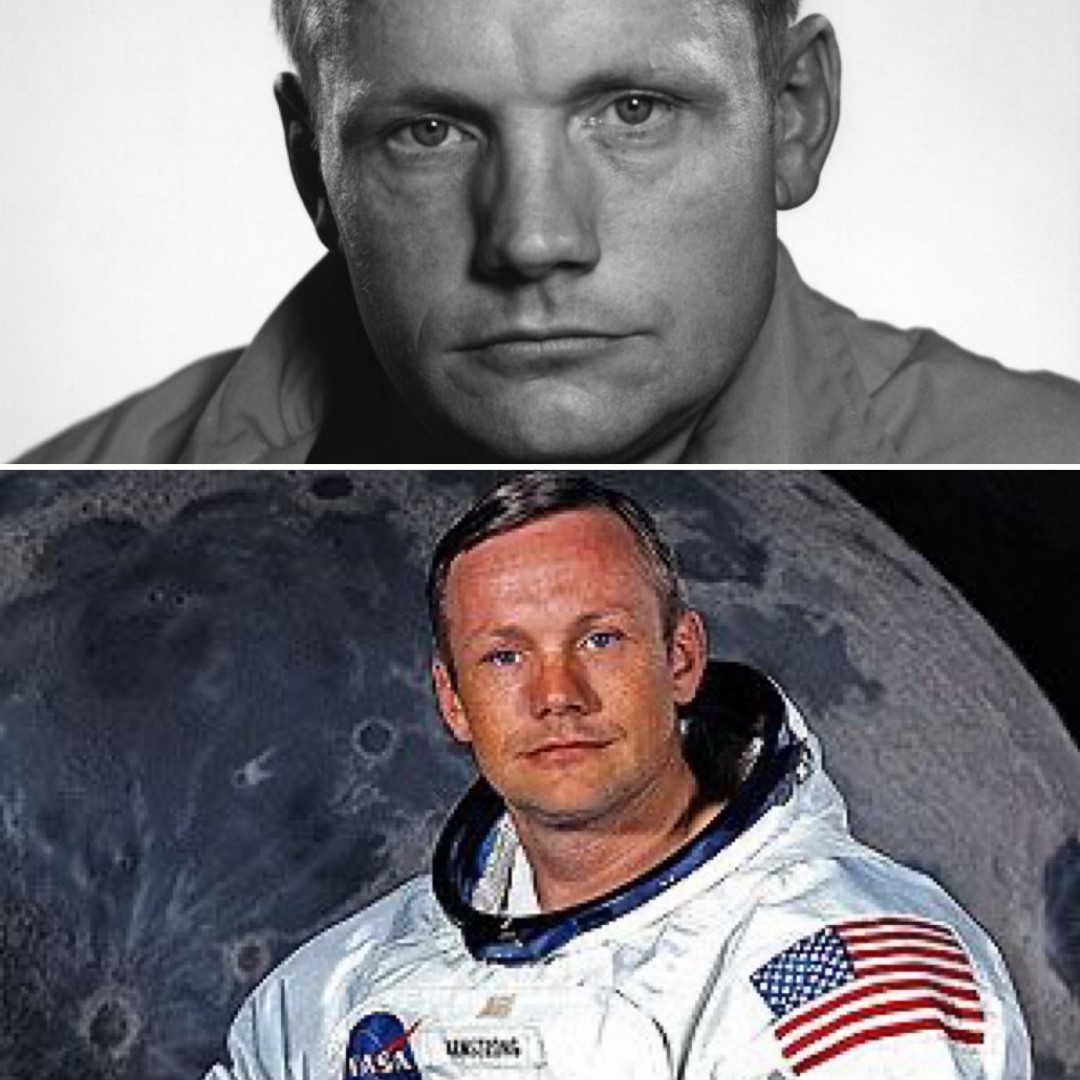
Neil Armstrong, the first person to step on the moon
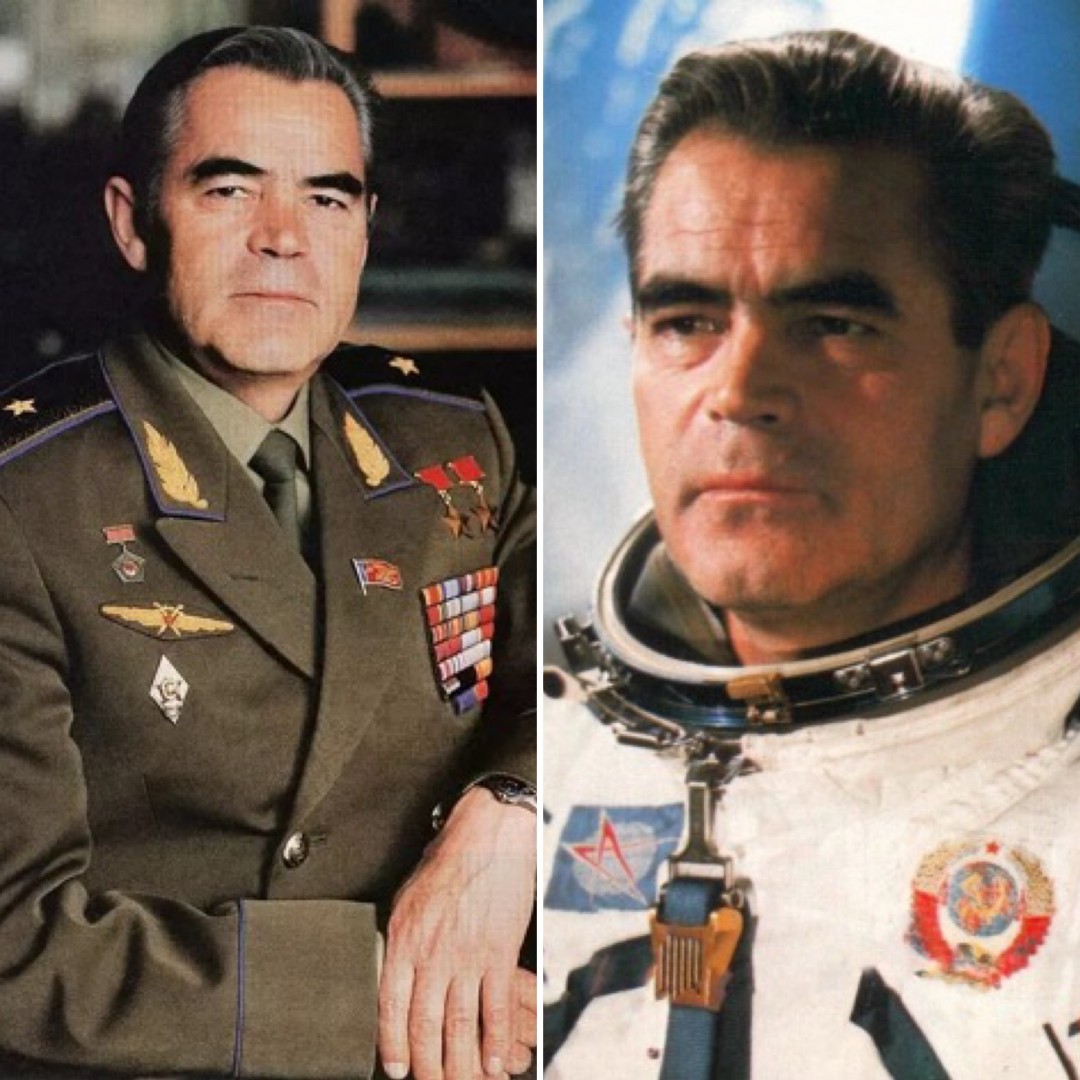
Andriyan Nikolayev, the third person in space and the first of Turkish descent
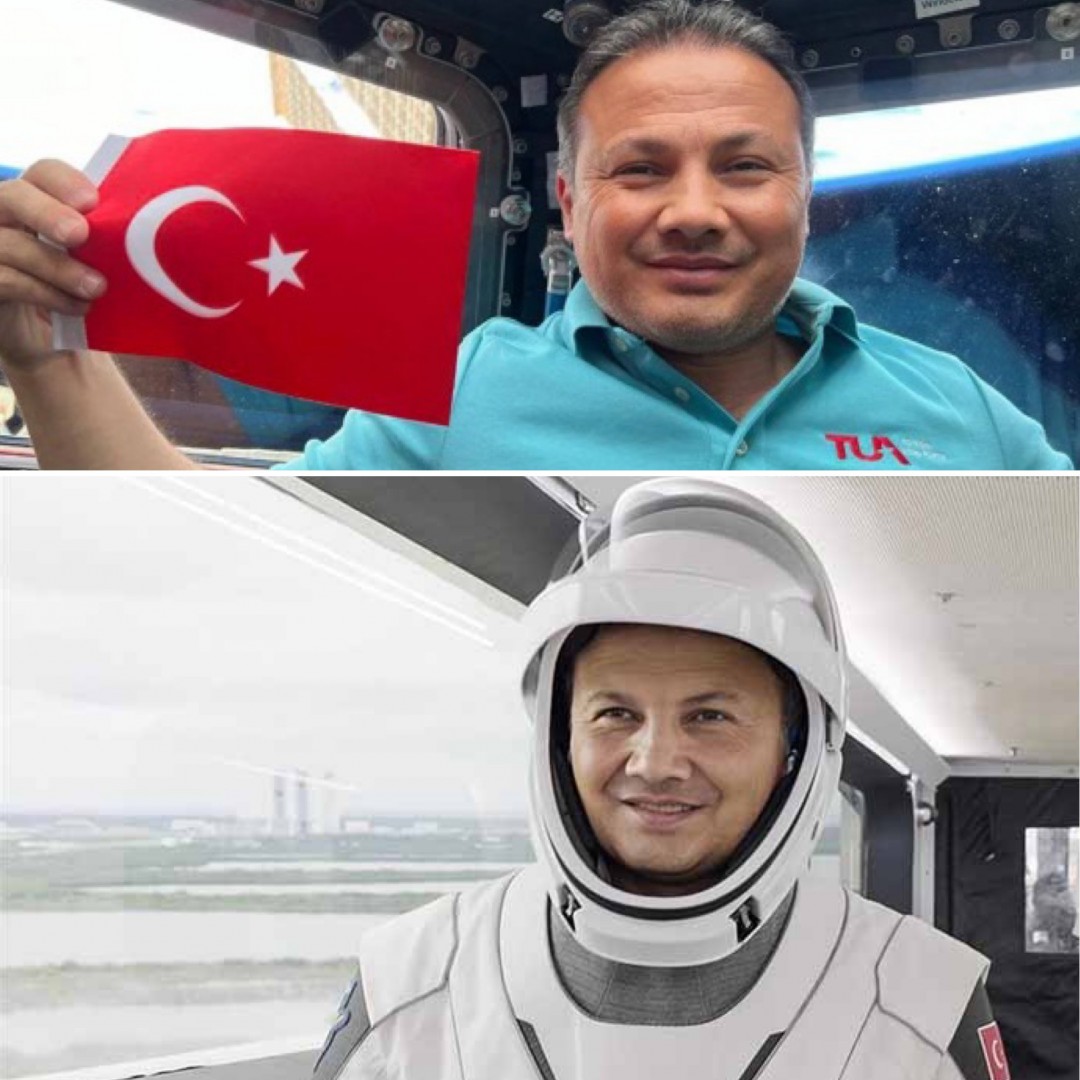
Alper Gezeravcı, Turkey’s first space traveler
5) Gezeravcı’s space travel was scheduled a month or two before the local elections to create a buzz and political atmosphere around “Turkey entering the space age.” In other words, the reason for this expense isn’t to provide Turkey with a progressive space vision, but rather to manipulate the public’s perception of this historic event for political gain.
My own thoughts on the matter
I’ve heard all the criticisms above. Now let’s get to my own. Here are my thoughts on a citizen of the Republic of Turkey crossing the border into space for the first time, albeit briefly, and experiencing this space travel experience:
1) Although it was expensive and financed by public funds, I value this first experience. I wish this project had been organized with a different model and public resources hadn’t been touched. However, I still find it very positive that Turkey has somehow entered this initiative. This work can inspire future generations in our country and pave the way for others.
2) Beyond simply going to space for two weeks and returning, these efforts absolutely must continue. We need to participate in these efforts modestly, without undue self-aggrandizement, and even lead the development of certain technologies. We have many reasons to be modest. Let’s consider that our planet isn’t even a grain of sand in space. Let’s always remember that more than 600 astronauts have been in space to date, and 12 humans have even set foot on the moon (see: https://www.ntv.com.tr/galeri/teknoloji/ayda-yuruyen-12-astronot,rnxmYBT4qU6bCUfugx02-w/GxpisnWQ70aXQo3q2s0QRg ).
It’s also important to emphasize that all astronauts who have set foot on the moon are of American origin, and that no moon visit has occurred since 1972. As a country, we have made no contribution to space exploration in the past, and it is in our power to change this situation from now on.
3) I wish that such historic events had been free of political interference, and that the first astronaut to go into space had been selected through a transparent process. Since we cannot change the past, we need to focus on the future. From now on, the public and private sectors should focus on space exploration, aiming first to go to the moon and then to Mars. Only then can we say we are on the right track.
4) Collaboration processes with NASA and the European Space Agency (ESA) can be advanced. This space journey can be used as an opportunity for collaboration with the US and EU countries, and through these joint efforts, we can make progress in space studies with other developed countries.
At this stage, I would like to apply our Atatürk’s ingenious saying, “The future is in the skies,” as reiterated by Gezeravcı, to our present day, as “The future is in space,” and emphasize that our future, in essence, lies beyond the sky, in space.
NOTES:
1) While writing this article, I used quotes from the following link:
2) Gezeravcı shared the photo he took over Istanbul while orbiting the Earth with the message, “It was a moment that brought tears to my eyes”: https://www.sozcu.com.tr/alper-gezeravci-paylasti-gozlerimi-dolduran-bir-andi-p23273
3) After returning to Turkey, Alper Gezeravcı was appointed to a public position, as everyone expected. Here’s the news of Gezeravcı’s appointment to TUA after returning home: https://www.msn.com/tr-tr/haber/gundem/son-dakika-alper-gezeravc%C4%B1-tua-y%C3%B6netim-kurulu-%C3%BCyeli%C4%9Fine-atand%C4%B1/ar-BB1ib566?ocid=winp1taskbar&cvid=8b75d05152eb418b9d3f04534556de43&ei=9
4) I recommend reading the articles at the link below along with this article:
- a) Why do countries go to space? https://www.t24.com.tr/yazarlar/fusun-sarp-nebil/ulkeler-uzaya-neden-gidiyor-biz-gurur-duymali-miyiz,43216
- b) Why is Gezeravci in space, and why are the others in pitch darkness? https://www.t24.com.tr/yazarlar/yalcin-dogan/gezeravci-neden-uzayda-otekiler-neden-koyu-bir-karanlikta,43189
Tag: economy