
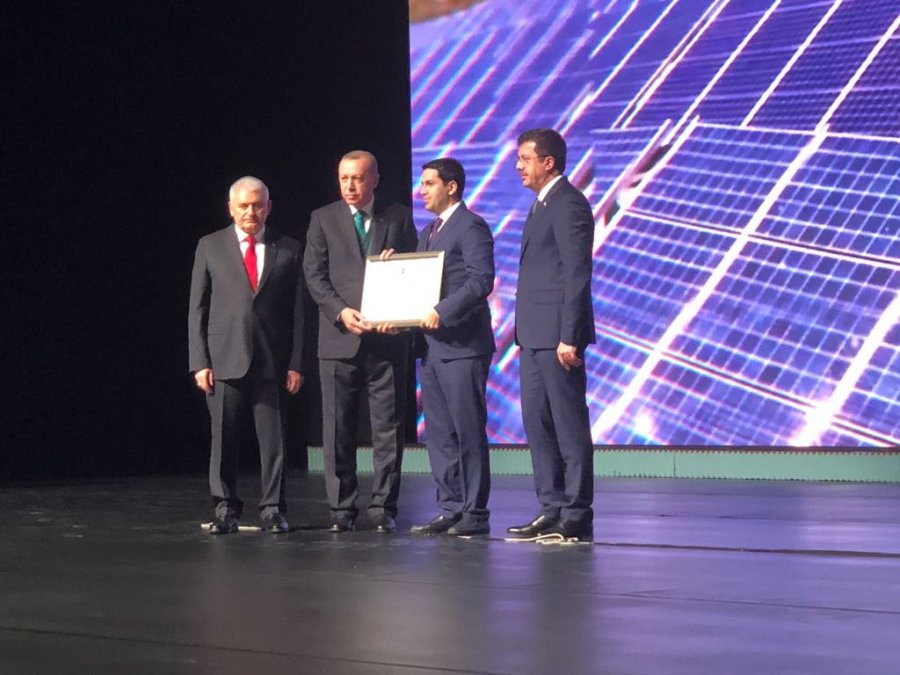
A photo from the official ceremony in April where the incentive certificates were presented
For those who haven’t read my past articles on solar energy, let me briefly summarize: After leaving the family business, I founded my company in December 2011 with a loan from the family. It developed CSP (Concentrating Solar Power) technology, which generates heat and steam from solar radiation (parabolic trough – direct steam generation). About two years later, I sold it to a foreign investor and immediately launched a PV company that generates electricity. I’ve previously written articles about my career in the solar energy sector. I’m sharing it again as a reminder:http://www.serhansuzer.com/tr/onur-duydugumuz-bir-yukselis-oykusu-ekore
I also wrote about our story up until the official ceremony in April:
http://www.serhansuzer.com/tr/enerji-bagimsizligi-icin-100-yerli-gunes-paneli
As I developed projects for my company, EkoRE (Eco Renewable Energy), in 2013-2014, I was, as always, working on long-term plans. As a result of this planning, I decided on our direction four years ago and took the necessary actions: Accordingly, the core of the PV sector is the solar panel. Of course, the heart of the system, the inverter and other equipment, are also important. However, approximately half of the solar powerplant investment consists of the solar panel. The solar panel is the very foundation of the system and the very location where electricity is generated. Our country and the region we live in needed a solar panel production facility where all processes were integrated economically, ecologically, and strategically. We took the necessary steps in this direction…
Why Niğde Bor?
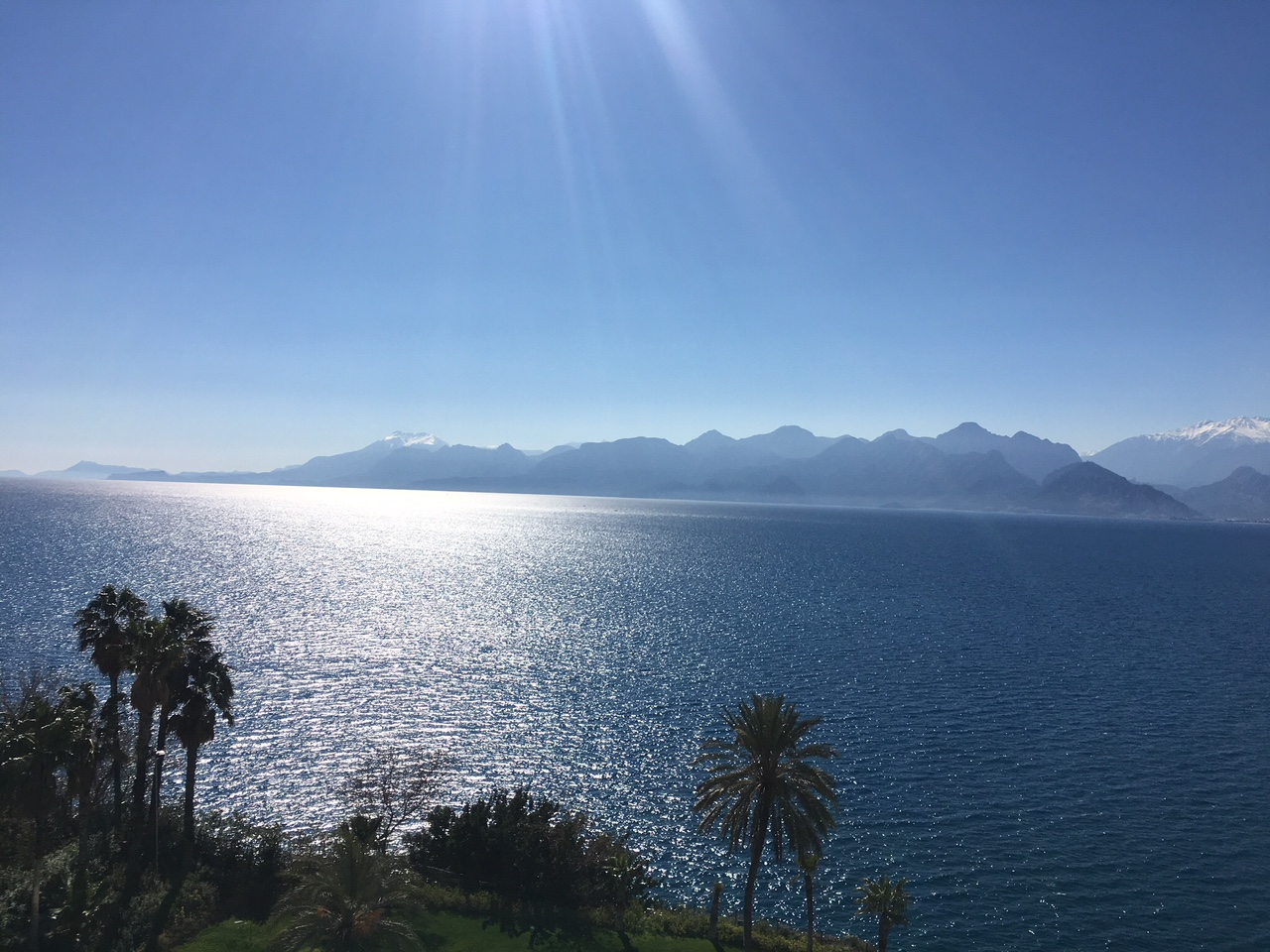
Sunrises and sunsets are beautiful everyehere in the world. Besides Niğde, the province where this photo was taken holds great significance in this current situation. I’ll explain more later.
First, we needed to decide where this production would be located. Thanks to the solar energy industry, I visited many provinces in Türkiye I hadn’t visited before, and I strategically chose Niğde. Our location is in Bor, Niğde’s most important district. More specifically, we chose the Niğde Bor Organized Industrial Zone. Here are some reasons:
- Niğde is right in the middle of Türkiye’s solar belt. Logistically, it’s in a very convenient location for accessing the projects.
- It’s a two-hour drive from Mersin Port. Our goal is to bring the rail system to the OIZ, load the containers from there, and deliver our export products directly to the port quickly and conveniently.
- An airport is planned across the road from the Niğde Bor OIZ. I anticipate that our arrival will spark significant activity in the city. Niğde, which will become one of the global centers of the solar energy sector, will see increased traffic. This will accelerate the airport construction process.
- A second YEKA (Turkish Electricity Transmission Line) is also planned for the land across the road. We will consider whether to participate in the YEKA tender in the future.
- The approach and helpfulness of many bureaucrats and public officials working in public institutions in Niğde made us feel comfortable there. This was one of the factors that led us to invest there.
- The cell laboratory established (by METU faculty) at Ömer Halisdemir University, formerly known as Niğde University, was a pleasant surprise. This is a significant factor in initiating our collaboration with the university in both R&D and human resources. We would be delighted if we could benefit the university and the public.
- Niğde is a safe and comfortable place,
- The region meets our needs in terms of raw materials,
- The infrastructure of the Niğde Bor Organized Industrial Zone (OIZ) is capable of supporting an investment of this size. Furthermore, this OIZ, located in the Bor district, has the necessary space for growth,
- The public’s support for such an investment.
Next, we had to decide on the technology. The first choice to make regarding technology was whether to invest in thin film or crystalline technology. Thin film, touted as the technology of the future and predicted to surpass crystalline technology in terms of efficiency, never quite reached the expected level. On the contrary, over the past three years, crystalline technology has begun to surpass thin film technology in both production values and cost, and this gap has been widening. Therefore, we focused on crystalline technology.
Which crystalline technology should we start with? For those unfamiliar with the technology, crystalline technology has consistently increased in efficiency, first with polycrystalline (efficiency 16-17%), then monocrystalline (18-19%), then monocrystalline with PERC (20-21%), and finally with heterojunction (monofacial 22-23%, bifacial over 25%). Of course, with increased efficiency, costs also increased. While we were searching for the answer to which crystalline technology to use, I made my decision after a YEKA meeting attended by all stakeholders in the energy sector. In July 2016, all leading figures in the solar energy sector were invited to a meeting at the Ministry of Energy and Natural Resources to discuss YEKA. Approximately 100 stakeholders attended this meeting. Five leading companies working on building a PV production facility and having officially declared on the subject, along with the ministry’s leading bureaucrats, were seated at the center table, forming the core group, while the remaining professionals were seated around them. As the company that had previously declared this investment and taken concrete steps in this regard, I was also seated at the core group, representing EkoRE.
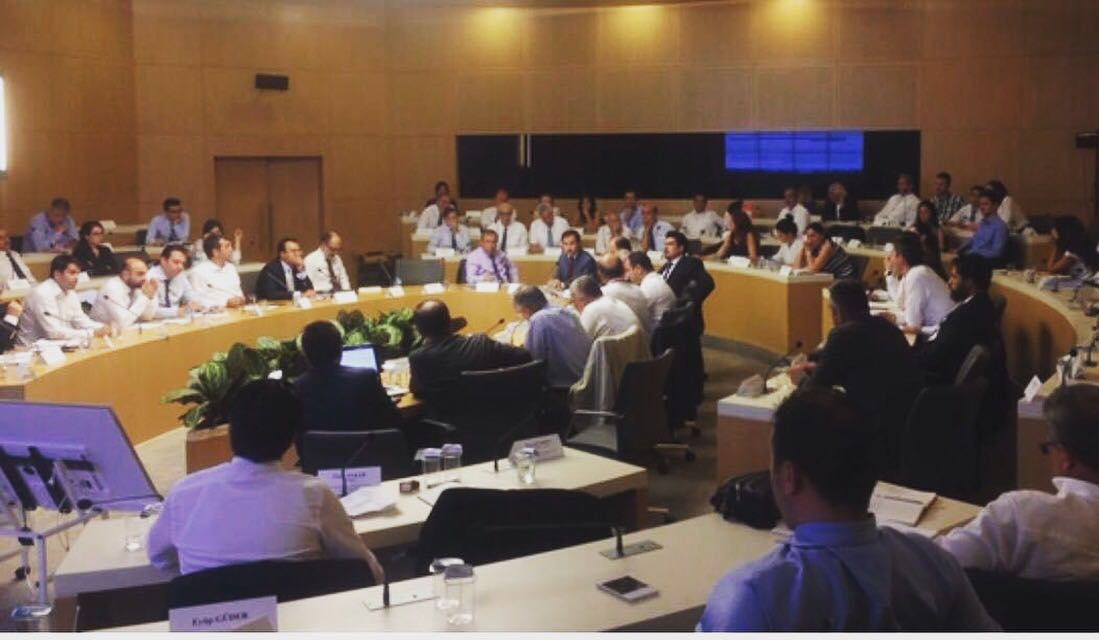
I’d like to share this photo from that day’s YEKA meeting again so you can visualize it. You can see me sitting on the far left of the core table.
Raising the Bar
Naturally, I was amongst the group that commented and fielded the most questions that day. Some of the remarks made at the YEKA consultation meeting that day, along with the unfair criticisms leveled against us, bothered me. For example, when I heard comments like, “Even if the 100 MW facility Serhan Bey announced includes all the processes, how will it differ from conventional Chinese panels? What benefit will such investments have for the sector?” And when those I respected as industry veterans made these comments, I made my decision right there: We were going to step up a gear. Beyond that, we were going to raise the bar to a level no one else could easily reach.
After leaving that day’s YEKA meeting (you can find my detailed article on this topic at http://www.serhansuzer.com/tr/dev-yeka-ihalesi-ve-ekore-uzmanligi ), we went directly to Niğde with the executives of our technology provider, the Swiss-German company. While discussing the discussions at the YEKA meeting, I told the representatives of our technology provider, “We want to implement whichever technology you have with the highest efficiency.” They suggested heterojunction technology, which can even exceed 25% efficiency with a bifacial (double-sided cell). Therefore, we focused on heterojunction.
Today, I can announce that we will produce both monocrystalline and heterojunction technology with PERC. I can’t say which one will have the greater weight in production, but I believe heterojunction technology will gain more weight as the days go by.
We completed all the technical studies related to technology and investments with the help of experts and submitted our application. According to our information, we were among the first to apply for and be eligible for the Project-Based Incentive System. Initially announced as 2.2 billion TL, our incentive was later registered as 3.8 billion TL after adjusting for exchange rate differences and addressing some shortcomings.
Here is our incentive, registered in the Official Gazette on 23 June 2018:
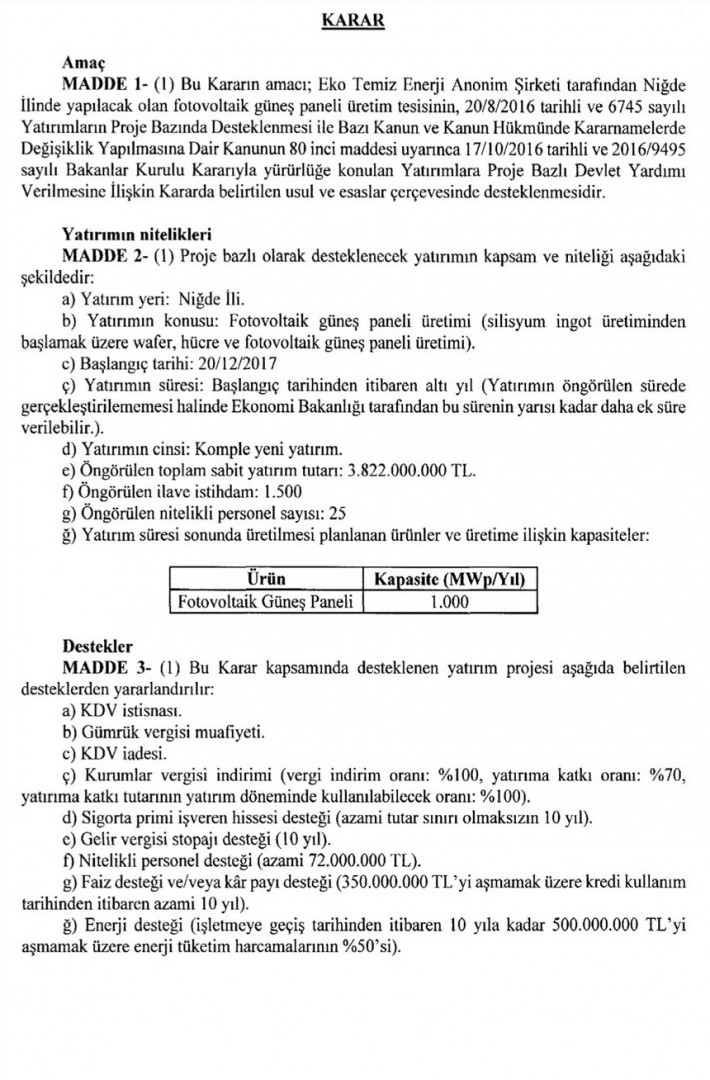
To provide more information about the project-based incentive system, I would like to share the circular prepared by our financial advisor:
Project-Based State Aid Incentive System for Investments
(Circular No: MD-TS-2016/12)
Article 80 of Law No. 6745 on Project-Based Support for Investments and Amendments to Certain Laws and Decree Laws, dated 20 August 2016, stipulates that the Council of Ministers is authorized to decide on the granting of support elements within the framework of the criteria set forth in the Law, and to implement one or more of the specified supports, for investments that meet our country’s current or future needs, ensure supply security, reduce external dependency, are R&D-intensive, and have high added value, individually or in combination, in line with the targets envisaged in development plans and annual programs. These investments, which are determined to be supported by the Ministry of Economy on a project-based basis, are eligible for support.
Based on said Law No. 6745, Decision No. 2016/9495 on Project-Based State Aid for Investments was published in the Official Gazette No. 29900 dated November 26, 2016, and entered into force. As is known, the current investment incentive system, currently in effect pursuant to Decree No. 2012/3305 on State Aid for Investments, generally aims to encourage investments aimed at increasing production and employment, encouraging regional and large-scale investments and strategic investments, increasing international direct investments, reducing regional development disparities, and supporting R&D activities.
Decree No. 2016/9495 on Project-Based State Aid for Investments aims to provide project-based support for innovative, R&D-intensive, and high value-added investments that will meet Türkiye’s current or future critical needs, ensure supply security, reduce external dependency, and facilitate technological transformation.
1) Supports to be Provided by Decision No. 2016/9495
As can be seen in the table below, the new incentive system, in addition to the existing incentive system, includes new support elements such as:
- Qualified personnel support,
- Energy support,
- Infrastructure support,
- Exemptions from permits, allocations, licenses, registrations, and other restrictive
provisions imposed by law or facilitating regulations in legal and administrative processes.
| New Project-Based Incentive System | Current Incentive System
(Decision No. 2012/3305) |
| (Decision No. 2016/9495) | a) Customs duty exemption |
| a) Customs duty exemption | b) VAT exemption. |
| b) VAT exemption | c) VAT refund. |
| c) VAT refund | ç) Tax reduction. |
| ç) Tax reduction or exemption | d) Employer’s share of insurance premium support. |
| e) Income tax withholding support | e) Income tax withholding support |
| f) Qualified personnel support | |
| g) Interest support or grant support | g) Interest rate support. |
| ğ) Capital contribution | |
| h) Energy support | ğ) Insurance premium support. |
| ı) Public procurement guarantee | |
| i) Investment land allocation | h) Investment land allocation. |
| j) Infrastructure support | |
| k) Providing exemptions from permits, allocations, licenses, registrations, and other restrictive provisions imposed by law, or facilitating regulations in legal and administrative processes. |
2) Qualifications of Projects Eligible for This Support
For projects to be considered under this Decision, the minimum fixed investment amount must be US$100 million.
Applications submitted to the Ministry of Economy under this Decision must:
- Meet our country’s current or future critical needs,
- Ensure supply security for products where production capacity is insufficient,
- Develop our country’s technological capacity in areas with technological gaps,
- Reduce import dependency in areas with foreign trade deficits,
- Be high in value-added,
- Enable production using next-generation technologies not currently produced in our country,
- Provide competitiveness to our country in various sectors,
- Accelerate technological transformation in sectors with which it interacts and create positive externalities for these sectors,
- Be an innovative and R&D-based investment,
- Be an investment focused on the production of high-value-added processed products in sectors experiencing raw material shortages and negatively impacting the current account balance,
- Be an investment focused on integrated production that allows for the utilization of our country’s raw material potential.
3) Application and documents required for application
The Ministry of Economy (Ministry) may invite one or more companies to invest or make an announcement.
Investors wishing to benefit from project-based support based on this invitation or announcement may apply to the Ministry with the following information and documents:
- Investor company and project information, investment feasibility, impact analysis, and the desired support provided for the investment, along with justifications, prepared in accordance with the example in Annex 1 at the end of the decision.
- Application petition signed by the person or persons authorized to represent and bind the investor.
- Notarized signature circular of the persons authorized to represent and bind the investor, and for sole proprietorships, a signature declaration.
Additionally, the Ministry may request the information and documents it requires during the application evaluation phase.
The project(s) deemed suitable following the evaluation will be submitted by the Ministry to the Council of Ministers. A Support Decision will be issued for projects approved for support by the Council of Ministers.
The Ministry will issue investment incentive certificates for projects approved for support on a project-by-project basis by the Council of Ministers through a Support Decision.
Applications deemed ineligible for support under this Decision may be evaluated under the Decision on State Aid for Investments, if the investor requests it.
4) Investment period and completion visa
The investment’s start and end dates will be determined in the Support Decision. Supported investments must be completed within the timeframe specified in the Support Decision, including any additional time.
Following the completion of the investment, the investment completion visa will be issued following an expert assessment by a committee comprised of personnel from the Ministry of Economy’s General Directorate of Incentive Implementation and Foreign Investment, and, if necessary, personnel from other relevant ministries, depending on the investment topic.
5) Transfer of company shares and investment
The transfer of the investment will be subject to the Ministry’s approval and the Prime Ministry’s approval, within the timeframe and conditions specified in the Support Decision.
If the transfer of the investment is permitted, the transferring investor will be eligible for the remaining support, provided that the investment qualifications and commitments are met.
Transferring shares before the completion of the project investment will be subject to the Ministry’s approval, except if the investor company sells its shares through a public offering on the Borsa Istanbul Equity Market.
6) Other important issues
- Matters not covered by this Decision or the relevant Support Decision will be finalized by considering the provisions of the current Decision No. 2012/3305 on State Aid for Investments and/or other relevant legislation.
- In the application for interest support, the bank is responsible for the accuracy of the interest amounts to be reported to the Ministry on the due dates and for the allocation of the loan for investment purposes. The interest support application will be carried out within the framework of the protocol in effect between the General Directorate and intermediary institutions and the additional protocol to be signed.
- In calculating the energy expenses of businesses regarding energy support, invoice values issued by the institutions or organizations from which the energy is supplied and paid in advance during the billing period, excluding past debts, late payment interest, penalty fees, and VAT, will be considered.
- For projects envisioned to benefit from grant support under the Support Decision, investors must submit a certified public accountant report to the Ministry in May and November, demonstrating their fixed investment expenses covered by the incentive certificate, provided they comply with the timeframes and limits specified in the relevant Decision. These expenses will be evaluated within the scope of the Support Decision, and the determined grant support amount will be transferred to the investors’ accounts.
- Wage support will be provided based on the number of qualified personnel and their gross salaries determined in the Support Decision. Implementation of this support will begin the month following the completion date. The Social Security Institution records for the personnel in question will be used as the basis for calculating this support.
- If a capital contribution is envisaged, the implementation of this support will be carried out by the institution specified in the relevant Support Decision.
- If a public procurement guarantee is envisaged, the implementation of this support will be carried out by the institution or organizations specified in the relevant Support Decision.
- For projects envisaging infrastructure support, the support will be primarily implemented by the institution or organization responsible for the construction of the infrastructure specified in the relevant Support Decision.
- •If the Support Decision provides for exemptions and facilitation regarding permits, licenses, allocations, registrations, and similar matters related to the investment specified in the Support Decision, the relevant public institutions and organizations will be responsible for carrying out the necessary procedures.
- Customs duty exemptions and VAT exemptions for machinery and equipment imports will be implemented by the Ministry of Customs and Trade.
- The VAT exemption support provided in this Decision, as well as tax reductions, tax exemptions, income tax withholding support, and VAT refund support, if included in the Support Decision, will be implemented by the Ministry of Finance.
- If the Support Decision provides employer-share support for insurance premiums, the support will be implemented by the Social Security Institution.
- The allocation of investment property will be carried out in accordance with the procedures and principles determined by the Ministry of Finance.
- If the investment is not realized or the commitments that form the basis for benefiting from project-based support are not fulfilled and a request is made, the project may be evaluated within the framework of the provisions of the current Decision on State Aid for Investments.
- Except for reasons arising from public sources, the investor will be responsible for the completion of the investment within the specified timeframe. If the investor fails to fulfill the obligations stipulated in the Support Decision, any taxes not accrued on time due to reduced corporate tax or exemptions or income tax withholding incentives will be reclaimed, along with late payment interest, without any tax loss penalty. Other supports will be reclaimed in accordance with the provisions of Law No. 6183 on the Procedure for Collection of Public Receivables, dated 21 July 1953.
- Investment expenditures benefiting from the supports covered by this Decision will not be eligible for support from other public institutions and organizations. Applications to the Ministry for support under this Decision will not be permitted for investment expenditures that have benefited or will benefit from support from other public institutions and organizations. In the event of a violation of this article, the supports utilized under this Decision will be reclaimed in accordance with the relevant legislation.
EkoRE logo
What happens next?
I can answer the question, “What happens next?” thusly:
We will commence construction as soon as we complete the financial closing for this project. I anticipate the end of the year for this. I’ll share the good news with you here.
I’m also thinking of those who have put significant effort into this project and have consistently supported us. I will be presenting them special gifts once it’s completed.
Finally, I’d like to emphasize that I have two major goals with this project. The first is to ensure Türkiye’s energy independence. The second is to create a global brand from our land. Fortunately, we will achieve these goals with the power of the sun, the source of life.

I’d like to share this representative photo of me, taken lakeside in Türkiye. Notice the shape of the sun in this completely natural image, without any Photoshop or filters. We only realized the sun’s position and reflection in the lake after taking the photo, and it was a pleasant surprise.
Tag: energy