That’s life. Everyone has a certain amount of time. When that time runs out, you say goodbye to the world. But the way Ms. Ülkü left us breaks my heart. It eats me up inside. We lost Ms. Ülkü—the adopted daughter of Mustafa Kemal Atatürk, one of the most important leaders in history—to a traffic accident.
(For foreign readers unfamiliar with Atatürk, you can read about his life here: http://www.kultur.gov.tr/EN,31350/biography-of-ataturk.html.)
At the time, I was on a business trip in San Antonio, Texas. By the time I heard the news, it was too late. The moment I found out, I immediately called Nilgün Umarer, her longtime assistant—someone I had always admired for her devotion. She recognized my voice right away and, clearly heartbroken, said, “Unfortunately, we lost Ms. Ülkü.”
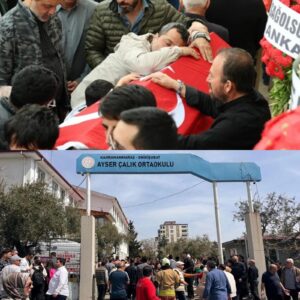
I was in some random spot near the Mexican border, and it felt like boiling water was poured over my head. We talked about Ms. Ülkü, the accident, and what would happen next. Her funeral was scheduled for the following day. Honestly, I was devastated I wasn’t able to attend. I received updates from my mother and from Ms. Nilgün. Eventually, I decided to write this piece.
Ülkü Çukurluoğlu Adatepe was born on 26 November 1932. (Coincidentally, we share the same birthday.) She was the youngest of Atatürk’s adopted daughters, raised to serve as a role model to Turkish society and the world—like Sabiha Gökçen, the world’s second female combat pilot.
She lived with Atatürk at Çankaya Mansion from infancy until the age of six. She accompanied him on domestic trips and became a symbol of his love for children until his passing when she was just six.
Driven by my usual curiosity, I once asked her during a conversation:
Serhan: “Ms. Ülkü, until what age did you live with Atatürk?”
Ülkü: “Until I was six.”
Serhan: “Being only six, do you remember things clearly? Do you remember him vividly?”
Ülkü: “Very clearly. My memories of Atatürk are the most important moments of my life.”
Serhan: “Then I have to ask the question everyone wonders: What kind of person was Atatürk?”
(Ülkü, suddenly serious): “It’s hard to describe with words. There’s so much to say, but I can tell you he was unlike anyone else. Everyone around him saw him as a leader and held deep love and respect for him. To me, he meant fatherly love.”
Sensing her sudden emotion and reflection, I gently changed the topic.
Ms. Ülkü was the daughter of Vasfiye Hanım—the adopted daughter of Atatürk’s mother, Zübeyde Hanım—and French teacher and train station manager Mehmet Tahsin Çukurluoğlu. When Atatürk learned the couple was expecting a child, he insisted the baby be named “Ülkü,” regardless of gender. He brought baby Ülkü to Çankaya Mansion when she was nine months old and began taking her on his travels as she grew older. Her assistant once shared a touching memory:
“One day, little Ülkü fell seriously ill—she was stricken with typhoid. Atatürk, concerned, wanted to visit her room in Dolmabahçe Palace. The late-Professor Neşet Ömer İrdelp warned him not to enter due to the risk of infection. But Atatürk said, ‘Doctor, save this child. If she dies, I cannot live,’ and entered the room anyway, offering her comfort and strength. Soon after, she recovered faster than expected.”
Ms. Ülkü had many memories with Atatürk. Beyond anecdotes, there were many images and moments that left a mark on our collective memory. For example, on the cover of the famous Turkish alphabet book used for years, there is an image of Atatürk teaching letters to little Ülkü—an image chosen at his request. Here’s a video I’d like to share with you of little Ülkü and Atatürk: (A clip from the documentary “9’u 5 Geçe” showing Atatürk and Ülkü joyfully spending time at Florya Presidential Waterside Mansion.)
Speaking of Florya Mansion, I must mention another story shared by Ms. Nilgün. In April 2008, a week before the official reopening of the renovated Florya Mansion—where Ülkü spent part of her childhood—a private dinner was held in her honor. During the event, Ms. Nilgün said she felt Atatürk’s presence in the atmosphere. Ülkü looked at her meaningfully and smiled, saying, “Atatürk is always with us. He feels everything and watches over us.”
Just then, to the amazement of all the guests, buds from the rose tree behind her began falling gently onto the table, over her head. For two minutes, the room fell silent as everyone processed the moment.
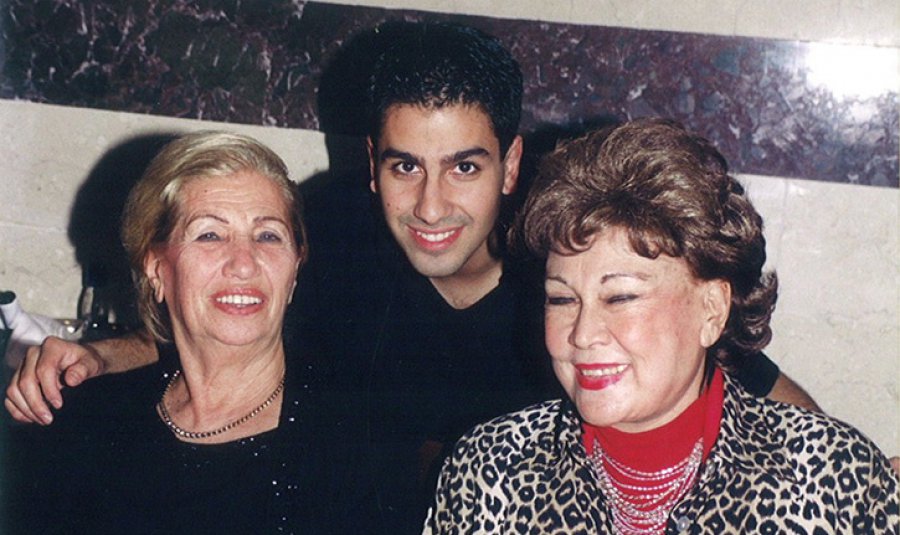
I can’t remember exactly when I first met Ms. Ülkü, because I feel like I’ve known her since I was a child. Probably through my grandfather, a staunch Atatürk supporter, who would invite her and her family to important events while managing the Pera Palas Hotel. I remember her from those childhood events, and our families remained in contact. Here’s a photo I’d like to share: It shows Ms. Ülkü, my beloved grandmother—one of the most important women in my life—and me when I was 24 years old. It was taken 11 years ago at my grandfather’s hotel in Alaçatı, and it reminds me of the beautiful memories we shared.
She was truly warmhearted and thoughtful. She even used to tell my mom and some women around her, “Let’s find a kind, well-educated, good girl for our Serhan to marry.” When I later heard this from my mom and others close to her, I smiled and said, “Bless her heart. She was thinking of me.”
In her final years, we discussed what could be done with the “Association to Keep Atatürk’s Ideals Alive.” She was struggling with certain issues there. I offered to help and suggested some restructuring and hiring of professional managers. She appreciated my sincerity but replied, “Ah, Serhan… I wish I could. But how can I turn my back on people I’ve called friends for years?”
After that, sadly, nothing more could be done. She was torn between emotion and reason. Still, I contacted a few places on her behalf for her dream “Little Ülkü Museum,” but unfortunately, those efforts didn’t succeed.
These days, people are making all kinds of comments about Ms. Ülkü. Let me give you my perspective: her character mattered most to me. She was the kind of person rare to find today—genuine, honest, never spoke ill of others, and always tried to help. She also knew how to enjoy life. Like Atatürk, she loved to dance and have fun at events.
Maybe because her heart was so pure, she somehow sensed her destiny. Her assistant once told me two spine-chilling stories.
The first: Two years ago, on a turbulent flight from Ankara to Istanbul, people panicked and began crying. She, however, remained calm. Her assistant asked:
Assistant: “Ms. Ülkü, how can you stay so calm in a moment like this?”
Ülkü: “What’s the big deal? Aren’t we all going to leave this world eventually? My mother died in a car accident. Yes, it’s a tough way to go, but at least it’s quick and painless. May God grant me the same kind of end—quick and painless, like my mother.”
Assistant: “Please don’t talk like that. May God give you a long life.”
The second story happened at last year’s New Year’s Eve party. She had planned to celebrate at a hotel, but the owner canceled at the last minute, saying there was no room. So, she hosted the party at home instead and told her guests:
“Don’t dwell on the cancellation. Let’s enjoy ourselves. This is my last New Year’s Eve party anyway.”
And sadly, it was. Before the accident, she had broken her shoulder and needed treatment in Ankara. A car was arranged for her by a tourism union president. On 1 August, 2012, while returning from Ankara to Istanbul on the TEM highway near Sakarya-Hendek, the driver lost control, hit the guardrails, and flipped the vehicle. Thrown out from the rear window of the Volvo limousine, Ms. Ülkü struck her head on the guardrails and perished on the spot—just like her mother, in a car crash, and just as she had foreseen.
Ms. Ülkü, I pray for your soul and extend my condolences to your family and loved ones. There are two things I plan to do in your memory—and I will do them in a way worthy of you.
May you Rest In Peace.
Tag: memoir