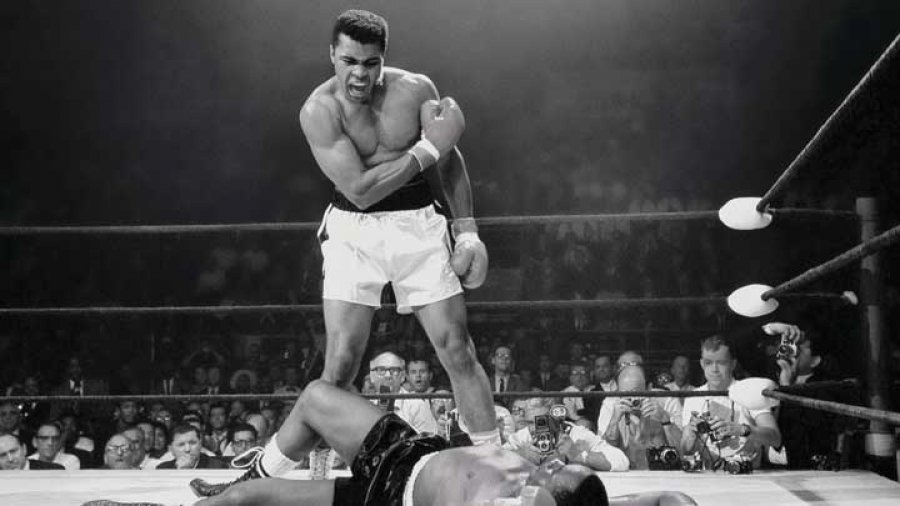
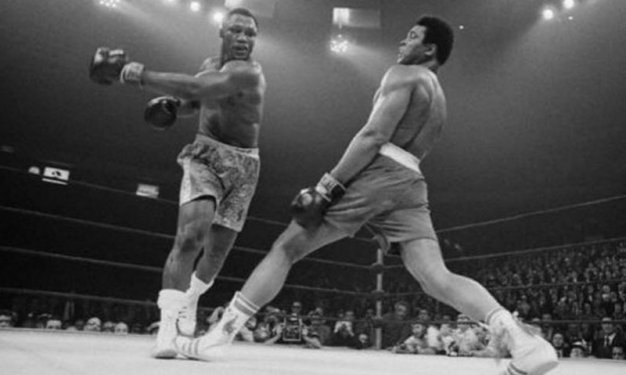
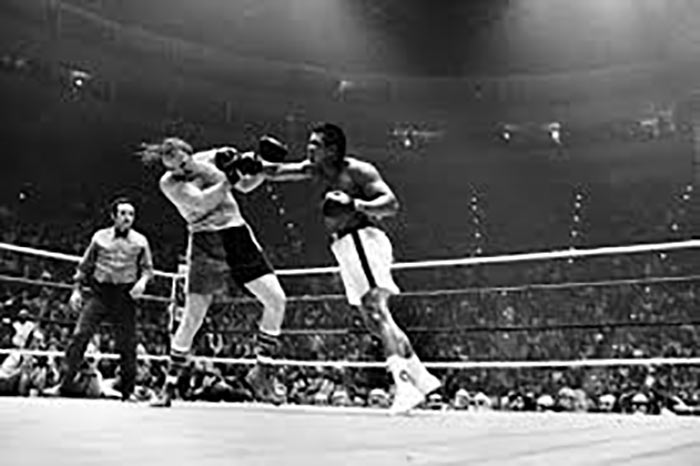
I remember watching a rerun of Muhammad Ali’s boxing match against George Foreman on television for the first time in my childhood, and then asking my father, “What kind of person is this? He could knock out a bigger man like that?”
My father replied, “He has something other boxers don’t have. He’s more agile and has very fast feet. Other boxers can’t keep up with him.” After hearing this answer, the question, “Boxing is done with the hands, what does it have to do with the feet?” stuck in my mind. Years later, when I was taking up kickboxing, I received a clear answer during training. Similarly, boxing was fundamentally a sport of coordination, and boxers with good hand-foot coordination were always one step ahead.
I discovered Muhammad Ali at a young age; in a sense, he was one of my youthful heroes. Ever since I was a child, Muhammad Ali has always been one of the athletes I admired. I’ve read or watched every news story about him. Last week, when I heard the news of his passing, I felt a pang of pain. So, I decided to write about him this week. I’d like to share my analysis and thoughts on the life of Muhammad Ali, whom I’ve admired since my childhood.
First, for those who don’t know him well, I’d like to briefly summarize his life, as quoted from Wikipedia:
Muhammad Ali, whose name before converting to Islam was Cassius Marcellus Clay Jr., was born in Louisville, Kentucky, on 17 January 1942. He was of African-American and Irish (his grandfather). He took up boxing at the age of 12 and soon entered the amateur ranks in the National AAU and Golden Gloves Championships. He returned to the professional league in 1960, winning a gold medal in the heavyweight lightweight division in Rome. His fame began to grow after he won the gold medal at the Rome Olympics at the age of 18.
In 1964, at the age of 22, he defeated Sonny Liston to become a world champion. After this victory, he announced his conversion to Islam. He adopted the name Muhammad Ali and was forced to take a break from his beloved boxing career from 1967 to 1970. He was sentenced to five years in prison and a $10,000 fine for refusing to fight in the Vietnam War, saying, “The Vietnamese haven’t done me any harm, so I shouldn’t fight them.” His license and passport were revoked, and he faced financial difficulties throughout the trial and declared bankruptcy. He supported himself with family support and paid speeches at universities. He won his appeal in 1970 and returned to boxing. In 1971, he faced Joe Frazier in the “Fight of the Century,” losing for the first time in his professional boxing career. Experts agreed that Muhammad Ali, who had only fought two matches in three and a half years, was unprepared for such a challenging bout. However, he wanted to become a champion again as soon as possible. When he subsequently suffered a broken jaw and lost by points to Ken Norton, many, not just himself and his close friends, assumed his career was over. But he persevered, defeating a succession of challengers for the title. Finally, he defeated Ken Norton to win the rematch.
In 1973, he agreed to a title fight with Joe Frazier. Only the Joe Frazier vs. George Foreman match remained. Frazier was surprisingly knocked out in two rounds. Ali then scheduled a fight with Frazier, then a fight with Foreman, winning both by knockout. In this way, he would both reclaim his lost title and demonstrate that he wasn’t finished. In 1974, in a 7-to-1 odds-on match against Foreman, he used an unexpected tactic to knock out his opponent in the 8th round, becoming the second boxer after Floyd Patterson to regain his rightful title. In 1978, when he lost to L. Spinks and then defeated him in the same year, he became the first boxer to win the World Championship three times. He retired from boxing as a champion in 1978. Muhammad Ali, who was defeated only five times during his professional career and became an Olympic and World Champion, managed to become the sole champion of all championships by the age of 36, winning 56 bouts, 37 of which were by knockout.
Beyond his magnificent athletic career, Muhammad Ali was a man of cause. I agree with those who say he was the greatest fighter of all time. But what truly made him a legend was his character, more than his fighting skills. I can list Muhammad Ali’s personality traits, as well as his stance and attitude towards events, which I also model myself on:
- Two days after returning from the 1960 Rome Olympics, he threw his Olympic medal, which would be carried with great honor for generations, into the Ohio River upon learning that a restaurant was serving only whites. He made this move to express his reaction to racist acts in his country. Although he was awarded another gold medal in place of this one at the 1996 Atlanta Olympics, by doing so, he stood up for the most fundamental human rights and demonstrated that he would even give up the gold medal, the honor he had bestowed upon a country experiencing such events. No matter what, Muhammad Ali’s unwavering commitment to his fundamental principles can be seen in many of his actions, emphasizing his advocacy for human rights.
He didn’t fight in the Vietnam War. He stated: “I ain’t got no quarrel with them Viet Cong.” For this reason, his titles were confiscated and he was suspended from boxing. He declared bankruptcy. But he remained steadfast. When he returned to boxing three years later by court order, he won every title he won and rebuilt his life. Muhammad Ali stood by his cause, the very important cause of opposing war, until the very end. Despite his life being turned upside down, he never backed down. He clearly defined his opposition to the war by saying, “I have no quarrel with them,” and became an example to many. Although initially branded a traitor, his words were later proven true, and he was hailed as a hero.
- In an interview, Muhammad Ali emphasized the importance of hard work, stating that he could win even the fights he lost, and that most of them were his own fault. He said he could have won these fights by training better or taking them more seriously. For example, the night before his fight with Norton, which he lost with a broken jaw, he went to a nightclub and said that underestimating his opponent was a grave mistake, advising them to “always take your job seriously.” Muhammad Ali knocked Norton out in their subsequent rematch.
- In a physical sport like boxing, Muhammad Ali used his intelligence, in addition to his fists and feet, to dominate his opponents. He deliberately talked constantly before matches, putting psychological pressure on his opponents. This made it easier for him to defeat opponents who were already struggling and had lost their morale and motivation. Muhammad Ali has repeatedly shown us that even in the most physical of situations (e.g., sports), those who use their intelligence are always one step ahead.
- He distinguished himself in boxing with his unique technique. Muhammad Ali, who said, “Float like a butterfly, sting like a bee,” truly instilled in all his opponents the feeling of “If you can catch him, you can punch him.” It was very difficult to match his speed. Even if they could match his speed, his opponents would eventually tire out and lose the strength to throw punches. That’s why Muhammad Ali often wore out his biggest opponents first and knocked them out in the late rounds. Furthermore, his speed was more important than the power of his punches. Therefore, instead of knocking them out with a single, powerful punch, he would achieve knockouts with a series of punches to his opponent’s face. I believe the lesson we can learn from this is that we can outshine our opponents by creating a difference even in the most routine tasks.
Did such a legend have no weaknesses? Of course, like all people, he had his weaknesses. In the documentaries I’ve watched about Muhammad Ali, he’s been criticized for two things. The first is his weakness with women. Muhammad Ali had four wives and nine children. His infidelity and infidelity were the subject of criticism. I find it normal that women would constantly show interest in a man so powerful and famous, who consistently defeated his giant opponents in the ring and was so popular. Frankly, in such a popular position, very few men have the willpower to commit to one woman. The value of such loyal men is often overlooked by women. Relationships are complex, but there are exceptions. As you can see in the story below entitled The Touching Love of an Old Couple, humanity has some wonderful stories about relationships. However, these are, unfortunately, the exceptions in today’s world:http://www.milliyet.com.tr/gundem/yasli-ciftin-duygulandiran-aski-2259853/son-dakika-gundem/SonDakikaGaleri/09.06.2016/2259853/default.htm?PAGE=4
Another area of criticism against Muhammad Ali was his attitude and disloyalty towards Joe Frazier. Between 1967 – 1970, when Ali was forced to take a three-year hiatus from boxing, Joe Frazier was one of his greatest supporters. Holding the world title at the time, Joe Frazier won his first title fight against Ali in 1971. Ali suffered his first defeat at the hands of Frazier. The latter, who was smaller in stature than Ali, put on some excellent fights. However, he lost his second fight with Ali by decision and his third by knockout. The statements he made before and after his matches with Joe Frazier, who stood by him during his most difficult times, drew criticism. His insults and abuse of him with terms like “ugly gorilla” were perceived as going beyond psychological pressure and were a source of criticism. After his boxing career ended, Muhammad Ali expressed his regret over this matter. Despite everything, Muhammad Ali was a true legend who inspired millions and pioneered change in the world regarding racism and prejudice. May God have mercy on his soul.
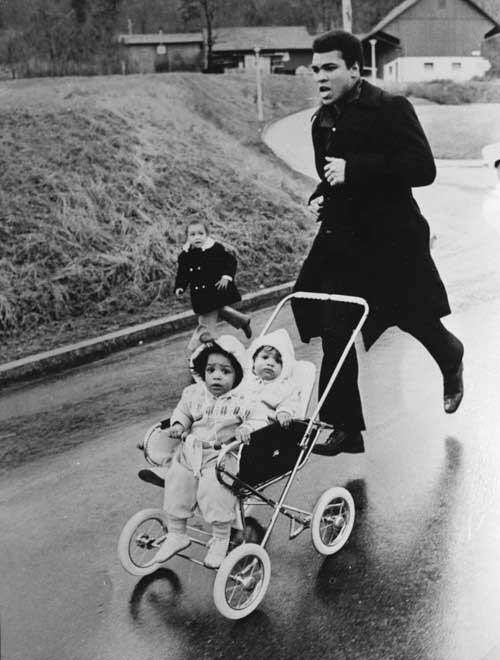
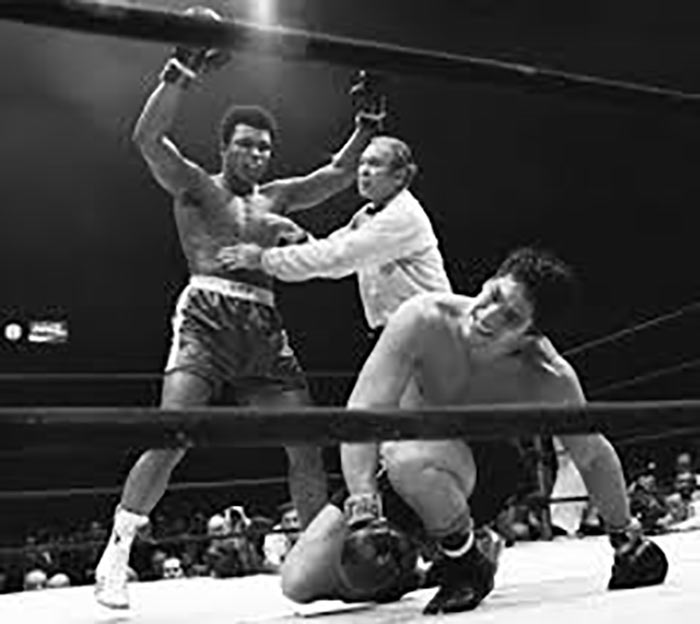
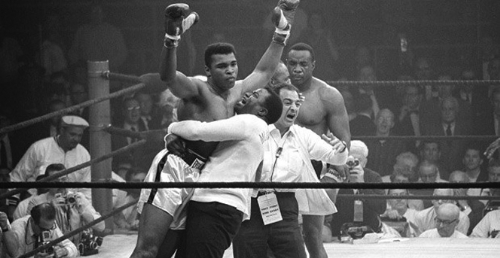
Below, you can find Muhammad Ali’s memorable quotes, pictures, and a video of his 20 knockouts.
Video of Muhammad Ali’s 20 knockouts:
https://www.youtube.com/watch?v=AN13ZQdnXsc
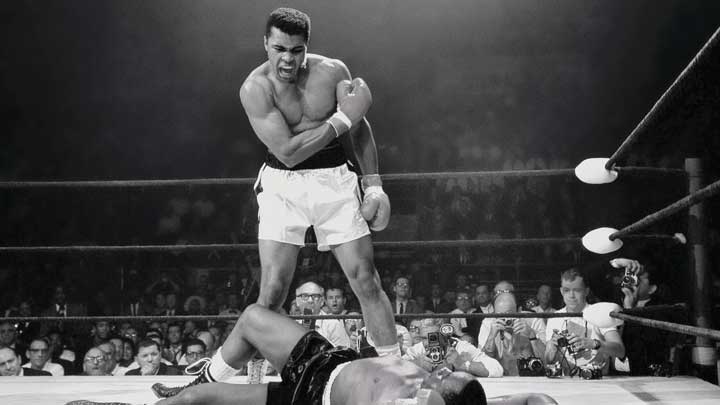

Legendary words of Muhammad Ali:
- Success makes a star, character is legendary.
- I float like a butterfly, I sting like a bee.
- Prejudice comes from being in the dark. Daylight purifies it.
- A person without imagination has no wings.
- It’s not the mountains to climb that wear you out, but the pebble in your shoe.
- I am the best. I was saying this before I saw it with my own eyes. Don’t ever tell me you can’t do it. Don’t tell me it’s impossible. Don’t tell me I’m not the best. I am the best of the best.
- Champions don’t come from gyms. Champions come from people with passion, dreams, and purpose inside them.
- I hated every second of training, but I kept telling myself, “Hang in there!” Today I will train and live a champion for the rest of my life.
- I am the Elvis of boxing.
- The best way to make your dreams come true is to wake up.
- I’m a good person at home, but I don’t want the world to know it. From what I understand, humble people don’t have much luck.
- I am America. I’m the part of it you don’t recognize. Get used to me. Black, confident, self-assured… That’s my name, not yours. My religion, not yours. My goals, not yours. Get used to me.
- If only people loved everyone the way they love me. The world would be a much better place.
- If you even dream of being a champion, wake up and apologize immediately.
- I’m young, handsome, fast, charming, and invincible.
- After all, it’s just a job. Grass grows, birds fly, waves lick the sand. I beat people up too.
- I’m so fast that when I try to turn off the light in my room, I can get back to my seat before it goes out.
- I’m a fighter. I believe in an eye for an eye. I won’t turn the other cheek. I don’t respect a man who doesn’t fight back. If you kill my dog, you’d better hide your cat.
- Pleasure doesn’t mean happiness. There’s no significance beyond the shadow that follows you.
- To be a great champion, you must believe you’re the best. Even if you’re not, you must act like it.
- The man who sees the world the same at 20 and 50 has wasted 30 years of his life.
- We have one life, and it will soon be in the past; only what we do for God will remain forever.
- I don’t smoke, but I always carry a matchbox with me. Whenever I’m about to commit a sin, I warm my hand with the flame of a match and say to myself, “Ali, you can’t even stand this small fire. How will you stand Hell?”
- “Was life hard?” I reply, “I lived.” And finally, my favorite Muhammad Ali anecdote (I agree with him entirely), aside from clichés like “float like a butterfly, sting like a bee”:
- When I’m a champion, after I grow a beard, I’ll put on my old jeans, put on an old hat, and take a walk through the streets of a town where no one knows me. And I’ll keep walking until I find someone who loves me for who I am. When I do, I’ll take them to my $250,000 house overlooking my $1 million property, show them my Cadillacs, my indoor pool I use on rainy days, and tell them, “This is all yours because you love me for who I am.”
Tag: lifestyle