Those in the know know that I’m focused on sustainability. Our family-owned company, Süzer Holding, has a bank in Croatia called Kentbank. It’s headquartered on Radnička, the busiest street in Zagreb, the Croatian capital. It ranks well among Croatia’s mid-sized banks. Ours are doing a good job. For more details, you can visit https://www.kentbank.hr/3/home .
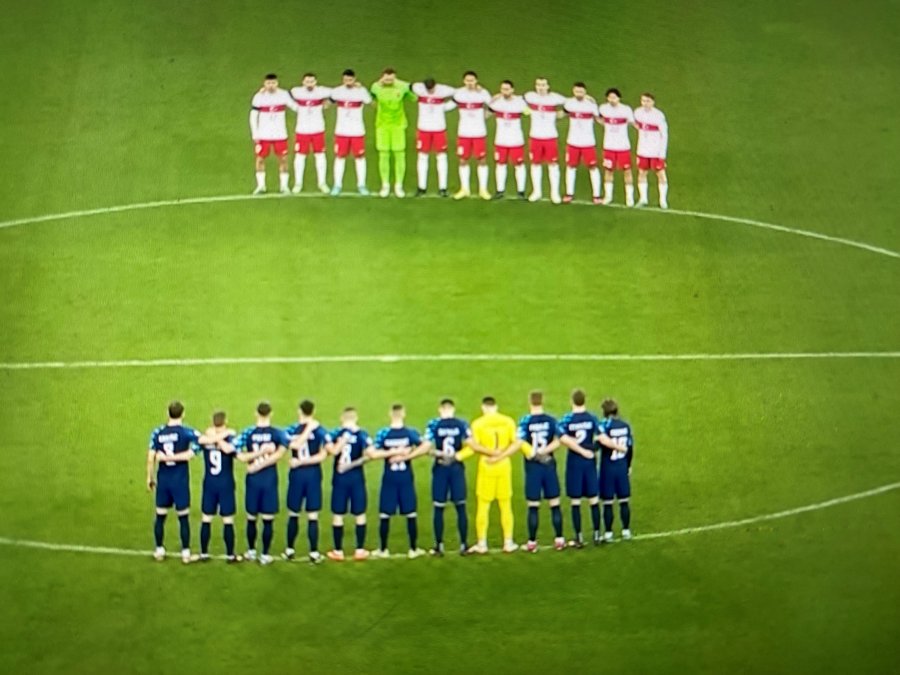
Although I have no affiliation with this bank, I personally follow Croatia closely. It’s a truly wonderful country. One of its hallmarks is its exceptional success in all aspects of sports, as a continuation of the former Yugoslav school. For example, in soccer, they finished third in the world at the last World Cup and second in the World Cup before that. I could give examples from every branch. As a country, they are very successful in every aspect of sports. The efficiently operated infrastructure systems they have spread throughout the country are of great importance. In Croatia, almost everyone loves sports, and when they have children, they willingly enroll in these youth academy programs to raise them and provide them with a future. Perhaps not all, but hundreds of thousands of children and young people from the approximately 3.5 million population are professionalizing in various branches of sports and showcasing their talents. Some even become world-class athletes in certain branches. Croatian National Soccer Team Manager Dalic, when asked a Turkish journalist, who thought he was being inaccurate and provocative, “Why aren’t we seeing any more young talent from the Croatian National Team?”, taught him a lesson by replying, “Bursa, where we play, is a city of 3 million, while we, as a country, are 3.5 million. We finished third in the World Cup. Ask yourself how we did.” Unfortunately, they taught that lesson not only during the interview but also on the field. Croatia beat us 2-0 on our home turf once again. You can watch the game highlights in the video below:
Related news
To explain the topic in more detail, I’m sharing some news about the events that unfolded before and after last week’s game against Croatia:
Dalic’s pre-game statement: https://www.sondakika.com/spor/haber-turkiye-hirvatistan-kiyaslamasi-yapan-dalic-ten-15727392/
Dalic’s statement after the game:https://www.hurriyet.com.tr/sporarena/zlatko-dalic-modrici-alkisladiklari-icin-turk-halkina-tesekkur-ediyorum-42241894
Dalic’s post-game interview:https://www.youtube.com/watch?v=LXOcn7kqpyE
Limited soccer successes
The Turkish National Team has two successes in its history. The first was finishing third in the world in 2002, and this was achieved thanks to the participation of eight players from Galatasaray, a team that had achieved a strong generation and won the UEFA qualifiers. The contributions of Balkan legends Hagi and Popescu, who played for Galatasaray during this period, to the Turkish national team are undeniable.
The other is the inexplicable way in which no one could understand how they won three games with last-minute goals, only to be eliminated by Germany in the semifinals with a last-minute goal, and to finish in the top four of the Euro Championship with a remarkable performance that mirrored our country’s own. Beyond this, we have no other successes, and statistically, the Turkish National Soccer Team is far behind.
Let’s look at some history and statistics. Following the establishment of the Turkish Sports Associations Alliance, the first organization in Turkish sports, the first Turkish Soccer Federation, chaired by Yusuf Ziya Öniş, was established in 1923 under the name “Futbol Hey’et-i Müttehidesi” (Soccer Heikdom), at a meeting held in the Letafet Apartment hall in Şehzadebaşı. An application was then made to FIFA, and Turkey became its 26th member on May 21, 1923. When we look at the games we have played since 1923, we see that we have lost far more games than we have won, and similarly, we have conceded far more goals than we have scored. See: https://www.tff.org/default.aspx?pageID=425
Croatia’s rising star in a short time
Now let’s look at the Croatian soccer team. Croatia was founded on 25 June 1991, following the dissolution of the former Yugoslavia, and despite being a new country, it immediately began achieving success. It finished 3rd in the 1998 World Cup in France and rose to 3rd in the FIFA rankings that same year. It finished 2nd in the 2018 World Cup in Russia and then 3rd in the 2022 World Cup in Qatar. It has also qualified for every World Cup tournament except for 2010. It has also qualified for every European Championship (except for 2000). It also has numerous successes in youth and futsal tournaments. A look at Croatia’s game statistics reveals that it wins and scores far more than it loses and concedes.
Let’s look at the games played between Turkey and Croatia. Turkey has faced Croatia 11 times in its history. Croatia won four of these games, and six ended in a draw. Turkey won one (we won that one in the Euro Championship with a last-minute goal). Croatia scored 15 goals against Turkey, while Turkey managed 9. So, we can say that Croatia has a clear advantage in the statistics we’re comparing.
Painful Economic, Social, and Environmental Comparisons
On one side, Croatia, with a population of approximately 3.5 million, and on the other, Turkey, the most populous country in Europe (they share the same lead as Germany), with a population of 85 million. Croatia, with approximately 4% of Turkey’s population, not only outperforms Turkey in terms of sporting success, but also outperforms Turkey in economic, environmental, and social factors.
There’s a wealth of data on this subject. I’m selecting nine data points from the World Bank database and sharing them with you. Here’s the comparison:
Croatia (https://data.worldbank.org/country/HR) and Türkiye (https://data.worldbank.org/country/tr)
1) Poverty index, which shows the proportion of people living on less than $2.15 a day relative to the general population (as a percentage and based on 2017 purchasing power parity):
Note: Due to exchange rate revisions in purchasing power parity, poverty rates for countries cannot be compared with those reported in previous years.
Comparison: Croatia 0.3% as of 2020, Turkey 0.4% as of 2019
2) Gross domestic product (GDP) per capita:
Note: GDP per capita is gross domestic product divided by mid-year population. GDP is the sum of the gross value added of all resident producers in the economy, plus (+) all product taxes, and minus (-) all subsidies not included in the value of products. It is calculated without deductions for the depreciation of manufactured assets or the depletion of natural resources. Data are reflected at the current dollar exchange rate.
Croatia: $17,685 as of 2021, Turkey: $9,661
3) Unemployment:
Explanation: Unemployment reflects the ratio of unemployed but able-bodied workers seeking work to the total labor force.
Comparison: Croatia: 7.6% as of 2021, Turkey: 12% as of 2021
(By the way, I believe that all of Turkey’s data has been manipulated, making the reality much worse. This 12% unemployment rate seems completely unrealistic to me. Unfortunately, data is manipulated in our country.)
4) Inflation, Consumer Prices (Annual %)
Explanation: Inflation, measured by the consumer price index, reflects the annual percentage change in the average consumer cost of purchasing a certain number of goods and services. The Laspeyres formula is generally used in its calculation.
Comparison: Croatia 2.6% as of 2021, Turkey 19.6% as of 2021
(No one would believe the 19.6% inflation in Turkey. The inflation we’ve experienced over the last two years has been at least 70-80%. In fact, it’s even exceeded 100% for many products. Whoever provided the World Bank with this data is either completely nonsensical or has reached the bottom of the manipulation stage.)
5) Carbon emissions (metric tons per capita):
Explanation: Carbon dioxide emissions are released as a result of the consumption of fossil fuels and cement production.
Comparison: Croatia 4.1% as of 2019 and Turkey 4.9% as of 2019
(Despite a population of 85 million, our carbon emissions per capita are higher than Croatia’s. This indicator alone demonstrates our commitment to the environment.)
6) Forest area to total area ratio:
Description: Forest areas are lands consisting of natural or planted trees, whether productive or not, that are at least 5 meters tall and spread over an area of at least one hectare. Excludes wooded areas in agricultural production systems (e.g., fruit plantations and agroforestry systems) and trees in urban parks and gardens.
Croatia 34.7% as of 2020, and Turkey 28.9% as of 2020
(We are also behind in this important data. Let’s not forget that many forested areas officially designated as forests in Turkey have lost their forest status.)
7) Intentional homicides (per 100,000 people)
Croatia 1 as of 2020, Turkey 2 as of 2020
(Of course, all citizens know that the crime rate in Turkey is much higher. Some are registered, some are not.)
8) Percentage of women’s seats in national parliaments (%)
Croatia 31 as of 2021, Turkey 17 as of 2021
9) Net inflows of foreign direct investment (percentage of GDP)
Description: Foreign direct investment is the net investment undertaken to acquire a permanent management stake (10% or more of the voting share) in an enterprise operating in an economy different from that of the investor’s home country. It includes investment inflows.
Comparison: Croatia 6.8% as of 2021 and Turkey 1.6% as of 2021
Looking at the data above, we can easily say that Turkey, with a population of 85 million, lags far behind Croatia, a country of 3.5 million, in all major economic, environmental, and social metrics. Moreover, despite the fact that relevant Turkish officials have manipulated many economic, environmental, and social data to paint a much more optimistic picture, we lag behind Croatia in every area.
Who is responsible?
So, I ask you now: Who is responsible for Turkey, which won the War of Independence in legendary fashion, made significant progress in its first 15 years, and is preparing to celebrate its centenary this year, falling significantly behind Croatia, which emerged from the war and has completed its 32nd year, in all economic, social, and environmental indicators?
The answer to this question is quite clear. If you, like me, can answer this question clearly (and an average person with an average intelligence can easily do so), then you need to vote wisely and consciously on 14 May and protect the ballot boxes. Stay well.
Tag: education