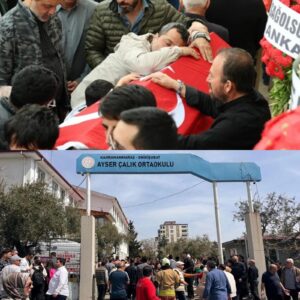

Honestly, I wasn’t even planning to write about violence against women. What happened to Özgecan Aslan and many other young girls and women, and all forms of violence against women, personally disturb me deeply as a man.

I think it’s more appropriate to listen to women on this issue. Women, rightfully, express the problems they face through social, written, and visual media, trying to make their voiceheard across different platforms. For example, they have organized protests repeatedly—even once beating up a man during one of these marches. Imagine someone driving his SUV right into the middle of a “fight against violence toward women” march, rolling down the window to insult the women. Not stopping there, he gets out of the car and tries to physically assault the women. This is how he ends up getting beaten by the women after stepping out: http://www.izlesene.com/video/ozgecan-aslan-eyleminde-dayak-yiyen-adam/8181426
After all the efforts by women trying to make their voices heard, have we made any real progress? Unfortunately, no. In fact, things have gone in the opposite direction. Brutal murders, violence, and harassment against women continue to increase and make headlines.
However, none of the opinions I’ve read or heard fully define the problem, and most importantly, none offer a satisfactory solution. That’s why I want to address this issue myself and share my thoughts with you.
First, in my opinion, violence against women is only the visible tip of the iceberg. As you dig deeper, you realize the problem is much bigger and more profound. In other words, I can say this with certainty: in Türkiye, violence is not only against women. Violence also targets men and LGBTQ+ individuals.
There is violence against children, young people, middle-aged adults, and the elderly. There is violence within families. Violence affects office workers, villagers, and town residents alike. Violence exists in public institutions, private sectors, and even in NGOs. Violence at home, at work, on the street, and during travel. In short, violence is everywhere, anytime, and under every condition. It manifests verbally, in writing, and through physical contact. It simply exists in all forms.
I want to ask the following questions: How did we get to this point in our beautiful country? How did we become a society that hates each other so much, that does not hesitate to inflict violence on one another, a society full of problems and imbalance? Are we collectively losing our minds? Will we ever become a society that respects and loves each other, living in prosperity and peace?
To answer these questions, we need to get to the root of the problem. Here is the tangle of problems and the prescription for solutions:
1.Justice
Sadly, the main reason violence continues to increase every day in our own country is the failure of the justice system. The justice system has many problems. I won’t go into detail here, but to summarize:
a.The judiciary in Türkiye is not independent: Politics holds significant influence; individuals exert heavy pressure. Unfortunately, judges, prosecutors, and everyone involved in the justice system usually take sides. Judges often pick a side when making decisions. The number of judges and prosecutors who can make objective decisions based solely on evidence, without any influence, is very low. This partisanship can manifest in various ways, sometimes siding politically, sometimes due to intervention from someone they can’t refuse, or sometimes favoring those close to them. For example, some male judges in rape cases exaggerate mitigating factors to rule in favor of the perpetrator and against the victim. In my opinion, the requirement of justice is that judges, prosecutors, and everyone within the legal system must act objectively regardless of their circumstances. Even if a judge encounters an acquaintance in court, they must remain impartial. If they cannot act impartially, they should voluntarily withdraw from the case.
b. Laws are insufficient: Many laws in Türkiye inadequate to say the least. I believe, especially criminal law, must be completely rewritten. I won’t debate whether capital punishment should be reinstated, but in my view, the laws are far from being deterrent. If there were a law mandating death penalty or unconditional aggravated life imprisonment for rape and murder, would the bus driver in the Özgecan case have thought twice before committing that heinous act? I doubt it.
Another example is a murder case in Antalya. You can find the news here: http://www.hurriyet.com.tr/gundem/28370632.asp. Lokman Barış Çelik, 40, killed his 20-year-old girlfriend Deniz Aktaş by shooting her in the head, heart, and leg. He said in his statement that he considered suicide afterward but was talked out of it by his daughter P.S., whom he called to say goodbye. He said, “After the incident, I first called my daughter P.S., I was thinking about suicide. My daughter convinced me by saying, ‘Don’t kill yourself, you’ll serve your sentence and get out.’ After giving up on suicide, I then called Deniz Aktaş’s mother Figen Yetişkin and told her I had killed her daughter…” “Did you read what the killer’s daughter said? “Don’t kill yourself, you’ll serve your sentence and get out.” That’s where the problem lies. If that killer had seriously considered the legal consequences before committing the murder—if he hadn’t lost his mind—he probably would have thought twice. But unfortunately, in Türkiye, many things operate on the mindset of “I did it, that’s it. I’ll serve time and get out, the crime stays with me, the consequences are for the victim and their family.”
In my opinion, crimes against humanity like rape and murder must be punished as harshly as possible, and everyone must know that these laws are applied without exception.
c. Judges, prosecutors, and those in the justice system are insufficient: Both in number and quality, there are serious problems. Many judges and prosecutors have piles of cases in front of them and are overwhelmed by workload. That’s why it is considered normal in Türkiye for trials to last 5-6 years. I personally think that is not normal at all. In a country with a functioning justice system, cases shouldn’t last more than a year. Cases that expire due to intentional or unintentional statute of limitations breaks your heart and make you ask, “Is this justice?” To fix this, both the number of judges must be increased, and the judges must be well-versed in law, act effectively, impartially, and be motivated solely by applying the law, not by any other influence.
I have many things to say about the justice system in Türkiye. For now, let’s just say if there were a properly functioning justice system, there would be a significant decrease in violence cases—especially violence against women.
2. Education: There is much to say about education as well. The education system needs a complete overhaul. Here’s what I think should be done:
a. Training the trainers: We need to start with those who raise our children and youth. This can be divided into two parts:
- Parental Education: First, we need to start with parent education. Mothers and fathers must be provided education about “child-rearing” before having children, and psychological counseling after they have children. In Türkiye, the number of people who truly understand how to raise children is limited. Not only the uneducated, but even among the educated, few know how children should be raised. From what I observe, many parents think mostly about themselves and lack child-rearing awareness. Having a university degree does not mean one understands child psychology or knows how to prepare their child for the future. Consider also families in big cities and rural areas who have children without thinking it through. Some families even think, “Better if they don’t go to school.” Either they lack awareness, or their economic situation is insufficient.
I want to share with you statements from the mother of Özgecan’s killer:
“No one is born a thief or murderer; everyone is born an angel. My child has health problems. He grew up with his father, that’s why he is like this. He’s just a human being; my son has no right to take someone’s life. I couldn’t protect my child. His father had violent tendencies. We’ve been separated for years. I didn’t want our children to grow up with him. I suffered a lot from my husband, but I couldn’t tell my parents. The father beat me with a belt and sharp objects. I couldn’t tell anyone.”
You can find details here: http://www.aksam.com.tr/guncel/katil-suphi-altindokenin-annesi-tek-suclu-babasi/haber-382537
Can we expect a child raised in such a family to be normal? Even if they have a decent character, a child who witnesses domestic violence up close, especially if uneducated, can unfortunately become a twisted killer in the future.
In my opinion, one of the important lessons mothers (and of course fathers) must teach their sons is respect for women. They need to repeatedly explain and instill in their children’s subconscious that women are our mothers, sisters, and wives, and deserve respect.
- Teacher Training: Türkiye faces a shortage of teachers. Just like in the justice system, there are not enough teachers, and many of the existing teachers need to improve themselves in many areas. There are even teachers within our education system who have violent tendencies. Can you imagine what kind of students a teacher who physically punishes students in class might raise? Are there people surprised that some teachers in Türkiye have violent tendencies? Here’s a recent news headline titled “This Time, It’s the Teachers Who Stormed the School!”: http://www.milliyet.com.tr/okulu-basan-bu-kez-ogretmenler–gundem-2027712/
b. Education for Children and Youth: Unfortunately, whether it’s preschool, elementary, middle school, high school, or university, we don’t have an education system that prepares our children for real life and the future with progressive, modern, and universal values. One that teaches virtues like honesty, mutual respect, and love deep into their core. Instead, there is rote learning, test-taking, and superficial education. Our schools should value education as much as instruction and prepare children to become honorable and honest individuals ready for real life. When hardworking students are labeled as “nerds” and honest ones are mocked as “naive,” and when being rebellious and inclined toward violence is treated almost like a virtue, this student mentality becomes the biggest source of violence in the country later. In our schools, right and wrong are almost mixed up. We need to completely overhaul our education system. Every day, hundreds of violent incidents occur in our schools. Some get media attention, others don’t. These incidents can involve students, teachers, school administrators, parents, and school staff — everyone. All types of violence in groups can be seen in schools. Here’s an example from just this week: http://www.hurriyet.com.tr/gundem/28479638.asp
3. Economic Problems and Unemployment: Economic collapse and unemployment are major causes of trauma in society. Societies where people work and produce always have much lower crime rates. Because instead of focusing on unnecessary things, people focus on their work and contribute to production. A working person stays away from trouble. It’s that simple. It’s clear our economy is not doing well. Unemployment is rising significantly. Meanwhile, businesses complain about not finding qualified workers. There is a gap in between. This gap needs to be filled with vocational training programs. There are a myriad of ways to address unemployment, but I won’t go into detail here. As an individual wanting to fulfill my responsibility to society, I founded the Food Banking and Basic Needs Association and launched the Support Market project, with the first one implemented in Maltepe. For details, see the news here: http://www.haberler.com/destek-market-ihtiyac-sahiplerine-yardim-edecek-7009586-haberi/
4. Psychological Trauma Caused by Insufficient Infrastructure and Lack of System: We live stacked on top of each other in big cities. Traffic, water and electricity outages, air pollution can cause people to become depressed and aggressive. Unfortunately, because everything here is unplanned and disorganized, these infrastructure deficiencies and resulting problems are inevitable. Many people act more aggressively than they normally would. As a result, people don’t hesitate to take out their frustration on those close or not close to them. Here’s an example: http://www.hurriyet.com.tr/gundem/21261426.asp
It’s almost like we are experiencing psychological trauma as a society. In my opinion, migration to big cities should be reversed. People should start living in villages and towns for a higher standard and healthier life. Also, instead of concentrating everything in big cities like Istanbul, Ankara, and Izmir, new small cities with solid infrastructure (e.g., no transportation or parking problems), high standards, and populations under 1,000,000 should be built. We live in a country with a large land area. However, for some reason, the population keeps concentrating in certain places while many other areas are empty. In my opinion, a new nationwide mobilization should start on this issue. Creating and implementing a new master plan for the country would also greatly contribute to economic development and provide a serious solution to the important problem of unemployment. For example, a location could be chosen in Türkiye for the textile industry; all textile factories in Istanbul could be moved there and a properly built Organized Textile Industrial Zone could be established, alongside a new city with a population under 1 million.
Additionally, this would provide an alternative to repairing or demolishing earthquake-damaged old buildings in metropolitan areas. Urban transformation projects could then be properly implemented. By strengthening buildings without increasing their height and increasing green spaces, the existing big cities could become more livable.
5. Partisan Mentality: Our beautiful country cannot come together as one. Everyone chooses a side. Then, that group either protects you unconditionally, or you protect everyone in your group at any cost. This is not true for everyone, but the majority behave this way. Micro-nationalism in this country is at an extreme level.
When I was in the military, the first question people asked me was “Where are you from?” Although I personally didn’t like it, I understood it was to figure out which side I was on, what my allegiance was, and whether I was close to them. I responded with a question: “Where are you from?” When they said a province in the East or Southeast, I said my father’s hometown was Gaziantep; when they said a province in the Black Sea region, I said my mother’s hometown was Trabzon; and for Western provinces, I said I was born and raised in Istanbul. That way, I became close to about 90% of people in our brigade somehow. Even though I didn’t like it, I had taken my own precautions. To be honest, I’m not a fan of micro-nationalism. No matter where you’re from, my door is always open to decent people. But if you have a bad character and are my neighbor, I won’t even look at you.
This tribal or partisan mentality unfortunately appears in football teams, political partisanship, and religious beliefs (religion, sect, etc.). This behavior may stem from Anatolia and Thrace’s history of hosting many different civilizations, having ethnically diverse populations, and Turks’ nomadic societal nature. However, regardless of shared beliefs or background, when someone commits a crime, the whole society, especially the justice system, must react with the same objective response. Nothing else is wrong. The attitude of “But he’s one of us; we won’t let the other side get him” causes nothing to work properly in this country. This is a kind of gang mentality. It’s so dangerous it could even lead to civil war. Therefore, not just in Türkiye, but worldwide, people need to align with universal values and act accordingly. An example of universal values: criminals must be punished. Even if they are the closest person to you, they must be punished. Honest, hard-working, family-valuing, and helpful people should always rise to better places as they deserve.
6. Media: If Türkiye had a responsible media as it should, a significant portion of these violence incidents could be prevented. However, there are two major problems with the media.
The media is not independent. A large majority of the media in Türkiye acts according to political interests. This causes news to always be reported in a way that benefits politicians. For example, a newspaper close to the ruling party never addresses problems in the education system; on the contrary, it tries to portray everything as perfect. Yet journalism requires reflecting on problems as they are and informing the public.
There is an ethics problem. Unfortunately, many journalists, driven by their own ambitions, constantly try to break sensational news to boost ratings. Some are motivated by greed, some by a desire to be close to power, others by ambitions related to the opposite sex, and some by the urge to uncover news or stories no one else can find. This sometimes leads to false or biased news, and at other times, the news itself incites violence. Even in sports, which can positively influence society, media fuels violence the most. Tensions in society are rising. Nowadays, it has come to the point that even opposing fans are not allowed into derby matches. The reason is simple: newspapers need to fill dozens of sports pages every day; if they have no real news, they fabricate stories. Before derby matches, they publish articles like “this person said this about that person,” constantly provoking people and creating a hostile atmosphere that encourages violence and division. They even benefit from creating polemics and fights because more people pay attention to them. Media workers need to realize how much they are dragging their country into a deadlock by fueling violence for ratings. Elements such as violence, distorted gender relations, intrigue, and lies — all with high viewership — should be removed from news, TV shows, and programs by those in the industry or at least shared in a way that minimizes their negative impact on society in terms of press freedom.
In conclusion, there is a lot of work to be done in this country. It feels like everything is falling apart no matter where you touch. We must consider many factors, both those I have mentioned and those I haven’t—and do our part. Personally, I believe we shouldn’t expect everything from the state. That’s why, as the founder of the association I established, we strive to provide material aid, vocational training, and development projects to those in need and disadvantaged groups. You can find details on our website: http://www.gbtider.org
Many responsibilities lie with all of us. We must do a lot in our professions, as Turkish citizens, and most importantly, as parents.
Here is a great photo summarizing men’s relationships with their mothers and wives. In this picture, taken on the Bosphorus Bridge, a groom has written on the back of his wedding car: “My mother’s first and last bride.” I wish him success in his married life and congratulate him for this heartfelt message.

Let’s never forget that men need women and women need men—they complete each other. To prevent violence in society, everyone should fulfill their responsibilities without expecting anything in return. What I have shared above reflects my personal opinions and vision. I hope to see a Türkiye where these solutions come to life within my generation…
Tag: lifestyle