
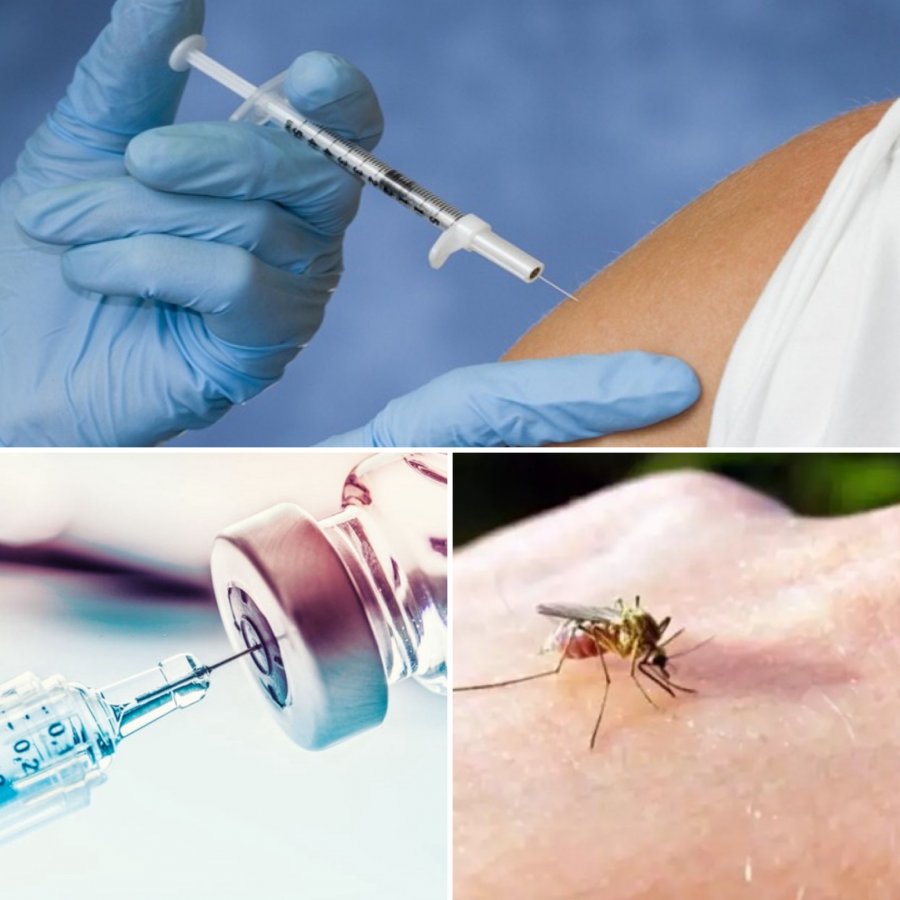
The Brazilian Consulate is located in Süzer Plaza, where my family company is based. Last week, after finishing a meeting at the Plaza, I got into the elevator to head to my car and ran into a consular official I’ve known for a long time—he’s married to a Turkish woman. When I told him that I’d be heading to the Amazon later this month, he responded with the cheerful and warm demeanor that Brazilians are known for and asked, “Are you thinking of getting vaccinated?” Caught off guard by the question, I replied, “Vaccinated? For what?” Still smiling, he asked, “How long will you be spending in the Amazon?” When I said nine days, he continued, “We recommend that anyone spending more than just a few days in that region get the yellow fever vaccine. It’s not mandatory, but because of the high number of mosquitoes in the area, I strongly suggest it.” A bit surprised, I said, “Alright, I’ll investigate it—most likely I’ll get the shot. Thanks for the heads-up.”
Right after that conversation, I started researching the yellow fever vaccine and found the following information on the Turkish Ministry of Health’s official website:
(https://www.seyahatsagligi.gov.tr/Site/Asilar)
Yellow Fever
Yellow fever is found in the tropical regions of Central and South America, as well as Africa. It is a highly fatal disease, and to prevent infection, individuals should follow mosquito protection measures and get vaccinated with the yellow fever vaccine, which offers strong immunity.
The yellow fever vaccine is a live viral vaccine administered in a single dose and provides lifelong protection. To ensure effectiveness, the vaccine must be administered at least 10 days prior to travel. Vaccination is recommended in the following cases:
- For residents of or travelers to high-risk countries
- When a country requires proof of yellow fever vaccination—via the International Certificate of Vaccination or Prophylaxis—as a condition for entry
- For lab workers who handle the yellow fever virus
According to the World Health Organization’s International Health Regulations (IHR), the yellow fever vaccine is the only mandatory vaccine. There are three primary reasons for yellow fever vaccination:
- To protect people living in or traveling to high-risk regions
- To safeguard travelers against infection in these areas
- To prevent transmission of the yellow fever virus into vulnerable countries
Once the vaccine is administered, an International Certificate of Vaccination or Prophylaxis must be completed in compliance with IHR standards. This certificate, issued by authorized travel health centers, becomes valid 10 days after vaccination and remains valid for life. Some countries require all incoming travelers to present this certificate, while others ask only those who have recently visited a high-risk region (within the past month). If the vaccine cannot be administered due to medical reasons, this must be documented with a health report.
When the Vaccine Should Not Be Administered
- Infants under 9 months old: For babies between 6 – 9 months, the vaccine may only be considered if the risk of contracting yellow fever due to travel is extremely high.
- Pregnant and breastfeeding women: Again, only recommended if the risk due to travel is very high.
- Individuals with weakened immune systems: This includes HIV-positive individuals or those undergoing chemotherapy or radiotherapy.
- People allergic to vaccine components
- People with egg allergies
- Anyone who has previously had a severe allergic reaction to the yellow fever vaccine
- Those with thymus gland disorders
- People in poor general health (e.g., high fever): This is to avoid confusing symptoms from a current illness with potential vaccine side effects.
- Travelers over the age of 60 who have never been vaccinated: In these cases, the risk of contracting the disease should be carefully assessed before recommending vaccination.
Vaccine Side Effects
1) Mild side effects occur in about 10–30% of those vaccinated:
Headache
Muscle pain (myalgia)
Mild fever
Pain at the injection site (Injection site pain typically lasts 1–5 days, while the other symptoms may persist for up to two weeks.)
2) The risk of anaphylaxis following the vaccine is reported at 1.8 cases per 100,000 doses.
3) Yellow Fever Vaccine-Associated Viscerotropic Disease:
- It affects internal organs such as the heart and lungs.
- Onset typically occurs within 1–8 days of vaccination.
- May lead to severe organ failure.
- The fatality rate is over 60%.
- It is rare after the first dose.
- Known risk factors include a history of thymus disease (e.g., thymoma or thymectomy) and age ≥60.
- In the U.S., the risk for individuals over 70 is estimated at 2.4 cases per 100,000 doses.
Symptoms may include:
- High fever
- Headache
- Muscle pain
- Hepatitis
- Low blood pressure
- Multiple organ failure
4) Yellow Fever Vaccine-Associated Neurologic Disease:
- A rare condition affecting the nervous system (brain and spinal cord).
- More commonly seen in individuals aged 60 and older.
- Usually occurs 3–28 days after vaccination, mostly following the first dose.
- Estimated incidence is between 0.13 and 0.8 cases per 100,000 doses.
Symptoms may include:
- High fever
- Headache
- Confusion or altered mental state
- Nerve-related issues (e.g., difficulty speaking due to problems with nerves affecting the tongue)
- Guillain-Barré Syndrome (inflammation of the nerves responsible for sensory and motor control)
Travel Vaccinations
Travelers going abroad may face the risk of contracting many infectious diseases that are not present in their home country. Before travel, passengers should be informed about the disease risks in their destination country, as well as the preventive measures they should take, and should receive any necessary vaccinations.
The decision on which vaccines are needed prior to travel is made based on an evaluation of both individual and travel-related factors. In other words, the vaccination schedule required before travel should be tailored to the individual. The risk assessment takes the following into account:
Individual Factors
- Age: Some vaccines may not be administered to children or the elderly, or their efficacy and side effects may differ.
- Health status: Chronic illnesses such as diabetes can increase vulnerability to disease; certain vaccines may not be suitable for individuals with specific conditions.
- Pregnancy and breastfeeding: Some vaccines may not be appropriate.
- Immune system status: Certain vaccines should be avoided in immunocompromised individuals.
- Allergy history
- Previous vaccination history
Travel-Related Factors
- Destination country: Some diseases are more prevalent in certain regions.
- Time of travel: Certain illnesses are more common during specific seasons (e.g., the rainy season).
- Duration of stay: The longer the stay, the higher the risk.
- Accommodation: Staying in rural areas or camping may carry higher risks than staying in a hotel.
- Planned activities: Activities such as working in rural areas or hiking can increase exposure to infectious diseases.
A certain amount of time must pass after vaccination for immunity to develop. This period varies depending on the type of vaccine, the number of doses required, and previous vaccination history. To ensure adequate immune response and to complete the necessary vaccination schedule, travelers should consult a travel health center at least 4–6 weeks before departure.
In Turkey, vaccines—either provided by the center or brought by the individual—are administered free of charge at Travel Health Centers affiliated with the General Directorate of Border and Coastal Health under the Ministry of Health. These centers also provide prophylactic medications.
It is important to remember that no vaccine offers 100% protection. Even after being vaccinated, travelers must adhere to general infection prevention measures.
Routine Vaccinations
In some countries, diseases like tetanus, diphtheria, and measles are still endemic. For this reason, it is extremely important that travelers are up to date with vaccinations according to their national immunization schedule. Many childhood vaccines require booster doses throughout life to maintain effective immunity.
During pre-travel health assessments, any missing routine vaccines should be completed, and those who have never been vaccinated should begin the initial vaccine series. Common routine vaccinations include:
- Tetanus-Diphtheria (Td)
- Measles-Mumps-Rubella (MMR)
- Polio
Travel-Specific Vaccinations
Recommended based on the traveler’s risk assessment:
- Yellow Fever
- Meningococcal
- Typhoid
- Cholera
- Hepatitis A
- Rabies
- Japanese Encephalitis
- Tick-Borne Encephalitis
Reading content like this can understandably make people hesitant about getting vaccinated. The potential side effects can be intimidating. But when you contract a disease like yellow fever or malaria, the consequences can be far more devastating. I speak from personal experience—I eventually decided to get vaccinated. Let me tell you about something that happened to me during my military service.
I served in the 11th Infantry Brigade in Denizli. I worked as aide to the two highest-ranking officers of the brigade: the brigadier general and his chief of staff, a colonel. In other words, I was their assistant. We spent most of our time in the brigade headquarters, where all operations were run, often working at our computers until very late into the night. Only when the day’s work was fully wrapped up would we finally go to sleep.
Witnessing a Malaria Episode
One night, we worked until 4 a.m. I headed back to the barracks where I was staying. Everyone in the 300-man dormitory was sound asleep. Before going to bed, I stopped by the communal bathroom at the entrance to brush my teeth. As I was brushing, a soldier suddenly walked in trembling, clearly freezing, his teeth chattering. He said, “Brother, help me,” and then suddenly collapsed on the floor. I immediately ran back to the dorm, grabbed a blanket, and wrapped him in it to warm him up. I asked, “Are you okay? What’s wrong? Do you need anything else?” After I bundled him up, he said, “Brother, I’m not actually cold. I’m having an episode.” “What kind of episode?” I asked. “I have malaria,” he said. “I’m having a malaria attack.” That was the first time in my life I had seen someone with malaria. In fact, it was the first time I’d witnessed a medical crisis of any kind that intense. It was terrifying. The moment I heard “malaria,” I woke up the officers responsible for our barracks and together we alerted the military hospital. An ambulance was dispatched immediately, and they hooked the soldier up to an IV unit and took him away.
I’ll never forget the look of pain on his face or the violent shivering. Normally, we believed malaria didn’t exist in Turkey anymore—but clearly, that wasn’t the case. This soldier was from Bolu, and he was battling malaria.
The Importance of Vaccines
After witnessing something like that, your perspective on vaccines changes. Sometimes when you try to offer preventive advice, people react negatively. But when you’ve seen firsthand how horrible things can get, you want to explain what can be done in advance to prevent such outcomes. And sometimes, you just can’t get through to people—they don’t understand unless it happens to them.
I support vaccines, and I have a hard time understanding the extreme reactions of anti-vaxxers. I also disagree with those who blamed the vaccine for every single health issue that arose during and after the pandemic.
In fact, I had a falling-out with a Turkish friend of mine who had grown up in Switzerland and spent some time studying with us in Canada. During the pandemic, I had been posting messages on social media encouraging people to get vaccinated—saying things like “Let’s get vaccinated and bring this pandemic to an end.” He replied with some extremely rude and bizarre comments. I messaged him privately to warn him not to mislead people. When he responded disrespectfully, that was the end of our friendship, I cut all ties with him.
Millions of Lives Were Saved
In my view, if mass vaccination hadn’t taken place, the pandemic would still be going on. Millions of people around the world would have continued dying. Vaccines were what first brought the pandemic under control and eventually ended it. Of course, there were side effects, and many people experienced them, but in my opinion, vaccination fulfilled its main purpose: it prevented the virus from spreading and saved millions of lives.
In the end, I decided to get the yellow fever vaccine. I found out that the vaccine was being administered by the Travel Health Unit of the Istanbul Port Authority, so I went to their Karaköy branch—located in the buildings right across from the ferry terminal.
I took a number and went through the process quickly and smoothly. First, they had me fill out a form. After that, the doctor called me in. The doctor’s approach, communication, and thorough explanation far exceeded my expectations for a government-run facility. I remember thinking to myself, “Finally, a government institution that actually functions properly!”
A Government Office That Actually Does Its Job
The doctor first asked where I was planning to travel. When I said I was heading to the Amazon in Brazil, he followed up by asking how long I’d be staying. When I told him nine days, he echoed what the Brazilian official had said: “It’s not mandatory, but we do recommend it.”
When I replied, “Yes, I’ve made up my mind—I’ll get the vaccine,” he explained what yellow fever was, told me the type of vaccine being administered, and listed the possible side effects I might experience afterward.
He also noted, “There’s a malaria risk in that region,” and added, “Once your shot is done, I’ll prescribe a preventive medication for malaria as well.” He jotted something down on a piece of paper and directed me to the room where the vaccine would be given. I went downstairs to a room on the ground floor and got the shot. The person administering the vaccine wasn’t wearing a white medical coat, and they drew the serum from the vial and gave the injection very quickly.
After that, I went back upstairs to the doctor’s office. He gave me some final information about yellow fever and then handed me malaria medication. He instructed me to start taking it two days before my departure to Brazil and to continue daily until the pack was finished. The moment he handed me the box; my memory flashed back to that soldier I helped during my military service.
I thanked the doctor and left. I walked to my car feeling surprisingly satisfied at having received such quick and competent medical service from a government institution in Turkey—something I hadn’t expected.
Optional in Some Places, Mandatory in Others
While the yellow fever vaccine is merely recommended for those heading into the interior of Brazil, I should emphasize that it’s required before traveling to certain African countries.
If you’re planning a trip to any exotic destination, it’s worth checking this link from the Turkish Ministry of Health to see whether vaccination is required for your destination country:
https://www.seyahatsagligi.gov.tr/Site/UlkeHastalikDurumlari/Sarihumma
The list provided answers to the following key questions:
- Is there a risk of yellow fever transmission in the country you’re visiting?
- For travelers coming from countries where yellow fever is present:
a) Does your destination require proof of vaccination from such travelers?
b) Does it require yellow fever vaccination regardless of the traveler’s country of origin?
Wishing all my readers healthy, safe, and enjoyable travels.
Tags: social responsibility, life, health, personal story, ecology