Much has been written about solar energy in Türkiye. Everyone I talk to in friendly conversations always mentions solar energy. Those who hear I’m involved in this business invariably ask me questions and details about it.
For my international readers, I can say that the sector began in Türkiye in 2013, and the capacity of the power plants installed so far has reached approximately 5 GW (5,000 MW).
With 2019 just around the corner, I’d like to discuss the future of solar energy in Türkiye, with a historical perspective, and describe our production facility project, 100% Domestic Solar Panel for Energy Independence, which has received project-based incentives and may represent a milestone for our country.
Solar energy (Photovoltaic – electricity-generating technology) officially launched in Türkiye in 2013, albeit belatedly. Initially, tenders were held for licensed projects. Later, the unlicensed market opened. We refrained from participating in these tenders because we anticipated that bidders would offer kamikaze-like prices. On the contrary, we began developing unlicensed projects that would allow us to enter the sector more easily and began collecting the call letters issued along the way. We have developed a project portfolio of over 20 MW.
Meanwhile, early on, I noticed the lack of technical equipment like solar panels and inverters in the sector and began researching what could be done to address this. I even voiced this to those around me: “For energy independence, we need to produce our own panels from our own resources.” We then worked on the details of these projects. Subsequently, we applied to the project-based incentive system and won a 3.8 billion lira incentive for our project, which we named 100% Domestic Solar Panels for Energy Independence. I would like to share the detailed article I wrote about this process with you again: https://www.serhansuzer.com/tr/turkiye-enerji-bagimsizligi-icin-100-yerli-gunes-paneline-kavusuyor
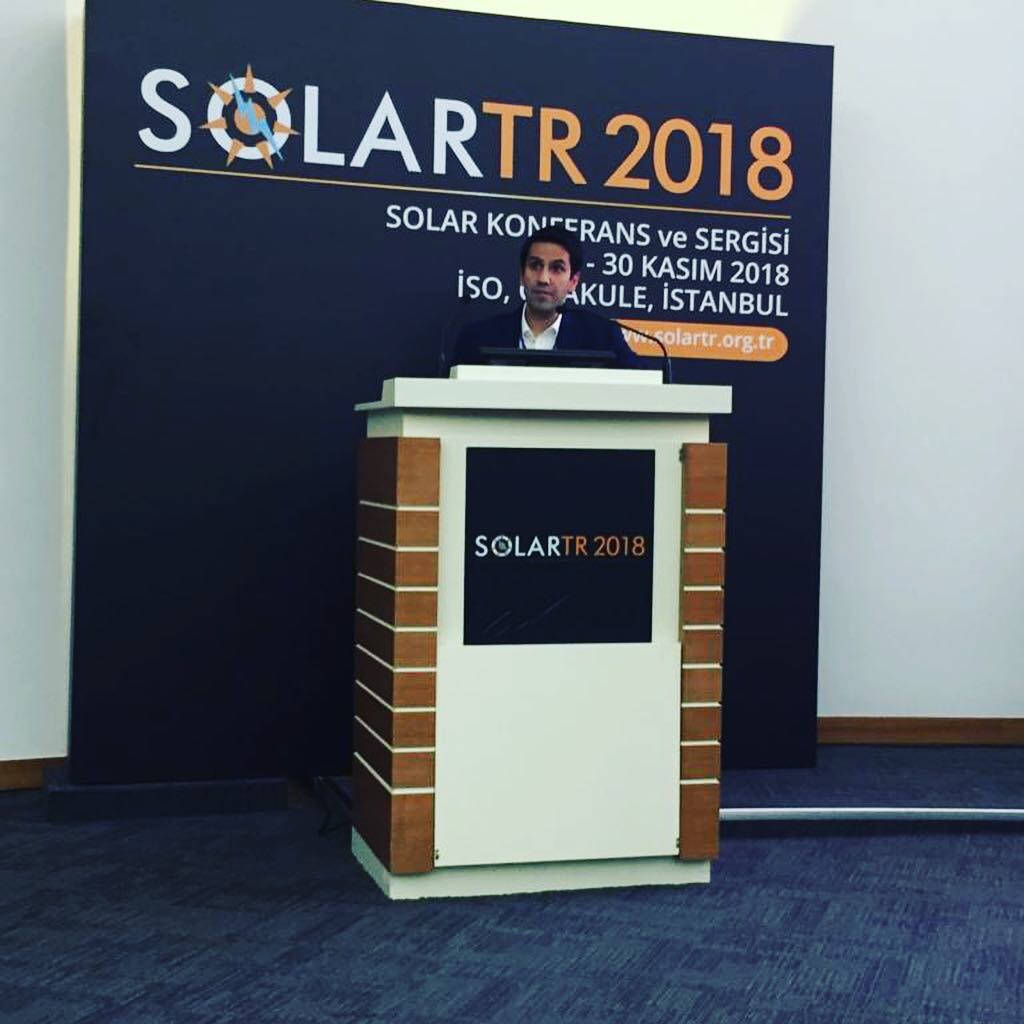
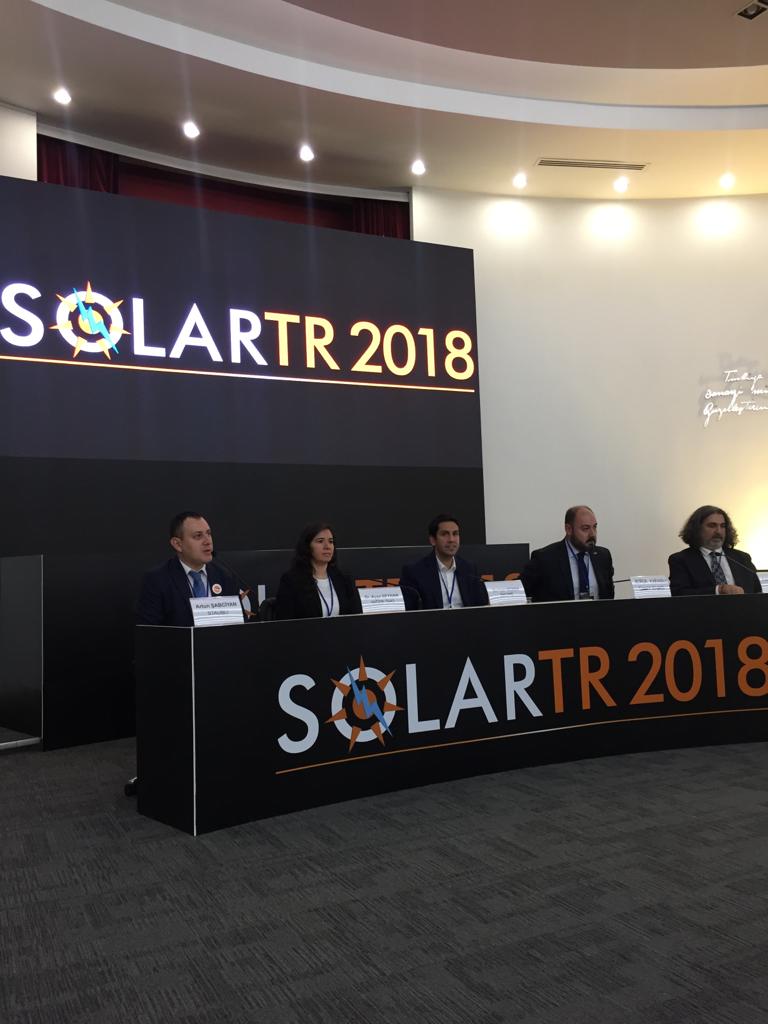
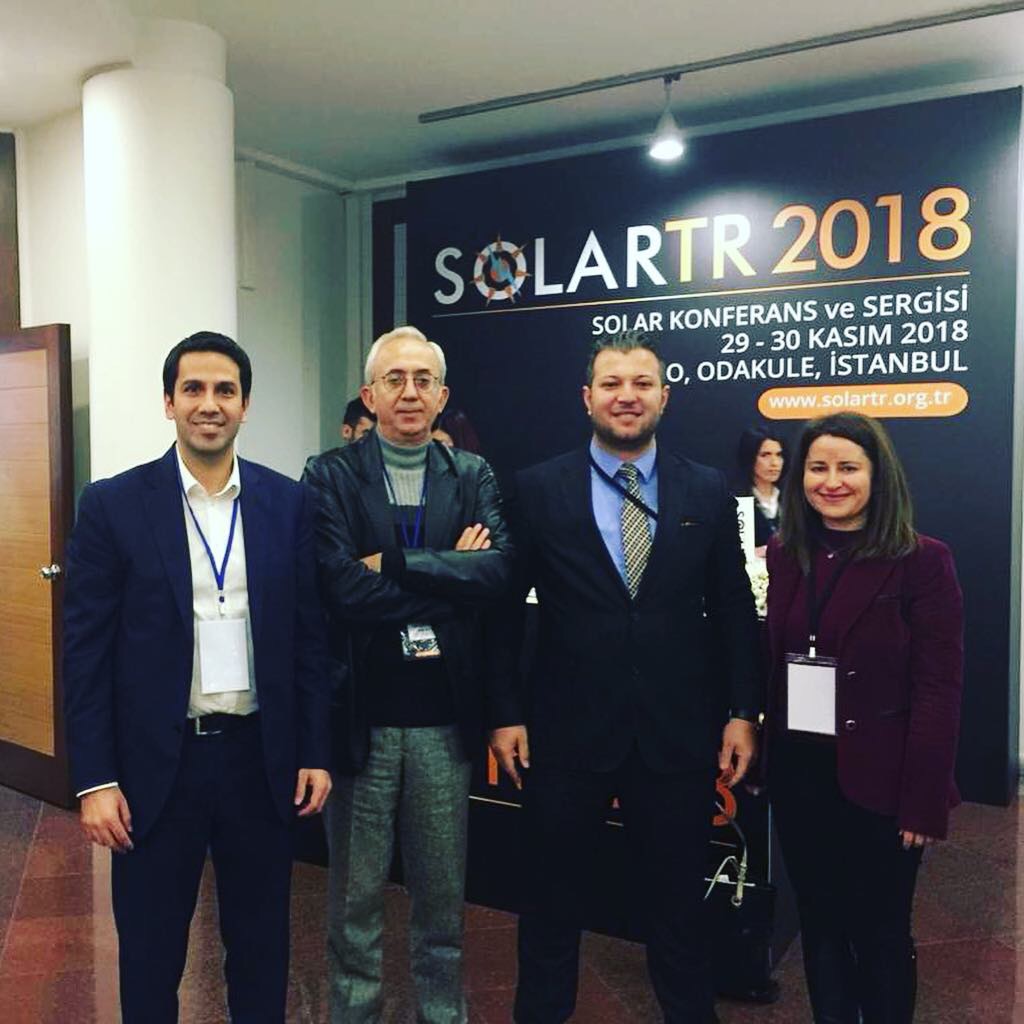
My statements at the Solar TR conference
I announced the details of this project at the Solar TR conference on 29 November. The reactions of the attendees and the conversations I had afterward gave me the following impression: While such a statement would normally generate excitement throughout the sector and the country, in my country, they almost questioned me, asking, “Why are you making such an investment?”
I’m now aware of the vicious, jealous, and constantly critical culture of our country’s citizens, a culture we feel deeply within our bones. I used to care about the opinions of others; to be honest, I no longer care at all about the comments of those who created this swamp. I will continue to advance on what I believe is right, despite others, and to serve my homeland and nation.
I would like to share with you the topics I addressed at this conference and my presentation:
I began my remarks by briefly explaining the history and content of the project.
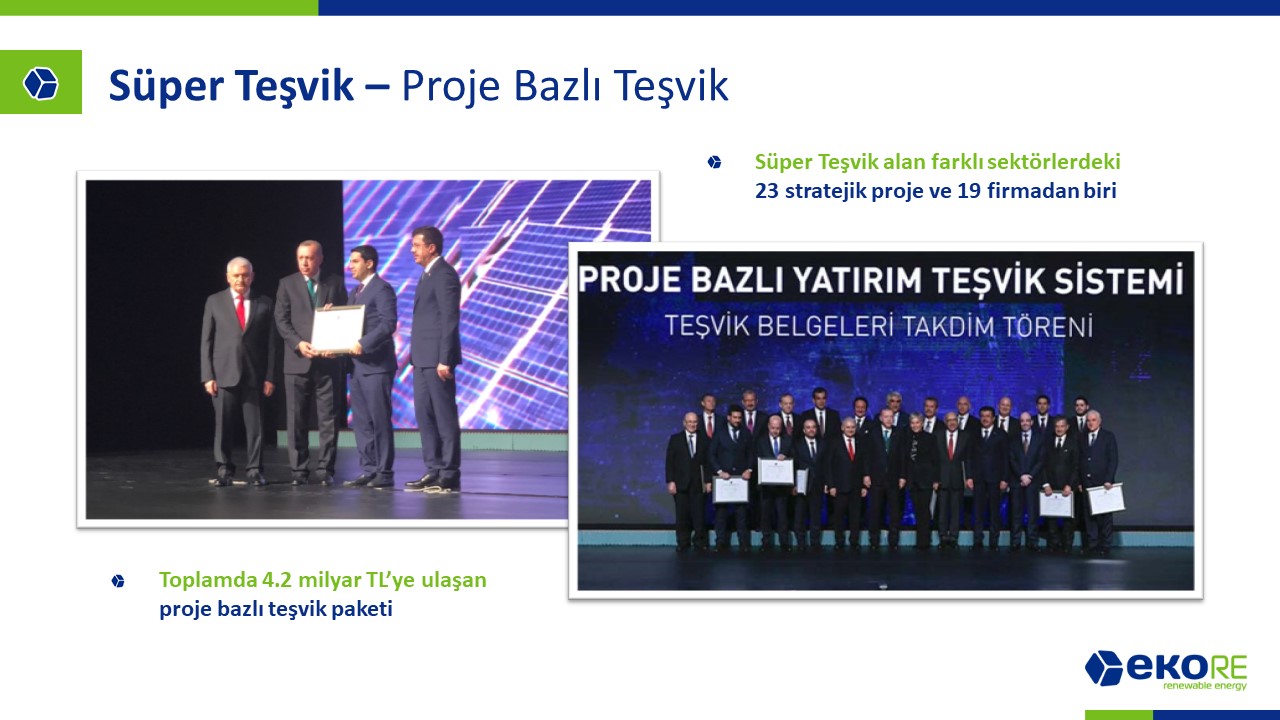
I then provided some of the details below regarding the incentive we received:
Investment Qualifications
ARTICLE 2
- Location of the investment: Niğde Province
- Subject of the investment: Photovoltaic solar panel production (starting with silicon ingot production, including wafer, cell, and photovoltaic solar panel production)
- Start date: 20 December 2017
- Duration of the investment: Six years from the start date (If the investment is not realized within the projected time, the Ministry of Economy may grant an extension of half this period.)
- Type of investment: Completely new investment
- Projected total fixed investment amount: 3,822,000,000 TL
- Projected additional employment: 1,500
- Projected number of qualified personnel: 25
- Products planned to be produced at the end of the investment period and their respective capacities: Photovoltaic Solar Panel 1,000 MWp/Year Capacity
Supports
ARTICLE 3
- VAT exemption
- Customs duty exemption
- VAT refund
- Corporate tax deduction (tax deduction rate: 100%, investment contribution rate: 70%, the proportion of the investment contribution amount that can be used during the investment period: 100%)
- Employer’s share of insurance premium support (10 years without a maximum amount limit)
- Income tax withholding support (10 years)
- Qualified personnel support (maximum 72,000,000 TL)
- Interest support and/or dividend support (maximum 10 years from the loan disbursement date, not to exceed 350,000,000 TL)
- Energy support (50% of energy consumption expenses, not to exceed 500,000,000 TL, for up to 10 years from the date of commissioning)
After summarizing the above information, I concluded by stating that the project certificates were presented at the Beştepe Complex on 9 April 2018, by President Recep Tayyip Erdoğan, Prime Minister Binali Yıldırım, and Minister of Economy Nihat Zeybekçi.
-
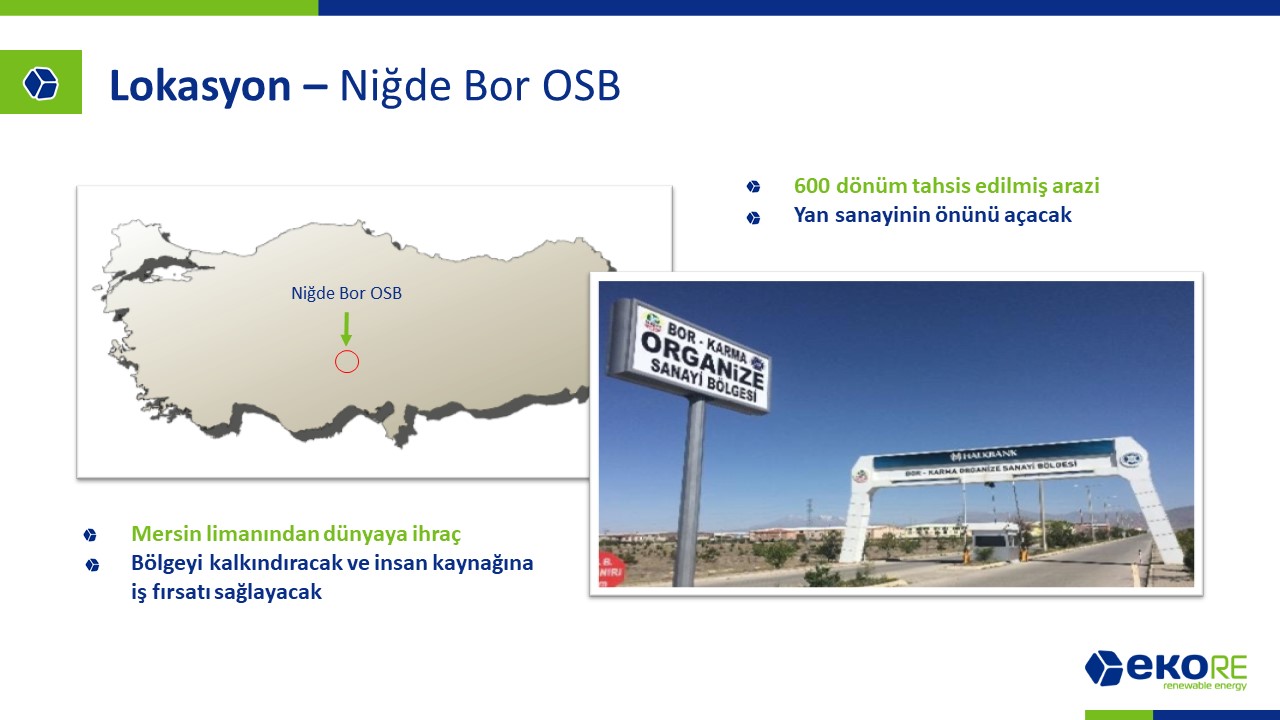
- Why Niğde Bor?
- In the next slide, I explained why we chose Niğde Bor:
- Right in the middle of the solar belt
- Close to the Port of Mersin (access to export markets)
- The upcoming Niğde-Aksaray Airport
- Economic growth and development opportunities in the region
- Support from local authorities and the people of Niğde as potential employees
- The Bor Organized Industrial Zone’s infrastructure is suitable for expansion
- Niğde Ömer Halisdemir University, which has a cell laboratory. Collaboration with the university is aimed for both R&D and human resources.
- The proximity of the 2nd YEKA
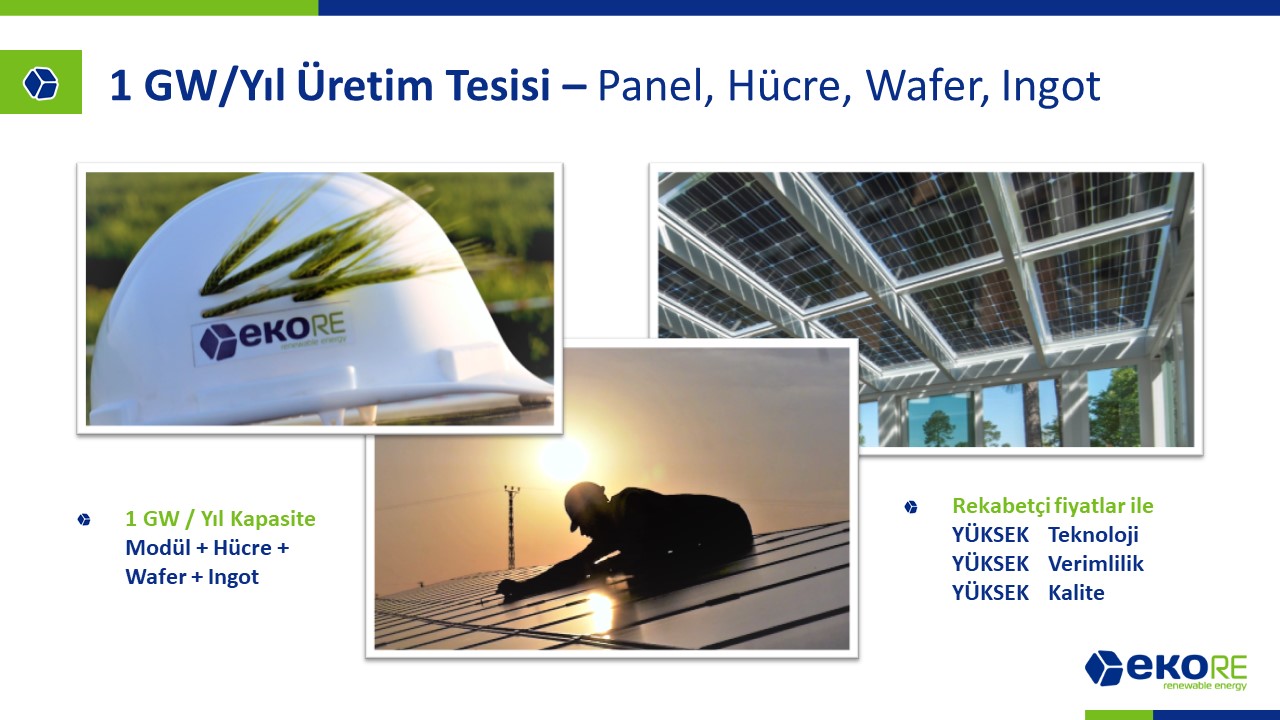
Afterwards, I explained that we aim to reach 1 GW capacity in the production of ingots, wafers, cells and modules in the production processes, and that we aim to produce the final product with high technology and, as a result, to achieve high efficiency and high quality.
A Constantly Raising Bar for Efficiency
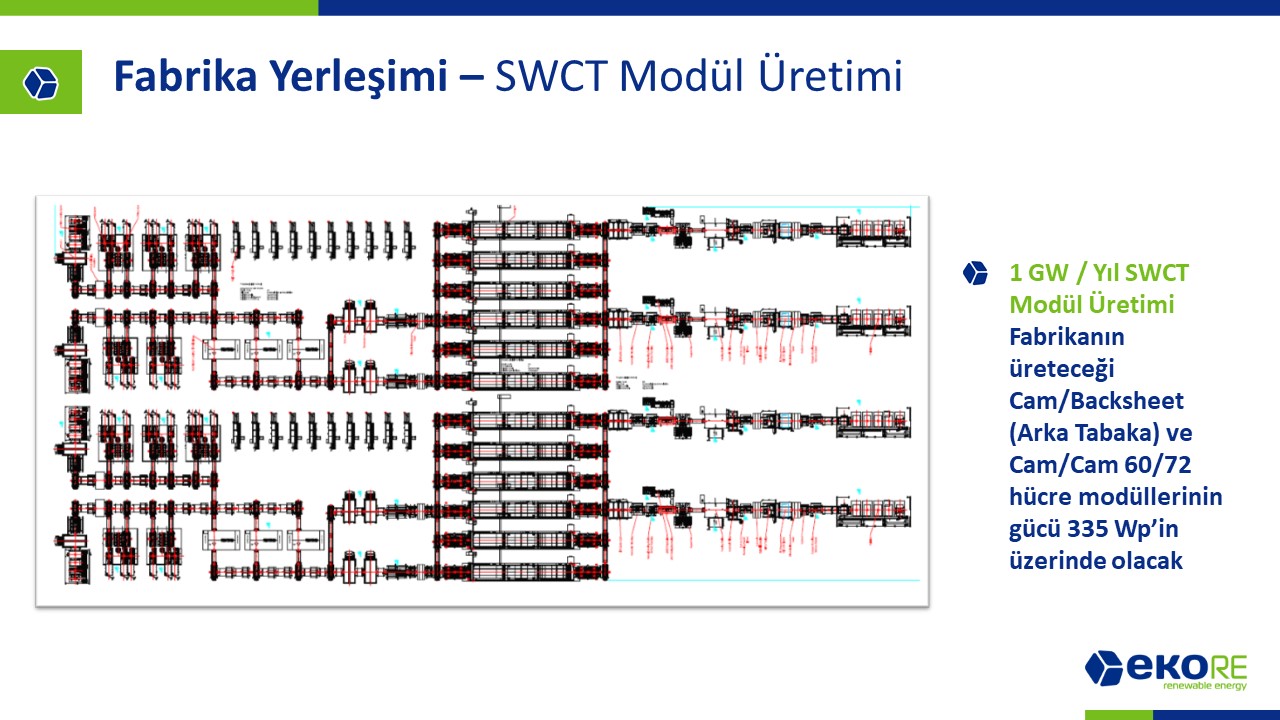
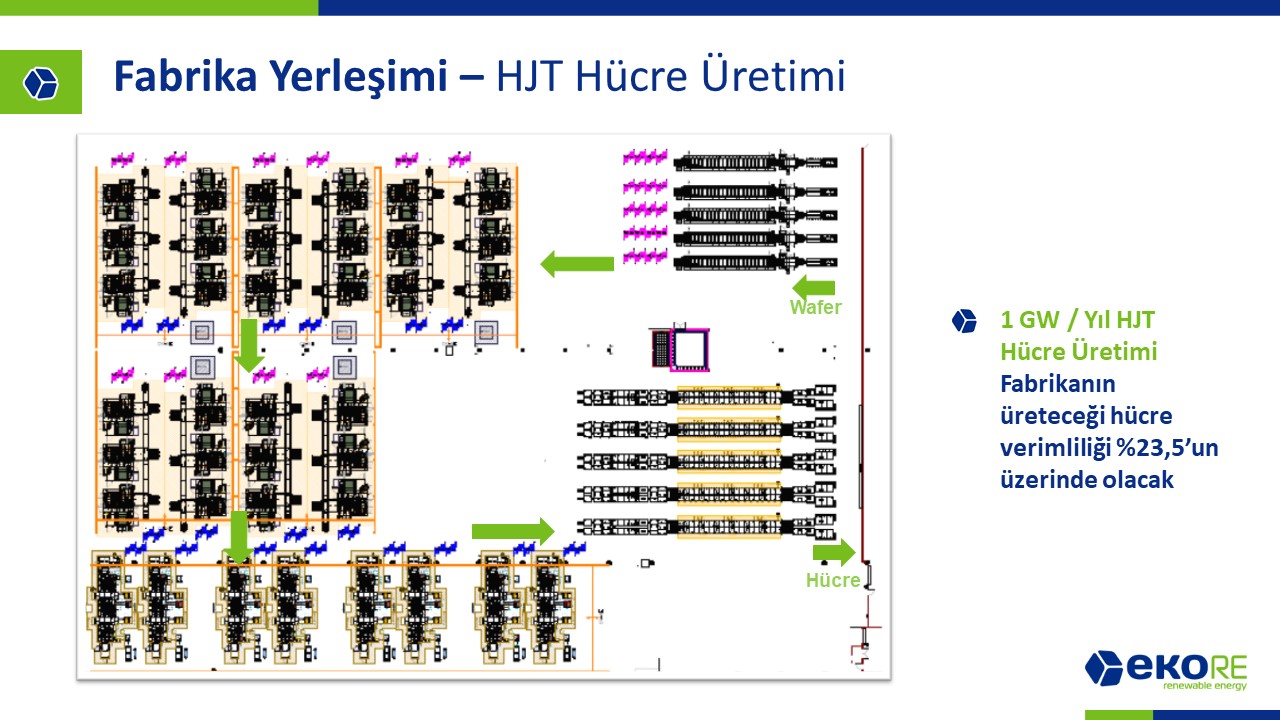
In the following sections, as you can see above, I shared the layout of the factory we designed for module and cell production. I explained that because of all these processes, we aim to exceed approximately 23.5% efficiency in the initial phase. I added that we intend to continuously raise the bar for efficiency through subsequent R&D efforts.
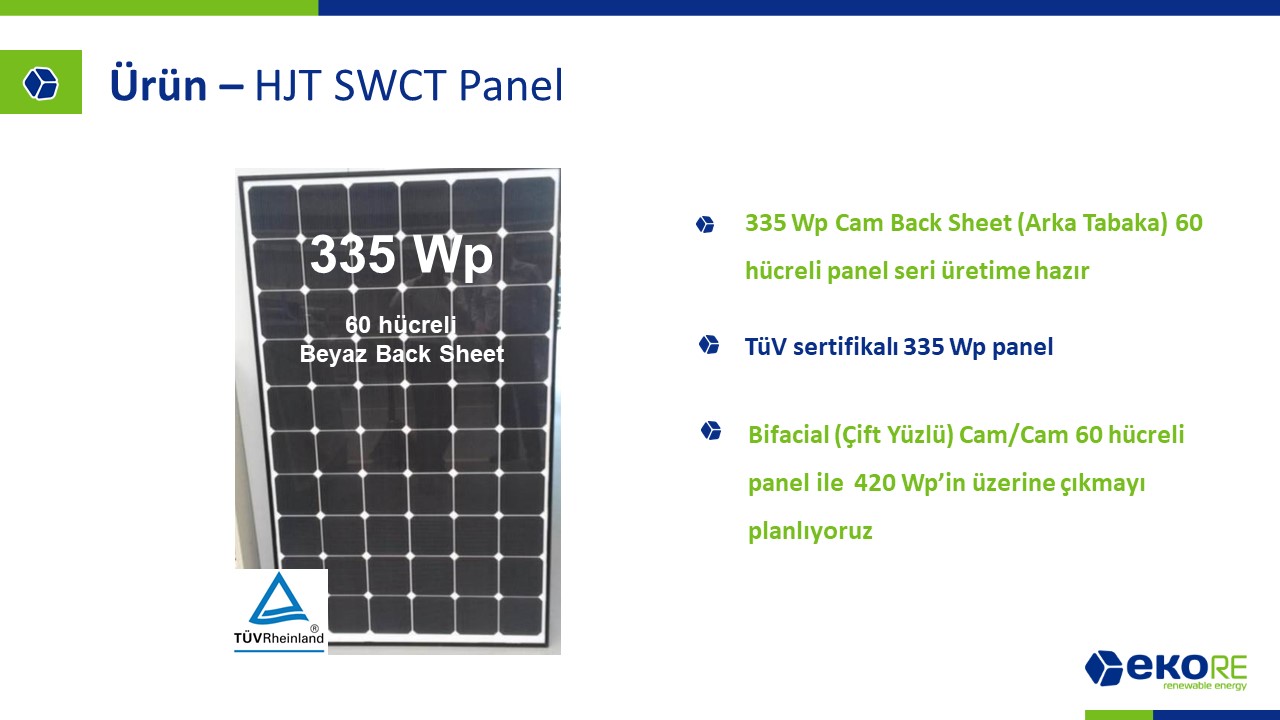
In this slide, where I provide product details, I shared an image of a 60-cell solar panel with a white back sheet, rated at 335Wp. I also explained that we aim to exceed 420Wp for the bifacial (double-sided) 60-cell panel we will produce.
Technologies We Utilize
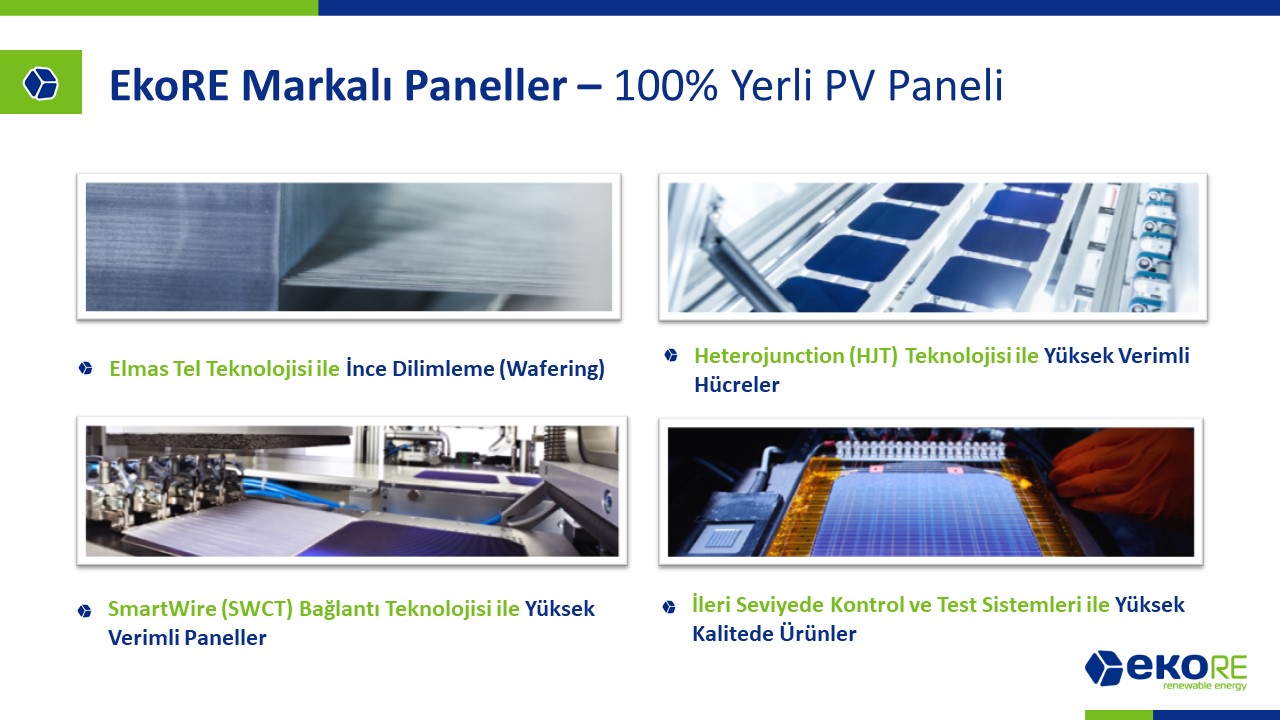
I explained which technologies we will be using in the latest technical information I shared. In summary:
Wafering: Diamond wire technology. The ingot is cut thinner, allowing more wafers to be produced from the same ingot. This machine maximizes efficiency and increases production output. It is cut twice as fast as the standard process and, because it is a water-based process, is environmentally friendly.
HJT Cell: Combining the advantages of crystalline silicon solar cells and thin-film technology, it achieves high efficiency (over 23.5%) with low production costs.
SWCT Module: This is the most cost-effective method for connecting cells together. It provides high efficiency and a significant reduction in microcracks.
High-Quality Products with Advanced Control and Test Systems: I discussed the importance we will place on control and test systems.
Financial Closing and Production
On the last slide, I stated that we had begun collecting demand, and that the first applicants would receive the first panels. I provided the contact information for our Business Development Manager, Selen İnal.
Following this, I stated that, as I mentioned earlier, all preparations were complete and that we would begin construction immediately after completing the financial closing. Our goal is to complete the financial closing in the first quarter of next year and release the first products in the last quarter.
By financial closing, I mean capital investment. We plan to avoid using any loans for this project, if possible. If we meet our target, we intend to finance almost entirely with capital investment, ensuring the project commences and continues on a healthy financial footing, and we are making our plans accordingly.
Personally, I am eager to launch this strategically important project for our country as soon as possible. The commissioning of our production facility will be a milestone for the solar energy sector in our country.
Groundbreaking Benefits
There’s much I could say on this subject, but let me reiterate the most important ones:
- With our production, we will take a significant step towards energy independence by producing our own panels from our own silicon mine.
- We will enable many residences, businesses, and buildings of various statuses to generate their own energy. Citizens, public institutions, and the private sector will gain significant financial advantages from these smart investments.
- Energy imports are the largest component of the current account deficit. Every panel we produce will reduce the current account deficit.
- We will significantly benefit nature by reducing the ecological impact of fossil fuels.
Congratulations.
This is a bonus for this article:
I made an important call during the question-and-answer session. In short, I conveyed this to the audience: We need to put aside the conflicts within the sector and work together to increase our potential. It’s important for all of us to help the solar energy sector reach its deserved potential. For example, I can’t accept that the rooftop market hasn’t yet properly launched in our country. We need to work together to talk to all relevant authorities and make recommendations to open this market.
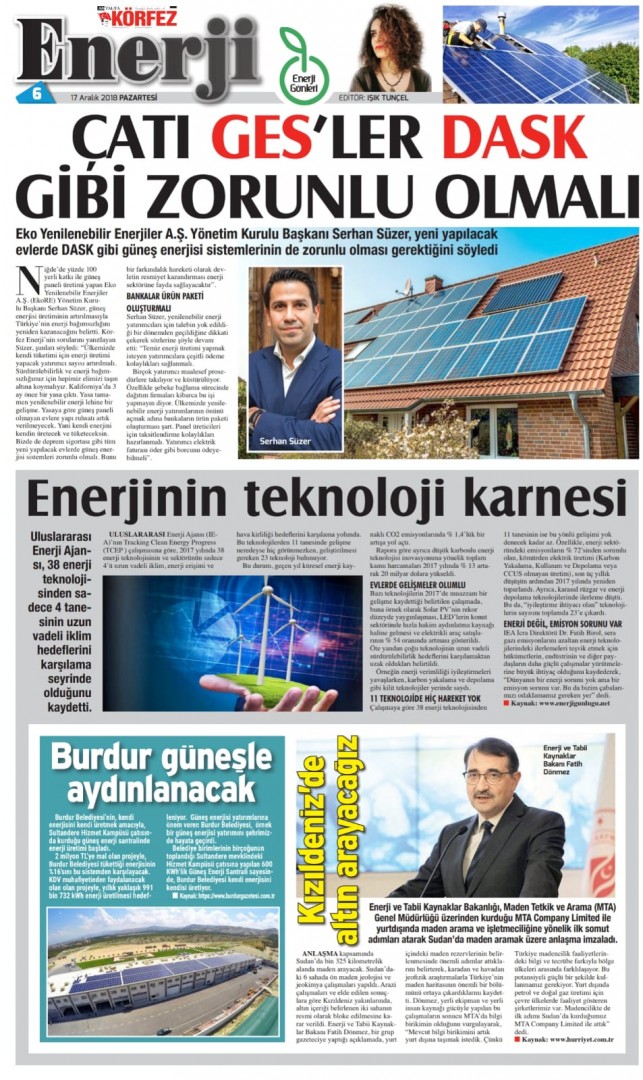
I personally repeat this statement I made at the conference everywhere. For example, below you can find the interview I gave to Işık Tuncel, who writes about energy in Körfez Newspaper, a newspaper published in Antalya, whose articles I follow with great interest:
https://antalyakorfez.com/haber/25106-cati-gesler-dask-gibi-zorunlu-olmali
Tag: business world