
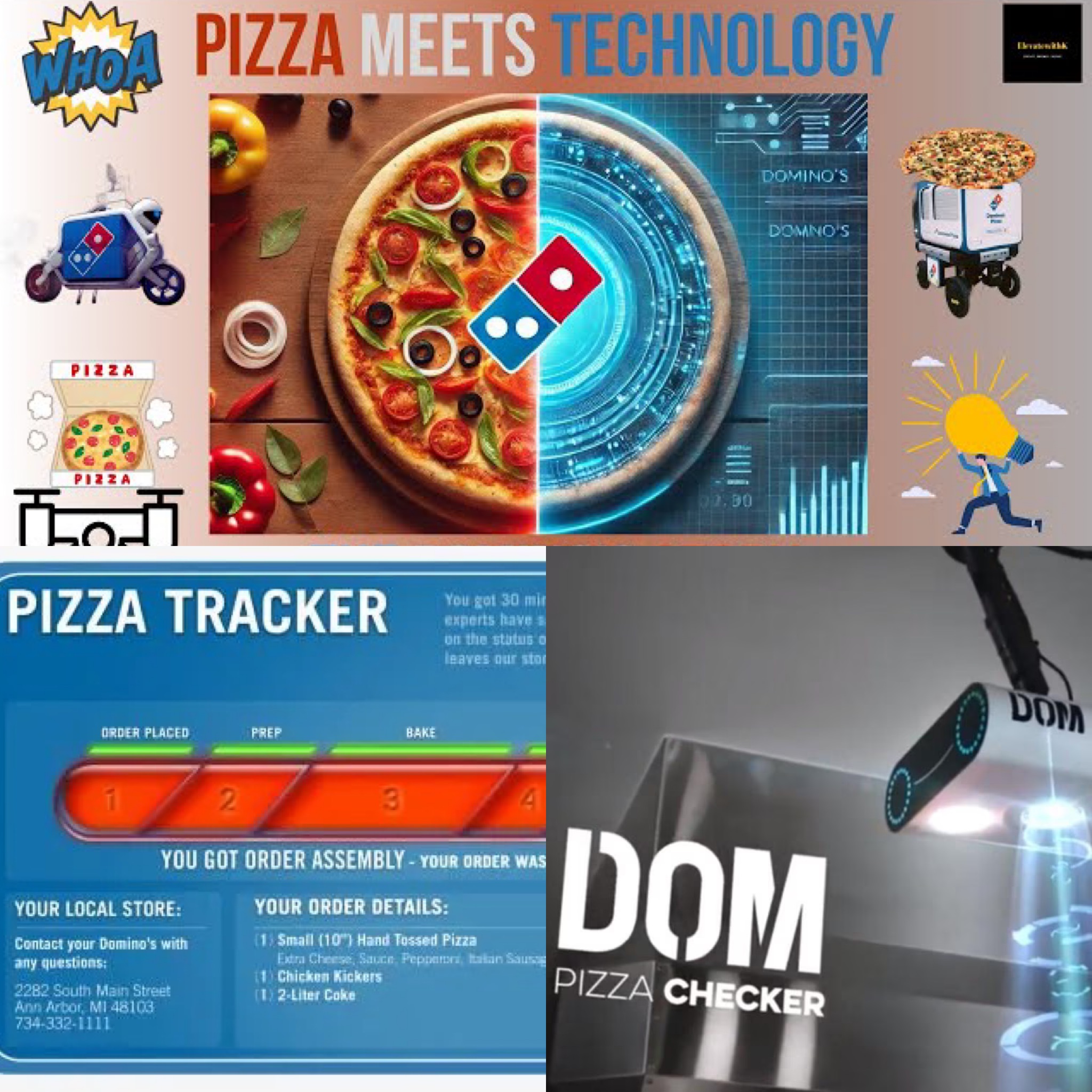
Before detailing this transformation, let’s first share the history of Domino’s Pizza to better illustrate the concept.
Domino’s Pizza History
Domino’s was founded in 1960 in Ypsilanti, Michigan, by brothers Jim and Tom Monaghan, initially operating under the name DomiNick’s. The company registered as Domino’s Pizza in 1965 and entered a period of rapid growth in the late 1960s by developing its franchise model.
In the 1970s, the company faced internal restructuring and trademark registration issues, but made a strong comeback with the “30-minute delivery guarantee” introduced in 1973. Throughout the 1980s, approximately 500 stores were opened annually; by the end of the decade, there were approximately 5,300 branches worldwide.
In the early 1990s, a decline was followed by operational restructuring to facilitate recovery. In 1998, Domino’s was sold to Bain Capital for $1.1 billion; during this process, the focus was on operational efficiency and underperforming branches were closed.
The company went public in 2004, followed by a transformation process in the 2010s, implementing a top-down, top-down transformation from top to bottom. Domino’s strategy focused on three critical areas:
1) Continuous and meaningful customer interaction
2) Operational efficiency (an obsession with speed and accuracy)
3) Real-time access to data from both customers and stores to make immediate decisions.
The Great Debris Removed
But to implement these strategies, they first had to clear a huge amount of debris. In 2009, they experienced a serious crisis. The incident, where two Domino’s Pizza employees uploaded videos to YouTube showing them engaging in unhygienic practices while preparing pizzas, was a turning point. This PR disaster caused Domino’s shares to lose 50% of their value in the first quarter alone. Their brand reputation was devastated.
Most companies wouldn’t easily recover from such a setback, but Domino’s turned this crisis into an opportunity, using it as a mirror rather than an excuse. This event painfully revealed just how negatively people perceived Domino’s Pizza. The biggest complaint was the taste. Customers described their pizzas as tasteless, like cardboard. The dough was bad, the cheese was poor quality. Domino’s management decided, “Since we’re starting from the bottom, let’s solve our most fundamental problem,” and focused on the taste of their pizzas before the digital transformation.
They considered this crisis a turning point and completely revamped their recipes, doughs, and cheeses – everything. First, they fixed a disastrous product and brought their pizzas to a normal standard. Of course, this meant reaching the level of competitors like Pizza Hut, Papa John’s, and Little Caesar’s.
The real revolution began after fixing the product, focusing on the most painful aspect of the customer experience: waiting. According to the pizza ordering emotion cycle, the joy you feel the moment you place your order can turn into anxiety within the next 30-40 minutes. To overcome this concern, they focused on speed and efficiency. Here is a summary of Domino’s digital transformation and related technological development process, focusing on speed and efficiency:
Operational Innovations at Domino’s Pizza
Store Design: The design aims to maximize organizational efficiency. Key elements include:
- Leaderboard (Performance Dashboard): Shows performance analytics for store managers, fostering a competitive environment.
- Order Processing: Orders are tracked via a terminal connected to the Pizza Tracker, providing real-time updates.
- Cooking Process: Standardized conveyor belt ovens ensure pizzas cook in exactly six minutes, guaranteeing product consistency.
- Delivery System: Courier drivers use computer terminals to access delivery orders and receive route optimization.
Historical Innovations: Tools like spoodles that ensure even sauce distribution and applications like illuminated delivery signs on vehicles have been among Domino’s pioneering innovations.
Technology-Supported Processes
Let’s elaborate on our technology-supported processes:
- Pizza Tracker: Increases customer interaction by updating order statuses in real time.
- AnyWare Technology: Enhances ease of use by enabling ordering via smartwatches and voice assistants.
- Employee Development: A Web 2.0-based platform has been implemented for employee training and resource sharing; supporting the creation of an innovative corporate culture.
- Artificial Intelligence Applications: Predictive analytics has been used to predict customer preferences and optimize delivery routes. Domino’s began experimenting with artificial intelligence in 2015 for predictive analytics and route optimization. Here are some of its AI-based applications:
– Campaigns: In 2017, an AI-supported promotional campaign was launched where customers interacted through photos of pizzas and earned points for free pizzas.
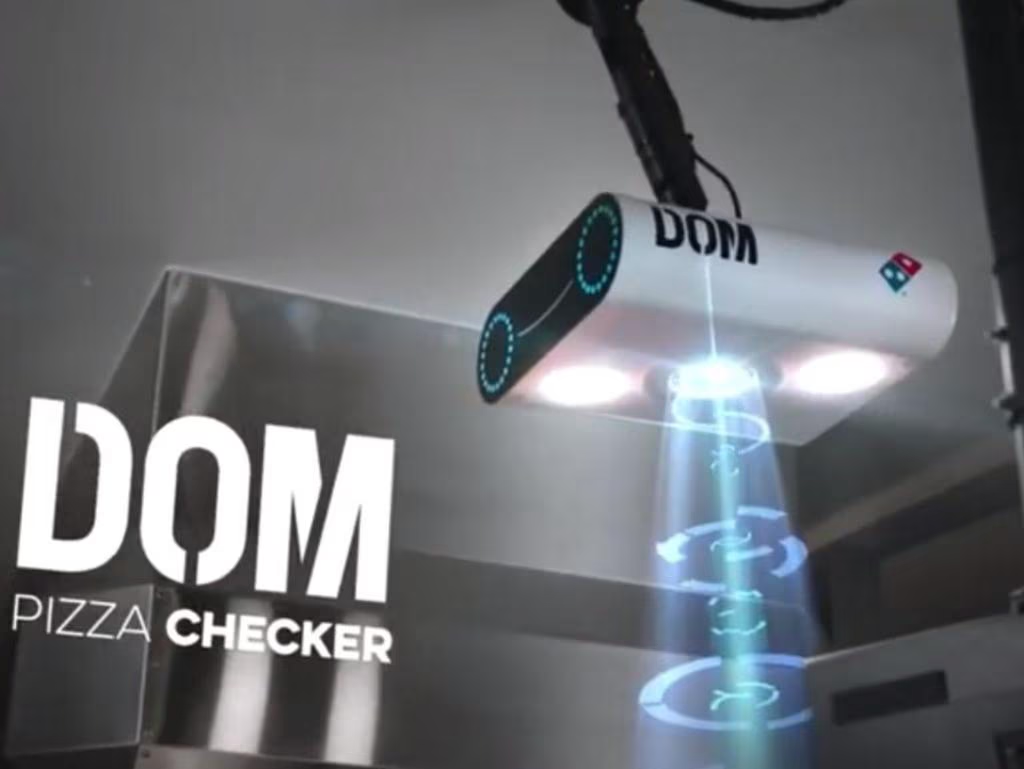
– DOM Pizza Checker Application: Developed to assess whether pizzas are ready and meet quality standards before delivery. Pizzas are photographed, and AI determines whether they meet standards and expectations, thus controlling product quality.
– Community Interaction: Pizzas that fail quality control are either donated or offered to customers as compensation for delays.
Social Architecture and Employee Engagement
When implementing digital transformation, it’s impossible to ignore social architecture. Increasing employee commitment to the company is a crucial issue. Let’s understand what they’ve done in this regard:
Cultural Training: Domino’s has prioritized training focused on transparency and accountability; adapting its human resources policies to support a fair working environment.
Performance Metrics: The Leaderboard application encourages competition among stores while ensuring operational transparency.
Customer Tracking: Thanks to Pizza Tracker, both management and customers can monitor order status in real-time, increasing accountability.
Fishbowl Concept: Employees operate in a transparent work environment, increasing performance visibility and customer satisfaction.
Real-time Customer Feedback
In the past, Domino’s had a low level of direct feedback from dissatisfied customers because customers often preferred ordering from competitors rather than complaining. However, this has been reversed with the new culture developed by the new management.
With the introduction of Pizza Tracker, customers can easily rate their experiences, and the amount of feedback received has increased significantly.
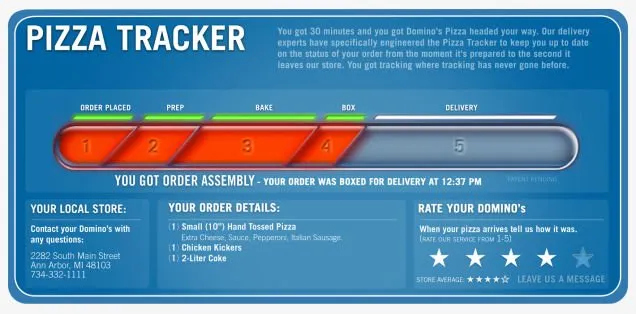
To manage the high volume of complaints, feedback was electronically forwarded to store managers; managers were then tasked with contacting customers directly to quickly resolve issues.
This proactive approach led to increased customer satisfaction, often resulting in a surprising experience for customers who received phone calls shortly after submitting online complaints.
Personalization of the customer experience was further enhanced by sharing the names of the employees who prepared and delivered the pizzas; this practice contributed to higher tip rates and made customers feel more comfortable.
Upward financial indicators
Of course, all these successful efforts yielded significant returns. Domino’s share price increased significantly, rising by 450% between 2015 and 2020 to reach $545.84. Unlike its competitors, Domino’s was the only major pizza chain to show positive revenue growth between 2017 and 2020.
During the COVID-19 pandemic, Domino’s reported strong financial results; in 2022, its revenues increased year-on-year, reaching approximately $4.5 billion. These financial improvements clearly demonstrate the success of Domino’s investments in technology and innovations in customer service practices. They performed strongly during the COVID-19 pandemic, being among the most prepared companies, and their total revenue reached $17.54 billion in 2022.
As of 2023, Domino’s Pizza has successfully managed competition from major players like Pizza Hut and numerous local businesses. With over 19,000 stores globally, the company significantly outperformed its competitors, achieving a 99.1% increase in share price between September 2017 and August 2020. Its market capitalization exceeding $13 billion as of September 2023 is a testament to its technological innovations and customer-centric transformation.
What happens next? Innovation and Future Plans
In 2023, Domino’s management planned to continue investing in technological innovation and employee engagement. The leadership team regularly visited technology companies to stay up-to-date with the latest trends, thereby fostering an innovative corporate culture.
At its headquarters in Ann Arbor, the Innovation Garage continues to encourage employees to collaborate and experiment with new ideas. This initiative aims to maintain a culture of continuous innovation, positioning Domino’s not only as a pizza company but also, as its former CEOs have stated, as a leader in technology.
Thanks to its emphasis on technology and customer-centric solutions, the company has transformed from a local pizza shop into one of the most successful global retail chains.
Now, let’s get to the most unexpected question from the case study we covered in our Digital Strategies class. Let’s see what happens if we apply Porter’s Five Forces model to Domino’s digital transformation:
Porter’s Five Forces Model
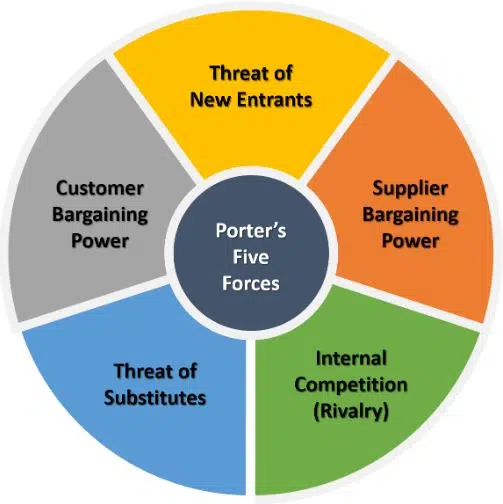
Porter’s Five Forces Model is a useful framework for analyzing a business’s competitive environment. Below, we explain how this model is applied in the context of Domino’s Pizza’s market position and digital transformation:
1) Threat of New Entrants:
Barriers to Entry: Barriers to entry in the pizza industry are moderate. While opening a small pizza shop is relatively easy, gaining market share against established players like Domino’s requires significant marketing and technology investments.
Brand Loyalty: Established brands benefit from customer loyalty, making it difficult for new entrepreneurs to attract customers. Domino’s strong brand awareness and extensive marketing activities act as a deterrent for new players.
2) Bargaining Power of Suppliers:
Supplier Concentration: Domino’s sources its ingredients from numerous suppliers, reducing their bargaining power. However, raw material quality and prices can directly affect costs and customer satisfaction.
Vertical Integration: Domino’s has achieved a certain level of vertical integration by establishing direct relationships with suppliers; this has allowed them to achieve better pricing and quality control.
3) Bargaining Power of Buyers:
Customer Options: Customers have numerous alternatives, from local pizzerias to large chains. This intense competition gives consumers high bargaining power.
Price Sensitivity: Especially in highly competitive markets, customers are sensitive to price. This leads Domino’s to offer campaigns and discounts to maintain its market share.
4) Threat of Substitutes:
Alternative Food Options: The threat of substitutes is high due to fast-food alternatives, takeaways, and home cooking options. Consumers can easily switch to other options if they are not satisfied with pizza.
Health Trends: Increased health awareness may lead consumers to prefer healthier food options, which could negatively impact pizza sales.
5) Rivalry of Competitors
Intense Competition: The pizza industry is highly competitive, with strong rivals such as Pizza Hut, Papa John’s, and local independent pizzerias. Price wars and promotions further intensify this competition. This competition has been shaped by large chains focusing on their sales channels to strive for dominance. For example, for a long time, Pizza Hut positioned itself in the in-restaurant dining channel, while Little Caesar’s focused on the take-away channel. Of course, these positionings have intertwined over time, turning into a battle for dominance across all pizza restaurant chains. Another area of competition has been product quality. Papa John’s has long advertised its pizzas as the most delicious because they are made with the highest quality ingredients. Of course, local pizzerias shouldn’t be overlooked in this competition either. In some destinations, local pizzerias have gained an advantage over all these chain pizza restaurants. In the US market, worth $45.5 billion in 2021, approximately 60% of market penetration was held by chain pizzerias, and 40% by local pizzerias.
Innovation and Technology: While Domino’s digital transformation has provided a competitive advantage, the investment of other players in technology and delivery innovations keeps the competitive pressure at a high level. In short, while Domino’s has implemented this digital transformation most successfully, its competitors are not standing still.
Conclusion
Using Porter’s Five Forces Model, it is clear that Domino’s operates in a highly competitive environment with significant opportunities and challenges. Thanks to its strong brand, technological innovations, and effective marketing strategies, Domino’s is in an advantageous position against these competitive forces. However, maintaining a competitive advantage in the dynamic pizza industry requires continuous attention and innovation.
Former Domino’s CEO J. Patrick Doyle’s description of Domino’s as “a technology company in the pizza business” was reflected in the overall company strategy during his tenure as CEO from 2010–2018. As a result of these successfully implemented strategies, by 2023 Domino’s had become a strong competitor in the pizza sector, surpassing Pizza Hut and local independent rivals.
The company has nearly doubled its total number of stores from 2012, reaching over 19,000 stores globally. Its share price increased by 99.1% between September 2017 and August 2020, a sharp contrast to the limited 21% growth of YUM Brands, Pizza Hut’s parent company, during the same period.
As of September 2023, Domino’s market value exceeded US$13 billion. This success is based on a strong focus on digital transformation, technological advancements, and a customer-centric social transformation.
The Power of Learning from Mistakes
Over the past 16 years, Domino’s Pizza has learned from its mistakes and crises, first solving its most fundamental problem to ensure its pizzas were delicious, and then taking radical steps by prioritizing technology, achieving significant improvements in speed and efficiency, and outpacing its competitors.
Here we can see how good or bad governance can either propel a company to the top or sink it. While Pizza Hut, once by far the brand with the highest value, revenue, and number of restaurants in the pizza industry, is struggling these days (I regret to say that they made major mistakes both in America and globally. See: https://serhansuzer.com/tr/pizza-hut-turkiyenin-yukselisi-nasil-engellendi/), Domino’s has evolved from a local pizza shop into a global leader in both pizza and technology. To maintain this leadership, they continue to innovate through the culture of innovation they have created.