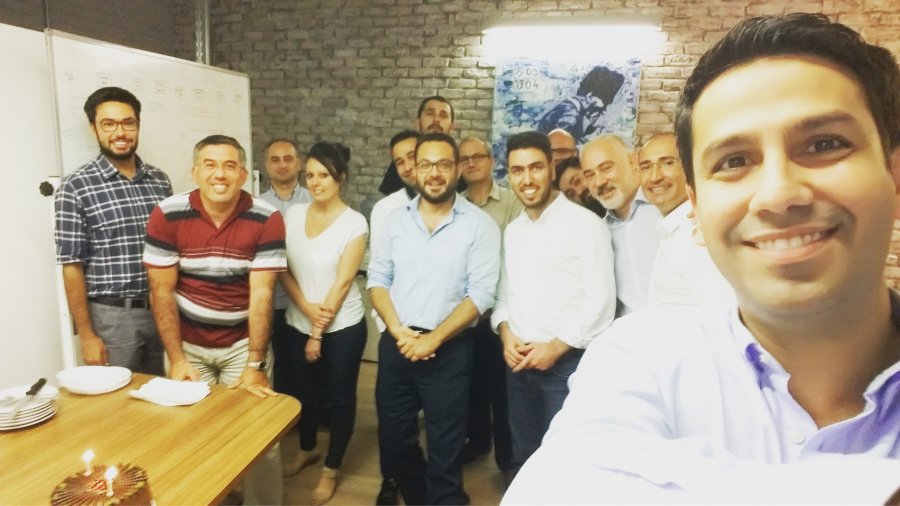
Ever since I was little, I’d chat with my father like he was some grown-up. Being the third generation of an entrepreneurial family inevitably leads to familiarity with the business. From the age of five, my father would include us in semi-official gatherings, and in high school and university, he would include us in all kinds of meetings. As kids, my brother Baran and I would hang out in the meeting room whenever we attended meetings.
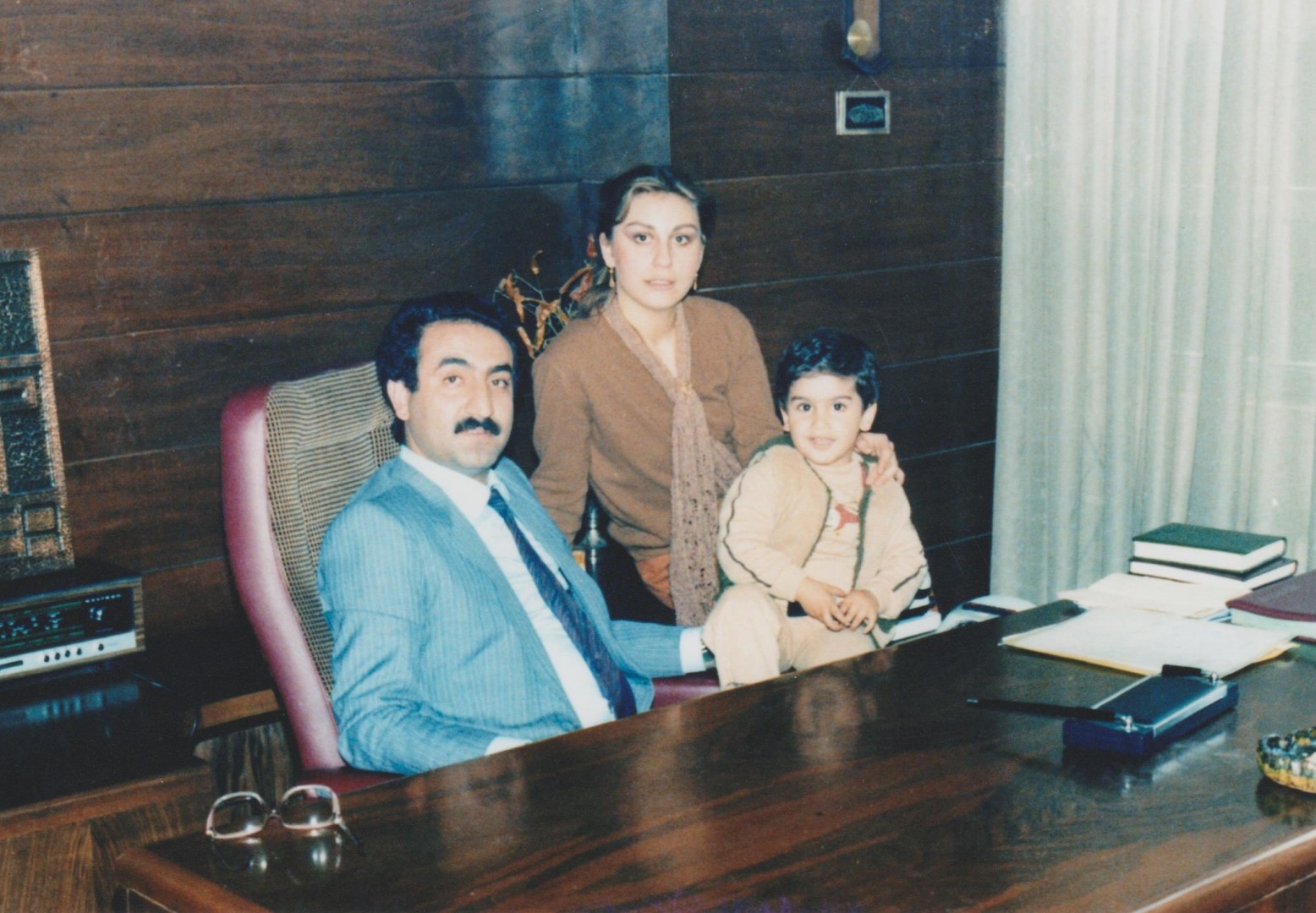
Sitting in my father’s office with my mother and father…
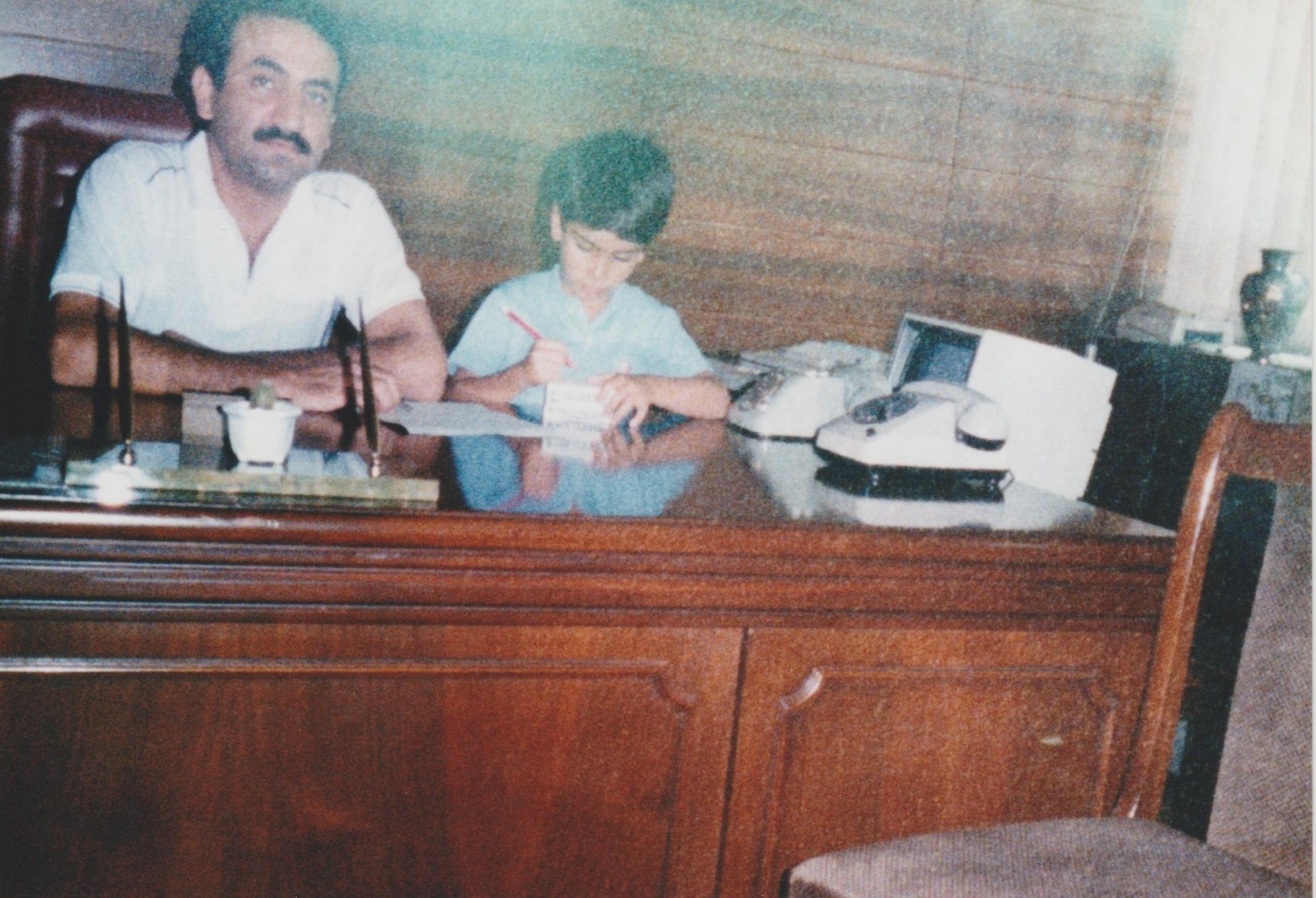
Still looking through something in my father’s office like a grown man.
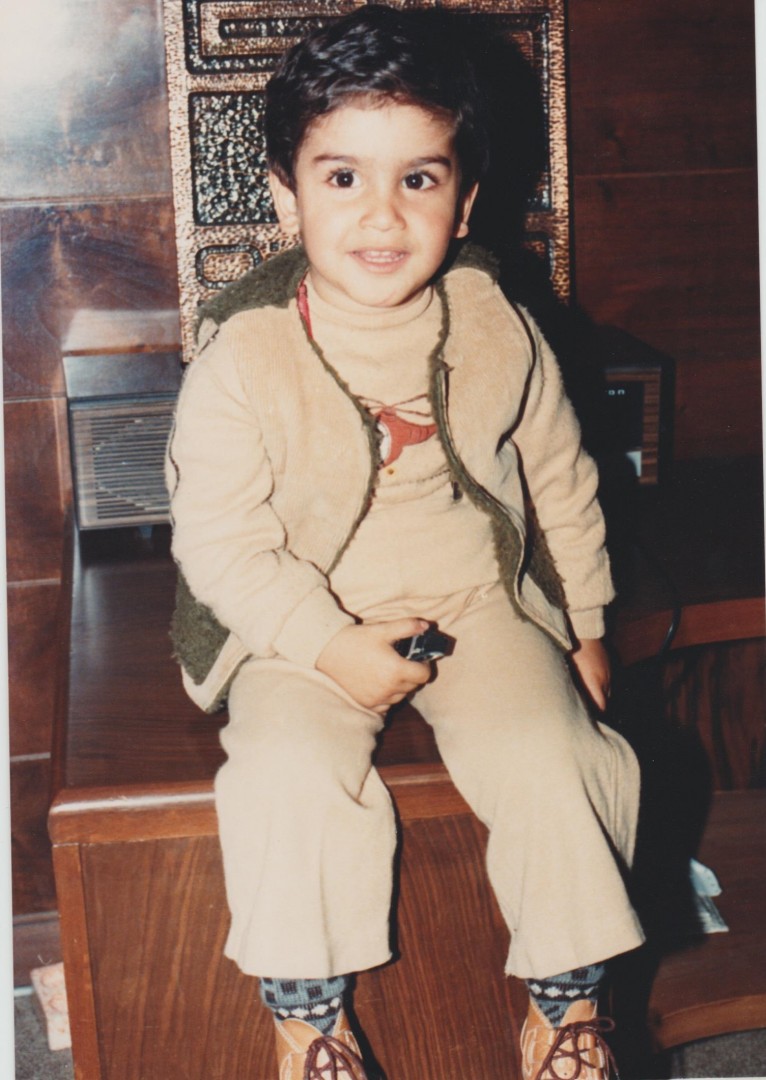
While the mischievous Serhan was sitting in front of the old Süzer Holding logo in my father’s office.
It might seem counterintuitive for children that age to listen to these conversations, and it actually seemed that way to me at the time. Now I understand it better. You become familiar with many concepts, your hearing becomes more acute, you develop certain reflexes, and you gradually grasp things more quickly. Beyond these, some meetings were particularly interesting and enjoyable to me. For example, when I was 11 or 12, during the design process for Bahçeşehir, I remember a meeting where my father and his staff decided on the names of the streets of the city they were going to build. Initially, they debated, “What should we name the concept?” But when they finally settled on flower names, they compiled a list of all the flower names. What followed was a delightful experience; conversations like, “Should we put orchids or daisies next to Gül Sokak?” erupted.
If I remember correctly, one day during middle school, I visited my father in his office and brought up the topic of money. Don’t get me wrong, I had no interest in money. It was only when I learned at school that money, as a means of payment, was introduced into human history by the Lydians that the topic struck me as quite interesting. I remember saying the following to my father at the time. Just as it seems comical to us today to know that money in the past consisted of ‘gold coins,’ it will also seem comical to future generations knowing that we exchanged ‘paper’ as a form of currency. “I’m sure there will be another medium to symbolize money,” I said.
I found the answer to my question during my university years. Since I studied during the digital disruption of the 1990s and was familiar with all the new technologies, it wasn’t hard to see that everything would gradually become digital. Money was nothing more than a digital element.
A lot of water has passed under the bridge. After graduating from university, I worked for a while at the American headquarters of the Italian insurance company Generali before returning to Türkiye. After completing my military service, I began my career in the family business after encountering the Kentbank incident. I’ve written about the details before; you can read the link at http://www.serhansuzer.com/tr/15-yillik-is-hayatim-ve-gelecege-notlar.
The love of Fintech is something else!
When things were starting to improve at the holding company, the son of a friend of my father’s gave us a presentation in 2007, at my father’s direction. This clever young man presented us with the ‘campus card’ project at his university, and I was very impressed with his project, and my love for fintech was instantly rekindled.
I reported that we should get involved in this project, but our board of directors, which made the final decision, wasn’t convinced by the project we were discussing among our business development projects, and we rejected the people who brought it to us.
After founding my company developing technology in the field of solar energy at the end of 2011, I had no intention of investing in anything else. In 2013, I sold this company to a foreign investor and launched another venture, this time focusing solely on renewable energy projects, which I now call EkoRE. During this period, I was visited by Aslı Işınak Gözören, Secretary General of the Keiretsu Forum, at one of my meetings outside the sector. She informed me about the Keiretsu Forum. Keiretsu Forum, an angel investor network, is a platform that connects companies seeking investment, whether they are startups, or in the early stages of investment, with investors who want to invest in these companies, typically continuing with minority stakes or intending to sell their shares at a higher valuation after a certain period. An angel network like Keiretsu Forum, which began in the US, now connects investors with investment seekers in many parts of the world. The companies seeking investment on Keiretsu Forum are generally technology companies founded by entrepreneurs with diverse profiles.
Given all these characteristics, it seemed like a platform that suited me. I wanted to join, partly out of curiosity and partly because of Aslı’s approach. She is Turkish Canadian and runs the platform with a culture and professionalism I’m very familiar with. I decided to join without even considering it.
I became a member in November 2013, and at the first meeting I attended in December, I came across the Moka project in the first presentation. It was a fortunate coincidence that, on such a platform, I first encountered a fintech project. I listened to other projects, but they didn’t pique my interest. I wrote a note on the form placed before me, requesting a meeting with Moka’s entrepreneurs, Seyfi Erol and Levent İlhaner.
Following this, we began meeting with Moka’s entrepreneurs starting in January. Levent and Seyfi are also the founders of Amerikadaniste.com. They had developed Moka’s software at their own company. From what I could see, there were problems with the business plan and feasibility studies. I worked with various consultants for the technical, legal, and financial review of the project.
The Decision Stemming From Çatalburun
Right then, while I was deciding whether to invest, I participated in the 10 K Runtalya run in Antalya one weekend. I’ve written about this run in the past. You can find my post about the run at http://serhansuzer.com/tr/runtalya-bir-kosunun-anatomisi. The day before the run, I was hanging out in the lobby of the hotel we were staying at in Antalya when suddenly, a very cute dog jumped up on the couch I was sitting on and lay on my lap. It wanted to be petted. I loved it so much. An incredible bond was instantly formed between us. After three minutes of affection, the dog’s owner arrived. After that, the following conversation took place:
— (Calling out to the dog first) Mokaaaaaa, where are you? I’ve been looking for you all this time.
— Is your dog’s name Moka?
— Yes, Moka.
— Why Moka?
— That’s why it’s brown. Moka is our favorite type of coffee.
That weekend, I found the answer to the question that occupied my mind the most: whether to invest in a Moka. I’m not superstitious, but I believe some coincidences aren’t just coincidences. So, I decided to invest in Moka. Then our conversation continued.
- Your dog is so cute, maşallah. I loved it.
- Thank you. This is actually a hunting dog. I was amazed. Moka isn’t a dog that gets too close to people. She doesn’t show this kind of interest to anyone except my husband; she even growls and barks.
- She doesn’t look like that kind of dog at all. I knew she was a hunting dog because of her high energy. What breed is Moka?
- Çatalburun
- Çatalburun? Is there such a breed? What country does it originate from?
- Yes, there is. This is actually a true Turkish dog. It originates from around Mersin. Everyone knows the Sivas Kangal, but we have many other beautiful breeds of dogs from Türkiye.
- Well, I loved this breed, too.
- He’s absolutely enamored with you too. Look, he won’t get off your lap. Honestly, my husband would be jealous of Moka if he were here.
- Is Moka a female?
- Yes.
- She needs a lot of time outside.
- Yes, we just got back from a walk. I lost him at one point, and he came to you from the balcony area of the lobby.
- I’m happy with my life.
As we were talking about this, my friend came over. When he sat down on the couch, Moka barked. My friend, a true dog lover, smiled back. Moka was angry and continued to bark to get him off the couch. At that moment, the woman’s husband arrived.
“You naughty doggie, what are you doing here?” he said, calling Moka over. Moka was fine. She was still lying on my lap. The man glared at his wife, just as the woman had said, and said, “Bring him to the garden.” Then the woman said to me, “When you get tired of Moka, we’ll be sitting there. You can bring her back.” After confirming, I continued drinking my tea with Moka. After a while, I took Moka to the spot the woman indicated.
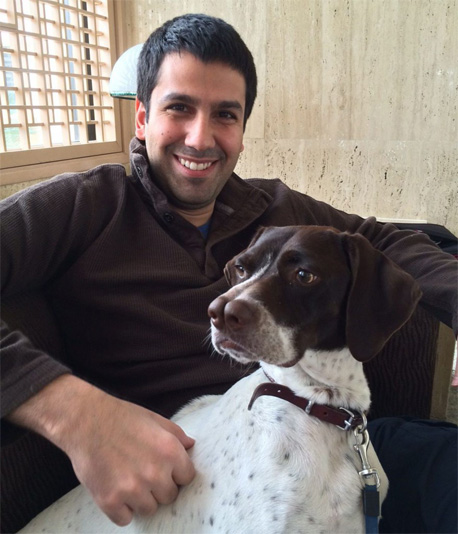
Having a good time with Moka
The waiter quickly informed me that the husband and wife who owned the dog also owned the hotel. After a successful race on Sunday, I returned to Istanbul with my decision made.
Startup with Moka
That week in Istanbul, I accelerated negotiations. Over the following weeks, we discussed and negotiated all the details. They made the changes we requested, finalized all the issues, and established the company on 14 August 2014. Thus, we completed the process that began in January 2014, after completing the technical, financial, and legal reviews, agreeing on a business plan, and finalizing administrative matters. We established Moka Payment Board Inc. from scratch and incorporated the software developed by my partners into the company, with all its rights. Thus, Moka began operations as a startup company.
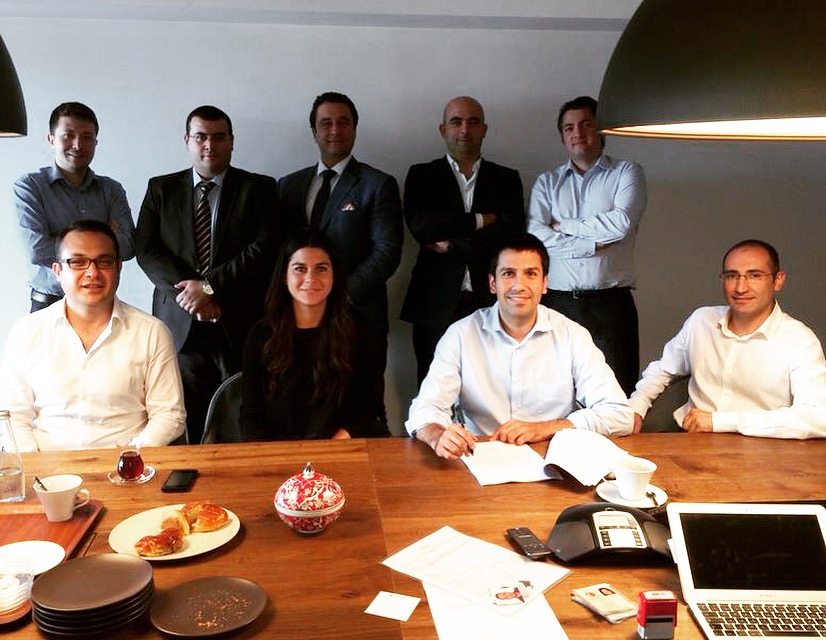
Moka signing the founding documents. Seated from left to right: Moka co-founder Seyfi Erol, our lawyer Yasemin Mürsaloğlu, myself, and Moka’s other founder, Levent İlhaner. Standing from left to right: Aytuğ Büyükatak, a lawyer at Başpınar & Partners Law, the law firm of Seyfi and Levent Beys; our financial advisor, Alper Gerdenari; Burçak Ünsal, a partner at Ünsal Law Firm, who represented me; Kaan Gök, a partner at Başpınar & Partners; and Kunter Barlak, a financial advisor to Seyfi and Levent Beys.
Incidentally, just for your information. While Moka sounds like a delicious type of coffee, for us, the name MoKa is short for ‘mobile card’ or ‘mobile safe.’ Ultimately, we came up with a catchy name. Later, we also acquired the address http://www.moka.com, which was a good thing.

Following our general manager search, we appointed İlker Uzkan as our first general manager. He came to us through a reference. He was a prominent expert in fintech in Türkiye. Raised in Germany and having pursued a career in the UK, he had achieved many significant successes in his sector. He gained experience in digital platforms and business development at Sony and Amazon and was a member of the founding team of Amazon Germany. He then moved to agency work in Berlin and London, where he worked for a long time on innovation strategies and mobile projects for international companies including major brands like Yahoo, Microsoft, the BBC, and BMW. He specialized in the development of next-generation financial services and played key roles in the implementation of mobile wallet projects for Visa, Turkcell, O2 Telefónica, and Softcard. He joined us in September 2014.
We explored many locations for our office, and finally, with İlker Bey’s encouragement, we settled on the Alarko Business Center in Karaköy. The high ceilings and open-plan office in a beautiful old building suited us. A few months after we moved in, the restaurant space below was also taken. While working in our office, located right above Mitte, a popular spot, the construction they were building for the restaurant not only disturbed us, but also shook the entire building. Despite our repeated warnings, they were working during business hours. We persevered for three to five months. Finally, Mitte opened to Istanbul residents. Personally, I resented them, so I never ate there until recently, when close high school friends invited me there.
Innovations and closure
Our first serious marketing activity was Retail Days. In a presentation delivered by İlker Bey, held in the heart of the retail industry, in front of hundreds of industry professionals, we introduced the possibility of sending promotions to mobile phones via push notifications inside and outside the store, allowing customers to easily make payments through our app without having to queue, and many other innovations for the sector.
Despite all our efforts, the software we developed specifically for retail and our planned initiatives were not effective. Having served the retail sector for many years, I knew the sector well. The main problem was that the sector in Türkiye was not receptive to such innovations, and users were not psychologically prepared to use payments through an app. This realization quickly became apparent.
Added to this, administrative challenges continued, and the difficulties continued. İlker Bey knew the industry intimately. He was well-versed in all its details. Above all, he was a man of good character and integrity. However, he struggled to adapt to the country, particularly when it came to managing professionals in Türkiye.
Consequently, we began searching for a new general manager. Following interviews, Selim Güsar was appointed as the second general manager. Mr. Selim was an experienced executive who, after a long and successful banking career, had served as Deputy General Manager responsible for marketing and fraud at BKM (Interbank Card Center), a major institution in the sector and a partner of Türkiye’s most prominent banks. Possessing the management qualities we were looking for, Mr. Selim assembled the team. During this process, we also retained our first General Manager, İlker Bey. His international experience was personally important to me because my primary goal was to create a global brand in the fintech and renewable energy fields in which I operate. Therefore, we spoke with him, and thankfully, he remained with us and continues to serve as a board member at Moka. However, the underlying problem was our business model.
During this period, I was talking to someone I respected about my fintech business. I mentioned that fintech wasn’t easy and that many fintech companies were losing money. I explained that we had our challenges, but that we would overcome them somehow. He asked me, “How can you make money in a business where everyone else is losing money?” Naturally, this question resonated with me. Without showing how upset I was, I suddenly said, “Anyone can lose money, but I will turn this business into a profit, and even more than that, I will turn it into an international business, you’ll see.”
Being both decisive and flexible
In the first months of working with Selim Bey, I held a critical meeting with the partners at Juno in Nişantaşı on a Saturday. At this meeting, I told Seyfi Bey and Levent Bey the following: “Fintech is a vast industry. It has many sub-segments. We can’t lose money by insisting on something the industry isn’t ready for. We will either abandon this business or find another focus area within fintech and continue our journey in a different direction. My position is to continue investing in this sector, no matter what.”
We discussed different business models. At one point, Seyfi Bey said something like, “A bill payment company acted like this,” and I reflexively asked him if he knew the details of the bill payment business. He said he didn’t, but that we could ask someone who knew, and called a professional he knew from PwC. He put the speaker on. I asked him the questions I had. By the end of the conversation, I was convinced. I told both partners, “Let’s get into this business.” They agreed. We revised our model and began preparing for a completely different business model, the traditional bill payment business. We purchased the bill payment software from another company and, after completing all the necessary preparations, quickly entered the sector. We started with the most basic model. We quickly established a dealer network. Within a year and a half, we had 5,000 dealers. We were offering bill payment services through our dealers in various parts of Anatolia.
We added top-up sales to this dealer network. We also discovered we could meet various collection needs. We also began offering a virtual POS service. Various institutions and organizations began processing their payments through our virtual POS service.
Meanwhile, we also received our ‘Payment Institution’ license from the Banking Regulation and Supervision Agency (BRSA). Thus, the pieces fell into place.
Beyond virtual POS, we continued to position ourselves as a payment tool for various organizations and business models. We focused on many different sectors in this area and continued to provide rapid technological solutions to address their problems. Today, despite all its sectoral problems, Moka has become a company with a promising future, a well-established team, and rapidly increasing revenues.
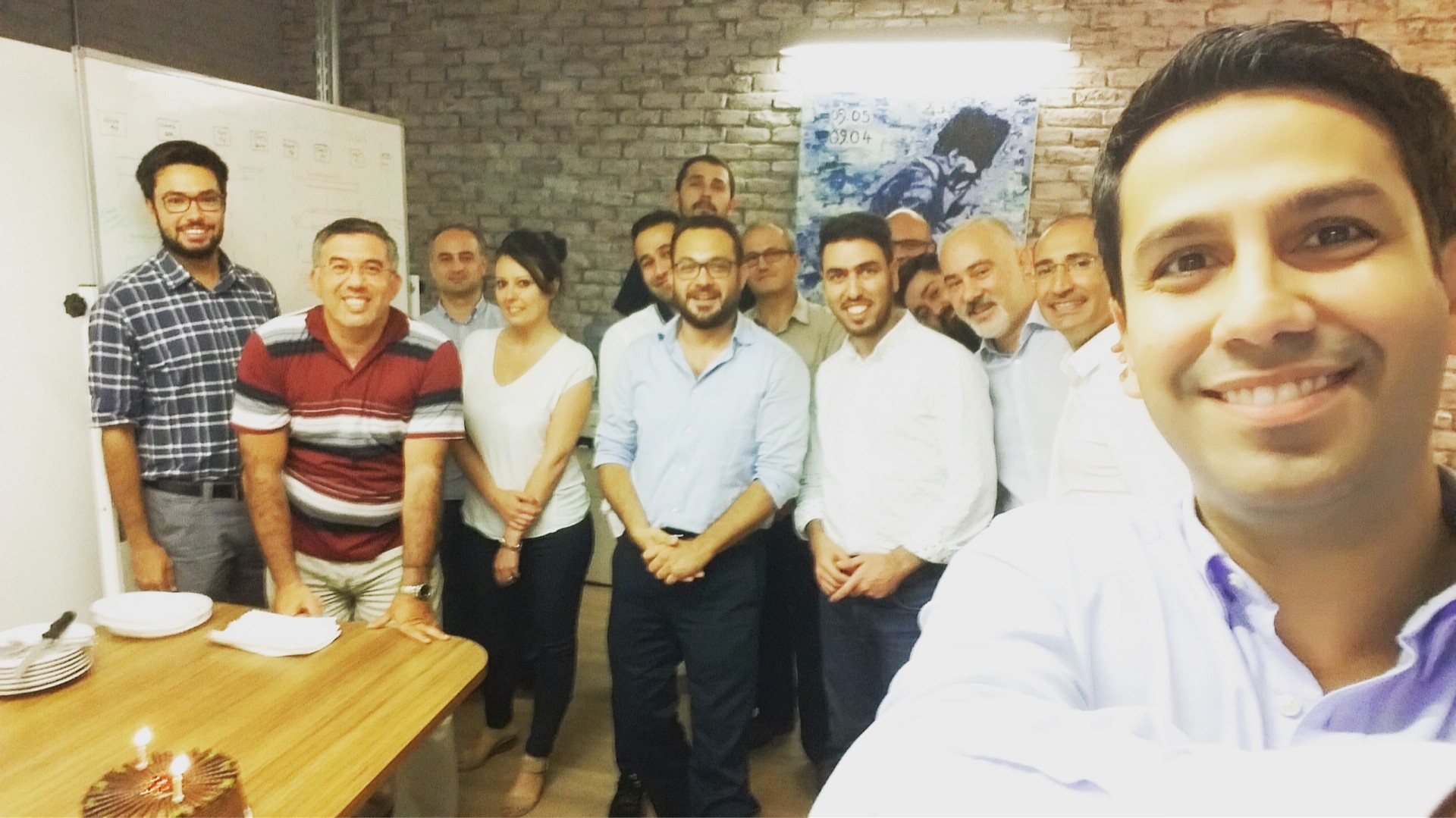
Celebrating the second anniversary
Delicious technological solutions!
Moka celebrated its second anniversary this week. In line with my previously mentioned sectoral vision, I founded another company last week.
Seyfi and Levent had chosen the name Moka. I continued to choose names that appealed to me. The newly established company is called Bonbon, officially known as Bonbon Technology Inc., and was founded as a next-generation technology company with the goal of developing innovative mobile technologies integrated with IoT in various fields focused on the IT sector. Bonbon Technology’s innovative solutions, developed specifically for the retail sector, simplify and elevate commerce by addressing the fundamental challenges of SMEs and businesses end-to-end. Data collected through Bonbon’s products is processed efficiently using advanced artificial intelligence algorithms, guiding businesses to maximize their profits.
Bonbon’s SME management system, one of two complementary solutions, integrates a wide range of processes, from sales and customer management to inventory tracking and reporting, making it accessible to SMEs. Leveraging the power of mobile technology and its numerous advantages, Bonbon offers all the solutions a business needs within a single mobile application, solving problems managers may not even be aware of, increasing sales with instant guidance.

Bonbon’s patent-pending WiFi Analytics, a proprietary data analysis solution that accesses real-time location data via Wi-Fi, addresses a fundamental problem that has been awaiting a solution for many years and has rendered many technologies obsolete. The technology developed by Bonbon enables analysis of customer behavior at points of sale, without the need for location-based applications, Bluetooth, Wi-Fi connectivity, or mobile applications. The solution focuses on customer behavior, providing real-time, location- and profile-based analysis of sales. In this context, it builds on the foundations of the ‘Internet of Things’ concept because it collects, processes, and generates meaningful reports.
I believe we can make the necessary breakthrough in the retail sector this time. While Moka advances with individual and enterprise-focused solutions, Bonbon will continue its path with technologies that differentiate the retail sector.
I will also write an article about Bonbon in the future. Let me share the link to the new website with you: http://www.bonbon.tech. I wish Bonbon Tech good luck and success.
As I mentioned in previous articles, after the recent coup attempt, I decided to step up my investments. Bonbon Tech is the first fruit of this. I am accelerating investments in the sectors I operate in. Despite all the challenges we are facing these days, I offer the same advice to all businesspeople and entrepreneurs. Let’s all protect our country together.
I will also continue to do my best to advance technologies in the sectors I operate in to serve humanity. My passion for developing diverse technologies continues to burn within me. We will see the results of this in the future.
See you in the next article…
Tag: business world