
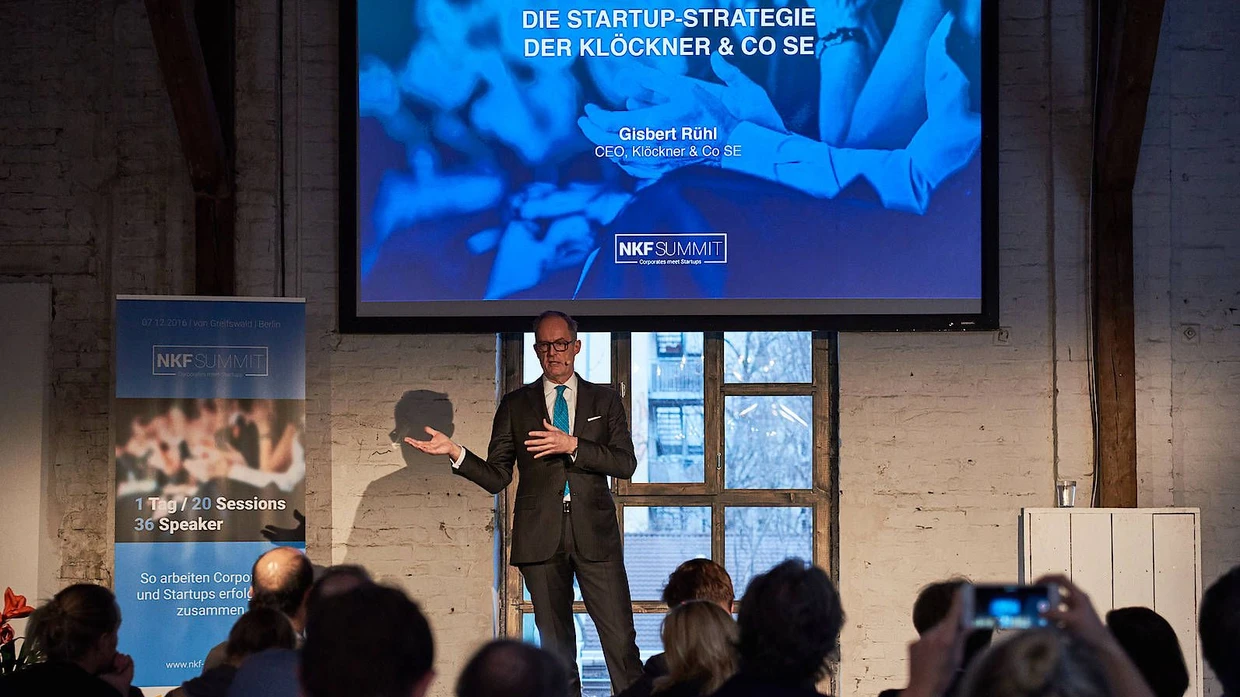
To kick off, let’s get to know Klöckner & Co.:
Klöckner & Co. serves 120,000 customers from 170 locations in 13 countries. As of 2017, it had shipped 6.125 million tons of steel and metal products and achieved sales revenue of €6.292 billion.
Company History
The company was founded in 1906 by Peter Klöckner in Duisburg, Germany. It grew alongside the German steel industry and pioneered the international steel trade. It was a pioneer in the early international steel trade, including sales to the Soviet Union for industrialization. Over time, it established numerous service centers and evolved into a full-service provider.
During World War II, it supplied the arms industry. Following the war, the company decartelized and became an independent distributor. It opened service centers to provide intermediary services.
It went public (IPO) in June 2006. 70% of the shares are held by institutional investors and 30% by individual investors.
Restructuring Programs Initiated by CEO Rühl
Under the leadership of Gisbert Rühl, CEO since 2009, more than 70 locations were closed due to shrinking steel demand, and 2,200 employees were laid off. The restructuring program concluded in 2013.
In 2014, CEO Rühl initiated the second restructuring plan. This time, the plan focused on digitalization. Rühl envisions a fully interconnected system. He emphasizes that this system will lead to new business models and that conducting B2B commerce through platforms is critical. Since 2014, Klöckner & Co. has invested heavily in online sales channels, contract management, and ERP integration. Automation was later added to this process.
An online platform created for the steel industry
CEO Rühl’s overall goal is to establish an online platform where the entire industry, including its largest competitors, can sell. He believes: “If we don’t do this, an online platform giant like Amazon will come and take over the entire steel industry. Then we’ll all be reduced to suppliers. Since the future of this business is a platform, let’s build that platform. Let’s set the rules of the game.”
Their goal is to become the central hub for all metal trade. They even want to expand into other industrial materials like plastics and become the Amazon of industrial materials. To this end, Rühl’s management has established an independent “Digital Center.”
Despite the “corporate immune system”
However, they are establishing this digital center in Berlin, independent of the headquarters in Duisburg. One reason for this is the existing structure that resists such digitalization. We call this the “corporate immune system.” This corporate immune system brushes off this new innovation idea, saying, “Our customers place their orders by phone.” Thinking, “If it doesn’t work in-house, I can do it outside,” they establish a separate digital unit called klöpner.ai in Berlin, located in the startup ecosystem.
The entire staff at this Berlin digital center are young people coming from the software industry, unfamiliar with the steel industry. They are far enough away from their parent company to avoid being influenced by it, yet close enough to benefit from its customer base. They are establishing a system called the Digital Experience Program. They are directing experienced salespeople from the headquarters to Berlin. Digital natives in Berlin learn the ins and outs of the business from professionals working in the field who come from the company headquarters. Salespeople from Duisburg also experience how the digital world works firsthand, becoming digital ambassadors upon their return.
Later, kloeckner.ai was founded in Berlin in 2014 to foster innovation. Starting with two employees, the center expanded to 80 by 2018. The center’s goal is to transform the company’s established mindset. The company is investing €25 million in the digital center by mid-2017. This will allow for a better understanding of digital processes and strengthen communication.
While the center operates independently, it maintains a connection with the parent company. This structure is structured similarly to Tesco.com’s relationship with physical stores. By applying a proven model, a smart approach is being implemented.
The Dual Approach
In short, Rühl has a two-pronged approach:
1) Vertical Platform: Klöckner’s own online stores selling its own products.
2) XoM Materials: An industry platform open to everyone. Not only Klöpner, but also its largest competitors can sell their own products.
There are two types of customers on the XoM Materials online platform, which the entire industry has begun using:
1) Price-oriented
2) Customers who demand specialized services and products
The Importance of Cultural Change in Digitalization Strategy
According to Angelika Kambeck, the company’s human resources director, a cultural change at Klöckner & Co. is essential for the success of the digitalization strategy. A digitalization strategy cannot succeed without cultural change. The real battle was won in the minds and hearts of people. Communication fueled this cultural change.
CEO Rühl is launching Yammer, Microsoft’s social networking tool that functions like a corporate Facebook, to ensure the smooth and rapid flow of information within the organization. He is radically closing communication channels for senior executives. He says he will hold all discussions on Yammer. Rühl spends 15-20 minutes a day on Yammer, interacting with employees and directly addressing critical issues such as strategy and organizational issues.
Because of a lack of focus amongst employees, Rühl clearly emphasized the importance of both digitalization and profit/margin targets. Initiatives like “Fuck-up Nights” fostered a culture of tolerance for mistakes and open discussion of failures.
Preventing Job Loss with Digitalization Training
The increased productivity brought by digitalization has created fears of job loss among employees. Rühl assured them that they would provide retraining and reassignment to different roles if necessary.
The Digital Academy was established to address the competency gap. Initially, participation was low, but interest grew after Rühl made participation mandatory. According to Rühl, working on digital projects secures the future by both enhancing the company’s competitiveness and increasing the value of employees in the market. He even issued a message to the entire company during this period: “Either take this opportunity and prepare yourself for the future, or don’t work with us. Don’t be stuck with skills that will become irrelevant in the future.”
People understand the importance. When Rühl properly explains the Digital Academy training, employees respond positively to the courses.
Leadership and Lessons Learned
Gisbert Rühl has evolved from a top-down leadership approach to a more collaborative style. He maintains his authority while focusing on explaining the “why” behind decisions. Rühl recognizes that his personal involvement is essential when unexpected developments arise during the digital transformation process and takes strong personal ownership of the process. He has been described as “a red thread running through change.” He visits Silicon Valley. Instead of a top-down leadership style, he strives to explain the why behind everything he does.
The company adopts a Minimum Viable Product (MVP) strategy, similar to the lean startup mentality: start small, scale based on success. When asked about the lessons learned, the CEO highlighted three key learnings:
1) Avoid excessive discussion,
2) Accept mistakes as a natural part of the process,
3) Maintain momentum despite challenges.
Regarding other personal details, Rühl doesn’t remove his tie. But he pushes for radical change. He strikes a balance. He both pushes for change, continues to take steps to disrupt the existing order, and keeps his tie on to emphasize stability with an air of “I’m the same leader you know.”
Conclusion
Since its founding, Klöckner & Co has transformed itself significantly in response to market conditions and technological advancements. Digital transformation requires not only technology investment but also cultural change. Effective communications and clarity of objectives are crucial for a successful digital strategy. A supportive environment that sees mistakes as learning opportunities fosters innovation and employee engagement.
We can summarize the key lessons we learned here in three points:
1) Boldness of vision: They aim to be the quarterbacks of the entire industry.
2) Separate innovation center: A separate innovation center model connected by an umbilical cord but protected from the company’s immune system.
3) Think big, start small approach: Instead of establishing a massive office, they set up a small, agile startup.
The same goes for the leaders of various industry giants trying to adapt to the new world. Technology, strategy, and organization are important, but ultimately, leadership is needed to drive cultural change.
I hope that companies operating in Türkiye and other countries on the path to digitalization can fully implement digitalization to increase efficiency and reduce carbon emissions.