
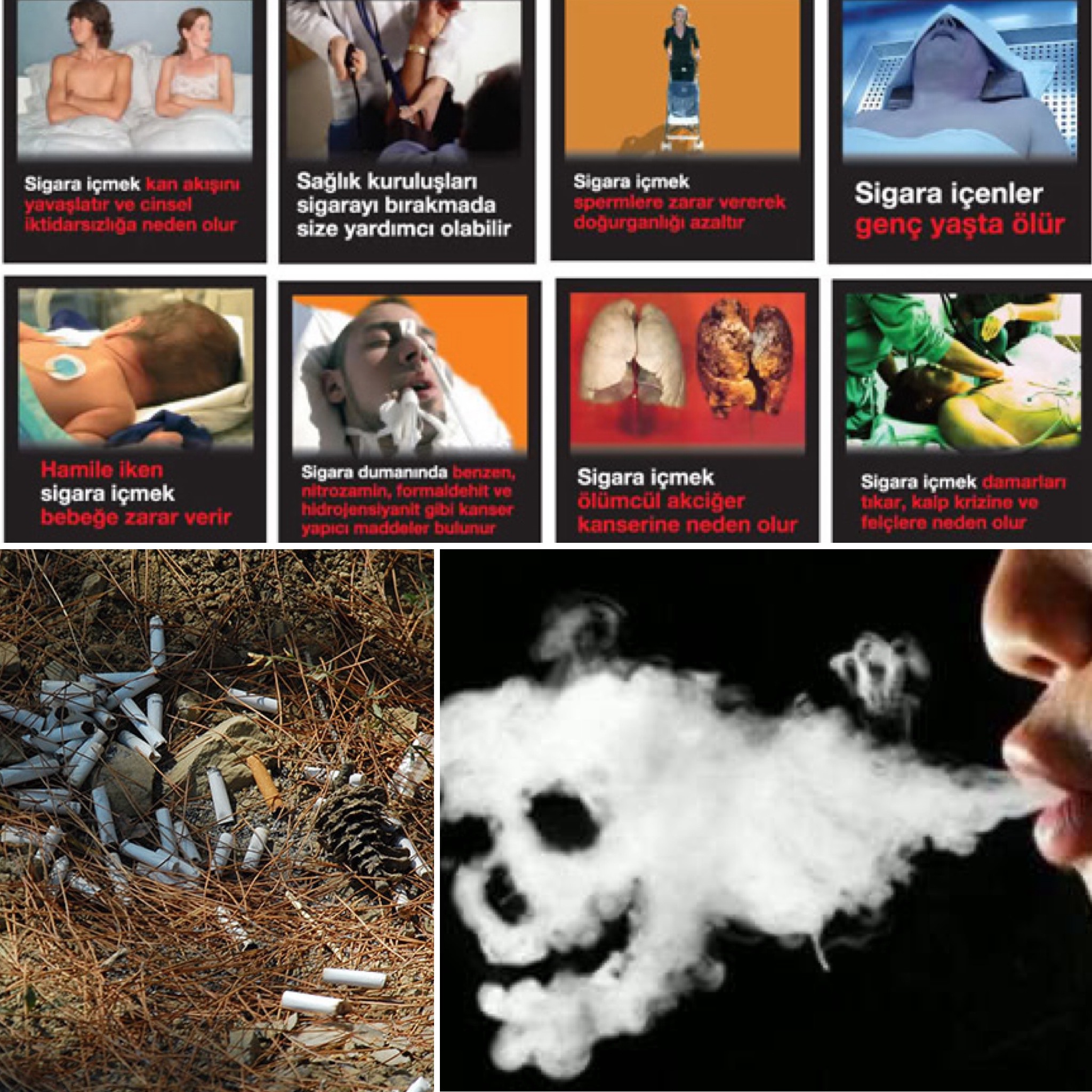
This month, I wrote two articles about the themes of ‘Forest Fires’ and ‘Death.’ In this article, I want to address the common theme of both themes: ‘Smoking.’ I’d like to begin by emphasizing, without mincing words, that smoking, for me, means “slowly approaching death” or “lowering my standard of living.” Call it a habit, an addiction, or a pleasure, whatever you call it, it’s none of my business. Smoking harms both your health and the health of those around you and even means slowly poisoning or even taking a life by poisoning.
However, the expression Italians once used to refer to our ancestors’ heavy smoking is still valid today. When I asked ChatGPT about this expression, “Fumare come un Turco,” or “smoking like a Turk,” they gave me the following explanation:
‘Smoking like a Turk’ (fumare come un Turco) has long been used in some European countries, particularly Italy. This expression is used to describe someone smoking excessively. The association of smoking with Turks is based on certain historical and cultural perceptions.
Historical Background
- Tobacco use was quite common during the Ottoman period. Tobacco spread rapidly throughout Ottoman society in the 17th century.
- Europeans observed the Ottomans’ fondness for cigarettes from their first contact with them.
- Smoking was not yet widespread in Europe at the time, so when observing a behavior like “smoking a lot,” this behavior might have been described as “like the Turks.”
- This has become a stereotype over time.
What Does It Mean?
The expression doesn’t imply a direct insult or hostile connotation toward Turks; however, it does contain clichés and stereotypes. In other words, it’s based on the generalization that Turks smoke a lot. Such expressions tend to label individuals or people with a single type of behavior.
Criticism from a Modern Perspective
- Today, this expression is controversial due to cultural prejudices.
- Because smoking rates vary widely across the world, such statements are no longer considered as valid or accurate as they once were.
- Furthermore, in a time of increasing health awareness, associating a habit like “smoking a lot” with cultural identity risks legitimizing an unhealthy norm.
Smoking Facts in Türkiye
- While smoking rates in Türkiye have historically been high, efforts have been made to reduce this rate in recent years through various legal regulations and health campaigns.
- While smoking is still widespread, this is no longer unique to Turks; many countries are grappling with similar problems.
Conclusion
The phrase “to smoke like a Turk” is based on a historical cliché and is increasingly outdated today. Rather than defining individuals based on cultural stereotypes, it would be healthier and more respectful to evaluate individuals’ behavior on a personal level.
So, I want to ask this: Is this merely a historical cliché, or is there some truth to it?
Let me answer right away, unfortunately, there is. In fact, I think we deserve much worse when we look at our current situation. Because:
1) Unfortunately, smoking rates are very high in our society,
2) Smokers smoke very dirty (polluting and poisoning everything), and
3) We are in trouble because of smokers.
Let me explain my point more clearly.
Negative effects of smoking on society
1) Those around them being affected (poisoned) by secondhand smoke:
If smokers think they only harm themselves, they are mistaken. The smoke they inhale also poisons those around them. In fact, if this becomes persistent, those close to them (usually those closest to them or those they care about) gradually lose their health. For example, a significant number of people with lung cancer who have never smoked are also affected. It’s helpful to look at the relatives of those who never smoked but died from lung cancer. If they lived with a smoker for many years (spouse, partner, etc.), it’s clear why that person developed lung cancer. I want to emphasize that the harmful effects of smoking on heavy smokers persist across generations. Unfortunately, this habit of a heavy smoker’s mother and/or father is deeply ingrained in their genes. If they have children in the future, that child may be born with genes sensitive to cigarette smoke, posing a risk for that child.
2) Forest fires caused by cigarette butts:
Everyone now knows that half-smoked cigarettes or still-smoking butts thrown in the forest can start forest fires. People’s habit of throwing lit cigarettes on the ground continues even when they are in or near the forest. When these people, whose minds have turned to compote, engage in this dirty habit without a second thought—the act of throwing butts on the ground in or near the forest—they can suddenly start a forest fire by igniting dry brush. I addressed this problem in my article this month titled “Turkey’s desertification is accelerating with forest fires” (https://serhansuzer.com/tr/turkiyenin-collesmesi-orman-yanginlariyla-hizlaniyor/). In the first article about human-caused fires, I included the following lines:
Human-caused fires:
- Fires caused by ignorance and a lack of culture: Unfortunately, there are many fires caused by negligence or accidents, such as stubble burning, cigarette butts, garbage fires, and barbecues. The root of this problem lies in the lack of proper education among our people. If our people were raised with a love of forests, respect for the environment (for example, not leaving their waste outside in the forest like the Japanese), and protecting the values and nature of their country, 99% of these problems would be eliminated. I recommend watching this video, which once again reveals our ignorance and lack of culture (we are all falling apart): https://www.instagram.com/reel/DMikkFdNjmX/?igsh=ZXk3d201OXY5eHN0
3) Environmental pollution:
I don’t know about other countries, but people in Turkey have a very nasty habit. After smoking, they throw their cigarette butts on the ground irresponsibly and without hesitation. Unfortunately, they continue these bad habits while doing everything they can (driving, chatting with friends outside, walking, etc.), throwing cigarette butts on the ground as if it were normal. Because of this despicable behavior stemming from a lack of culture, the ground is littered with cigarette butts and cleaning them up is never easy. And of course, these butts are very difficult to biodegrade or recycle. When I asked ChatGPT about this issue, I received the following response: Cigarette butts do not biodegrade easily. Plastic-based filters (cellulose acetate) remain in the environment for a long time, negatively impacting environmental sustainability.
Finally, I want to emphasize the multifaceted environmental damage caused by smoking. For example, in a world where water shortages are increasingly common, the production of one cigarette requires approximately 3.7 liters of water.
4) Increasing carbon emissions, the main cause of the climate crisis:
I created this thread and asked ChatGPT. I am sharing the answer I received:
1) Direct emissions:
- Combustion occurs when a cigarette is smoked. When tobacco, paper, and additives burn, they release carbon dioxide (CO₂), carbon monoxide (CO₂), and other gases.
- An average cigarette produces small amounts of CO₂ during combustion. While this amount alone is very small, the billions of cigarettes smoked worldwide each day add up to a significant carbon footprint.
2) The Production Process:
- Large areas of forest are cleared for tobacco cultivation (especially in the tropics). This both reduces carbon sinks and leads to additional carbon emissions from deforestation.
- Energy is consumed during the tobacco drying and processing stages, resulting in CO₂ emissions related to fossil fuel burning.
- Cigarette packaging, paper, filters, and transportation processes also increase the carbon footprint.
In summing up the situation, a single cigarette emits a small amount of carbon, but the tobacco farming, production, distribution, and consumption chain combined have a significant carbon footprint for the cigarette industry.
When I asked ChatGPT about this carbon footprint, they provided a calculation. I share it verbatim:
Yes—according to scientific life cycle (LCA) studies, the climate impact of one cigarette is ≈ 14 g CO₂e (carbon dioxide equivalent). This is the total impact, including growing, processing, packaging, transporting, and smoking tobacco.
ACS PublicationsPubMedspiral.imperial.ac.ukfctc.who.int
Quick calculation (assuming 14 g CO₂e per cigarette)
Formula: Number of cigarettes per day × 14 g × 365 / 1000 = kg CO₂e per year
Examples:
- 1 cigarette/day: 14 g/day → 5.11 kg CO₂e/year. ACS Publications
- 5 cigarettes/day: 70 g/day → 25.55 kg CO₂e/year. ACS Publications
- 10 units/day (half-pack): 140 g/day → 51.1 kg CO₂e/year. ACS Publications
- 20 units/day (1-pack): 280 g/day → 102.2 kg CO₂e/year. ACS Publications
- 40 units/day (2-pack): 560 g/day → 204.4 kg CO₂e/year. ACS Publications
Additional information: According to the same study, the 50-year footprint of someone who smokes one pack of cigarettes a day is approximately 5.1 tons of CO₂e; this has also been reported as a separate finding in the literature.
Wow. I must say I wasn’t expecting this much. A person who smokes one pack of cigarettes a day (and most smokers smoke more) contributes an additional 5.1 tons of carbon emissions to the atmosphere over 50 years of smoking.
5) It causes inefficiency in the workplace:
Employees taking smoke breaks is now considered normal. Some workplaces have even established ‘smoke break hours’ to regulate these frequent smoke breaks, requiring employees to take them during these hours.
They also ask, “Why don’t Turks work as productively as Germans?” The main reason is that Turks have a high tendency to smoke, and they do most of their smoking while smoking. Employees often just say, “I’ll have a cigarette and come back,” and leave, only to hang out outside smoking for 45 minutes. Can you expect such an employee to be productive?
Frankly, we’re now asking if they smoke when hiring. We prefer non-smokers when choosing between two applicants with similar skills.
6) It paves the way for other bad habits:
I’ve made a point: Smokers are also prone to drugs like marijuana, cocaine, and heroin. A non-smoker’s rate of drug use is lower than a smoker’s. Therefore, a habit that’s smoked like a cigarette and is addictive to nicotine can lead to a tendency toward drug use.
7) Smoking derivatives like electronic cigarettes (e-cigarettes) and hookahs:
Let’s not fool ourselves; none of the devices recently introduced to enhance the smoking experience reduce the harmful effects of cigarettes. When you smoke these instead of cigarettes, including hookahs, you’re still harming yourself and those around you. Let’s not fool anyone.
8) Causing both individual and public economic harm:
First, let’s talk about individual economic harm. If they’re a serious addict, individuals smoke 1-2 packs of cigarettes a day, which translates to consuming 30-60 packs a month. Assuming that cigarette prices are constantly rising, I can say they’re paying a fortune for something that’s slowly killing them. They could be spending the money they pay for cigarettes on things that could have a positive impact on their lives.
After the individual economic harm of smoking, let’s also address the public economic harm. Let’s start with the negative economic impact of foreign cigarettes. Importing these cigarettes harms our economy. Just think; billions of dollars (or euros) are being transferred from national resources to purchase foreign-made cigarettes, which millions of our citizens smoke. This negatively impacts the country’s import/export balance, and because our imports exceed our exports, our current account deficit increases. Add to this the burden of the health system problems that smoking causes. Many people suffer from health problems due to smoking. It causes many health problems, from lung cancer to conditions caused by clogged arteries, affecting general functions, and more. Of course, treating these health problems places a significant burden on the country’s healthcare system. A significant share of national resources is allocated to the treatment of these patients, and tens of billions of dollars (or euros) are spent.
Are cigarette companies aware of the burden they cause on people, communities, and countries, and the negative impact they have on them in every way? For example, when I asked ChatGPT about the extent of their impact on the health of the people I mentioned above, I received the following answers:
Health Harms of Smoking:
1) Cancer Risk
- 85-90% of lung cancer cases are linked to smoking.
- The risk of many types of cancer, including larynx, mouth, esophagus, pancreas, bladder, and kidney, also increases.
2) Respiratory System
- Chronic bronchitis and emphysema (COPD) develop.
- Lung capacity decreases, leading to shortness of breath and cough.
3) Cardiovascular System
- Increases the risk of heart attack, stroke, and peripheral vascular disease.
- Accelerates the process of atherosclerosis.
4) Addiction
- Nicotine affects the brain’s reward system and creates a strong addiction.
5) Pregnancy and Child Health
- Can lead to miscarriage, premature birth, low birth weight, and infant mortality.
- Secondhand smoke increases the risk of asthma, bronchitis, and ear infections in children.
6) Teeth and Skin
- Causes yellowing of teeth, gum disease, and bad breath.
- Premature aging, wrinkles, and a dull appearance occur on the skin.
There’s much more we could add to this summary of ChatGPT. This should be asked of doctors who specialize in this topic; the above points will be much more numerous. Let me add another harm that immediately comes to mind: We can say that the damage to men’s blood vessels negatively affects male function and disrupts women’s hormonal balance.
The Curse of Humanity
Having said all this, I want to emphasize that I consider smoking to be a “curse of humanity” due to the individual and societal harms I’ve emphasized above. I use the strong word “curse” here because we’re talking about a scourge that affects people both physically and mentally, sets them back, and causes them to lose their health. Despite this, billions of people worldwide still struggle to break free from this habit.
Consequently, as someone who is proud of my origins and Turkish identity, I’m deeply disturbed by the fact that smoking, which I consider a curse of humanity, is based on a historical stereotype and associated with Turks.
No matter how hard I tried, I couldn’t get my mother to quit smoking. His health is deteriorating right before my eyes due to smoking, and unfortunately, due to his addiction, I can’t stop it. I truly resent this issue. Besides my mother, many people I care about have lost their lives to smoking-related causes (lung cancer, heart attacks, embolisms, etc.). I’d like to share my suggestions for combatting smoking below.
My suggestions for combatting smoking
1) Raising public awareness: The harmful effects of smoking need to be constantly explained to people through a comprehensive campaign. Television, social media, and print media should be completely suppressed, any negative news that appears should be disseminated, and this issue should be communicated daily by the government.
2) A phased smoking ban: This may seem like a radical step to smokers, or especially those who are already smokers, but it must be implemented for the sake of our people’s health. Smoking can be banned after the following steps:
a) A comprehensive campaign: As mentioned above, a massive campaign should be organized about the harmful effects of smoking, and its harms should be communicated daily across all media.
b) Government support: Once the government has established a strong will and sufficiently raised public awareness, it is necessary to continuously encourage people to quit by expanding the use of smoking cessation methods (through persuasion, nicotine patches, or various methods like acupuncture). All necessary conditions and products for those who want to quit should be provided free of charge by the government.
c) Tax increases: Taxes on cigarettes should continue to increase significantly each month.
d) Limiting smoking areas: Eventually, it is necessary to significantly limit the number of smoking areas. For example, these shouldn’t be limited to indoor areas (by the way, if you try to deceive people by saying, “This is a winter garden, it’s considered an open space,” you will have to shut down their businesses indefinitely without any warning). Eventually, smoking should be banned not only indoors but also outdoors, up to a certain distance from buildings, like in the US.
e) Announcing to the world: Finally, as the world’s first smoke-free country, we need to announce to the world that we are the first country to go smoke-free. After this point, smokers should also be discouraged from visiting. Since the number of non-smokers and those who dislike smoking is increasing daily, we will observe a long-term increase in tourist numbers. Even after the smoking ban, we must actively combat the smuggled cigarette trade and crack down on those who commit this crime.
3) Filing substantial compensation lawsuits against cigarette companies and transferring the resulting proceeds to the healthcare system: This is crucial. Before banning smoking, serious lawsuits should be filed against the relevant cigarette companies. After the ban, all cigarette companies should be shut down and substantial compensation should be secured from these lawsuits. These funds should be channeled into the healthcare system, used to treat citizens harmed by smoking, and to support citizens who want to quit smoking (such as providing free nicotine patches and government-funded acupuncture treatments).
4) Ensuring joint action by governments worldwide against smoking: In this final stage, after achieving a smoke-free country, all necessary negotiations and incentives must be conducted to ensure that all other countries follow the path we have paved. After banning smoking, our citizens may continue to smoke abroad. All states must act together on this issue. Meanwhile, I’d like to remind you that there’s a big difference between banning alcohol and smoking. In my opinion, there’s no need to ban alcohol. We just need to ensure that our people can drink like gentlemen. In other words, drinking and driving should be banned (let’s not get into the hype; I think vehicles should be driven with zero alcohol content), or those who consume alcohol and cause chaos, start fights, and attack others should be punished with the harshest penalties.
The Harmful Difference of Smoking
The situation with smoking is different. If a person drinks too much or drinks constantly, they harm themselves. However, smokers also poison their immediate surroundings with the smoke they emit. Let me give you a few examples:
1) Those who die from lung cancer due to their husbands’ smoking.
2) Children whose parents are smokers lose their parents to lung cancer, and even the genes of their parents increase the risk of lung cancer in their non-smoking children.
3) Employees who are exposed to secondhand smoke in a workplace where there is heavy smoking, even if they don’t smoke, are exposed to serious illnesses such as hardening of the arteries or blood clots.
4) Those who regularly hang out with friends who smoke experience yellowing of the skin.
5) Women who become pregnant and continue to smoke, or who hang out with friends or husbands who smoke, are at increased risk of miscarriage or various complications in their unborn child.
The list goes on and on. In other words, smokers, just like alcohol consumption, are not only harming themselves but also their immediate surroundings. You can be exposed to this smoke even outdoors.
Licking an ashtray
Let me give you a personal example. I shouldn’t make a big deal about these matters, but I would definitely not choose a woman who smokes. There’s a saying, half-jokingly, that goes, “Kissing a smoker is like licking an ashtray.” That saying is actually true. I think so too. I also really dislike people smoking in my car. Even if they’re someone I can’t really hurt, I might let them, but I’ll have them roll down the window and openly state my dislike for it. Because the smell of that smoke permeates the car seats. Even if you open the window, it’ll still linger. A non-smoker can easily smell it.
On the other hand, the smoke from cigarettes, cigars, or pipes smoked outdoors in social settings also bothers me greatly. For example, when I go to a Galatasaray match and someone in the adjacent box is smoking a huge cigar, and the smoke hits us, I get a real headache. I’ll glare at them for a while, hoping they’ll correct me. If they still don’t, I’ll tell them directly that the smoke from their cigar is getting on us and bothering us.
As I read this, I can almost hear people talking about freedom to smoke. I’d like to tell them this (I’m writing in capital letters for clarity):
YOUR FREEDOM TO SMOKE IS LIMITED TO NOT HARMING THE HEALTH AND WELFARE OF OTHER PEOPLE. YOU CANNOT TRY WITH PEOPLE’S HEALTH AND WELFARE FOR THE SAKE OF ENJOYMENT.
In fact, I believe smoking and other addictions exist because of a lack of emotion. Society needs to become spiritually stronger to rid itself of smoking. We still have a long way to go for Turkish society to become spiritually stronger. This is the subject of a separate blog post.
I wish you healthy, smoke-free days.