
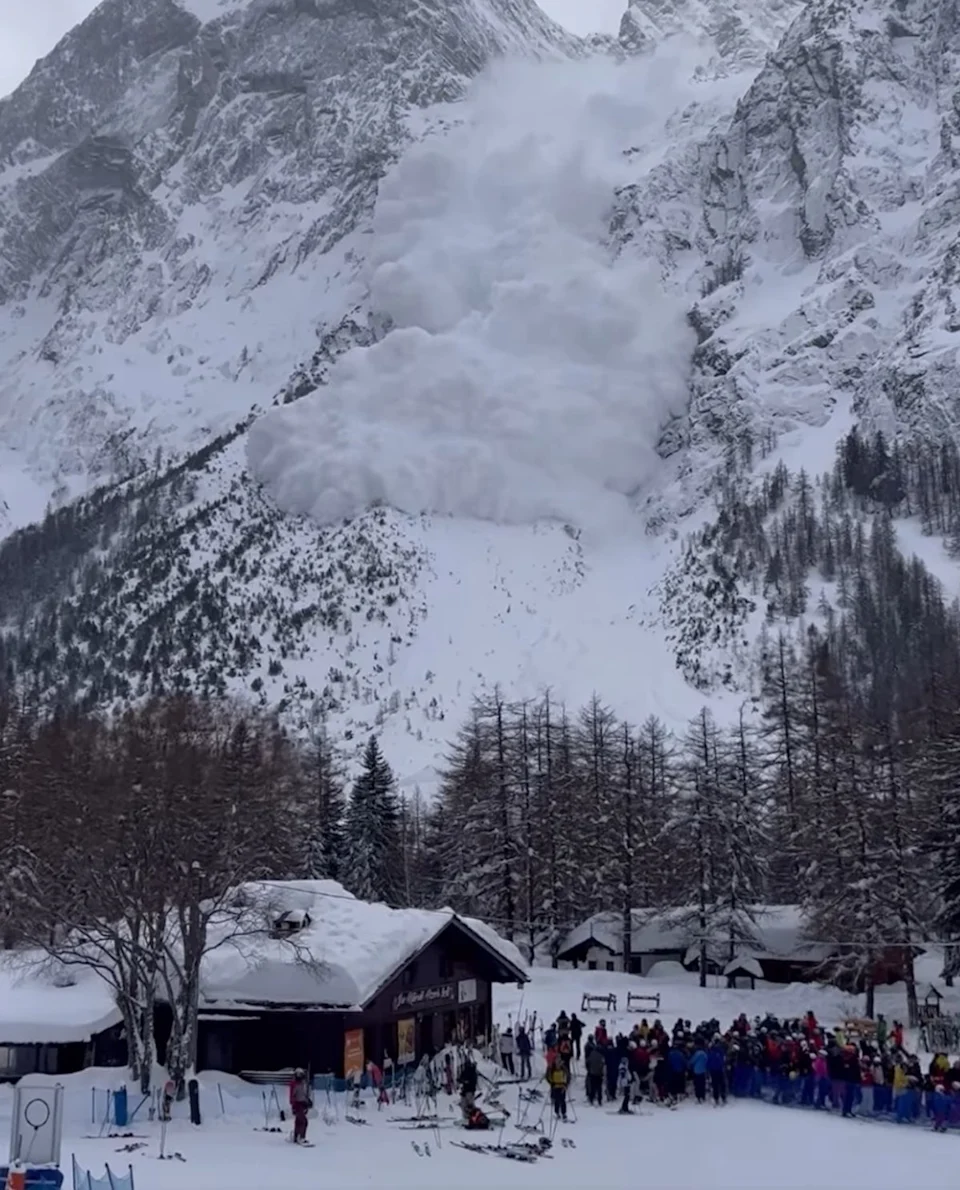
News of natural disasters continues to increase from all over the world. As a skier, I’m particularly concerned about avalanches these days. The avalanches occurring in the European Alps, which we call the Mecca of skiing, right in the middle of the ski season, are upsetting me. Now, let’s look at the natural disasters that have occurred in the last year. I’m sharing a list I got from ChatGPT:
Since today is 28 February 2026, I’ve roughly taken ‘the last year’ as the period between 28 February 2025, and 28 February 2026, and compiled some striking examples of nature’s ‘slap’ (I’ve removed earthquakes from the list as they are related to the earth’s crust):
Avalanche
- 4 November 2025 – Nepal, Mount Yalung Ri: At least 7 people died in an avalanche that hit a campsite (according to news agencies/local sources).
- Floods and inundations
29 May 2025 – Niger State, Nigeria (Mokwa): At least 153 deaths reported in floods following heavy rainfall.
- February 2026 – Minas Gerais, Brazil (Juiz de Fora and Ubá area): At least 64 deaths reported and thousands displaced in floods and landslides triggered by extreme rainfall.
Landslides (often associated with extreme rainfall)
- 27 August 2025 – Indian-administered Kashmir: At least 30 people died in a massive landslide triggered by heavy rainfall.
Heatwaves and fires
- June 2025 – Europe: Two major heatwaves reported across the continent (particularly the 17–22 June and 30 June – 2 July windows); such periods significantly increase the risk of fires.
- June 2025 – Turkey, Izmir region: Large-scale displacements, such as the evacuation of tens of thousands of people due to major fires, have been reported.
Let’s look at what happened in Turkey:
- 28 April 2025 – Samsun (Canik) | Landslide
A father and his two children (3 people) lost their lives when rocks/soil fell onto a car wash area next to a gas station.
- 30 June 2025 (and throughout the summer) – Primarily Izmir | Forest fires
According to AFAD (Disaster and Emergency Management Presidency), more than 50,000 people were evacuated to safe areas.
- 23 July 2025 – Eskişehir | Forest fire (fatalities during intervention)
At least 10 personnel lost their lives while fighting the fire; according to AP (Associated Press), the number of fire-related deaths during the year rose to 13.
- 23 October 2025 – Izmir (Foça) | Floods
A 70-year-old man died after being swept away by floods following heavy rainfall.
- September 2025 – Rize & Artvin | Flood + landslide risk and evacuations
Heavy downpours caused floods/landslides; official reports stated no loss of life (although there was significant damage/evacuations and transportation disruptions).
- 20 January 2026 – Giresun (Güce) | Avalanche
A shepherd died after being buried under an avalanche (news sourced from AA).
Now, after sharing all these natural disasters that occurred within a year, I would like to share with you an article published on BBC about avalanche incidents titled “More than 90 deaths this season: Are we seeing more avalanche disasters?”: https://www.bbc.com/news/articles/cn4gjqv7vl3o
In Nevada County, California, rescue teams are still searching for a missing skier in blizzard conditions.
Europe has seen two major storms in a week; heavy snowfall combined with strong winds has raised avalanche warning levels to very high across an unusually wide section of the Alps. Among the dozens who have died in incidents so far this season are three Britons.
One Alpine ski resort suggested that current conditions may be the worst seen there this century.
Recent snowfalls have also led to the evacuation of some settlements in Switzerland and northern Italy, as well as power outages and a train derailment in Goppenstein in the Valais canton of southwestern Switzerland.
So, is there a connection between the events in Europe and those in California?
Is climate change to blame?
Climate change may seem like the obvious culprit for the erratic weather patterns causing these events.
Dr. Ben S. Pickering, a meteorology research fellow at the University of Manchester and the National Centre for Atmospheric Science, said, “There is evidence that climate change is leading to sharper, more intense rainfall, followed by longer periods without rain.”
This situation appears to apply to Europe, which has recently experienced several seasons with below-average snowfall and some dry periods earlier in the season.
“However, there are many factors controlling avalanche risk, and since precipitation is only one of them, it is difficult to conclude how the risks will evolve with climate change in the future,” said Pickering.
Climatologist Christoph Marty told the Swiss organization SRF that the current Alpine winter, which until recently was dominated by high pressure and long, dry periods, is the opposite of a typical “climate change winter.”
Benjamin Zweifel from the Swiss Federal Institute for Snow and Avalanche Research told the BBC that storms are “only one piece of the puzzle.”
“The main challenge this winter was a very weak snow cover with very persistent, weak layers, caused by long periods without new snowfall and low temperatures. Seasonal accumulation of snow that compresses and melts…” he said.
The Val d’Isère resort stated on Thursday that the situation could be the worst seen this century.
While global warming affects weather patterns, temperature itself can have a direct impact on avalanches. According to the North Rocky Mountains Science Center in the US, wet snow avalanches, which are likely to occur more frequently as temperatures rise, are dangerous, difficult to predict, and relatively less understood than dry snow avalanches.
In a paper on wet snow avalanche research, the center states, “Wet snow avalanches occur when the strength of the snow cover weakens; they are often triggered by rain, abundant sunshine, or warm weather,” adding that their frequency is expected to increase with changing temperatures.
A 2021 research paper published in the journal Frontiers in Physiology suggests that wetter and warmer snow can negatively impact a person’s chances of surviving an avalanche, while thinner snow cover can increase the risk of blunt trauma injuries.
Overall, there appear to be four destabilizing factors that alter the dynamics of avalanches: fluctuations between drought and heavy rainfall, the rainfall itself, wetter snow, and indeed, melting snow.
How do ski resorts mitigate the risk?
Blaise Agresti, a high-mountain guide in Chamonix, told Sud radio in France that another significant factor in the rise of avalanche-related deaths in Europe is the changing behavior and increased risk-taking levels of skiers.
“People are increasingly skiing off-piste. 25% of skiers go off-piste,” he said (I’m an off-piste myself, obviously).
Marked slopes are usually protected by preventative avalanche blasting; In addition, snow is leveled and compacted to further reduce risk. However, if the avalanche risk persists, slopes may be closed, as was the case during the last warnings.
However, even though prediction and blasting techniques have improved in recent years, avalanches on slopes declared “safe” are not entirely impossible. There is no such thing as zero risk, and it may be wise to stay away from slopes with powdery, snow-covered slopes.
Sometimes ski resorts may identify a broader threat. The French resorts of Tignes and Val d’Isère even implemented a lockdown/curfew-like “lockdown” due to the threat of avalanches, forcing residents and tourists to stay indoors.
Generally, resorts do not completely prevent tourists from going off-piste; instead, they offer advice. For example, another French resort, La Plagne, advises skiers to get information about the conditions; to have the necessary safety equipment (avalanche detector, shovel, and sounding rod); to know how to use it; to always go with a professional guide; and never to go alone.
The resort, which boasts one of the world’s largest off-piste areas, organizes weekly safety days during peak season and recently invested in a drone equipped with a thermal camera for use in avalanche detection and rescue operations.
Thomas Hager, a ski guide working in the Zell am See region of the Austrian Alps, told BBC World Service’s Outside Source programme that it’s sometimes easy for snow enthusiasts to become complacent.
“The snow looks so calm. It’s like water,” he said. “You don’t see the undertow in the ocean, but the locals know where the undertow is and where avalanches frequently occur. Please always talk to the locals and listen to the avalanche forecast report.”
He also suggested that carrying an airbag, which can help avalanche victims stay close to the snow surface, is vital, even though it’s not legally required.
While the recent increase in avalanche deaths in Europe is worrying, it’s not extraordinary: according to the European Avalanche Warning Services, 95 people have died so far this season; In the entire 2024-25 season, 70 people died, compared to 87 in 2023-24. The 2020-21 season, with 131 deaths, and the 2017-18 season, with 147, appear to be similar.
Could it have been worse?
However, if you ask weather trackers, a different picture emerges. Meteo France, based in Bourg-Saint-Maurice near the Italian border, told the BBC that the region went from below-average snowfall to a “significant” above-average level in less than 10 days.
“Statistically speaking, we experience something like this once every eight years. This means a very significant avalanche risk,” they said.
Meanwhile, the Val d’Isère center said in its weather bulletin on Thursday that a third wave of 30–50 cm (12–20 inches) of snow following two storms should be taken very seriously and requires “specific precautions.”
“This hasn’t been seen for a long time (maybe since February 1999),” he added.
So, could modern avalanche warning systems and safety measures implemented by centers in recent years have kept the death toll low?
Benjamin Zweifel believes that without these factors, the situation could have been much worse, and says he has seen a “significant impact,” at least in Switzerland.
He notes, however, that deaths are higher in France and Italy—25 in each, and 13 in Switzerland—which he suggests may be linked to “even more challenging conditions” in the Western and Southern Alps.
But the worst may be over. The weather is expected to improve from Friday, giving centers more time to conduct safety work and allowing the snow cover to settle (stabilize).
However, sunny, south-facing slopes will lose some of their snow, potentially leading to greater risks for those going off-piste.
After sharing this article, let’s also answer the question posed within the article: “Is climate change to blame?” The culprit is, of course, climate change. I shared ways to prevent climate change in my article last year. I’m reposting it with some additions:
To reduce carbon emissions…
As I mentioned before, to stop the disasters caused by climate change, we need to reduce carbon emissions in the atmosphere. Now, let’s briefly look at how we can reduce carbon emissions:
1) A 100% transition to renewable energy worldwide is essential.
2) Fossil fuels must be used for raw material production, not for energy needs.
3) Electrification of all buildings, vehicles, and everything that requires energy is essential.
4) Carbon must be extracted from the atmosphere (technology exists for this) and stored on Earth in different forms and for various purposes (using materials like carbon fiber, etc.).
5) Issues such as the increased carbon emissions from livestock also need to be addressed technologically. I’m talking about collecting the methane gas they emit and using it for other purposes.
6) Cities (and all buildings) must be designed with a concept that absorbs carbon, not produces it. Existing cities also need to be transformed accordingly.
7) We need to increase carbon sequestration, especially in tree planting and greenhouse farming techniques. In this way, we can accelerate carbon absorption from the atmosphere.
8) We need to increase the use of hydrogen instead of fossil fuels (e.g., natural gas). When you burn hydrogen, water vapor is released. Carbon emissions are zero.
We need to end the nightmare
Avalanches are a nightmare for skiers and those living in the mountains; forest fires are a nightmare for those living in and around forests; floods are a nightmare for those living in or near wetlands such as streams, rivers, and valleys. In short, all people living in different geographies are affected by the climate crisis. To end this nightmare, we need to reduce carbon emissions at an increasing rate.
Therefore, we want to see all countries in the world making serious efforts to reduce carbon emissions, taking concrete steps, and accelerating the processes. To give an example from my own country, the announcement that the deadline for achieving zero carbon emissions has been moved from 2053 to 2035 could be a good start.