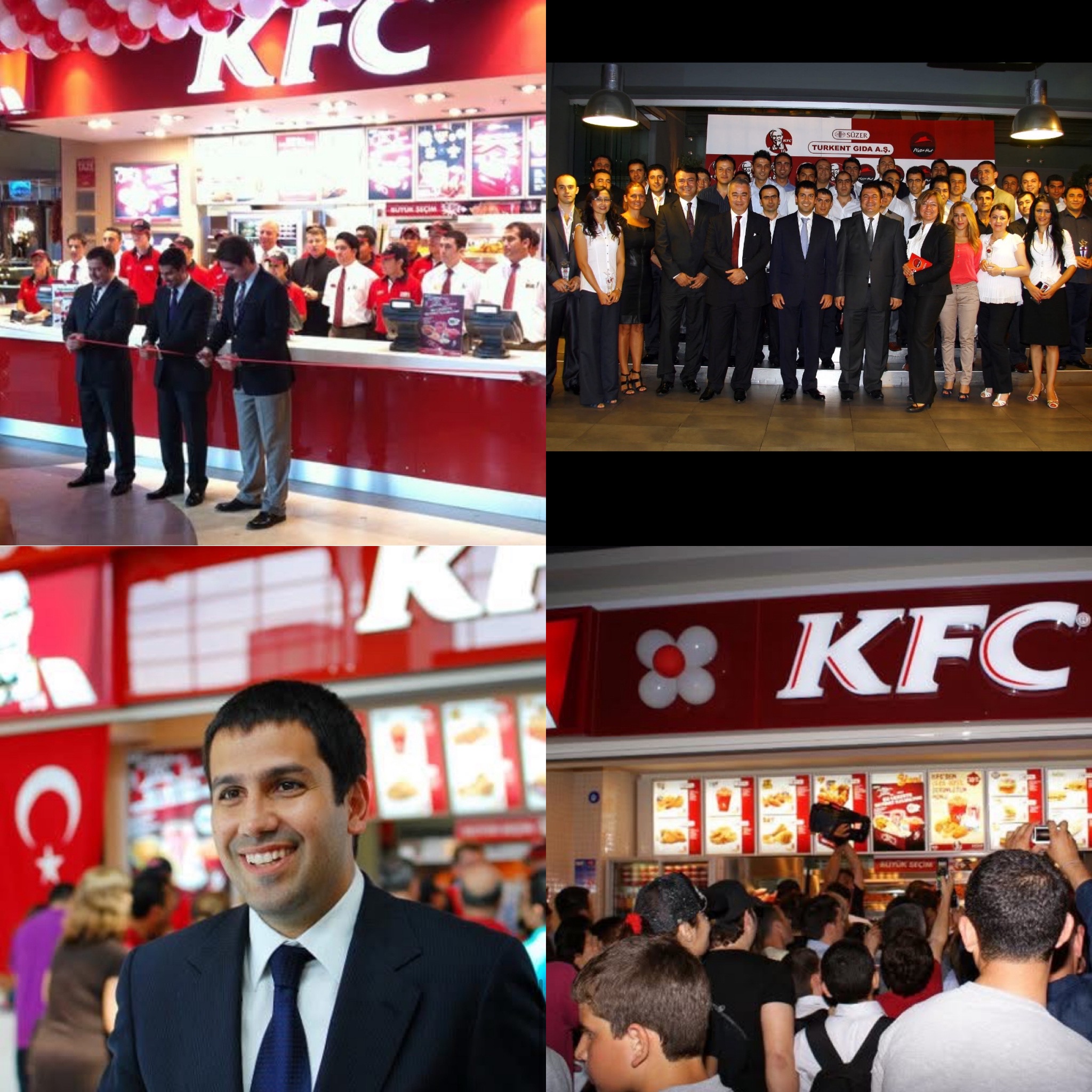
Those who know me know that I served as CEO of KFC and Pizza Hut Türkiye for approximately three years. By December 2011, I had left the company and founded my own solar energy business. Frankly, I was quite surprised when I heard about KFC’s bankruptcy at the beginning of this year. I knew it was poorly managed and had heard a lot of rumors, but I didn’t expect such poor management that it would lead to the collapse of one of Türkiye’s most popular restaurant chains like KFC. In this two-part series, I will share the history of KFC in Türkiye, an analysis of why it went bankrupt, and my predictions for the future. In this first article of the series, I will share how KFC was founded in Türkiye and the Süzer Holding era that comprised its first 24 years.
To help you fully understand KFC’s journey in Türkiye, I’d like to share its history with you. So, without further ado, here’s the first 24 years of Süzer Holding’s existence before it was acquired by Yum International, the owner of the brand that bankrupted KFC Türkiye.
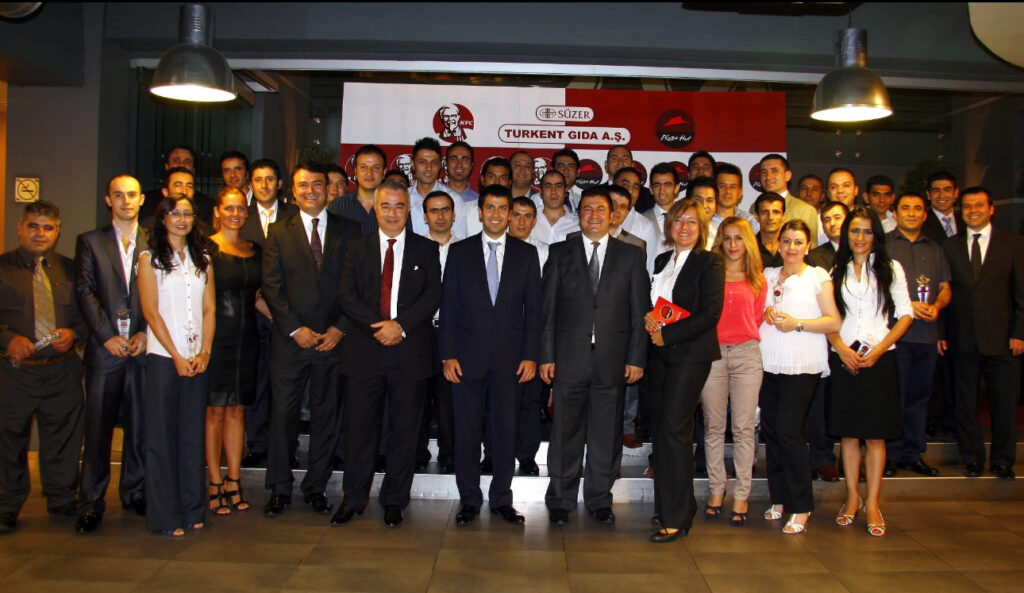
KFC’s arrival in Türkiye began with my father, Mustafa Süzer, acquiring the KFC franchise in Türkiye in 1989. During a speech my father made during his efforts to bring KFC to Türkiye, then-Prime Minister Turgut Özal said, “We want to attract foreign capital to Türkiye. There’s a Qatari investor who has approached us about investing in Türkiye. I hope you’ll collaborate with them. Good examples will attract other foreign investors.” Süzer Holding began negotiations with the Almana Group, founded by Qatari Omar Almana. As a result of these negotiations, a joint venture called Turkent A.Ş. was established with a 50/50 partnership. KFC’s franchise rights in Türkiye were acquired, and KFC’s Turkish adventure began.
PepsiCo’s Yum! Transfer to Yum!
Turkent, which acquired all its franchise rights in Türkiye from PepsiCo, continues its journey with firm steps. At the time, PepsiCo, the owner of soft drinks like Pepsi, also owned successful restaurant brands like KFC, Pizza Hut, and Taco Bell. In 1997, PepsiCo made a strategic decision: to spin off its restaurant business from its soft drinks business, establishing a separate restaurant company called Yum!, and transferring all its restaurant brands from PepsiCo to Yum!.
In the late-90s and early-2000s, Asil Nadir’s companies, experiencing difficulties, put their Pizza Hut restaurant businesses up for sale. When the KFC business in Türkiye achieved success, Turkent A.Ş., which our team had founded, sought to acquire the rights to Pizza Hut in Türkiye, another Yum! brand. Following negotiations, they acquired Pizza Hut.
Pizza Hut joins the bandwagon
Later, they incorporated Pizza Hut into KFC’s system and continued their successful growth with Pizza Hut brands. However, operating the Pizza Hut brand isn’t like running KFC. Some problems arose in the early years of their acquisition, and after the first five years of the 2000s, they returned to a “mass consumption” model with campaigns like “Limitsizsiniz” (You’re Limitless), trying to recover revenue. In 2021, I wrote about what happened after I took over at Pizza Hut, and how our efforts and strategies to make Pizza Hut the clear leading pizza brand in Türkiye were thwarted. If you haven’t read this article, I highly recommend it to understand what’s happening at KFC: https://serhansuzer.com/tr/pizza-hut-turkiyenin-yukselisi-nasil-engellendi/
Personally, as part of Süzer Holding’s restructuring process, I first sold our shares in Generali Sigorta and then profitably sold the shares of the Coca-Cola Iraq project, which we had been developing since 2006 and launching in 2008. This led me to focus on the company’s real sector operations. During my responsibilities within the Holding’s real sector companies, restaurant and facility management were my top priorities. In 2009, I joined the board of directors of Turkent A.Ş. and quickly mastered all the details of the company, which I had previously monitored at the holding company level.
Our Detection of Corruption
During my initial audit, we discovered significant corruption. This corruption, perpetrated by four of the company’s highest-ranking executives (including a representative of Almana on the executive board and a representative of Süzer Holding), concerned the distribution of year-end bonuses. As you might expect, in a 50-50 partnership, the distribution of bonuses requires dual signatures from both the Almana Group and Süzer Holding. This bonus distribution protocol bore the signature of Omar Almana, the founder of the Almana Group, and the executives, knowing we would object to this overly generous bonus distribution, distributed bonuses themselves without obtaining the signature of Süzer Holding’s authorized signatory.
Upon realizing this, we decided to raise the issue with our partner, Omar Almana. Since I sit on Turkent’s board of directors, I personally took on this responsibility and went to visit Omar Almana in Qatar. I broached the subject without further ado:
“Are you aware that the executives we appointed to the Executive Board, both on your side and ours, have agreed to distribute bonuses themselves, obtaining only your signatures and not ours?” I presented him with the bonus protocol they had signed. I was shocked by what I saw. Omar, who had this protocol in hand, was holding the document I’d given him upside down and pretending to read it. It was the first time I’d ever witnessed something like this. Many Qatari investors, who had founded numerous s companies, were illiterate. I immediately understood the situation, corrected the document in his hand, and began reading it line by line.
A heated exchange
After I finished reading, the following exchange took place between us:
Yes, I signed this document. What will happen?
Okay, you signed it, but this protocol requires two signatures for this bonus to be paid. The signature of Süzer Holding is missing. They can’t make any payments from the company with it. This is an irregularity.
(Omar Almana’s reactions, which suddenly became harsher when I got straight to the point, were incomprehensible.) Am I going to ask you who I’m supposed to pay what to in my company?
Turkent A.Ş. isn’t just your company. We’re 50/50 partners in this company, and I’d like to remind you that the company agreement requires two signatures on every important decision. The signature circular also requires this.
(Almana, who pretended not to understand what I said, became even harsher.) This is my own company. The company performed well. I gave my managers the bonus I requested.
The company’s good performance reflects all of our hard work and capital. This isn’t just your company. It’s a company you founded jointly with Süzer Holding. The Süzer side’s permission is required for this bonus payment. What the executives are doing is a form of theft.
I decided this. I also gave the bonus. You cannot interfere with this.
You cannot pay our joint venture without our permission. If you did this knowingly, you are also guilty.
I can do whatever I want, but you cannot interfere with me.
This is my final warning to you. If you don’t correct this behavior, we will declare you an accomplice. This partnership will also end.
Do everything you can
After this confrontation, I left Almana’s office in Qatar and immediately called my people and relayed the conversation verbatim. Their reaction was, “We’re not to blame.” We subsequently sent a written warning to the Almana Group and verbally stated our desire to terminate our partnership. They insisted on retaining the corrupt executives at the company during this period.
When the prosecutor’s office intervened, their stance changed
Almana, who had resorted to such pressure, insisted on us, “If you’re not satisfied, sell us your shares.” We refused and filed a criminal complaint against the Almana Group executives, including the group’s founder, Omar Almana. When the prosecutor’s office addressed the matter, Omar Almana’s stance changed. Under his guidance, we initiated a mutual auction process with a Lebanese investment banker to sell the shares.
The Lebanese investment banker appraised the company. Based on that valuation, both parties bid up their prices, and a mutual auction was adopted to purchase the remaining 50% of the company. As a result of this auction, we were entitled to purchase the remaining 50% of the company at Almana’s final bid price. In other words, they did not increase our final bid price, and Süzer Holding was entitled to acquire the remaining 50% of the company at the highest bid price based on the appraised values.
A Record-Breaking Period of Growth
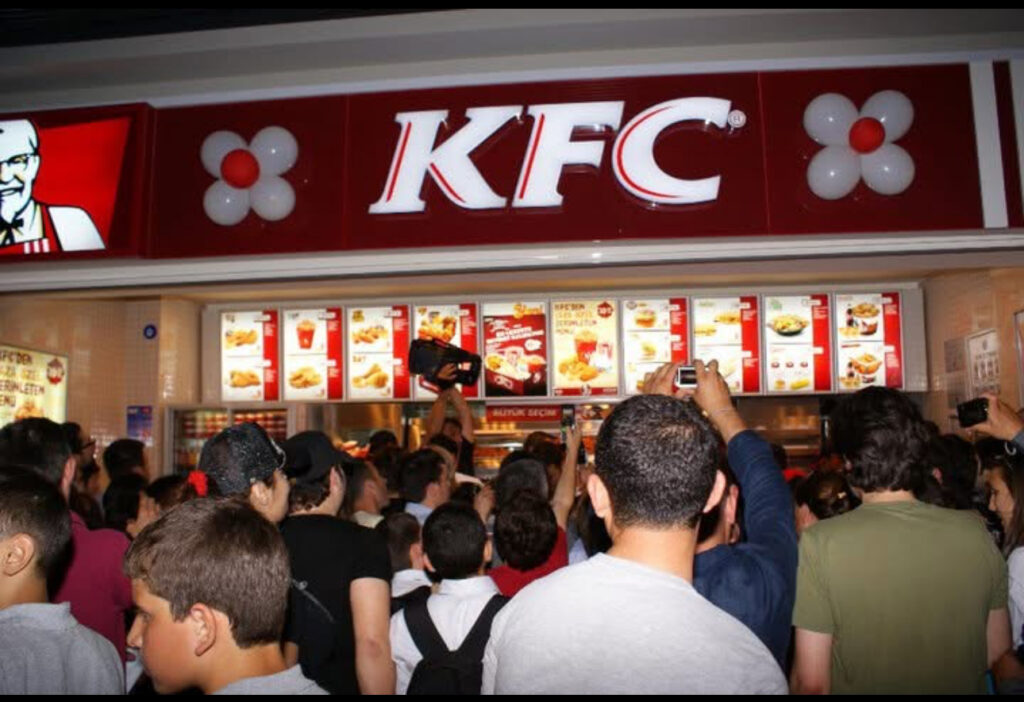
A German sold his 50% stake in Turkent to us at the final bid price in a mutual auction and then left the company. I managed the process on behalf of Süzer Holding, which owned 100% of the company, and after the process was completed, I took over as Turkent’s CEO to ensure the company’s healthy growth. Naturally, all the executives involved in this corruption and the professionals close to them were dismissed, and new professionals were hired. After this six-month restructuring process, we began to grow rapidly. In the next six months, we opened 25 restaurants. By 2011, our number had grown from 81 to 106. We achieved this without taking on any loans. We secured financing through sponsorships and the support of our supply chain. We had reached a point where we could open a restaurant from scratch in 13 days, without taking on any debt. These times were industry records at the time.
Effectively Utilizing Brand Superiority
For example, when we started, the ratio of rent paid to our revenue was approximately 15%. We planned to reduce this to below 10% as a goal. During our strategic development, we determined the rents we could offer to each location and submitted offers to nearly 100 locations simultaneously. The core theme of all these offers was the same: a low fixed rent or an 8% turnover rent (we would pay the property owner the higher amount).
Almost all the property owners in the locations where we made this offer responded to us with a harsh tone, “We can’t offer this rent, but if you offer this fixed rent, we can start talking.” When five of the approximately 100 offers we made were accepted, we opened restaurants in those five locations under our dictated terms and enthusiastically announced each restaurant we opened. We explained, both through the press and in person, that KFC had returned to growth and its high revenues. KFC had a clear brand advantage, and we leveraged this brand advantage throughout this process. Popeye’s, considered our peers, was generating at best one-third of our revenue in any given location (despite having a much better food court presence, having entered shopping malls long before us, alongside Burger King), and in some locations, this difference was as low as one-tenth.
The Rise in KFC’s Perception
We explained this to the entire industry individually. Real estate owners, fully grasping this situation, cemented KFC’s position as a highly desirable brand, and one by one, they began to return to us and accept an 8% turnover rent. KFC’s virtually guaranteed high turnover excited everyone. With the rent payments for the restaurants we opened using this method being 8% or less of our restaurant revenue (in some locations, we were even reducing rent to 6% of revenue), our total rent dropped from 15% to less than 10% within a year and a half during my tenure. This directly impacted our profitability.
Some real estate investors were quite upset with our stance. Let me give you a specific example. Aziz Torun, founder of Torunlar GYO (Real Estate Investment Trust), which currently owns the Mall of Istanbul, Torium Shopping Mall, Bursa Zafer Plaza, Bursa Korupark Shopping Mall, Mall of Antalya, Antalya Deepo Outlet, Torun Center Square, and 5. Levent Market, personally handled the leases and persistently tried to dictate his own terms. While negotiating the rent for KFC and Pizza Hut in Torium Shopping Mall, we clashed several times. At the end of these exchanges, Aziz Bey personally told me, “I’ll complain to your father about you.” I smiled and said, “It would be good if you complained to me. My father will understand how tightly we’re holding the business. Please complain.” Ultimately, they were forced to agree to the maximum rent of 8% of the turnover we insisted on.
Incredible Financial Recovery
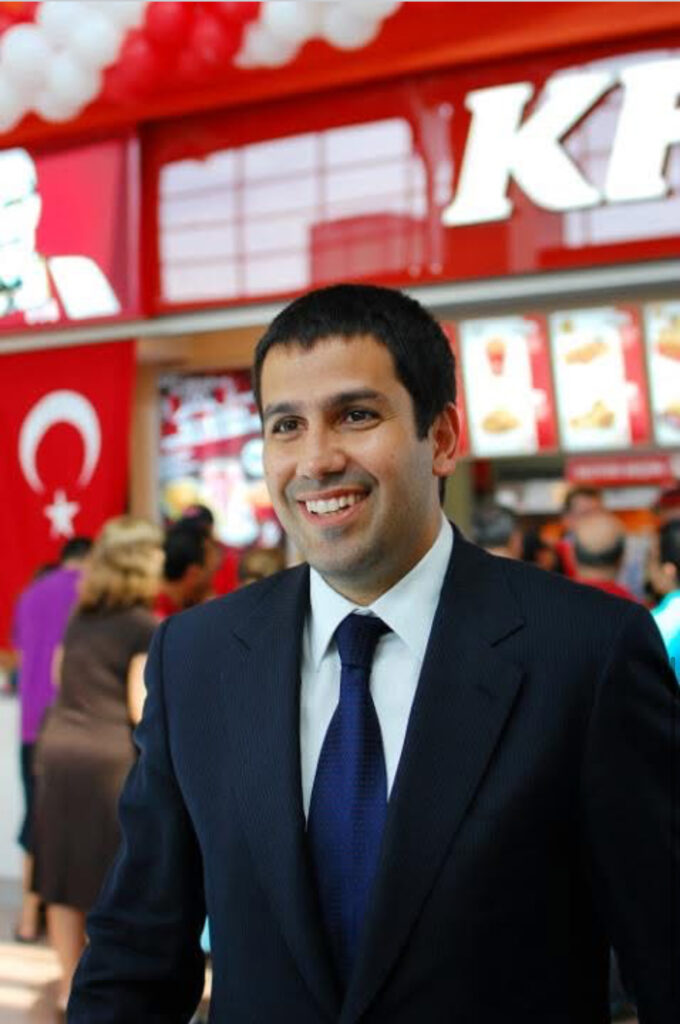
Our smart marketing campaigns focused on direct sales, our operational superiority, Popeye’s’ incompetence against us, Burger King’s disappearance for at least six months due to the meat scandal, leaving us with the market, our quick, confident approach to all leases, opening restaurants in prime locations with excellent conditions, and our smart moves across all functions resulted in an incredible financial recovery.
In November 2011, I accomplished the final thing I wanted to do for the company. We opened the first LEED-certified green restaurant at Yum International, the owner of the KFC brand. You can read the details in my blog post at https://serhansuzer.com/tr/gida-perakendesinde-enerji-ve-su-verimliligi/.
A Timeless Approach
With this KFC restaurant, which minimizes water and electricity consumption, boasts a rooftop solar power plant (SPP), and was designed with an environmentally friendly approach in everything from transportation to the restaurant, you’ll appreciate that we were ahead of our time in 2011. We were pioneers at a time when no one was even discussing sustainability in food retail. After this last project, I left the family business in December 2011 and founded my own solar energy company, becoming a pioneer in the solar energy sector.
Before stepping down from my position as CEO of Turkent A.Ş., I submitted a report to Süzer Holding regarding the future of Turkent A.Ş. In this report, I briefly stated the following:
“The company has grown healthily and rapidly. It can continue to grow like a snowball for the next few years without losing momentum. However, I predict some challenges will arise in the next 10 years. The profitability gap will narrow, particularly because of suppliers’ and property owners’ constant price increases, and our inability to reflect these increases in our sales prices (at KFC, the acceptable price range for customers was between 10 and 15 TL at the time. This meant we couldn’t list any menu for less than 10 TL or more than 15 TL. Our sales would immediately plummet). To compensate for this shrinking profit margin, we need to open more restaurants every year. This rapid growth could lead to financial problems in the future. Therefore, while this restaurant chain currently has great potential, let’s sell Turkent A.Ş. at a good price, reflecting its high potential while operating brands that everyone is excited about (KFC and Pizza Hut).”
A Timely and Profitable Sale
The report I submitted to our family business was accepted, and as I recommended, shortly after I left, my family put the company up for sale. They completed the sale approximately a year later. Incidentally, the constant inflated costs and poor financial risk management I mentioned in this report were the main reasons for KFC’s collapse in Türkiye today. I will explain this in detail in my next article.
While Süzer Holding was about to sell the company to a fund that offered the highest bid, they approached Yum International, the owner of the brands, and asked for permission (this is the procedure). Yum International, the owner of the KFC and Pizza Hut brands, told our company, “We offer you a higher price. Sell it to us instead of this fund.” After this generous offer, Süzer Holding sold its 100% stake in Turkent A.Ş. to Yum International at the very attractive price they had offered us.
Unfortunately, the sale of Turkent A.Ş. to Yum International began the process of KFC’s collapse in Türkiye. I will analyze what happened next, and the process that led to the company’s collapse, in my next article.
As Süzer Holding’s managers, we managed the company based on merit during our 24-year tenure, from 1989 to 2013. I can confidently and proudly say that Turkent A.Ş.’s best period was the period when it was 100% owned by Süzer Holding. The company was growing rapidly in every respect, every move we made resonated, and cash was flowing everywhere.
Having said all this, I would like to emphasize that good governance is only possible with good managers. I wholeheartedly thank all the managers who worked side by side with us during the Süzer Holding period and contributed greatly.
We remember Banu Arıduru with love and respect
On this occasion, I would like to commemorate Banu Arıduru, with whom I worked together, albeit briefly, at Pizza Hut, achieving great things, and with whom I personally enjoyed working.
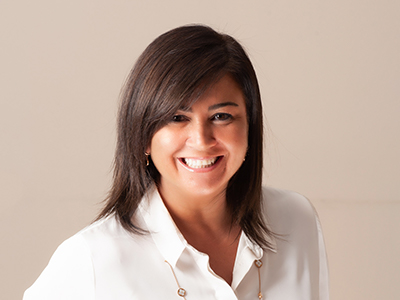
Unfortunately, we lost her at a very young age last August. Banu set an example for everyone within the company with her dedicated work, forthrightness, cheerfulness, and ability to get things done. If political reasons hadn’t prevented our company from making a big splash with the Pizza Hut Delivery concept, we would today be dominating the entire pizza industry in Türkiye with our Pizza Hut Delivery brand. Banu would have been at the helm. Life is like that sometimes. The good ones say goodbye to life sooner, while the bad and the unqualified continue along their journey longer than they should.
On one side, there are those who ruin beautiful brands like KFC and Pizza Hut, and on the other, there are resourceful, well-intentioned, and joyful people like you who do the best with the resources they have. Rest In Peace, Dear Banu. May you rest in peace!
Everything will fall into place in the long run, both in the food retail sector and in Türkiye. In my next article, I’ll explain what happened when Turkent A.Ş., the company that owns KFC and Pizza Hut Türkiye, was acquired by Yum International, the brand’s owner, and how a leading brand like KFC was brought down in Türkiye. See you in my next article.