
When solar energy is mentioned, the first thing that comes to mind is solar panels. In fact, people often use the wrong jargon: “I installed solar panels on my roof.”
Let me correct this quickly. Solar panels aren’t installed; they’re installed as “solar energy systems” or “solar power plants.” The solar panel is part of any solar power plant. It accounts for about half of the overall cost. The other half includes the inverter, construction equipment, wiring, grounding, manpower, and so on. Therefore, instead of “solar panel,” you could simply say “solar energy system” or “solar energy system/plant” in Turkish.
Of course, everyone talks about generating electricity from solar power plants. This is also misplaced in the jargon. When we say solar power plants, solar power plants aren’t just comprised of photovoltaics (PV). Solar power plants also incorporate heat-generating technology, or CSP (Concentrating Solar Power). You can then use that heat directly or combine it with water to produce steam at high temperatures and pressure using steam turbines to generate electricity.
Different Categories and Technologies
There are different categories and technologies in electricity-generating PV systems. For example, silicon-based panel technology is listed chronologically as follows (from the early-2000s to the present):
1) Polycrystalline
2) Monocrystalline
3) Monocrystalline PERC or PERT
4) Heterojunction
5) TOPCon
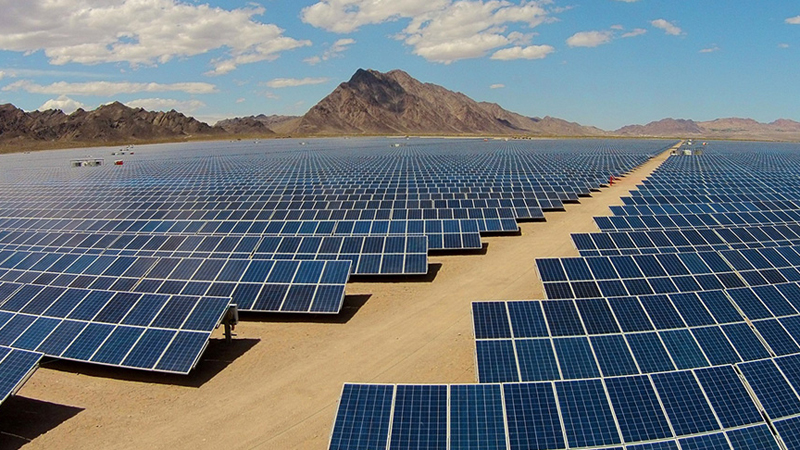
Heterojunction and TOPCon emerged around the same time, and today, one of the two is generally preferred, with TOPCon being the preferred choice. Energy conversion efficiency has reached levels of approximately 25-26%. The physical upper limit for silicon-based cells is 30%.
There are also different types of inverters:
1) Centralized inverter
2) String inverter
3) Microinverters
4) Off-grid inverters
5) Hybrid inverters, etc.
Hybrid power plants and CSP technologies
Furthermore, we can generalize PV projects as rooftop or land-based. We also use the term “hybrid” when a PV power plant is installed in conjunction with another power plant. For example, if there is a wind power plant adjacent to it, we might refer to it as a “wind-solar hybrid power plant,” or if there is a CSP system that generates heat, we might refer to it as a “CSP-PV hybrid power plant.”
On the CSP side, there are also different technologies.
The most well-known are the Parabolic Trough, the Tower (especially popular in the United States), the Linear Fresnel, and the Parabolic Dish (or Stirling Engine, as it’s known in the industry). I’m sharing images of these technologies below to help you visualize them:
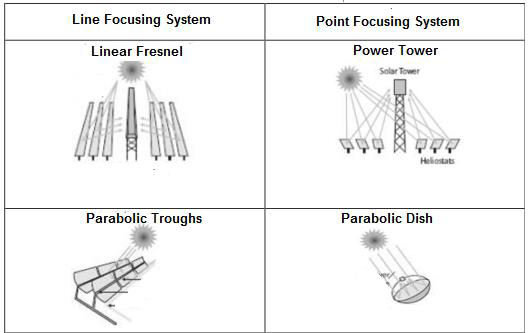
Parabolic trough or linear Fresnel technology is generally preferred for meeting the heating needs of factories, Stirling engines for off-grid systems, and tower technology for large power plants generating electricity and supplying it to the grid. However, this is not a set rule. Occasionally, parabolic trough or linear Fresnel technologies may be preferred in large power plants. This depends entirely on the engineers’ efficiency calculations.
Efficient use of sunless hours
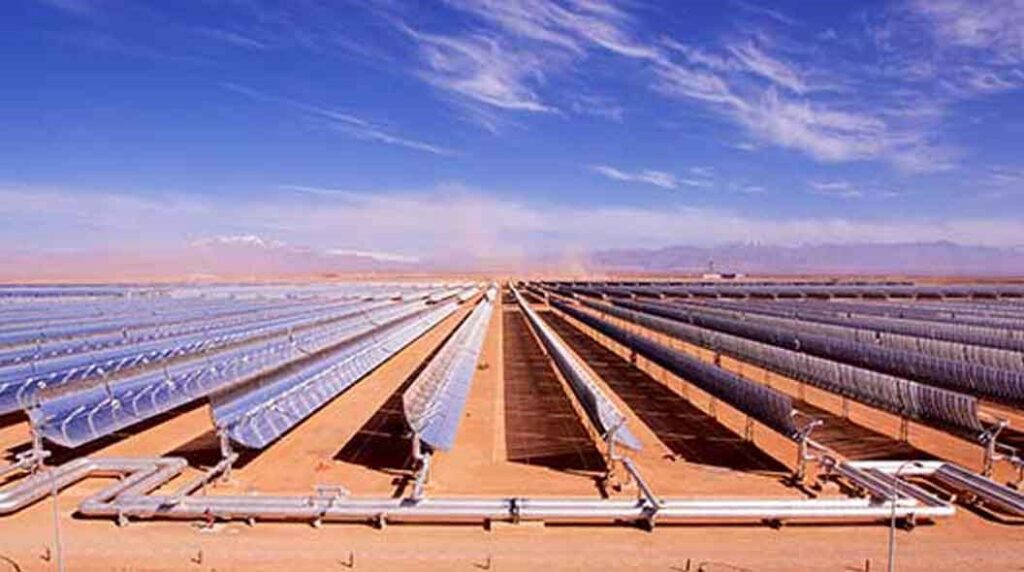
Speaking of large power plants, these plants don’t have to be solely PV or CSP plants. Especially considering that heat storage is still more efficient than electricity storage with current technologies, a solar power plant that aims to generate electricity 24 hours a day would be wise to use PV during the day when the sun is shining, and a CSP-based heat storage system during the evening/night when the sun is out. In other words, during the day, CSP collectors store heat in molten salt; at night, this heat is combined with water to produce steam at high temperatures and pressure, which can be used to generate electricity with a steam turbine during the day when the sun isn’t shining.
The ‘China Three Gorges’ project
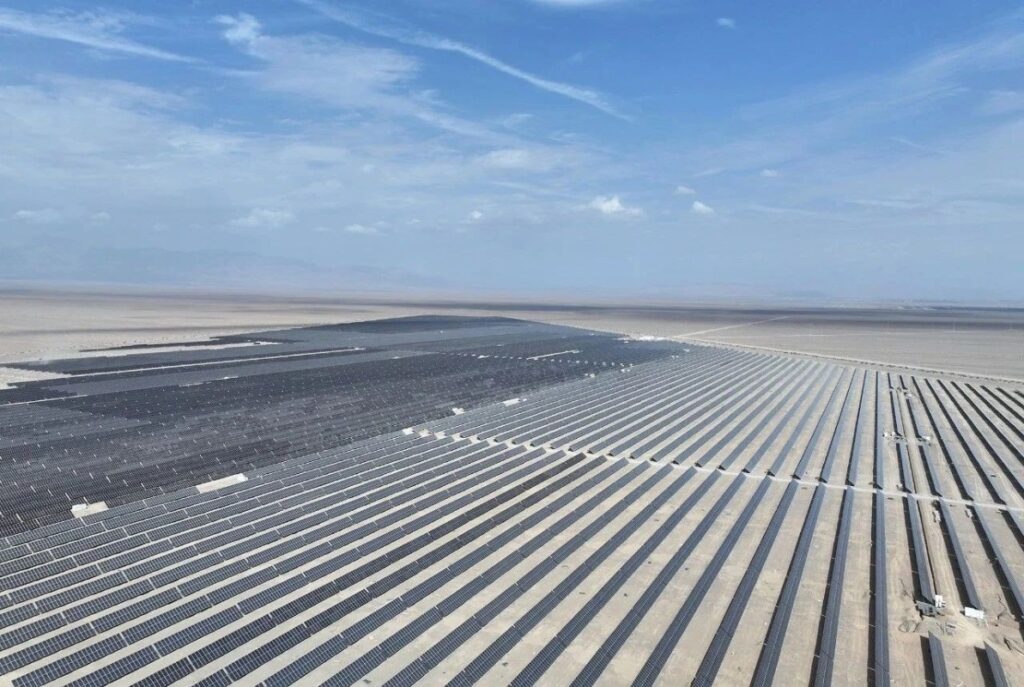
The world’s largest PV-CSP hybrid power plant, which fully implements this system, was recently opened in Xinjiang, China. You can read all the details at the link of PV Magazine, the important media of the industry: https://www.pv-magazine.com/2025/09/25/china-three-gorges-commissions-worlds-largest-pv-csp-solar-plant/?utm_source=Global+%7C+Newsletter&utm_campaign=d04af31181-dailynl_gl&utm_medium=email&utm_term=0_6916ce32b6-d04af31181-494211929. I am sharing a verbatim translation of this news below:
China Three Gorges commissions world’s largest PV-CSP solar power plant
The hybrid project combines a 100 MW Linear Fresnel concentrated solar power (CSP) plant with a 900 MW PV plant, providing 24-hour generation and demonstrating large-scale storage integration.
China Three Gorges Group has connected its 1 GW hybrid CSP and PV solar power plant in Hami, Xinjiang, to the grid, described as the world’s largest integrated facility of its kind.
Prior to this achievement, the world’s largest CSP-PV hybrid plant was the Noor Energy 1 project in the UAE, with a total capacity of 950 MW, comprising 700 MW of CSP and 250 MW of PV.
Built on a 1,817-hectare desert site in the southern foothills of the Tianshan Mountains, the project consists of a 100 MW linear Fresnel CSP plant with eight-hour molten salt storage and 900 MW of solar PV. With an average annual sunshine duration exceeding 3,000 hours (an average of 8.22 hours per day), the region offers ideal conditions for large-scale solar energy projects.
Construction began in 2023. The photovoltaic (PV) section was completed and connected to the grid by the end of 2024, while the thermal power plant entered full operation in September 2025, 42 days ahead of schedule. The total investment is 3.53 billion Chinese yuan (US$480 million), with China Energy Engineering Northwest Institute and other local suppliers providing core EPC services and technical systems.
Continuous Power Supply
The thermal power plant heats molten salt to 550°C using 260,000 high-precision curved reflectors that focus sunlight onto 800,000 square meters of absorber tubes. The design increases heat conversion efficiency by up to 10% compared to traditional Fresnel systems. The modular 46-loop configuration allows for uninterrupted operation during maintenance, while innovations in the salt circulation system ensure reliable performance in winter conditions reaching -20°C.
The hybrid system is designed to provide continuous power supply. During the day, the photovoltaic field generates electricity at full load while simultaneously charging the thermal storage system. At night or in low light conditions, the stored heat drives the steam turbines to ensure stable production. A central control platform allocates output power between the photovoltaic and thermal sources with a frequency regulation accuracy of approximately 0.02 Hz and response times of less than one second.
Electricity for 830,000 households
At full capacity, the plant is expected to generate 2.07 TWh of electricity annually (enough to power 830,000 households). The project will reduce carbon dioxide emissions by 1.63 million tons annually and improve the integration of renewable energy sources into the grid in Xinjiang, increasing regional utilization rates to over 95%.
The project also provides local economic benefits by creating approximately 500 jobs and stimulating related industries in solar energy equipment and engineering services. Ecological restoration efforts are underway, with drought-tolerant vegetation being planted throughout the site to combat desertification.
Beijing has identified hybrid projects combining photovoltaic (PV) and thermal storage as a strategic technology to balance intermittent renewable energy sources. The Hami plant sets global benchmarks in Fresnel distribution and molten salt performance and is on China’s national list of advanced low-carbon demonstration projects.
The Three Gorges Group plans to expand its Hami base to 3 GW in the second phase and replicate the model in resource-rich provinces including Inner Mongolia and Gansu. Analysts predict that such integrated projects could become a vital pillar in China’s long-term energy transition and offer a scalable path for desert solar development and grid stability.
My articles on solar energy
Now, having shared this good news, I’d like to remind you of my other articles on solar energy. If you’re interested in this topic, you can check out the links below to my articles on both CSP and PV to learn more and gain a multi-dimensional understanding of solar energy:
CSP:
Direct steam generation, hybridization, and parabolic dish innovation (2012): https://serhansuzer.com/en/dogrudan-buhar-uretme-hibridlestirme-ve-parabolik-canak-inovasyonu/
My first venture, Hitit Solar (2022): https://serhansuzer.com/en/ilk-girisimim-hitit-solar/
CSP genius Dr. My Meeting with Ahmet Lokurlu (2025): https://serhansuzer.com/tr/csp-dehasi-dr-ahmet-lokurlu-ile-tanismam/
PV:
The tourism sector will soon discover solar energy (2015): https://serhansuzer.com/tr/turizm-sektoru-gunes-enerjisini-yakinda-kesfedecek/
Solar energy that provides water (2016): https://serhansuzer.com/tr/suya-kavusturan-gunes-enerjisi/
The Pulse of the Solar Energy Sector in Turkey (2019): https://serhansuzer.com/tr/turkiyedeki-gunes-enerjisi-sektorunun-nabzi/
The Speech I Gave at a Solar Energy Event on My First Trip to China (2019): https://serhansuzer.com/tr/cine-ilk-gidisimde-gunes-enerjisi-etkinliginde-yaptigim-konusma/
Rooftop Solar Energy Solutions (2019): https://serhansuzer.com/tr/cepheden-catiya-gunes-enerjisi-cozumleri/
Floating Solar Energy Systems 1 (2020): https://serhansuzer.com/tr/yuzer-gunes-enerjisi-sistemleri-1/
Floating Solar Energy Systems 2 (2020): https://serhansuzer.com/tr/yuzer-gunes-enerji-sistemleri-2/
Solar Energy in Turkey and the World (2022): https://serhansuzer.com/tr/turkiyede-ve-dunyada-gunes-enerjisi/
AgriPV: The Amazing Synergy of Solar Energy and Agriculture (2024): https://serhansuzer.com/tr/agripv-gunes-enerjisi-ve-tarimin-muhtesem-sinerjisi/
The Sun is the Source of Everything Vital
As someone who has repeatedly stated that we will meet all of our energy needs from renewable energy, I would like to reiterate that the sun is the source of everything vital. I first raised the issue of 100% renewable energy in an article I wrote for Transatlantic Policy Quarterly in 2013: https://transatlanticpolicy.com/why-turkey-should-aim-for-100-renewable-energy-2/. Solar energy is necessary for the growth of all living things (humans, animals, plants, etc.). Solar radiation is the basis of renewable energy. For example, even the source of wind energy is solar energy (temperature difference).
Our ancestors knew how essential the sun is to life on Earth. In Turkish mythology, the sun is seen as the source of life, a symbol of light and power. Sunrise symbolizes the beginning of life, while sunset symbolizes death and rebirth. In ancient Turkish belief, the sun is considered a symbol of God and is known as the supreme being reigning in the sky.
To benefit from the blessings the sun offers, as befits our ancestors, and to ensure that all living beings on Earth can live dignified and beautiful lives, we must continuously develop and utilize relevant technologies and models.