First, as a reminder, I’d like to share the link to my previous speech at the SNEC fair in Shanghai, where I wrote about my first impressions of China: https://serhansuzer.com/tr/cine-ilk-gidisimde-gunes-enerjisi-etkinliginde-yaptigim-konusma
Following a very busy and productive fair in Shanghai, I arrived in Xi’an on the evening of Friday, 7 June, after a roughly three-hour journey. After completing my meetings, which began early the next morning and continued into the evening, we had time to explore Xi’an on Sunday. When one of the professionals attending these meetings offered to accompany us on a city tour on Sunday, I gladly accepted. It was a great opportunity to explore the city with a local and get to know the culture better.
In short, Xi’an, the capital of Shaanxi Province, is a large and historic city in China with a population of 9 million. Once known as Chang’an (Eternal Peace), this region marks the beginning of the eastern terminus of the Silk Road. Considered the capital of the Zhou, Qin, Han, and Tang dynasties, it is a significant and ancient city with a history spanning 3,100 years. Archaeological sites in the plains surrounding Xi’an contain the famous Bingmayong (Terracotta Army), an underground city containing thousands of figures buried alongside China’s first emperor, Qin Shi Hua.
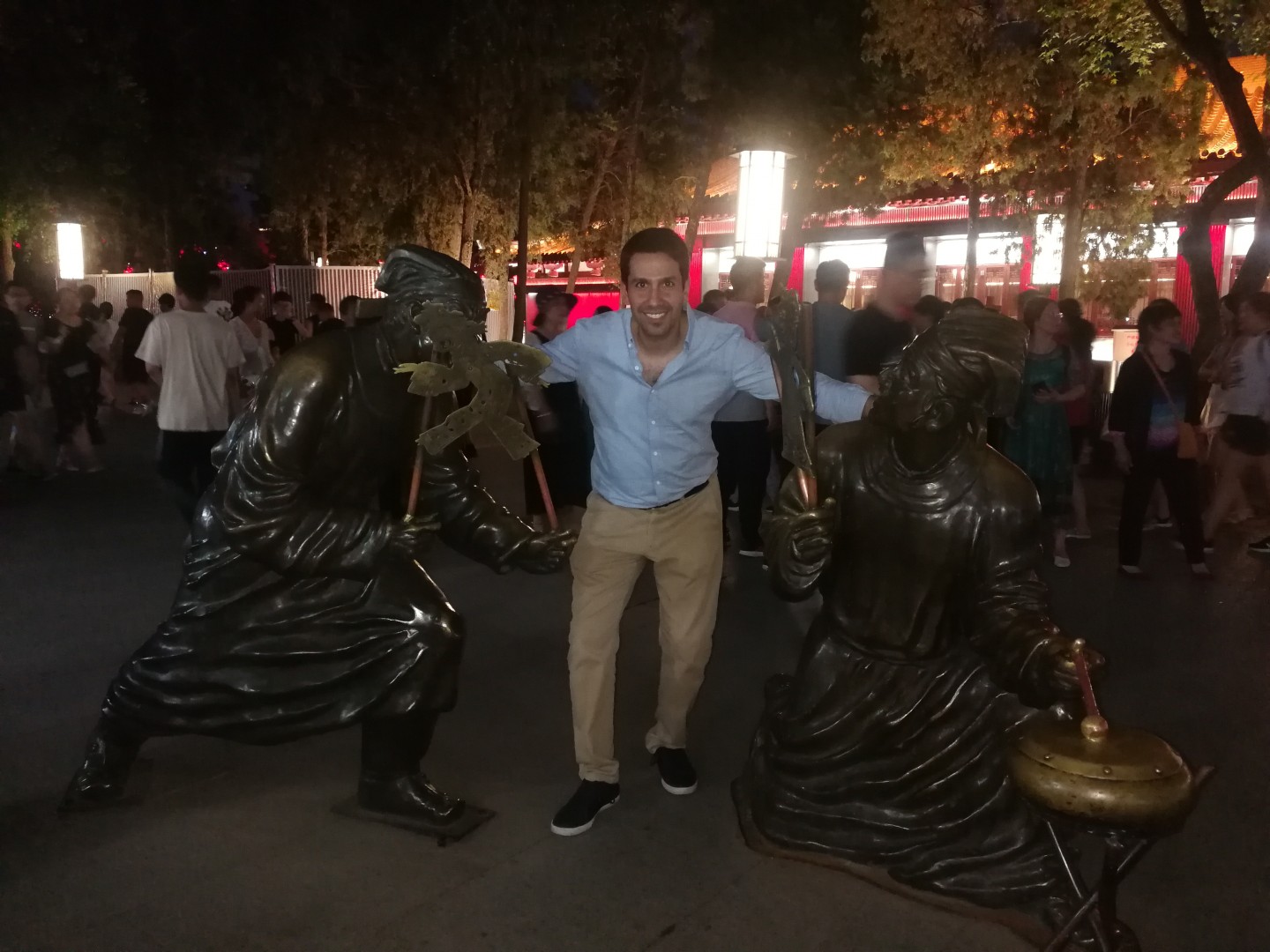
Ghost City Statues
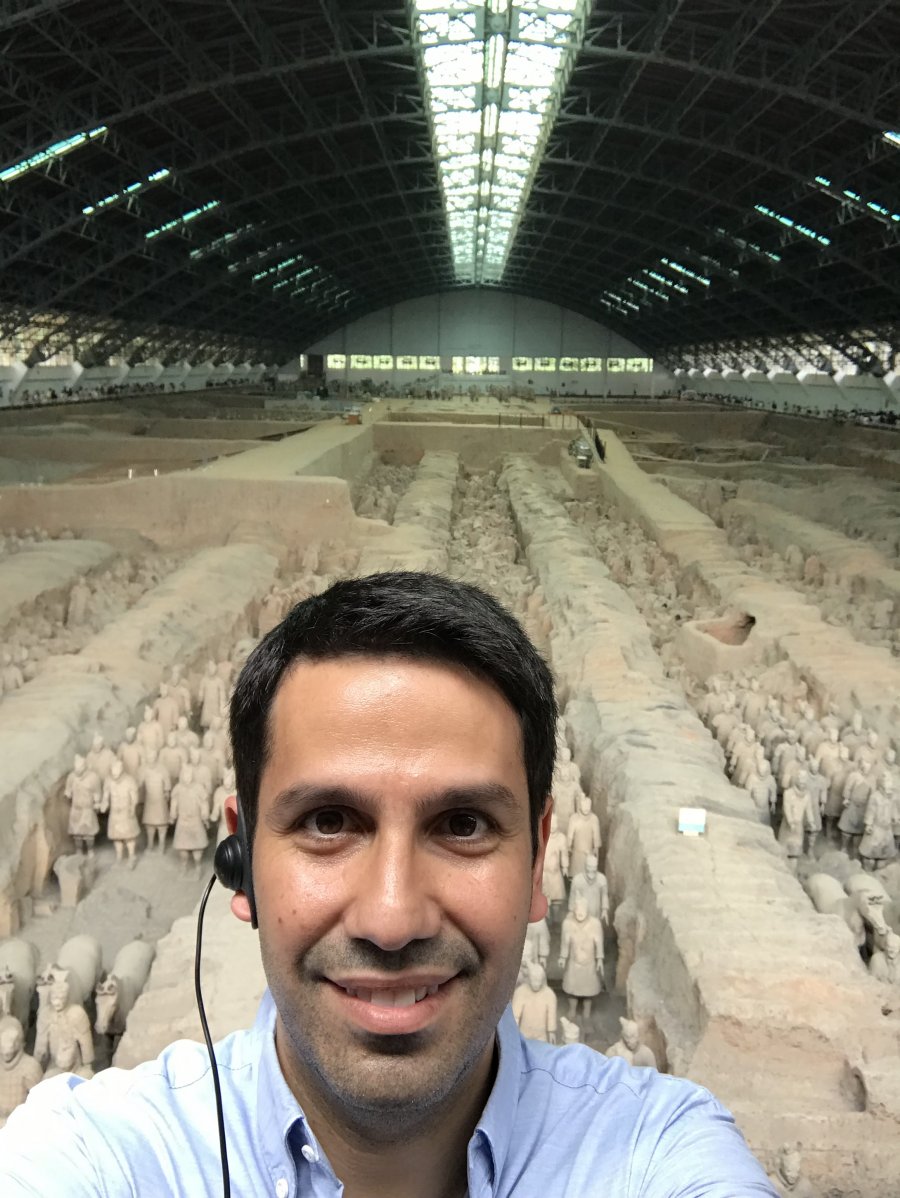
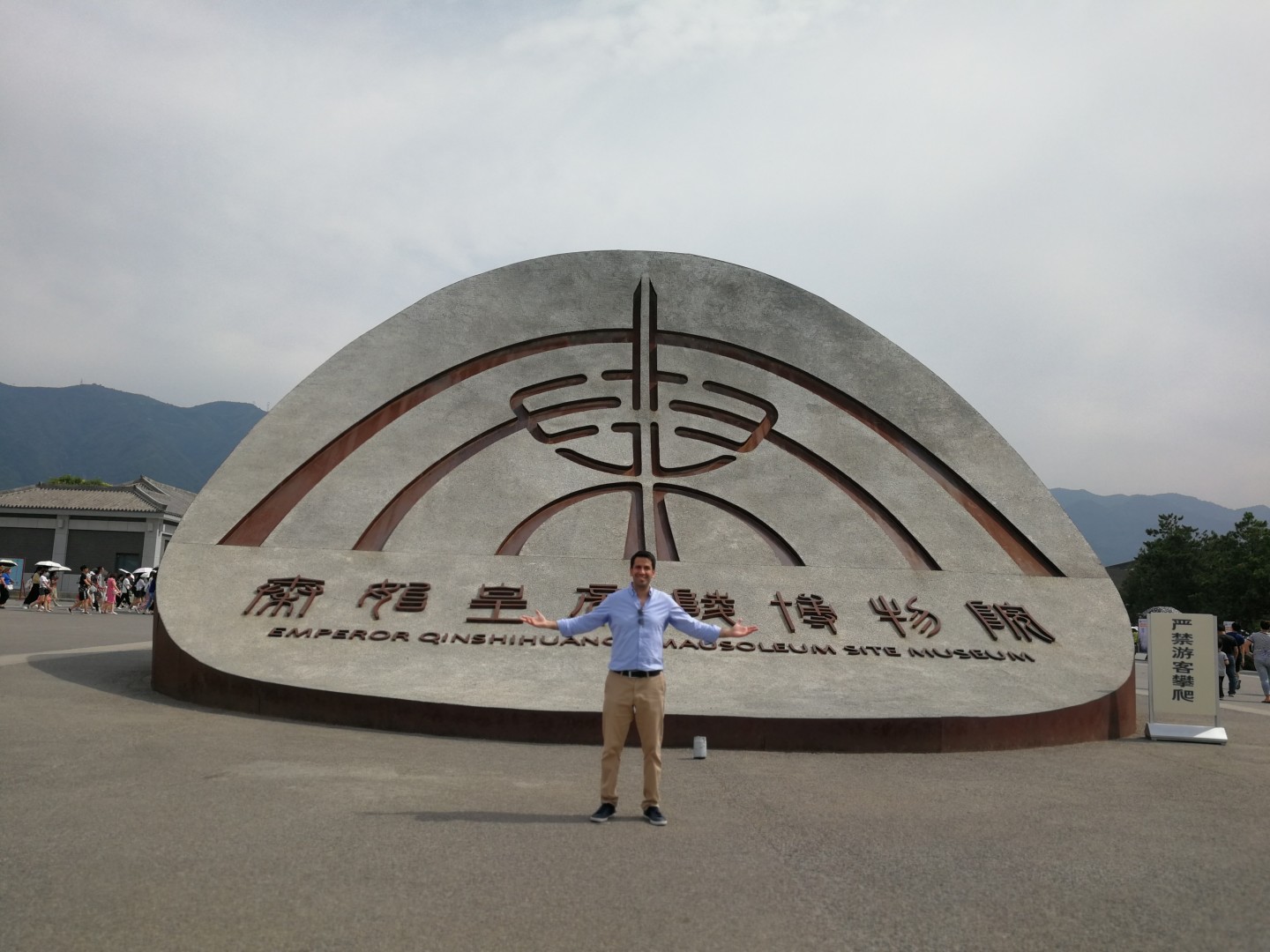
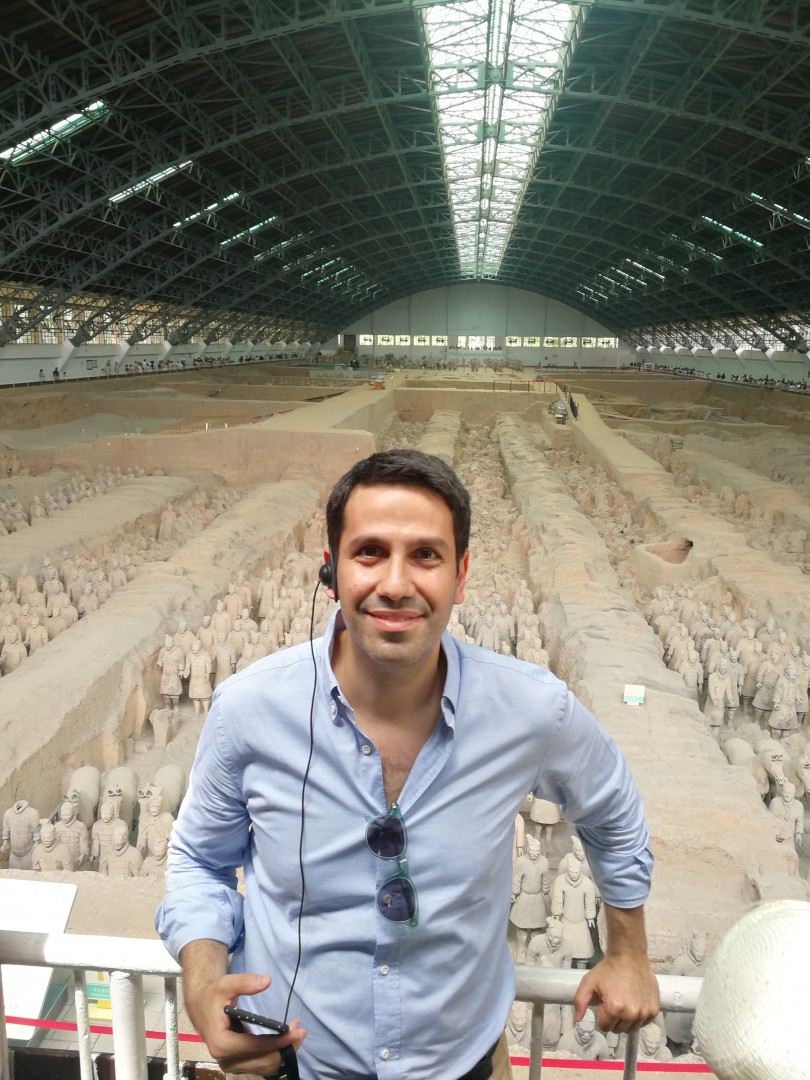
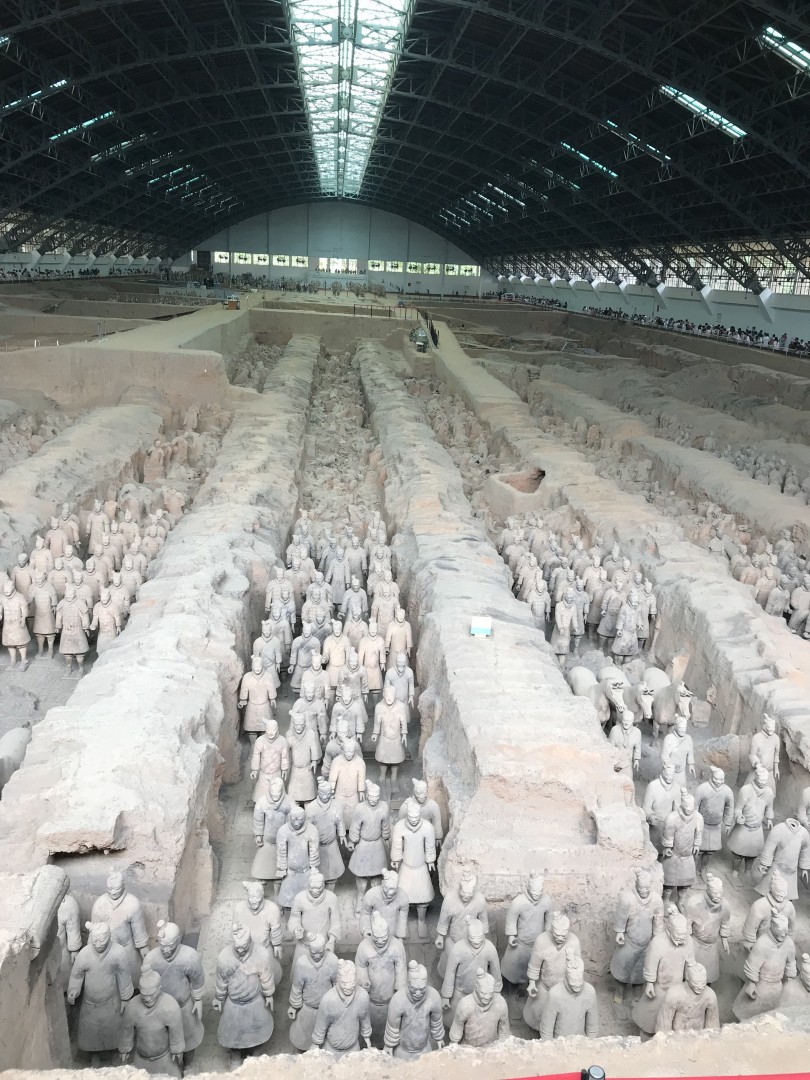
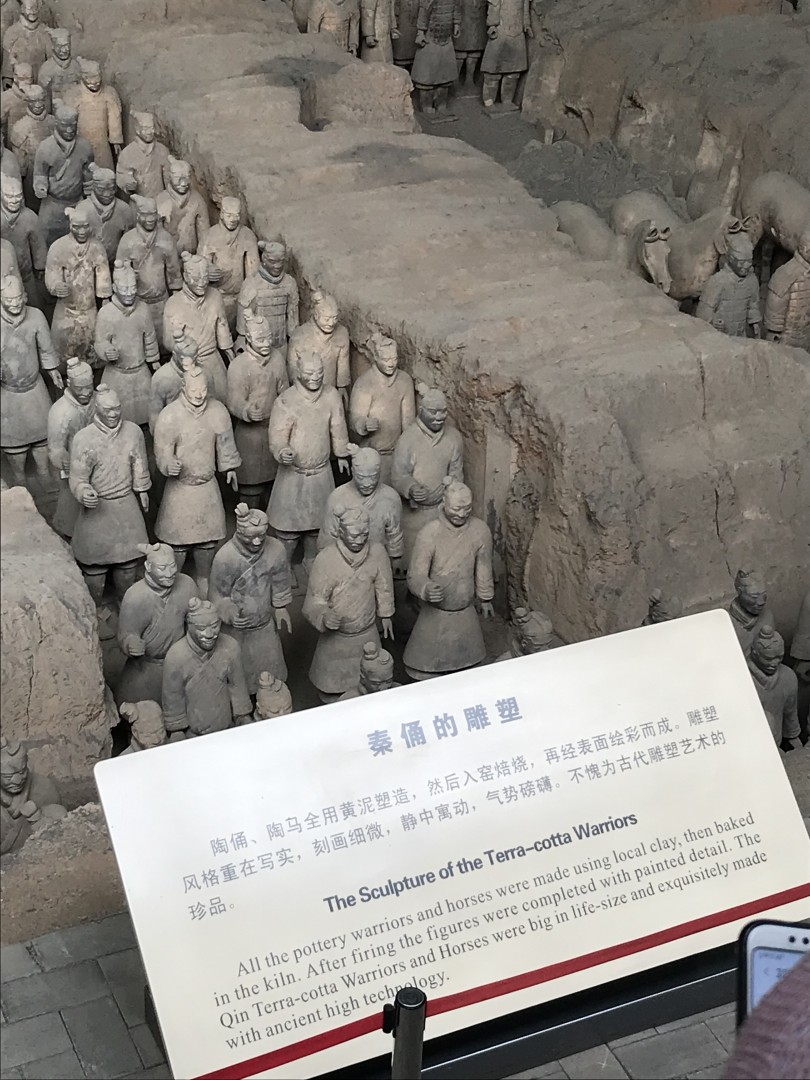
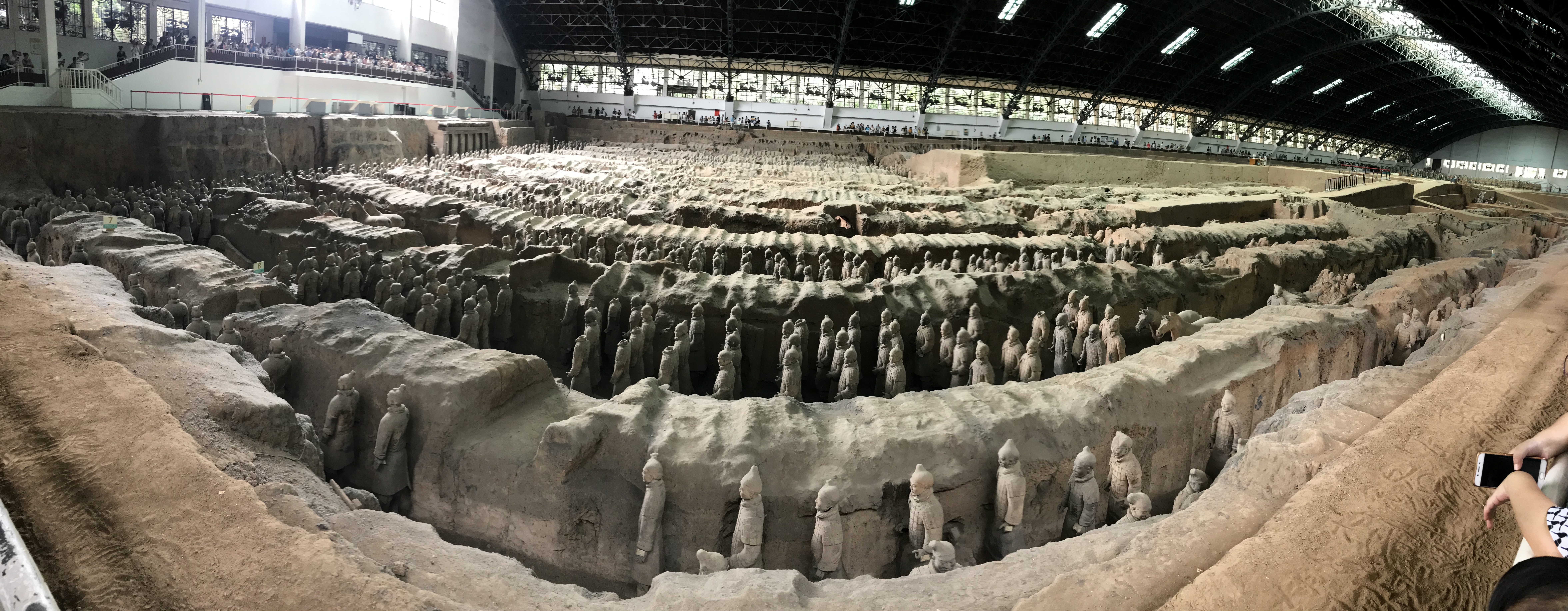
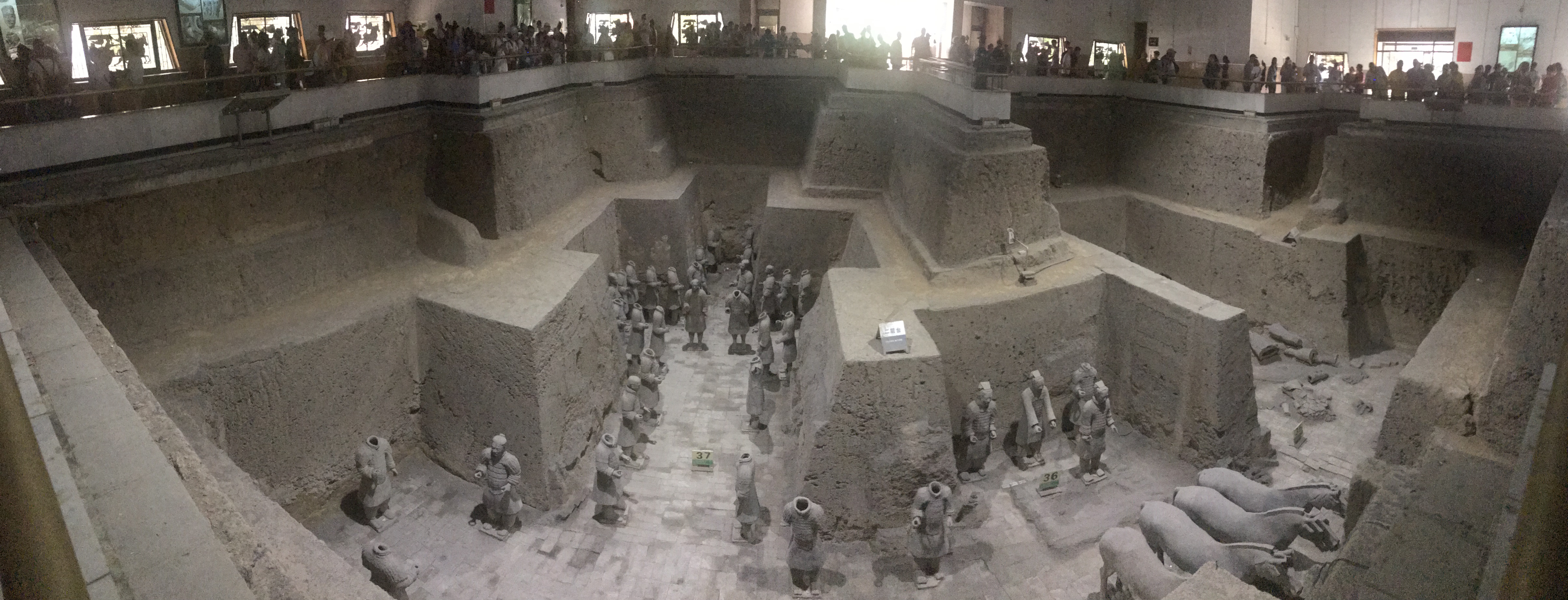
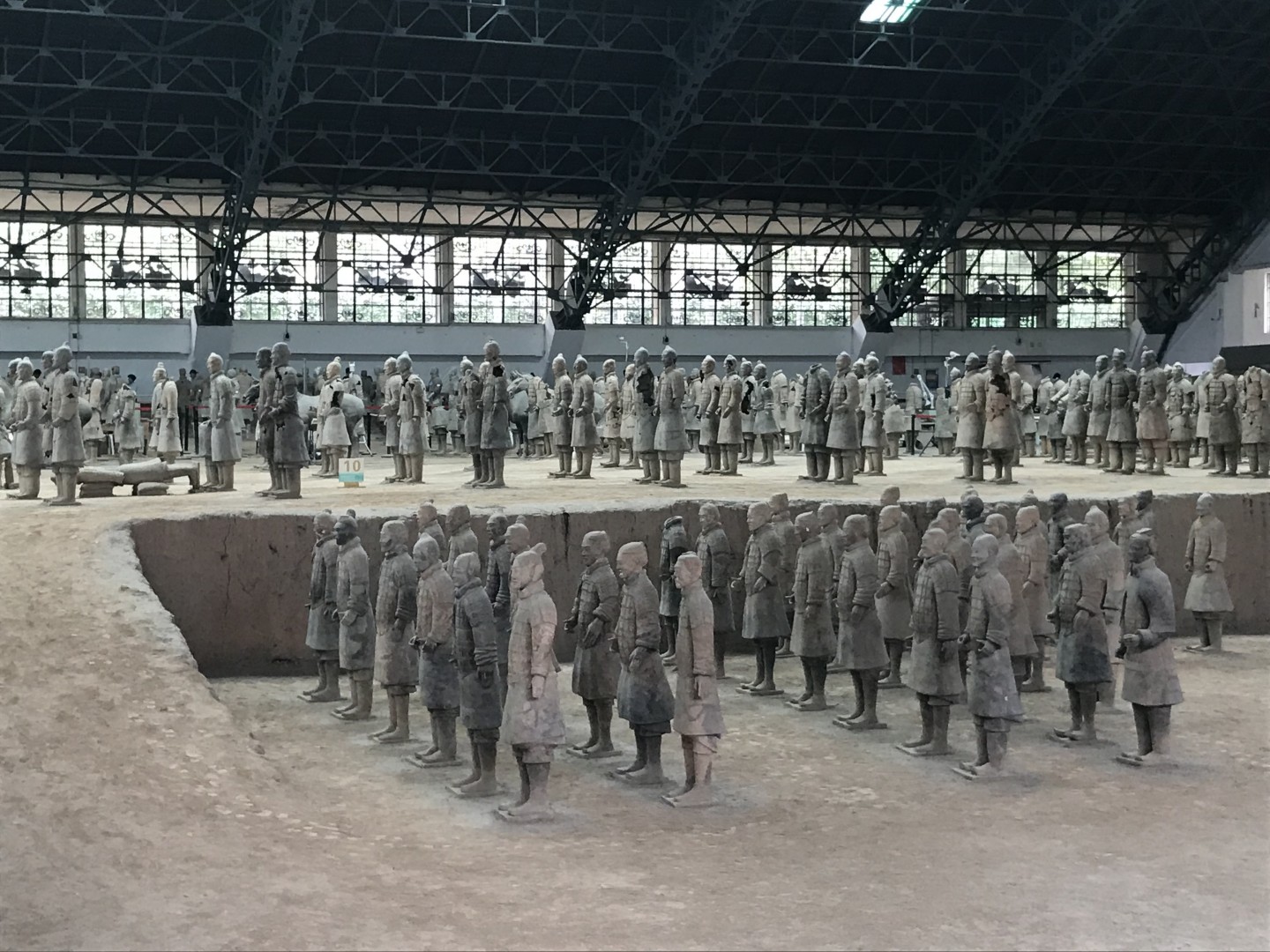
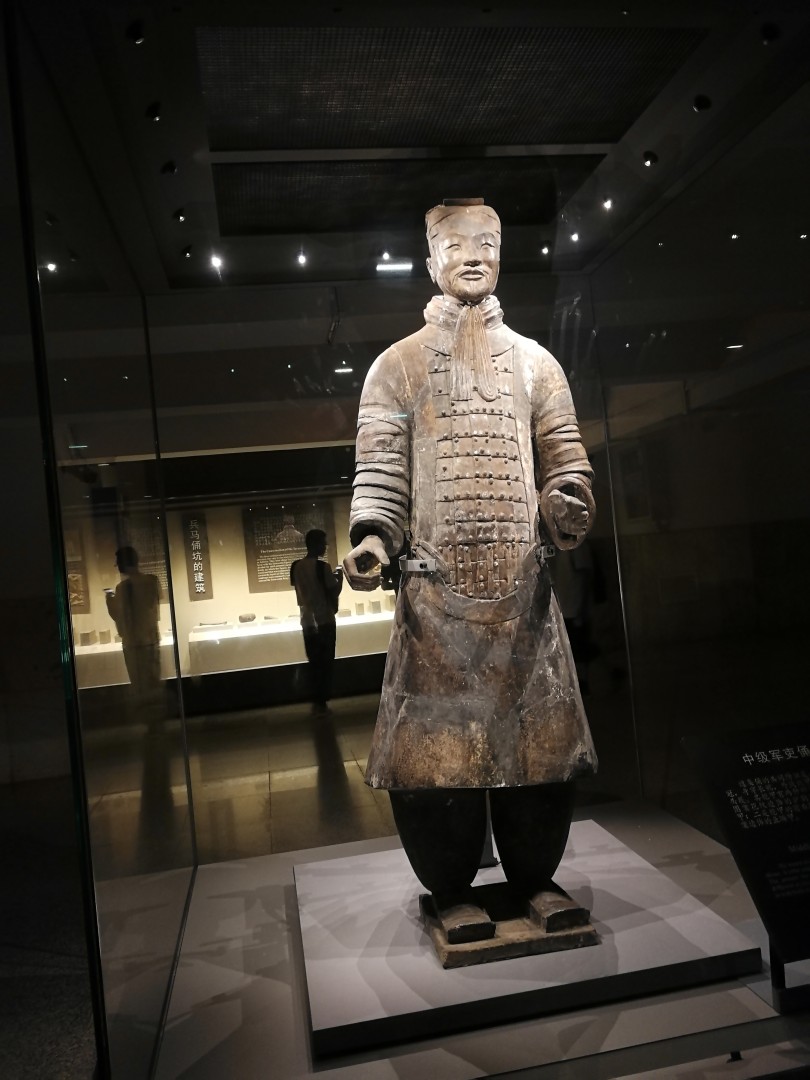
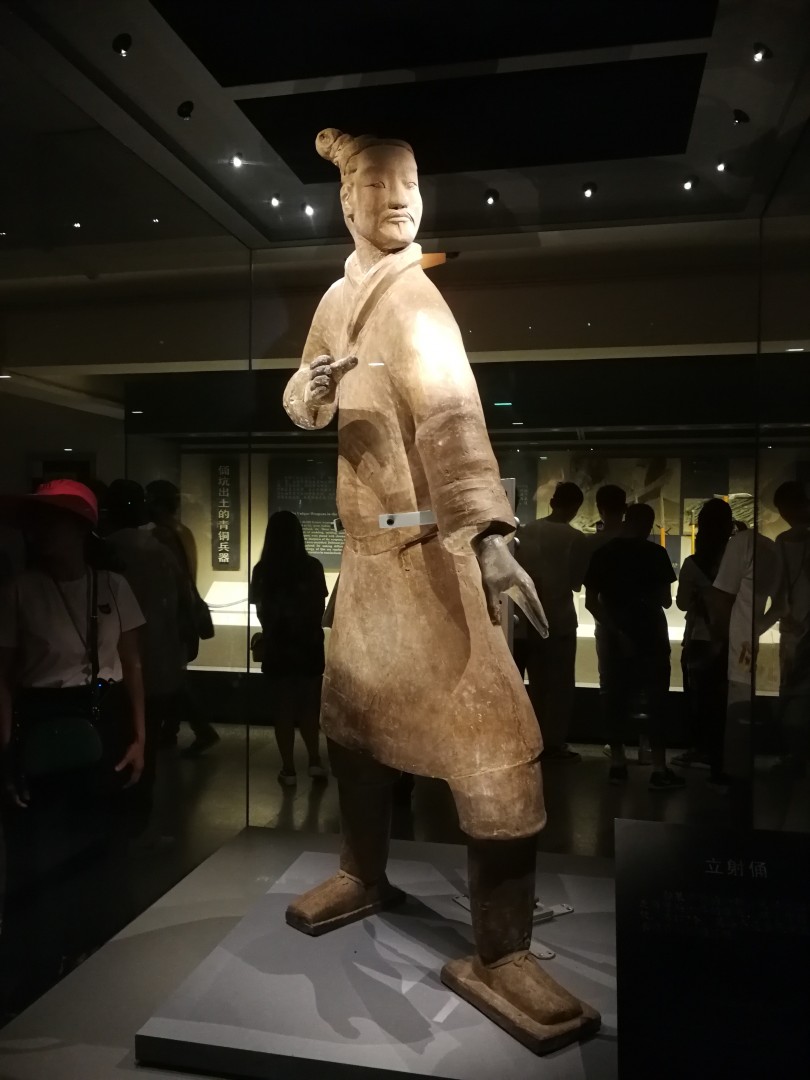
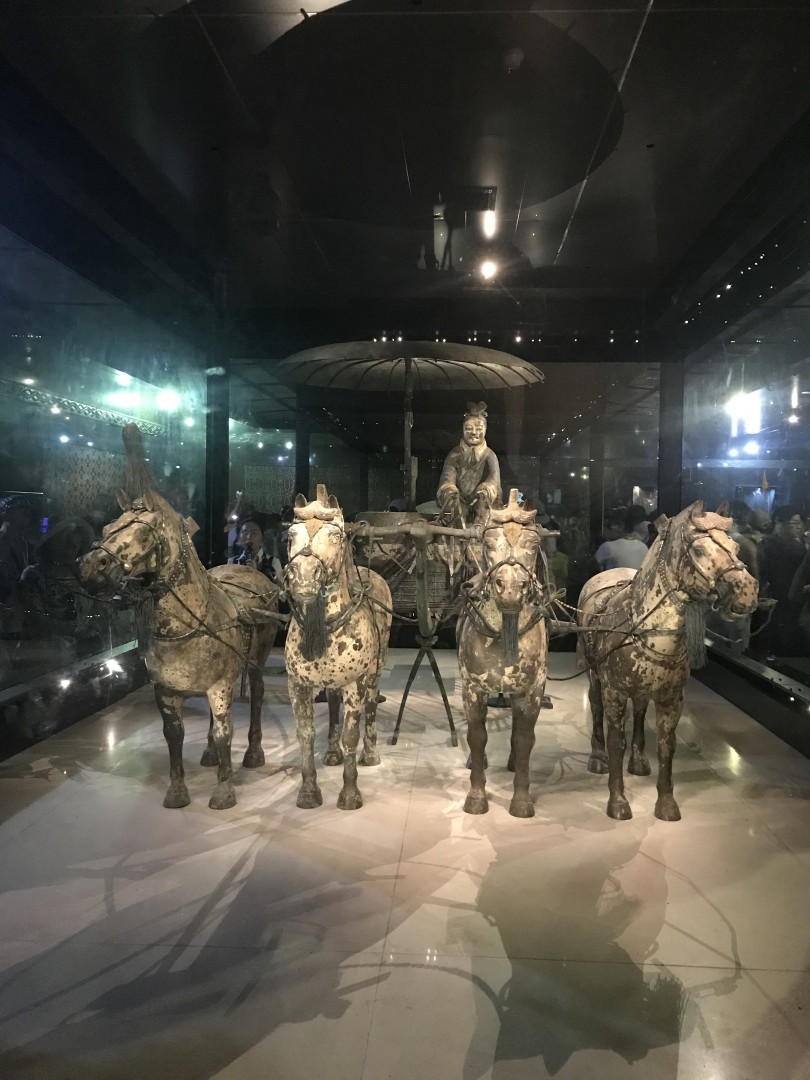
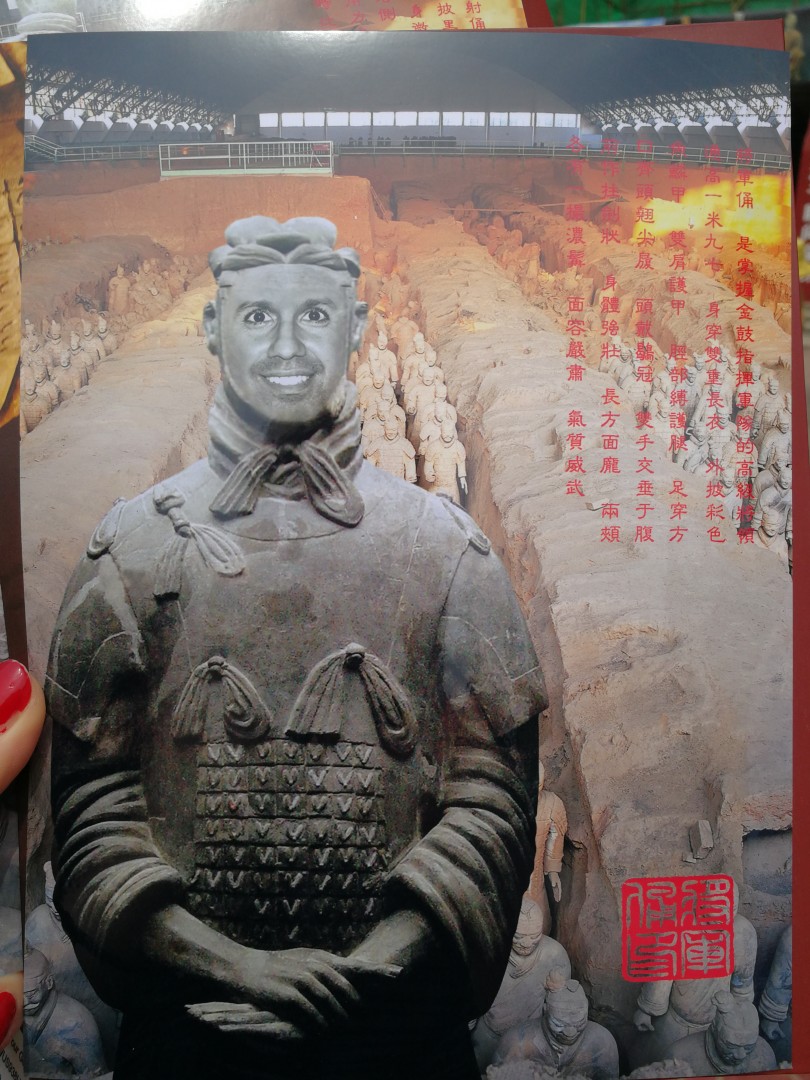
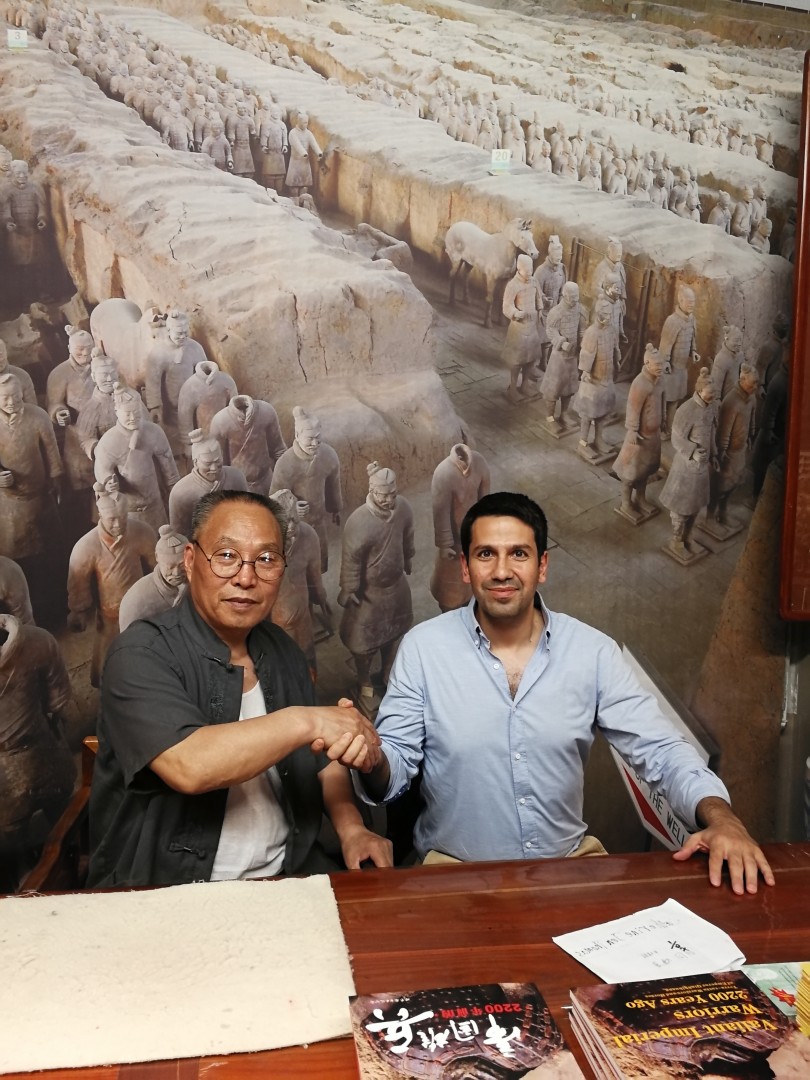
We departed from our hotel early Sunday morning and first visited the Museum of Qin Terracotta Warriors and Horses, as mentioned above. It’s a roughly 45-km drive from Xi’an city center to reach this area. Upon arrival, we hired a guide who accompanied us throughout the day. Also known as Emperor Qinshihuang’s Mausoleum Site Museum, this historic site, known as the Eighth Wonder of the World, exhibits terracotta warriors and horses made during the Qin Dynasty. Qin Terracotta warriors have guarded Qin Shi Huang’s mausoleum for over 2,000 years. This site was built from 246 BC – 208 BC. The soldier and horse statues were discovered by chance in 1974, when farmers stumbled upon the remains while digging a well. Qin Shi Huang’s Mausoleum and Terracotta Warriors were inscribed on the UNESCO World Heritage List in 1987.
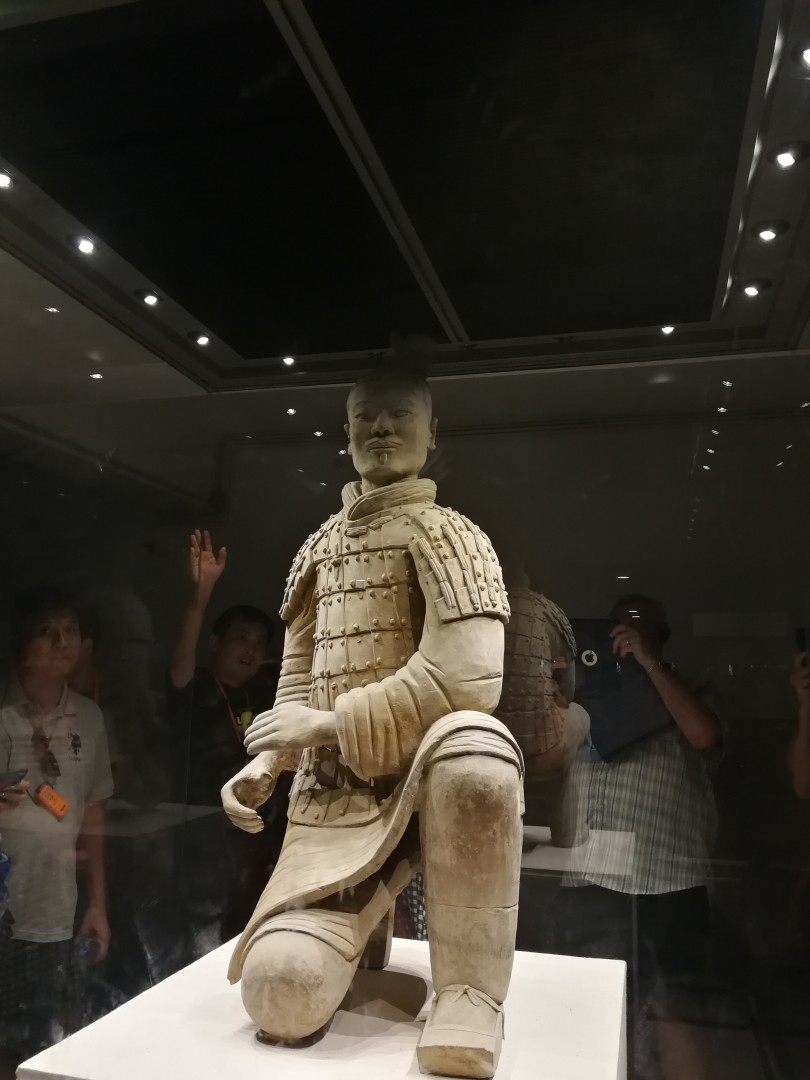
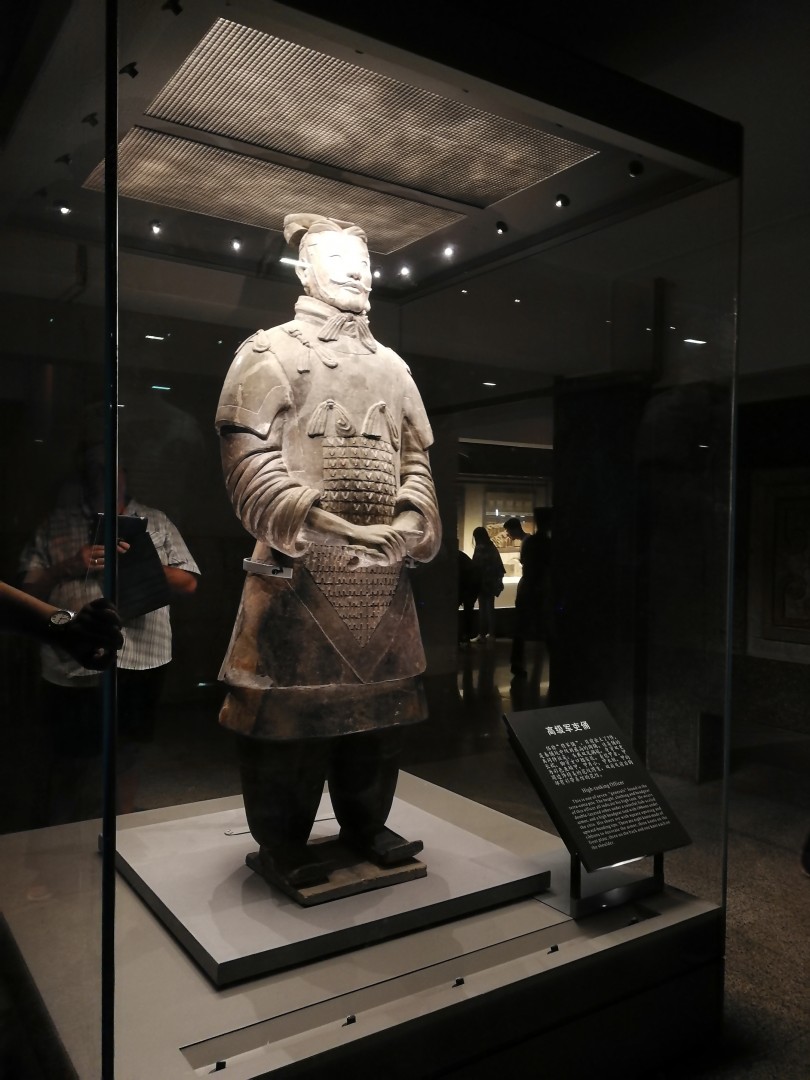
The facial features of each soldier are unique, leading to the assumption that they were sculpted in the image of real soldiers. This area isn’t just about soldiers; it’s a vast underground city built for Emperor Qin Shi Huang’s afterlife. Other areas haven’t yet been opened; only this area is open to visitors. Although the terracotta warriors were placed in ovens, they were severely damaged underground. Because they were removed and repaired individually before being placed in the museum, opening new areas is time-consuming.
Kung Fu Tea Ceremony
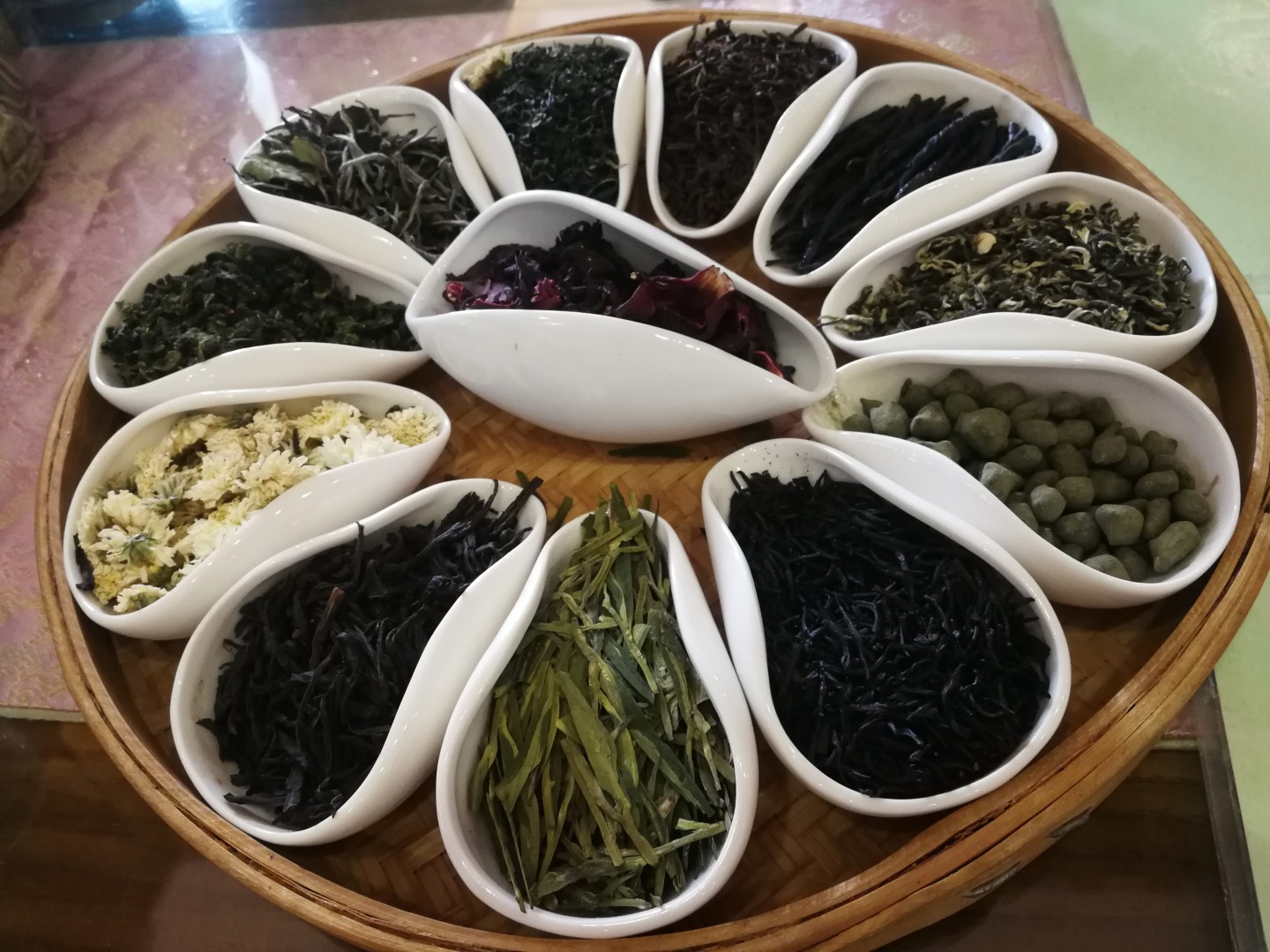
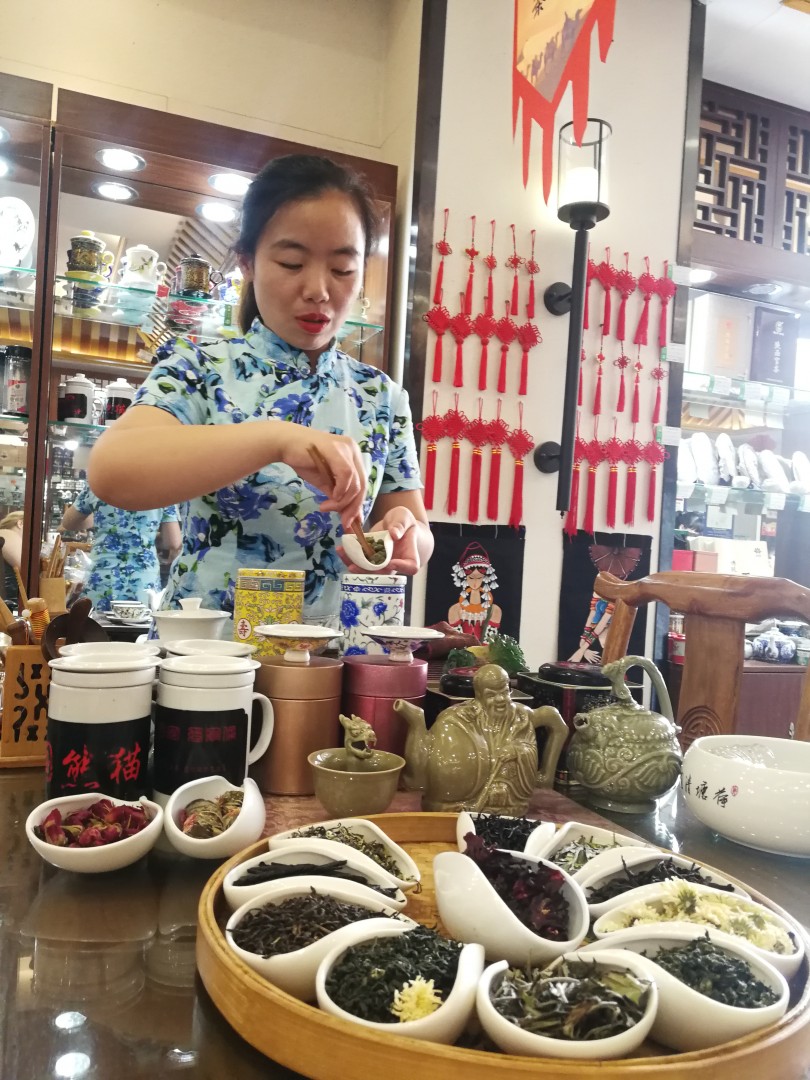
After visiting the first two major exhibition areas, when it was time for lunch, we chose the local restaurant of the two restaurants inside the museum, one offering local and the other Western cuisine. Our guide was surprised and pleased with our choice of Chinese cuisine. As people who live with a vision of global citizenship, being open to new tastes and discovering local flavors are key to being a good traveler. After lunch, we enjoyed a Kung Fu tea ceremony and tea tasting. We had the opportunity to taste 13 different types of tea, listening to and learning about the important functions and properties of each. The Kung Fu tea ceremony holds a very important place in Chinese culture. Tea ceremonies are believed to offer both spiritual purification and inner peace, enabling people who care for each other to enjoy their time together.
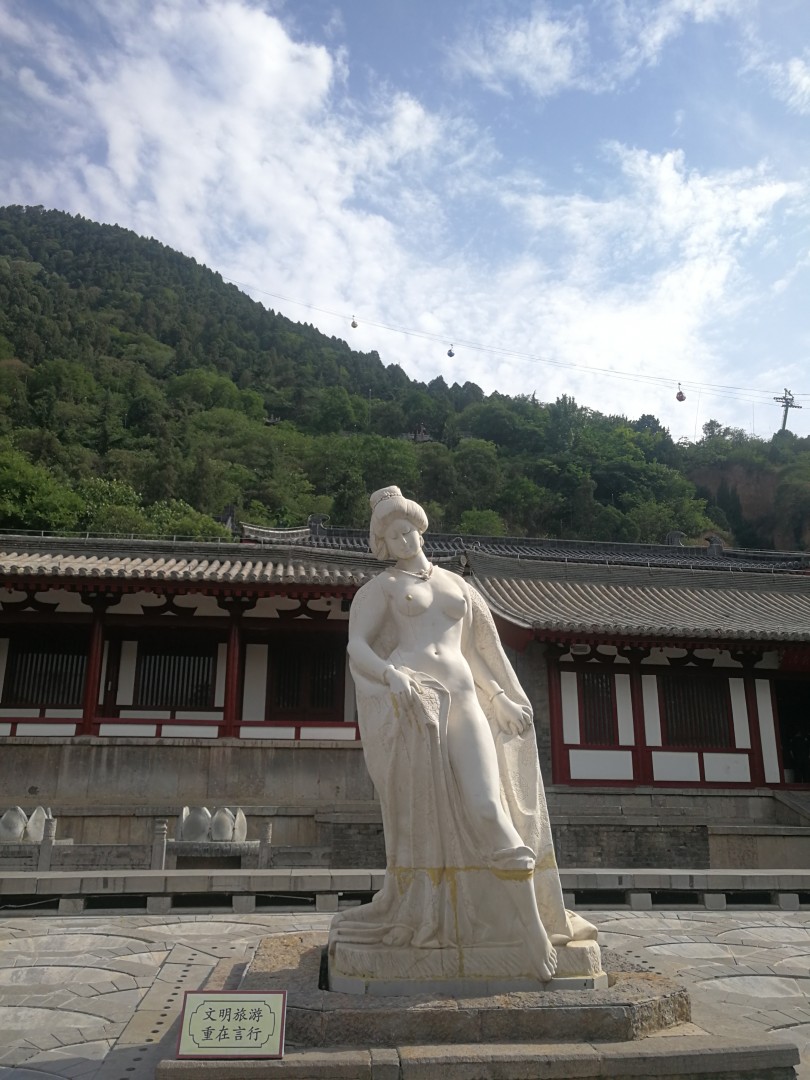
The Four Beauties of Ancient China
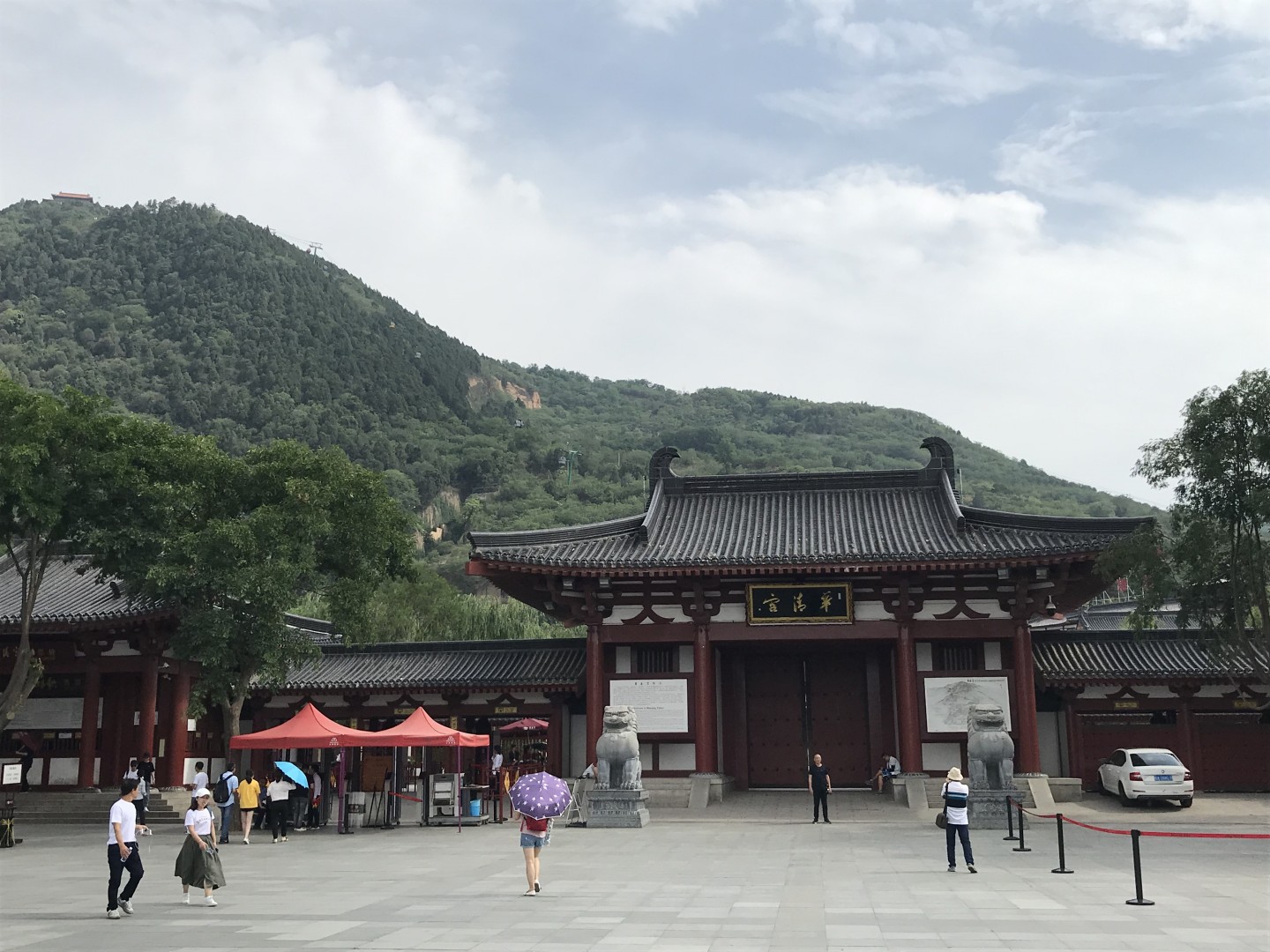
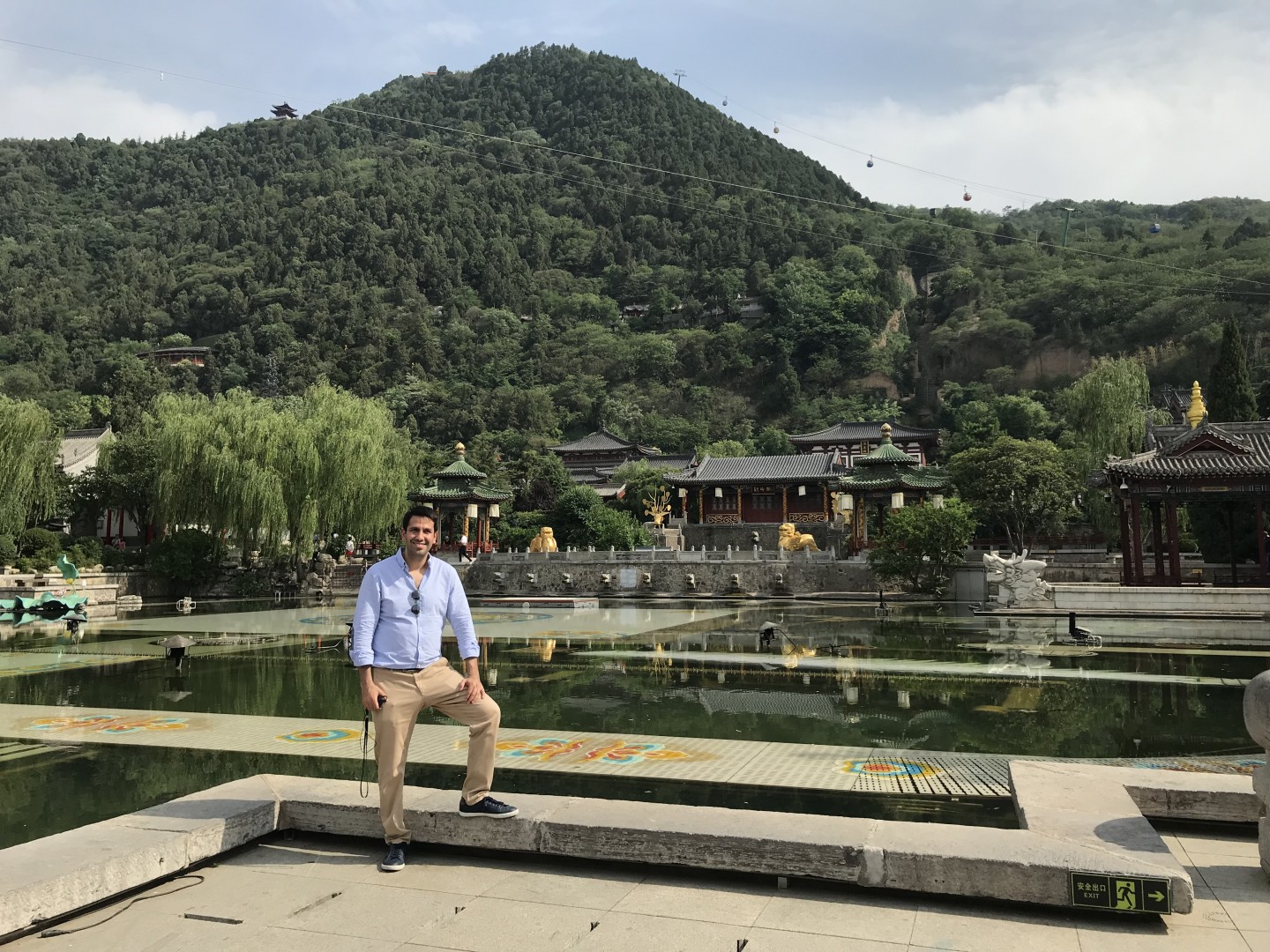
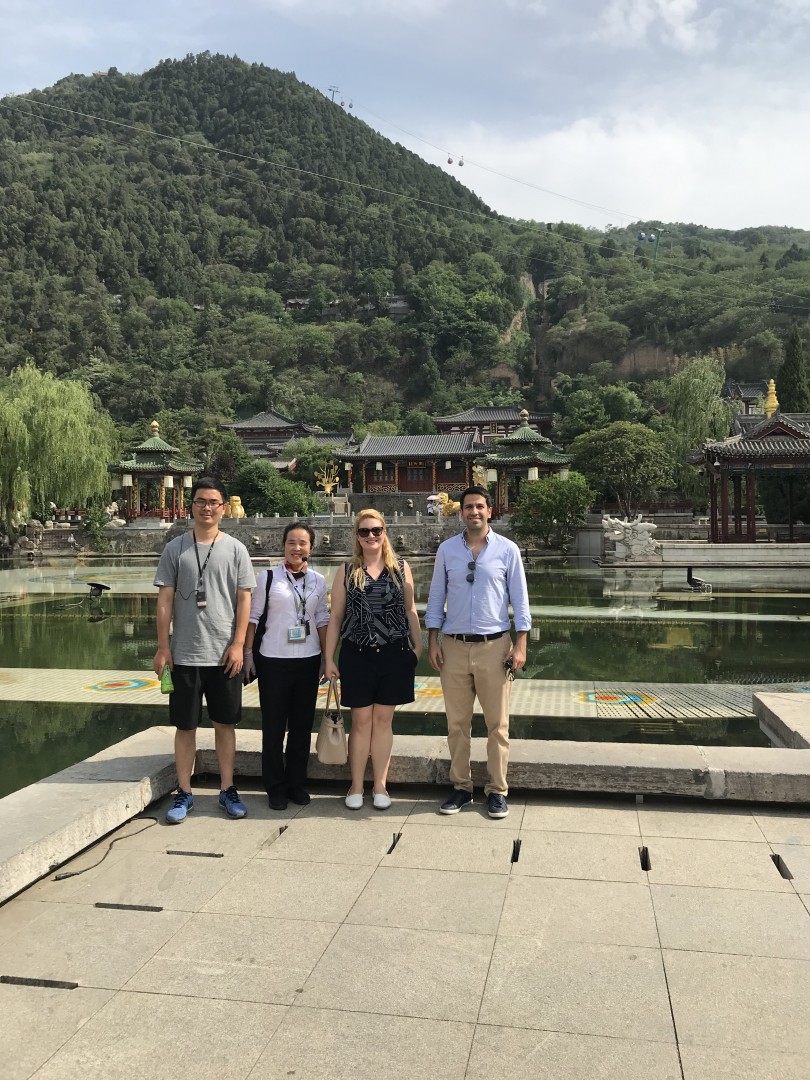
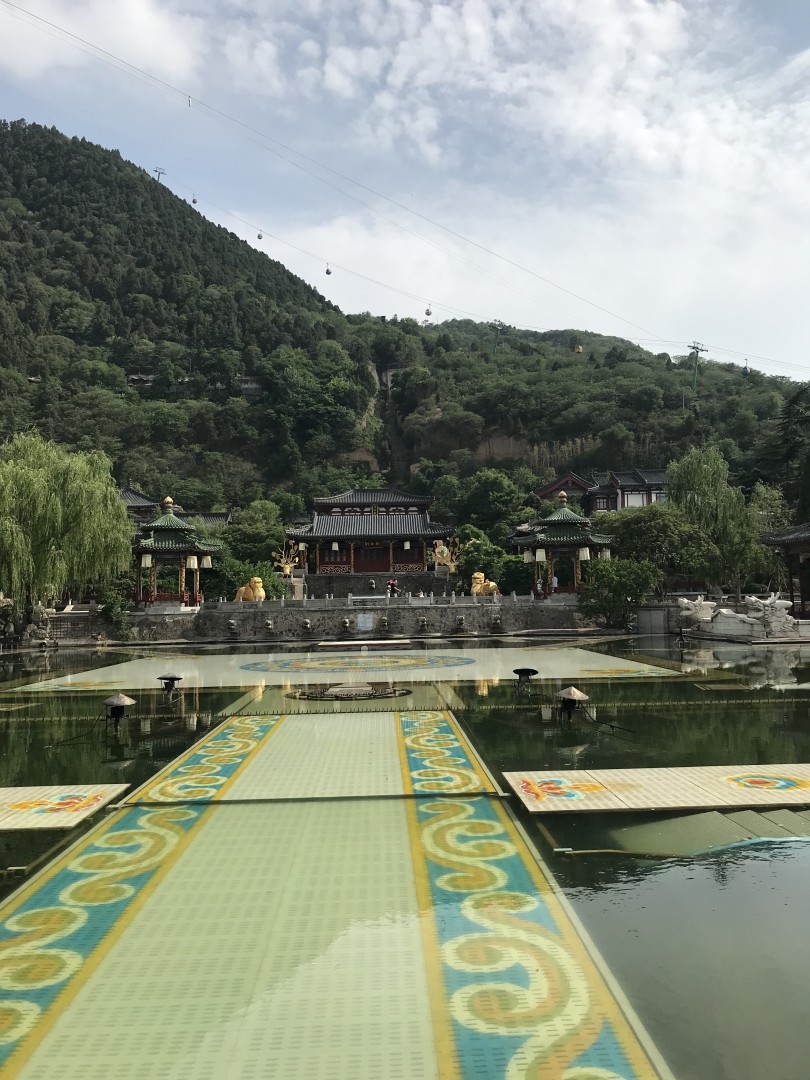
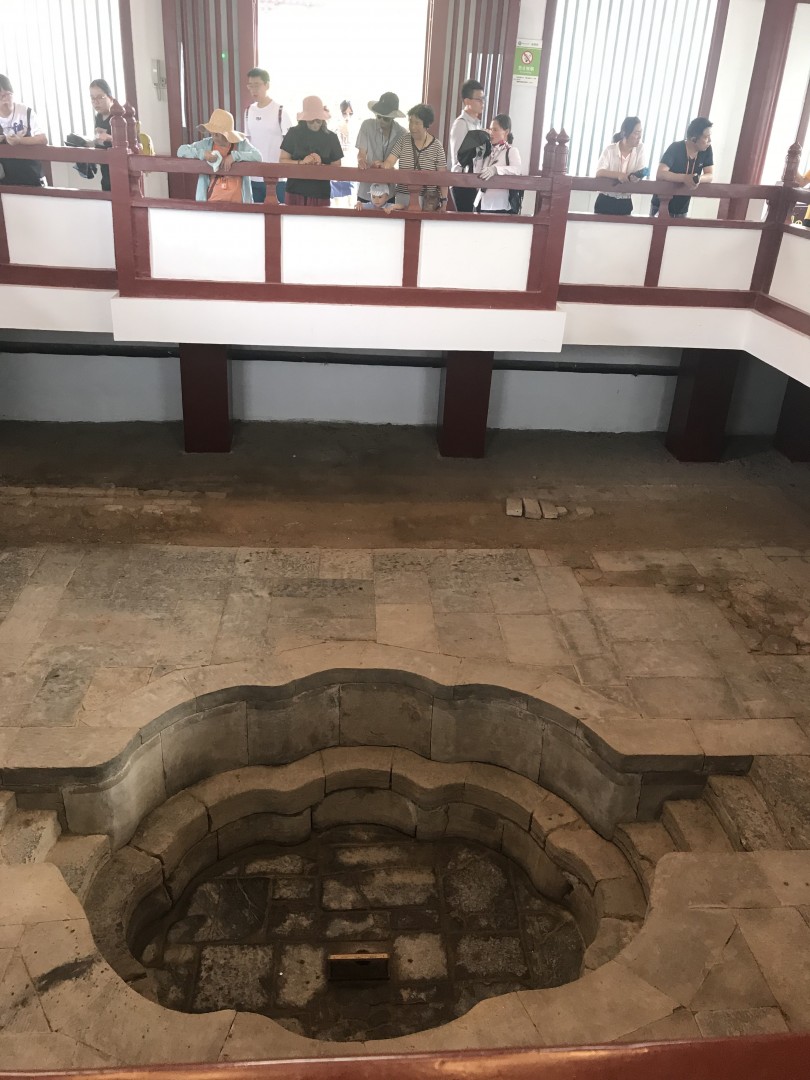
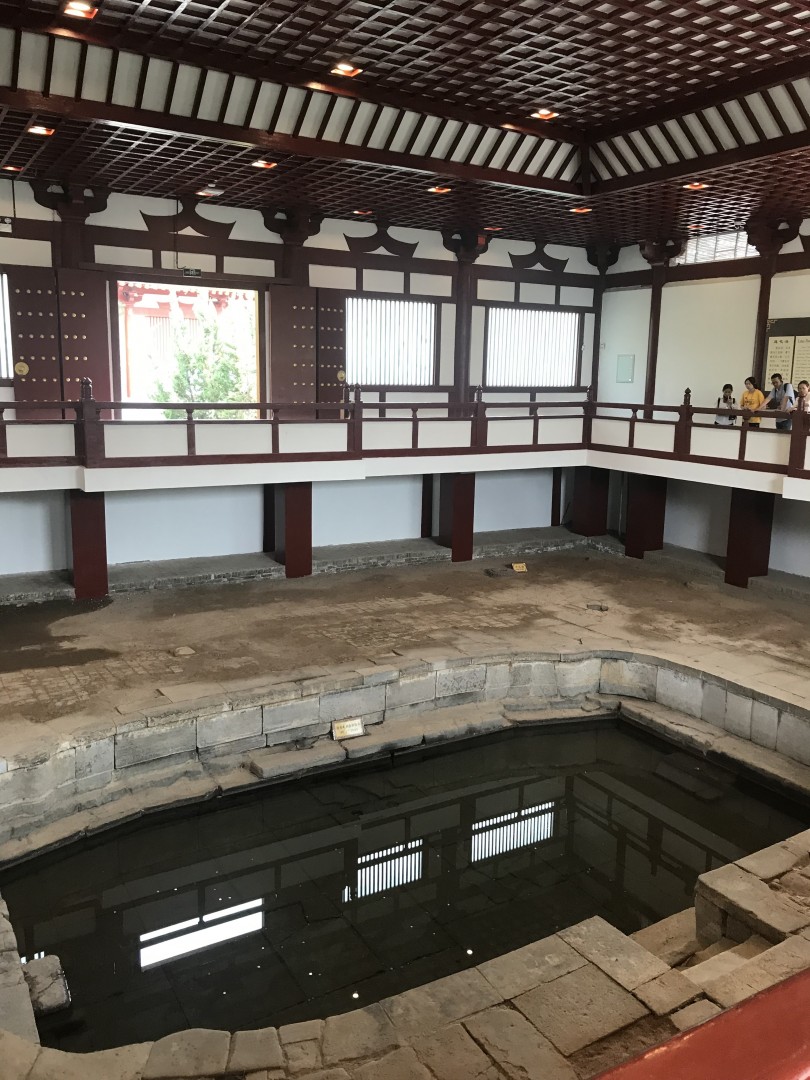
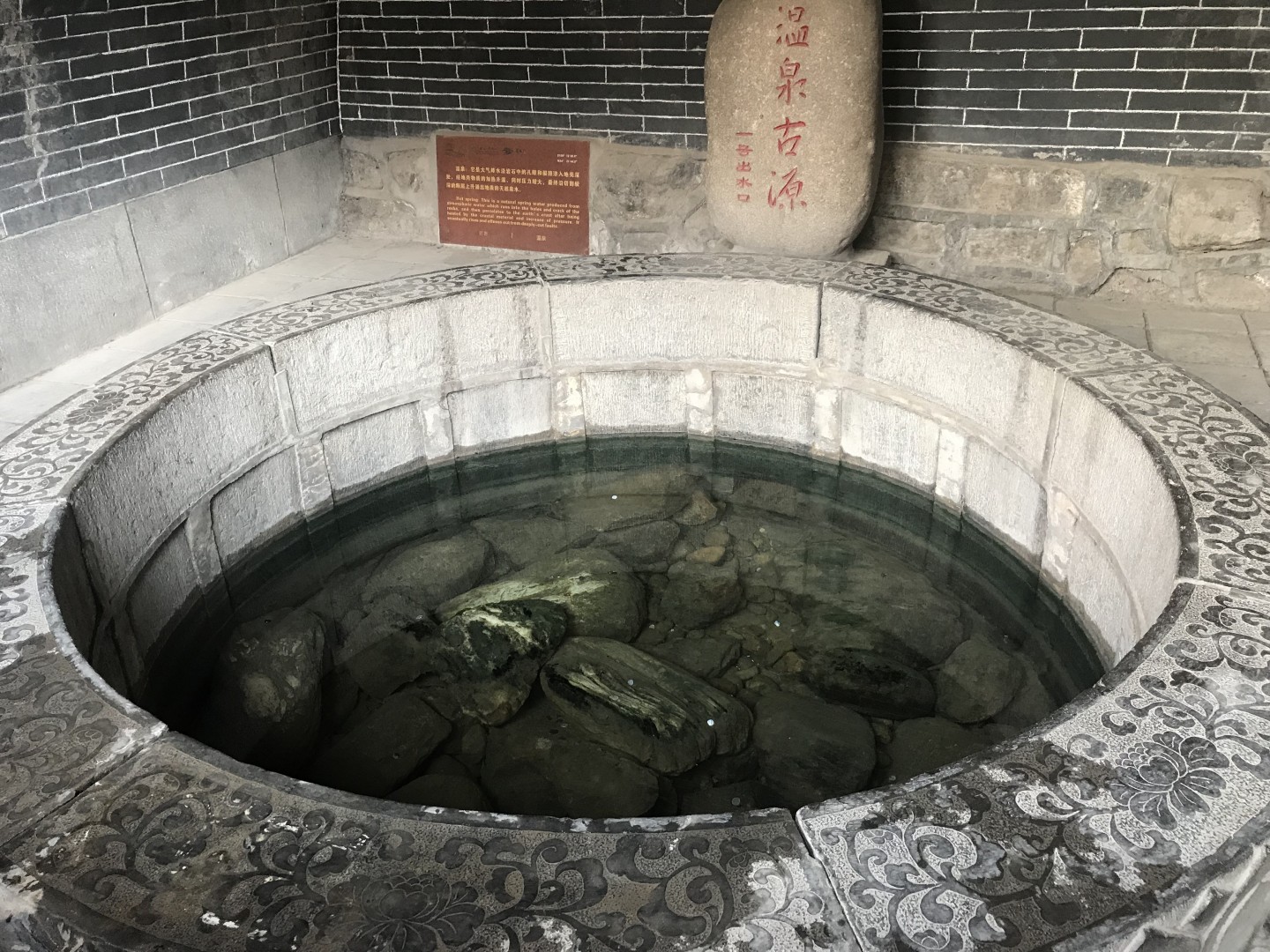
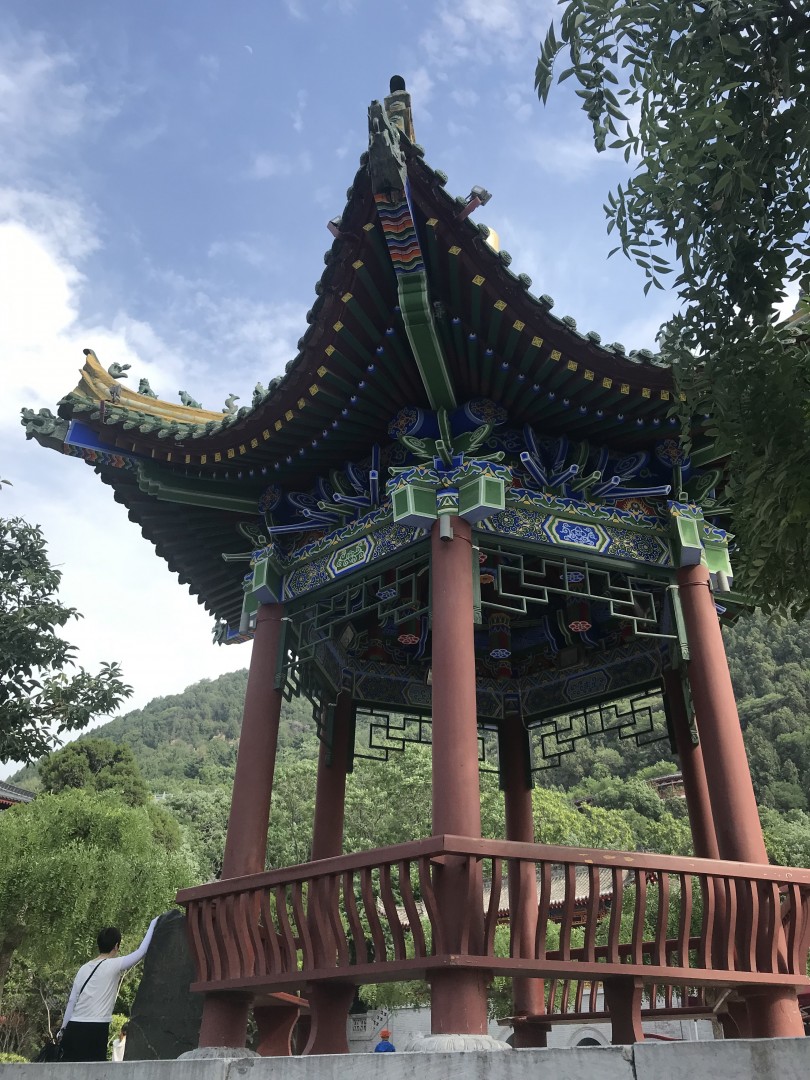
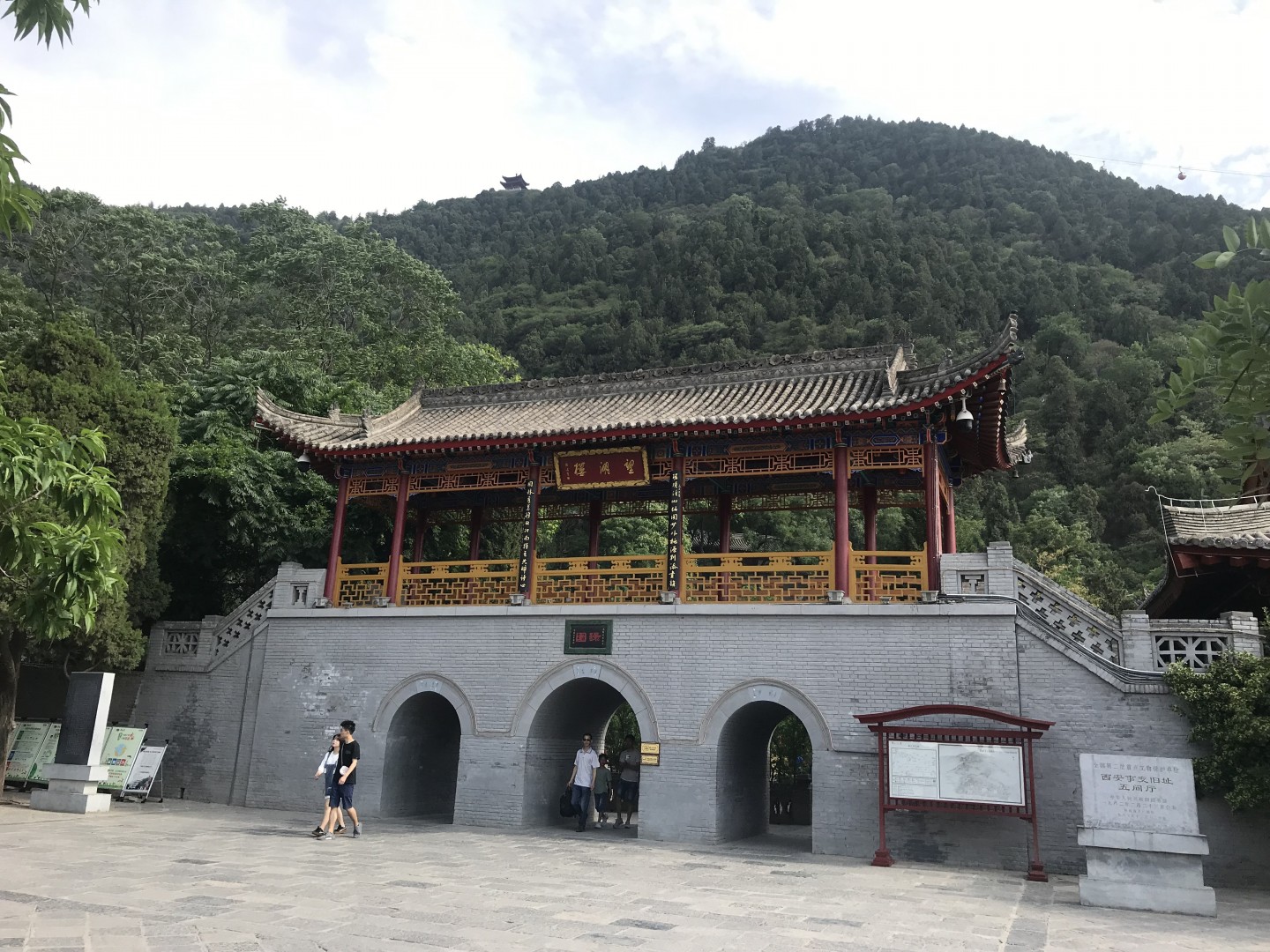
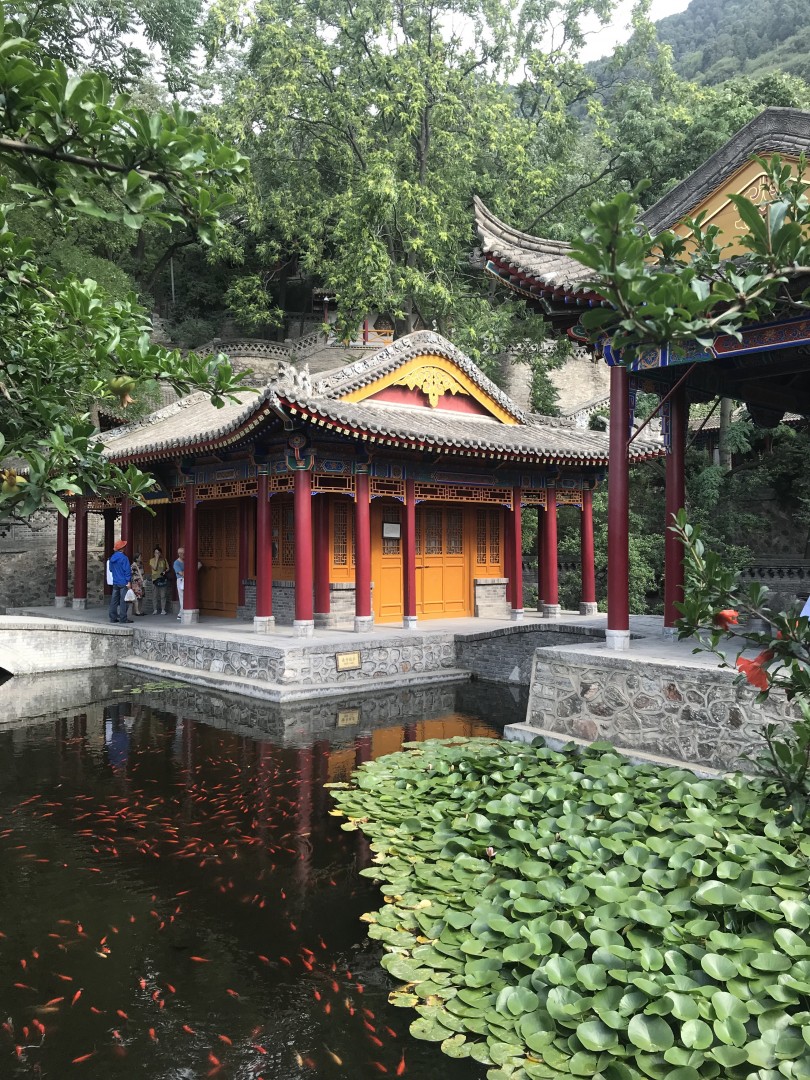
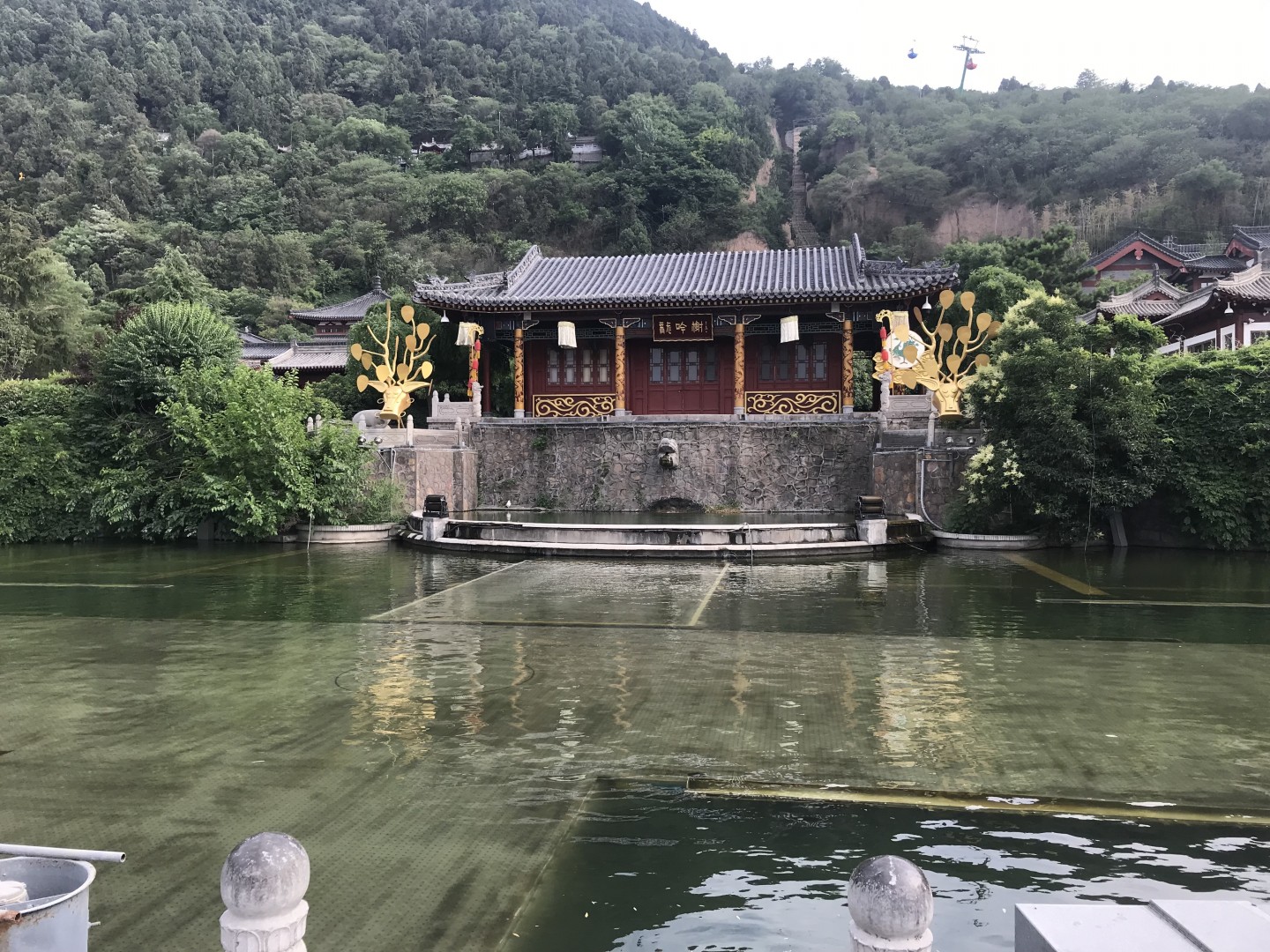
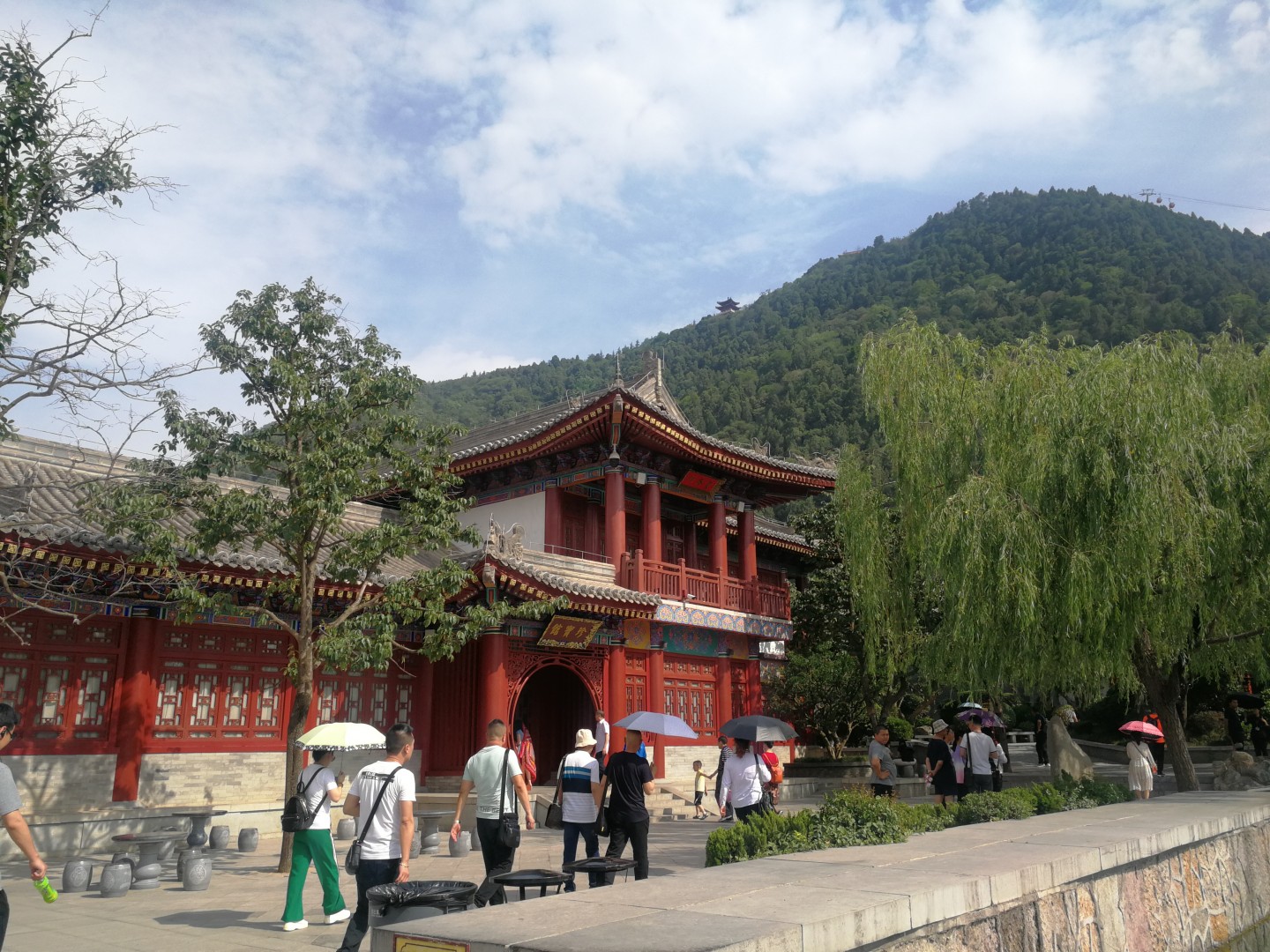
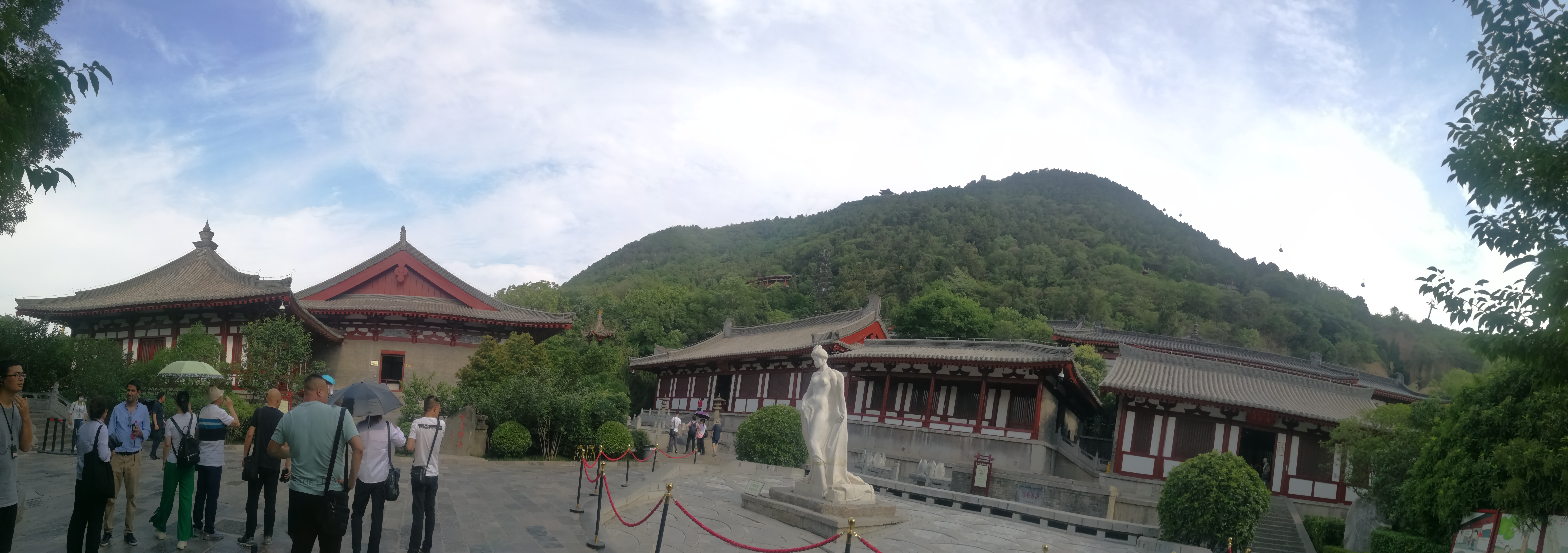
After the tea ceremony, we headed out. We stopped at a shop along the way to shop and then left the museum. Then, we set off for Huaqing Palace and Hot Springs, a 10-minute drive away. Our guide, who accompanied us in the terracotta palace, also came with us to Huaqing. Huaqing is an imperial palace built during the Tang Dynasty. It is situated between the Weihe River and the foothills of Mount Li. According to Feng Shui philosophy, a site leaning against mountains and overlooking rivers is considered auspicious and can bring good luck to its inhabitants. For this reason, you often see similar locations in China. This palace is renowned for its hot springs and deep historical culture. It is where the romantic story of Tang Dynasty Emperor Tang Xuanzong and his beloved Yang Guifei (or Concubine Yang) took place. Yang Guifei was known as one of the “Four Beauties of Ancient China” in Chinese history.
A Hostage Crisis with a Curious End
Another historical feature of this city is that it was the scene of the Xi’an Incident. This was a political crisis that occurred in 1936. Chiang Kai-shek, then leader of the Republic of China, was held hostage in Xi’an by his subordinates Zhang Xueliang and Yang Hucheng. Two weeks of negotiations were held to persuade the ruling Chinese Nationalist Party (Kuomintang, or KMT) to change its policies toward the Communist Party of China, with which it was at war, and toward Japan, with which it was at peace. Interestingly, this crisis was resolved when Chiang convinced his subordinates who were holding him hostage to their demands. The Chinese government subsequently allied with the communists and declared war on Japan.
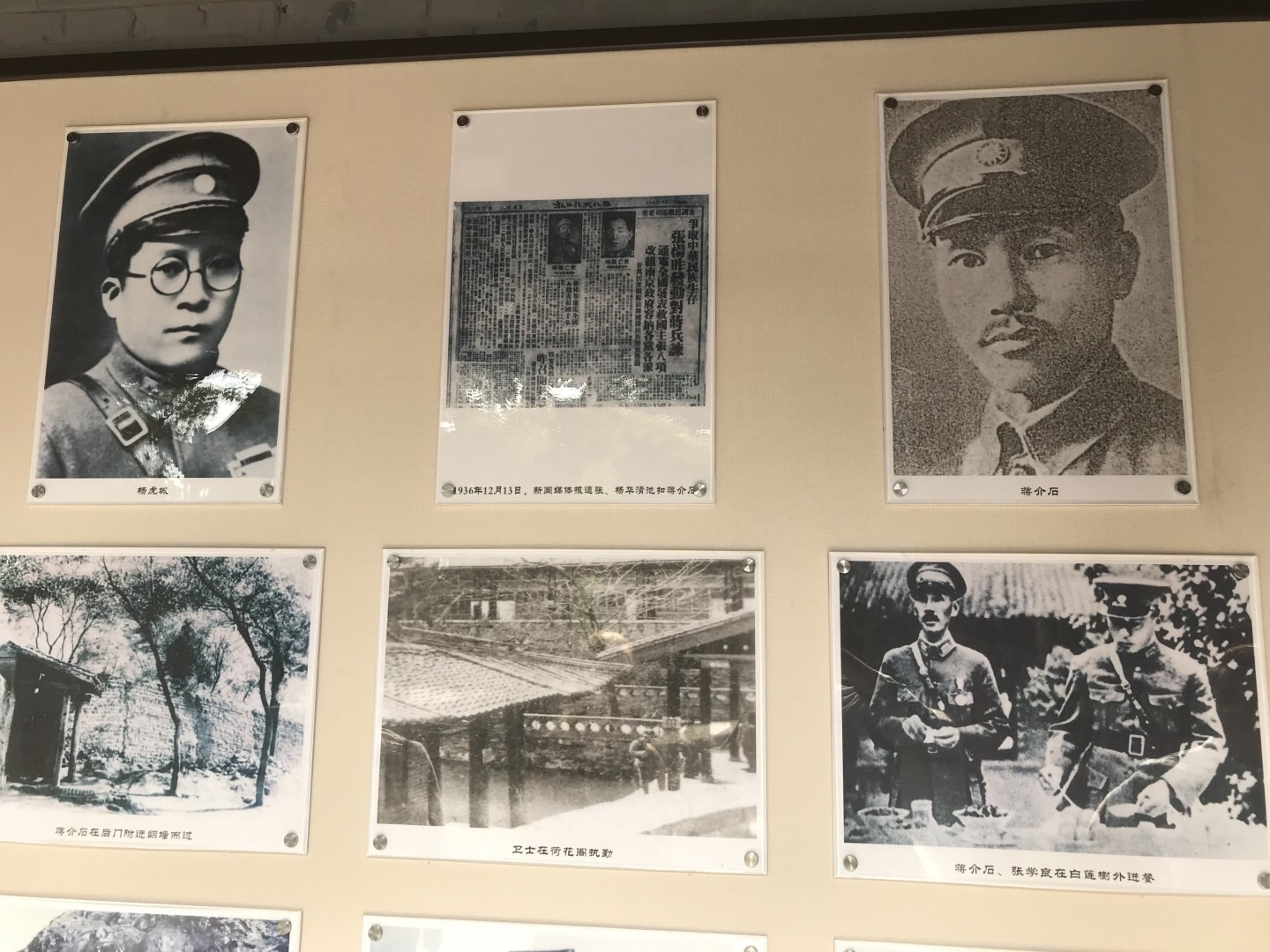
The Xi’an Incident: Chiang Kai-shek, Zhang Xueliang, and Yang Hucheng
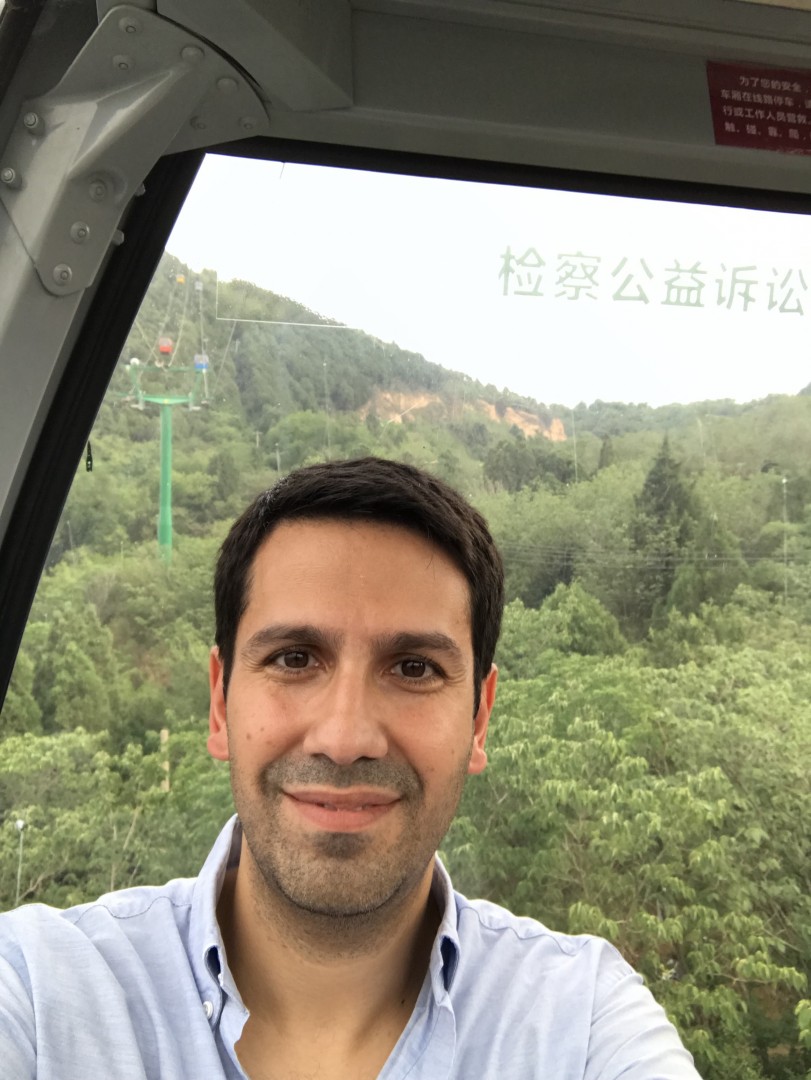
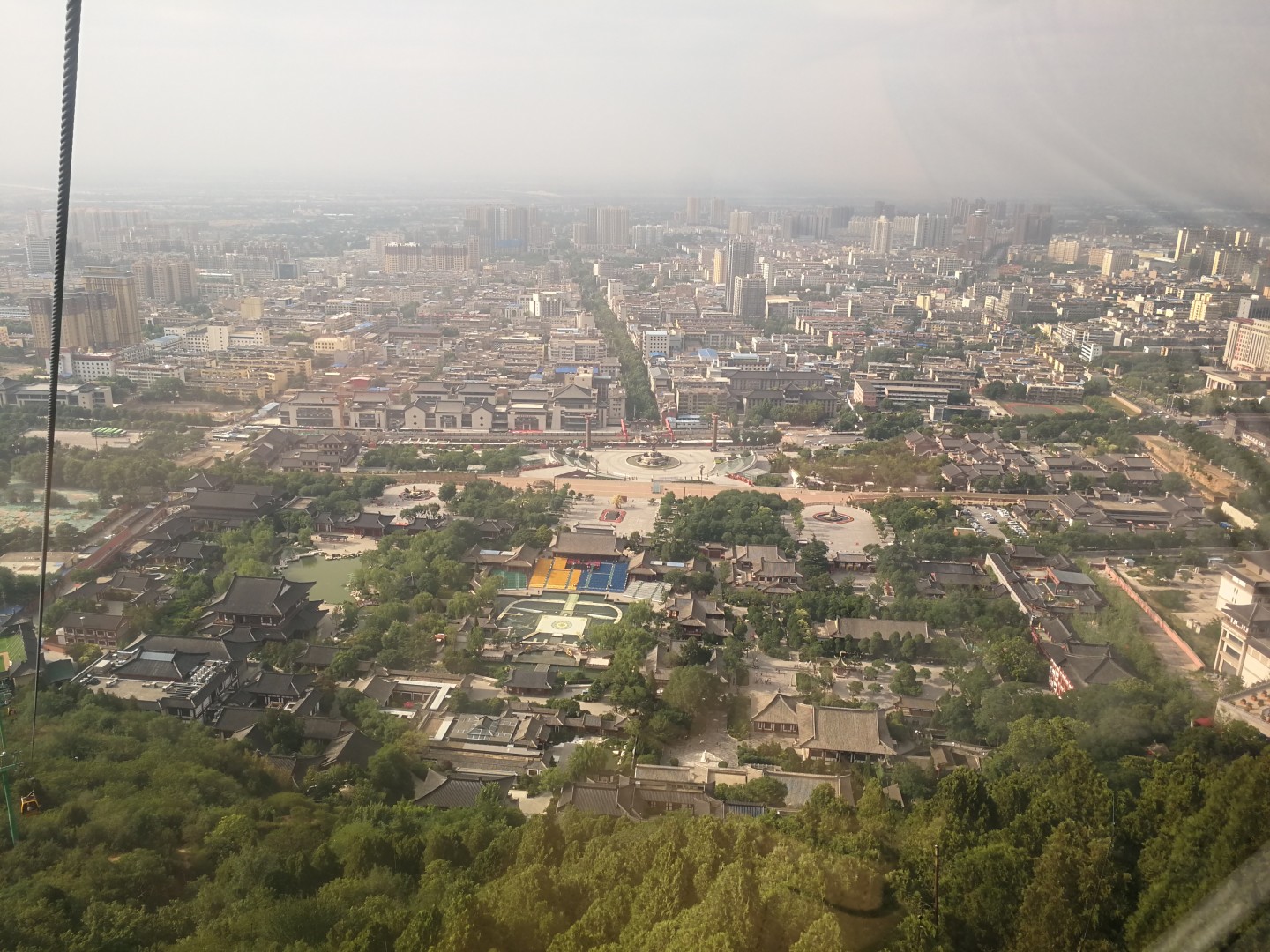
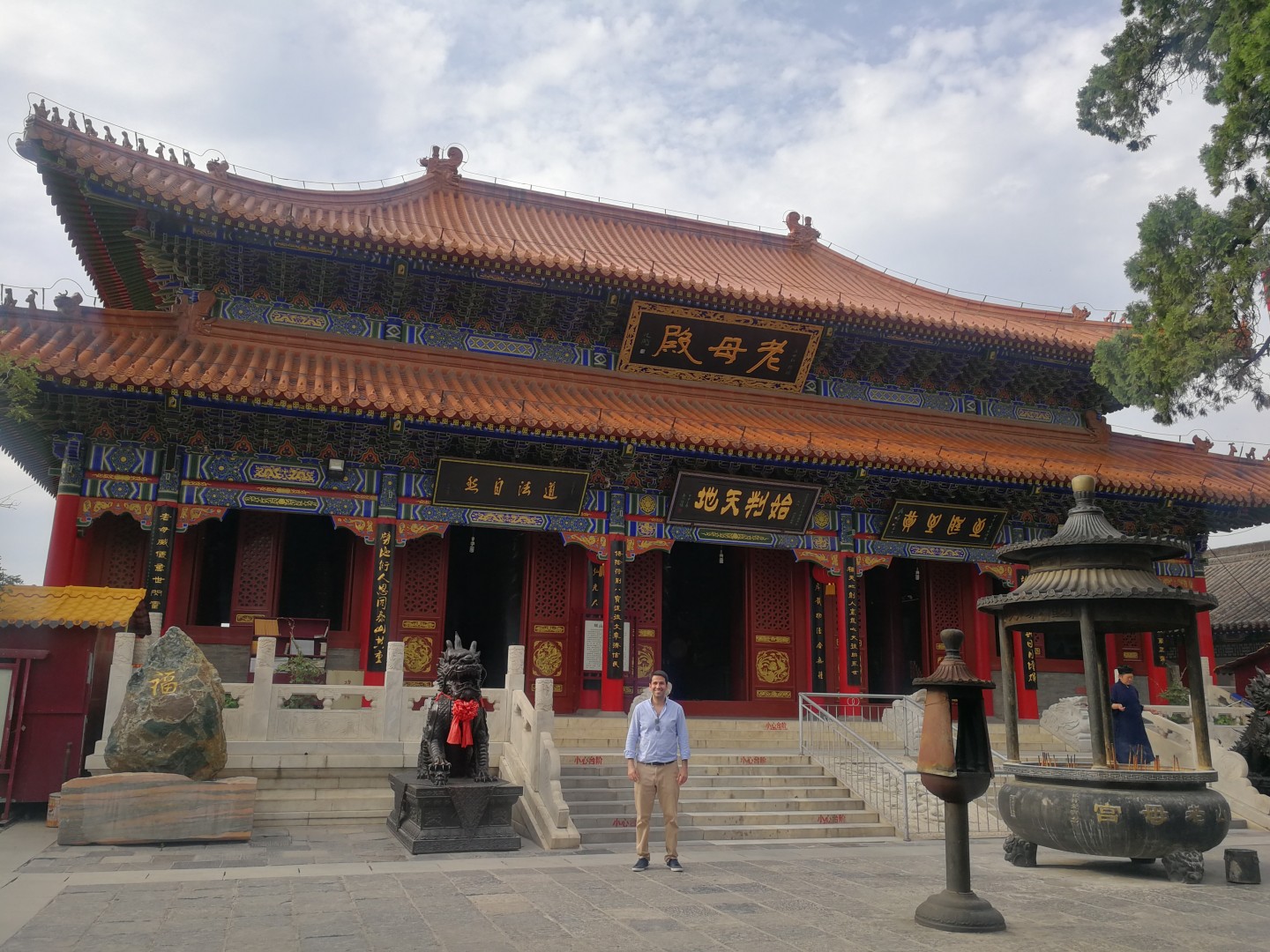
After visiting the gardens and historic hot springs of Xi’an, we headed to the cable car stop to ascend Mount Li. Our guide left us. We enjoyed the views of the city and the hot springs on a 15-minute cable car ride up Mount Li. At the top of Mount Li is Lishan Laomu Temple.
According to a legend in Chinese mythology, Lishan Laomu, the goddess of Mount Li, and Nüwa, another goddess considered the creator of humanity, repaired the wall of heaven here together.
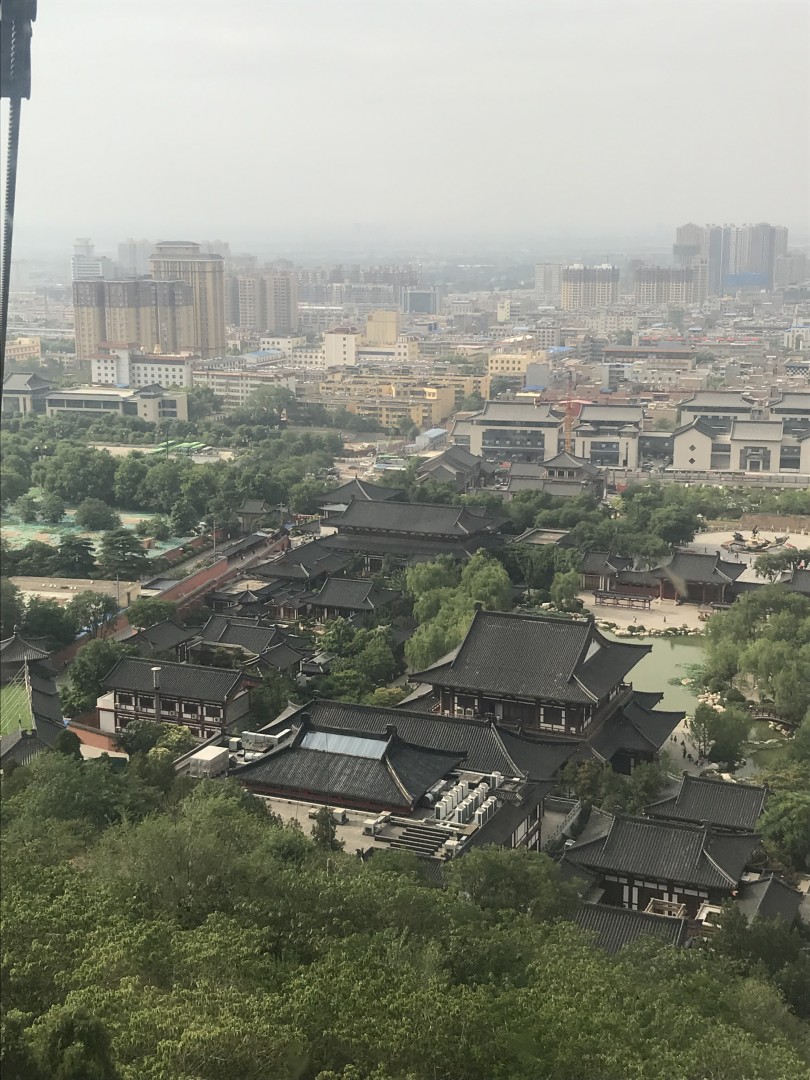
Laomu Temple
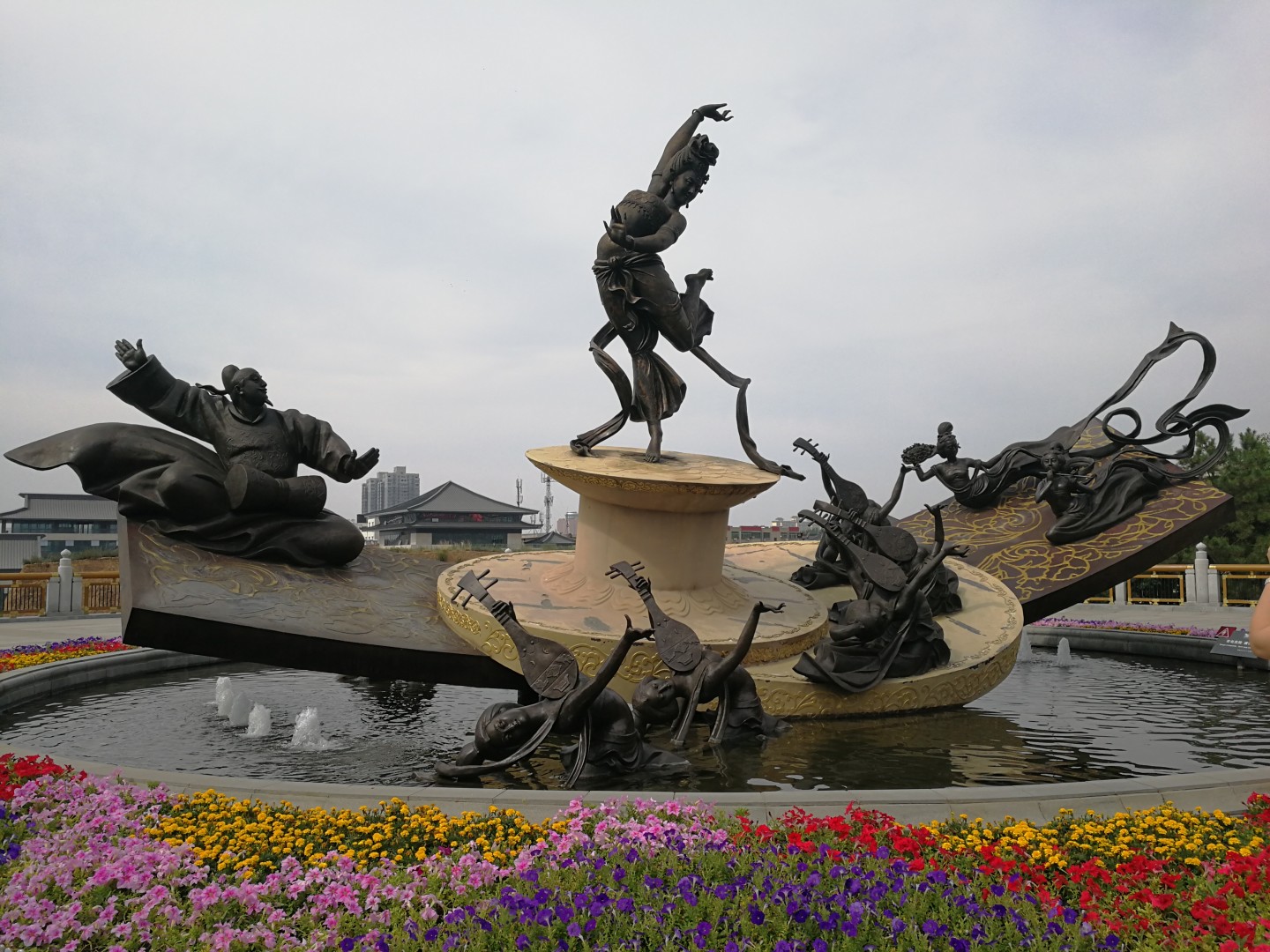
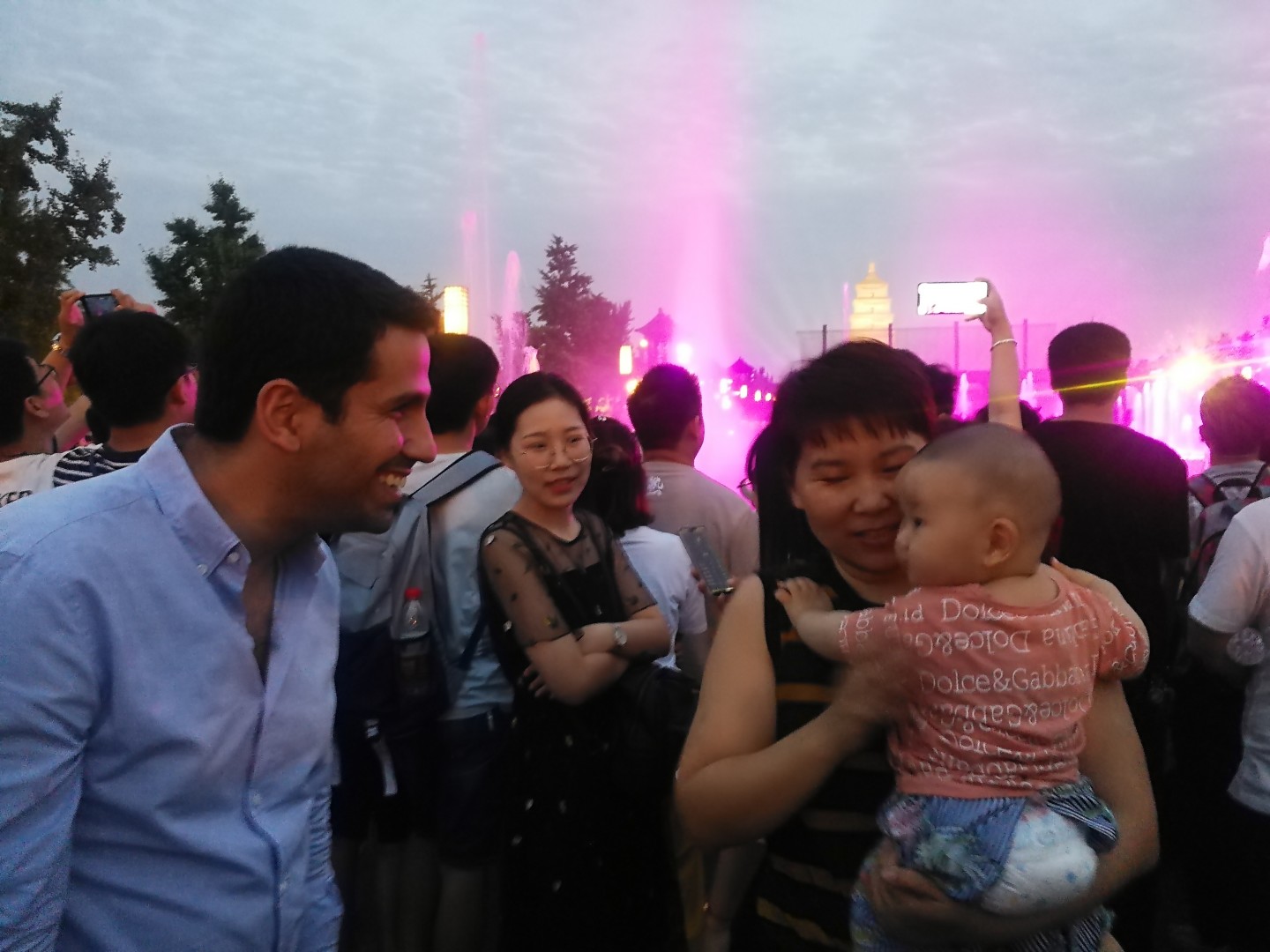
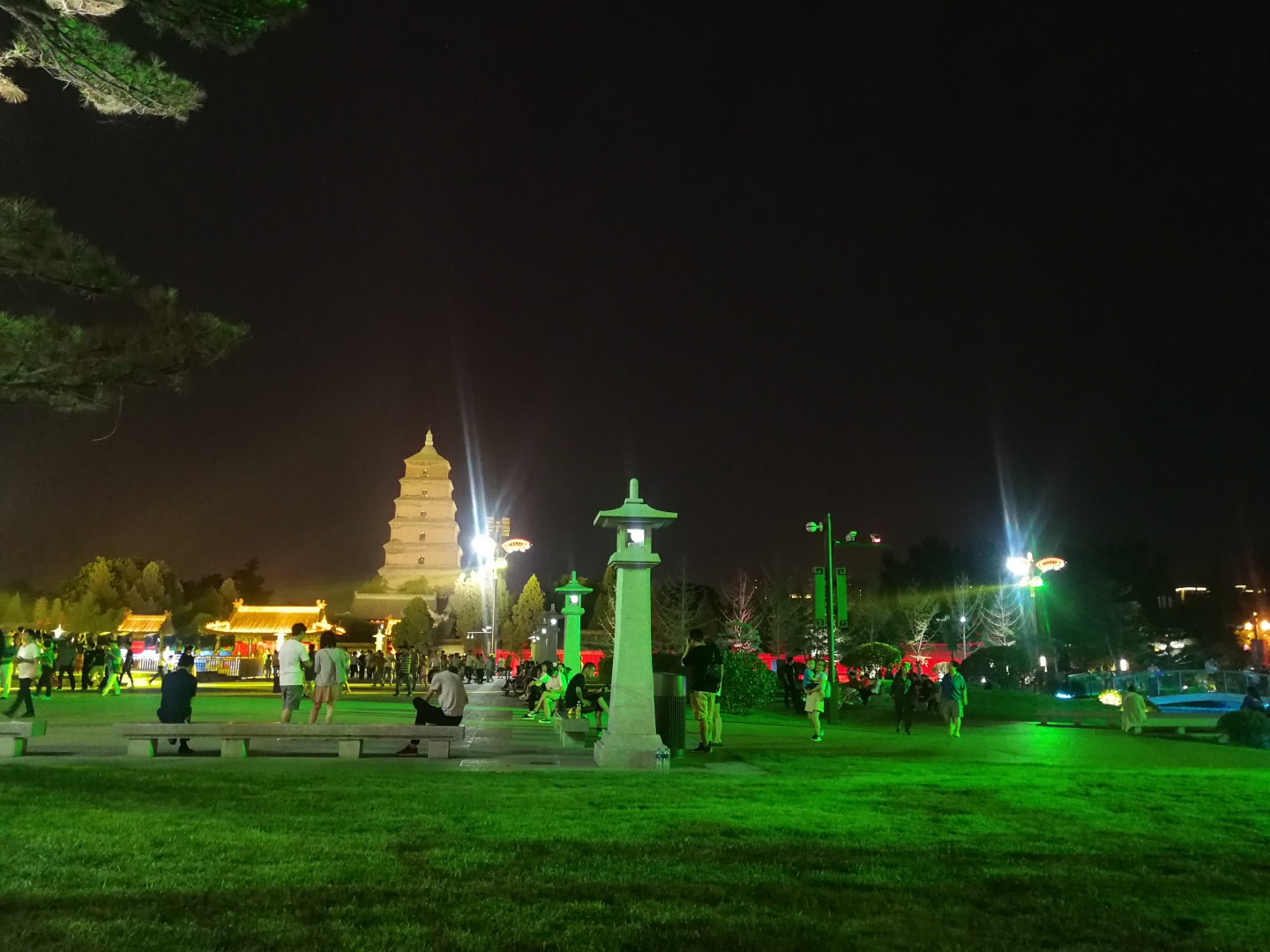
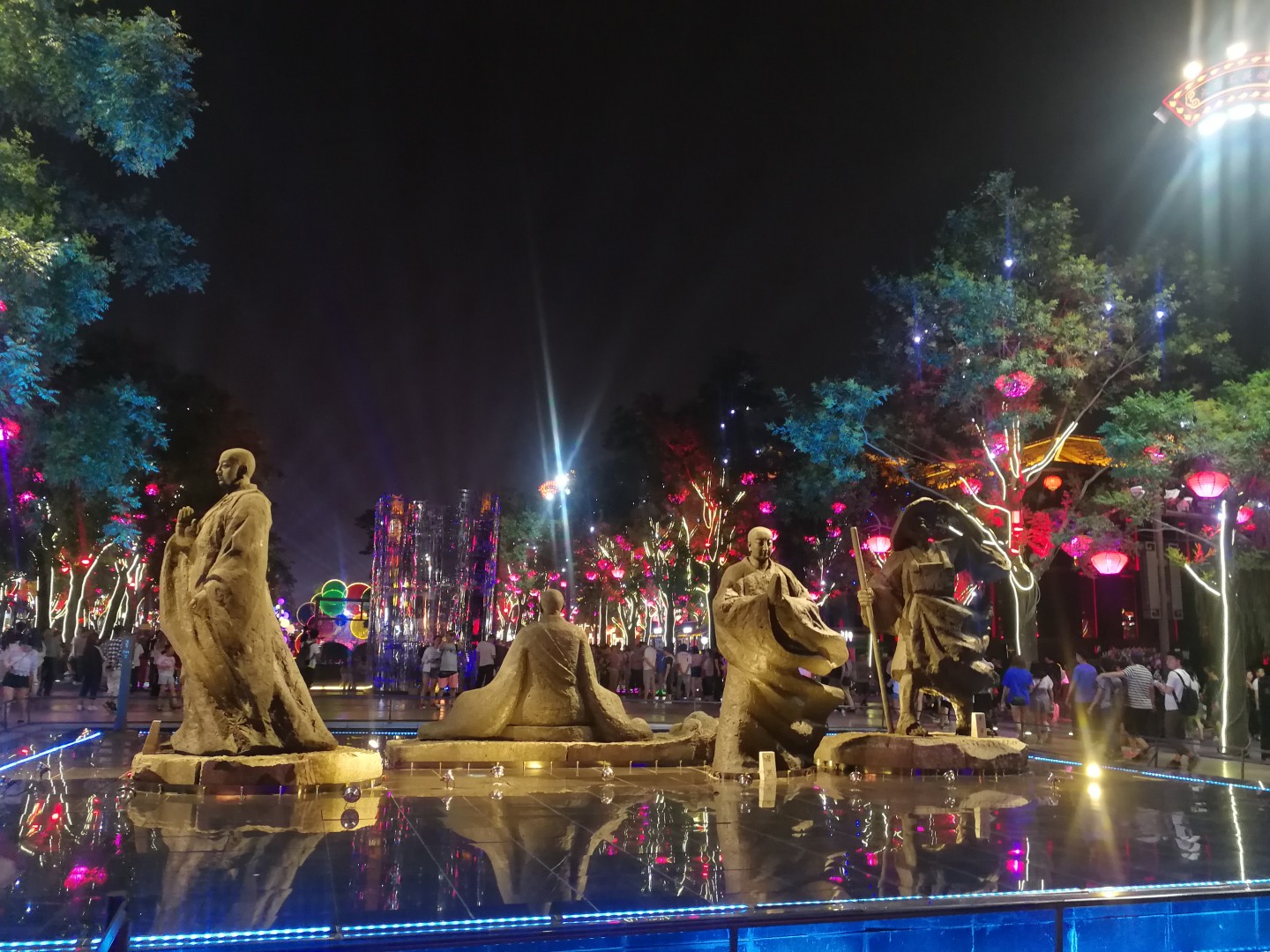
After visiting the temple, we caught the last cable car to head towards Xi’an city center. Our next stop was the Giant Wild Goose Pagoda (Dyanta) area, where we arrived to watch the evening performances on the Walking Street. We witnessed many shows and musical water performances along the way.
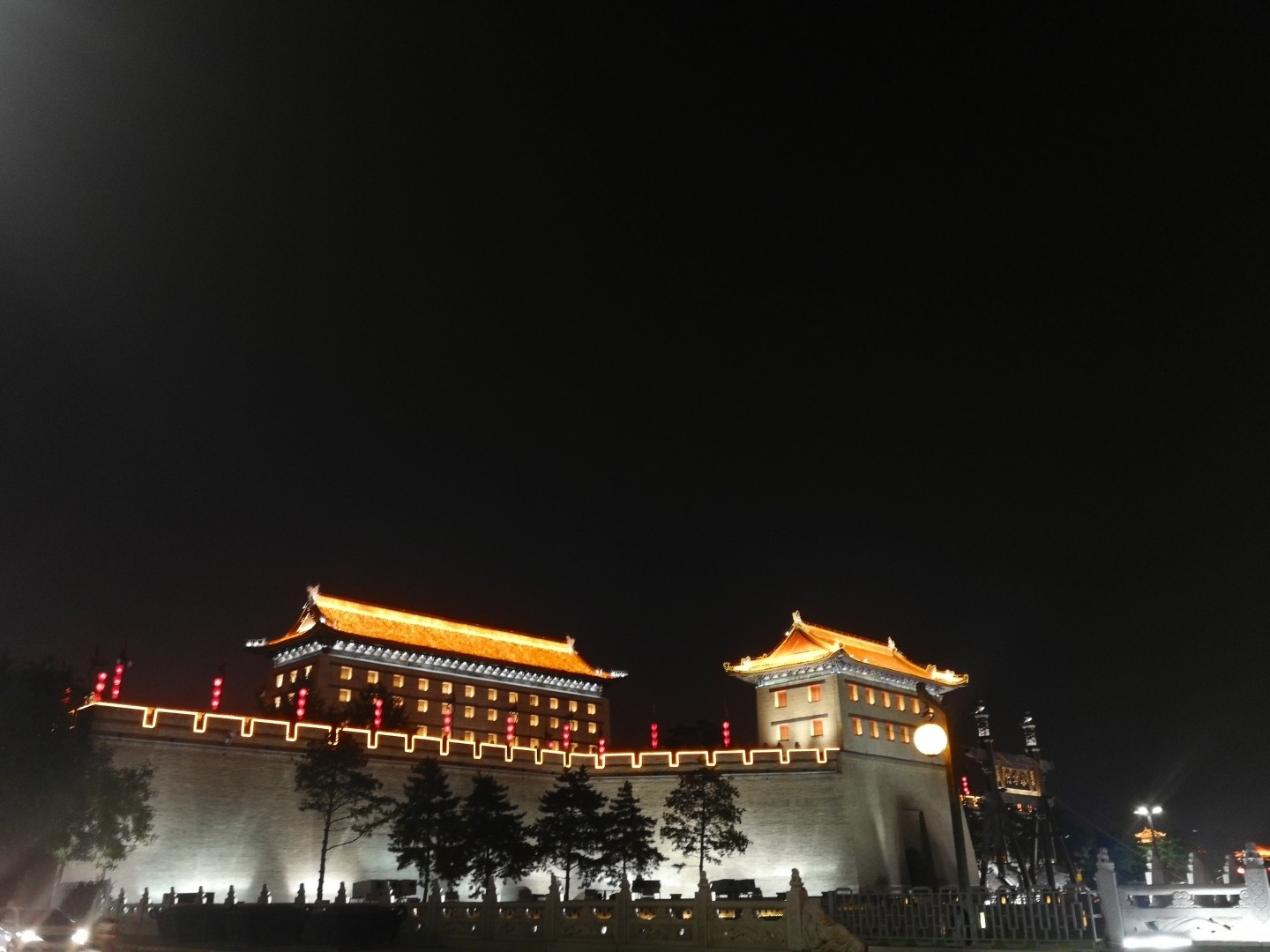
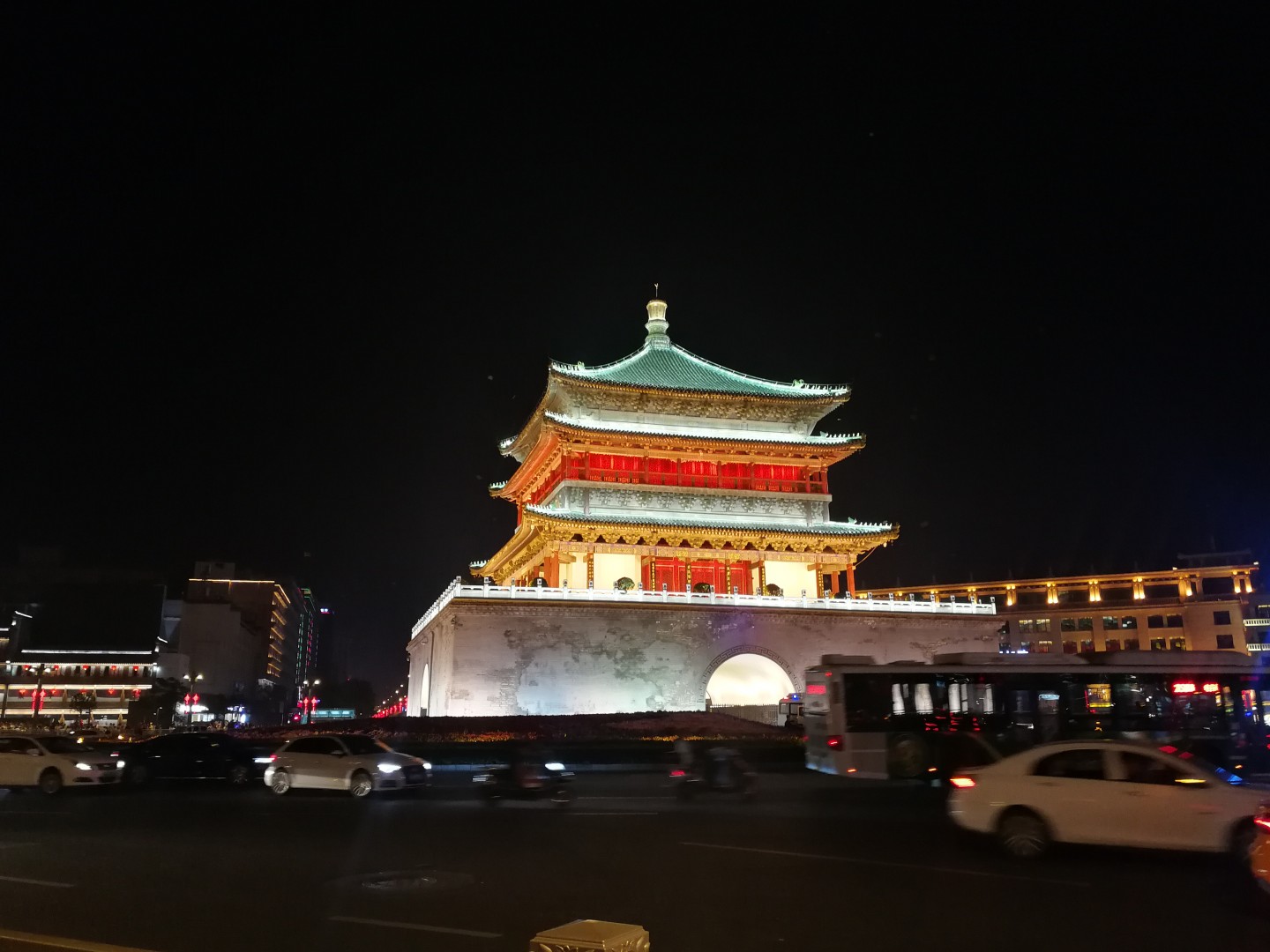
When it was dinner time, our Chinese companion offered to take us to a street known as “Muslim Food Street.” However, we had only discovered this area by chance when we took a walk through the city center after our meeting on Saturday evening. On this occasion, I’d like to mention another discovery we made in Xi’an’s city center: the Bell Tower. The center of Xi’an lies within an area surrounded by city walls.
The Iconic Belfry
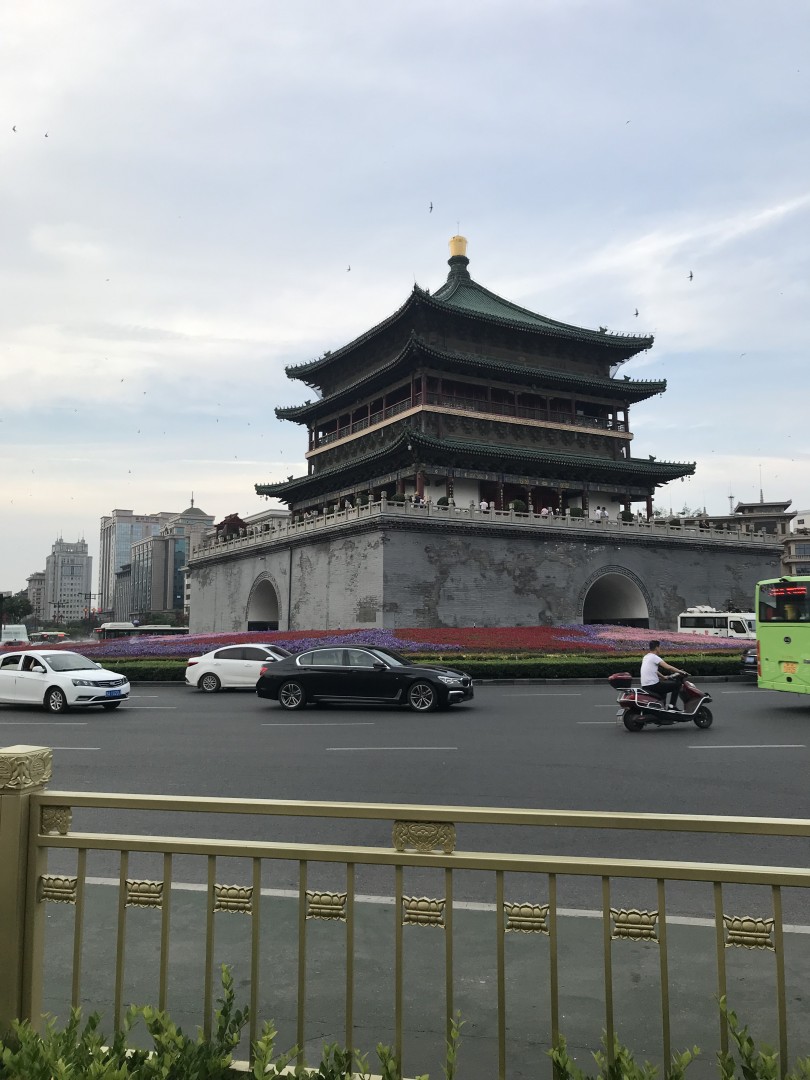
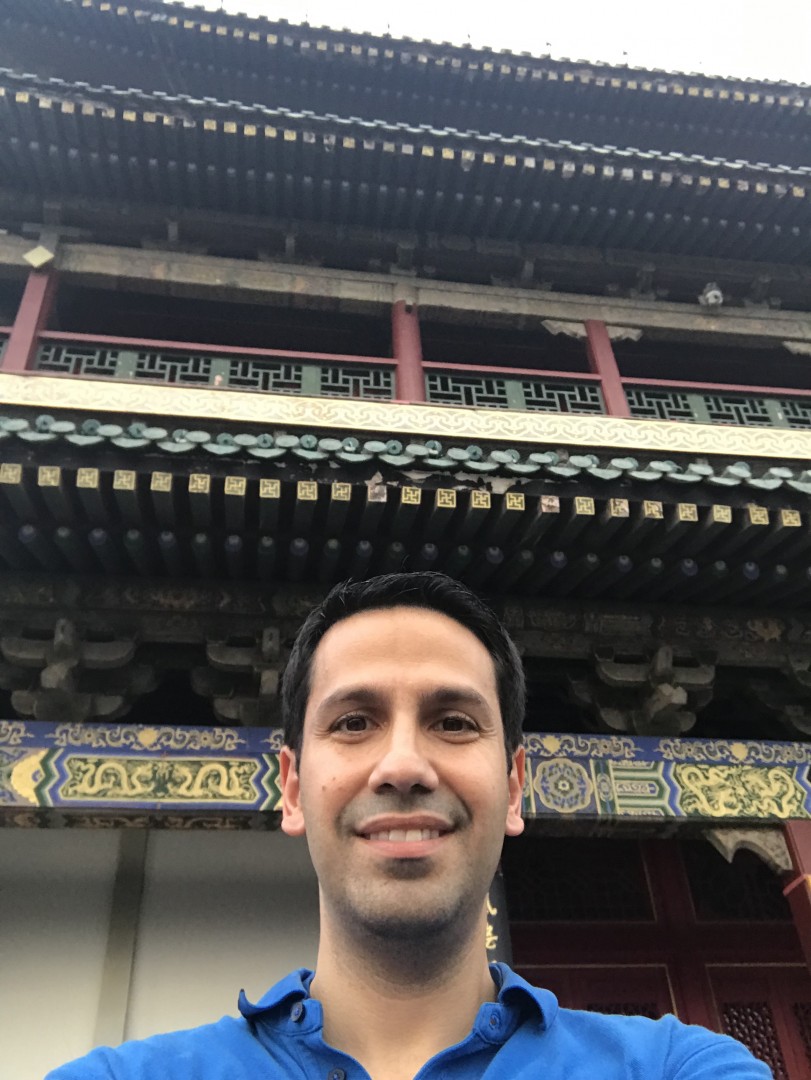
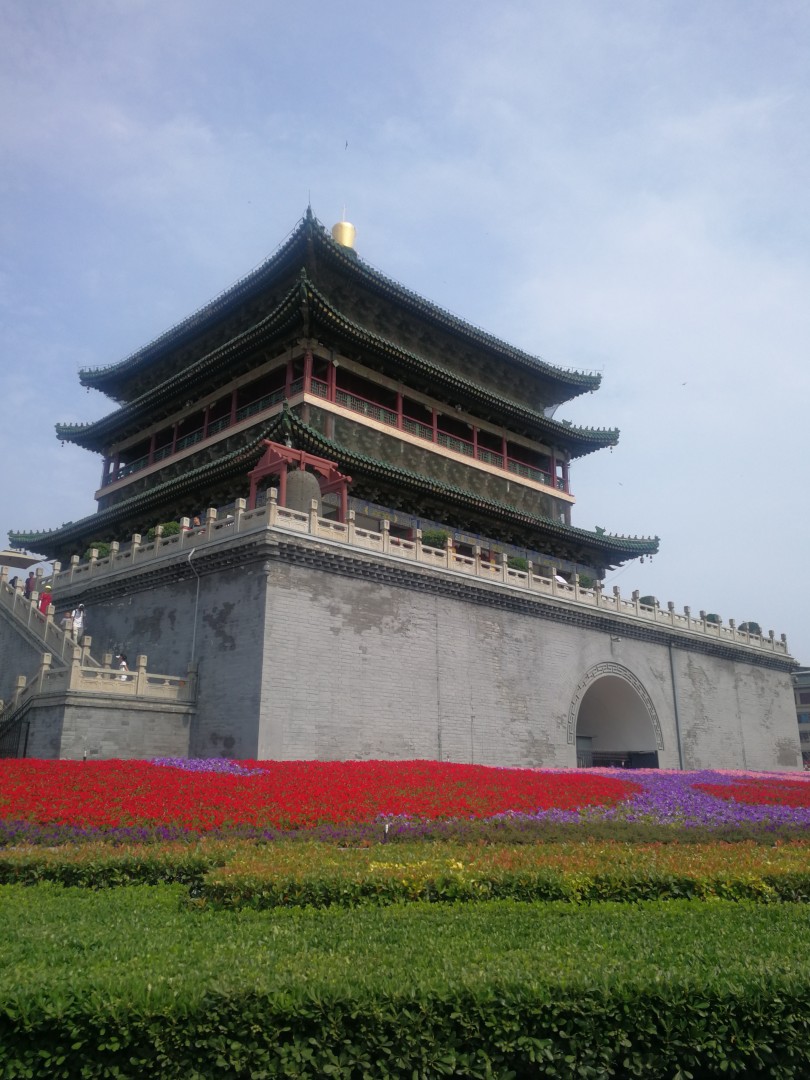
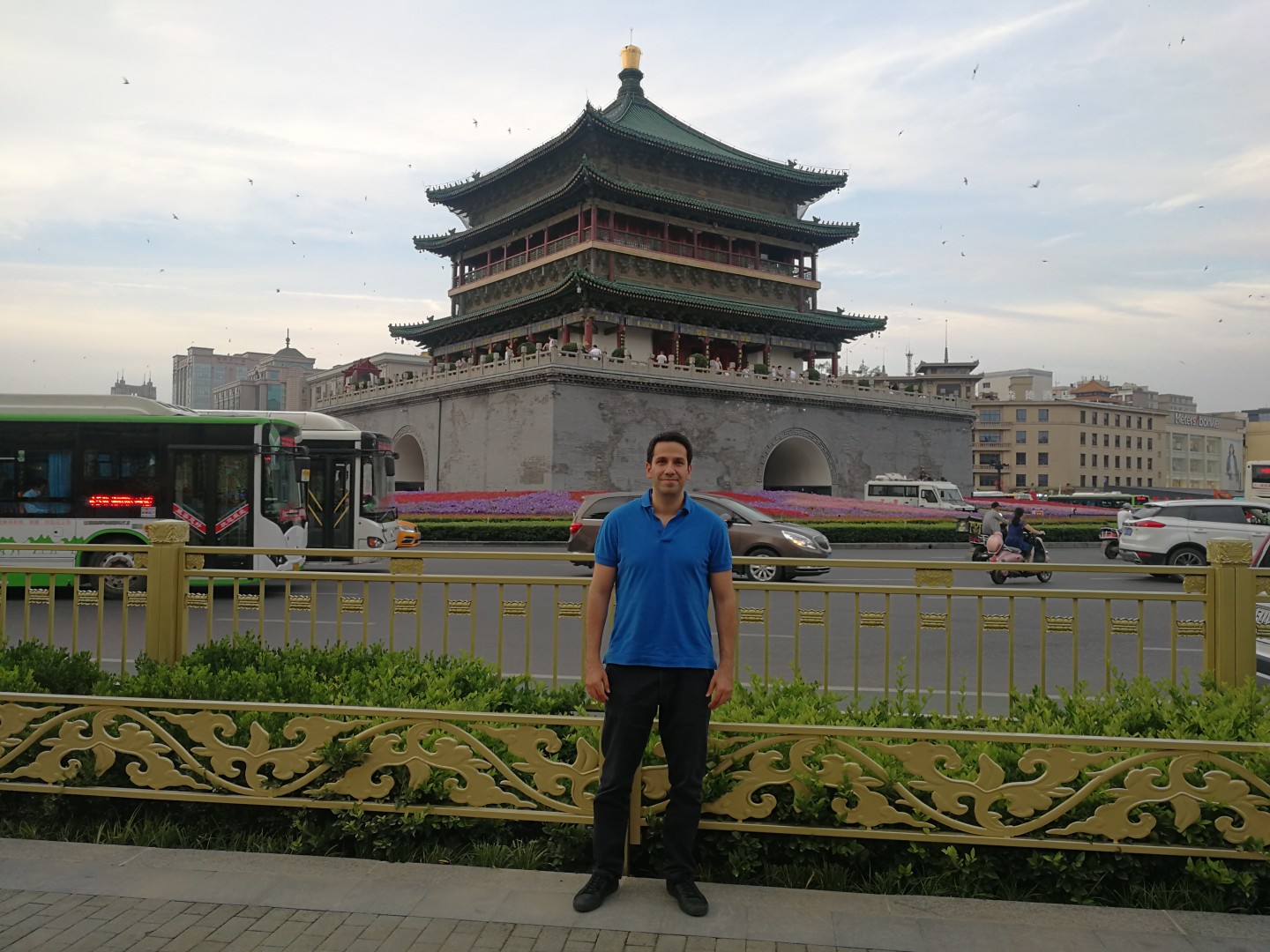
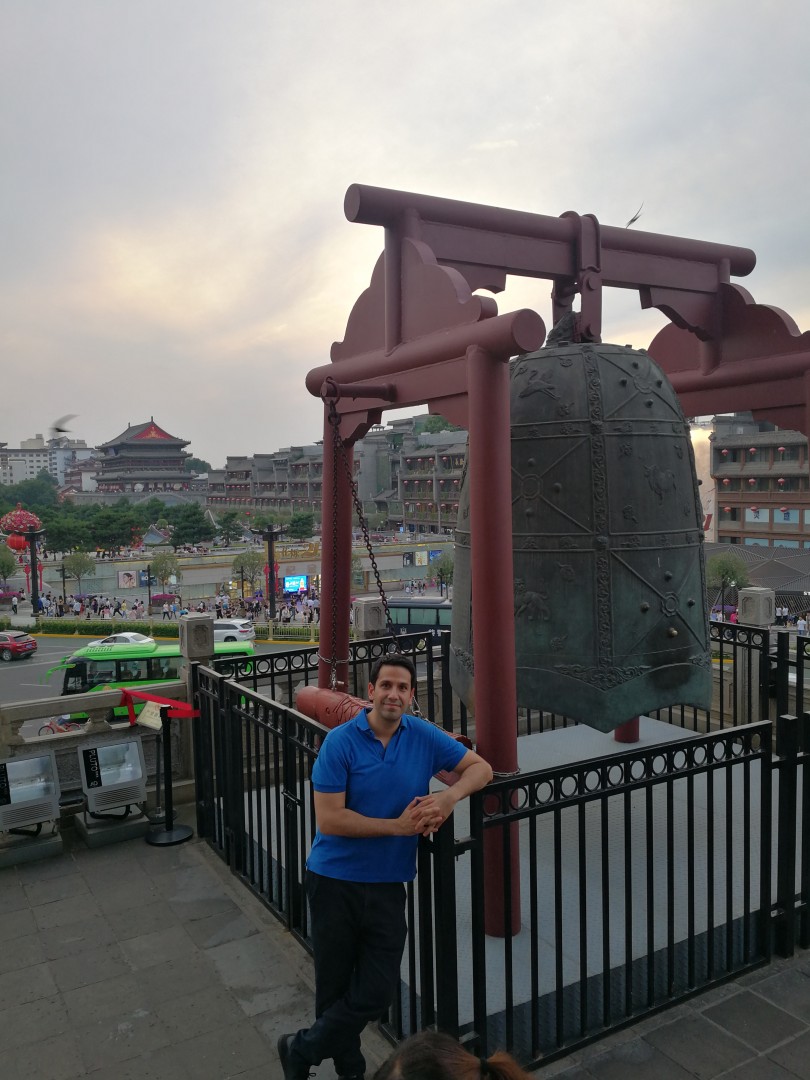
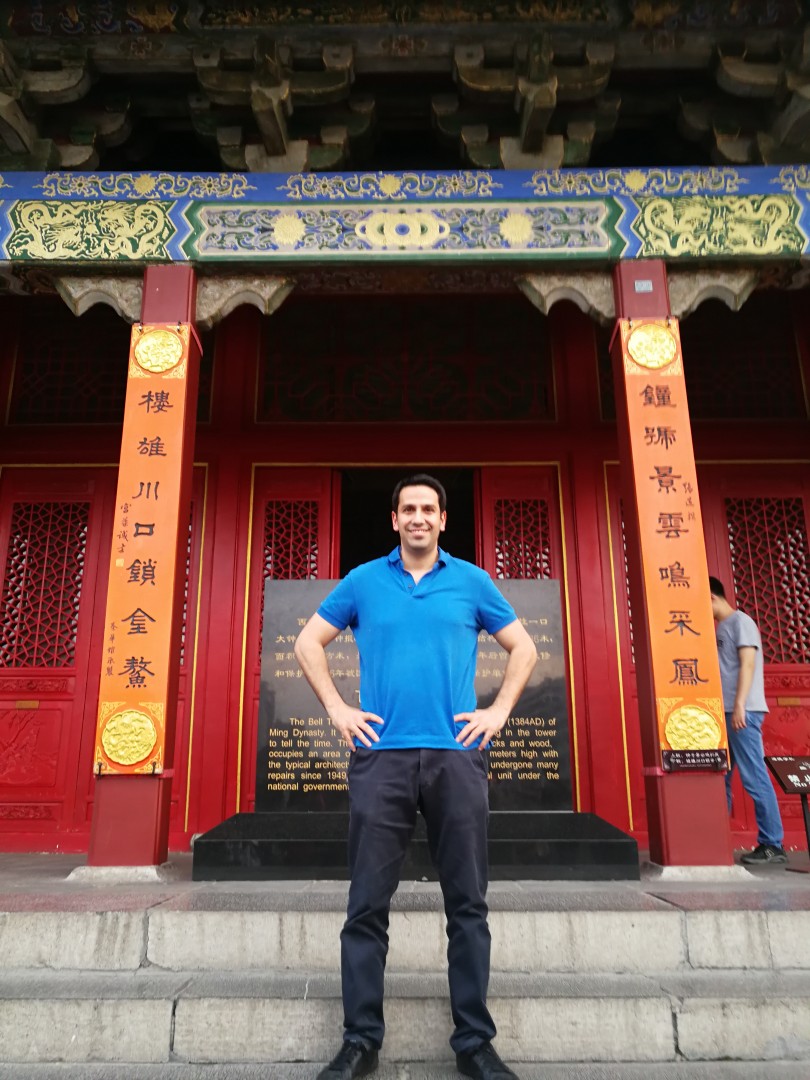
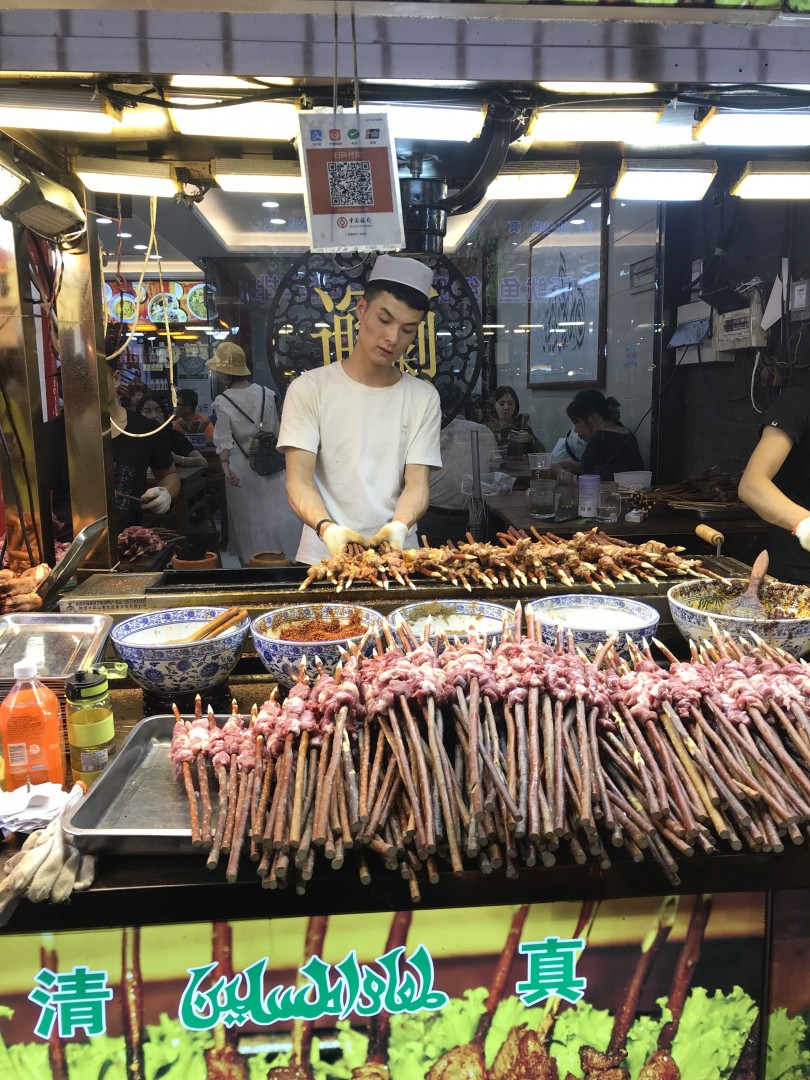
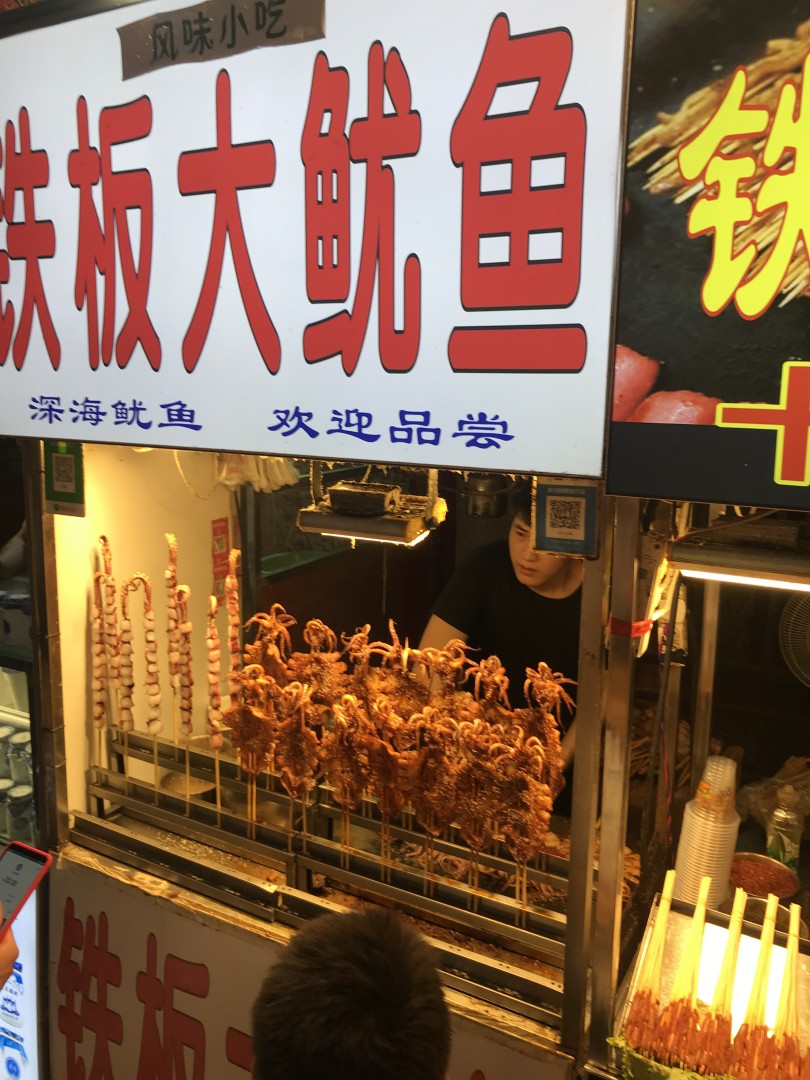
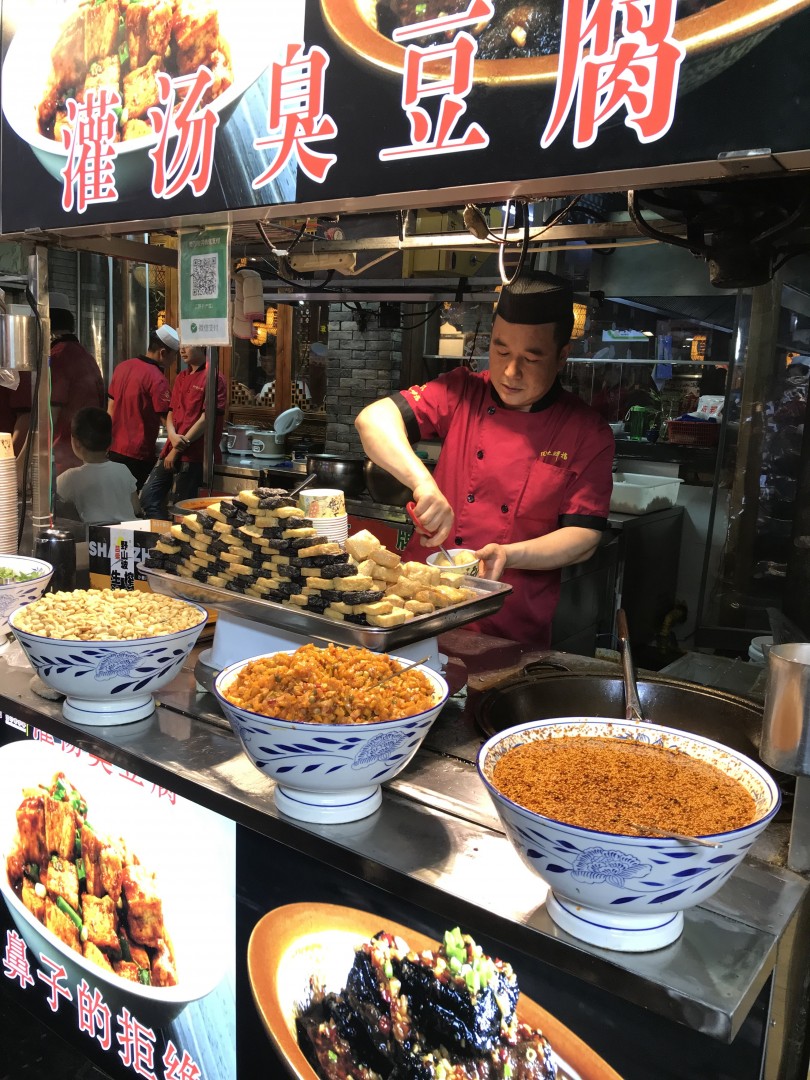
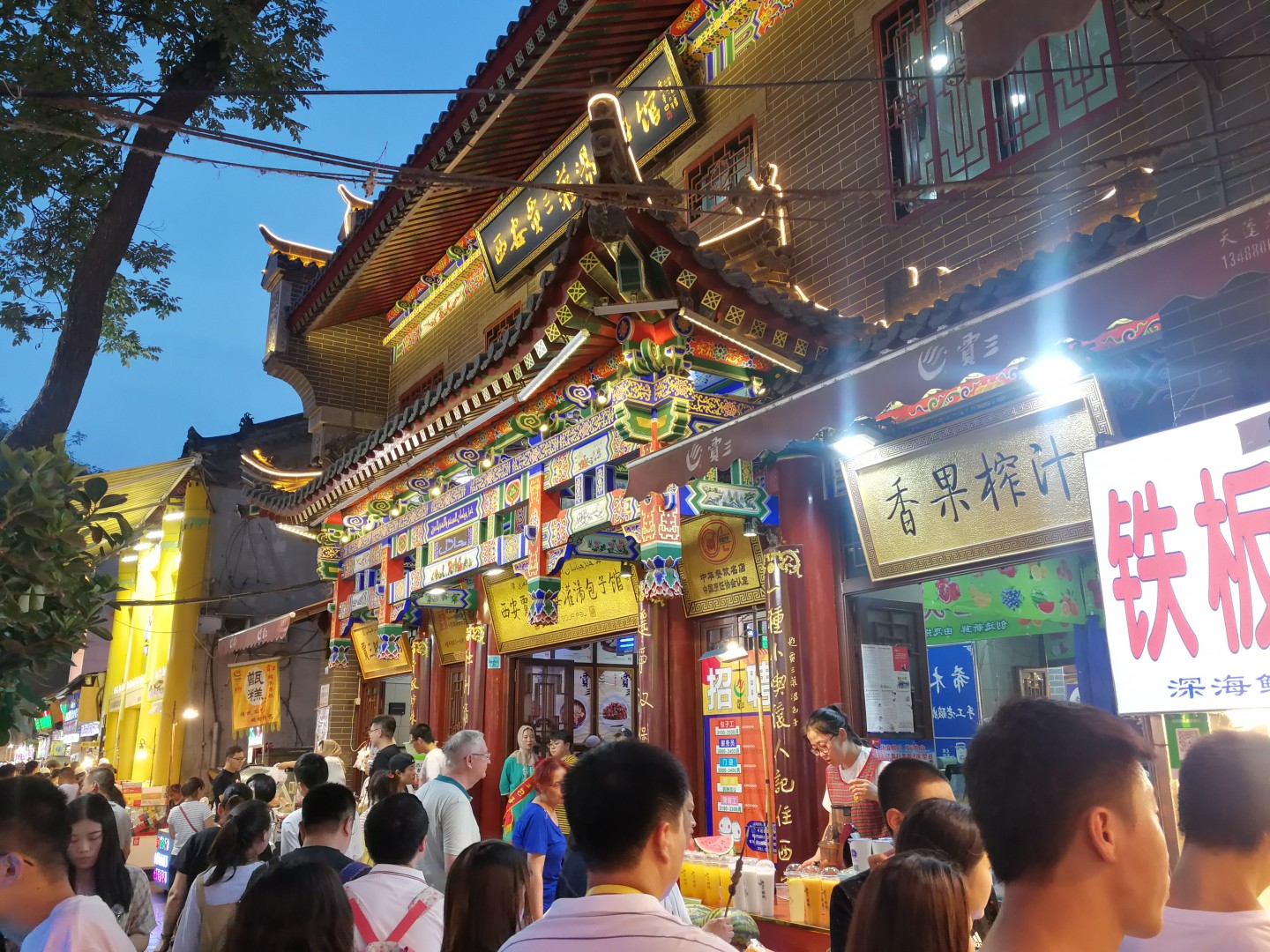
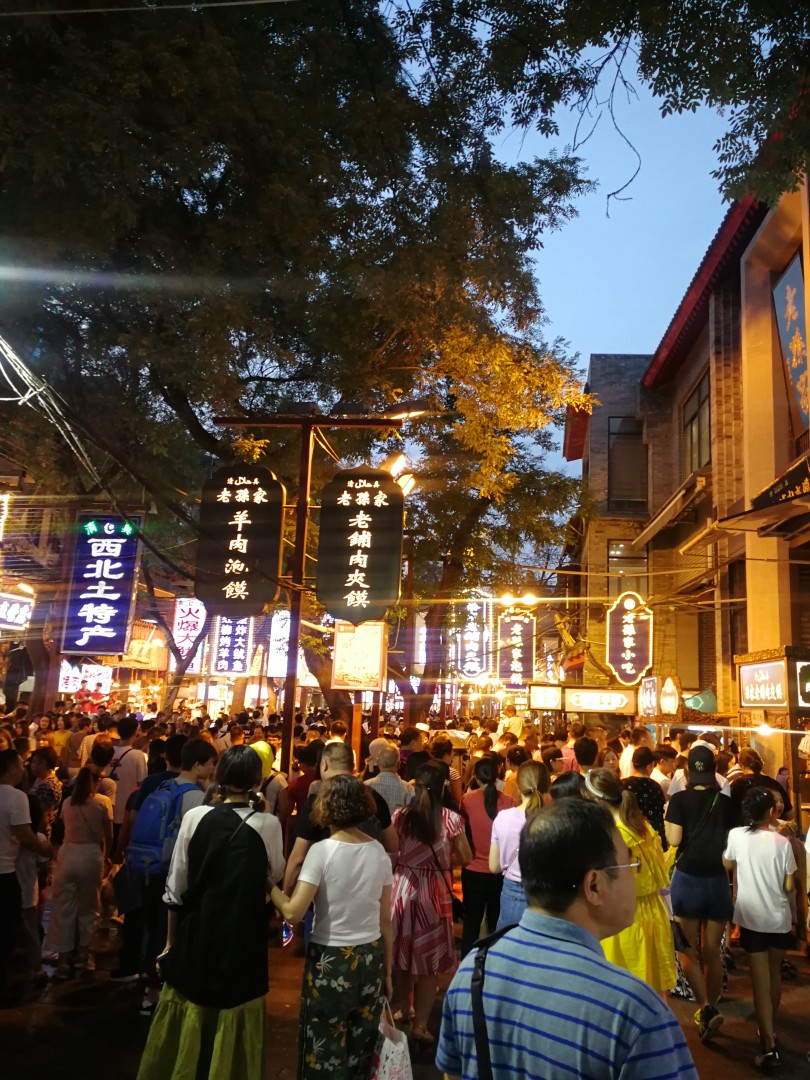
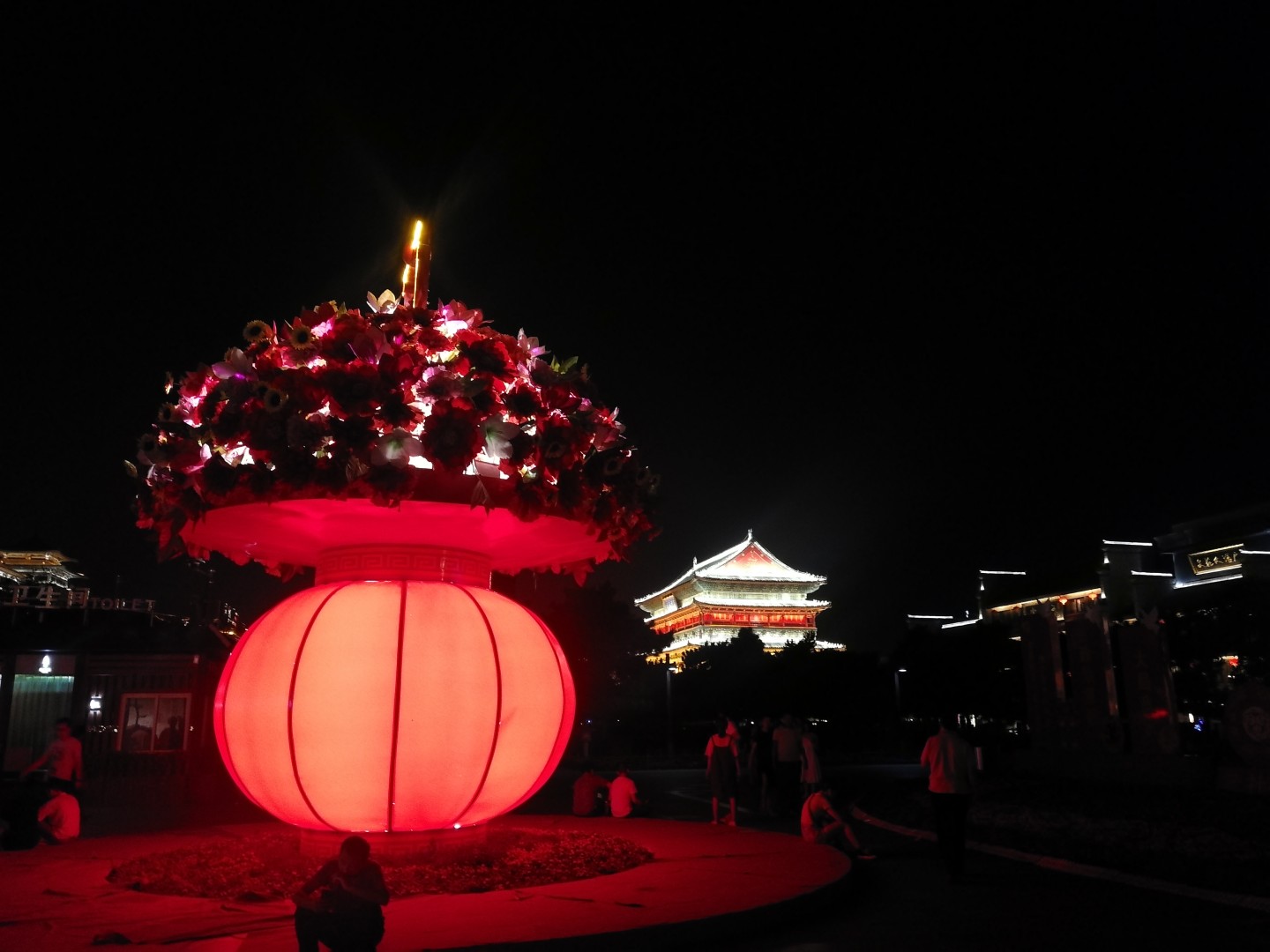
Built in 1384 during the Ming Dynasty, the Belfry is the city’s most iconic landmark, one of the largest symbols of its kind not only in Xi’an but throughout China. Our hotel was centrally located on the southern and central portion of the Xi’an City Wall. From there, we walked to the Belfry, located within the city wall and at its very center, before visiting the tower. Access to the Belfry is a bit tricky, requiring only a gate on the underground walkway. The tower is located right in the center of the city, within a main circular intersection. As we walked from the bell tower to the Drum Tower, another important landmark, we stumbled upon a street known as Muslim Food Street. This street is lined with numerous street food stalls and restaurants. The street is so named because these restaurants serve the food of the Hui ethnic group, which is predominantly Muslim. The Hui population in Xi’an and Shaanxi Province is already very high, and this street’s fame has led many other ethnic groups, including Uyghurs, to open restaurants in this area
“Cook and Eat” Chinese Style
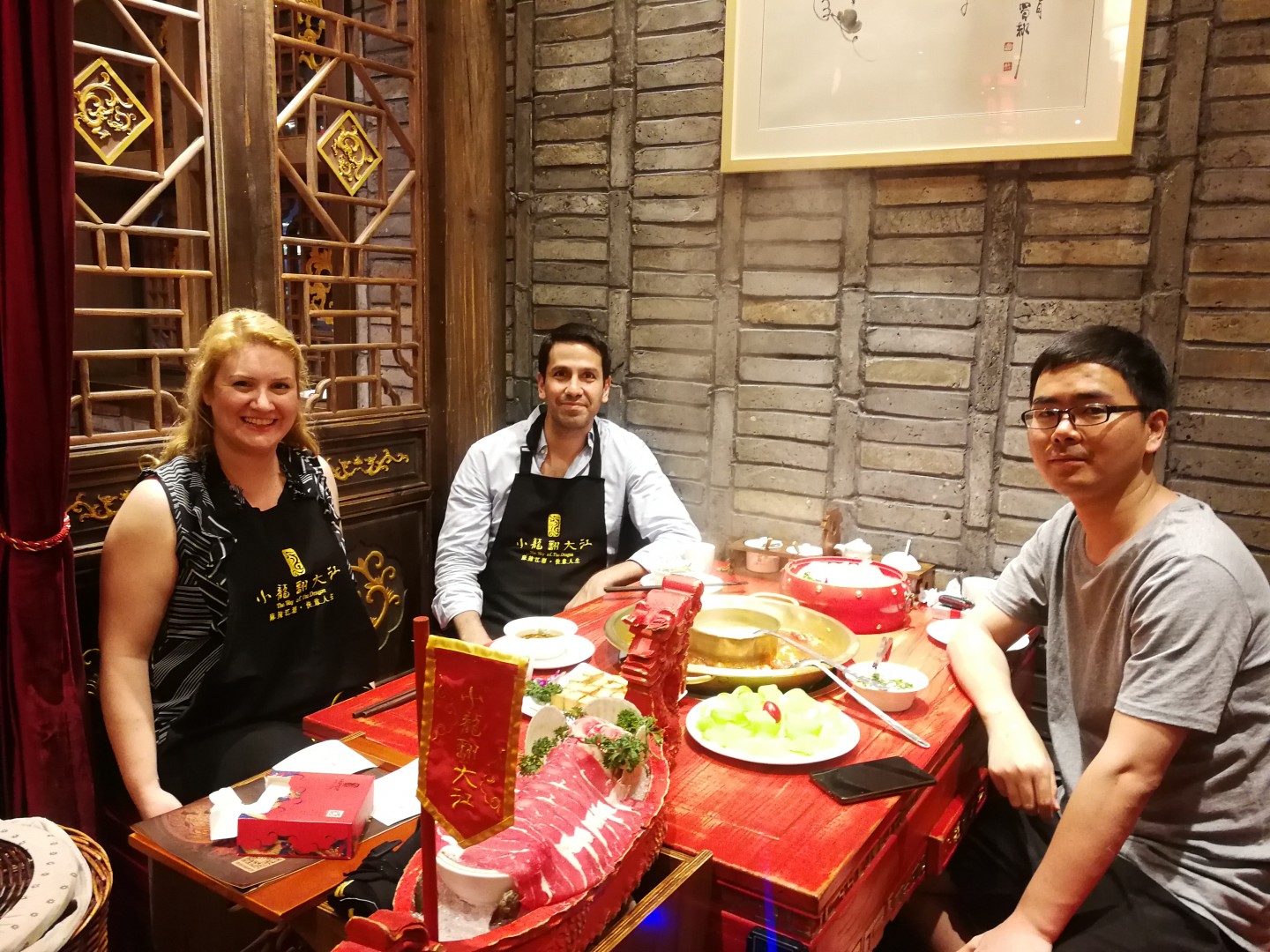
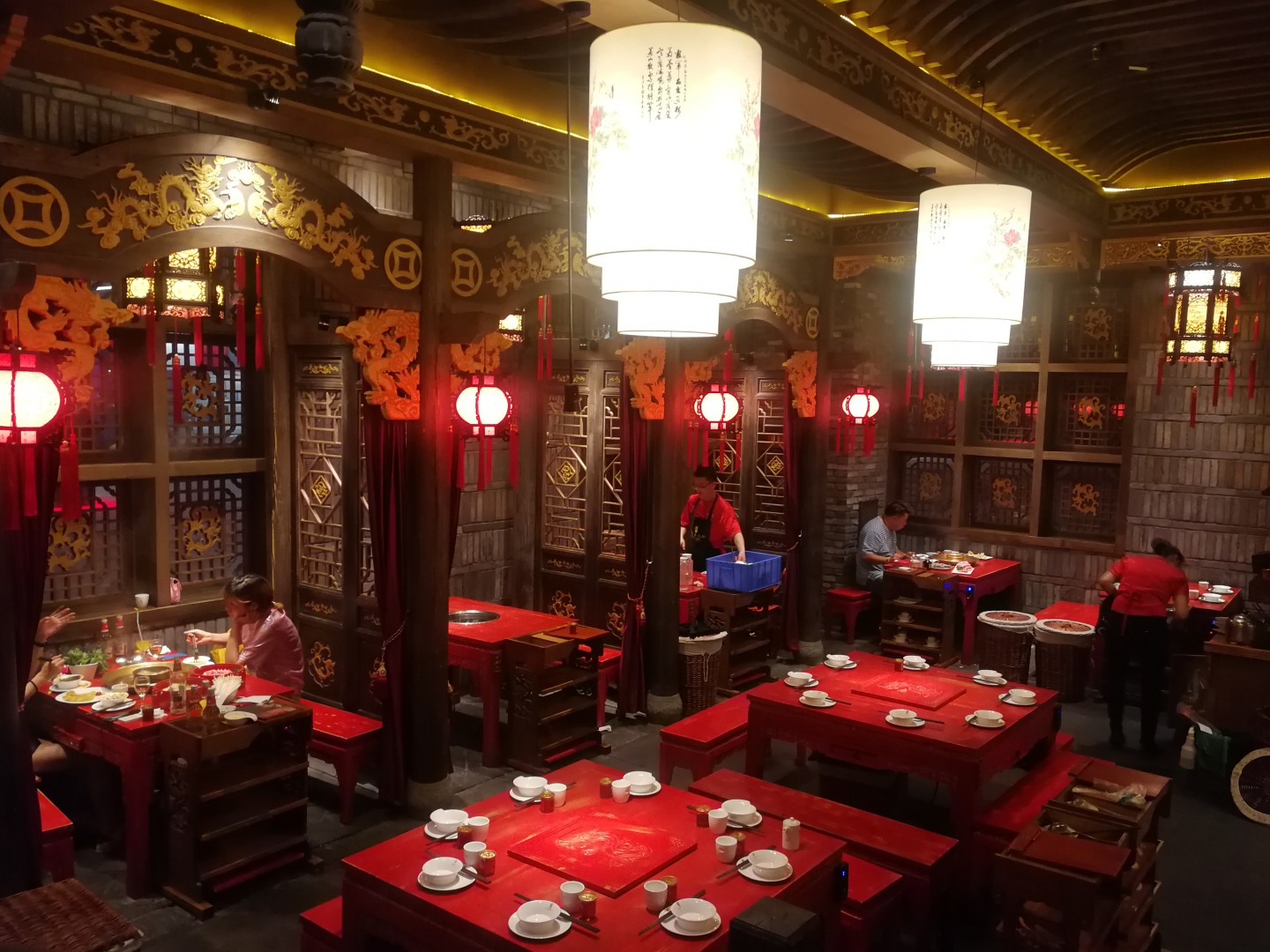
Having previously explored the “Muslim Food Street,” we decided to stay for dinner in the Giant Wild Goose Pagoda, Dayanta” area. We decided to go to the Chengdu Hot Pot restaurant. Hot pot restaurants, not unlike the Chinese fondue concept, involve cooking everything yourself in hot water. Of course, you mix various flavors like peppers, spices, onions, and garlic into the hot water to flavor the dish. We savored the delicious dishes while enjoying the cooking process.
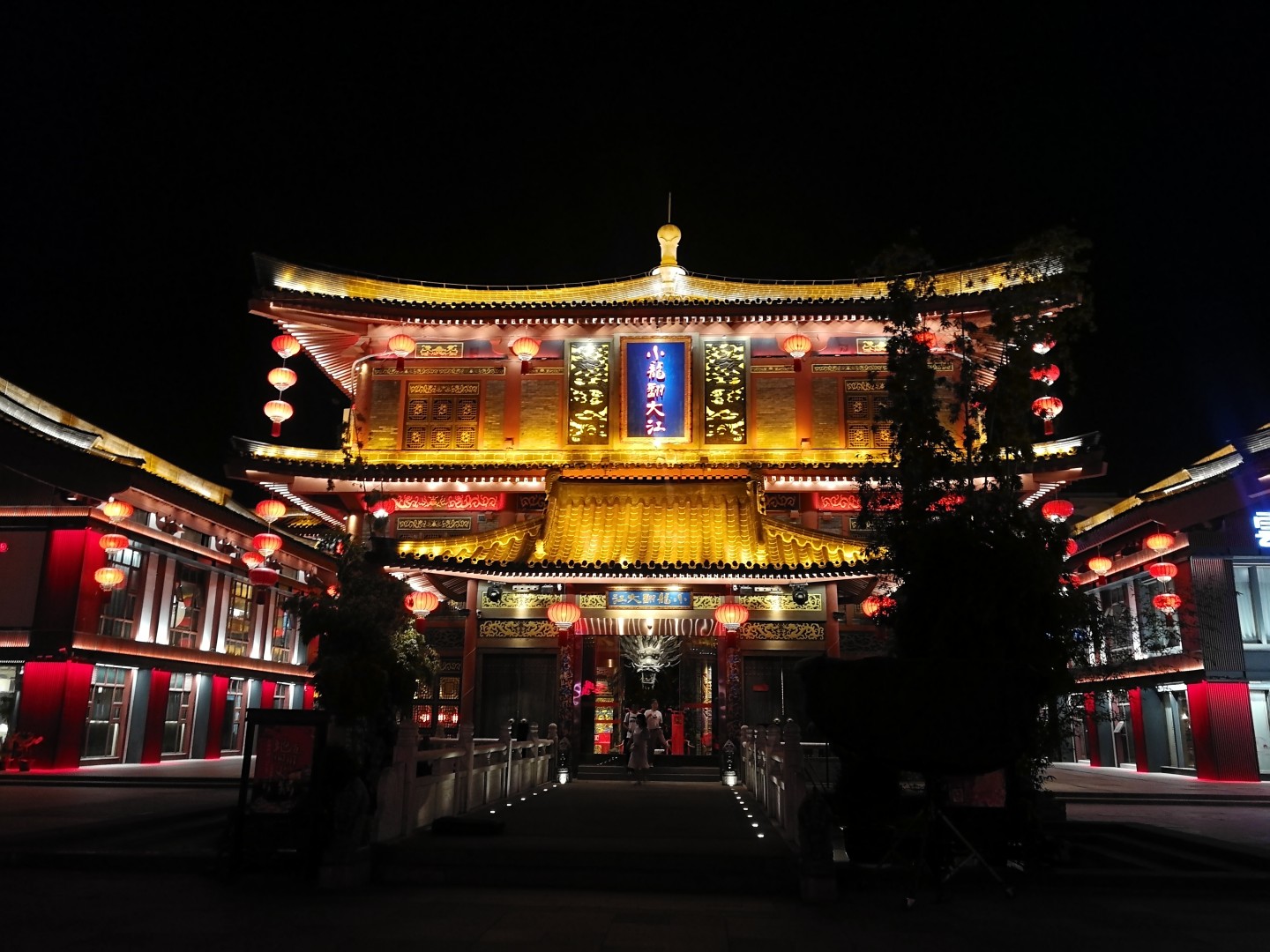
After dinner, we walked up the pedestrian street, reminiscent of Istiklal Avenue in Istanbul. I say “up” because, unlike Istiklal Avenue, this street was steep and undulating. We concluded our tour by watching music and dance performances here and there before returning to our hotel. The next day, we were ready for our final meeting in China and our return to Istanbul.
I was delighted to have experienced the culture, people, and cuisine of China, my first time there. At the end of my visit, which was rewarding in many ways, I left China knowing I would return to this country soon.
Tag: excursion